

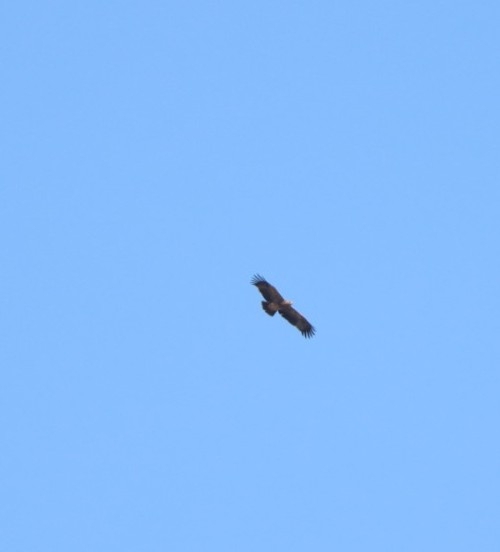
Eastern Imperial Eagle
Aquila heliaca
白肩雕
Introduction
This large raptor breeds across southeastern Europe and extensively through West and Central Asia, with most populations migrating south to winter in northeastern Africa, the Middle East, and South and East Asia. As a member of the booted eagle subfamily Aquilinae, it inhabits the transitional zone between forested areas and open plains, including the wooded mosaics of steppe habitats. An opportunistic predator, it takes a wide variety of prey including small mammals, birds, reptiles, and carrion. Nests are constructed in large mature trees, where pairs typically raise one to two fledglings. The species has declined significantly across its range due to persecution, habitat loss, and prey depletion, leading to its Vulnerable IUCN status since 1994.
Description
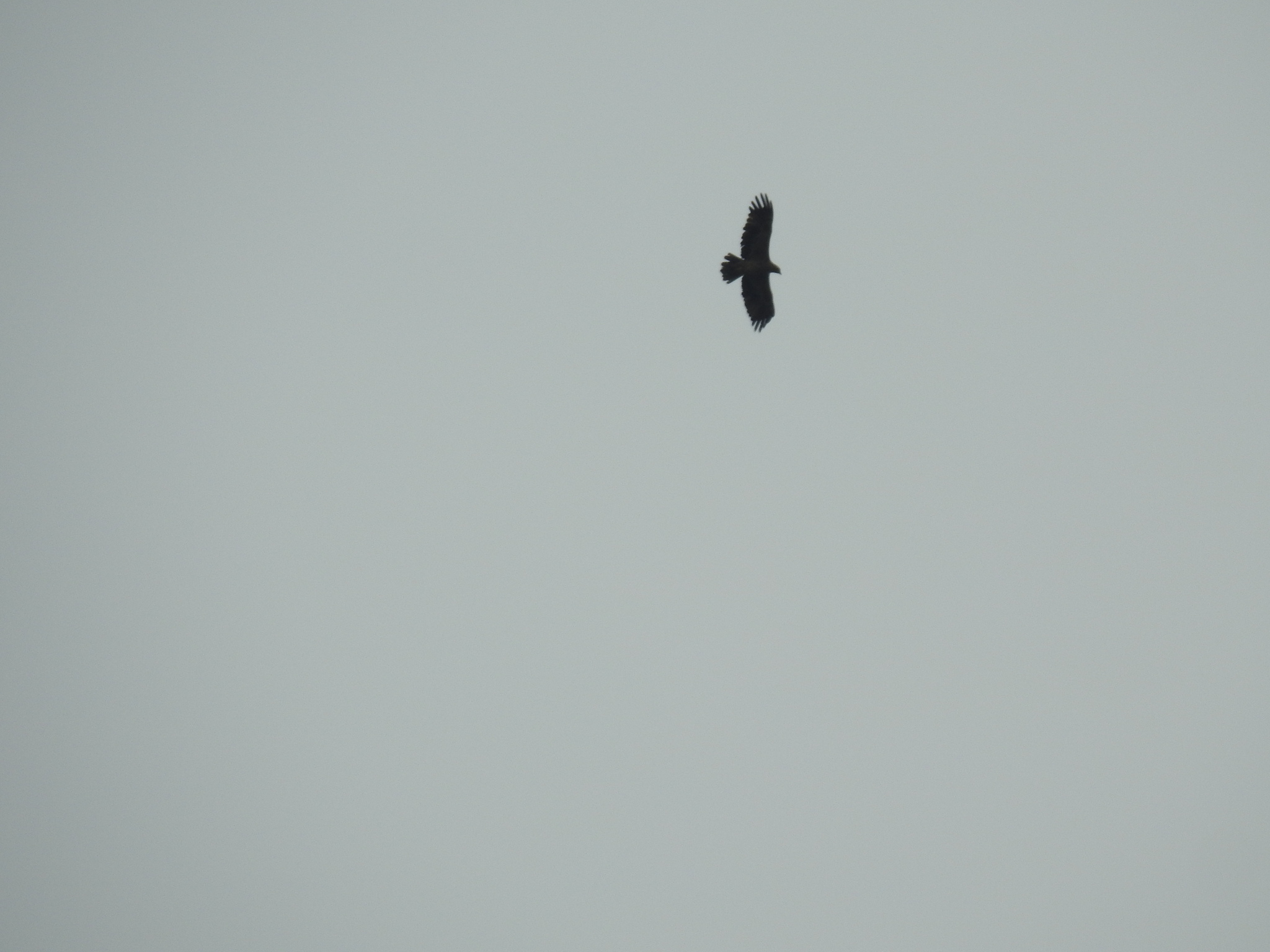
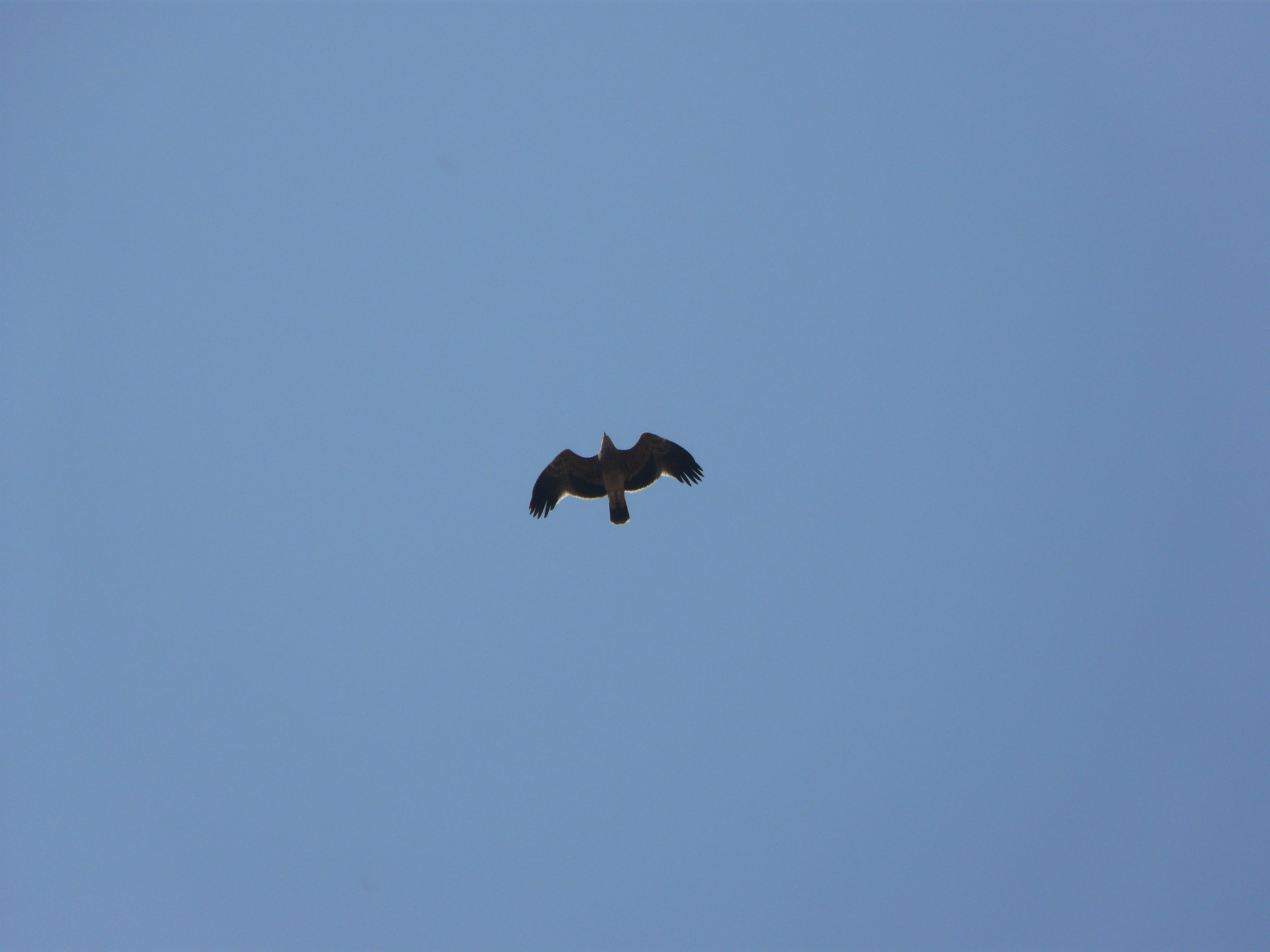
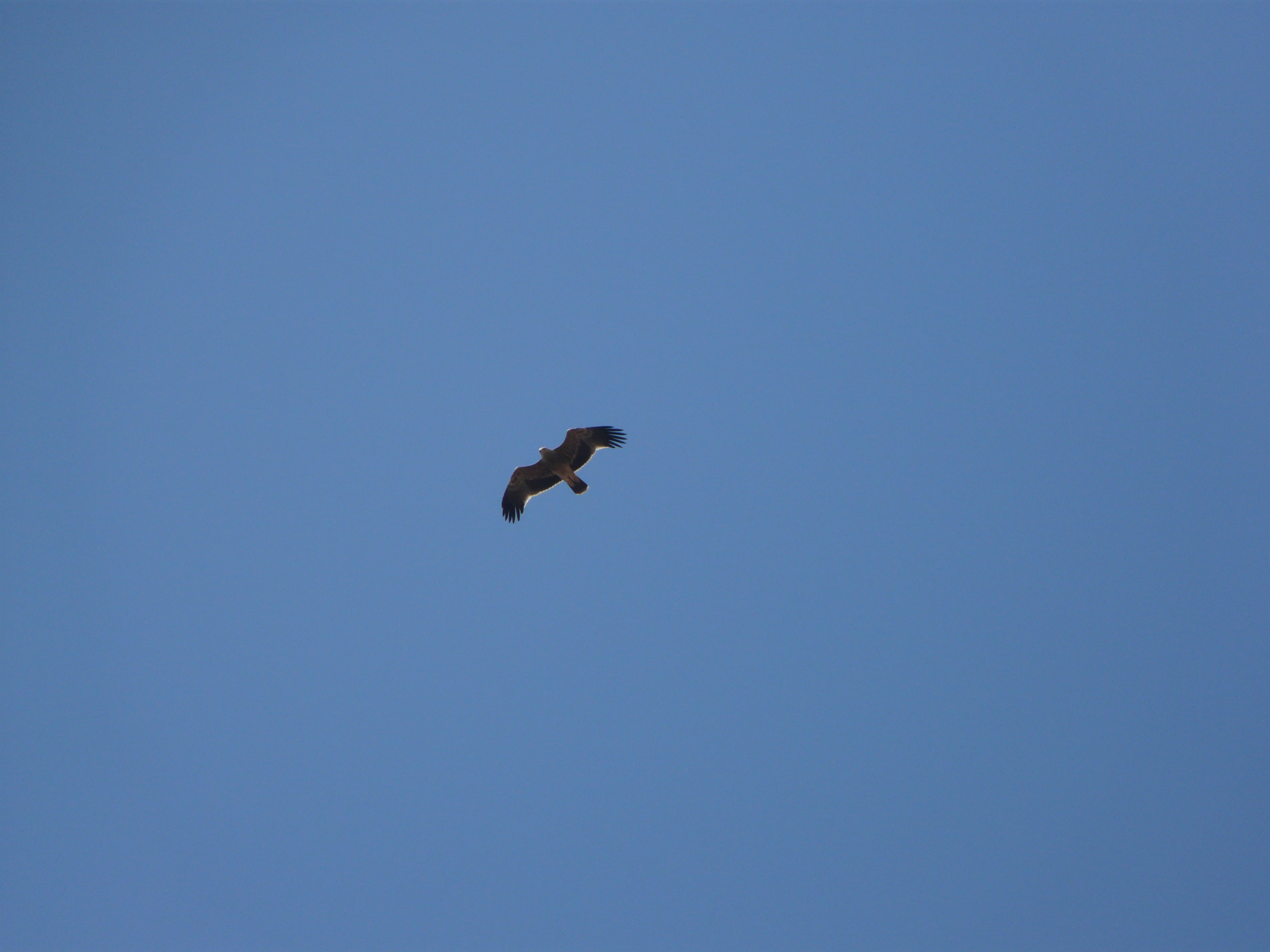
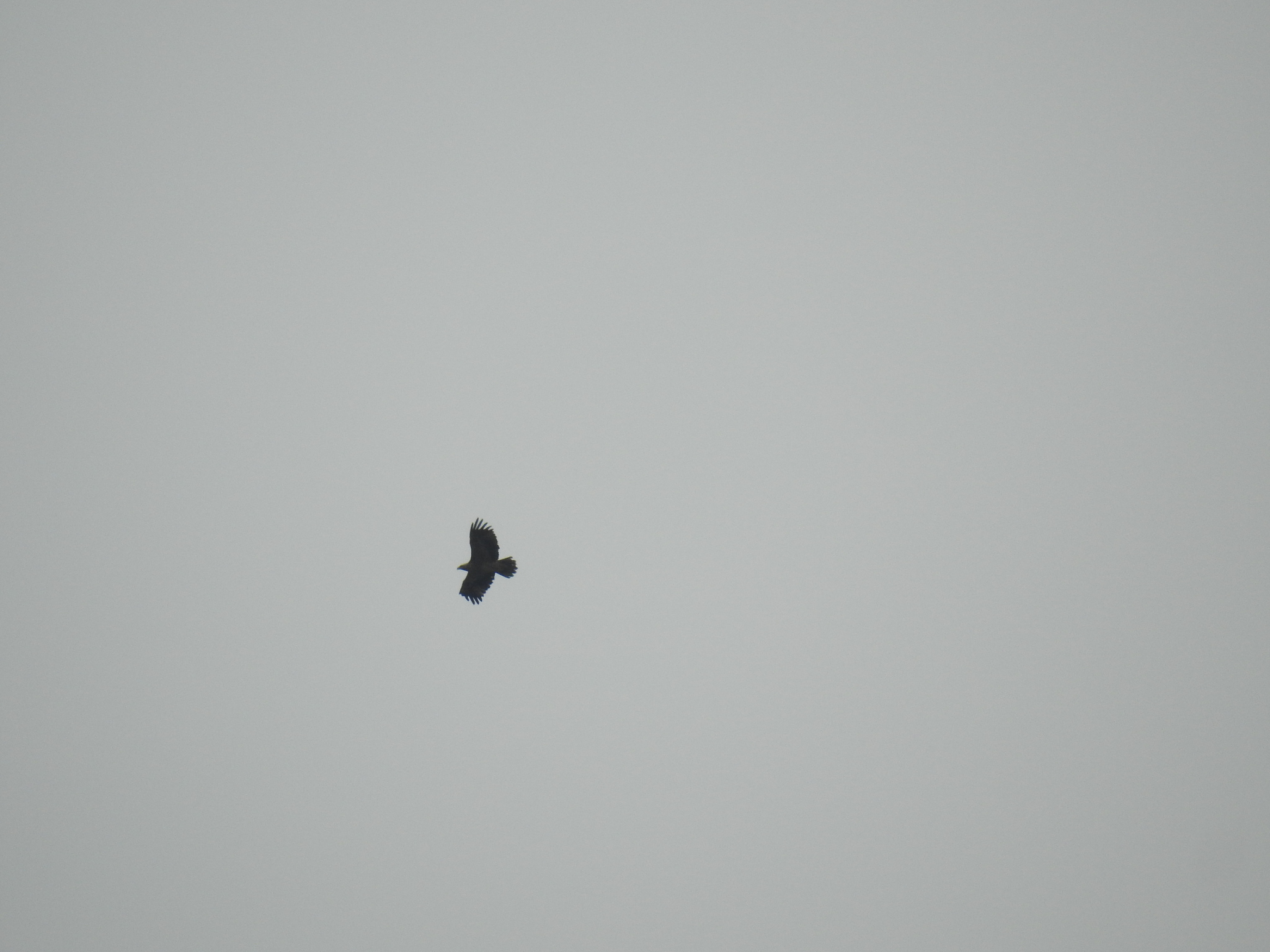
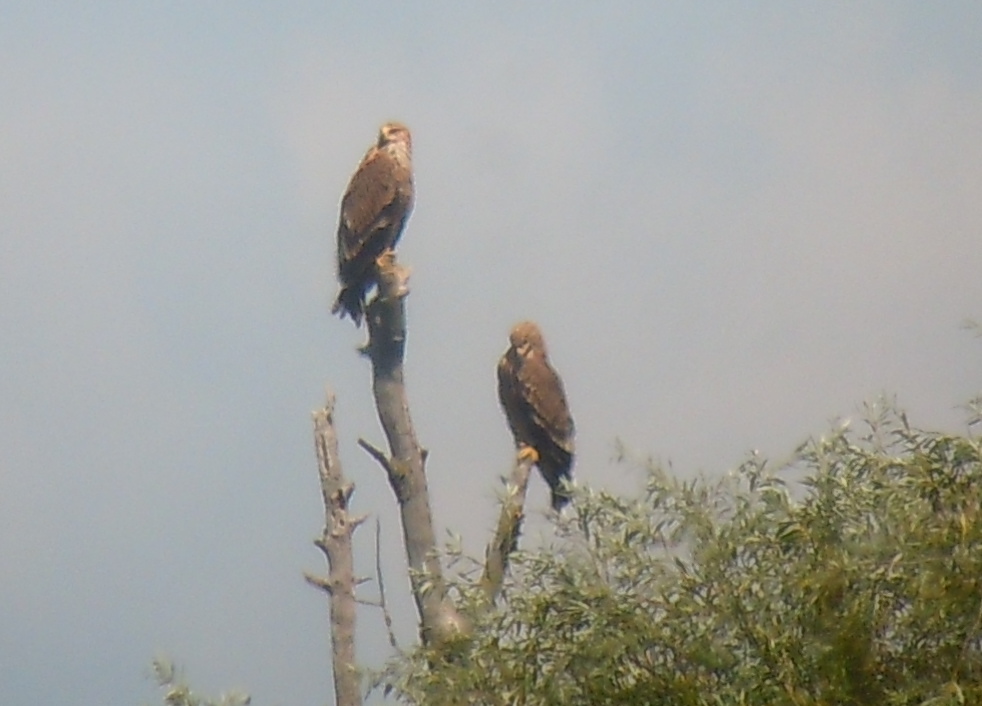
This large eagle approaches the average size of the genus Aquila. Adults measure 68-90 cm in length with a wingspan of 1.76-2.2 m. Females are up to 10% larger linearly and 40% heavier than males, weighing 3.26-4.54 kg compared to 2.45-2.72 kg for males. The species has a relatively long, thick neck, large head and bill, long legs with heavy feathering, and a square-tipped tail. Adults are predominantly blackish-brown with a creamy-gold coloring on the crown, hindneck, and neck sides, plus conspicuous white shoulder patches. The tail shows narrow dark bars over grey with a broad black subterminal band. Juveniles are pale tawny-buff with heavy dark brown streaking on the breast, mantle, and wings. Full adult plumage is attained at 5-6 years of age. In flight, the projecting head and flat-held wings create a distinctive silhouette.
Identification
Compared to the golden eagle, this species is smaller, more slender, and less powerful despite its proportionately larger head and longer neck. Its hallux claw is notably smaller than that of golden eagles. The adult's dark plumage is considerably darker than other Eurasian Aquila eagles, with white shoulder patches and greyish under-tail that distinguish it from similar species. The juvenile's unique tawny-buff coloration with brownish streaking is not matched by any other eagle. Confusion is possible with Spanish imperial eagles, but the eastern species has more restricted white on the shoulder and browner dark feathers. The steppe eagle lacks the pale overall colors and streaking of juveniles. The flat-winged, large-headed flight profile is distinctive among European and Asian eagles.
Distribution & Habitat
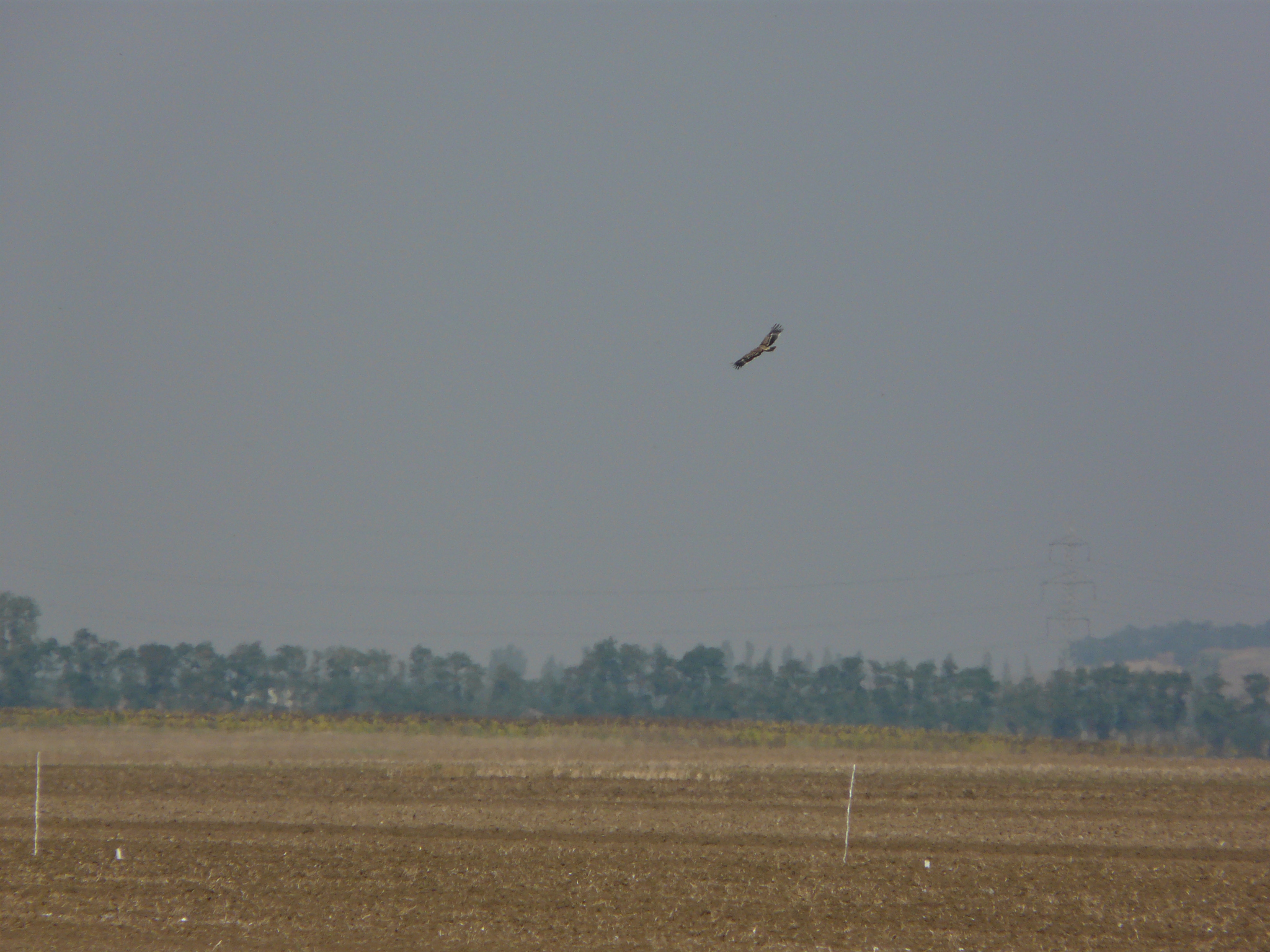
The breeding range extends from eastern Austria and the Czech Republic through Hungary, the Balkans, and Ukraine across Russia to Siberia and the Russian Far East. It continues through the Caucasus, Central Asia, northern Mongolia, and northwestern China, with isolated populations in Turkey, Cyprus, and northern Iran. Most populations are migratory, wintering in northeastern Africa, the Middle East, South Asia, and East Asia. Some residency occurs in western and southern parts of the range. It inhabits open country with scattered trees, forest-steppe mosaics, riparian zones, and agricultural areas with trees. It winters in grasslands, plains, semi-desert, and wetlands from sea level to 1,800 m, occasionally higher on passage.
Behavior & Ecology
This eagle is a ground-hunting predator that watches for prey from low perches before making short stoops or longer dives. It also forages by low soaring and occasionally pirating food from other raptors. Prey spectrum includes 200-300 species, with small to medium mammals (hares, ground squirrels, hamsters, voles) and birds being most important. Carrion is consumed year-round but especially in winter. Breeding pairs are solitary, constructing massive stick nests in large trees. Courtship displays include aerial circling, mock dives, and talon grappling. The breeding season runs from late March to September. Clutches of 2-3 eggs are incubated for 43 days, with 1-2 fledglings typical. The call is a deep, harsh bark repeated rapidly, deeper and more resonant than the golden eagle.
Conservation
IUCN Red Listed as Vulnerable since 1994 due to a small and declining global population. Primary threats include persecution, nest tree removal, prey depletion, poisoning, and electrocution on power lines. European populations have shown encouraging recovery, with numbers increasing from 363-604 pairs in 1996 to 1,800-2,200 pairs by 2000-2010, particularly in Hungary where pairs grew from 10-15 in the 1970s to around 105 by the late 2000s. However, steep declines continue in some regions, particularly around Lake Baikal where the population crashed from 250-300 pairs in the 1950s to just 70 pairs by 1999. Global population is estimated at 3,600-4,400 breeding pairs, with the strongest populations in Russia and Kazakhstan.
Culture
Historically revered in Eastern Europe as a 'sacred bird,' this eagle was believed to divert hailstorms and protect farmers' crops. The monarchy of Austria-Hungary adopted it as a heraldic animal. Despite this traditional respect, the species suffered from the widespread persecution of birds of prey that spread through Europe from the 17th century onward, contributing to its dramatic population decline.
Source: Wikipedia · CC BY-SA 3.0
Taxonomy
- Order
- Accipitriformes
- Family
- Accipitridae
- Genus
- Aquila
- eBird Code
- impeag1
Distribution
breeds central Europe to Mongolia; winters to Africa, northern India, and China
Data Sources
Species description from Wikipedia, licensed under CC BY-SA 3.0.
Bird images and sounds sourced from GBIF, contributed by citizen scientists worldwide under Creative Commons licenses.
Taxonomy data from AviList 2025.