
Bonelli's Eagle
Aquila fasciata
白腹隼雕
Introduction
Bonelli's eagle (Aquila fasciata) is a medium-large booted eagle with a discontinuous range spanning the Iberian Peninsula, Mediterranean Basin, South Asia, and Indonesia. It inhabits hilly, rocky mountainous terrain with accessible cliff nesting sites. The species is characterized by a relatively stout body and long, fully feathered legs. It typically soars at high altitudes and often occurs in pairs. Classified as Least Concern on the IUCN Red List, European populations have experienced significant declines with local extinctions, while Asian and North African populations remain more stable. Primary threats include habitat loss, electrocution from power infrastructure, and persecution.
Description
This medium-sized eagle measures 55-74 cm in total length with a wingspan of 143-163 cm in males and 156-180 cm in females. Males average 1.94 kg while females are substantially larger at 2.62 kg, displaying the reverse sexual dimorphism typical of raptors. The plumage is dark brown above with pale margins to the feathers, particularly broad on the median wing coverts, creating a somewhat lighter appearance. Adults have a variable white patch on the mantle and display a grey tail with obscure darker bars, a broad blackish subterminal band, and a creamy white tip. The underparts are cream-colored with sparse blackish-brown streaks, most concentrated on the breast and upper flanks. The eyes are yellow to yellow-orange in adults, the cere and feet pale yellow. The species has a medium-sized head on a long neck, strong bill, relatively long tail, and notably long, well-feathered legs giving an athletic impression.
Identification
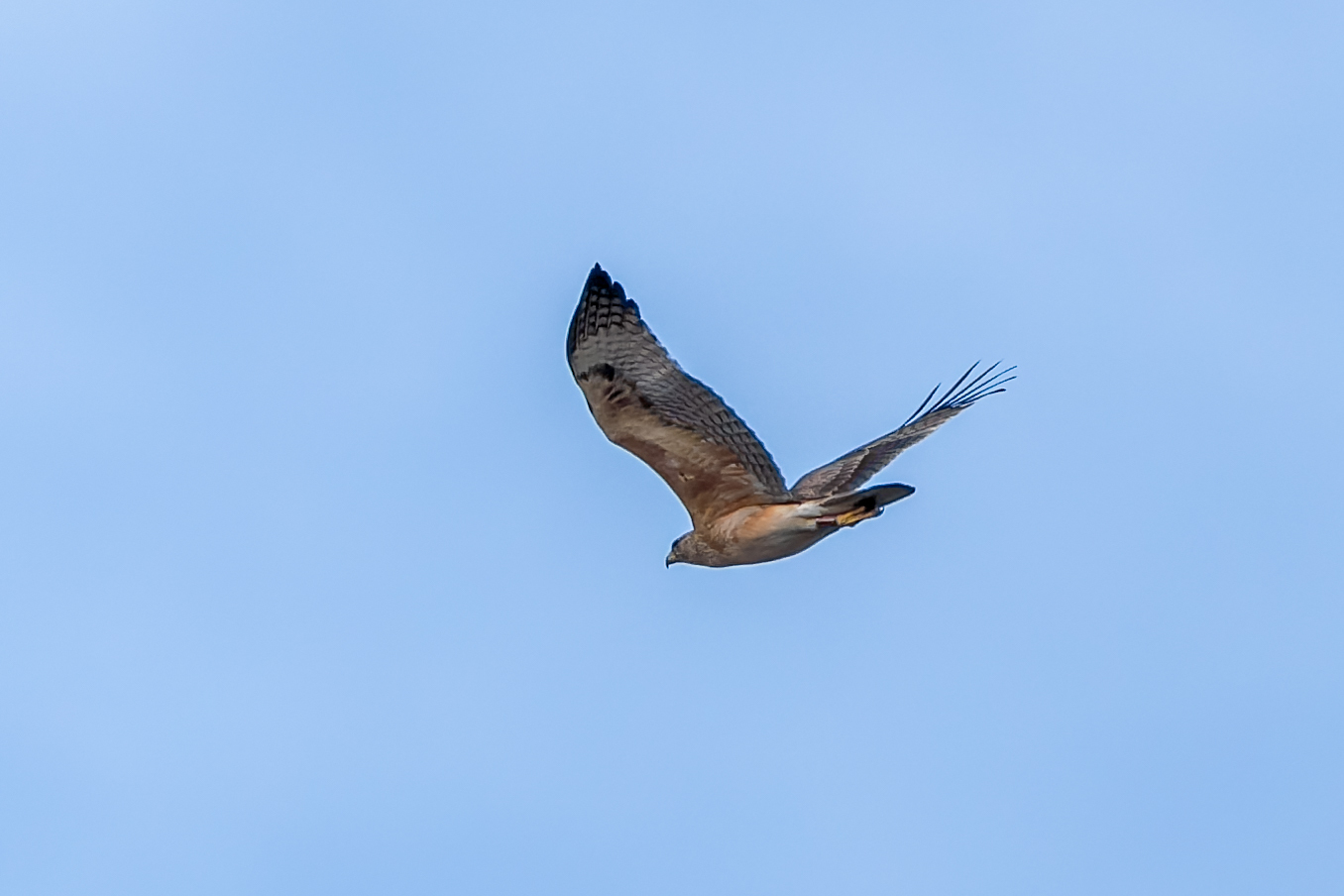
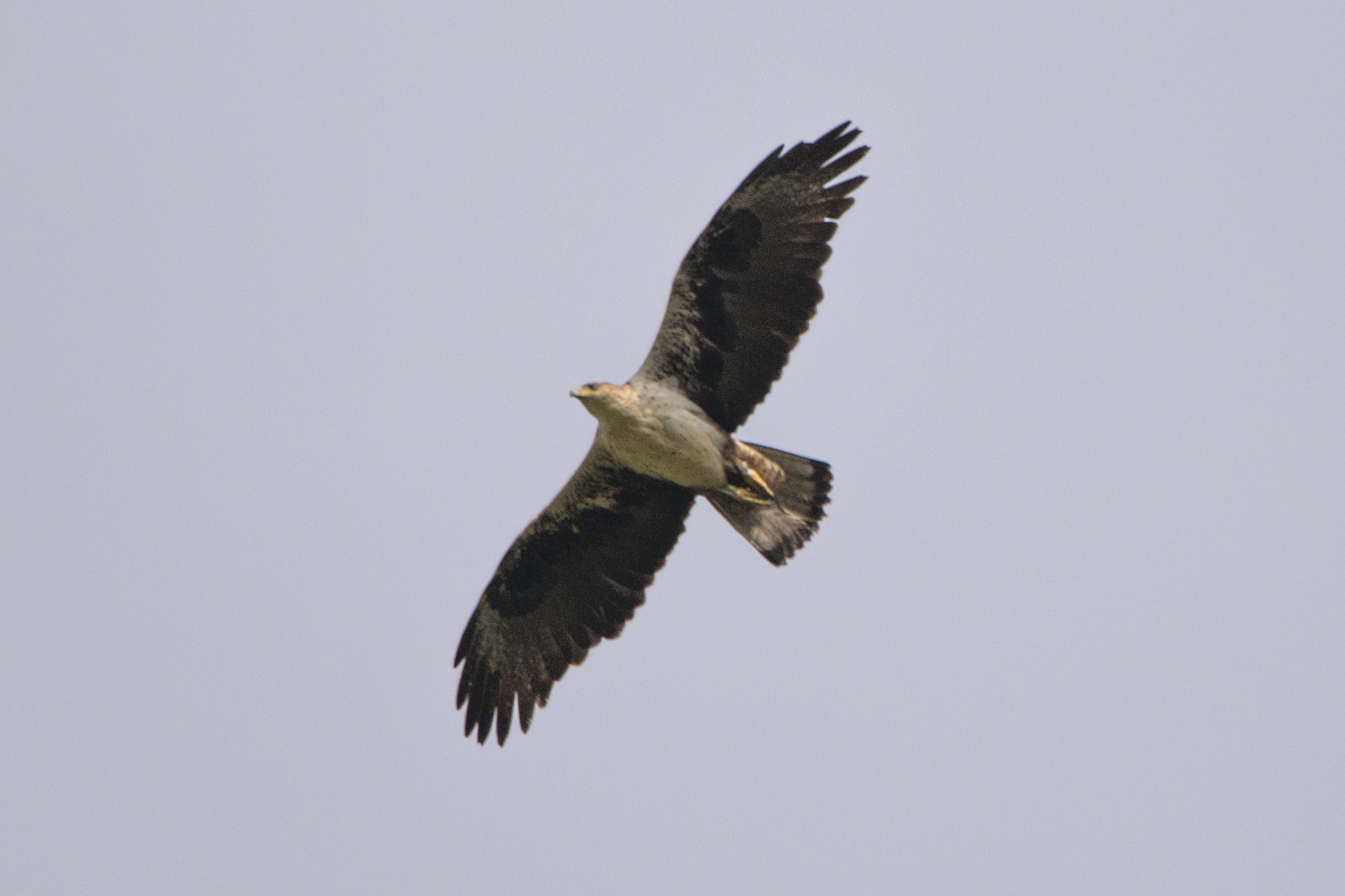
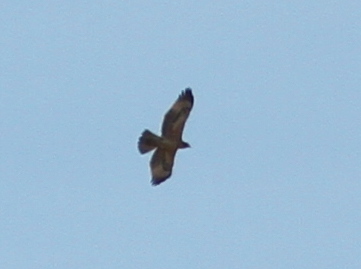
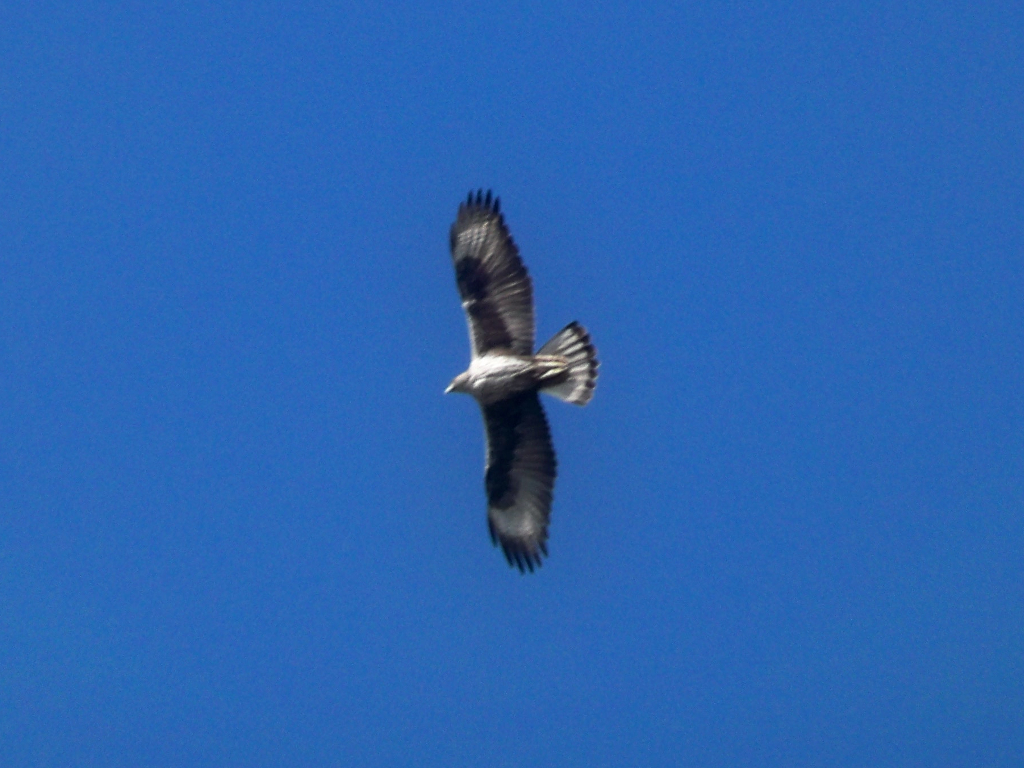
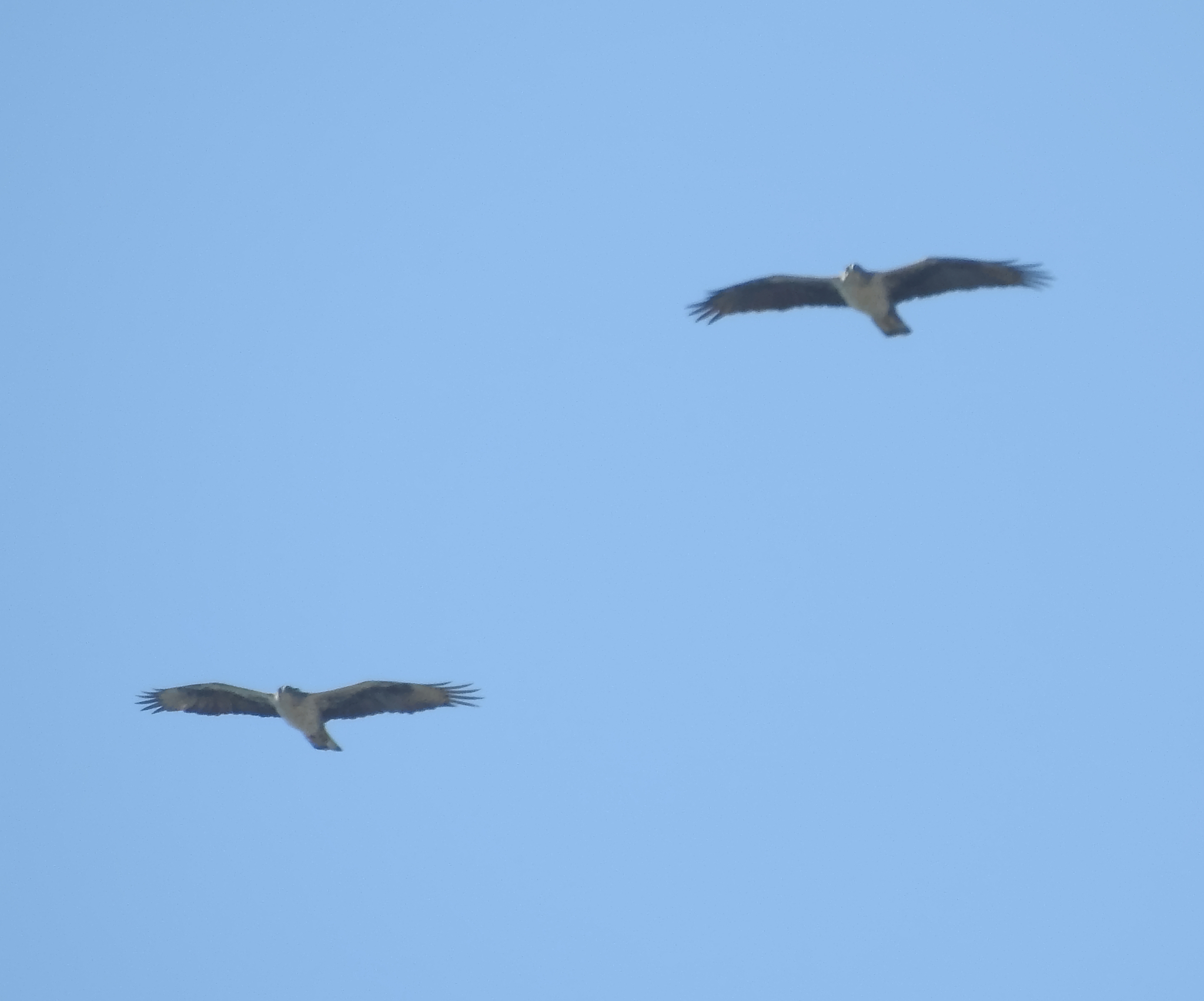
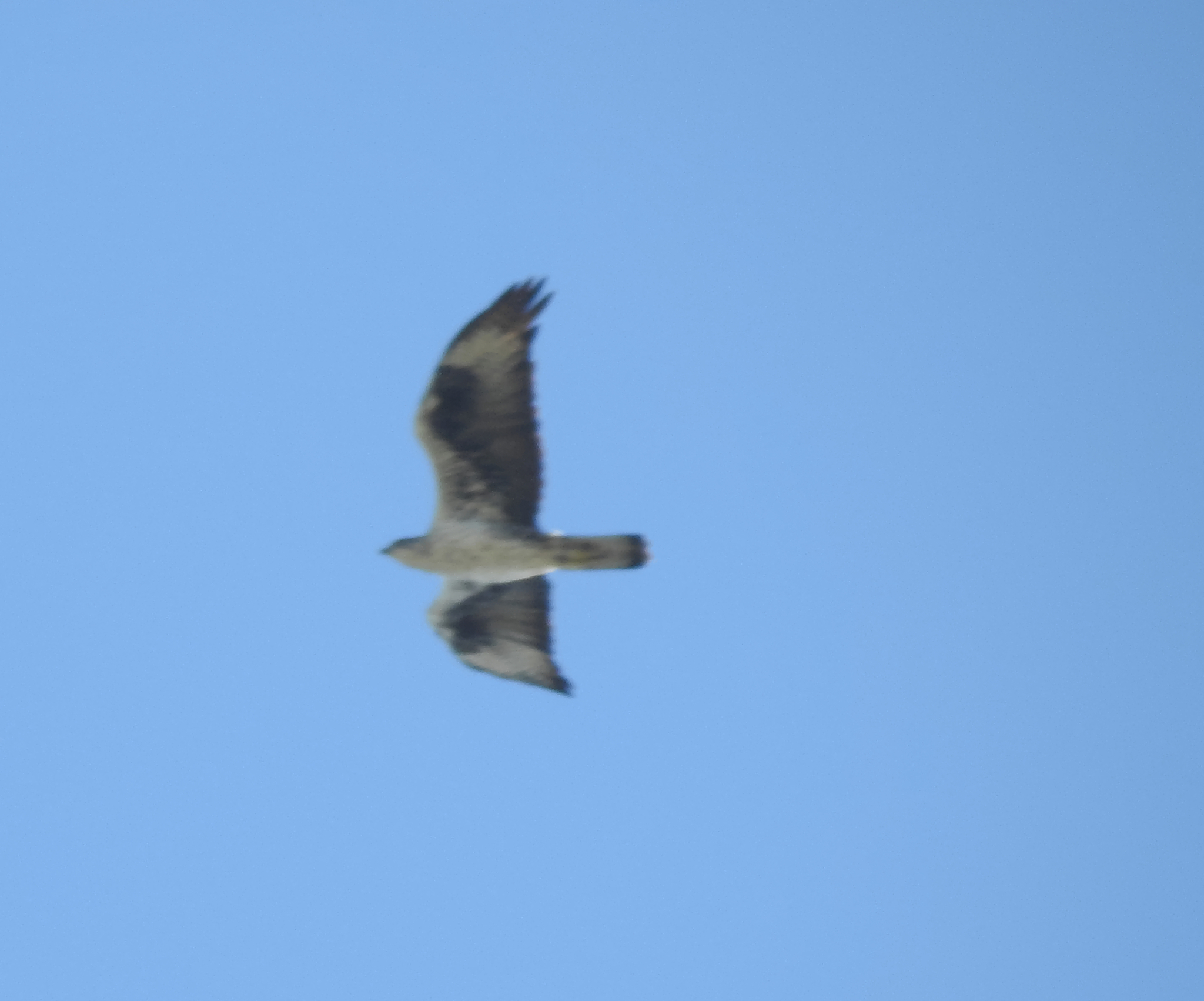
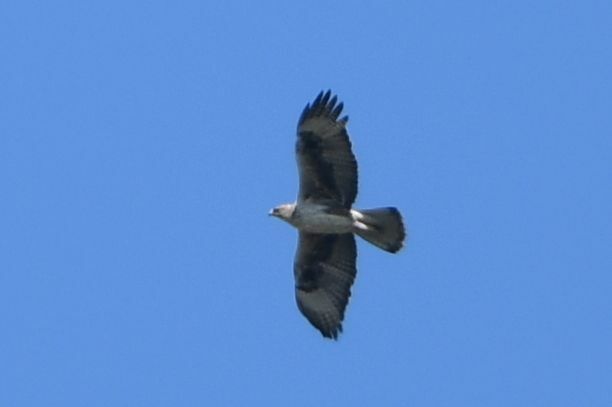
Bonelli's eagle is unmistakable when shape, flight action, and plumage are considered together. In flight, it shows a well-projecting head, broad long wings with a somewhat square-ended appearance, and a long broad tail. The adult's dark upperparts contrast with white lesser coverts and a greyish tail against the blackish central wing band. Juveniles appear lighter brown above with a rusty-brown head and light rufous to warm buff underparts. Confusion with honey buzzard is possible in poor light, but that species is distinctly slimmer with a much smaller head and notched tail. The Eurasian goshawk is smaller with shorter wings and different flight style. Long-legged buzzard shows dark carpal patches and dark trailing wing edges, typically flying in a noticeable dihedral. The short-toed eagle has larger, wedge-shaped wings and a less dark overall pattern. Juvenile booted eagles are similar but smaller and paler overall.
Distribution & Habitat
Bonelli's eagle has a spotty global distribution across multiple continents. It occurs in northwestern Africa from the Anti-Atlas through the Atlas Mountains, and patchily across southern Europe from Portugal and Spain through southern France, Italy (Sicily and Sardinia), and the Balkans. The species ranges through Turkey, the Middle East, and across the Indian subcontinent to Southeast Asia, southern China, and the Indonesian Lesser Sunda Islands. It inhabits hilly, mountainous regions with rocky cliffs and crags up to 1,500 m elevation, though it reaches higher in the Himalayas and Bhutan. Preferred habitats include rocky foothills, canyons, and open woodland with scrubby vegetation. While largely resident, juveniles disperse widely, with records far beyond the breeding range. It frequents arid to semi-moist climates, often near Mediterranean coastlines and major water bodies.
Behavior & Ecology
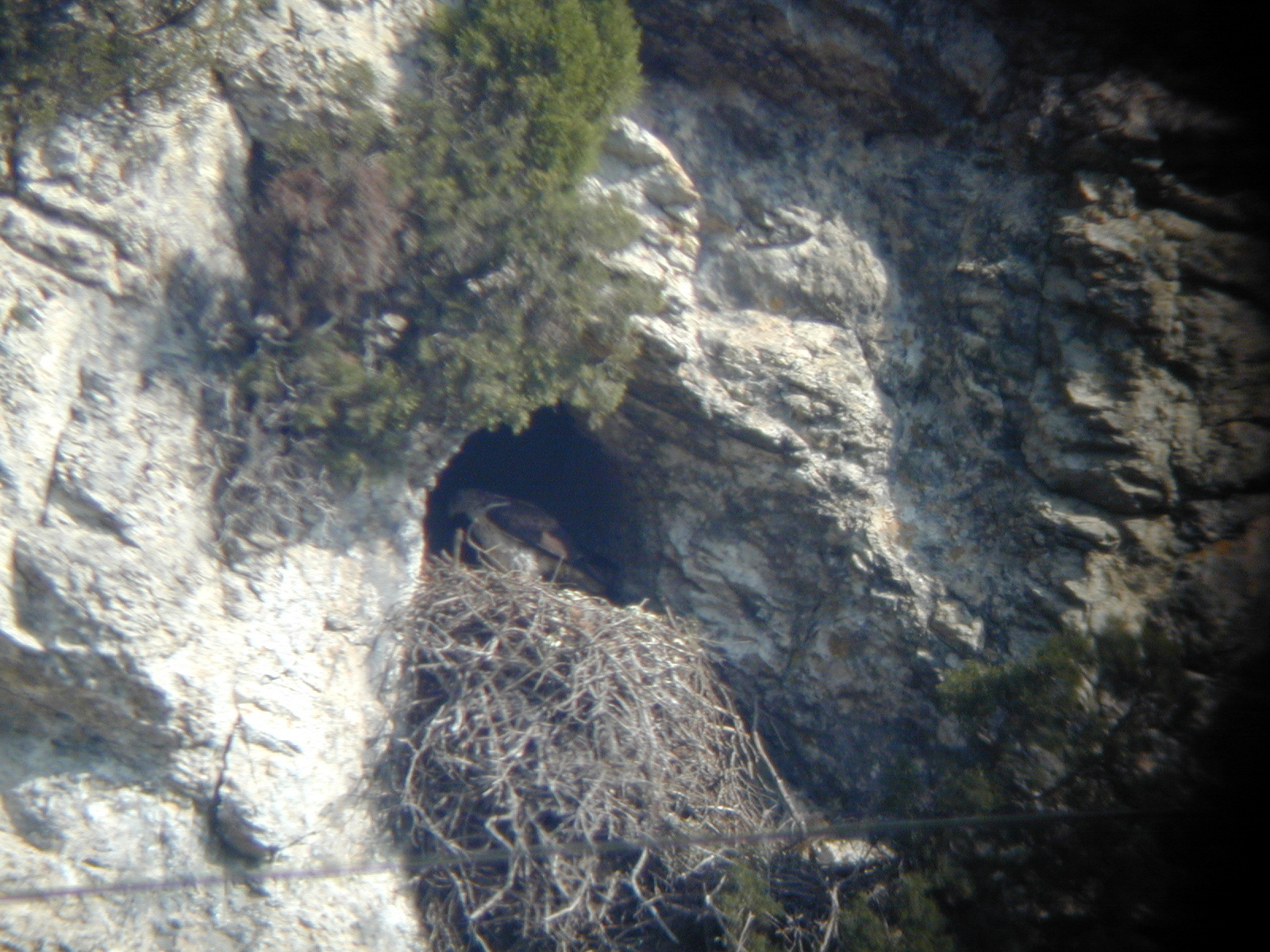
This largely silent species is very aerial, frequently soaring and circling over its territory. It lives solitarily or in breeding pairs, with pairs maintaining bonds for life. The diet is extensive, comprising nearly 200 prey species, with specialization on European rabbits, gamebirds (especially partridges), and pigeons. Hunting methods include still-hunting from concealed perches, low quartering flights reminiscent of harriers, and occasional stoops from height. Tandem hunting by pairs is common. The main call is a loud, shrill scream described as 'yuiii-yuiii-gii-gii' or 'heeeeii-heeeeii', delivered during courtship displays. Breeding occurs from January/February to July in the west and November-September in Asia. The huge nest of sticks is placed on cliff ledges or in tall trees. Clutches of 1-2 eggs are laid, with fledging at 56-65 days. Juveniles disperse distances of 50-536 km.
Conservation
Classified as 'Least Concern' globally but facing severe declines in Europe, where populations have dropped at least 30% since the 1950s. European estimates now total approximately 1,500 breeding pairs, with Spain holding the majority. Local extinctions have occurred across much of the species' European range, including potential extinction in Bosnia and Herzegovina. Major threats include habitat destruction, electrocution from power lines (responsible for 55% of deaths in Spain), and persecution by hunters, gamekeepers, and pigeon-fanciers. In Spain, 424 deaths were recorded between 1990-1996, with 55% due to electrocution and 26% from poisoning and shooting. Wind farms and lead poisoning from bullet fragments in game animals pose additional risks. Conservation measures focus on insulating dangerous power lines, habitat protection, and supplemental feeding programs. Without continued intervention, local extinctions across remaining European populations are likely.
Culture
The species bears the name of Italian ornithologist Franco Andrea Bonelli, who collected the type specimen, likely during an exploration of Sardinia. Some historical texts also referred to this eagle as the 'crestless hawk-eagle.' Beyond its taxonomic nomenclature, there is limited documented cultural significance or folklore associated with Bonelli's eagle compared to larger, more prominent eagle species. The species' relative obscurity in cultural traditions may reflect its specialized habitat preferences and patchy distribution, which kept it less visible to human populations historically compared to more widespread raptors.
Source: Wikipedia · CC BY-SA 3.0
Taxonomy
- Order
- Accipitriformes
- Family
- Accipitridae
- Genus
- Aquila
- eBird Code
- boneag2
Subspecies (2)
-
Aquila fasciata fasciata
Mediterranean basin to India, southern China, and Indochina
-
Aquila fasciata renschi
Lesser Sundas
Data Sources
Species description from Wikipedia, licensed under CC BY-SA 3.0.
Bird images and sounds sourced from GBIF, contributed by citizen scientists worldwide under Creative Commons licenses.
Taxonomy data from AviList 2025.