Sandhill Crane
Antigone canadensis
沙丘鹤
Introduction
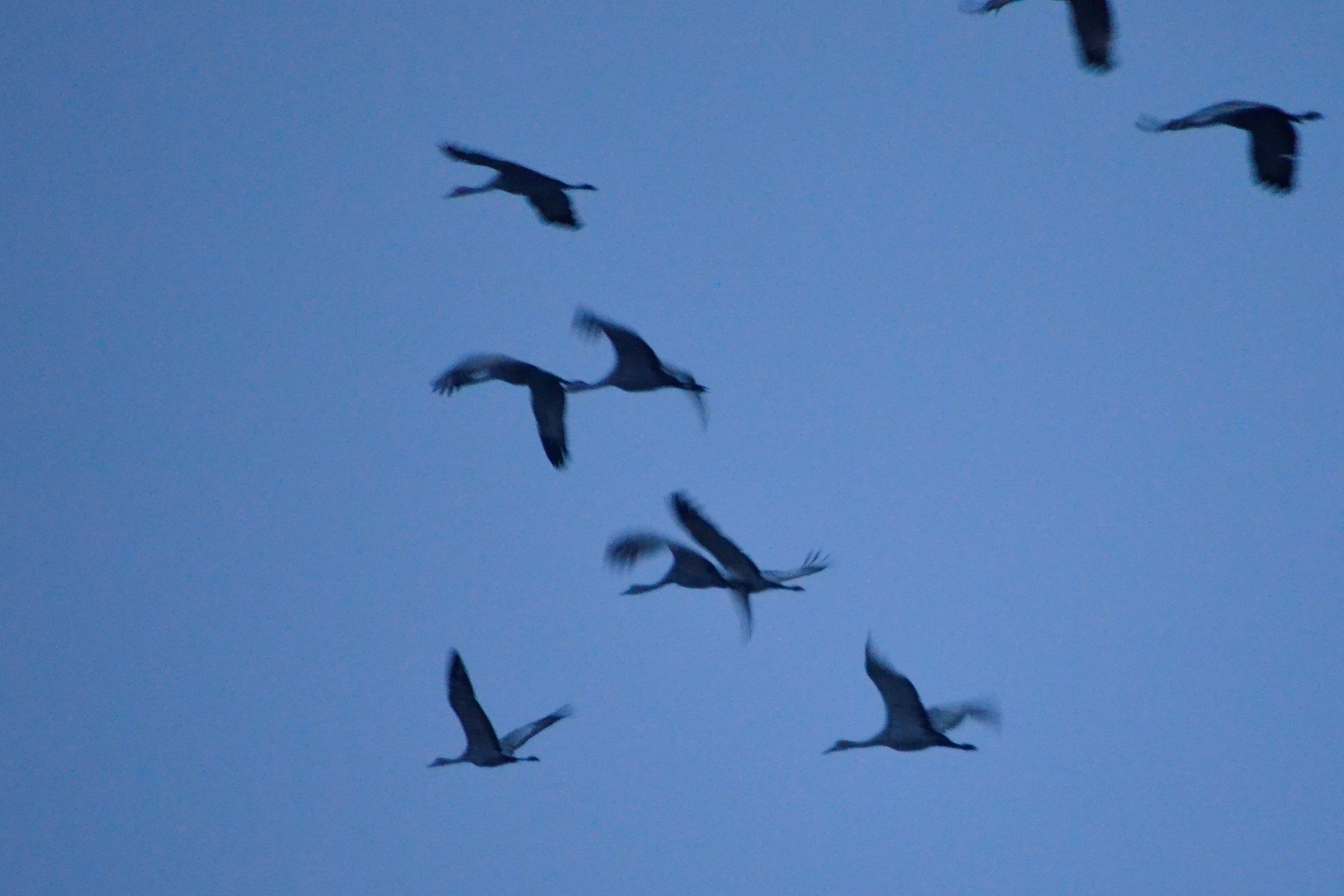
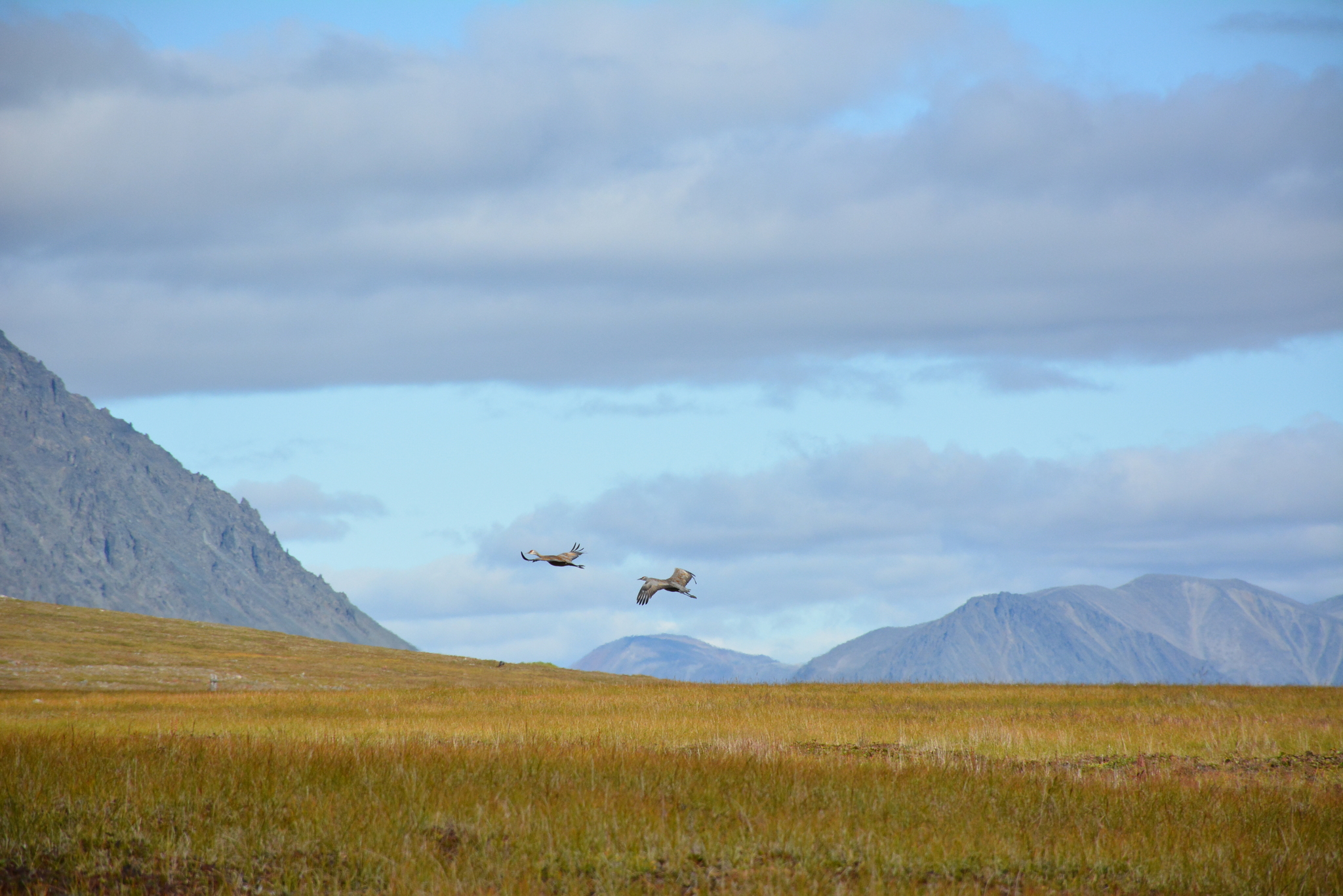
The sandhill crane is a North American bird species with fossil records dating back 2.5 million years. During spring and fall migrations, hundreds of thousands concentrate at key stopover sites, with the Platte River valley in Nebraska hosting up to 450,000 birds annually. Their loud, trumpeting calls are audible from great distances. The species inhabits wetland and prairie habitats. Distinctive behaviors include elaborate unison calling between mates and young colts accompanying parents. The species can soar for hours on thermals with minimal wing flapping.
Description
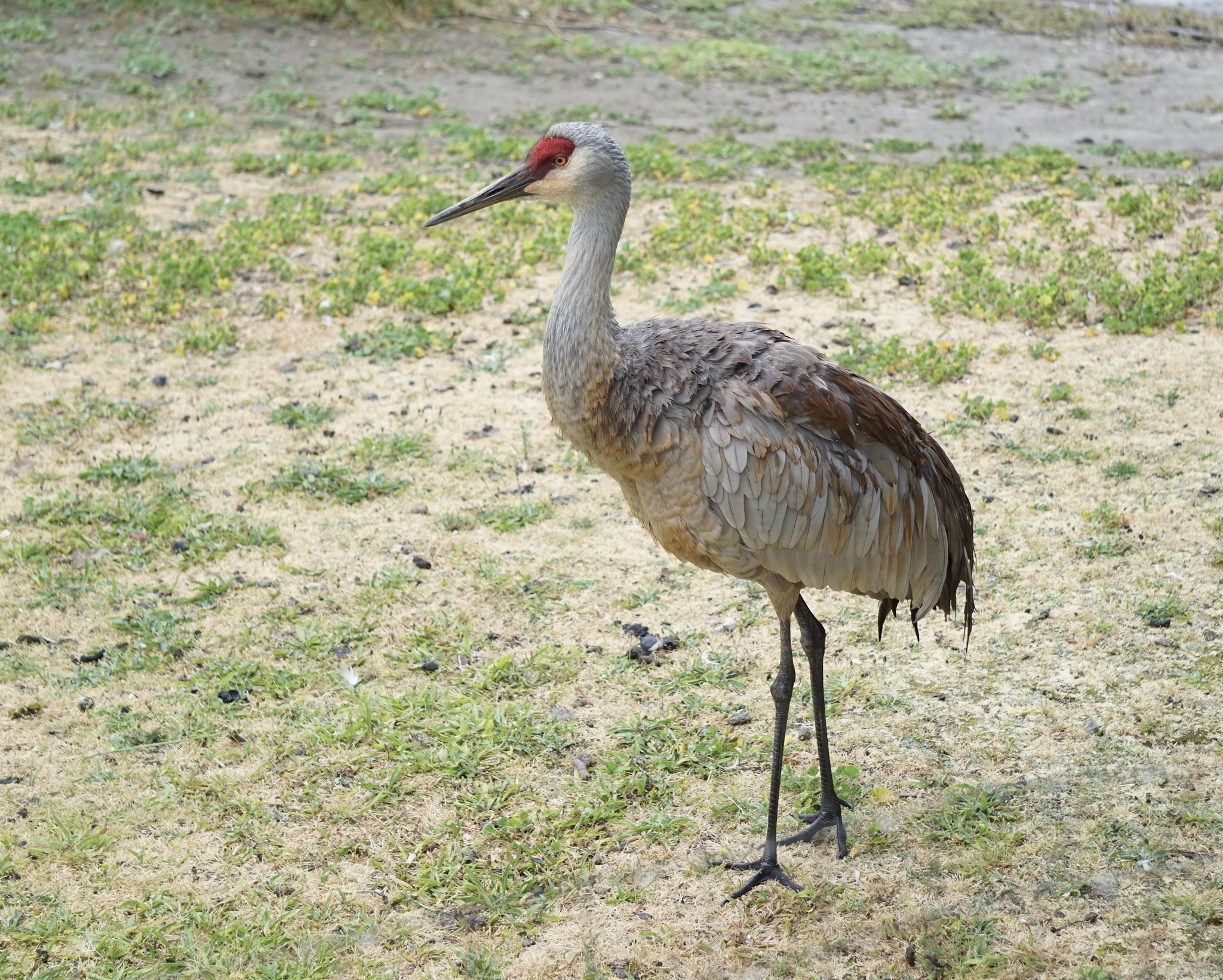
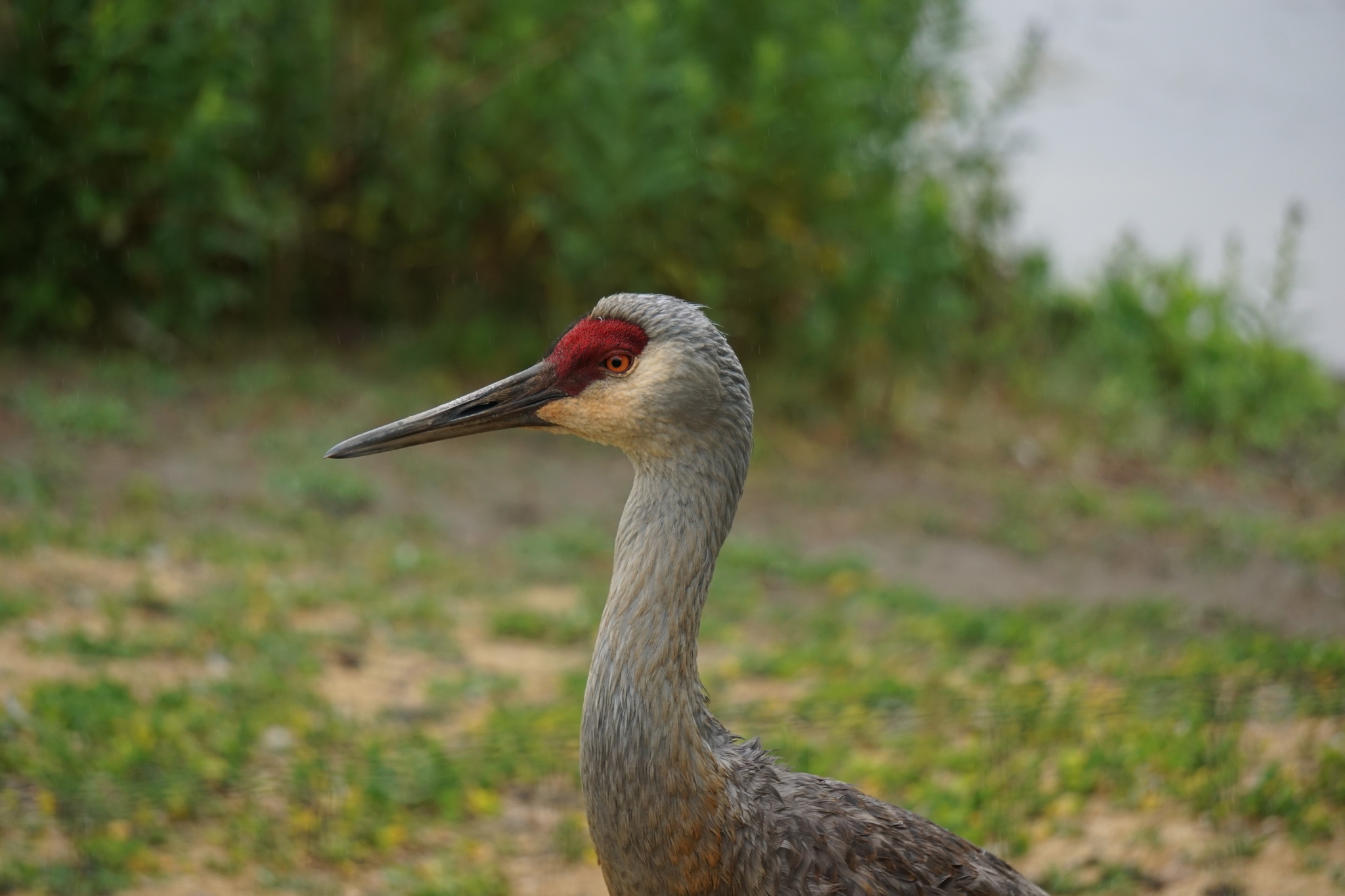
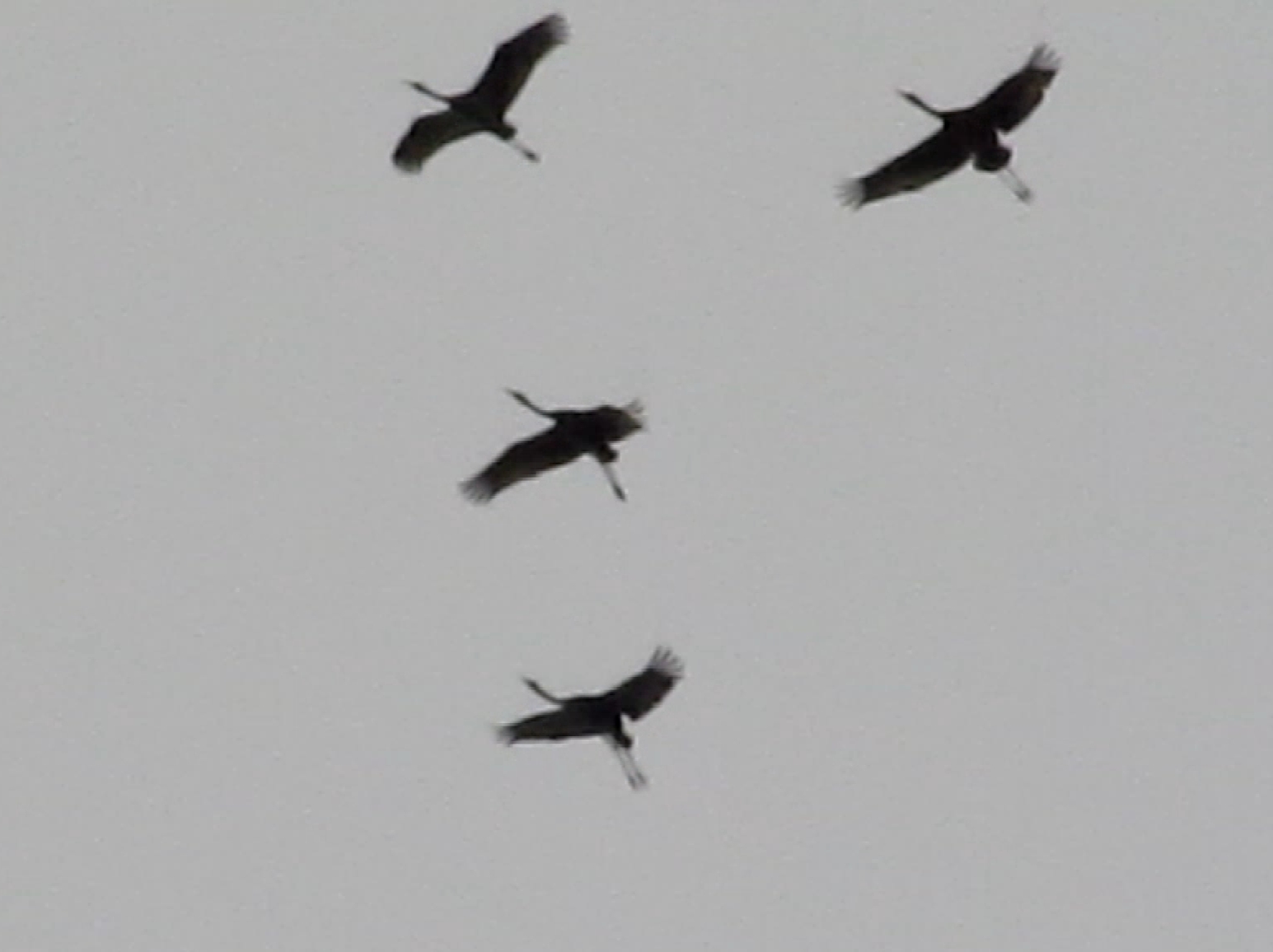
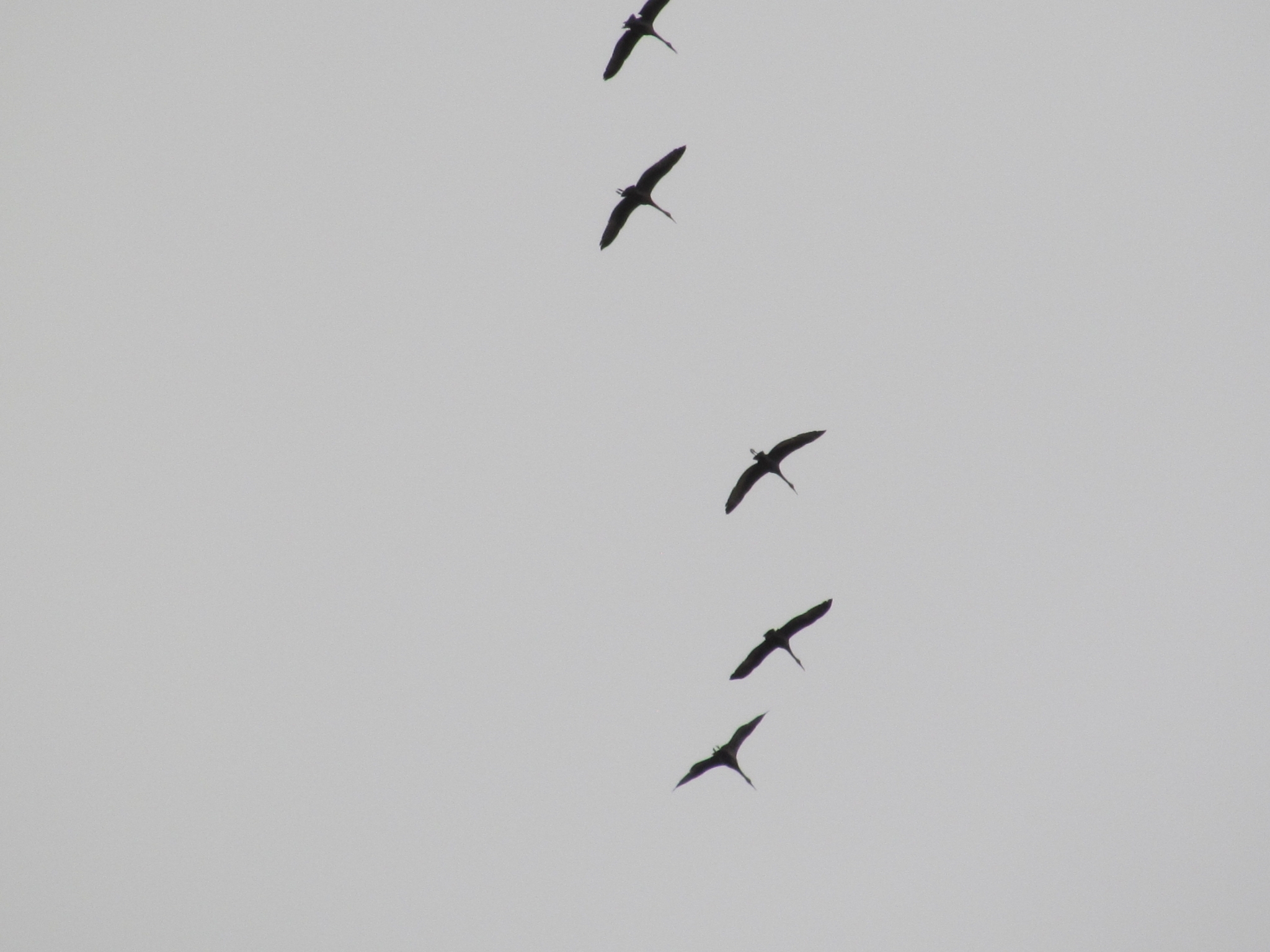
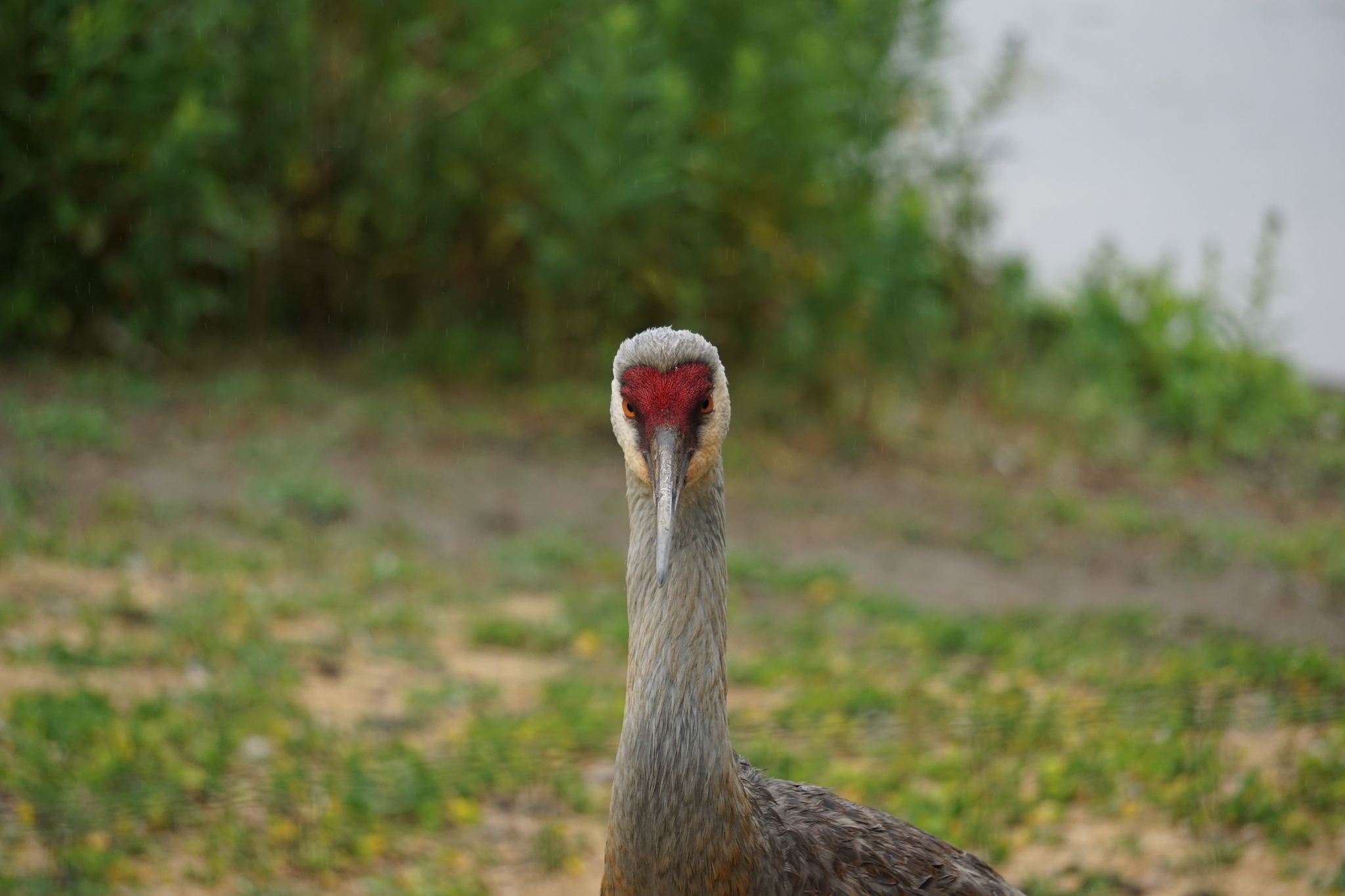
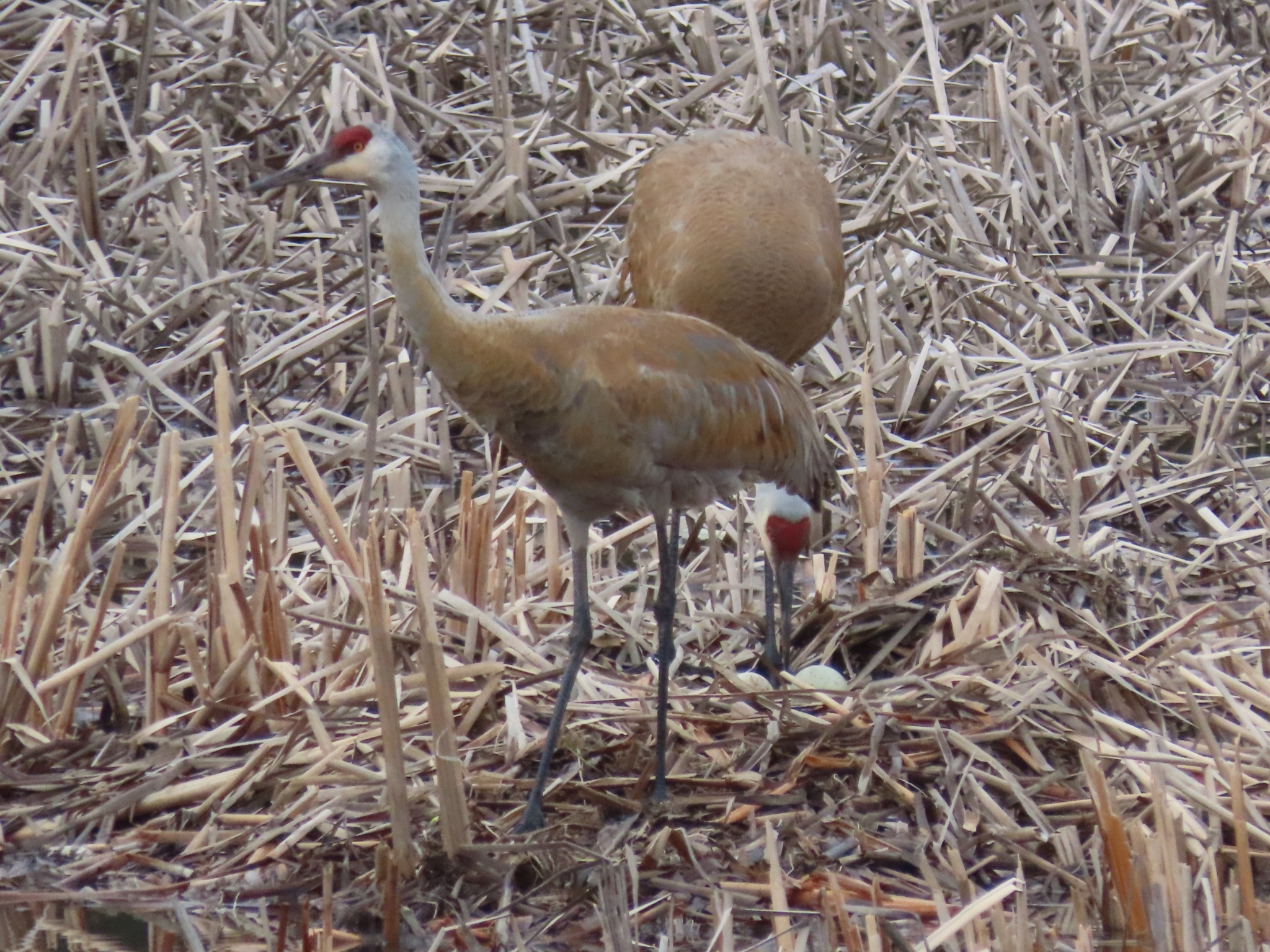
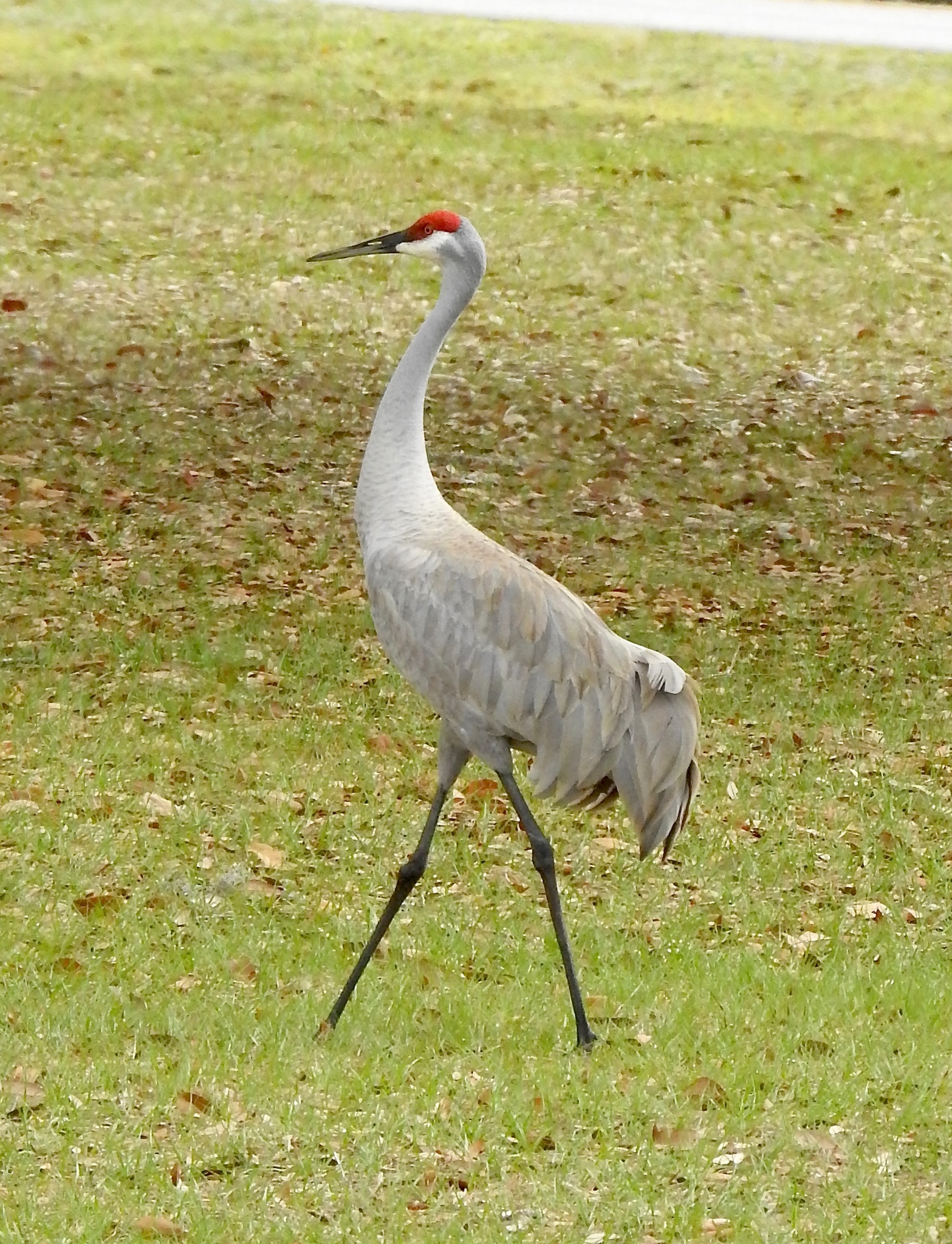
These imposing birds stand 80 to 136 cm tall with a substantial 200 cm wingspan. Adults display overall gray plumage that becomes notably worn and stained during breeding season, taking on a nearly ochre coloration. The most striking features are the vivid red foreheads and white cheeks contrasting with long, dark, pointed bills. In flight, their long necks remain straight while equally long dark legs trail behind. The sexes appear identical in plumage. Juveniles lack the characteristic red forehead and instead show reddish-brown upperparts with gray underparts. Body weight varies considerably across subspecies, with males averaging 4.57 kg and females 4.02 kg, though weights range from 2.7 to 6.7 kg depending on population and sex.
Identification
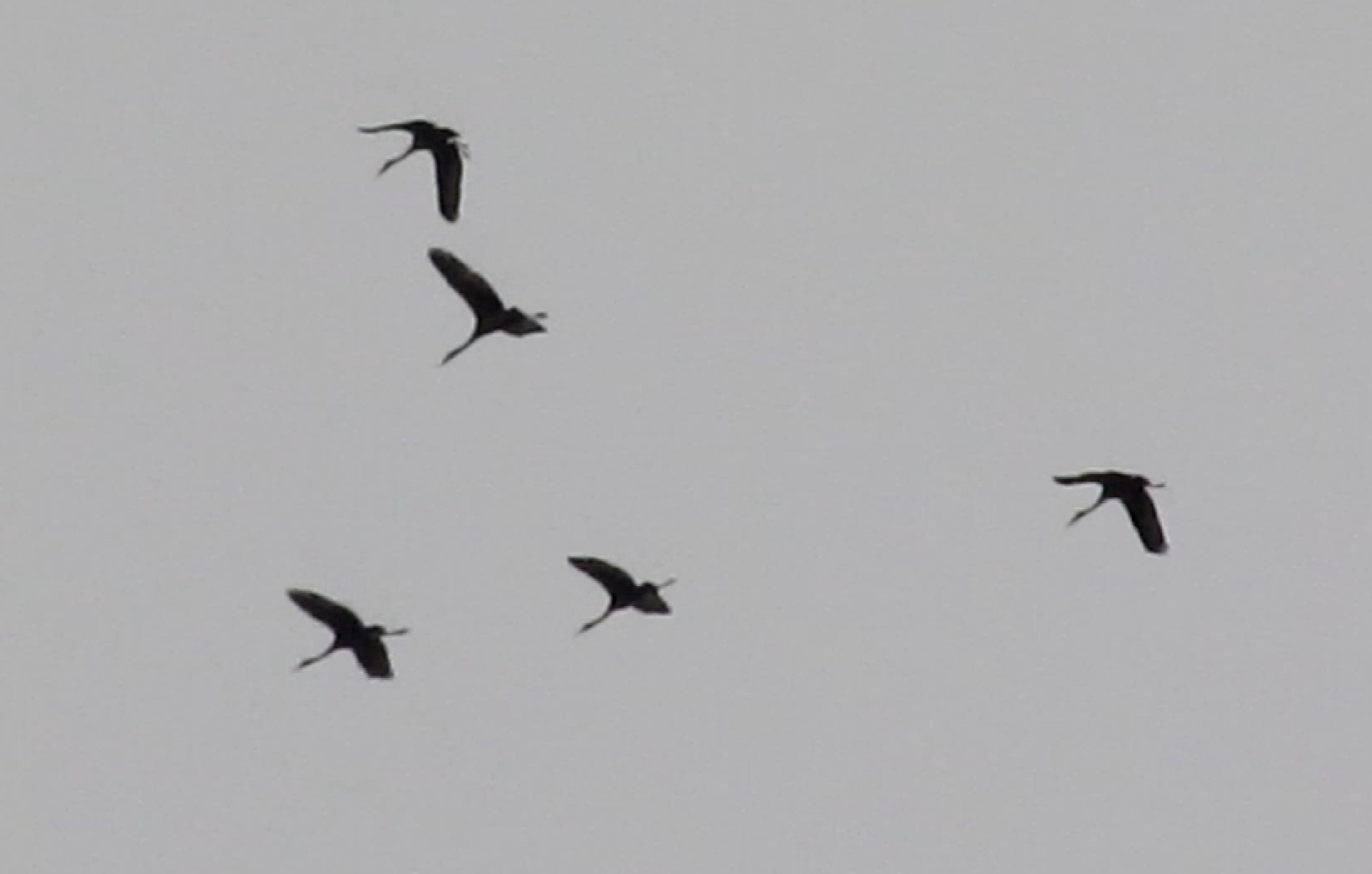
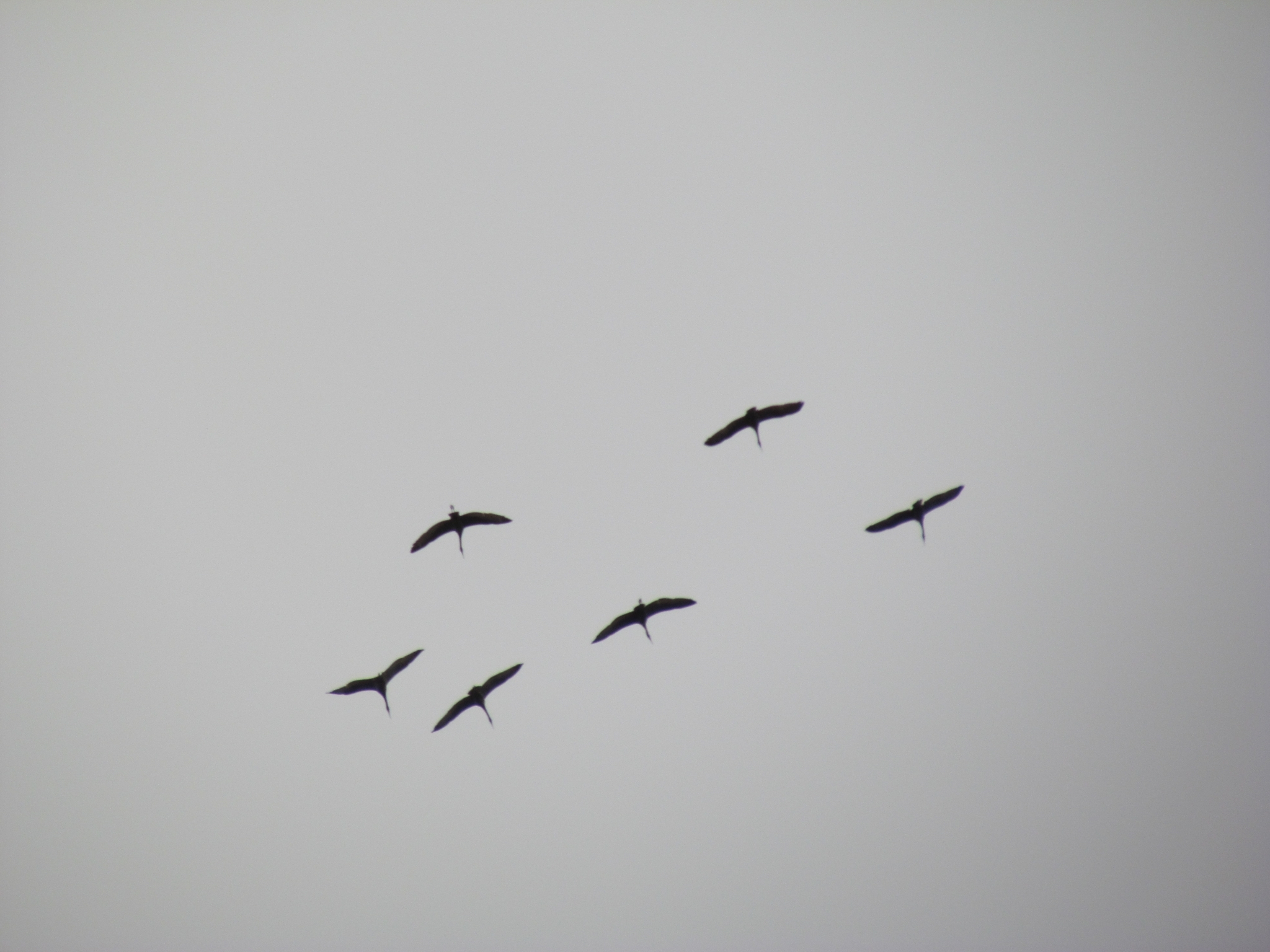
Adults are readily identified by their combination of gray plumage, red forehead, white cheek, and long straight neck. The absence of a red forehead immediately identifies juveniles. In flight, the trailing legs and straight neck distinguish them from herons, which bend their necks into an S-shape. The larger subspecies may be confused with whooping cranes, though whoopers are nearly all white with black wingtips in adults. Accurate subspecies identification often requires location information and size assessment, as differences can be subtle. The three resident subspecies in the southern United States and Cuba are non-migratory and can be distinguished by range.
Distribution & Habitat
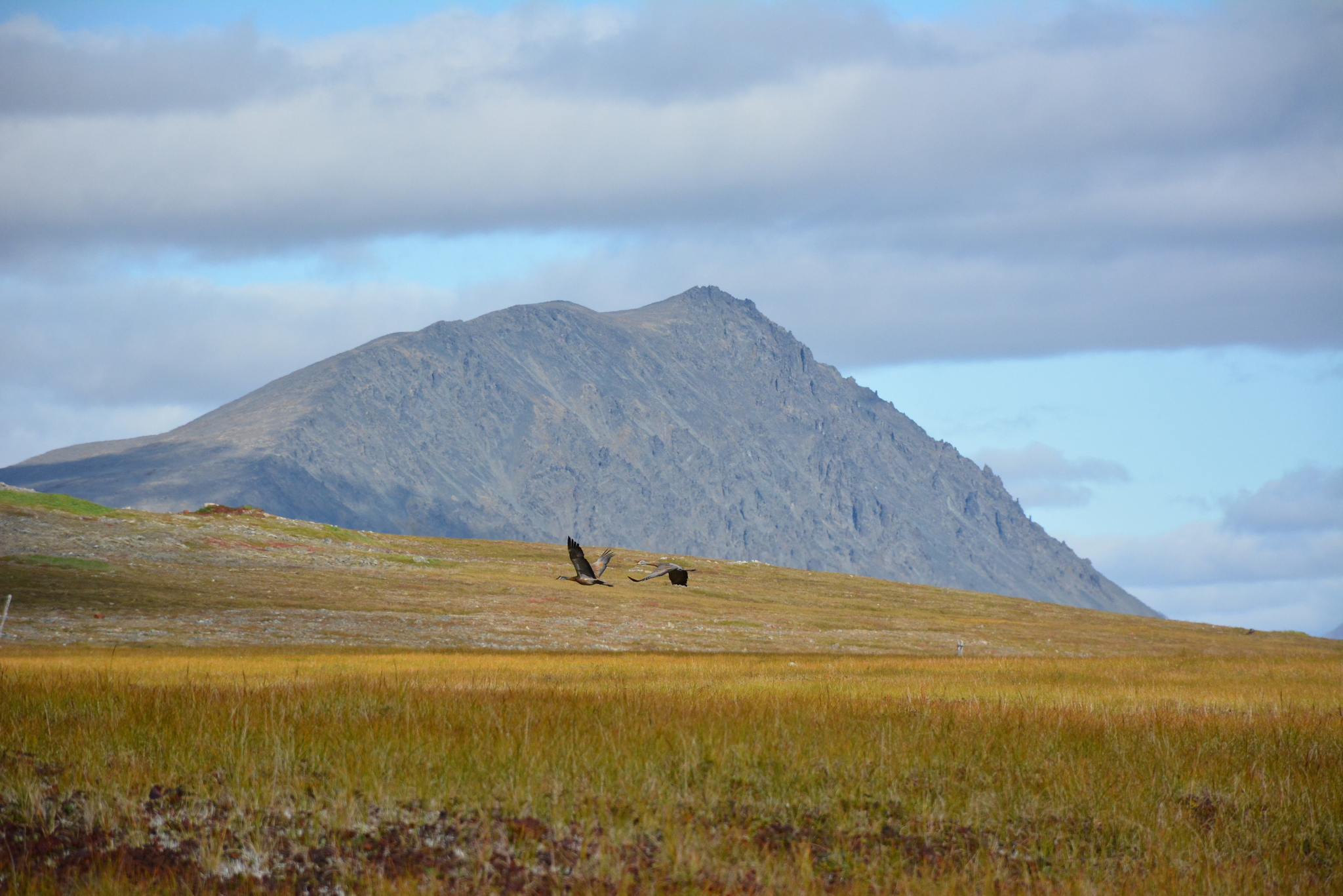
This species breeds across North America from Alaska and northern Canada southward, with the nominate subspecies ranging across extreme northeastern Siberia. Five subspecies are recognized, including the lesser sandhill crane of the far north and the greater sandhill crane of southern Canada and the western United States. Three resident subspecies inhabit the Gulf Coast, Florida and Georgia, and Cuba. Migratory populations winter in the southwestern United States and Mexico, with some populations wintering at sites like Bosque del Apache National Wildlife Refuge where over 10,000 birds may congregate. Habitat includes pastures, open prairies, and freshwater wetlands. Vagrants occasionally appear in China, South Korea, Japan, and Western Europe.
Behavior & Ecology
Sandhill cranes live in pairs or family groups year-round, joining larger flocks during migration and winter. They are primarily herbivorous, feeding on seeds, cultivated grains, berries, and insects while foraging with bills pointed downward in wetlands and uplands. Breeding pairs build nests from plant material in marshy areas, with females laying one to three eggs incubated by both parents for about 30 days. Chicks are precocial and remain with parents for 10 to 12 months. The species is famous for unison calling, where mated pairs perform synchronized duets with the female producing two calls for each male note. They defend themselves and their young from predators through aggressive displays, kicking and striking with their sharp bills.
Conservation
While the species overall is not considered threatened with an estimated 500,000 continent-wide, the three southernmost subspecies face significant challenges. The Mississippi sandhill crane is critically endangered with only about 25 breeding pairs remaining in an intensively managed population. The Cuban sandhill crane numbers around 700 individuals and is threatened by habitat loss, predation from introduced mammals, and poaching. The greater sandhill crane recovered from fewer than 1,000 birds in 1940 to nearly 100,000 today. Main threats include habitat loss, hunting in some states, competition with snow geese for food resources, and vehicle collisions. Conservation efforts include captive breeding programs, habitat management, and reintroduction initiatives.
Culture
The sandhill crane has captured human imagination throughout history, including an unusual modern connection to folklore. The mythical Mothman, reportedly sighted in Point Pleasant, West Virginia from 1966 to 1967, is now believed by some to have originated from misidentified sandhill cranes seen during unusual migration patterns. In 2023, the Mississippi sandhill crane was featured on a United States Postal Service forever stamp as part of the Endangered Species series, based on a photograph from Joel Sartore's Photo Ark. The annual Sandhill Crane Festival at Bosque del Apache National Wildlife Refuge celebrates these birds with thousands of visitors gathering to observe the wintering flocks. Native American traditions and early naturalists documented these cranes long before modern ornithology.
Source: Wikipedia · CC BY-SA 3.0
Taxonomy
- Order
- Gruiformes
- Family
- Gruidae
- Genus
- Antigone
- eBird Code
- sancra
Subspecies (5)
-
Antigone canadensis canadensis
breeds Arctic North America and eastern Siberia; winters southwestern USA and northern Mexico
-
Antigone canadensis nesiotes
resident Cuba including Isla de la Juventud
-
Antigone canadensis pratensis
resident southeastern Georgia and Florida
-
Antigone canadensis pulla
resident Gulf Coast of Mississippi (Jackson County), southeastern USA
-
Antigone canadensis tabida
breeds southern Canada and western and central USA eastward to the Great Lakes; winters to south, from California through Floridae
Data Sources
Species description from Wikipedia, licensed under CC BY-SA 3.0.
Bird images and sounds sourced from GBIF, contributed by citizen scientists worldwide under Creative Commons licenses.
Taxonomy data from AviList 2025.