Sarus Crane
Antigone antigone
赤颈鹤
Introduction
The Sarus Crane is the largest nonmigratory crane species found across the Indian subcontinent, Southeast Asia, and northern Australia. As the world's tallest flying bird, it reaches heights of up to 1.8 meters. The species occupies open wetlands in South Asia, seasonally flooded Dipterocarpus forests in Southeast Asia, and Eucalyptus-dominated woodlands and grasslands in Australia. Foraging occurs in shallow wetlands and marshes where it consumes roots, tubers, insects, crustaceans, and small vertebrate prey. The species forms long-lasting pair bonds, maintains territories, and performs courtship displays featuring loud trumpeting calls, dances, and leaping movements. Breeding occurs during the wet season, with both parents constructing circular nest platforms up to two meters in diameter that rise above the water. Agricultural intensification poses threats, though the species also benefits from wetland crops and irrigation infrastructure. India remains the stronghold for this species, where it lives in association with human settlements and agricultural landscapes. Populations outside India have been significantly reduced or eliminated from much of their historic range.
Description
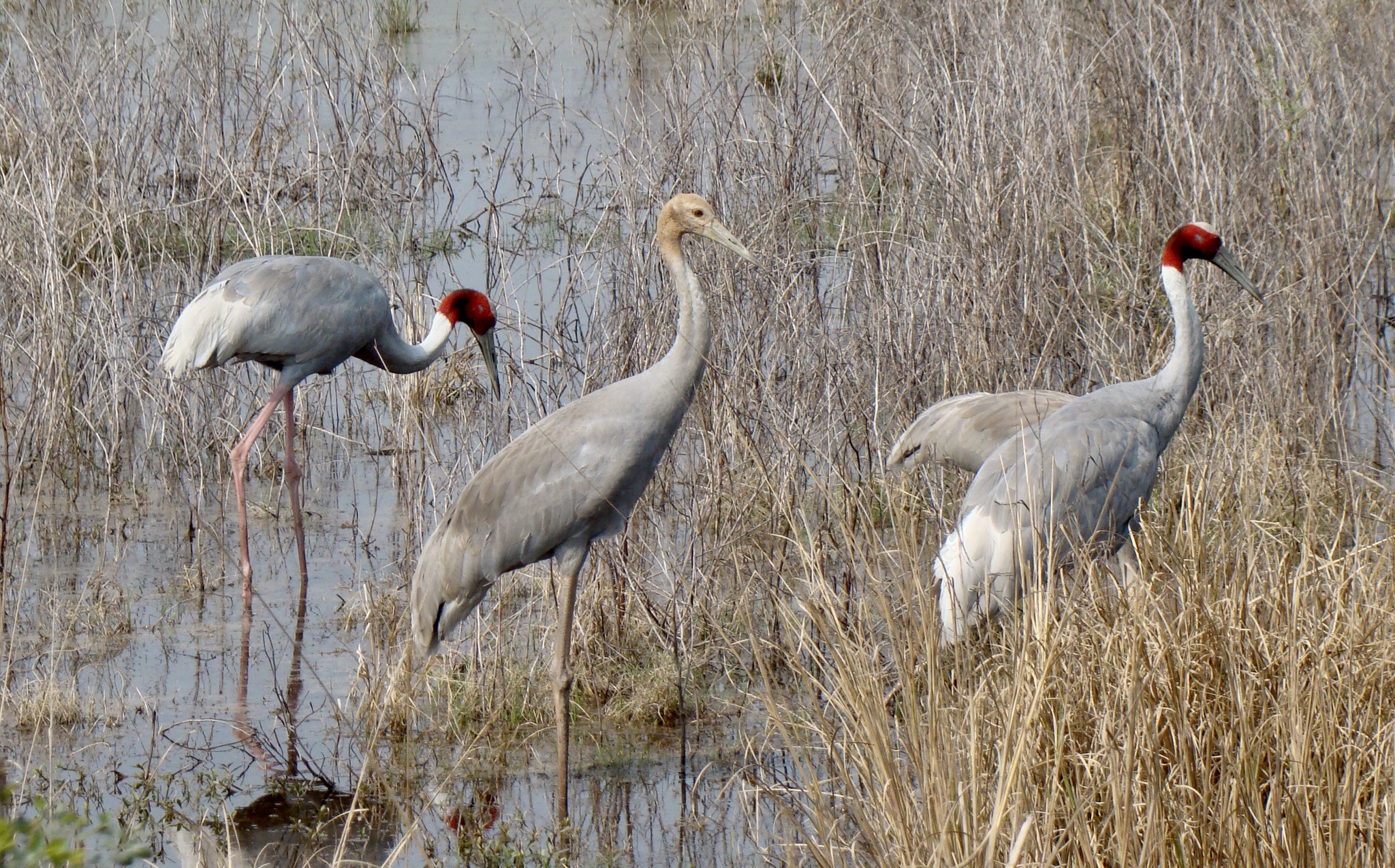
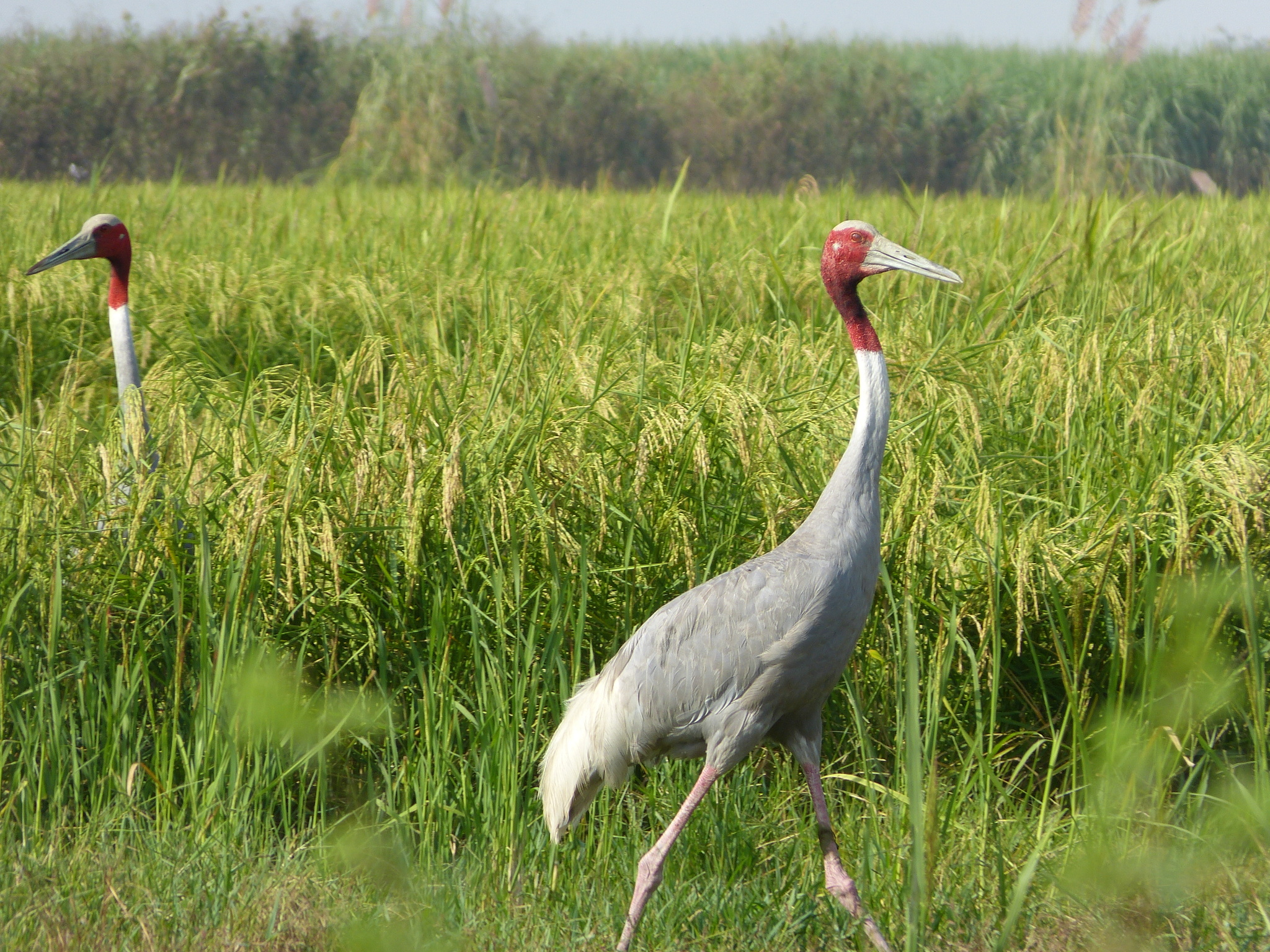
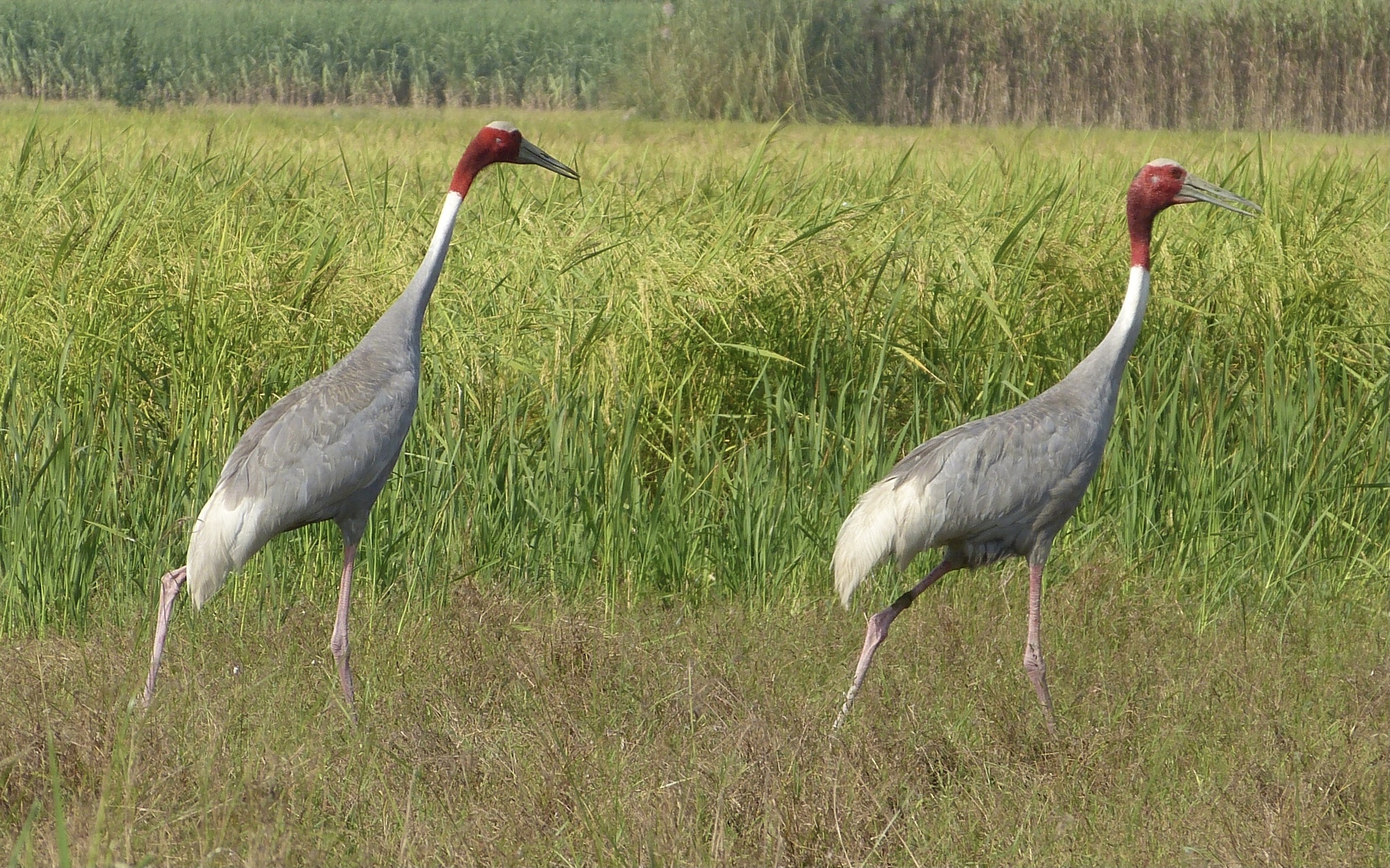
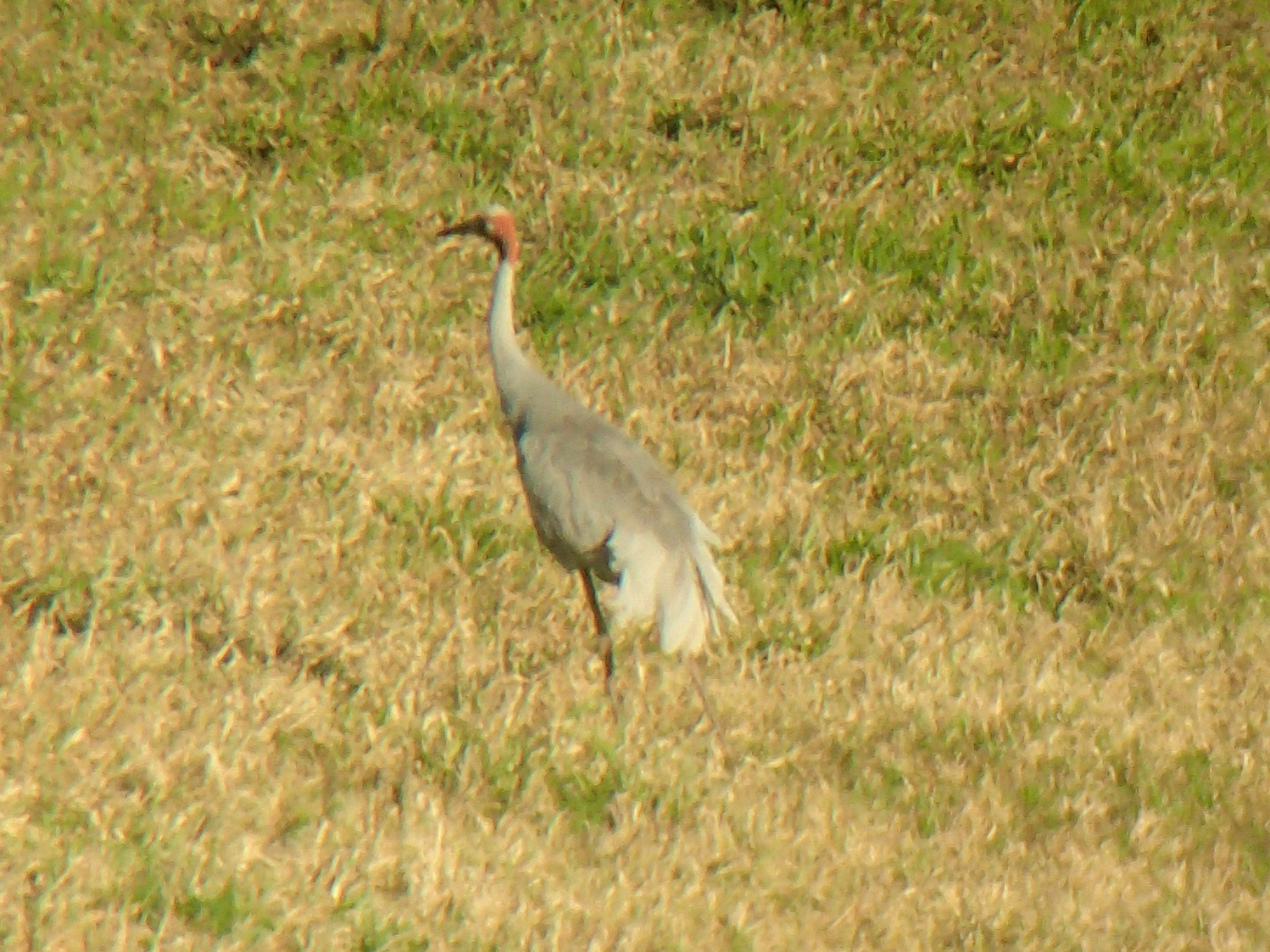
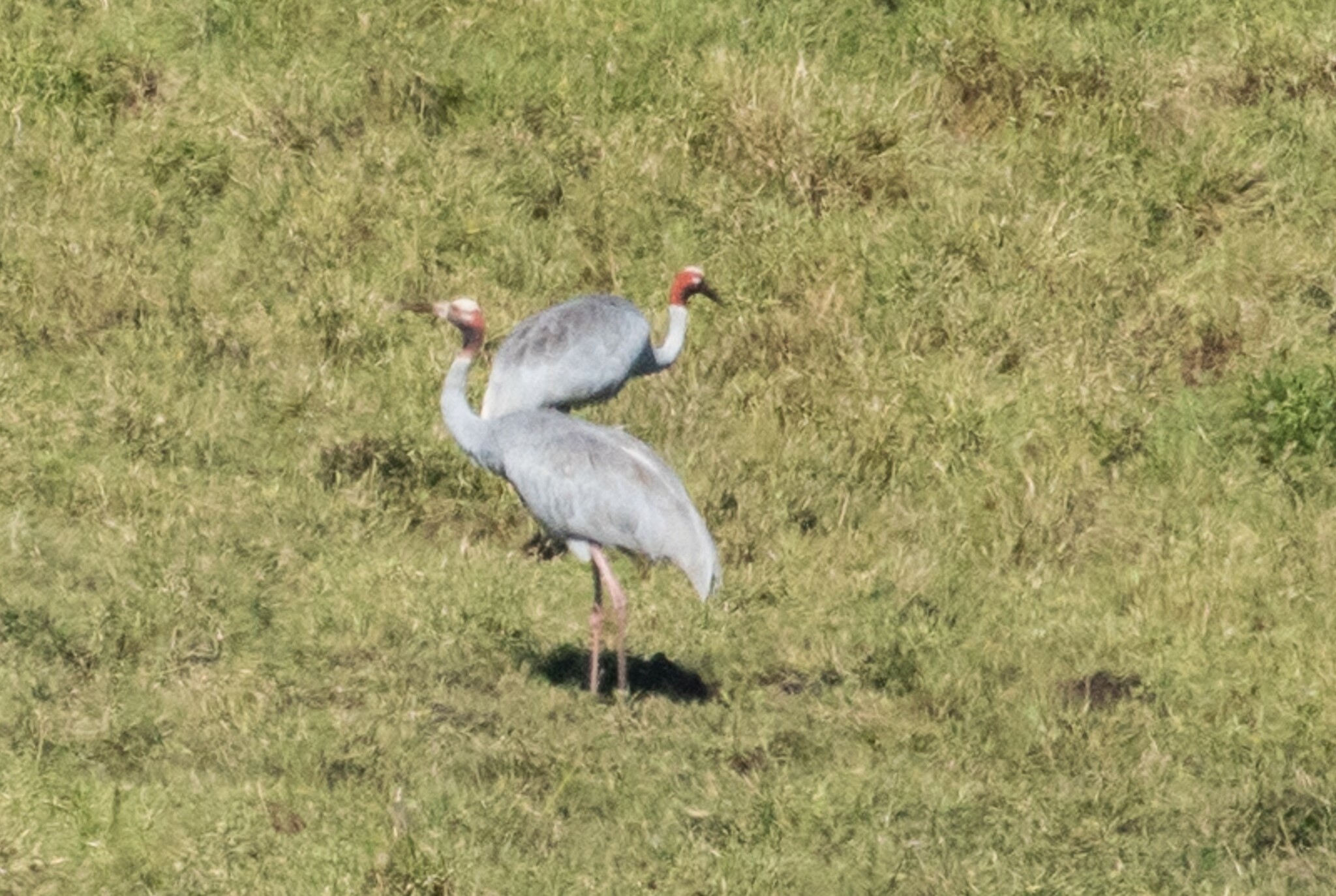
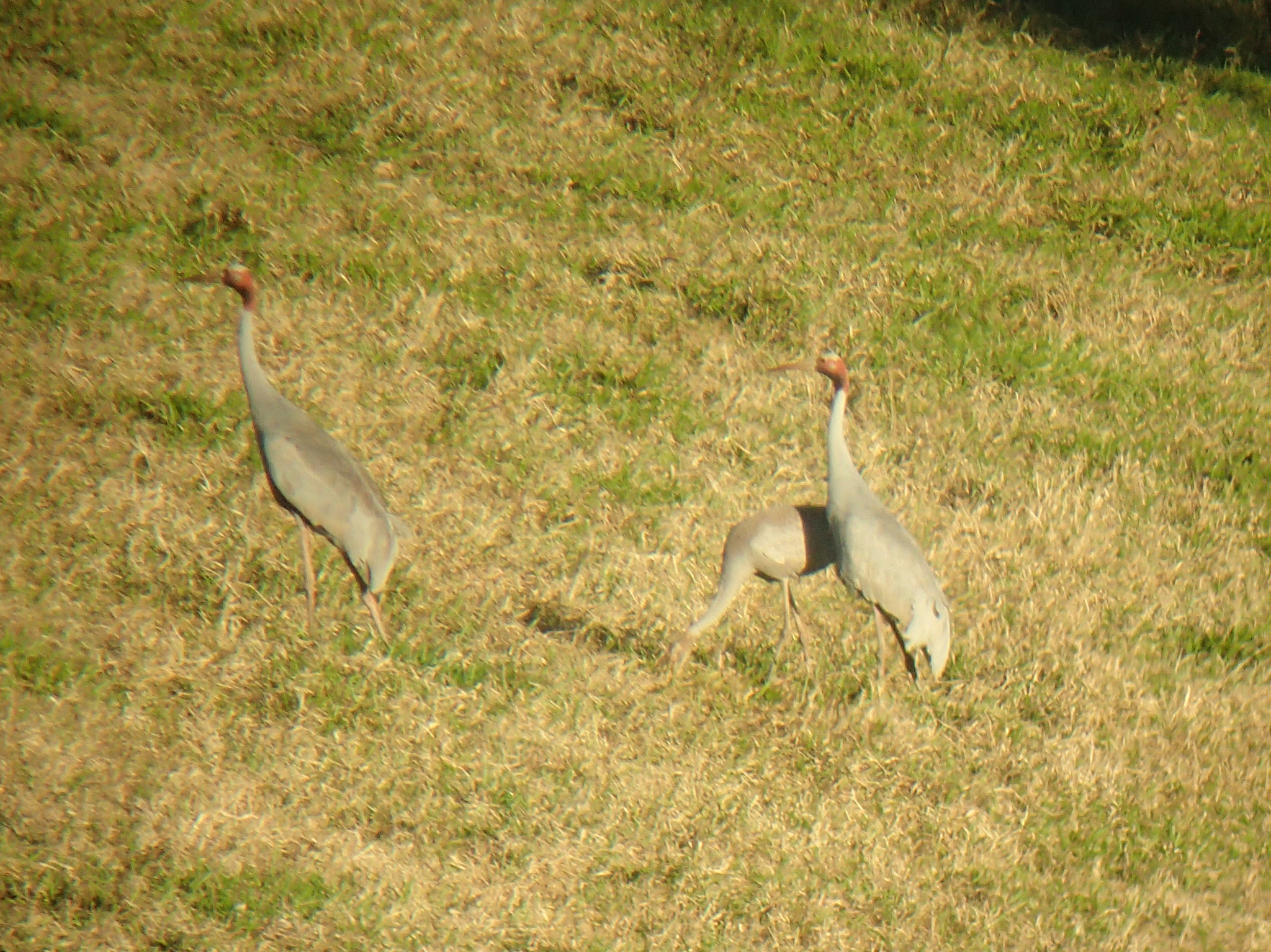
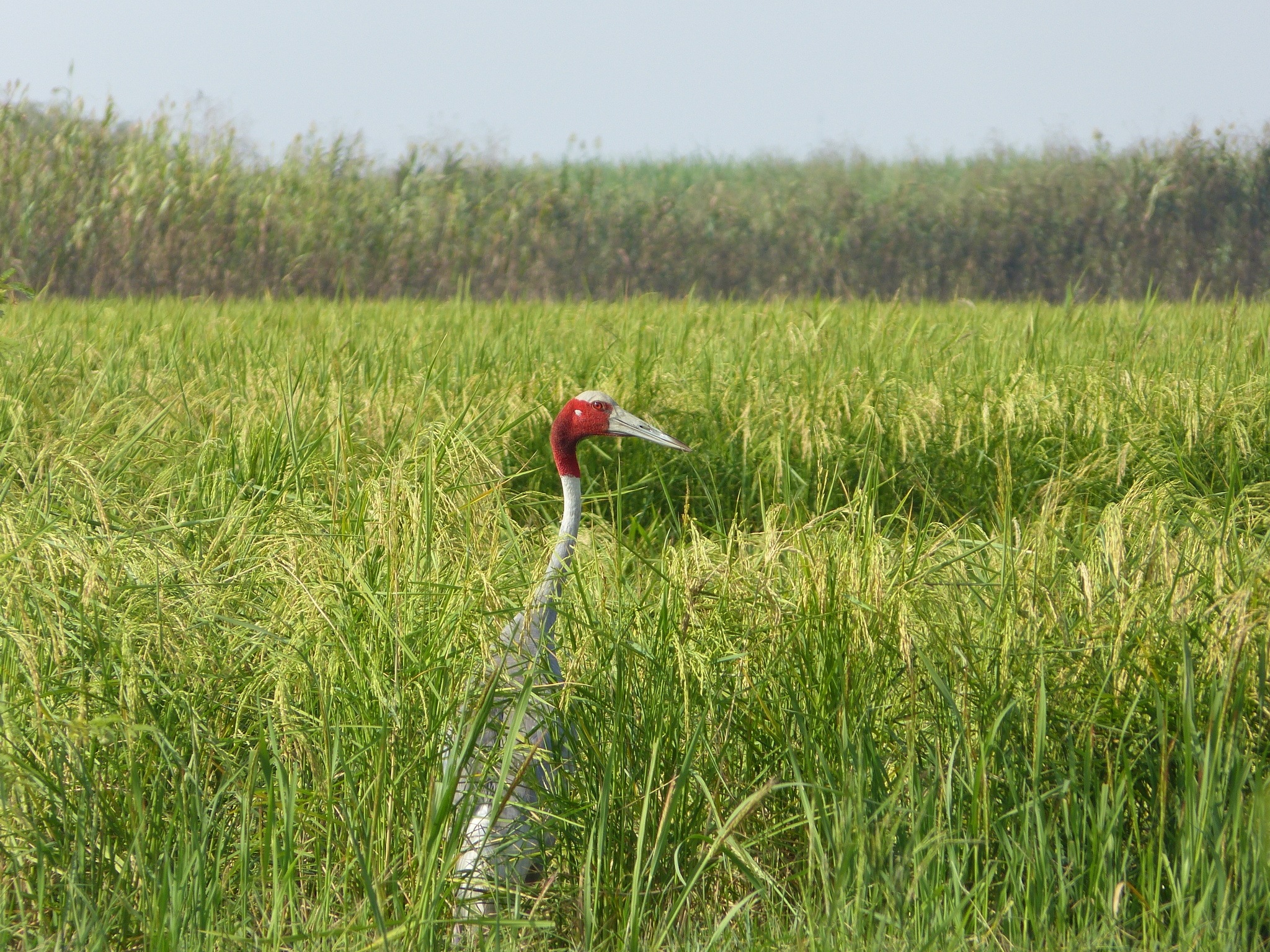
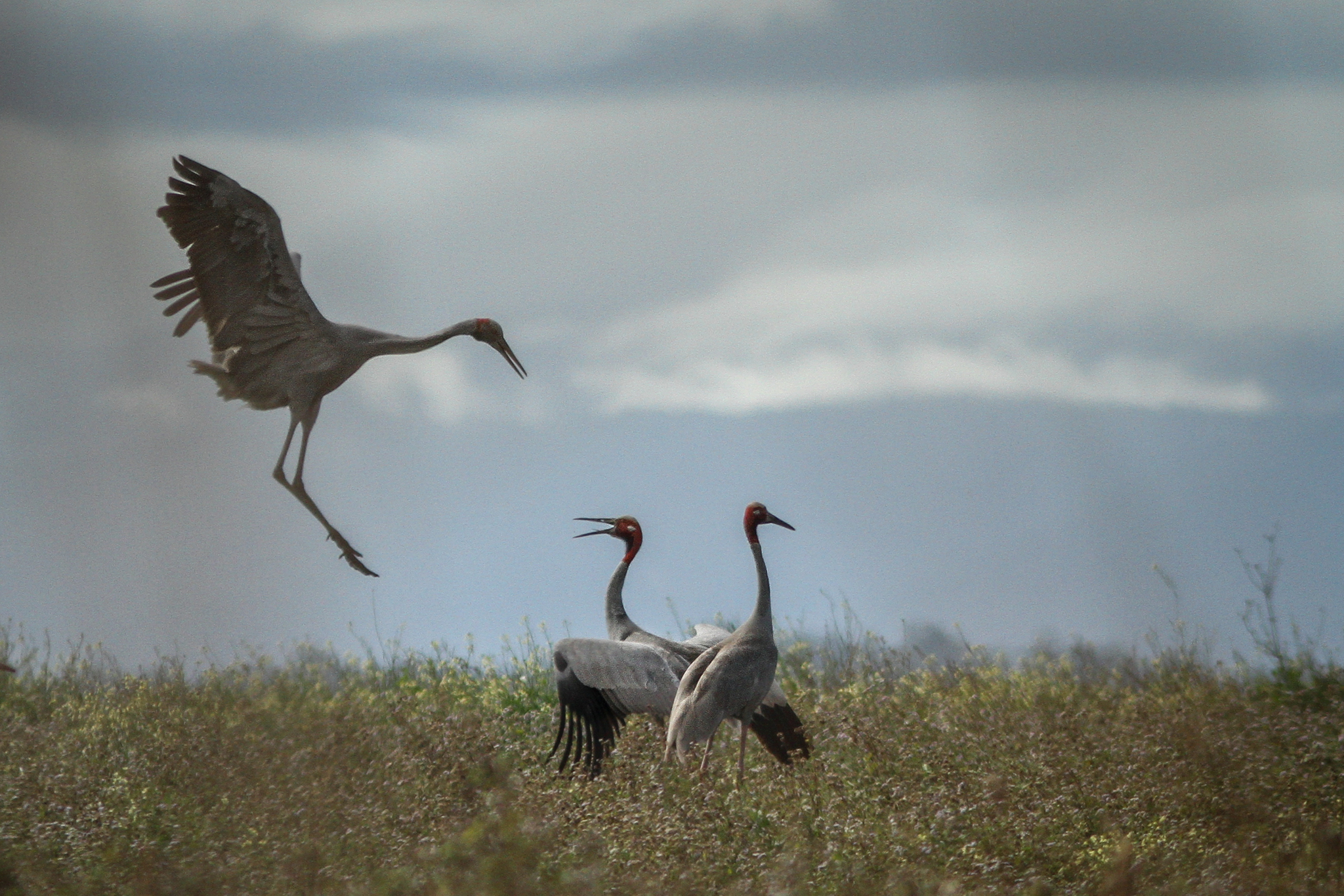
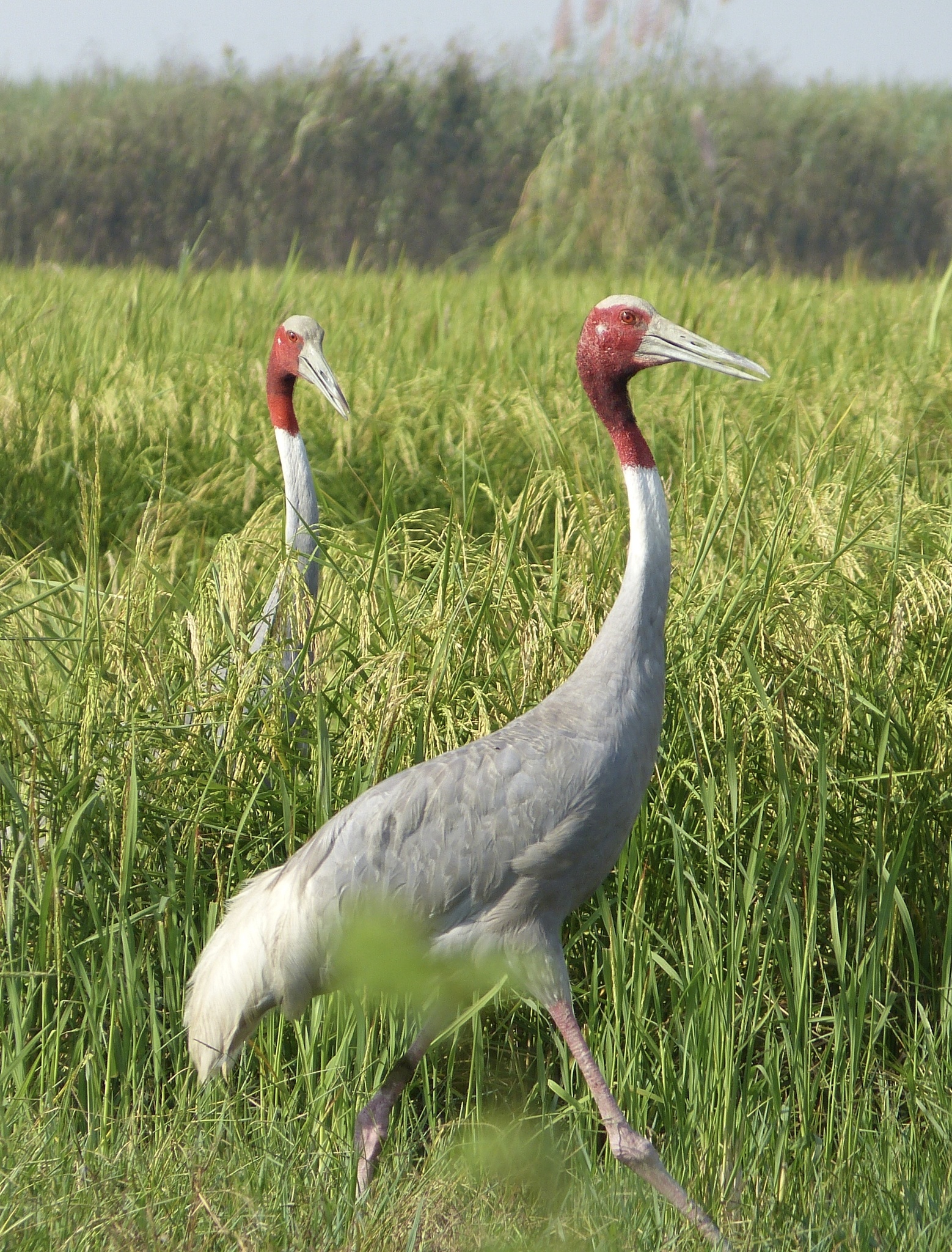
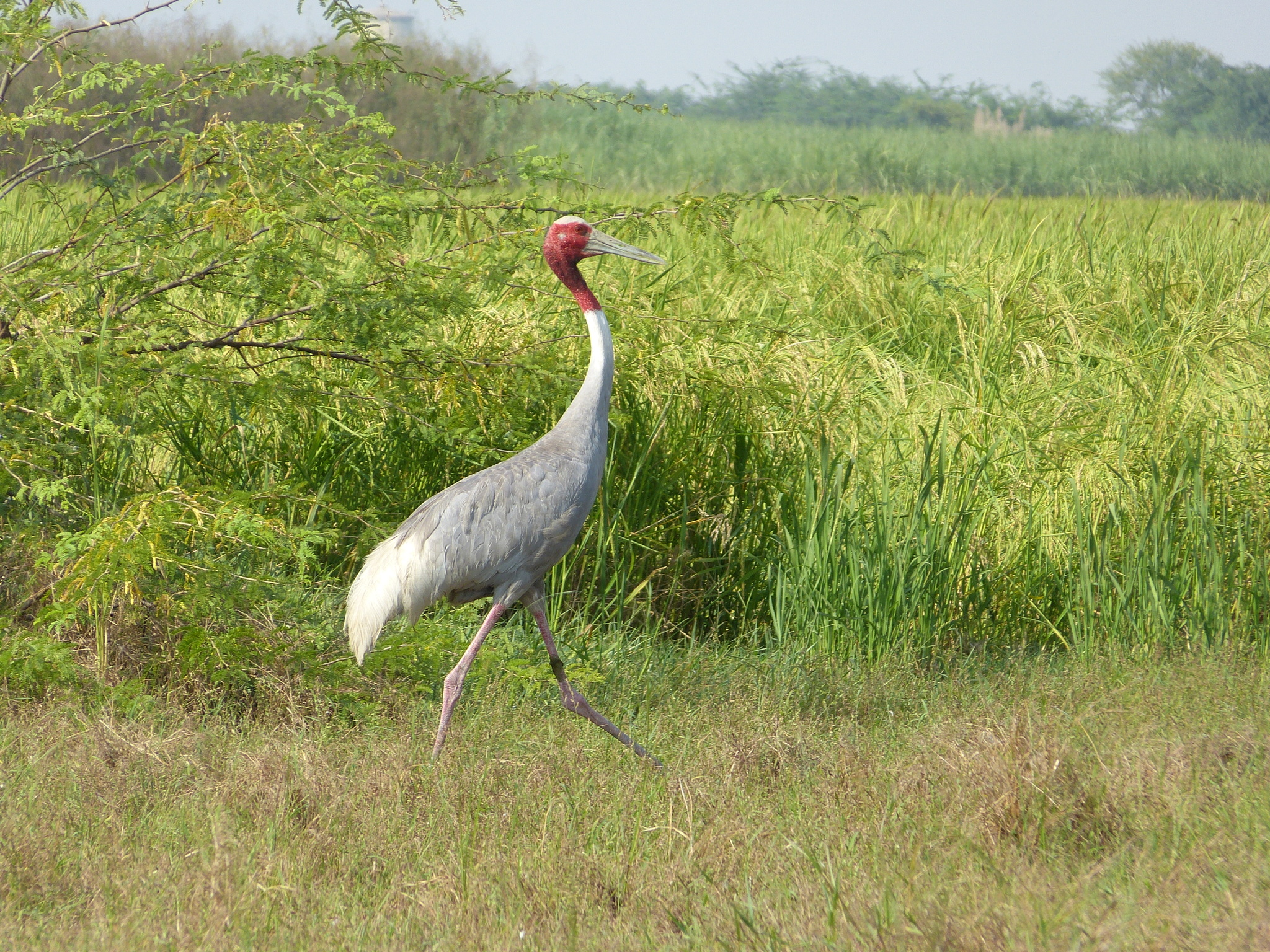
This is a very large crane with grey wings and body plumage. The most distinctive feature is the bare red head, collar, and nape, contrasting with a greyish crown and a long, greenish-grey pointed bill. In flight, the long neck is held straight rather than folded like a heron's, with black wing tips visible and long pink legs trailing behind. The ear covert patch is grey, irises are orange-red, and the bill greenish-grey. Juveniles differ with a yellowish bill base and fully feathered brown-grey head. The bare red skin on the head and neck becomes brighter during breeding season and is rough, covered by feather follicles with black bristly feathers around the crown. Males are larger than females; Indian males can reach 180 cm tall, making them the world's tallest extant flying bird. Weights range from 5-12 kg across the range, with nominate race birds at 6.8-7.8 kg. Typical height is 115-167 cm with a wingspan of 220-250 cm.
Identification
This species is distinguished from other cranes in its range by its overall grey colour and contrasting red head and upper neck. The red colouring extends onto the neck, unlike the closely related brolga in Australia where the red is confined only to the head. In flight, the straight neck distinguishes it from herons, which fold their necks back. Australian birds closely resemble Southeast Asian populations, lacking the white collar and white tertiary flight feathers seen in Indian birds. The grey ear covert patch is larger in Australian birds. Males are larger than females but plumage is identical between sexes.
Distribution & Habitat
The species historically ranged widely across the lowlands of India, extending from the Gangetic plains to the Godavari River, west to Gujarat and Pakistan's Tharparkar District, and east to West Bengal and Assam. Current distribution shows significant contractions: the species no longer breeds in Punjab and is rare or absent in West Bengal, Assam, and Bihar. In Nepal, populations are restricted to western and central lowland plains. Southeast Asian populations exist in China, Myanmar, Cambodia, and Vietnam, with recent surveys discovering over 150 breeding pairs in Myanmar's Ayeyarwadi Delta. The Philippines population is now extinct. In Australia, the species is found only in the north-east, particularly in the Gulf Plains of Queensland, with some populations being partly migratory. The species has been extirpated from Pakistan, Malaysia, the Philippines, and Thailand, though reintroduction efforts are underway in Thailand using birds from Cambodia.
Behavior & Ecology
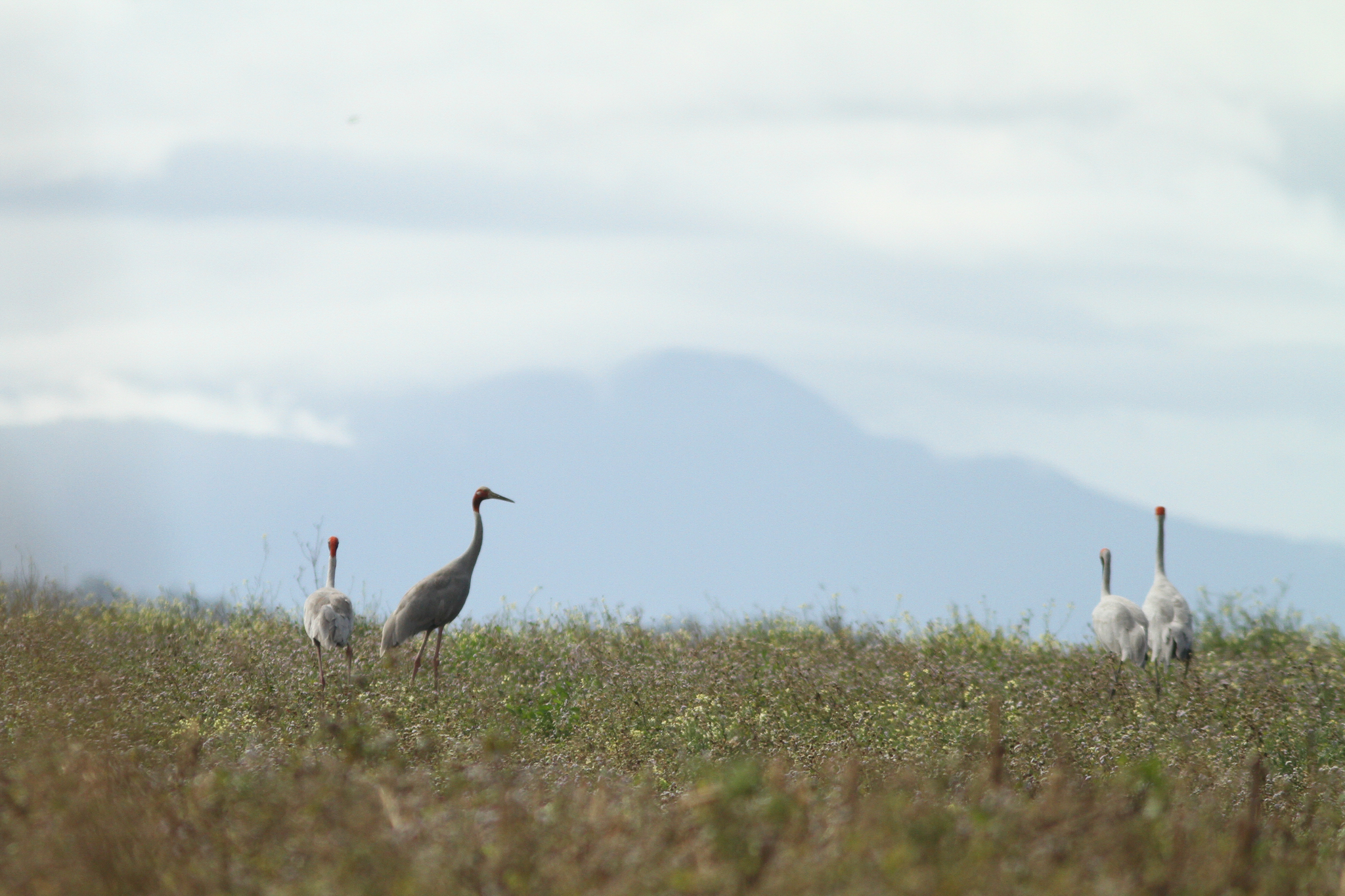
This crane is largely nonmigratory, though some populations make short-distance movements. Four distinct population behaviors exist: wintering populations in Punjab, expanding populations following new irrigation in arid regions of Gujarat and Rajasthan, seasonally migratory populations in the same regions, and perennially resident populations in areas with reliable water sources like western Uttar Pradesh. The species forms long-lasting pair bonds and maintains territories defended through elaborate calls and displays. Non-breeding birds form flocks ranging from 1-430 individuals, with the largest concentrations at Keoladeo National Park and community wetlands in Uttar Pradesh. The diet is omnivorous, including roots, tubers, insects, crustaceans, small vertebrates, and cultivated crops. Breeding occurs mainly during monsoons (July-October in India), with pairs building large platform nests of reeds and vegetation in shallow water. Clutches consist of one or two eggs incubated by both parents for about 31 days. The species produces loud trumpeting calls from elongated windpipes and performs spectacular courtship dances involving jumping and bowing movements.
Conservation
The species is classified as Vulnerable on the IUCN Red List, with an estimated 15,000-20,000 mature individuals remaining globally in 2009. The Indian population numbers fewer than 10,000 individuals. Major threats include habitat destruction and degradation, hunting and egg collection, environmental pollution, and possibly diseases. Historical population declines were severe, with estimates suggesting the 2000 population was just 2.5-10% of 1850 levels. However, evidence indicates populations have increased in India following the Green Revolution and irrigation development, with similar patterns in Nepal and Myanmar. The Australian population exceeds 5,000 birds and may be increasing. Conservation measures include payment-for-nest protection programs in Cambodia that achieved 87% nest success, habitat preservation efforts, and community engagement. Reintroduction programs in Thailand using captive-bred birds show promise. The Philippines subspecies is extinct, and populations remain extirpated in Malaysia and Thailand, though reintroduction efforts are underway.
Culture
This crane holds significant cultural importance, particularly in India where it is considered sacred and a symbol of marital fidelity. Legend states that the poet Valmiki cursed a hunter for killing one of these birds and was inspired to write the Ramayana. The species was a close contender to the peafowl for India's national bird, and Uttar Pradesh declared it the state bird in 2013. Among the Gondi people, certain tribes consider the species sacred, and its meat was taboo in ancient Hindu scriptures. The belief that these cranes pair for life and pine to death if separated has made them symbols of marital virtue; in Gujarat, taking newlywed couples to see a pair is customary. Historically hunted during colonial times, even sport-hunting guides discouraged shooting them. Young birds were kept in menageries in both India and Europe, and Emperor Jehangir successfully bred them in captivity in the 17th century. Australian Aboriginal peoples distinguished this species from the brolga, calling it 'the crane that dips its head in blood.'
Source: Wikipedia · CC BY-SA 3.0
Taxonomy
- Order
- Gruiformes
- Family
- Gruidae
- Genus
- Antigone
- eBird Code
- sarcra1
Subspecies (3)
-
Antigone antigone antigone
northern India to Nepal and (formerly?) Bangladesh
-
Antigone antigone gillae
northern Queensland, northeastern Australia
-
Antigone antigone sharpii
Cambodia and southern Laos; winters in Vietnam
Data Sources
Species description from Wikipedia, licensed under CC BY-SA 3.0.
Bird images and sounds sourced from GBIF, contributed by citizen scientists worldwide under Creative Commons licenses.
Taxonomy data from AviList 2025.