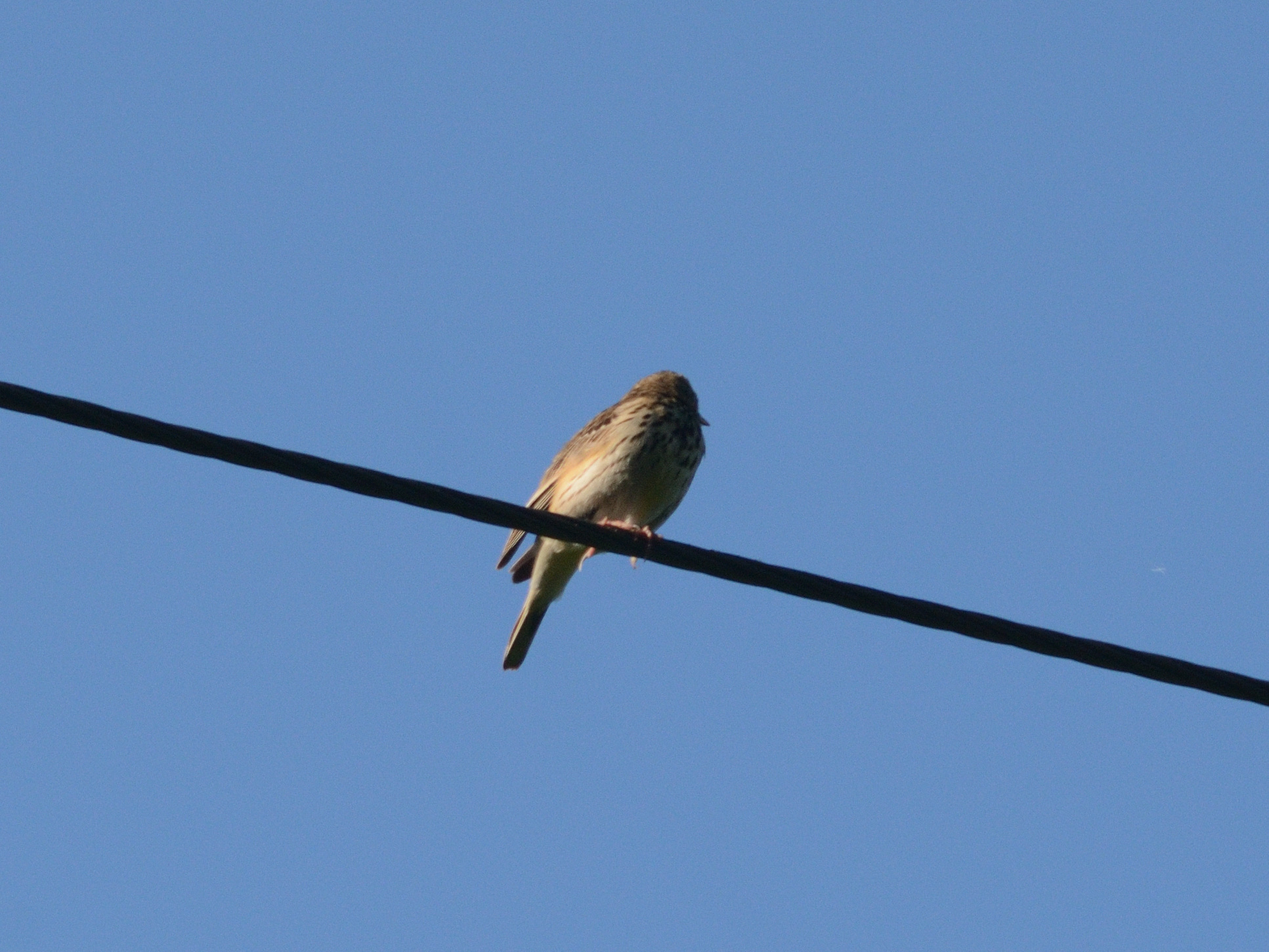
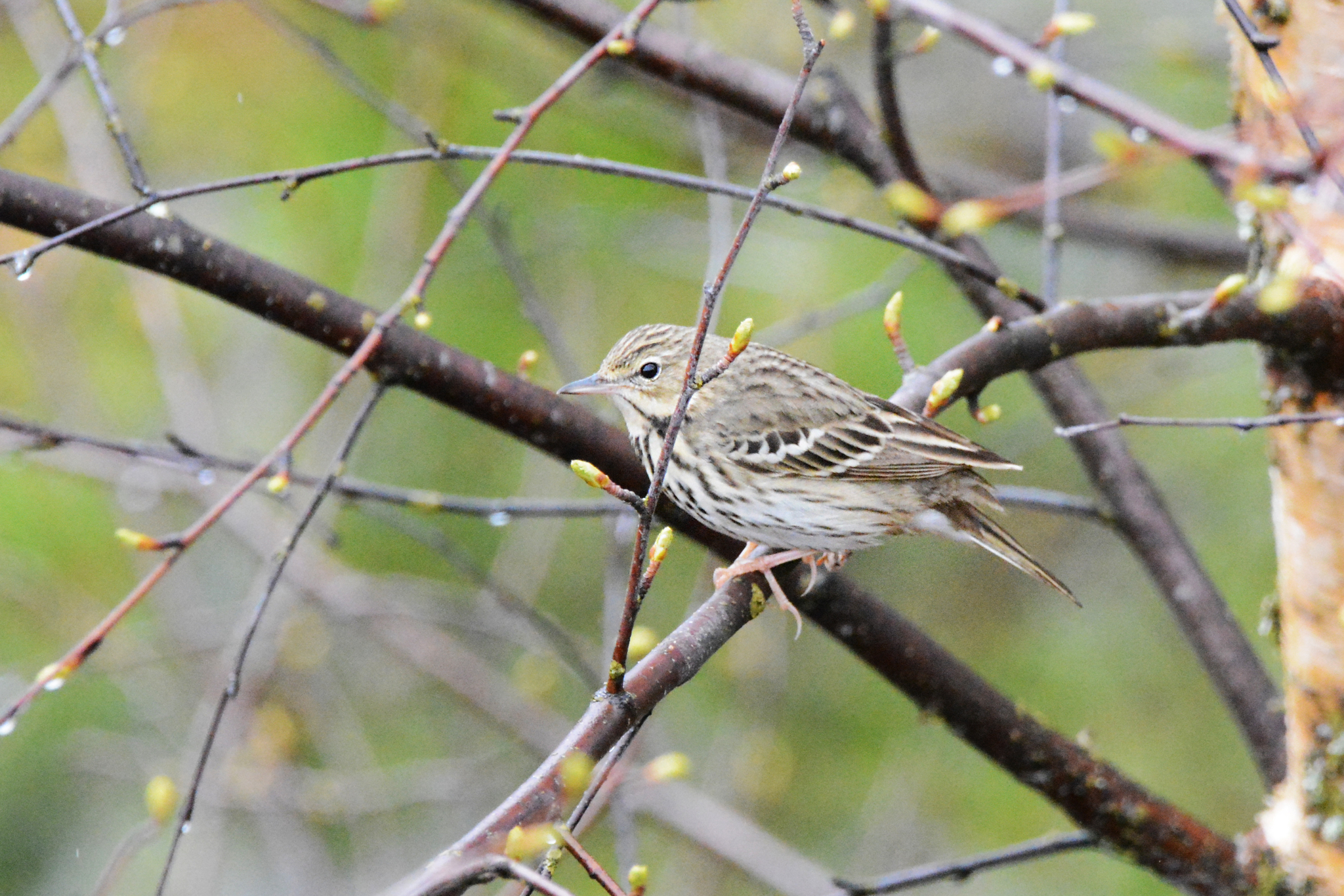
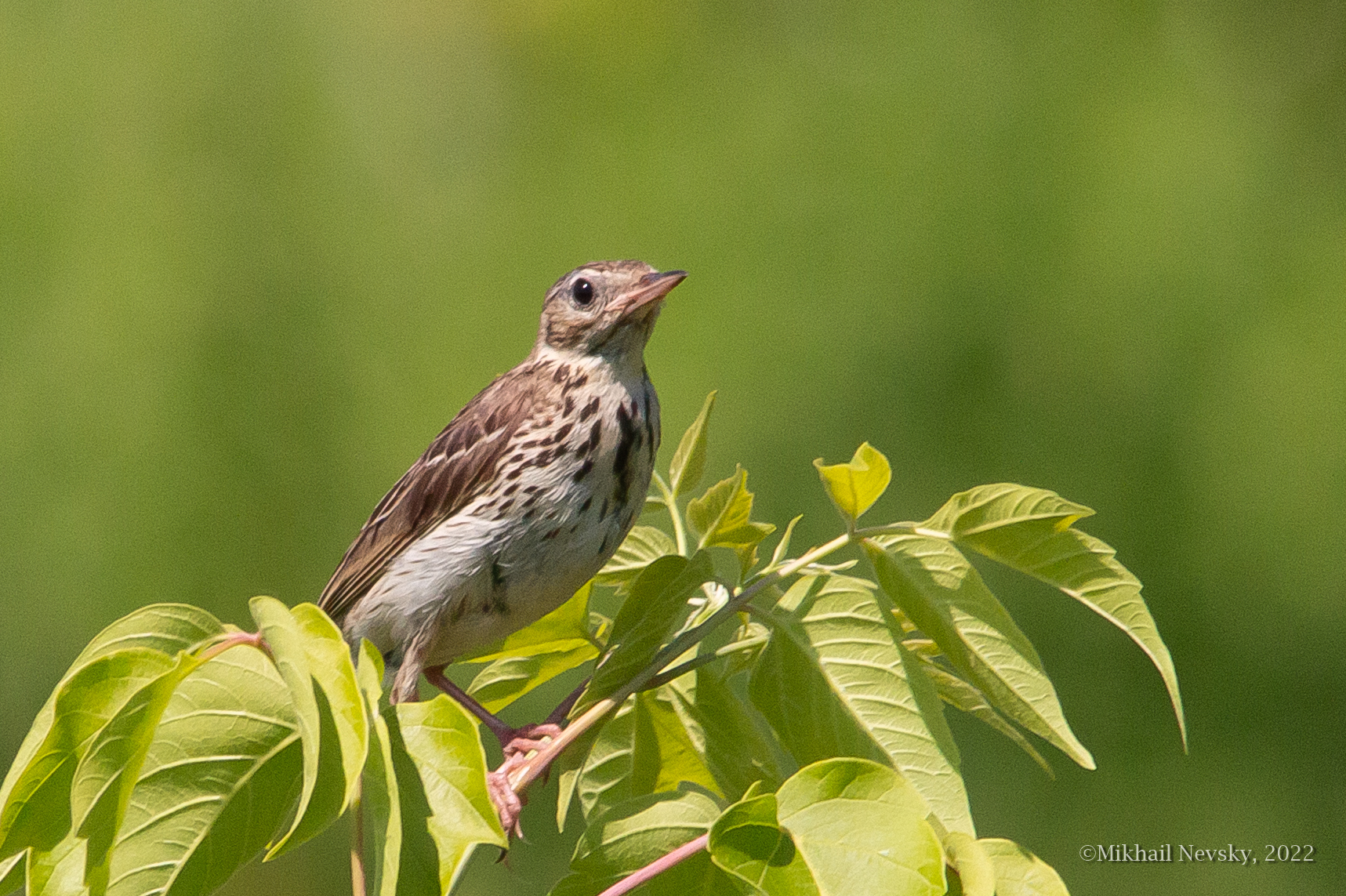
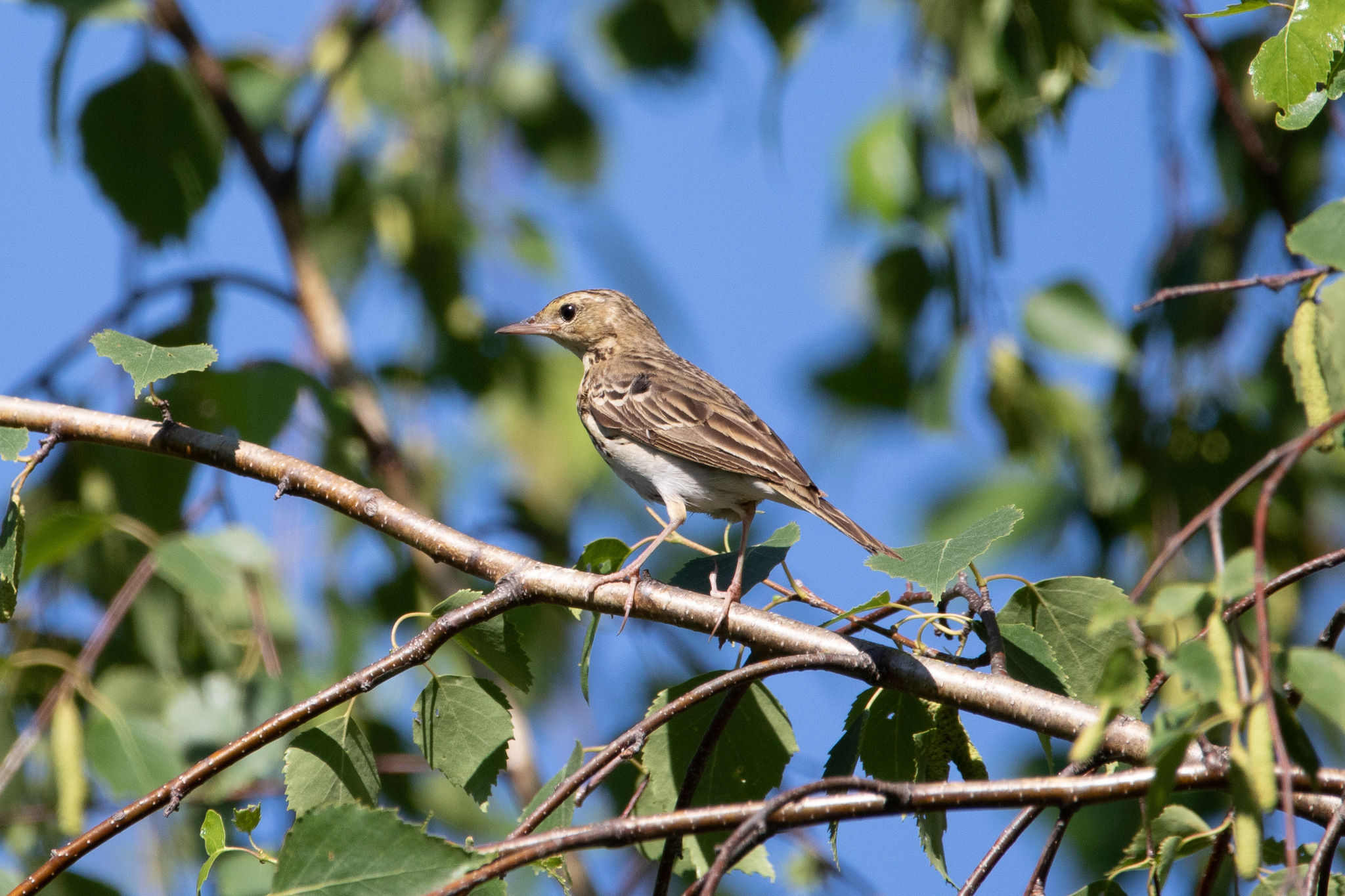
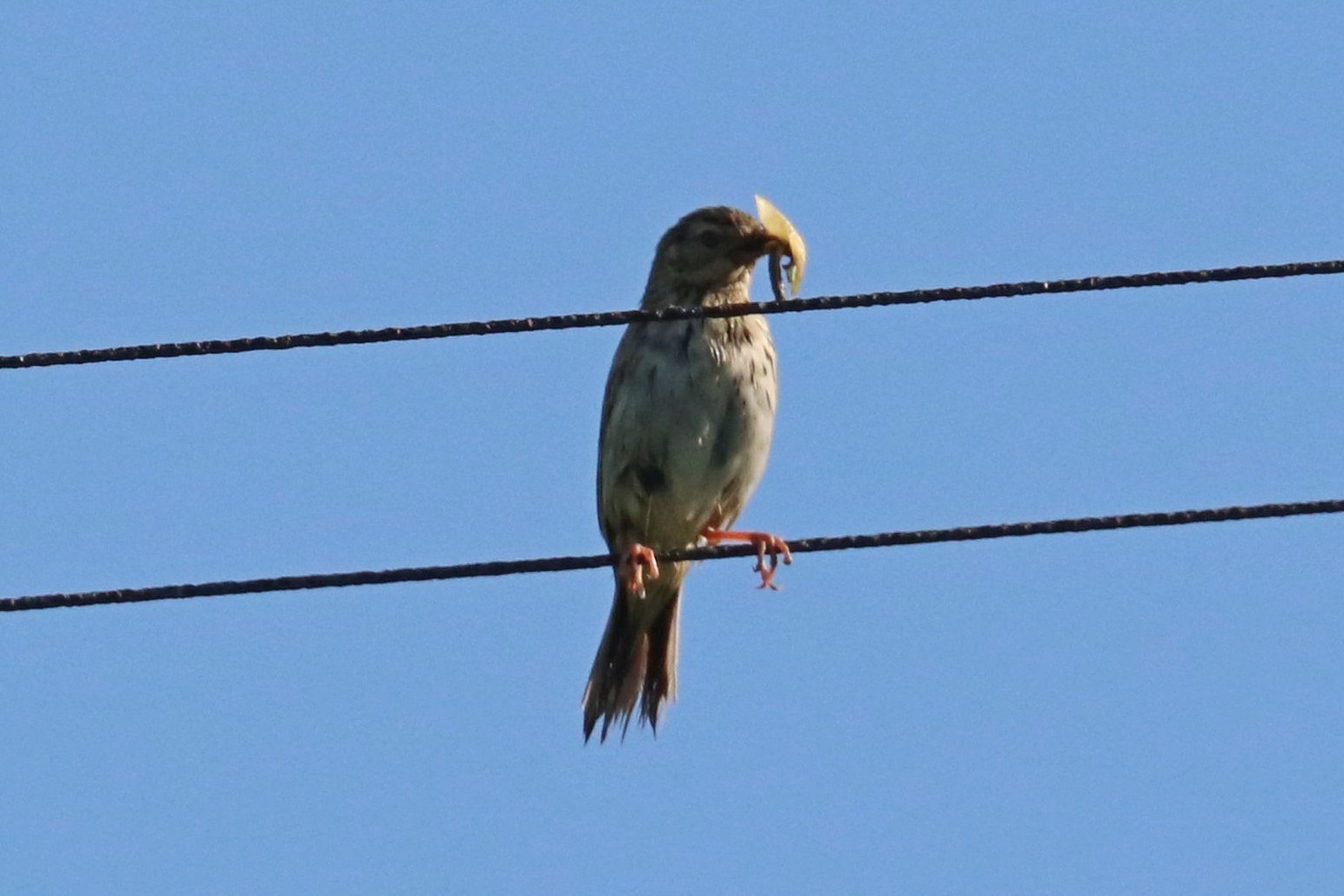
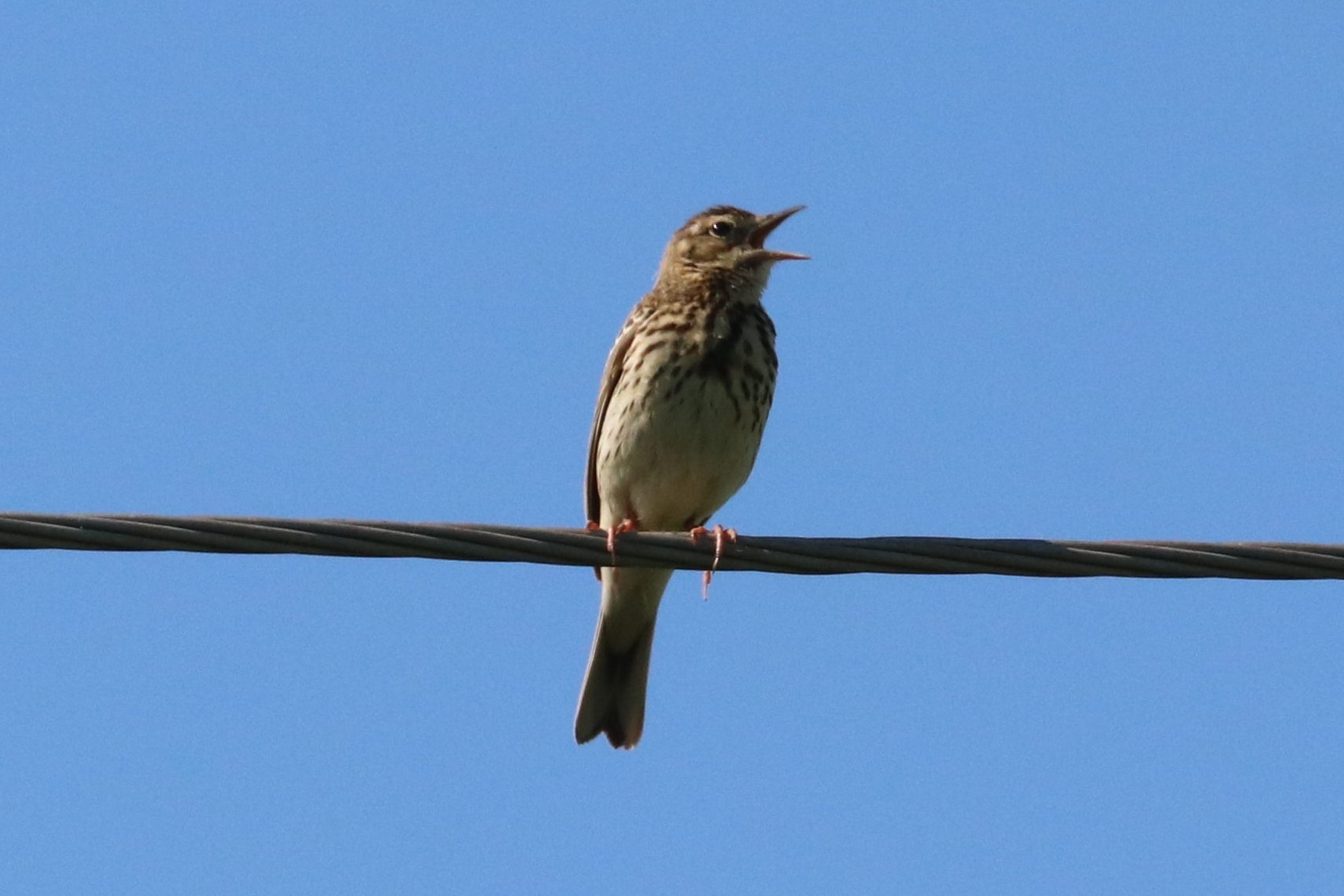
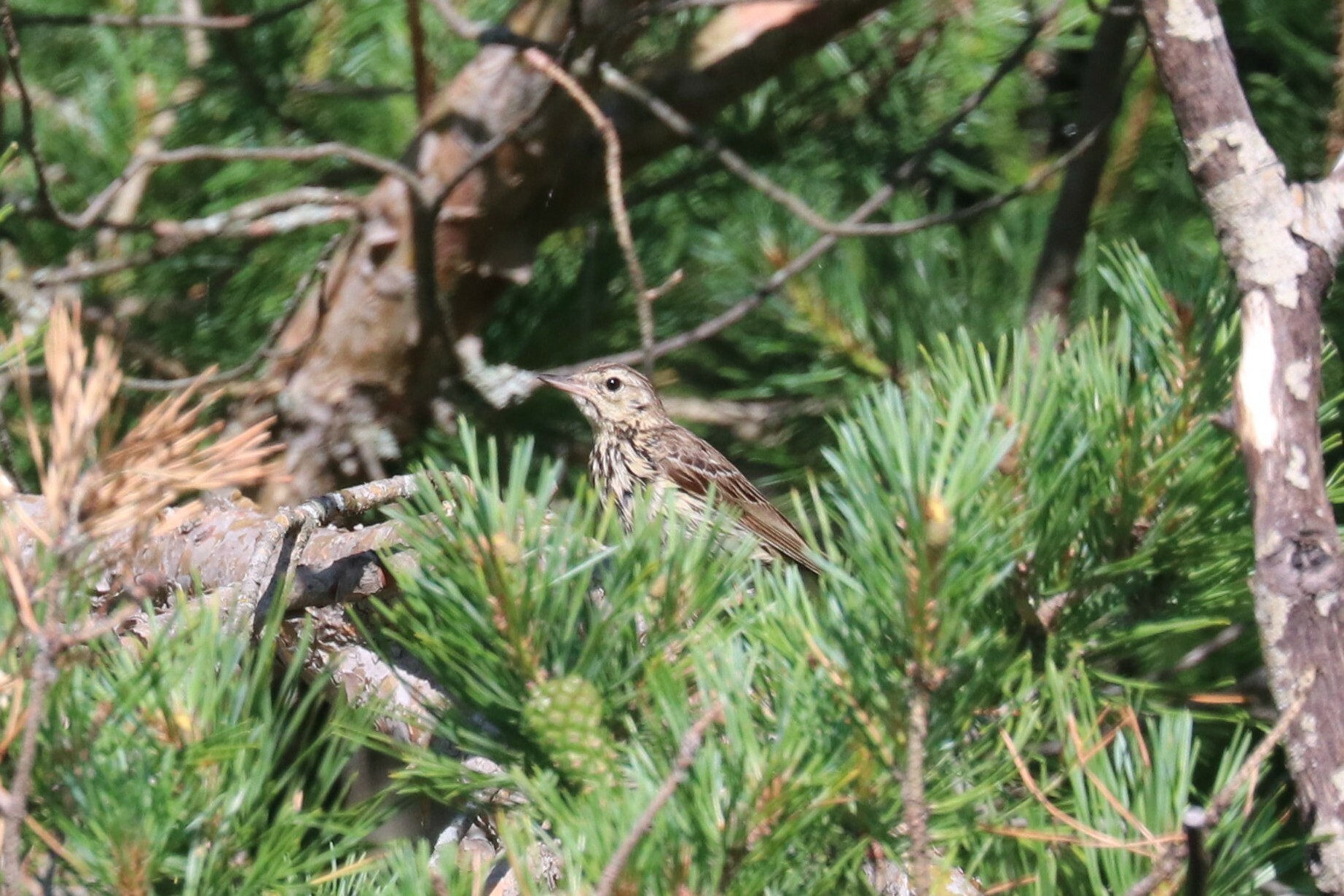
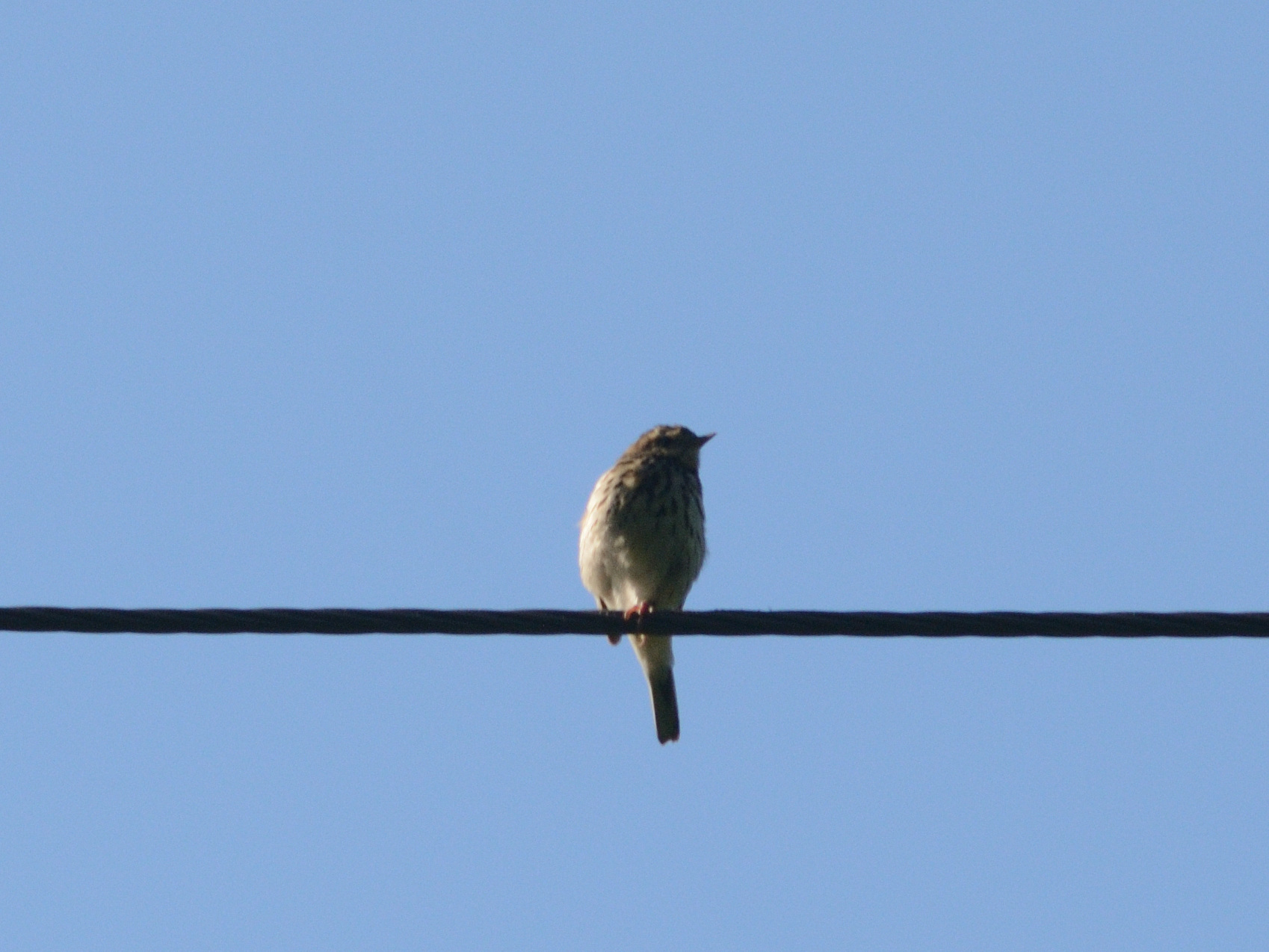
Tree Pipit
Anthus trivialis
林鹨
Introduction
A passerine summer visitor across most of Europe, extending east through the Palearctic to the East Siberian Mountains. A long-distance migrant, it winters in Africa and southern Asia. Inhabits open woodland with structured canopy. Forages on the woodland floor and grassy clearings. Diet is primarily insectivorous, supplemented seasonally with seeds. Plumage is streaked brown.
Description
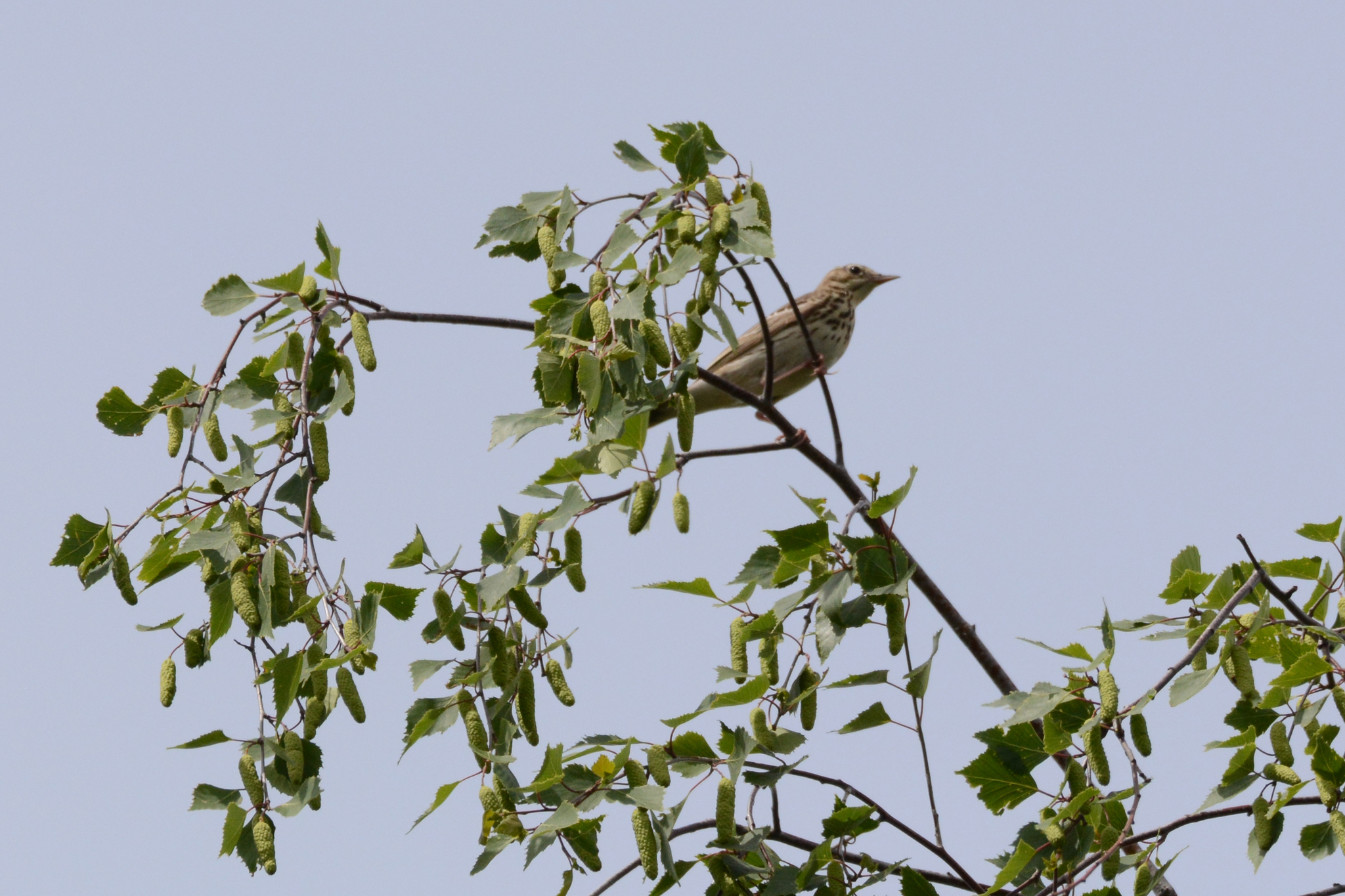
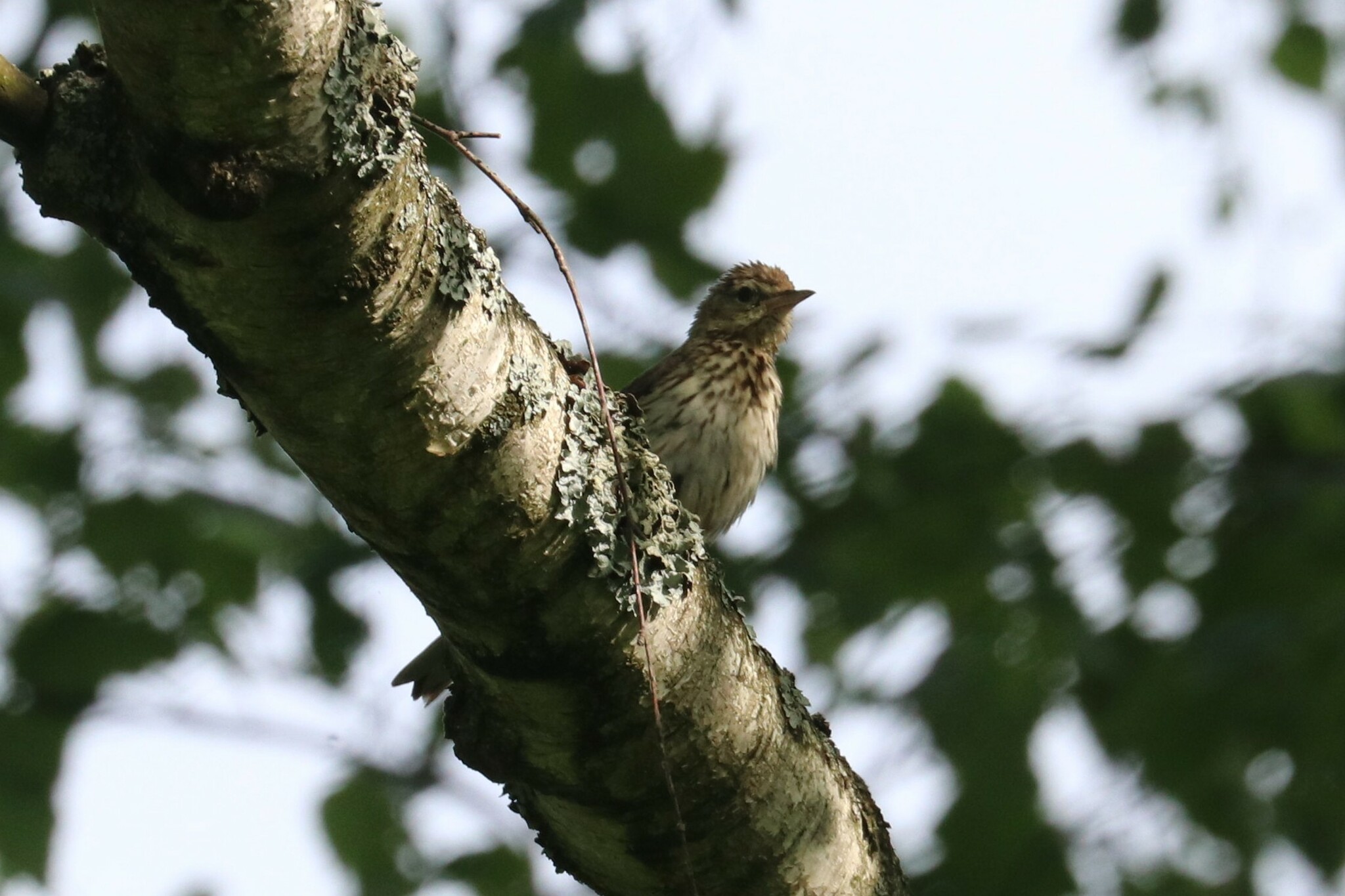
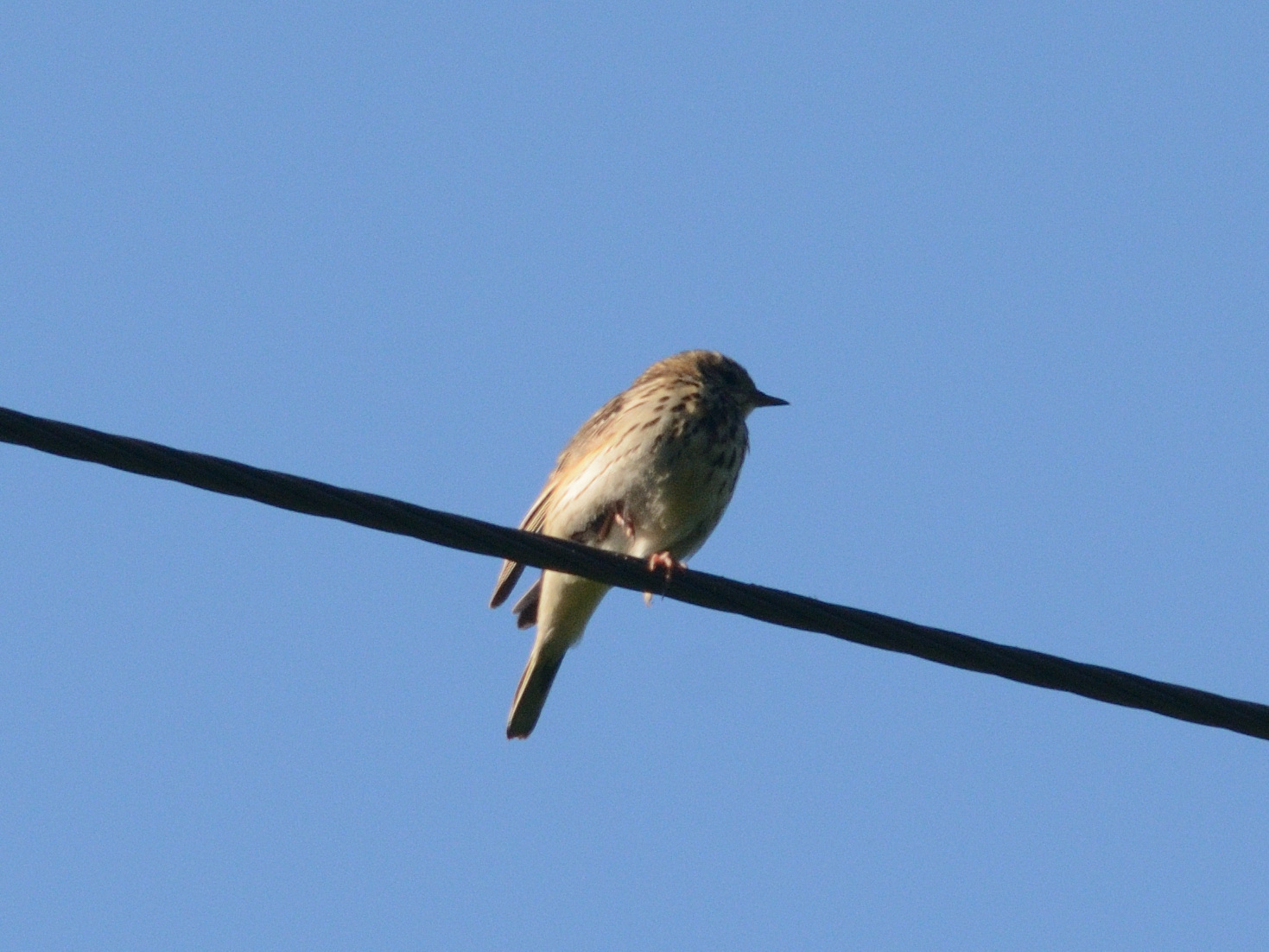
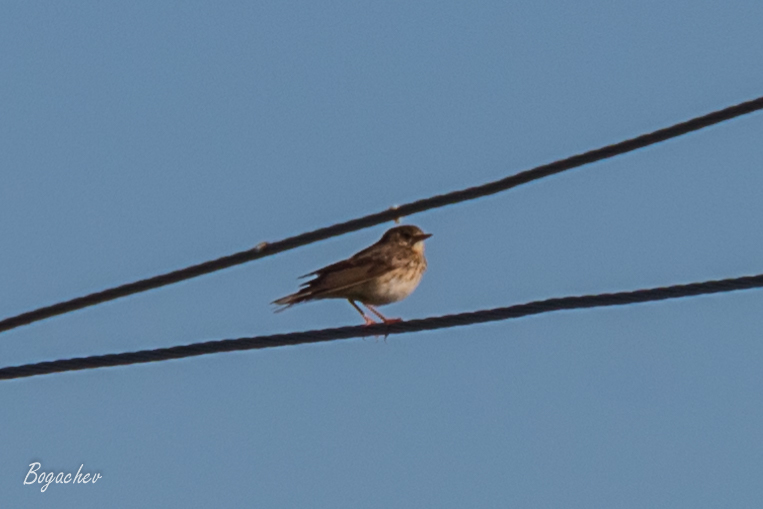
A small, rather plain-looking pipit with an undistinguished appearance. The upperparts are brown with conspicuous stripes, while the underparts feature black markings on a white background with a distinctive buff-colored breast. The plumage provides effective camouflage in its preferred woodland edge and heathland habitats. The species closely resembles its relative the meadow pipit but can be distinguished by its heavier bill and the more pronounced contrast between its buff breast and white belly.
Identification
The most reliable way to distinguish this species from the meadow pipit is by its heavier bill and the sharper color contrast between the buff breast and white belly. Unlike the meadow pipit, this species shows a strong tendency to perch in trees, making it easier to observe when elevated. The call is a diagnostic feature—a loud, sharp 'spek' that contrasts markedly with the weaker call of its relative. The song flight is particularly distinctive: the bird rises a short distance from a tree before parachuting down on stiff wings, with the song becoming increasingly drawn out as it descends.
Distribution & Habitat
This species breeds across most of Europe and extends eastward through the Palearctic to the East Siberian Mountains. The breeding habitat consists of open woodland with a scrub component, including lowland heath, coppice, and open structured oak woodland. The bird prefers areas with medium-sized trees and relatively low canopy cover where horizontal visibility remains good. It favors landscapes with a mosaic of grass and bracken patches, avoiding heavily grazed short turf in favor of light to moderate grazing regimes. It is a long-distance migrant, spending the winter months in sub-Saharan Africa and southern Asia.
Behavior & Ecology
The breeding season begins in early May and extends through August, during which time the species typically raises two broods. The female constructs a cup-shaped nest on the ground amongst grass or heather tussocks, where she lays a clutch of four to six eggs. Incubation lasts approximately twelve to fourteen days and is performed solely by the female. Both parents participate in feeding the chicks, which leave the nest after twelve to fourteen days. The species is occasionally parasitized by the common cuckoo. It forages primarily on the ground, consuming invertebrates and insects, though some plant material and seeds may also be taken.
Conservation
The species is currently assessed as being of Least Concern by the IUCN, reflecting its extensive range and substantial global population. Despite this favorable assessment, local populations may face pressure from habitat loss and degradation, particularly the reduction of suitable woodland edge and heathland habitats through agricultural intensification or inappropriate land management practices.
Culture
This species holds limited cultural significance beyond its ecological role. While pipits as a group have appeared in various cultural contexts across Europe, there is no specific folklore or traditional cultural associations documented for this particular species in the provided sources.
Source: Wikipedia · CC BY-SA 3.0
Taxonomy
- Order
- Passeriformes
- Family
- Motacillidae
- Genus
- Anthus
- eBird Code
- trepip
Subspecies (2)
-
Anthus trivialis haringtoni
breeds northwestern Himalayas (Kashmir to Garhwal); winters in Indian subcontinent
-
Anthus trivialis trivialis
breeds from Europe eastward to northern Iran, Siberia, and northwestern China; winters in sub-Saharan Africa and on the Indian subcontinent
Data Sources
Species description from Wikipedia, licensed under CC BY-SA 3.0.
Bird images and sounds sourced from GBIF, contributed by citizen scientists worldwide under Creative Commons licenses.
Taxonomy data from AviList 2025.