
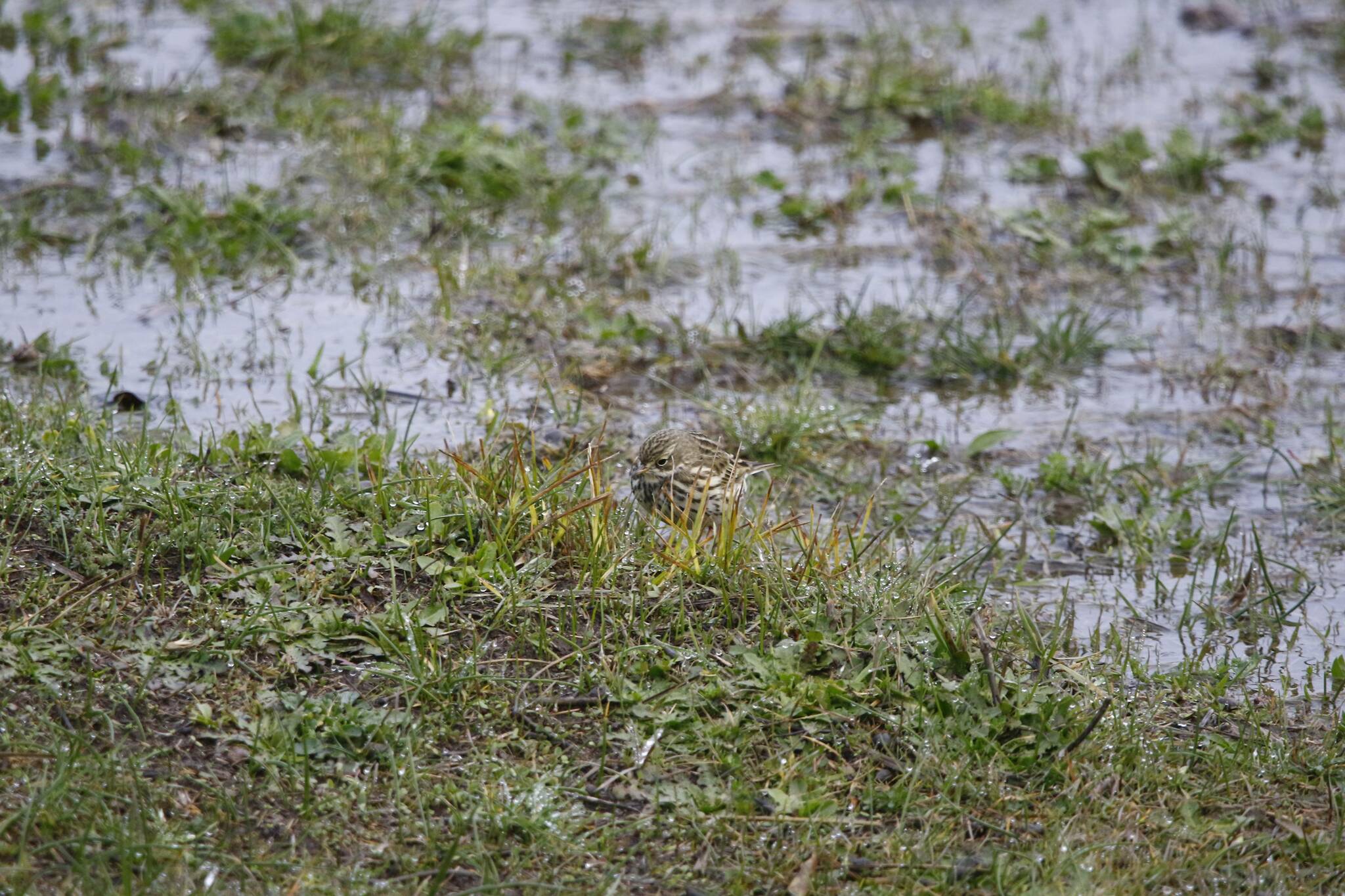
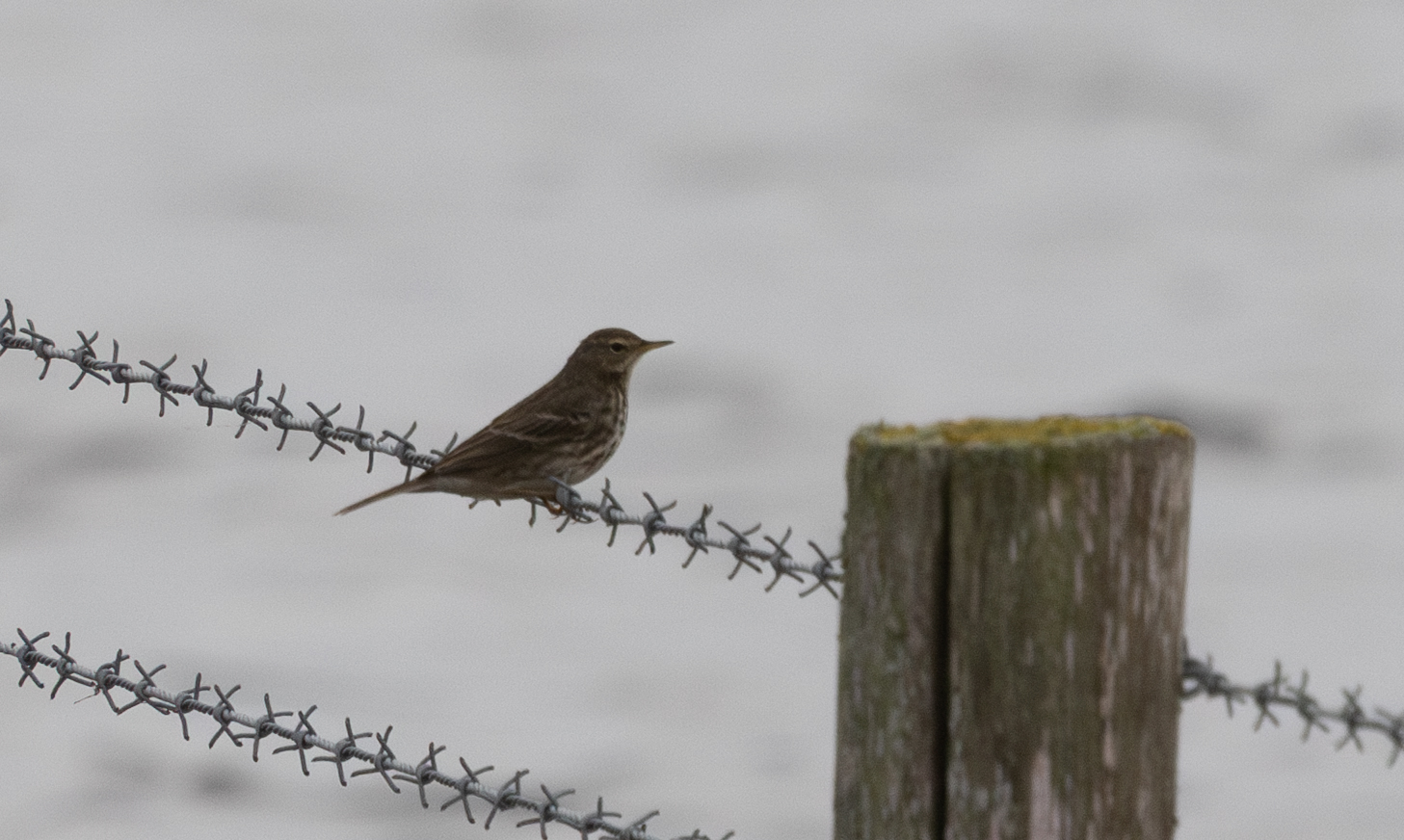
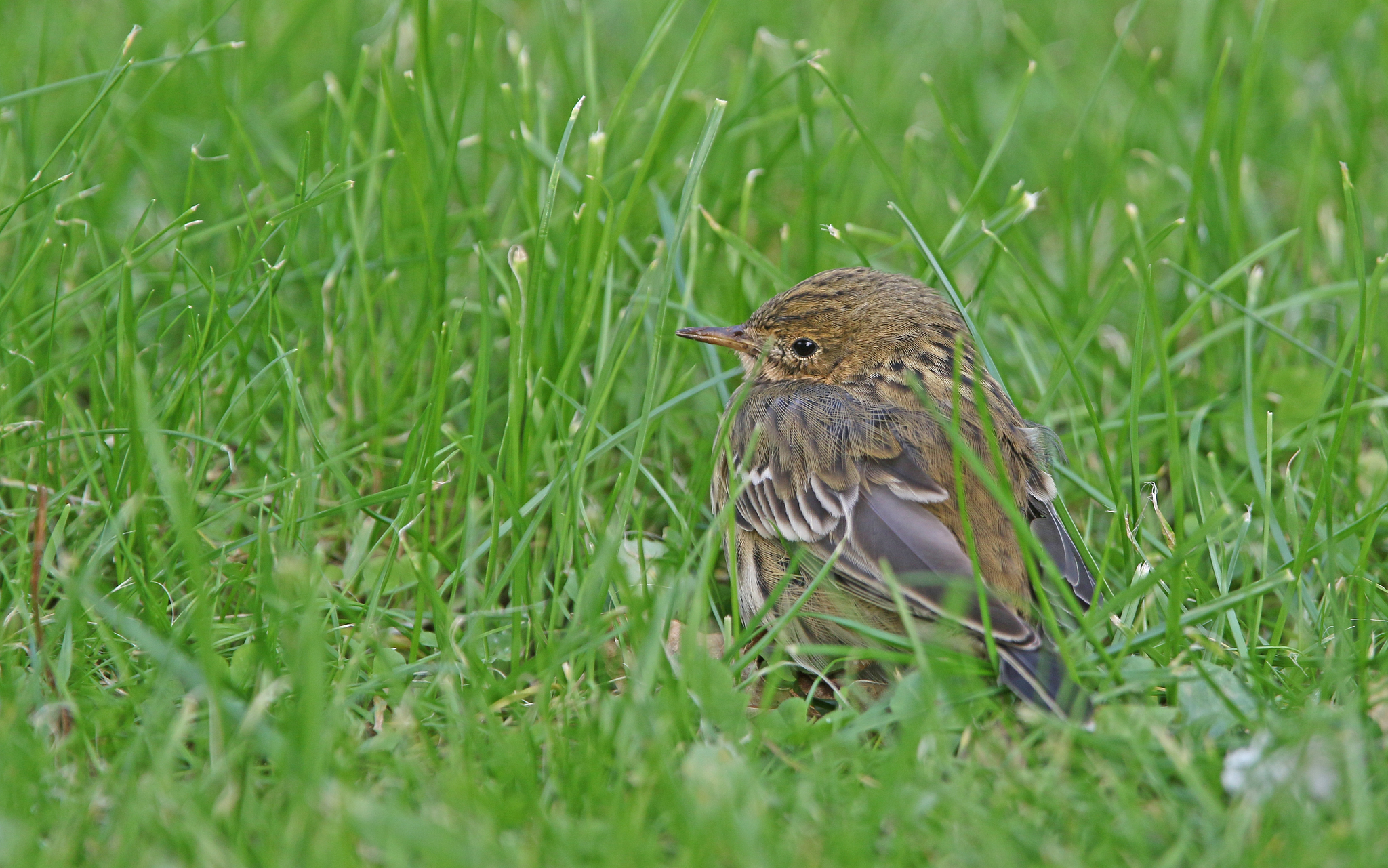
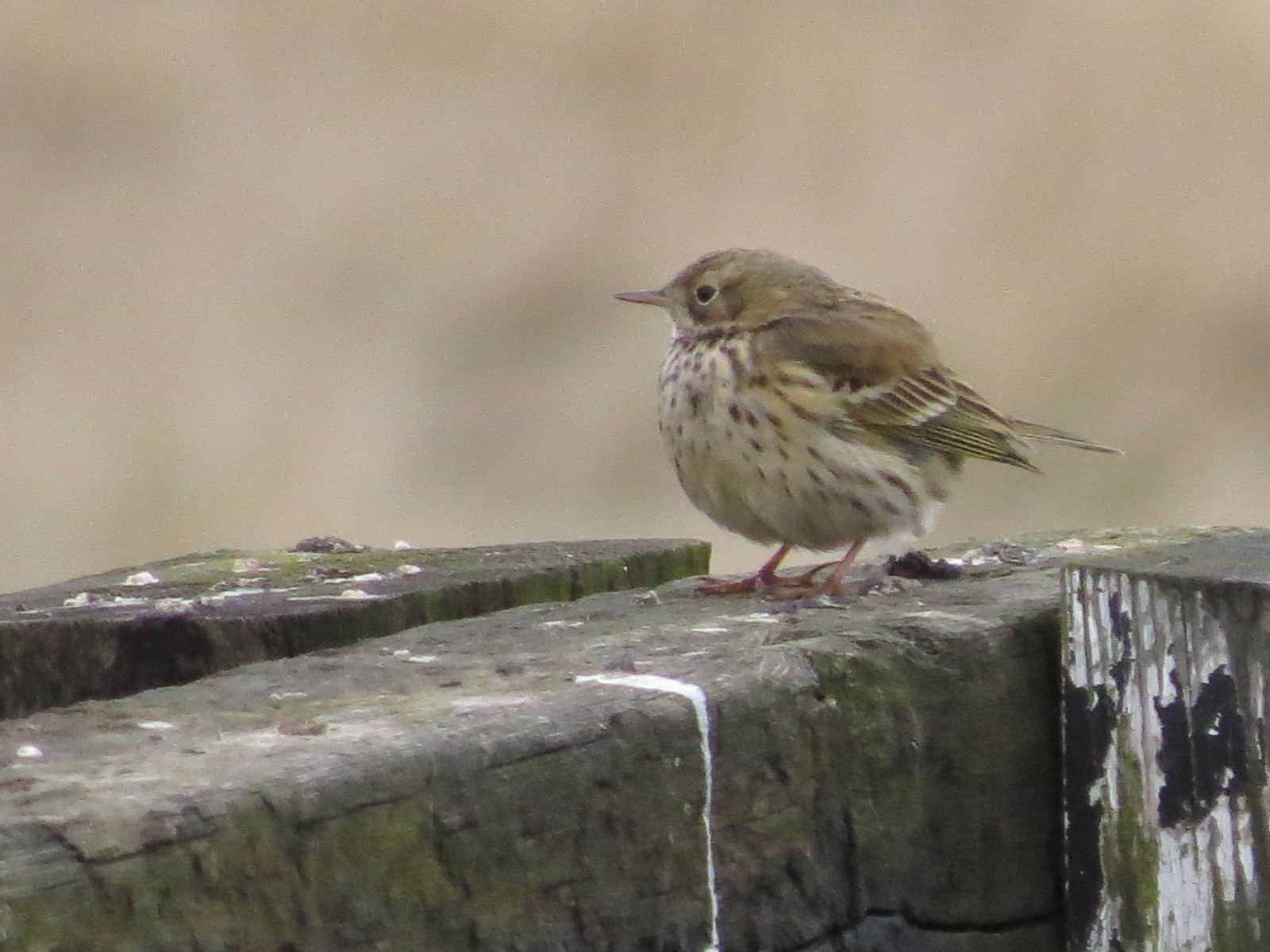
Meadow Pipit
Anthus pratensis
草地鹨
Introduction
A small passerine bird of the genus Anthus, breeding across much of the Palearctic from south-eastern Greenland and Iceland east to just east of the Ural Mountains in Russia, and south to central France and Romania; an isolated population occurs in the Caucasus Mountains. Migratory over most of its range, wintering in southern Europe, North Africa, and southwestern Asia; resident year-round in western Europe. Primarily inhabits open uncultivated or low-intensity agricultural habitats such as grassland, moorland, and heathland. The total population is estimated at 12 million pairs. It is the most common breeding bird of the British uplands.
Description
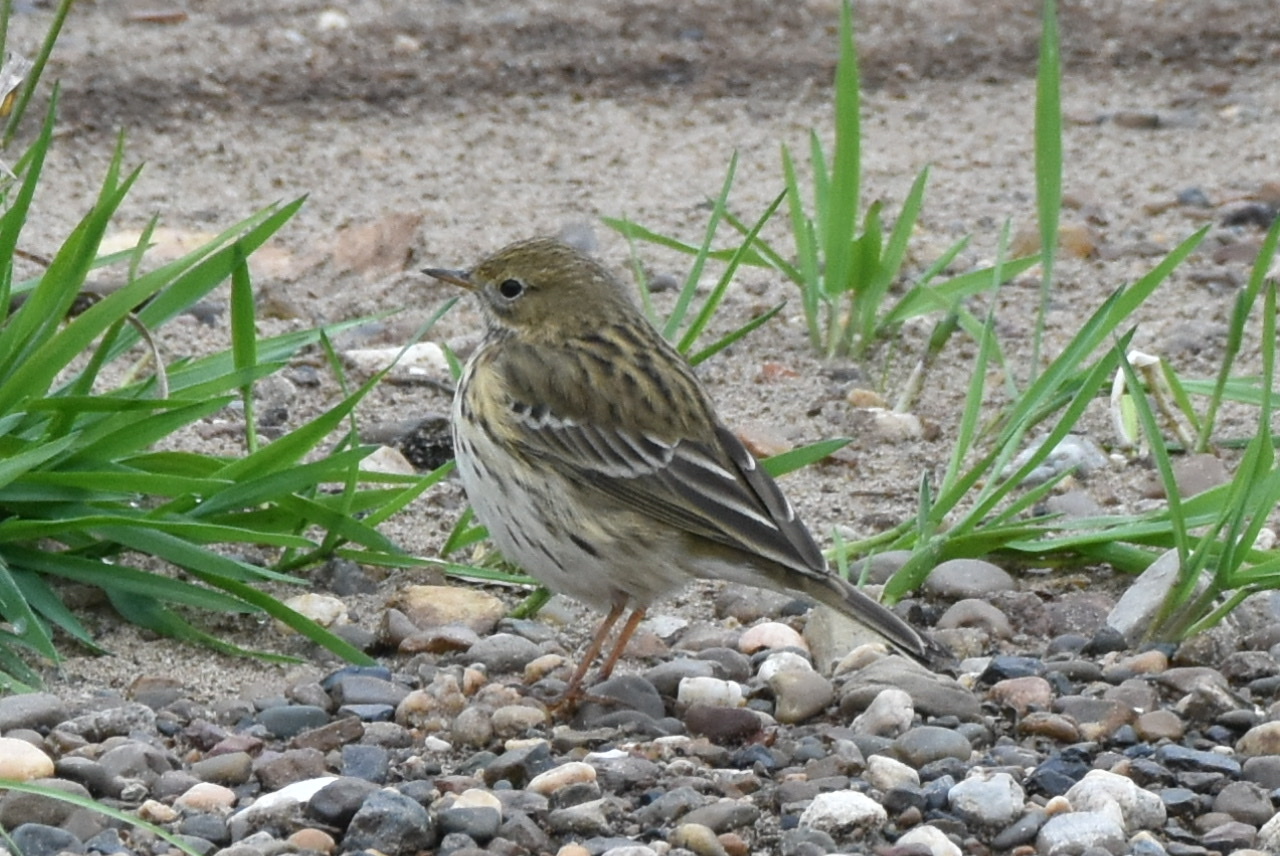
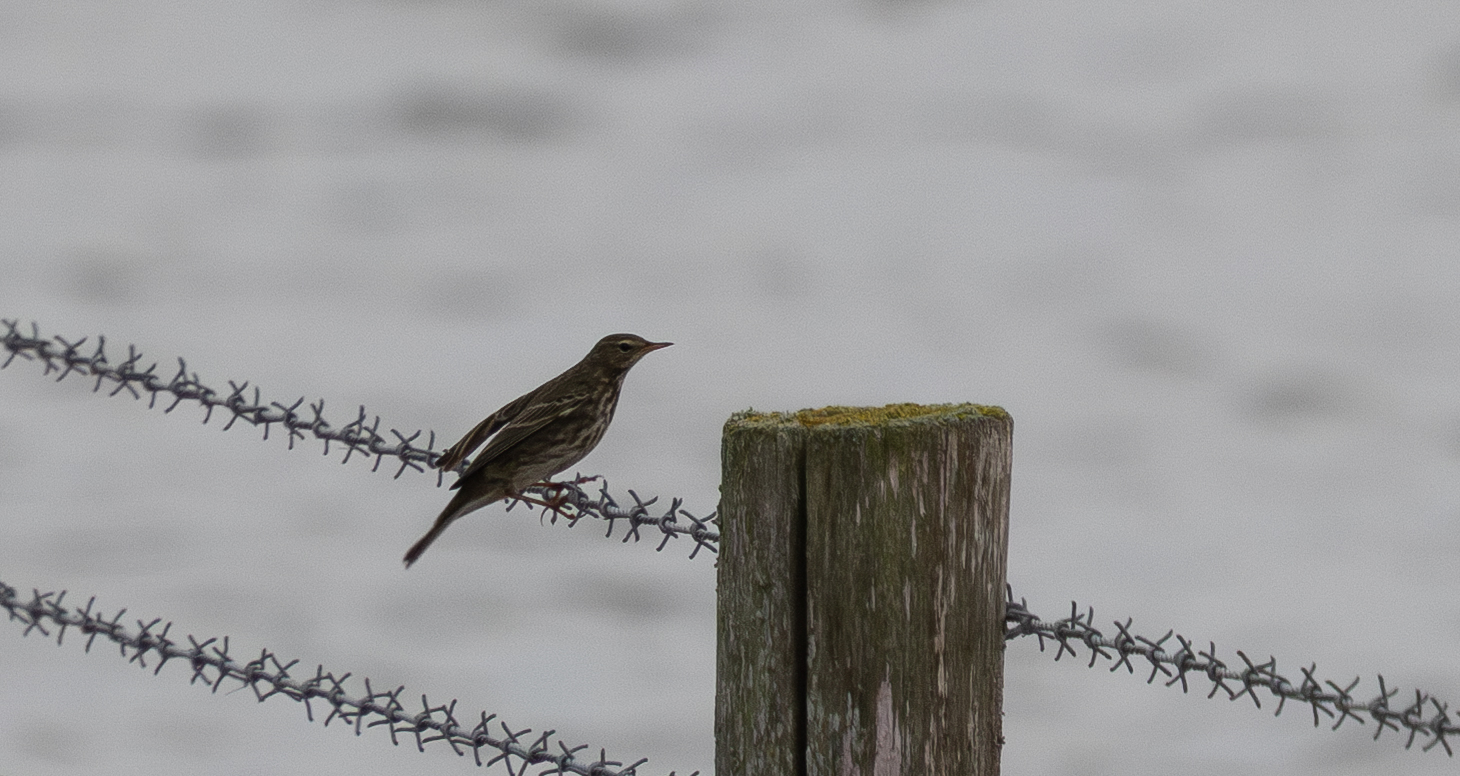
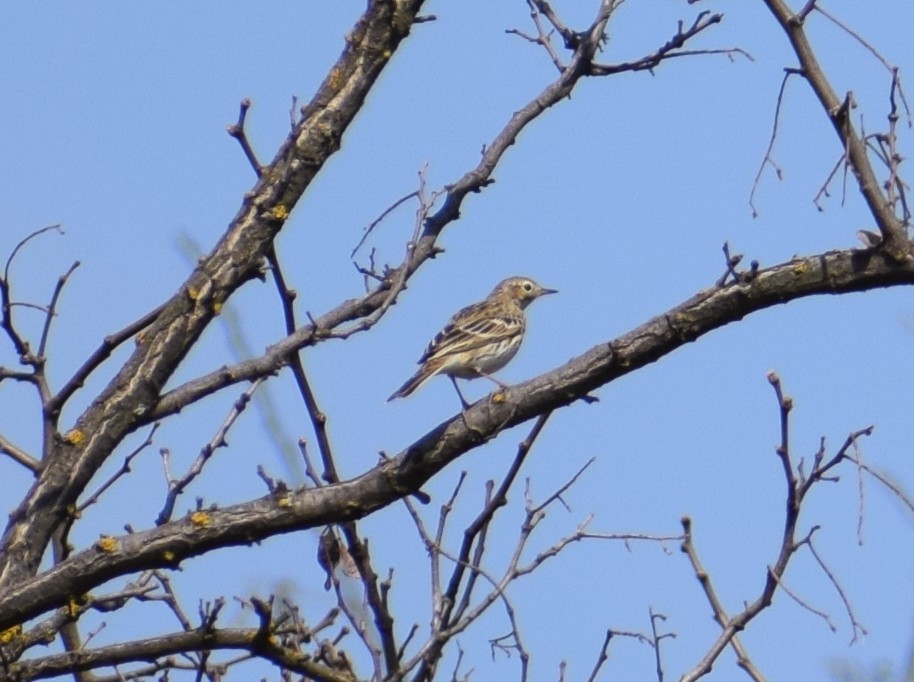
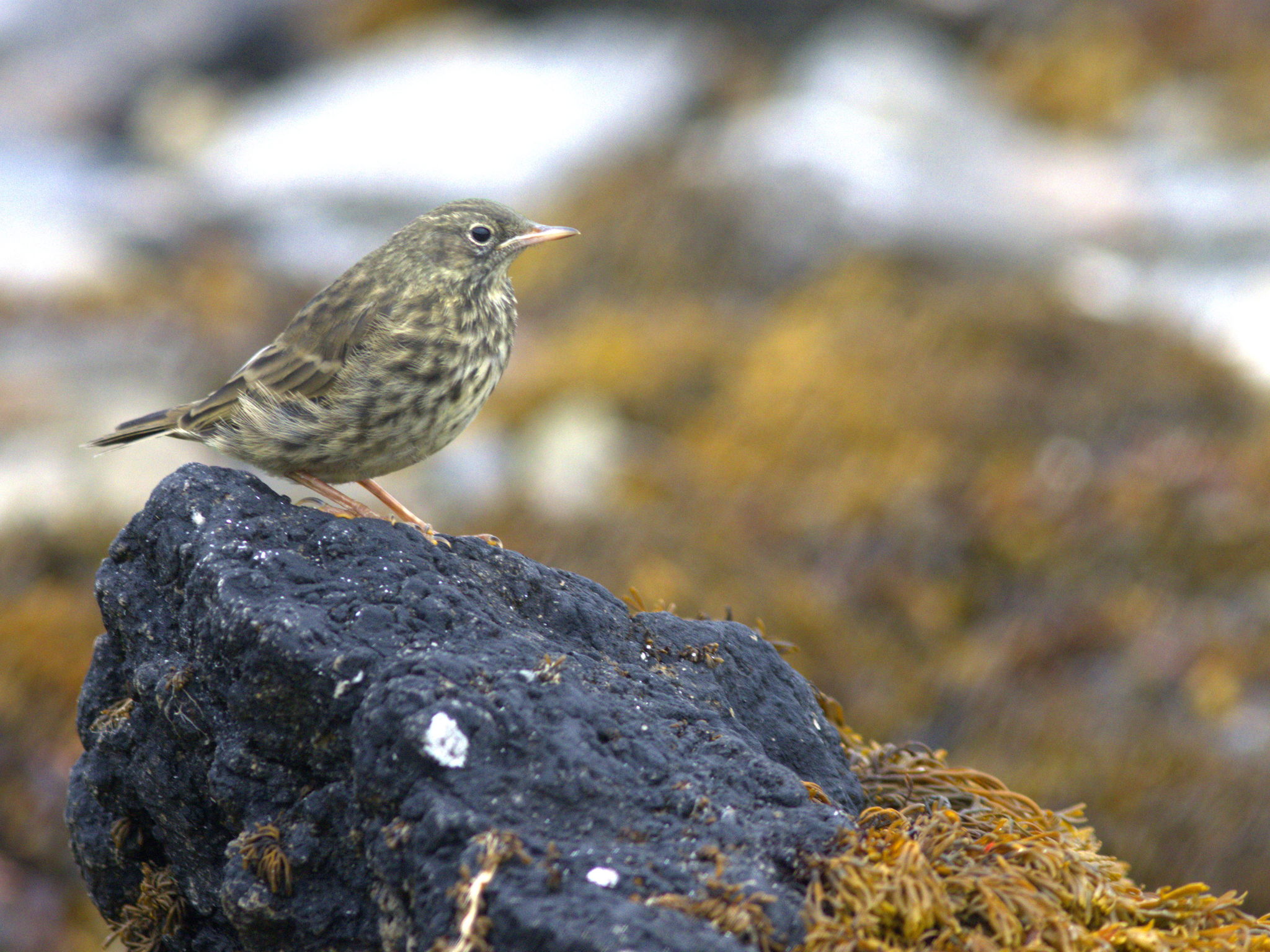
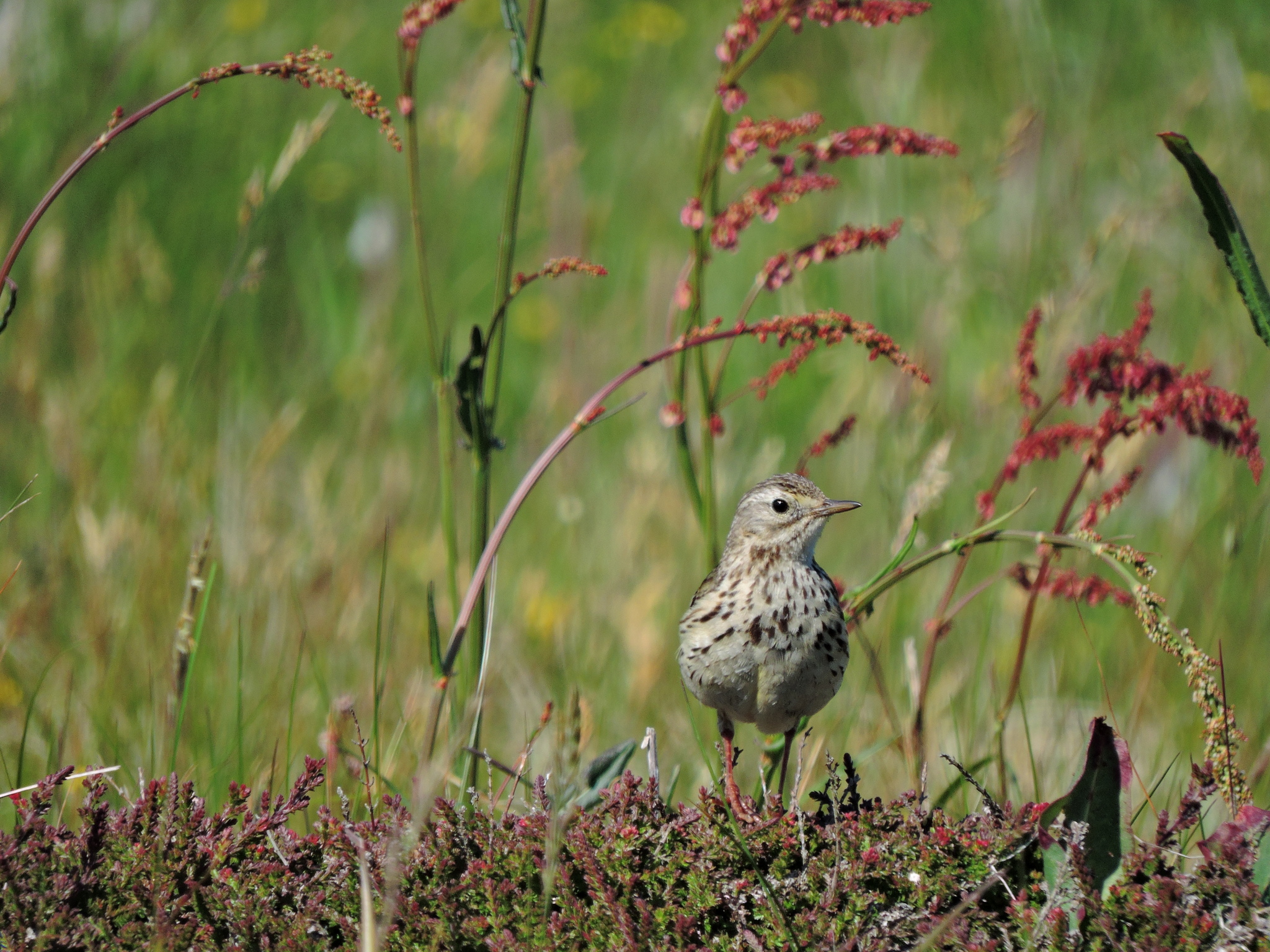
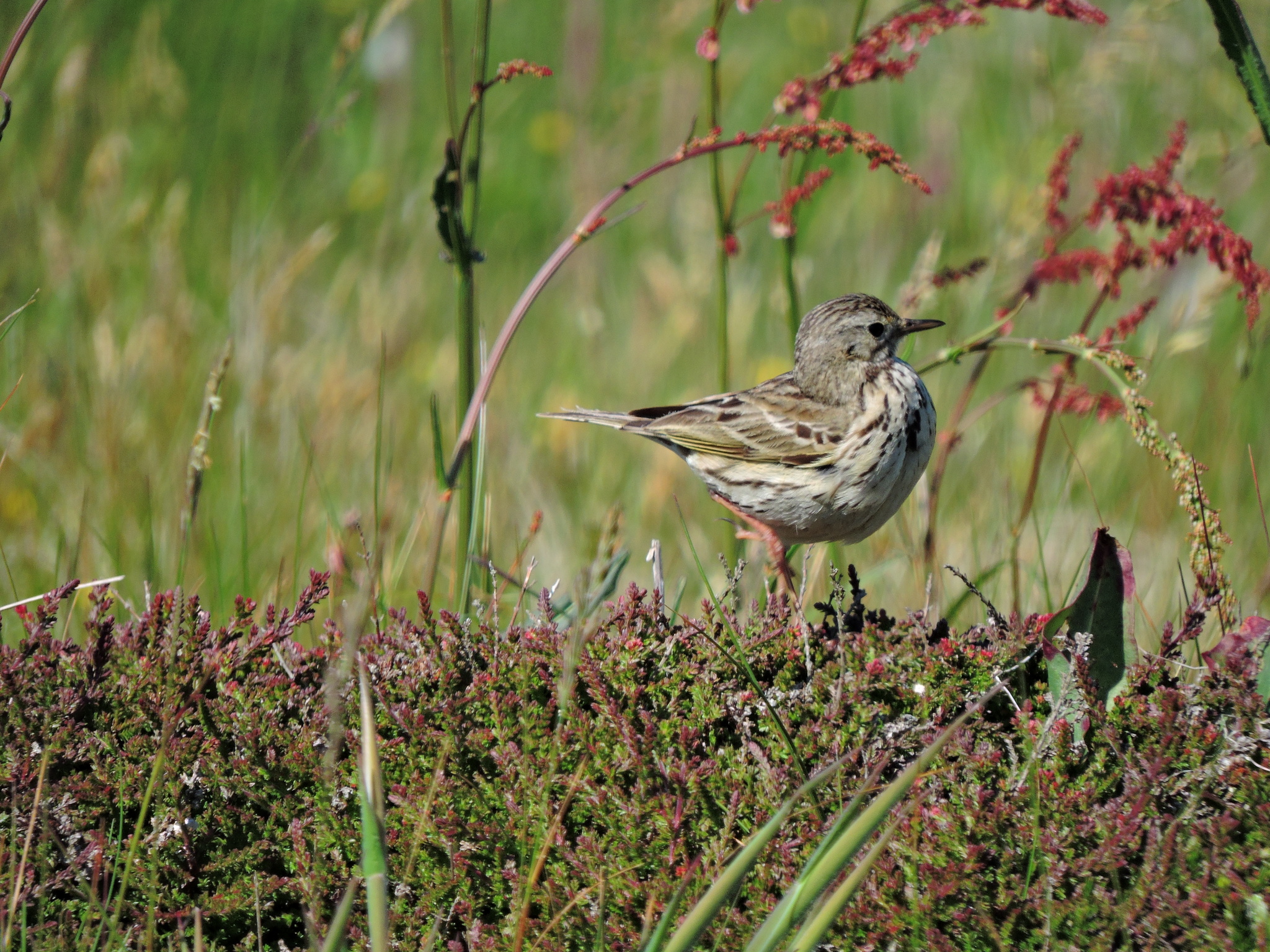
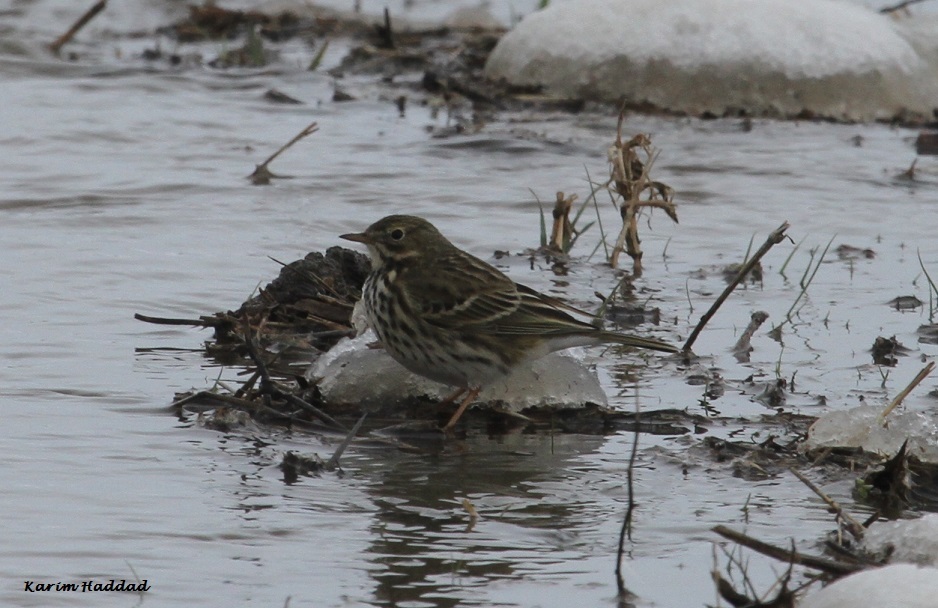
A small, widespread pipit measuring 14.5–15 cm in length and weighing 15–22 g. Plumage is mainly brown above and buff below, with darker barring on most of the plumage. The tail is brown with narrow white lateral edges. It has a thin bill and pale pinkish-yellow legs; the rear claw is conspicuously long, longer than the rest of the rear toes. Birds breeding in Ireland and western Scotland are slightly darker than those elsewhere. Call is a faint tsi-tsi; the simple repetitive song is given in a short song flight.
Identification
Similar to the red-throated pipit (A. cervinus), which is more heavily barred and has an orange-red throat in summer. Similar to the tree pipit (A. trivialis), which is slightly larger, less heavily streaked, has stronger facial markings, and a shorter rear claw. The meadow pipit's song accelerates towards the end, while the tree pipit's song slows down.
Distribution & Habitat
Breeds across the Palearctic from south-eastern Greenland and Iceland through Scandinavia and eastern Europe to just east of the Ural Mountains, south to central France and Romania, with an isolated population in the Caucasus Mountains. Also breeds in small numbers in the mountains of Spain, Italy, and the northern Balkans. Winters in southern Europe, North Africa, and southwestern Asia. Inhabits open grassland, moorland, and heathland; also occurs on arable land, saltmarshes, and open woodland in winter. Breeding densities range from 80 pairs/km² in northern Scandinavia to 5–20 pairs/km² in southern grassland and 1/km² in arable farmland.
Behavior & Ecology
Nests on the ground concealed in dense vegetation, with two to seven eggs (usually three to five); eggs hatch after 11–15 days, chicks fledge 10–14 days after hatching. Two broods are raised annually. Diet consists mainly of insects and other invertebrates less than 5 mm long, supplemented with grass, sedge, rush, and heather seeds, and crowberry berries in winter. It is one of the most important nest hosts of the cuckoo and an important prey species for merlins and hen harriers. Fairly terrestrial, always feeding on the ground but using elevated perches as vantage points.
Conservation
The total population is estimated at 12 million pairs. There has been a general decline over the past 17 years, most notably in French farmland where the species has declined by 68%.
Culture
The name 'pipit' is onomatopoeic, first documented in 1768, derived from the call note. Old folk names include 'chit lark', 'peet lark', 'tit lark', and 'titling', referring to its small size and superficial resemblance to a lark.
Source: Wikipedia · CC BY-SA 3.0
Taxonomy
- Order
- Passeriformes
- Family
- Motacillidae
- Genus
- Anthus
- eBird Code
- meapip1
Distribution
breeds Iceland through western and northern Europe eastward to western Russia; winters to northern Africa and central Asia
Data Sources
Species description from Wikipedia, licensed under CC BY-SA 3.0.
Bird images and sounds sourced from GBIF, contributed by citizen scientists worldwide under Creative Commons licenses.
Taxonomy data from AviList 2025.