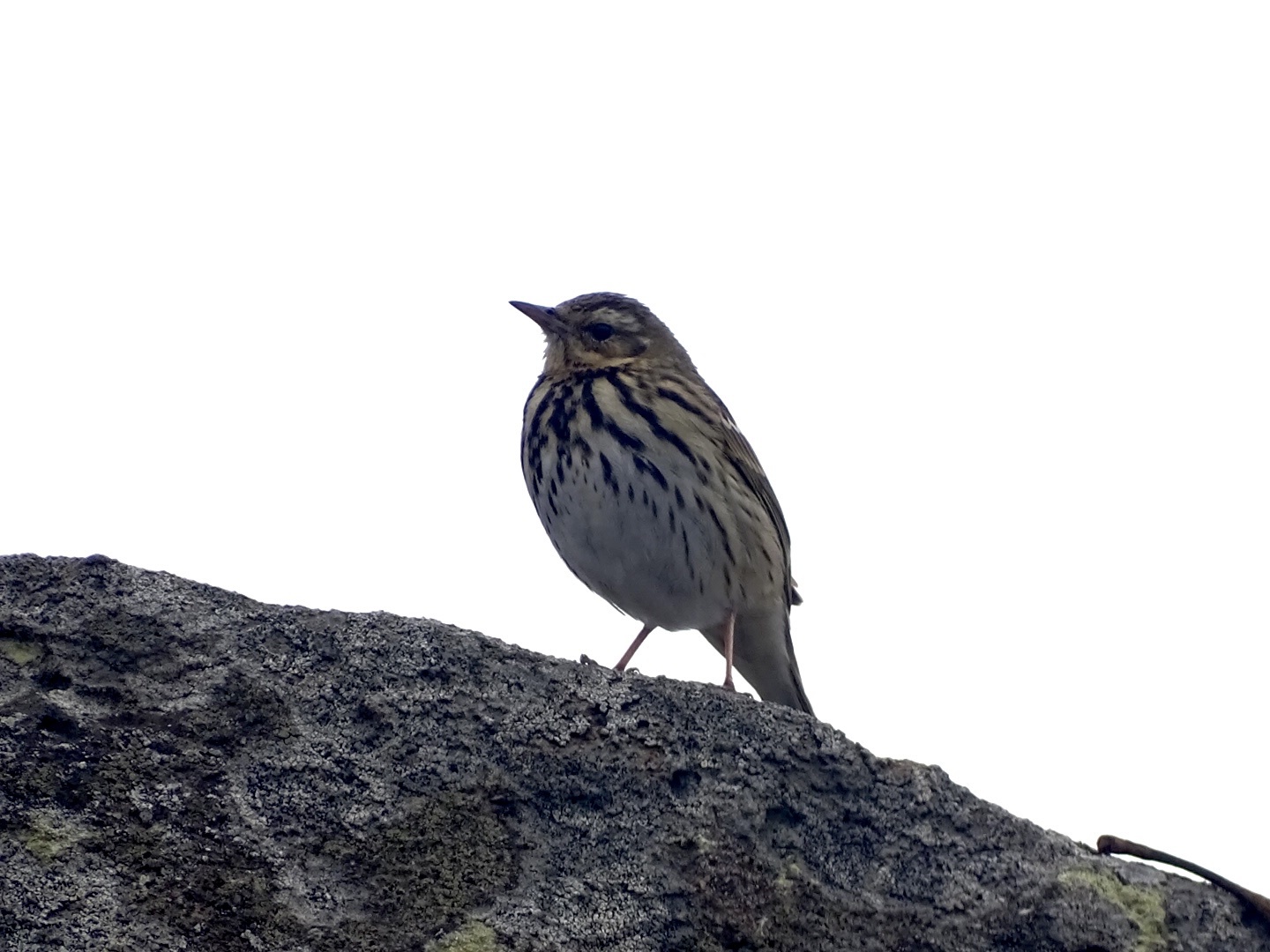
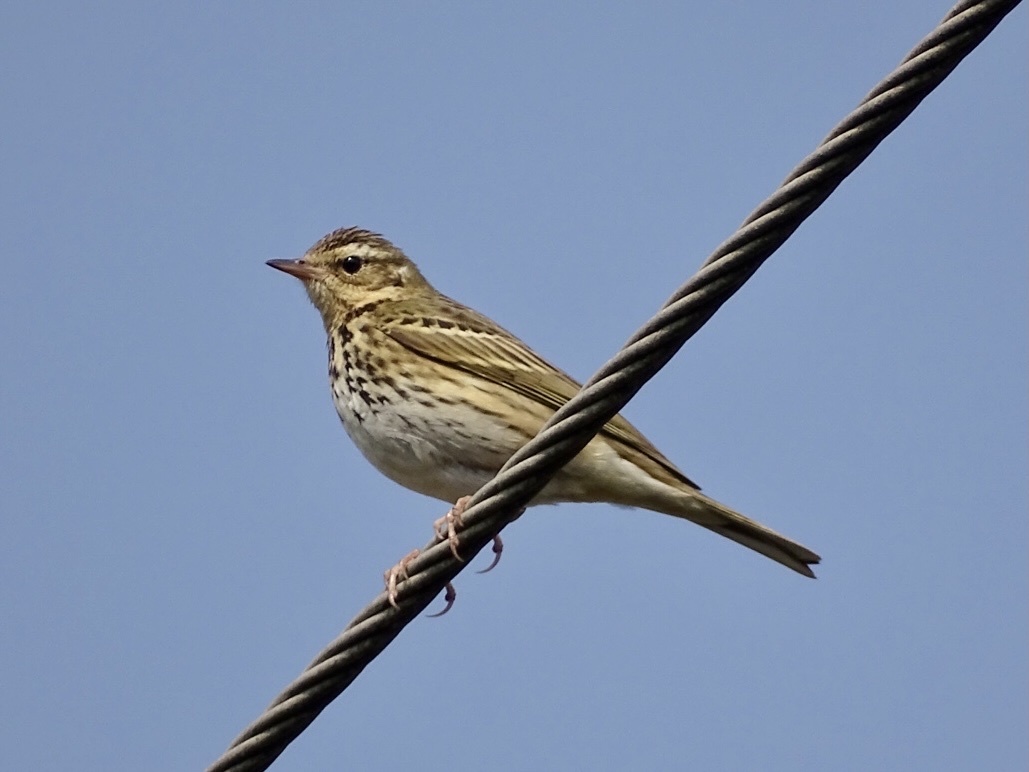
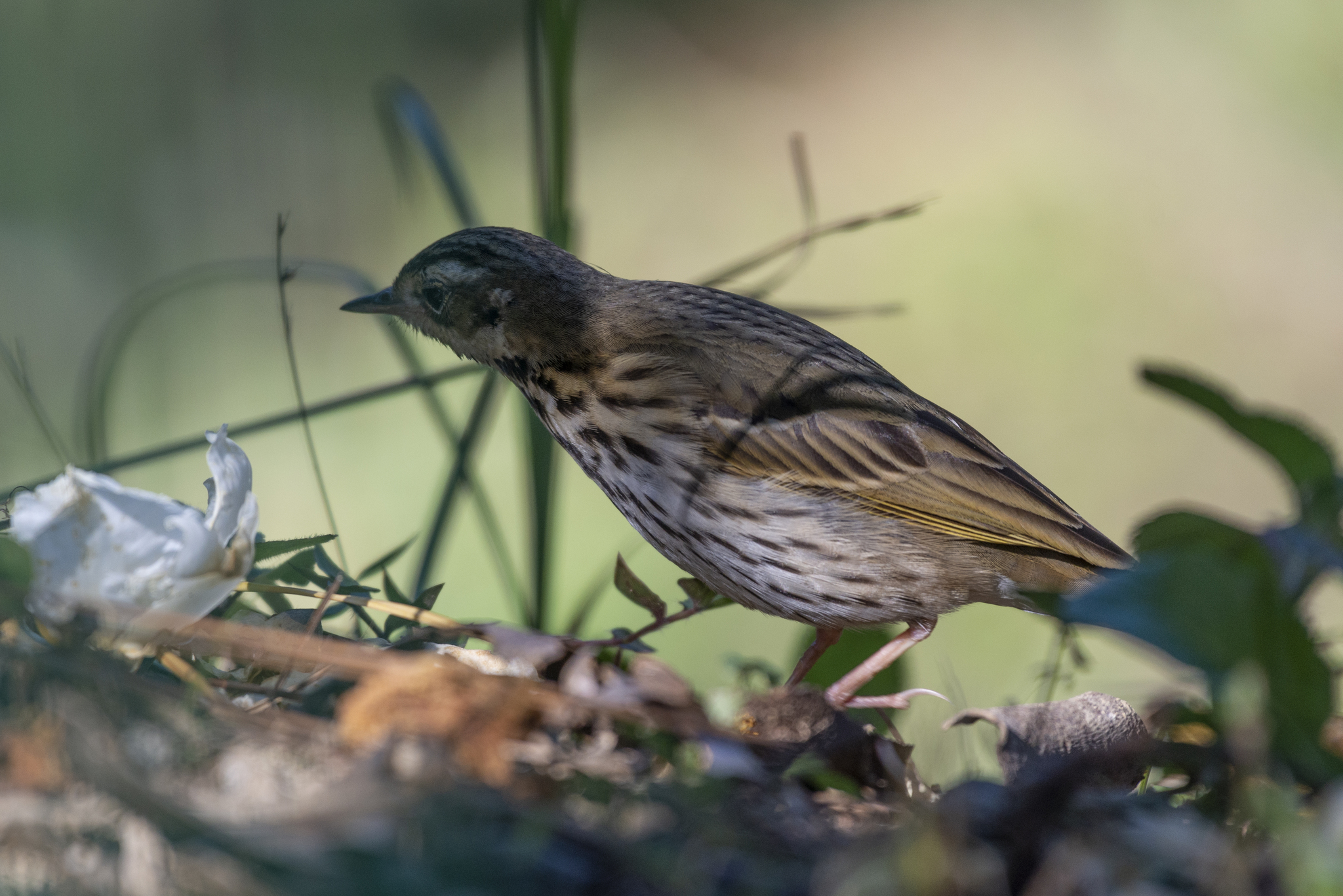
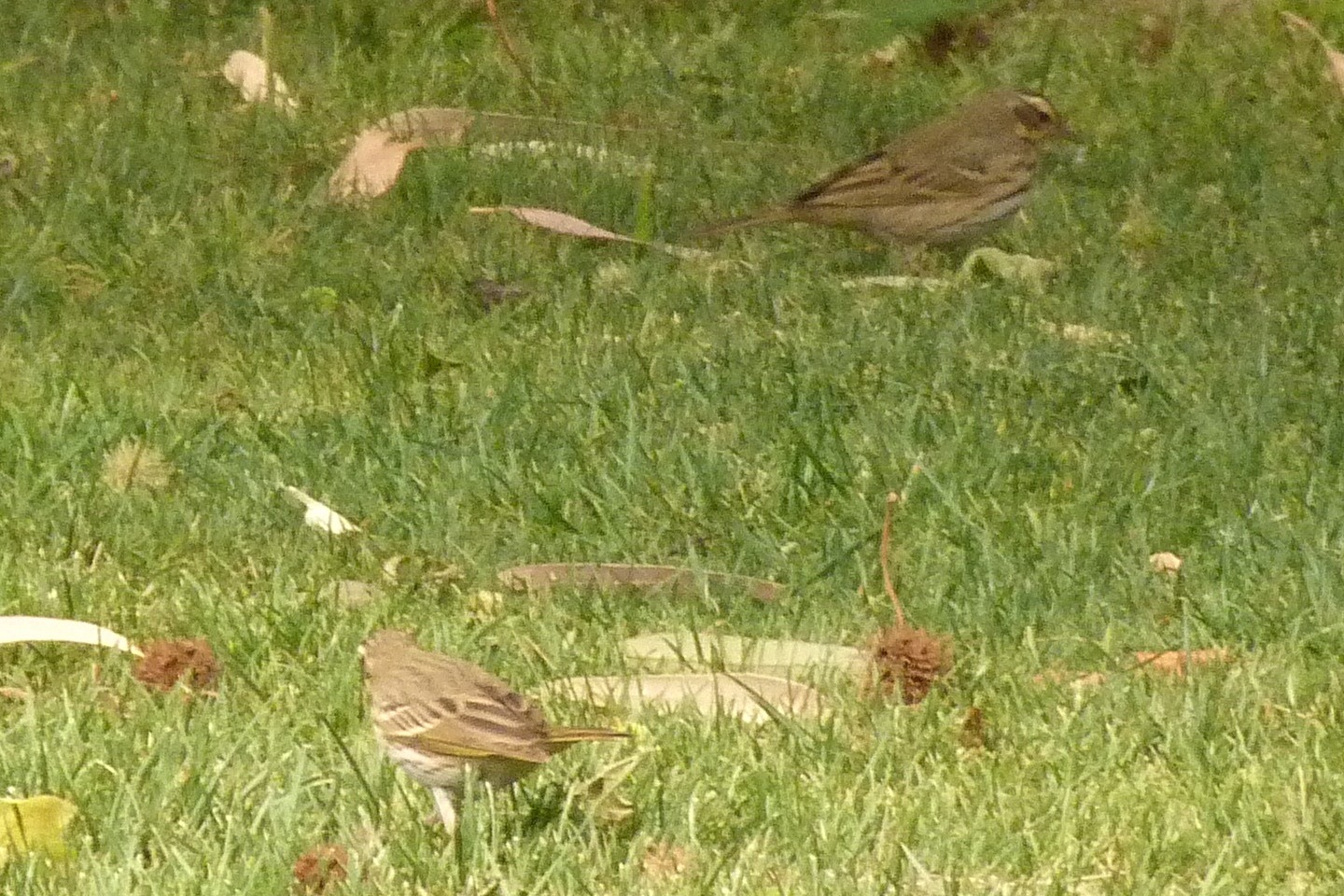
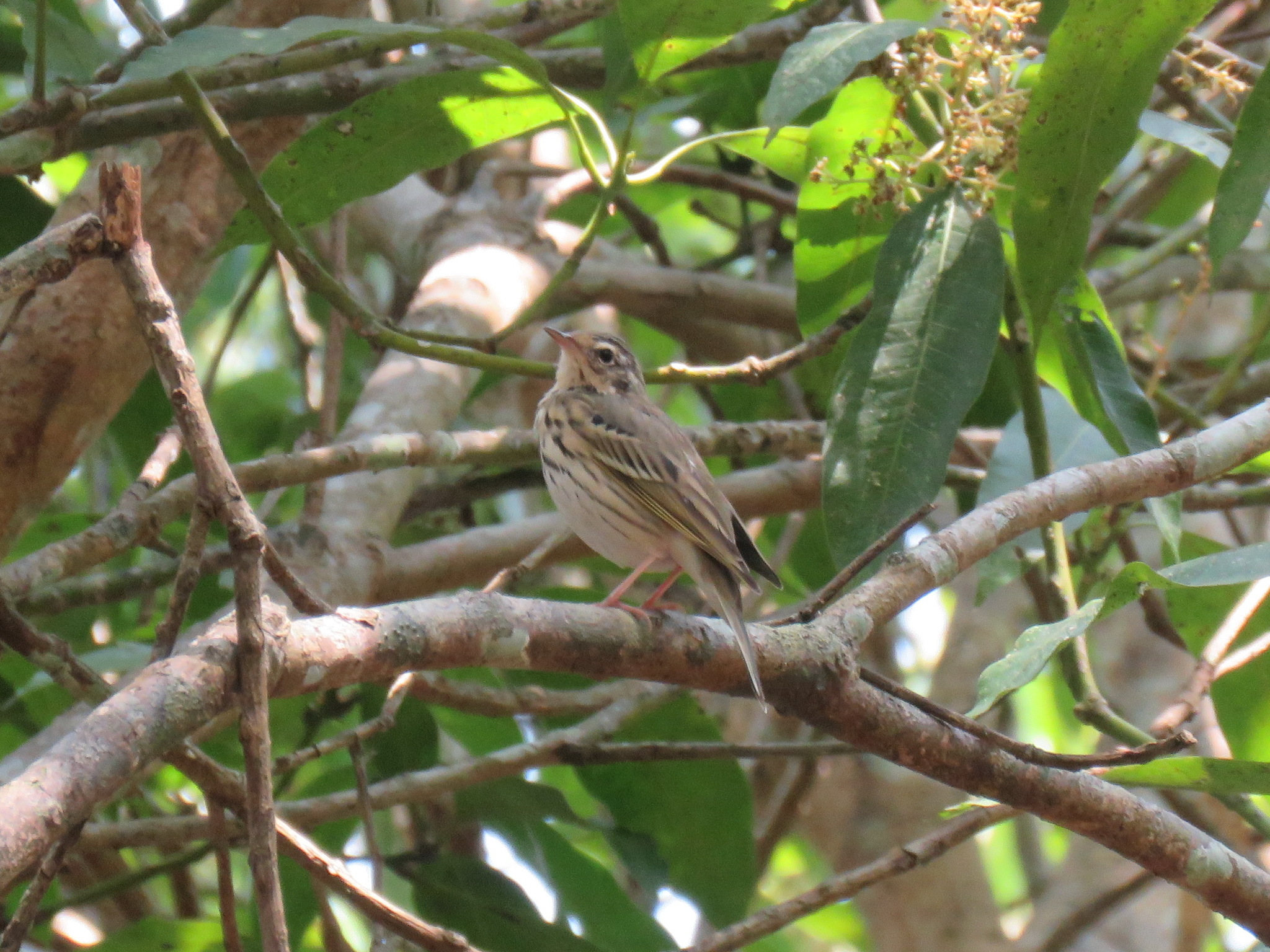
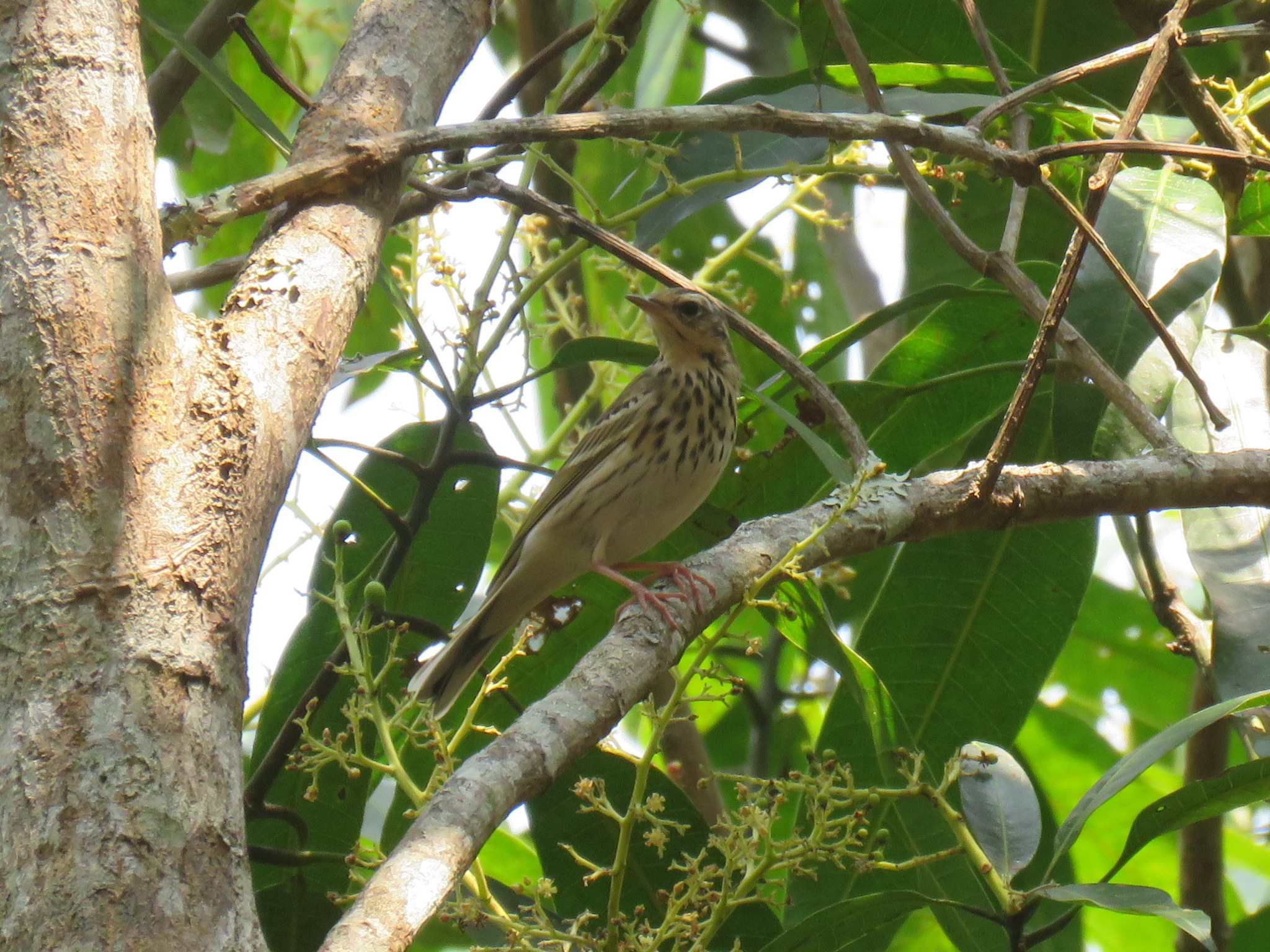
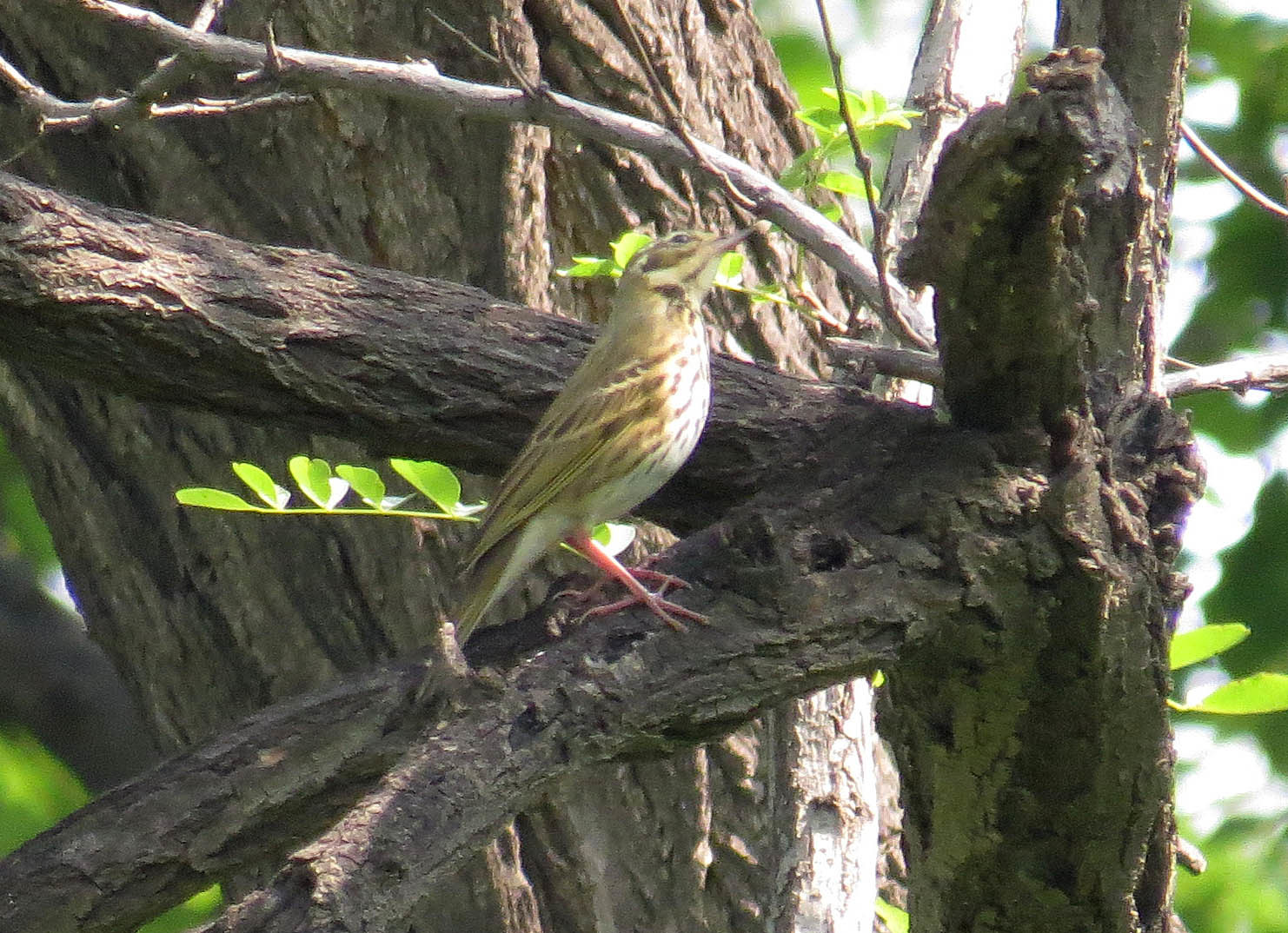
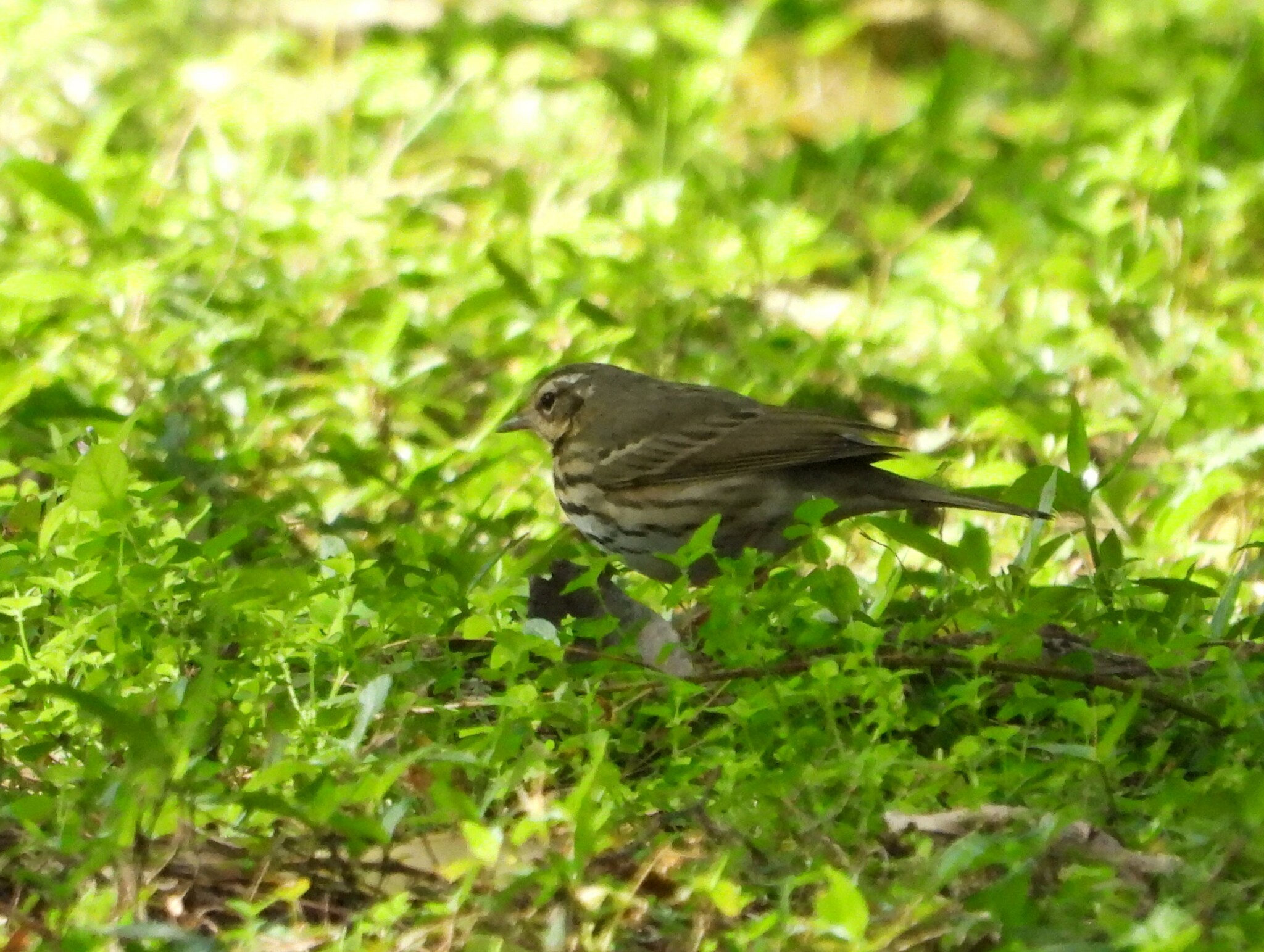
Olive-backed Pipit
Anthus hodgsoni
树鹨
Introduction
Small passerine with a distinctive flight song. Breeding range extends from Himalayas through East Asia to northeastern European Russia. Winter range includes Indian subcontinent, Southeast Asia, and regions beyond. Breeds in wooded areas and groves; winters in open terrain, readily taking to trees when disturbed. Characteristic jerky, undulating flight movements accompany flight song. Similar to tree pipit but distinguishable by specific features.
Description
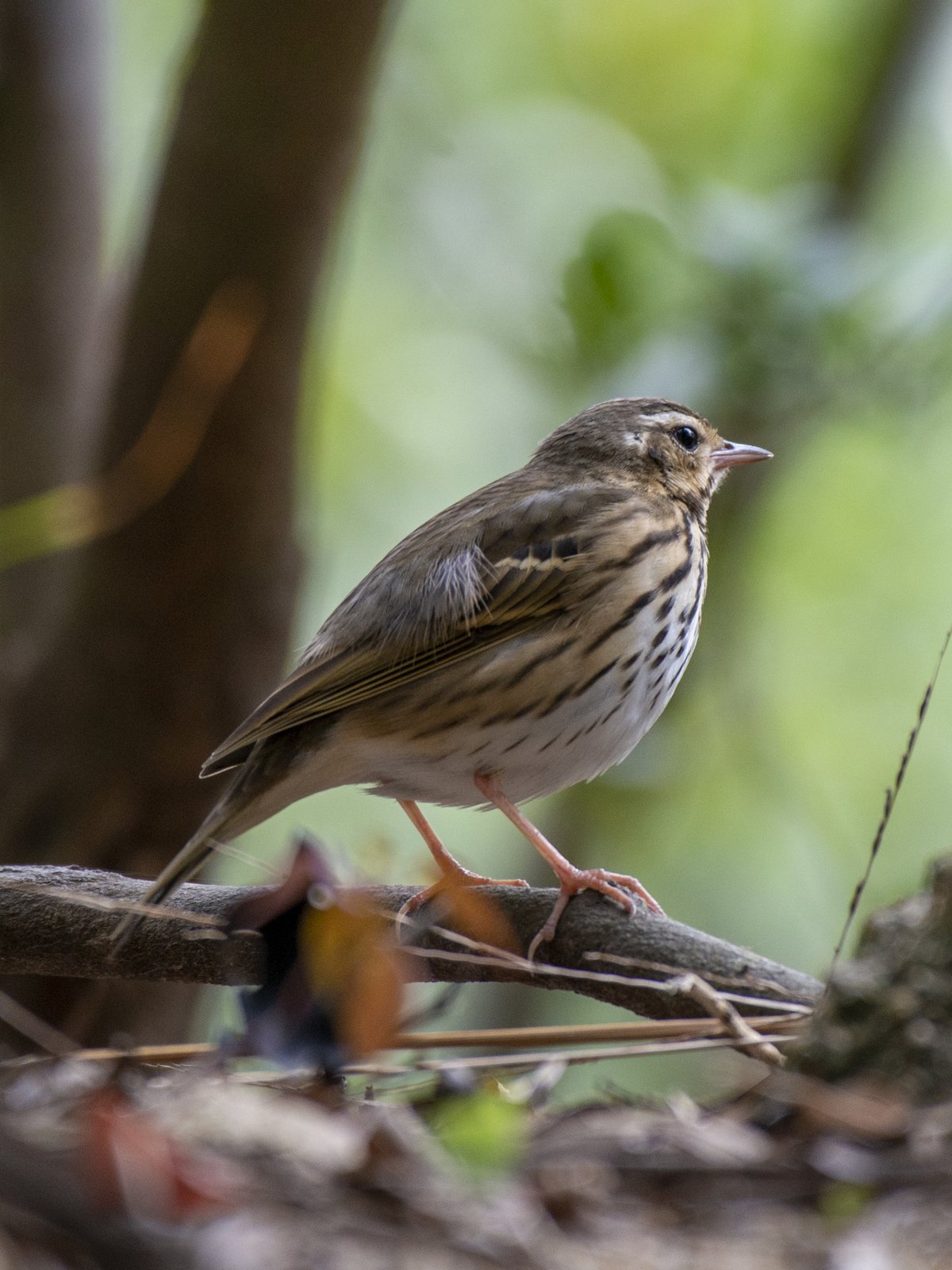
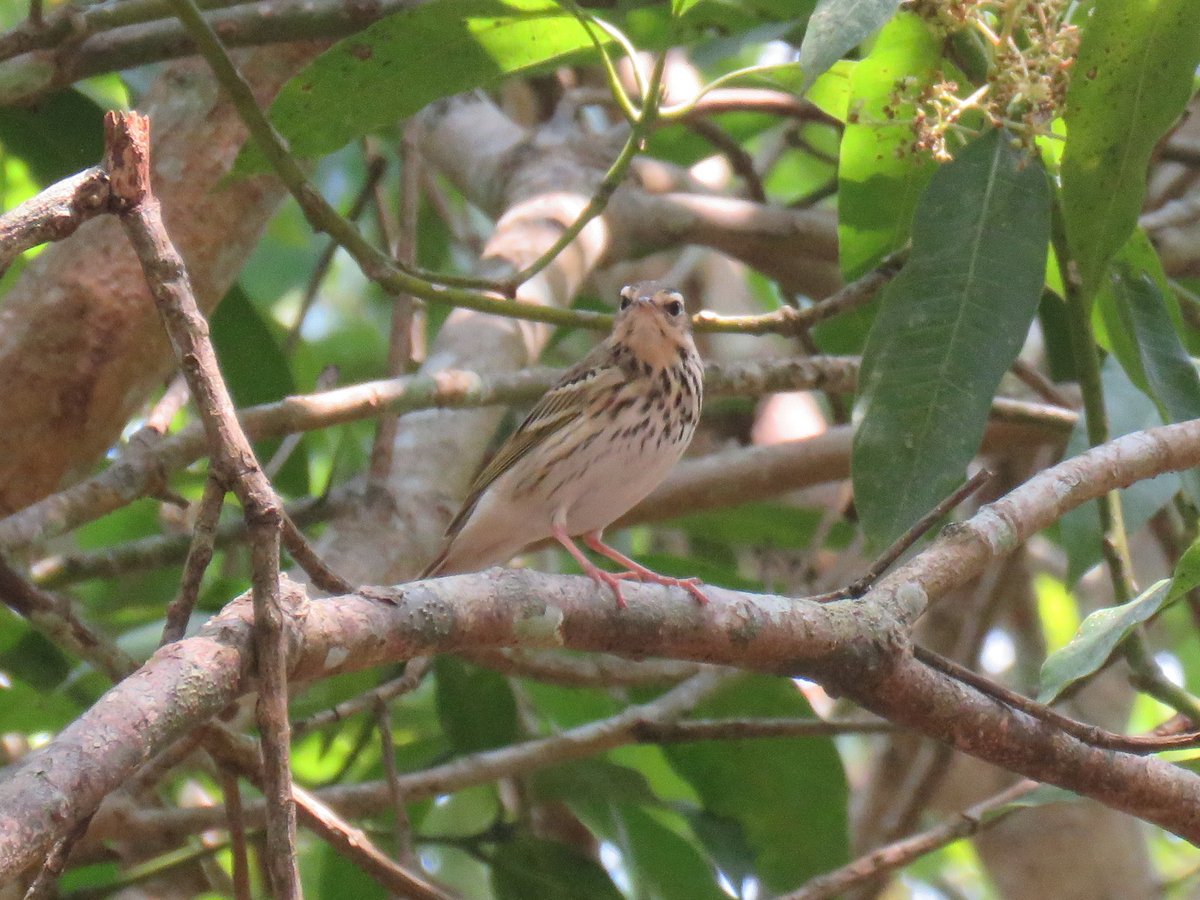
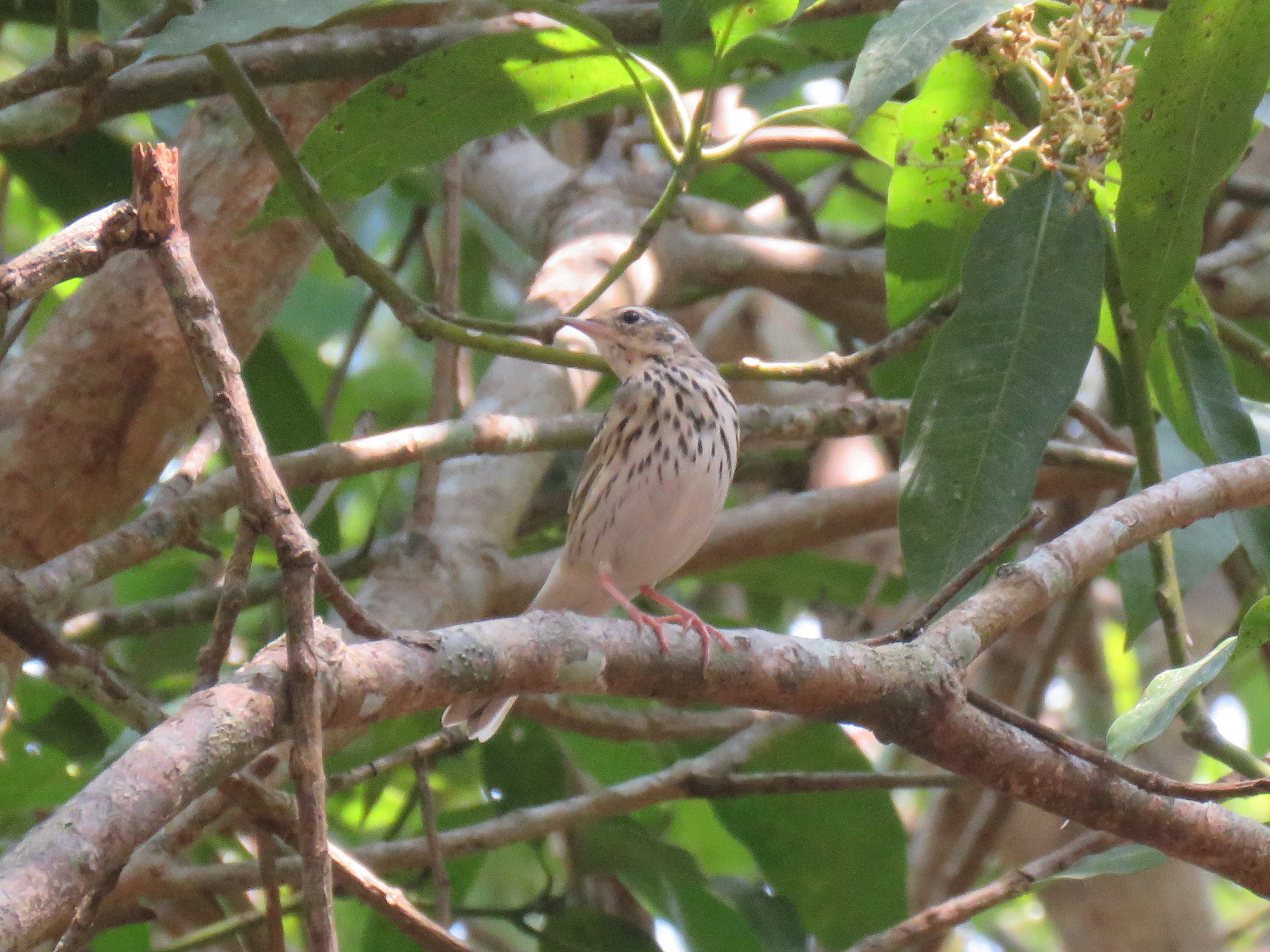
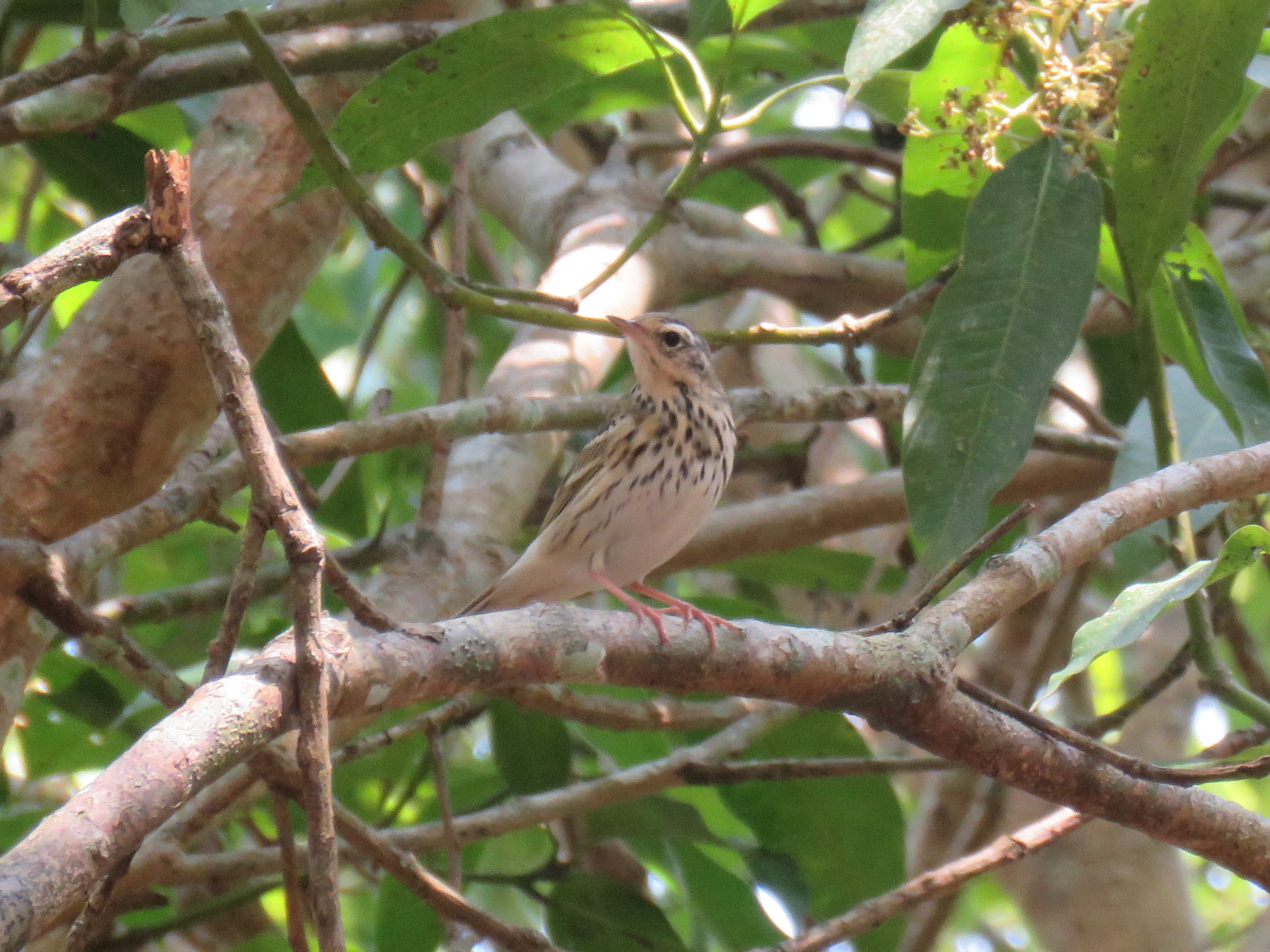
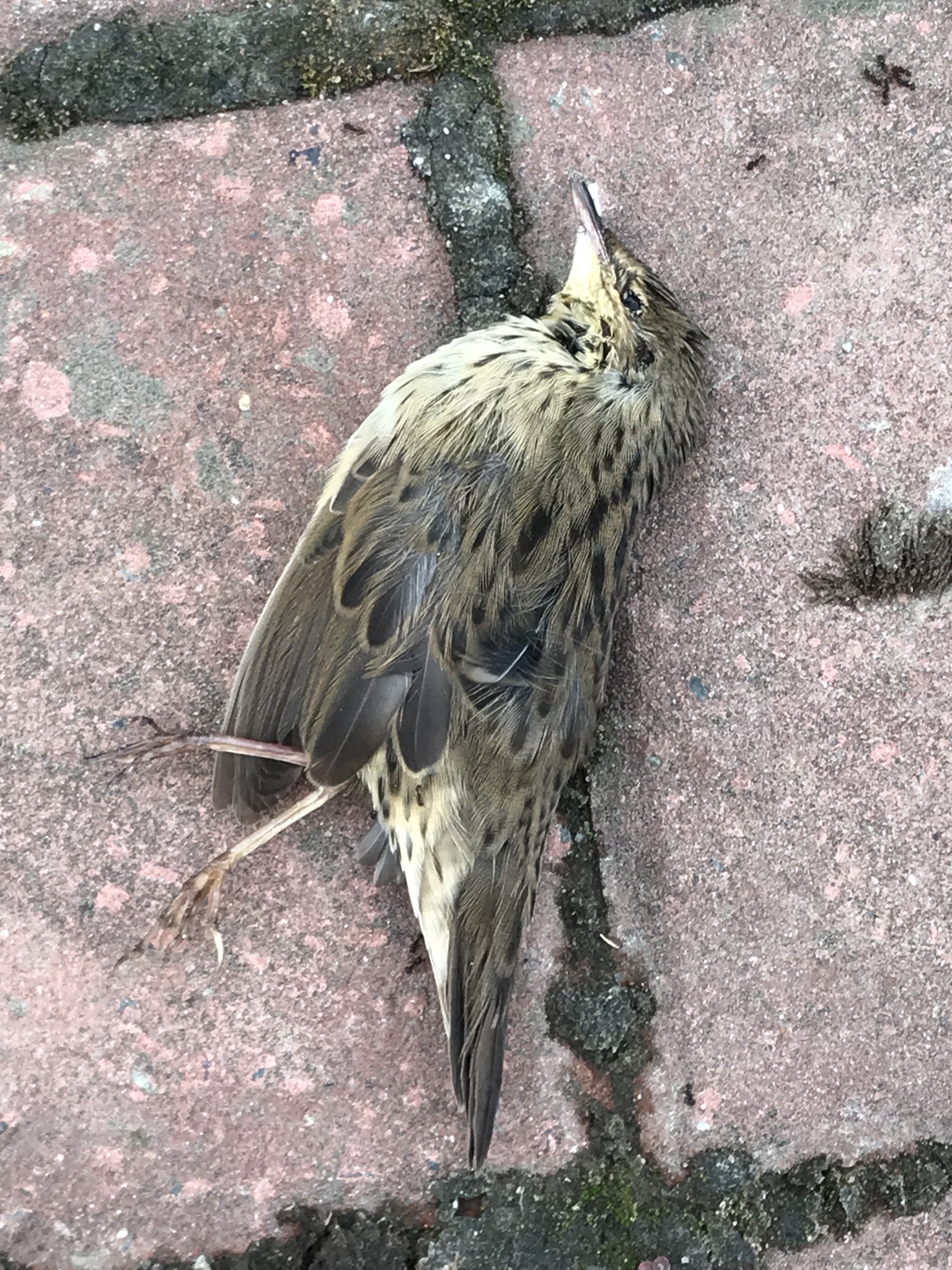
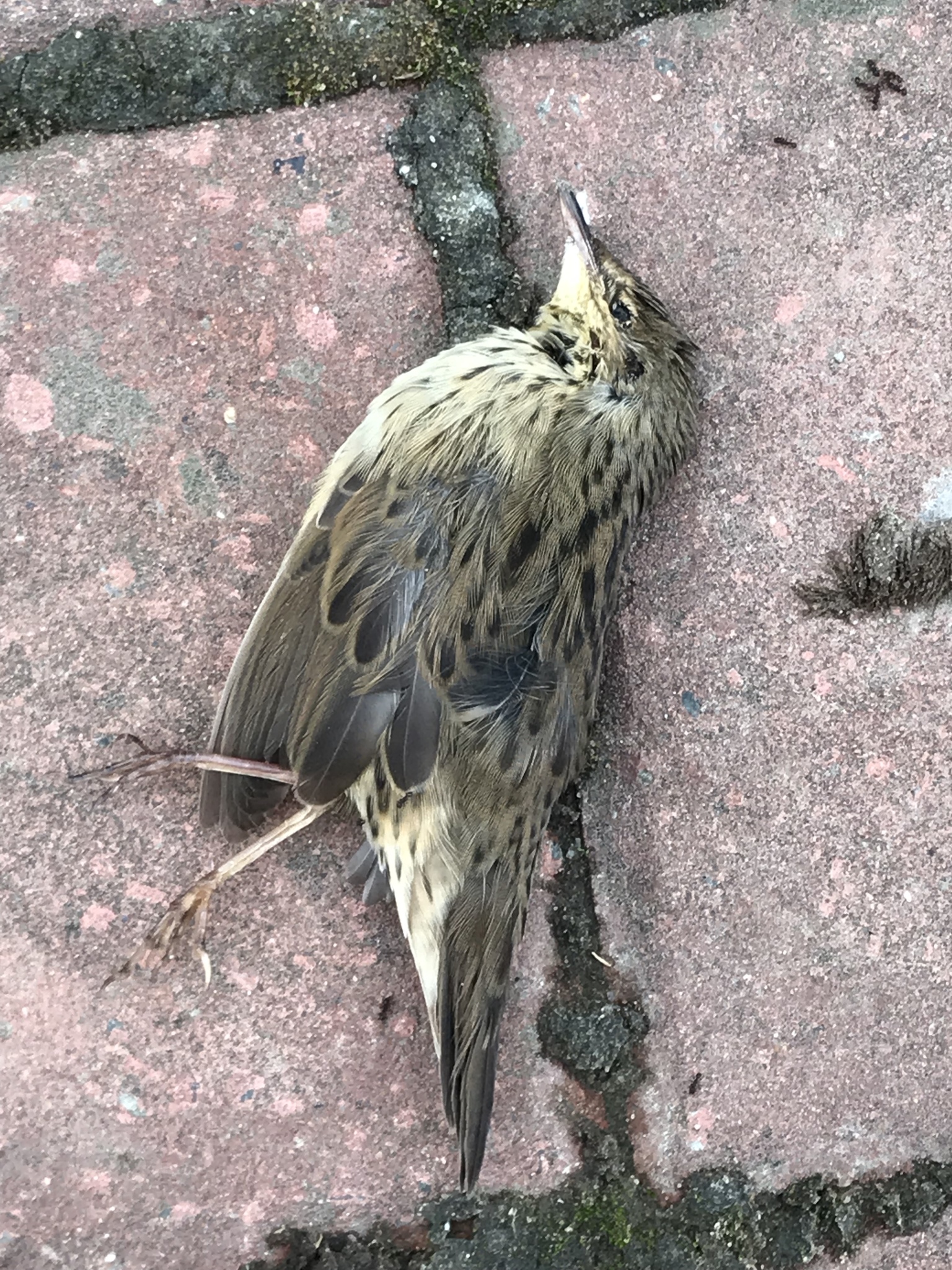
A small, sparrow-sized bird measuring approximately 15 cm in length. The upperparts are greenish-brown, intricately streaked with darker brown. A prominent whitish supercilium adorns the face, complemented by a double wingbar. The outer tail feathers are distinctly white. Underparts range from whitish to buff, with dark brown streaking concentrated on the breast and flanks. The sexes appear identical in plumage. The overall impression is of a well-patterned, olive-tinged pipit with rather bold facial markings.
Identification
This species closely resembles the tree pipit, presenting a potential identification challenge. The key distinguishing feature lies in the back coloration, which is more olive-toned and less heavily streaked than that of the tree pipit. The head pattern provides additional clues, with a more distinctly marked supercilium. When observed in flight, the combination of the olive-toned upperparts, prominent supercilium, and white outer tail feathers helps separate it from its lookalike cousin. The song, if heard, provides confirmation: while similar in quality to the tree pipit's, it is delivered at a faster tempo and higher pitch.
Distribution & Habitat
Breeds across an extensive range from the Himalayan region of Pakistan and India, westward through Nepal, across China to Gansu province, extending east through Korea to Japan, and north through central Asia into northeastern European Russia. A rare vagrant to western Europe. Found at elevations up to 4,500 meters in eastern Nepal. Winters broadly across southern Asia, from peninsular India eastward through Southeast Asia to the Philippines. Breeds in groves and wooded biotopes, while wintering grounds feature evergreen woodland in open country.
Behavior & Ecology
Typically encountered singly or in pairs, this ground-dwelling species actively runs about searching for food before taking refuge in nearby trees when disturbed. Its flight appears jerky and undulating. The diet consists primarily of insects, supplemented by grass and weed seeds. The song is lark-like in quality and delivered during flight, similar to the tree pipit but noticeably faster and higher pitched. A simple tseep or spek call is also given, closely resembling that of the tree pipit. Breeding occurs from May to July, with two broods typical. The nest is a cup of moss and grass situated on the ground beneath grass tufts or boulders in open woodland and scrub. Clutches contain 3-5 eggs, usually four, dark brown with darker spotting.
Conservation
Not assessed in the provided source material.
Culture
No cultural significance or folklore information provided.
Source: Wikipedia · CC BY-SA 3.0
Taxonomy
- Order
- Passeriformes
- Family
- Motacillidae
- Genus
- Anthus
- eBird Code
- olbpip
Vocalizations
Subspecies (2)
-
Anthus hodgsoni hodgsoni
breeds Himalayas to China and Japan; winters to southeastern Asia
-
Anthus hodgsoni yunnanensis
breeds northeastern Eurasia; winters to India, Myanmar, Philippines, and Borneo
Data Sources
Species description from Wikipedia, licensed under CC BY-SA 3.0.
Bird images and sounds sourced from GBIF, contributed by citizen scientists worldwide under Creative Commons licenses.
Taxonomy data from AviList 2025.