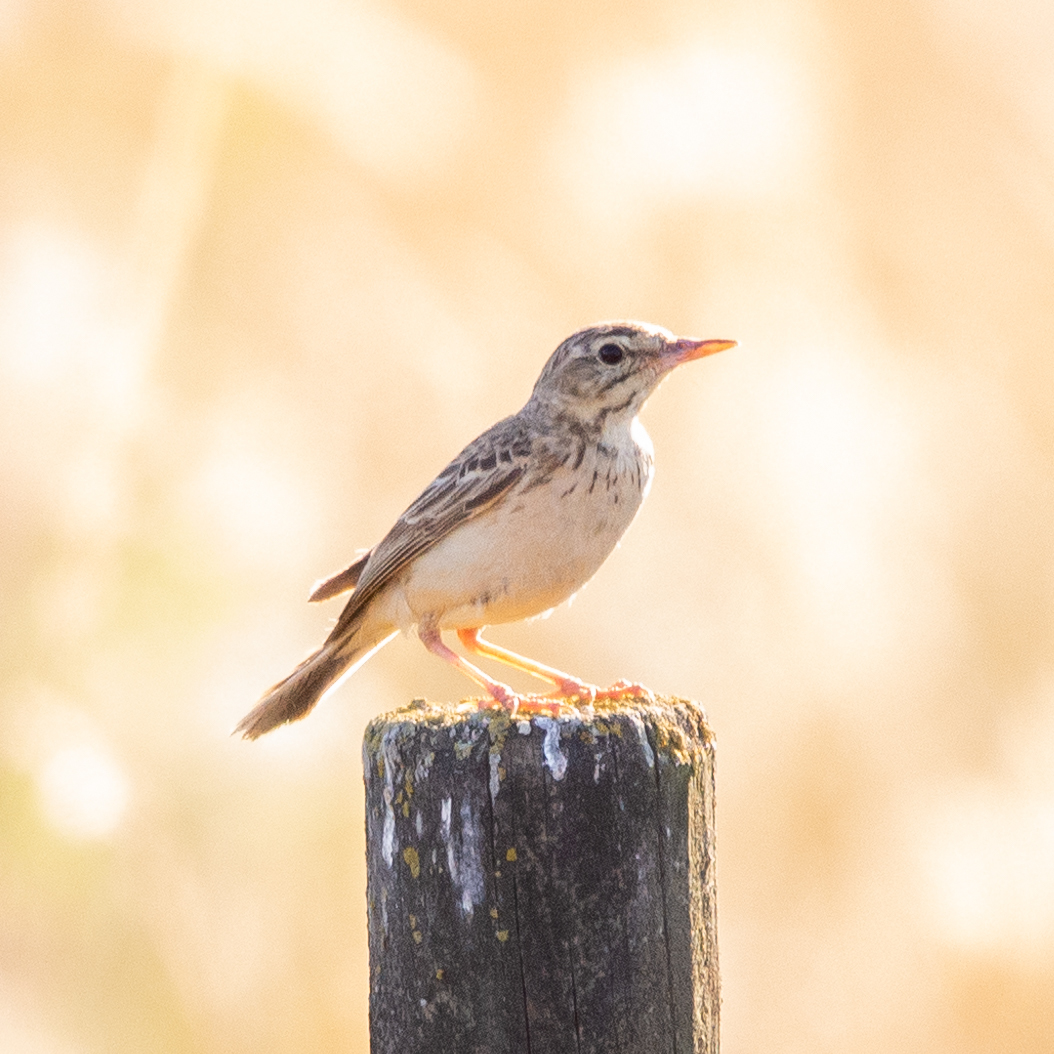
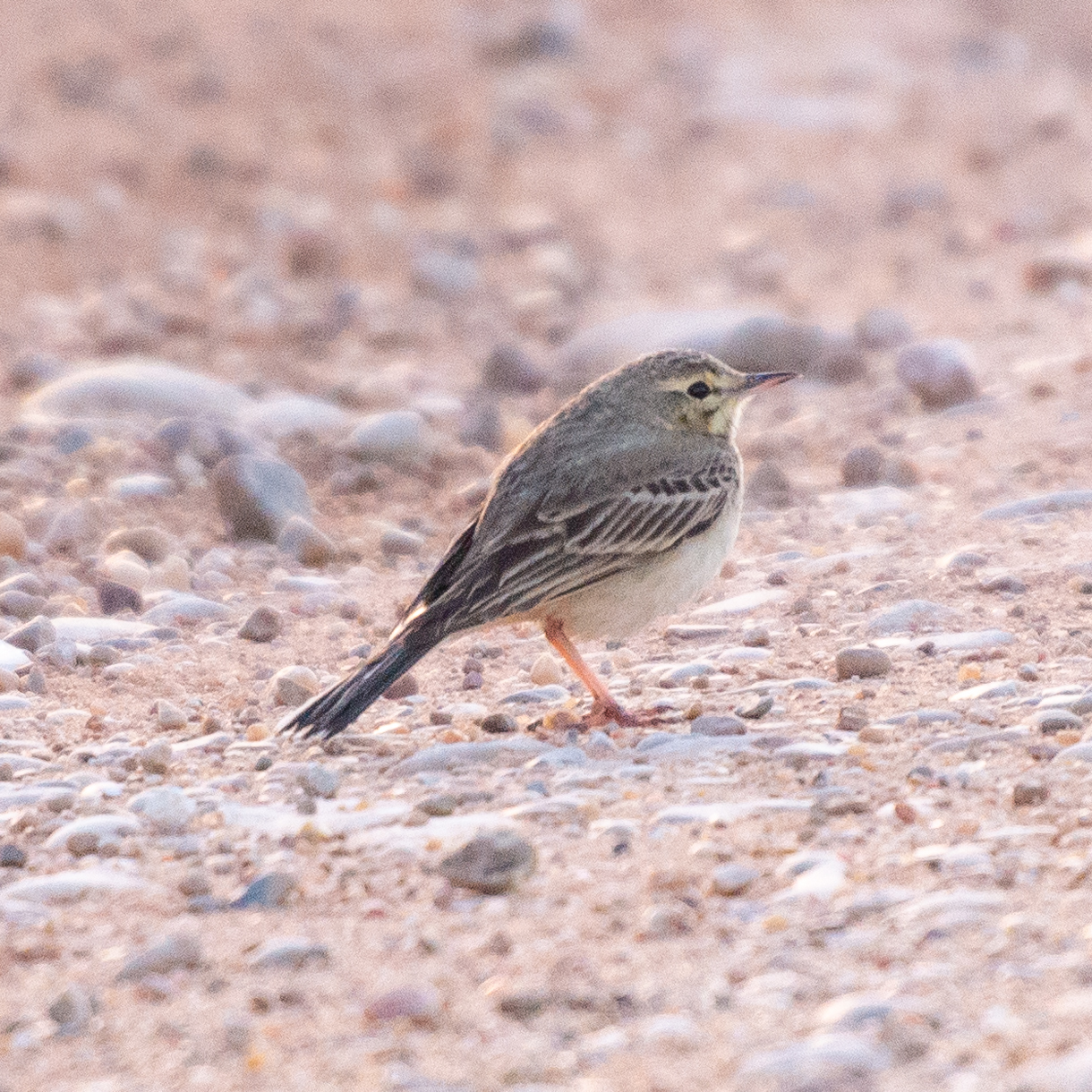
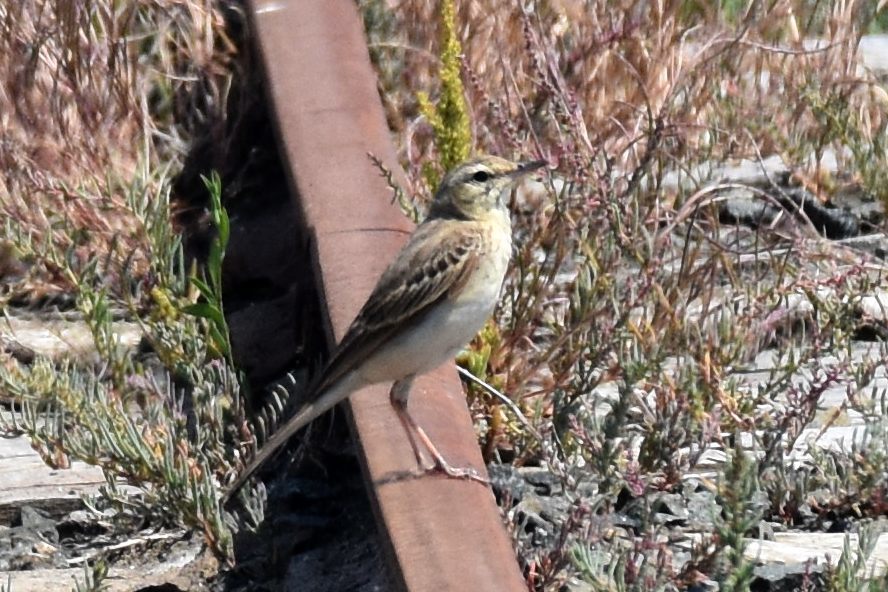
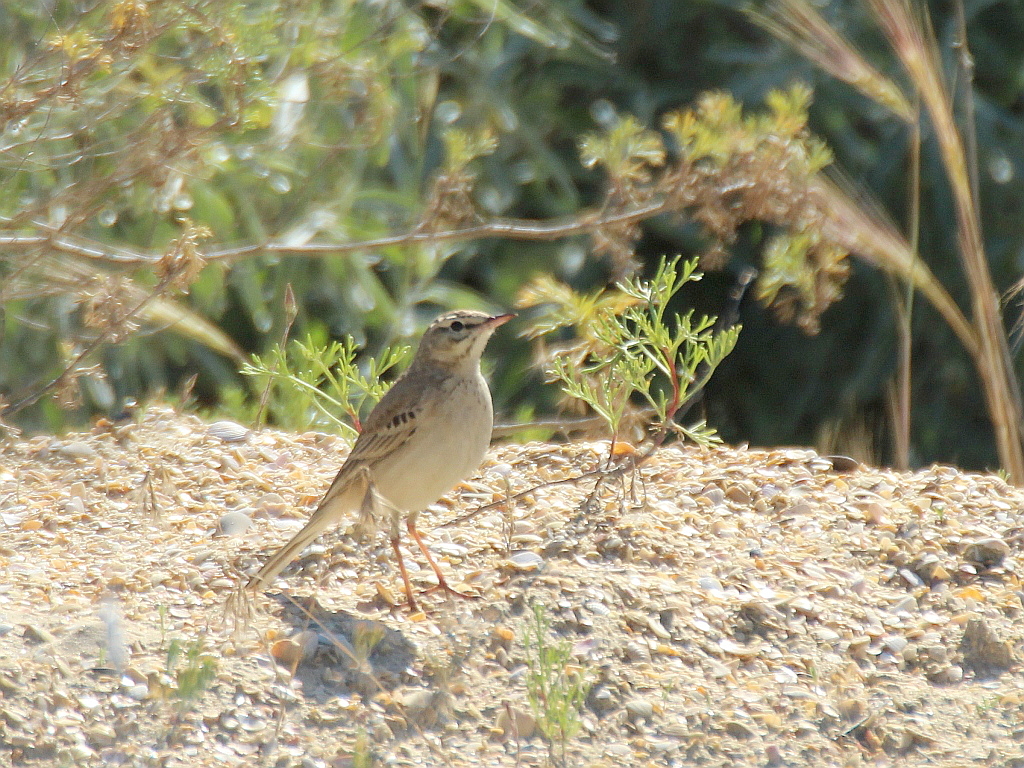
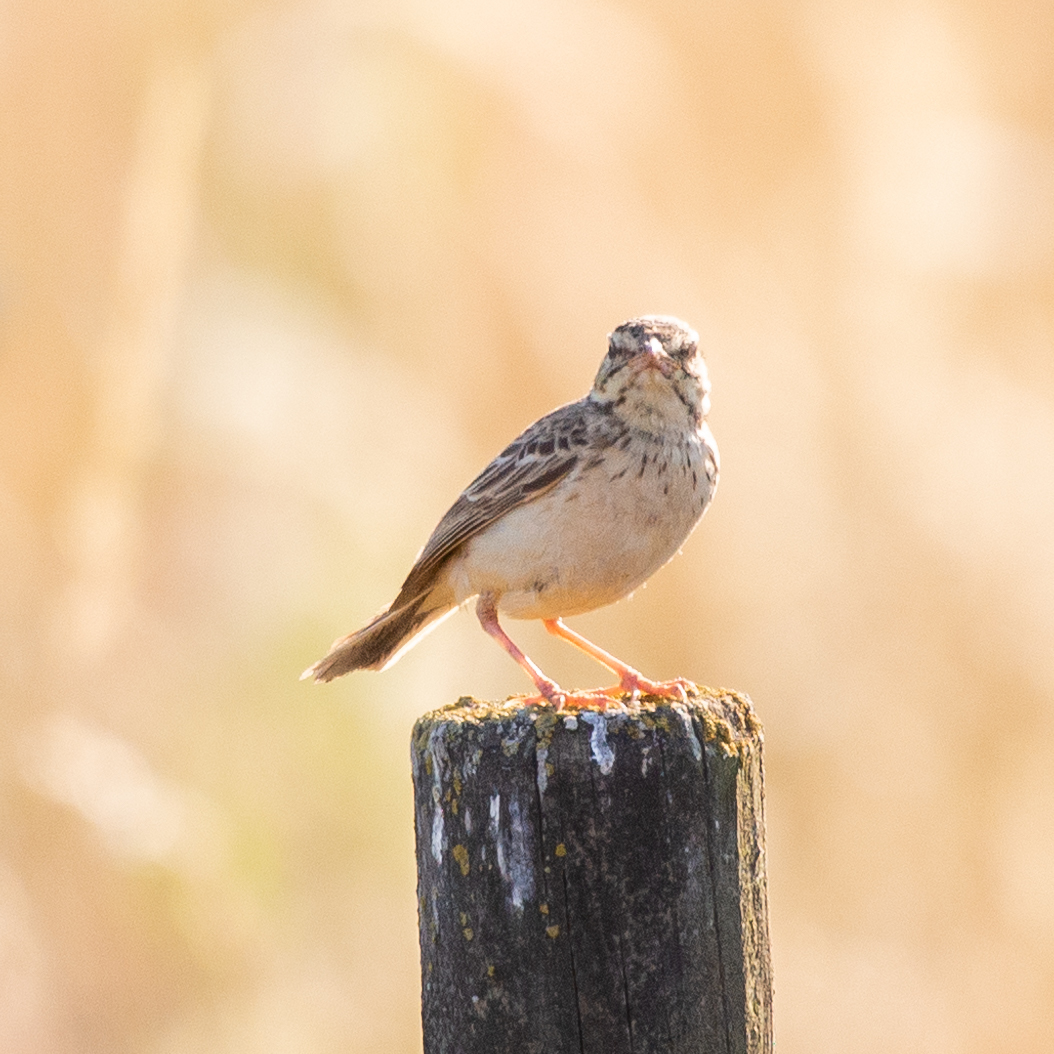
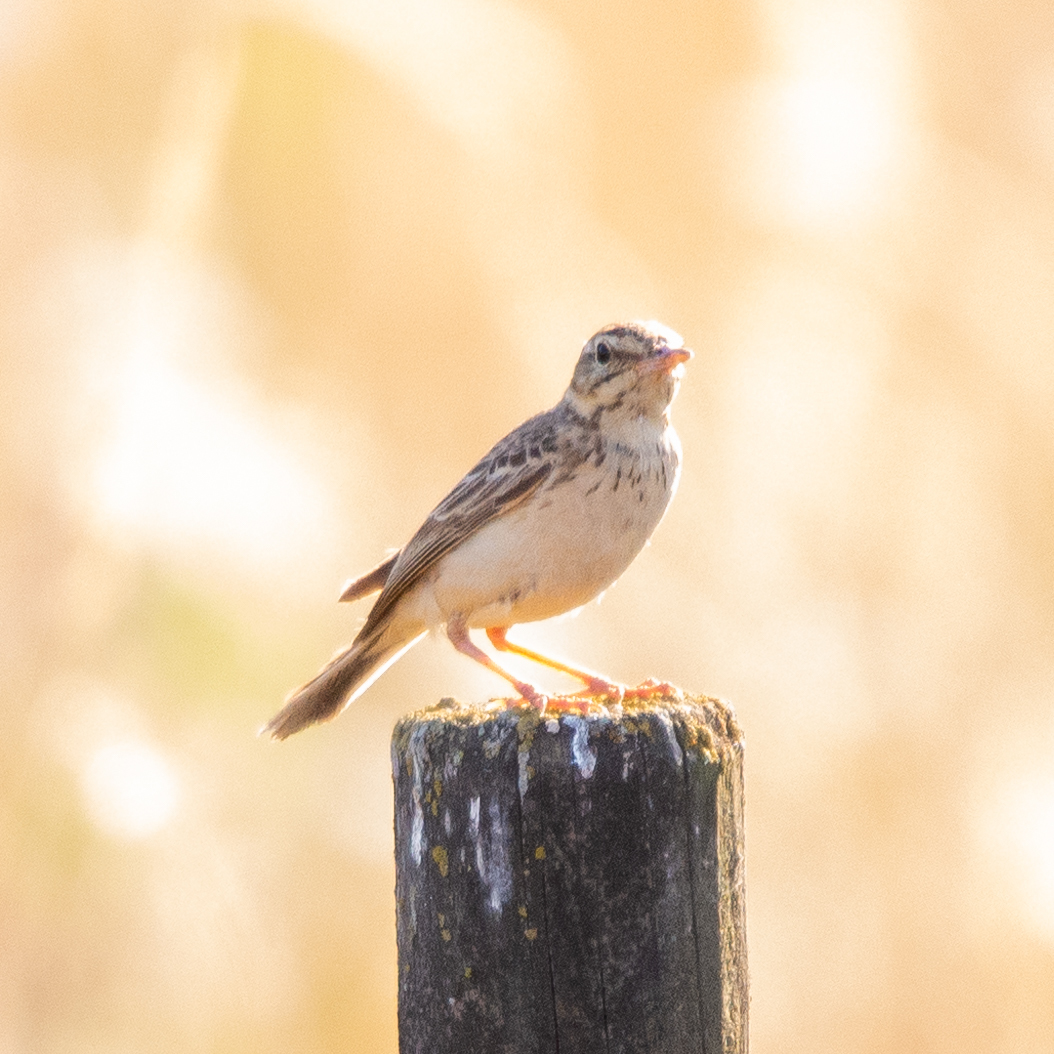
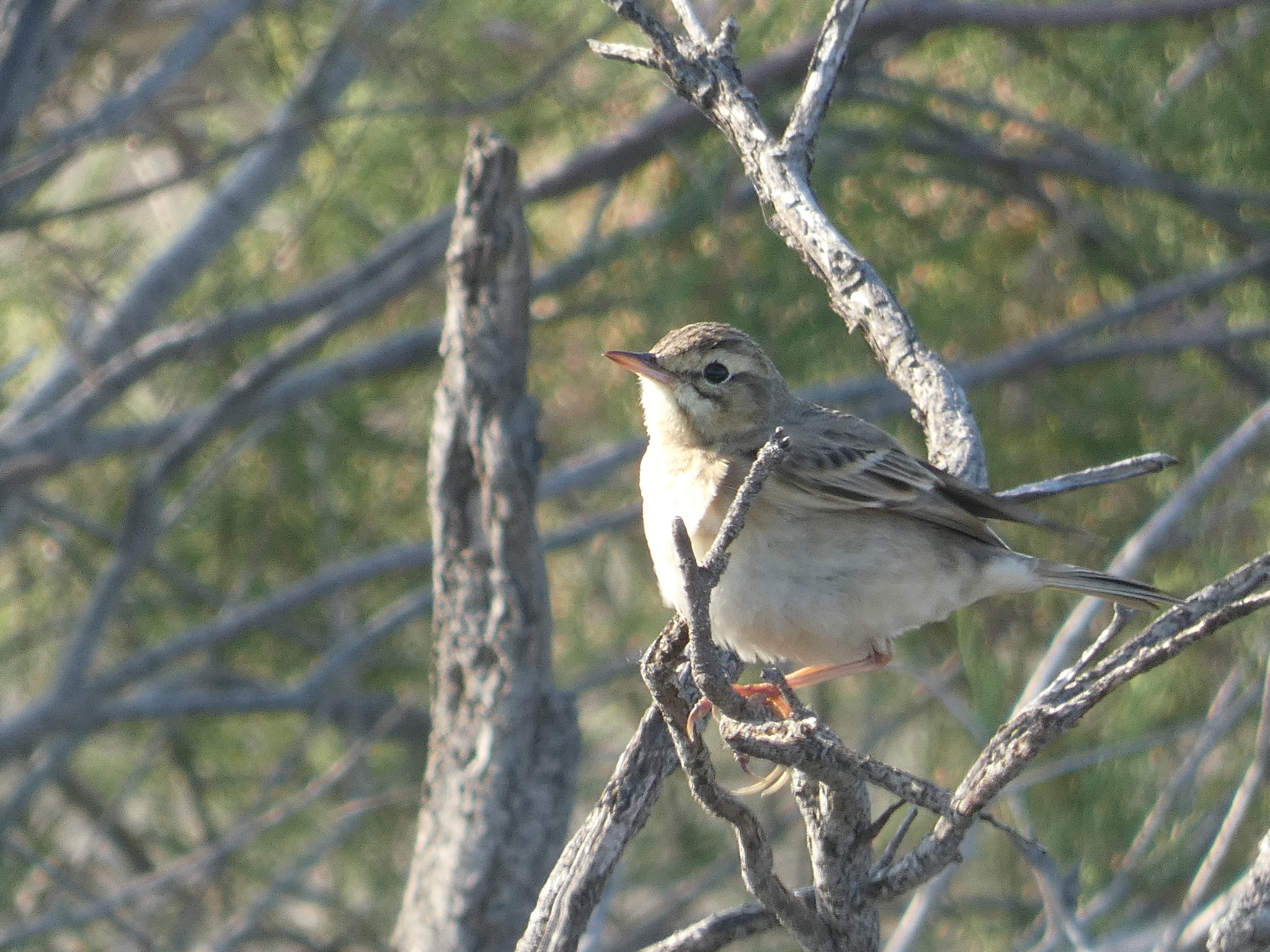
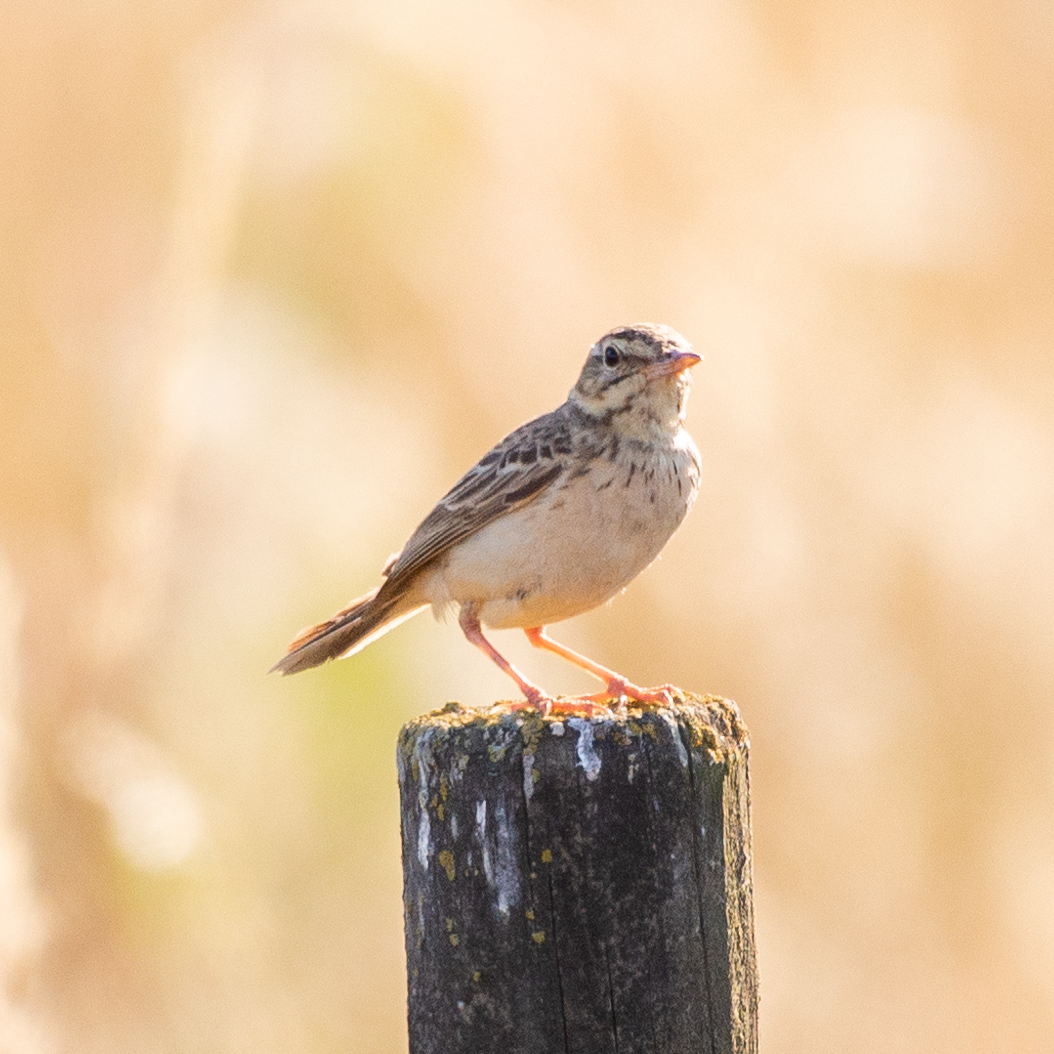
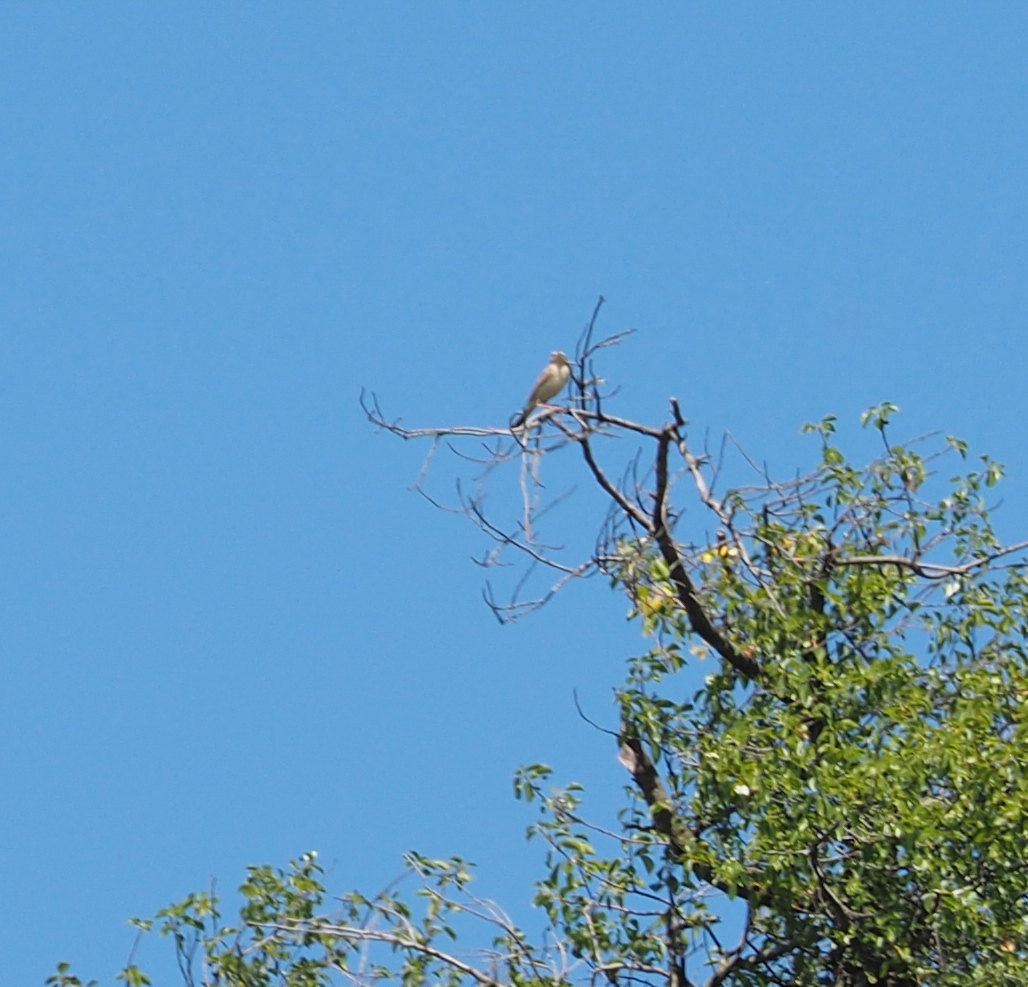
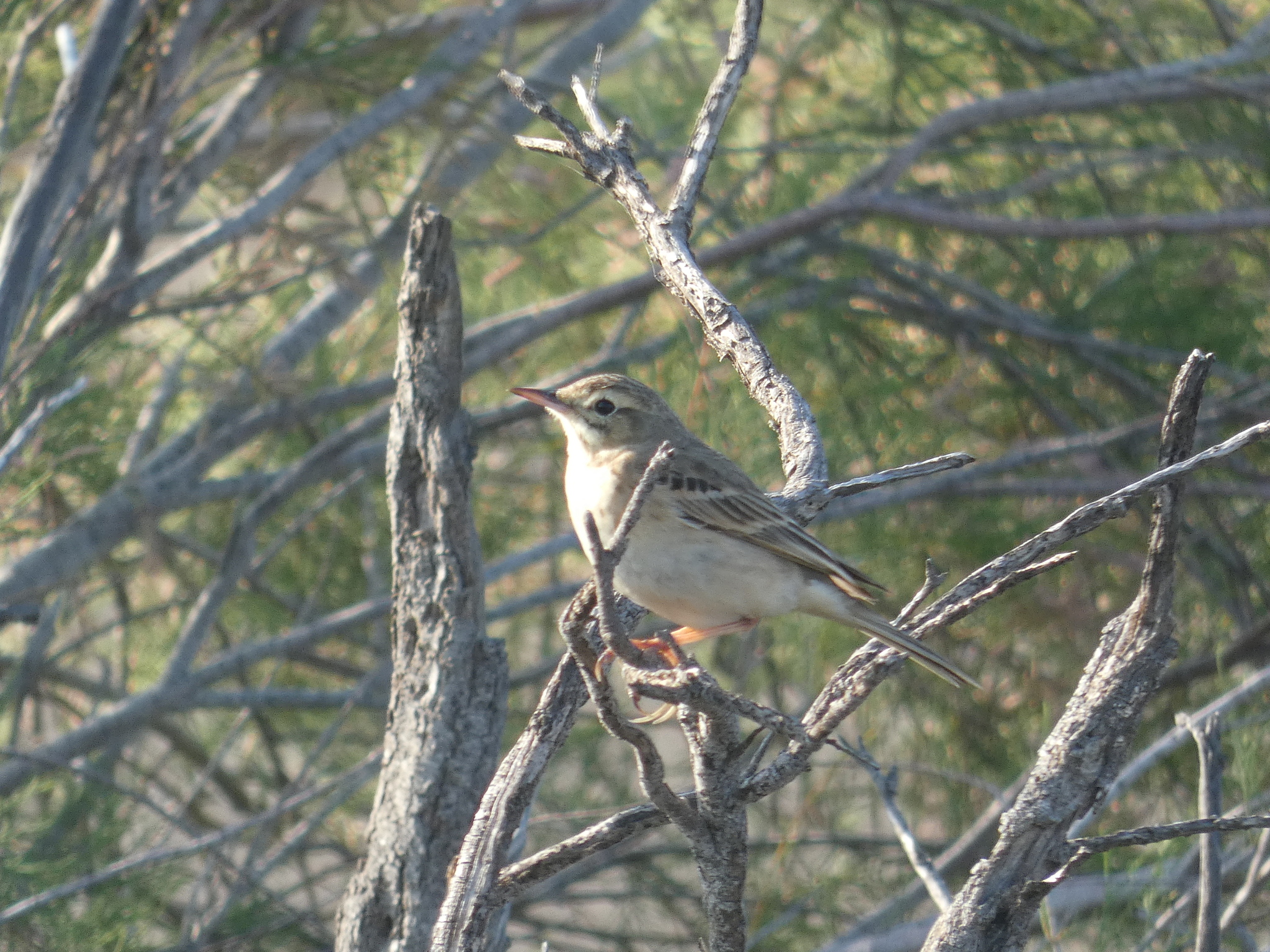
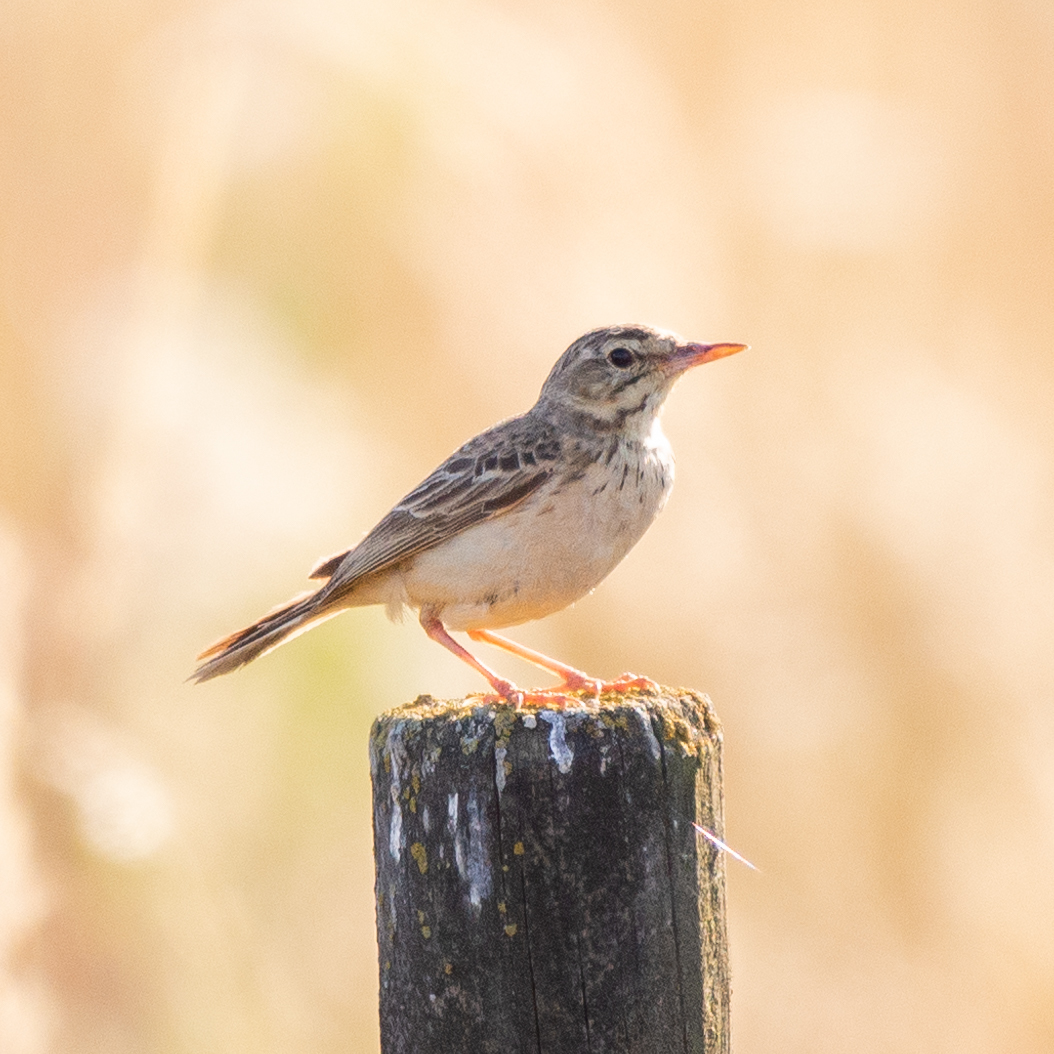
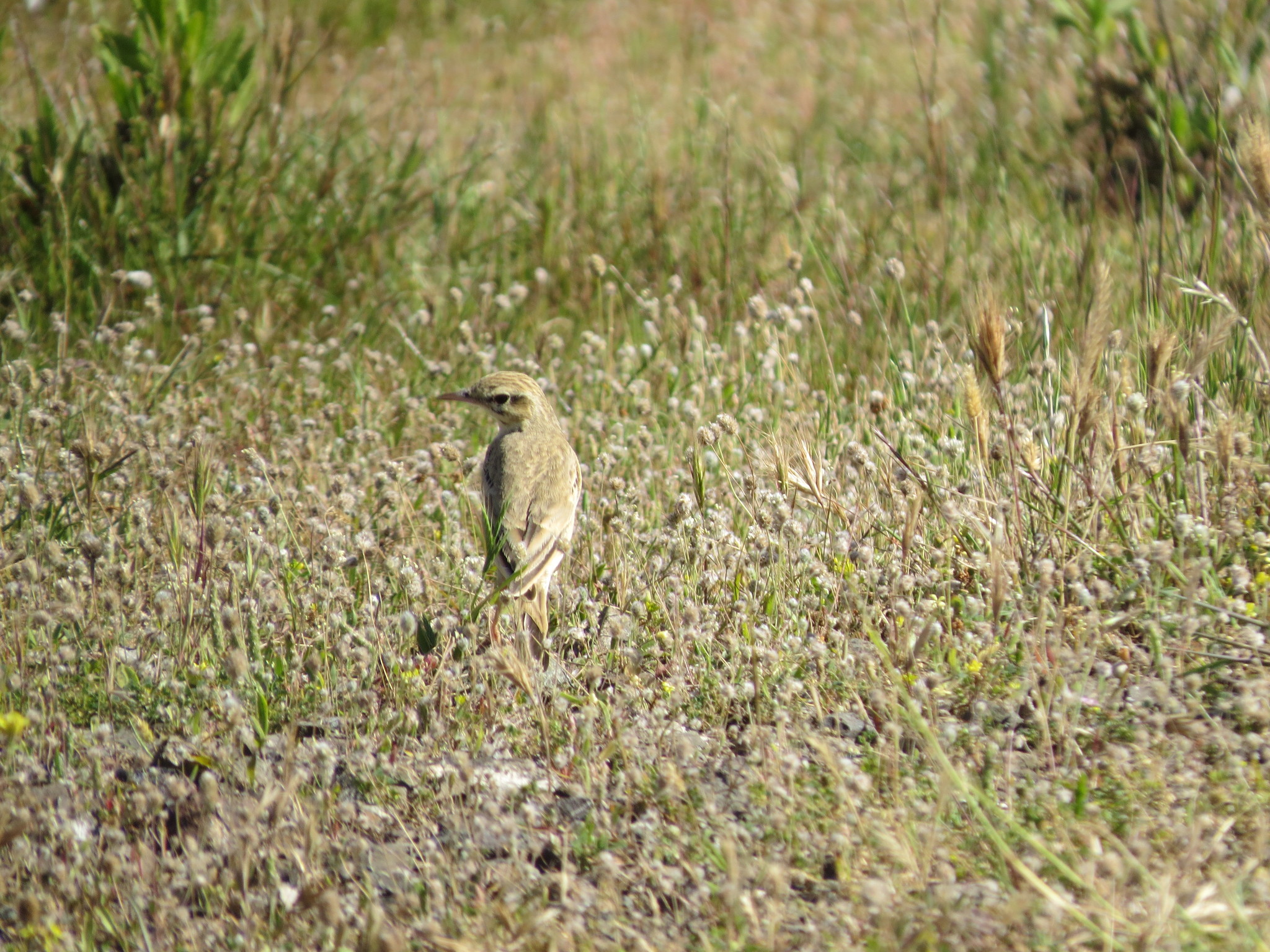
Tawny Pipit
Anthus campestris
平原鹨
Introduction
A medium-large passerine bird in the family Motacillidae. It breeds across much of the central Palearctic from northwest Africa and Portugal east to Central Siberia and Inner Mongolia. This long-distance migrant winters in tropical Africa and the Indian subcontinent. The breeding habitat consists of dry open country including semi-deserts. Distinguished by its large size among pipits, sandy-brown plumage, and characteristic 'schip' call.
Description
A large pipit measuring 16 cm in length with a wingspan of 25-28 cm. The plumage is predominantly sandy brown above and pale below, giving it an undistinguished appearance when on the ground. It closely resembles Richard's pipit but is slightly smaller with shorter wings, tail, and legs, plus a narrower dark bill. The species shows less streaking overall. Flight is strong and direct.
Identification
The key distinguishing feature from the similar Richard's pipit is its smaller size with proportionally shorter wings, tail, and legs. The narrower dark bill and reduced streaking also help separate it from Richard's pipit. The call is higher pitched and described as a distinctive 'schip.' In south Asia during winter, care must be taken to distinguish it from Richard's pipit, Blyth's pipit, and paddyfield pipit.
Distribution & Habitat
Breeding range extends across the central Palearctic from northwest Africa and Portugal through Europe to Central Siberia and Inner Mongolia. The species migrates to wintering grounds in tropical Africa and the Indian subcontinent. Breeds in dry open habitats including semi-deserts.
Behavior & Ecology
Insectivorous diet typical of pipits. Breeding season involves ground-nesting with 3-6 eggs laid. Incubation lasts approximately 12 days and is performed mainly by the female. Both parents feed the nestlings. The song consists of a short repetition of a loud disyllabic 'chir-ree chir-ree.' The characteristic call is a sharp 'schip' note.
Culture
Featured as the subject of the 1944 British film 'Tawny Pipit,' which dramatized the rare event of a pair breeding in England. The film footage credited to ornithologist Eric Hosking was actually of meadow pipits, as genuine tawny pipits could not be obtained from German-occupied Europe during WWII.
Source: Wikipedia · CC BY-SA 3.0
Taxonomy
- Order
- Passeriformes
- Family
- Motacillidae
- Genus
- Anthus
- eBird Code
- tawpip1
Distribution
breeds central and southern Europe and northwestern Africa (Morocco eastward to Tunisia) eastward to northwestern and south-central Mongolia, northwestern Kazakhstan, northern Afghanistan, and far northwestern China, also locally in Middle East; winters in sub-Saharan Africa (mainly in the Sahel), Arabia, and southwestern Asia
Vocalizations
Data Sources
Species description from Wikipedia, licensed under CC BY-SA 3.0.
Bird images and sounds sourced from GBIF, contributed by citizen scientists worldwide under Creative Commons licenses.
Taxonomy data from AviList 2025.