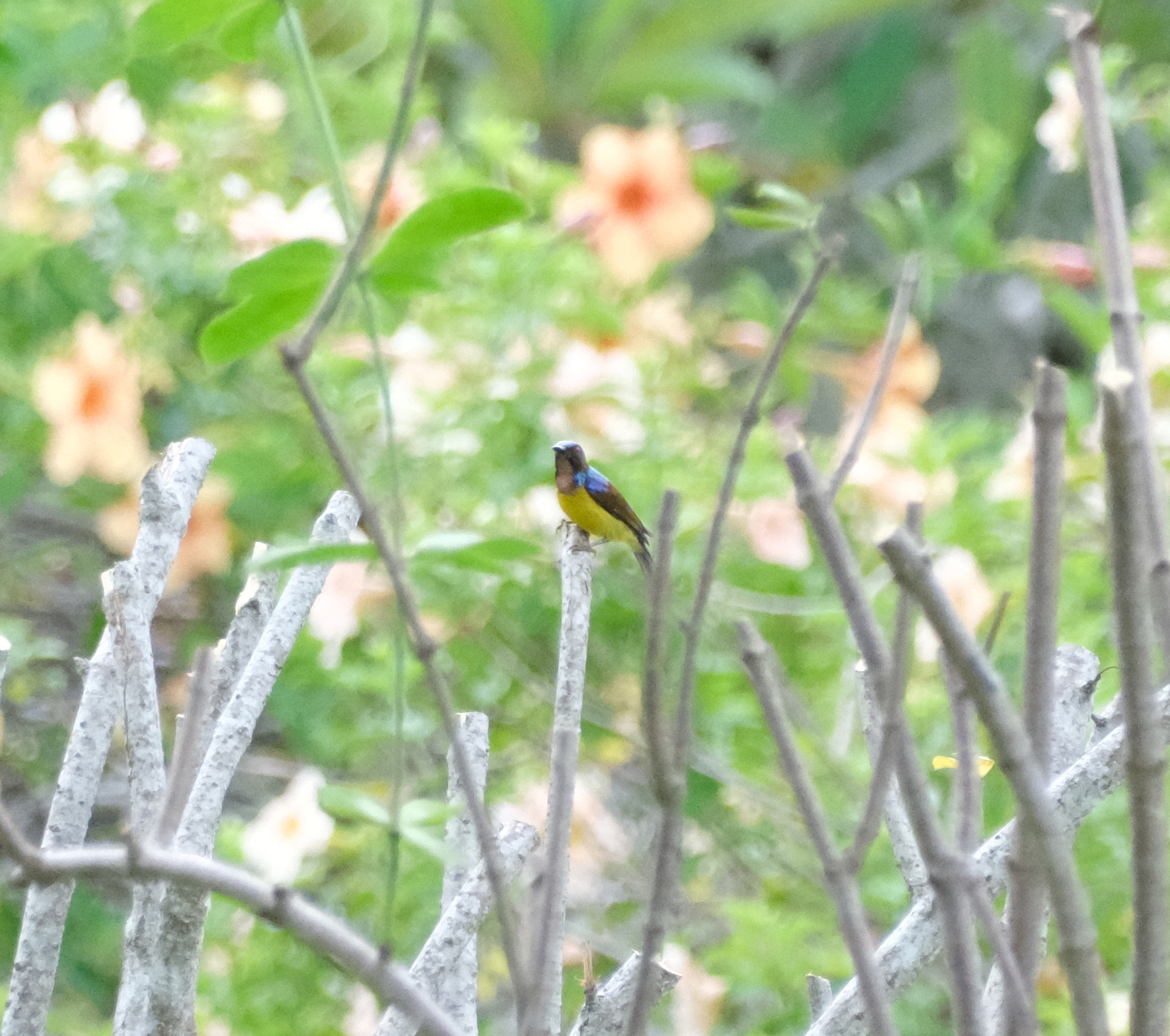
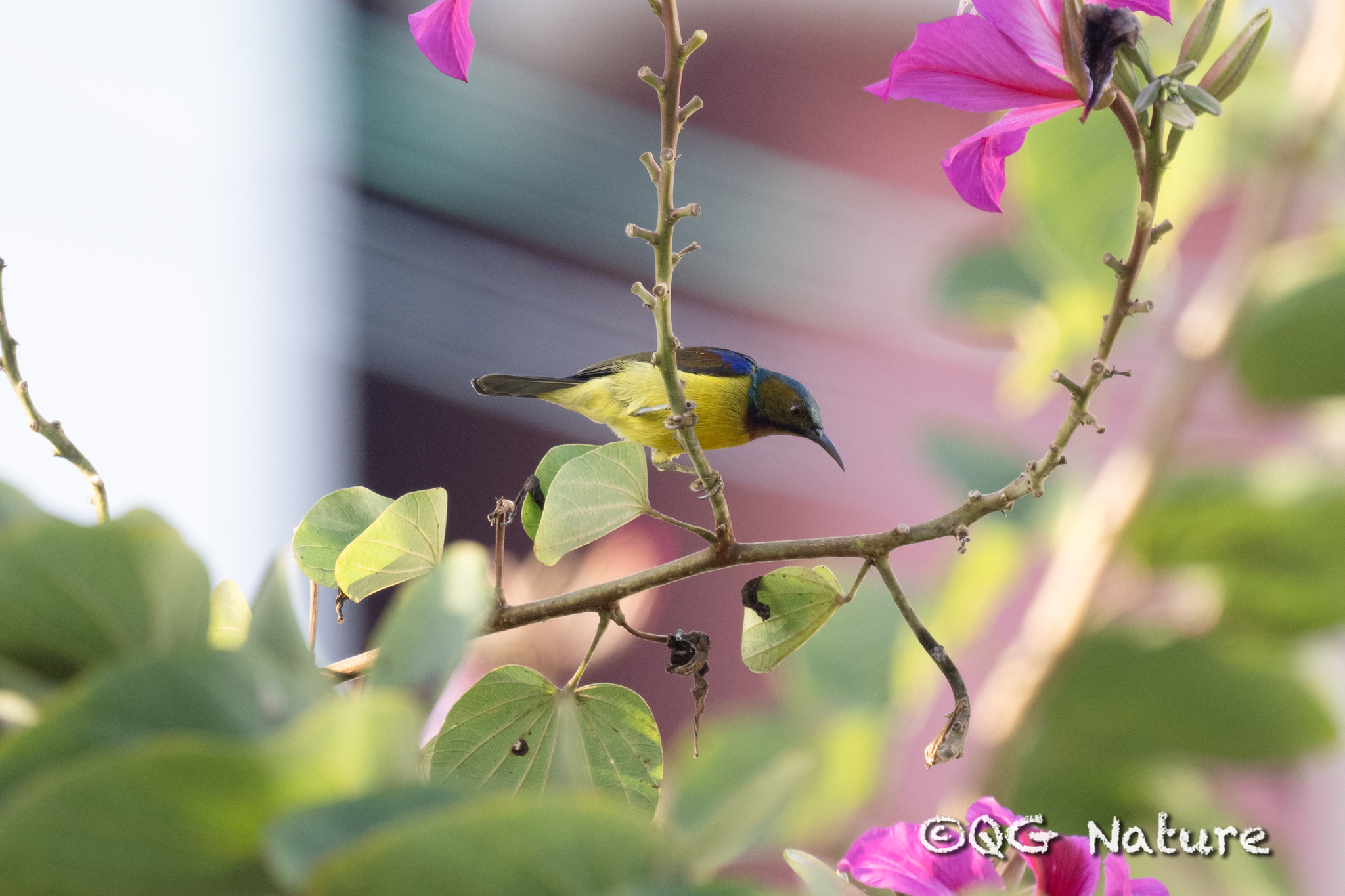
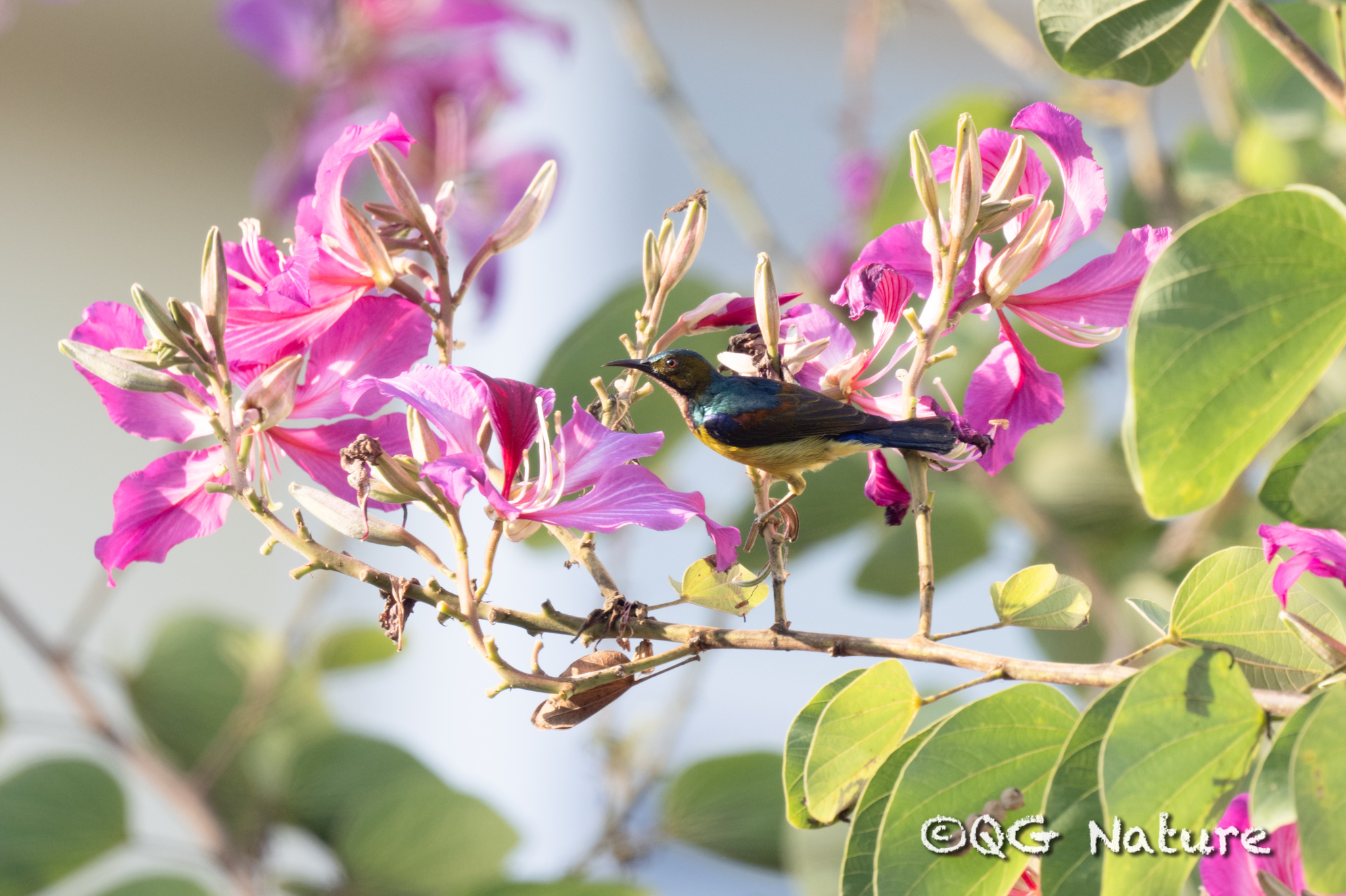
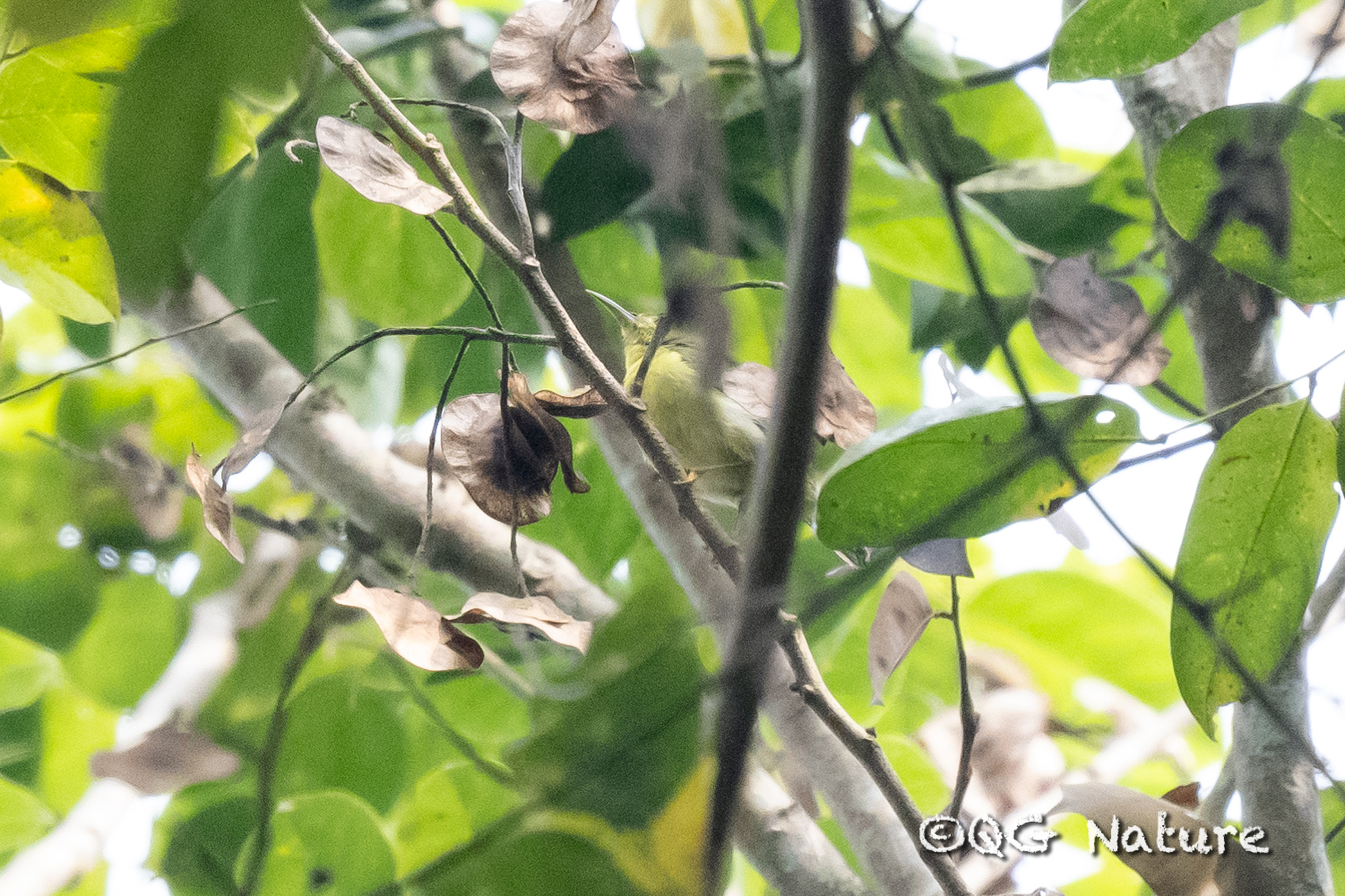
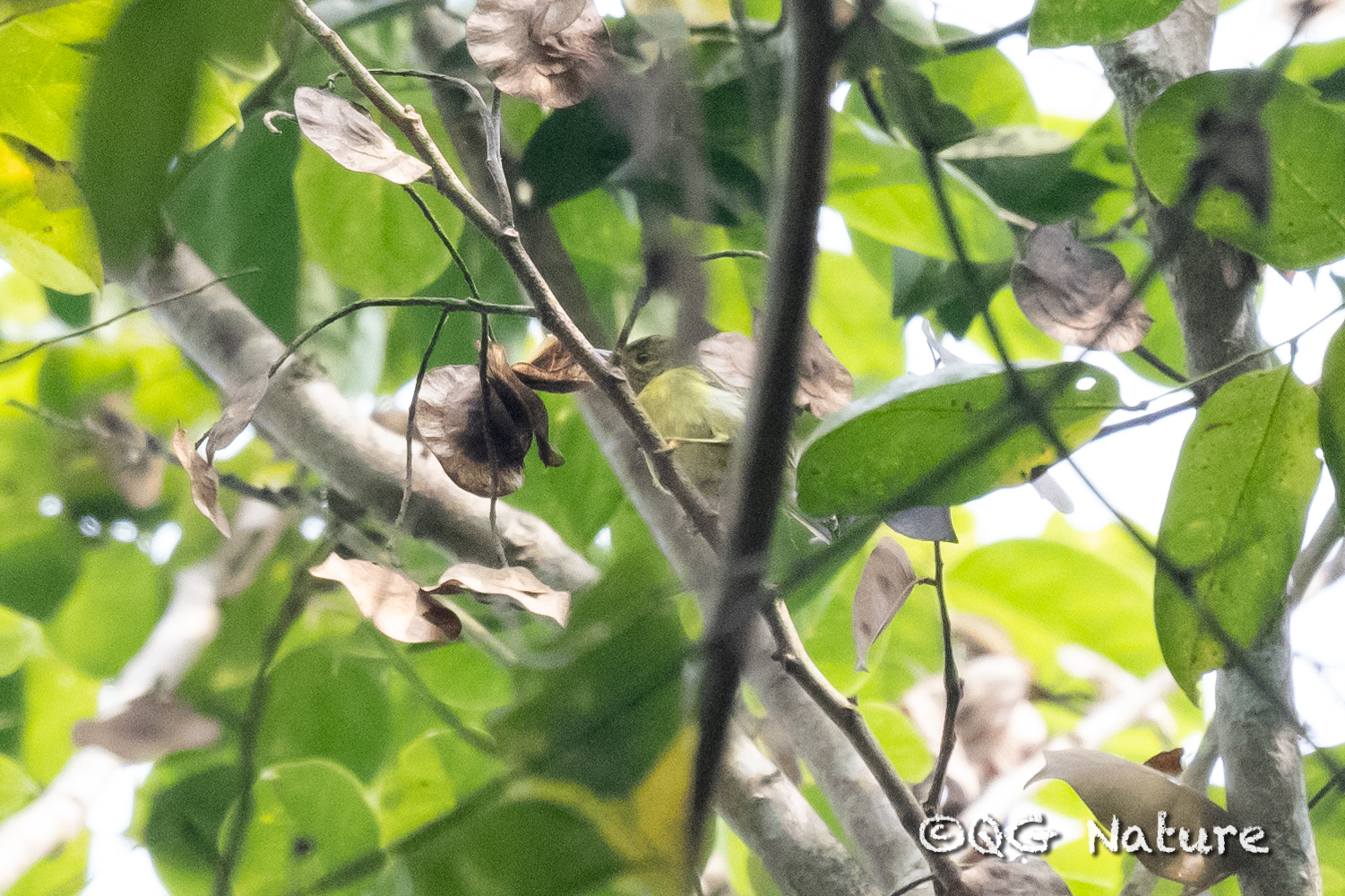
Brown-throated Sunbird
Anthreptes malacensis
褐喉食蜜鸟
Introduction
The Ornate Sunbird is a member of the Nectariniidae family. It occurs across South East Asia from Myanmar through the archipelago to the Lesser Sundas and western Philippines, inhabiting semi-open habitats. The grey-throated sunbird occupies the remainder of the Philippines and was formerly considered a subspecies; consistent differences in measurements and plumage with no intergradation support their treatment as separate species.
Description
This is a notably large and heavy sunbird species characterized by a substantial, thick bill. Adults measure approximately 14 centimeters in length and weigh between 7.4 and 13.5 grams, with males presenting marginally larger measurements than females. Males display striking iridescent green and purple plumage on their upperparts, complemented by chestnut coloring on the wing-coverts and scapulars, while their underparts are predominantly yellow. Females present more subdued olive-green upperparts and yellowish underparts, following the typical sexual dimorphism pattern observed in most sunbird species.
Identification
The combination of large size, heavy build, and thick bill distinguishes this species from other sunbirds in its range. Males can be identified by their iridescent green and purple upperparts and yellow underparts, while females show olive-green upperparts with yellowish underparts. The similar grey-throated sunbird differs consistently in both measurements and plumage characteristics.
Distribution & Habitat
This species inhabits a broad geographic range extending from Myanmar through mainland South East Asia, Sumatra and its satellite islands, most of Borneo, Java, and Bali. Its distribution continues east through Sulawesi and surrounding islands to the Lesser Sundas, and includes the western Philippines. It occupies various semi-open habitats throughout this extensive range.
Behavior & Ecology
Nectar constitutes the primary dietary component, reflecting this bird's ecological role as a nectarivore. The diet is supplemented with small fruits and berries, providing additional nutritional variety. Insect consumption is restricted to the juvenile stage, when growing nestlings require the protein-rich nutrition that insects provide for proper development.
Conservation
IUCN assessment and population data were not available in the source material.
Culture
Cultural significance and folklore were not documented in the source material.
Source: Wikipedia · CC BY-SA 3.0
Taxonomy
- Order
- Passeriformes
- Family
- Nectariniidae
- Genus
- Anthreptes
- eBird Code
- pltsun2
Vocalizations
Subspecies (16)
-
Anthreptes malacensis anambae
Anambas Islands (South China Sea)
-
Anthreptes malacensis bornensis
northern Borneo (Sabah, Brunei, and adjacent islands)
-
Anthreptes malacensis cagayanensis
Mapun (southern Philippines)
-
Anthreptes malacensis celebensis
Sulawesi and adjacent islands
-
Anthreptes malacensis chlorigaster
west-central Philippines (Cebu, Masbate, Negros, Panay, Sibuyan, Tablas, Romblon, and Ticao)
-
Anthreptes malacensis convergens
western Lesser Sundas (Lombok to Pantar and Alor)
-
Anthreptes malacensis erixanthus
Natuna Islands (South China Sea)
-
Anthreptes malacensis extremus
Banggai and Sula islands (off eastern Sulawesi)
-
Anthreptes malacensis heliocalus
Sangihe and Siau islands (off Sulawesi)
-
Anthreptes malacensis heliolusius
southern Philippines (Basilan, western and central Mindanao, and Talicod)
-
Anthreptes malacensis iris
southern Philippines (Sibutu and Sitanki)
-
Anthreptes malacensis malacensis
southern Myanmar to Indochina and the Malayan Peninsula, Sumatra, and satellites, Borneo (except northern), Java, and Bali
-
Anthreptes malacensis mjobergi
Maratua Islands (off Borneo)
-
Anthreptes malacensis paraguae
southern Philippines (Balabac, Culion, Palawan, and Calauit)
-
Anthreptes malacensis rubrigena
Sumba Island (Lesser Sundas)
-
Anthreptes malacensis wiglesworthi
Sulu Archipelago (Bongao, Jolo, Tawitawi, and Basbas)
Data Sources
Species description from Wikipedia, licensed under CC BY-SA 3.0.
Bird images and sounds sourced from GBIF, contributed by citizen scientists worldwide under Creative Commons licenses.
Taxonomy data from AviList 2025.