Tundra Bean Goose
Anser serrirostris
短嘴豆雁
Introduction
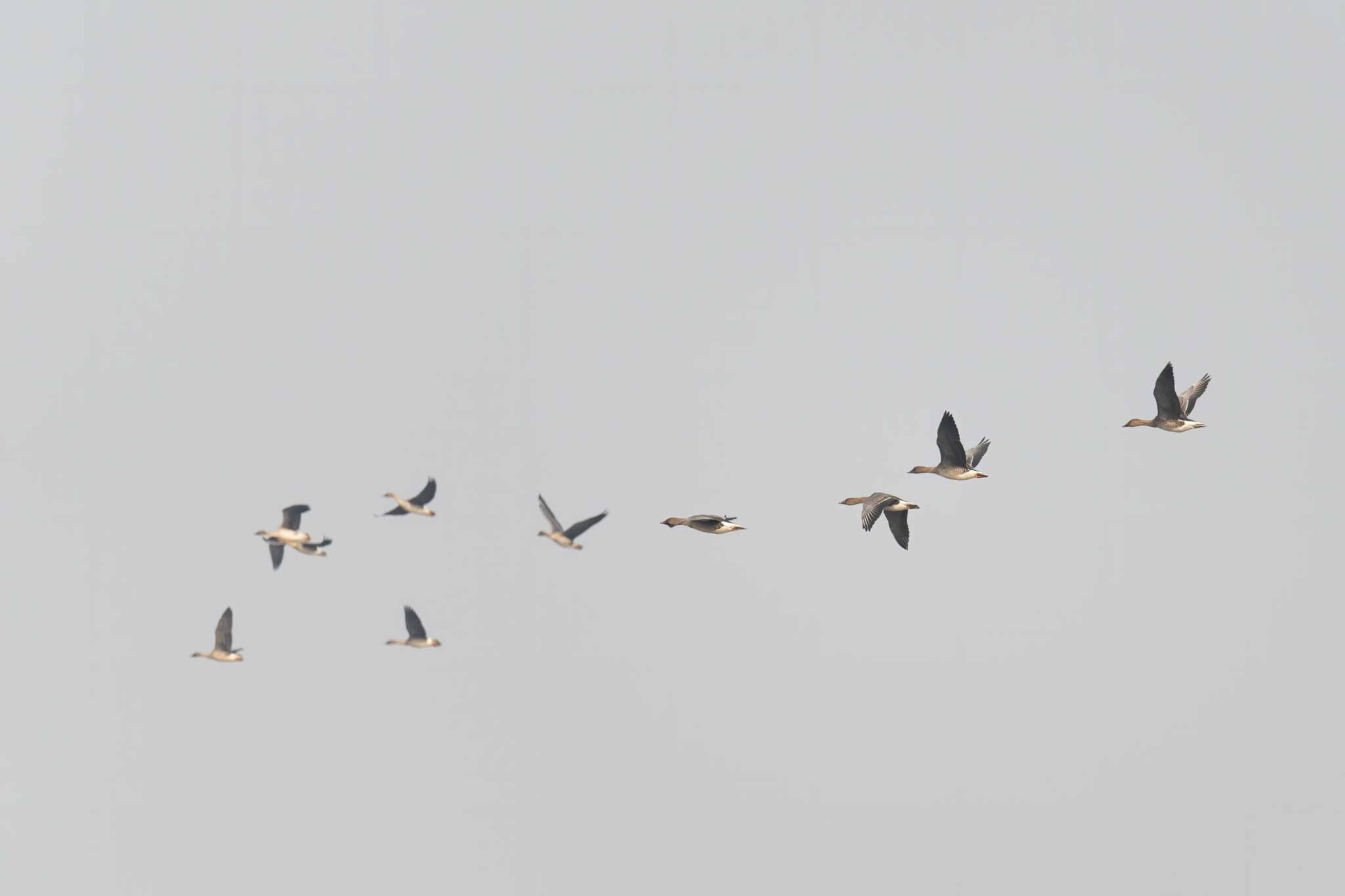
This waterfowl breeds across northern Siberian tundra and migrates to wintering grounds in Asia. It belongs to the grey goose complex and is genetically distinct from the taiga bean goose, with genetic divergence beginning approximately 2.5 million years ago. Secondary contact occurred around 60,000 years ago, resulting in some genetic exchange. During breeding, it inhabits open tundra. At wintering sites, it occurs in agricultural fields and wetlands, often mixing with other grey goose species.
Description
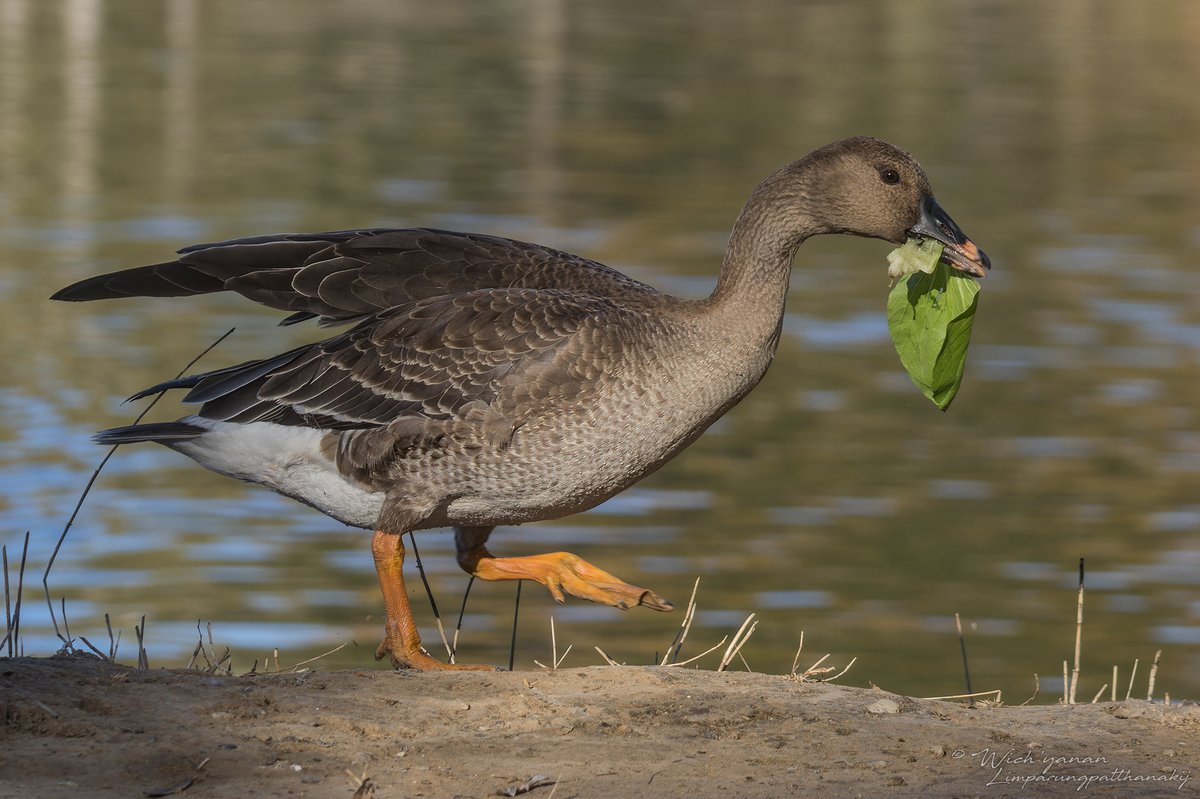
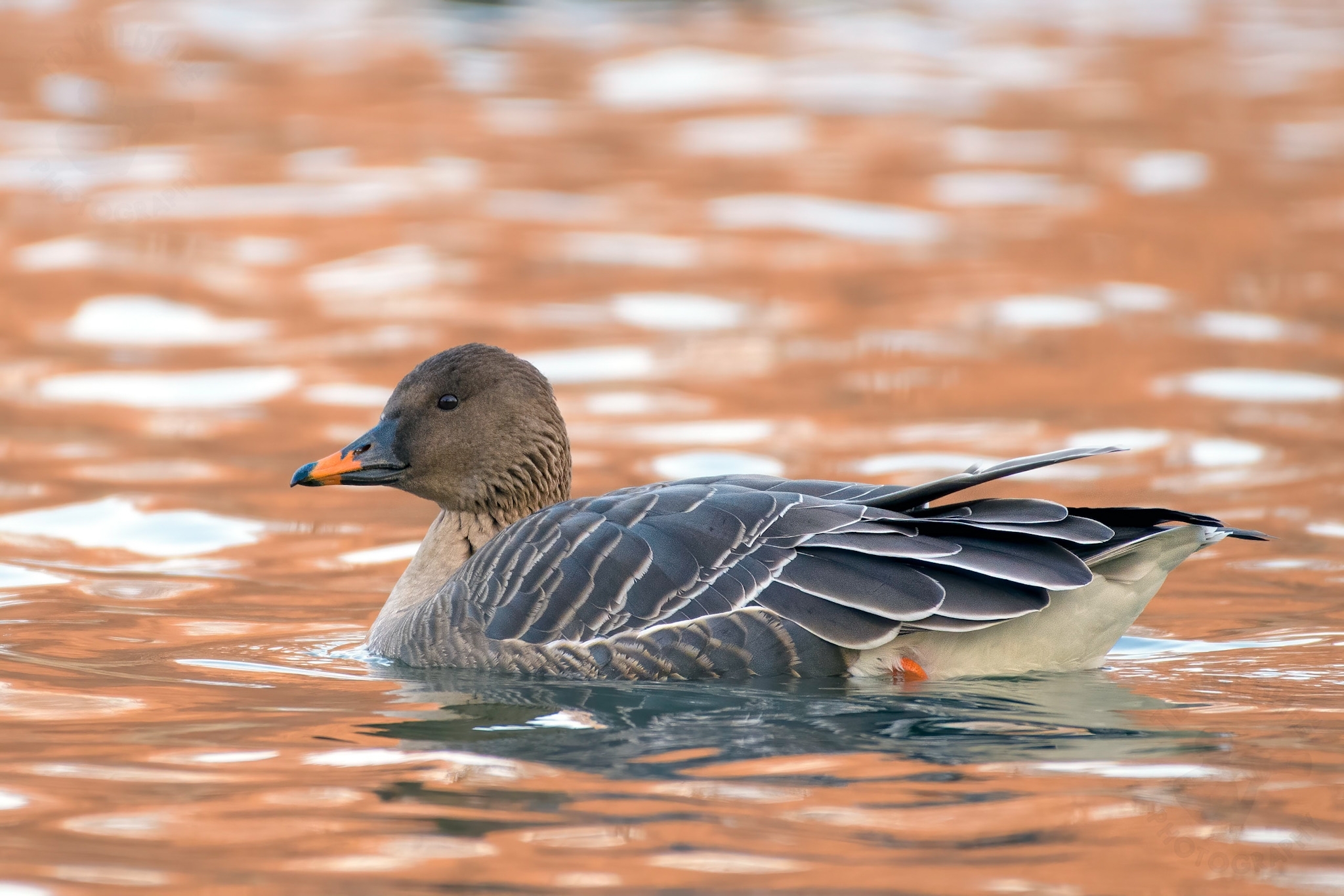
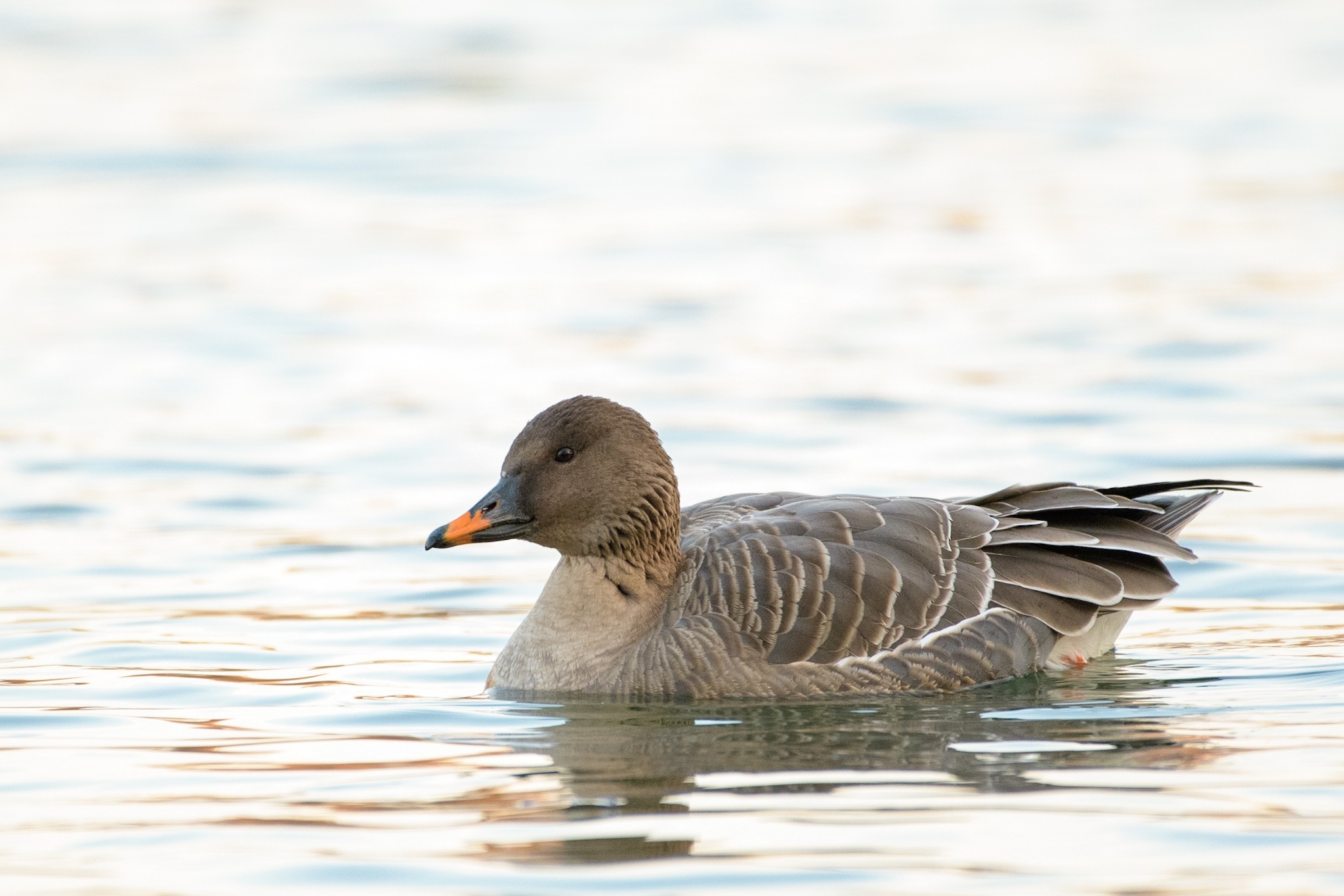
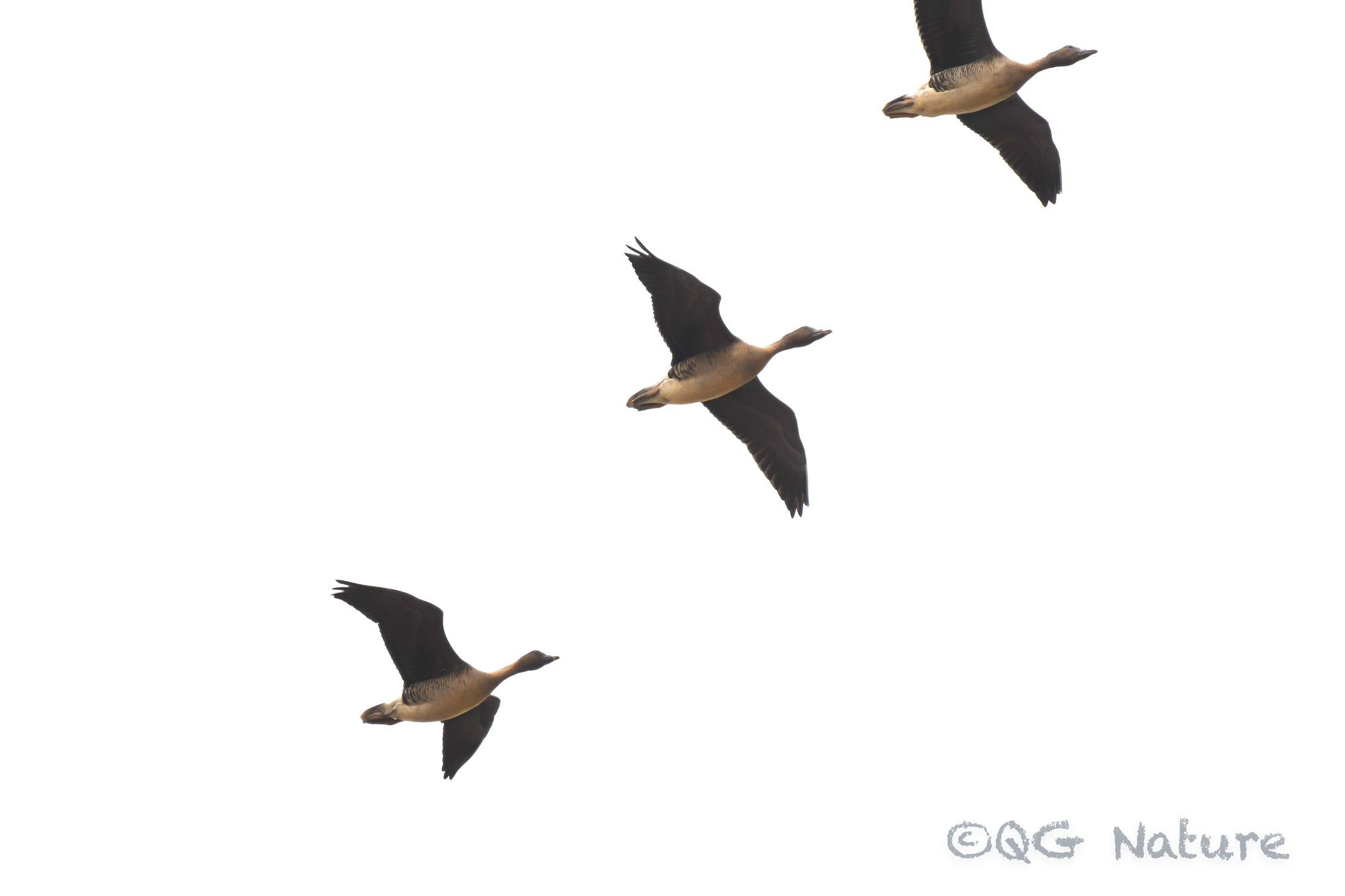
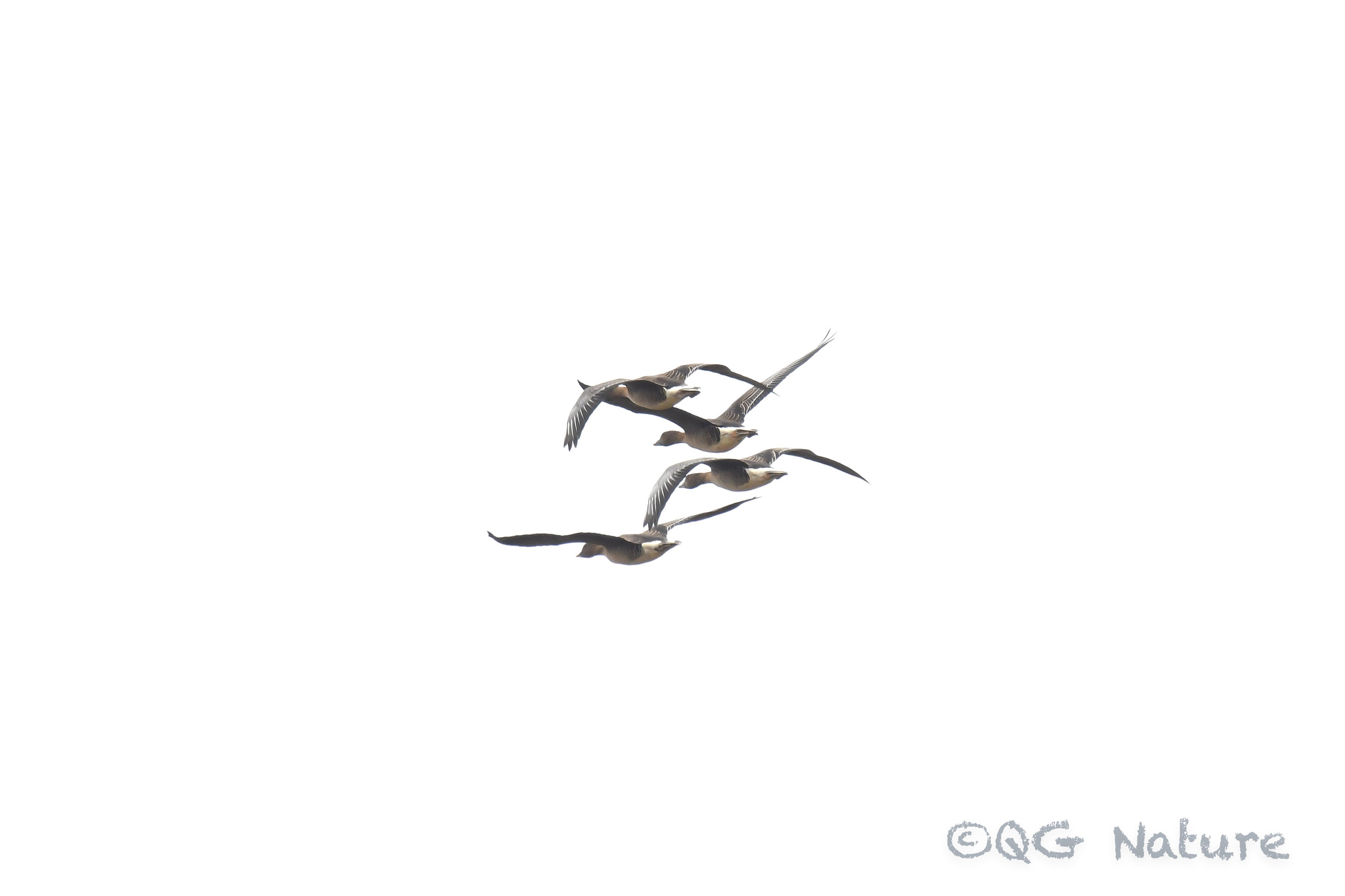
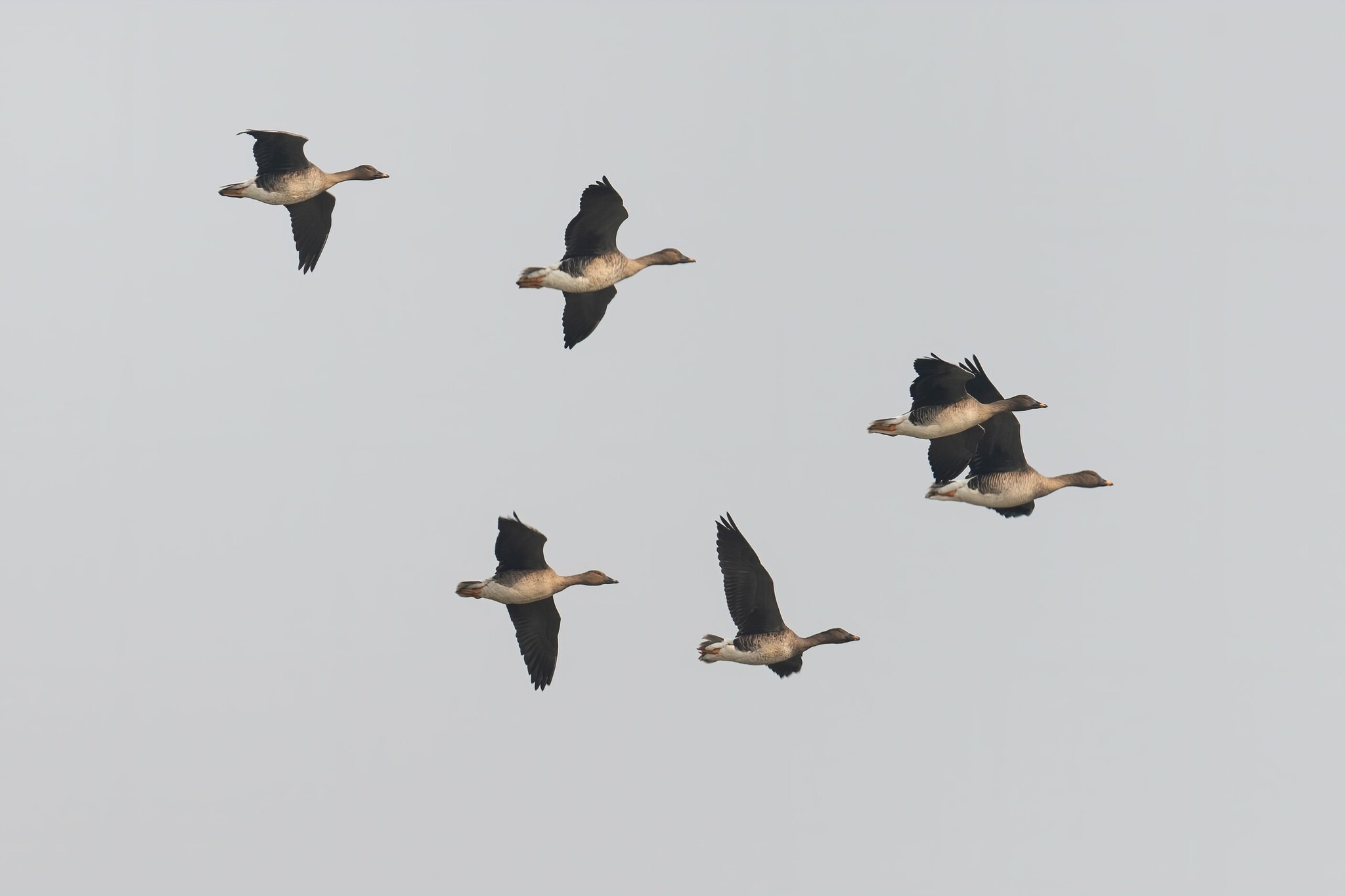
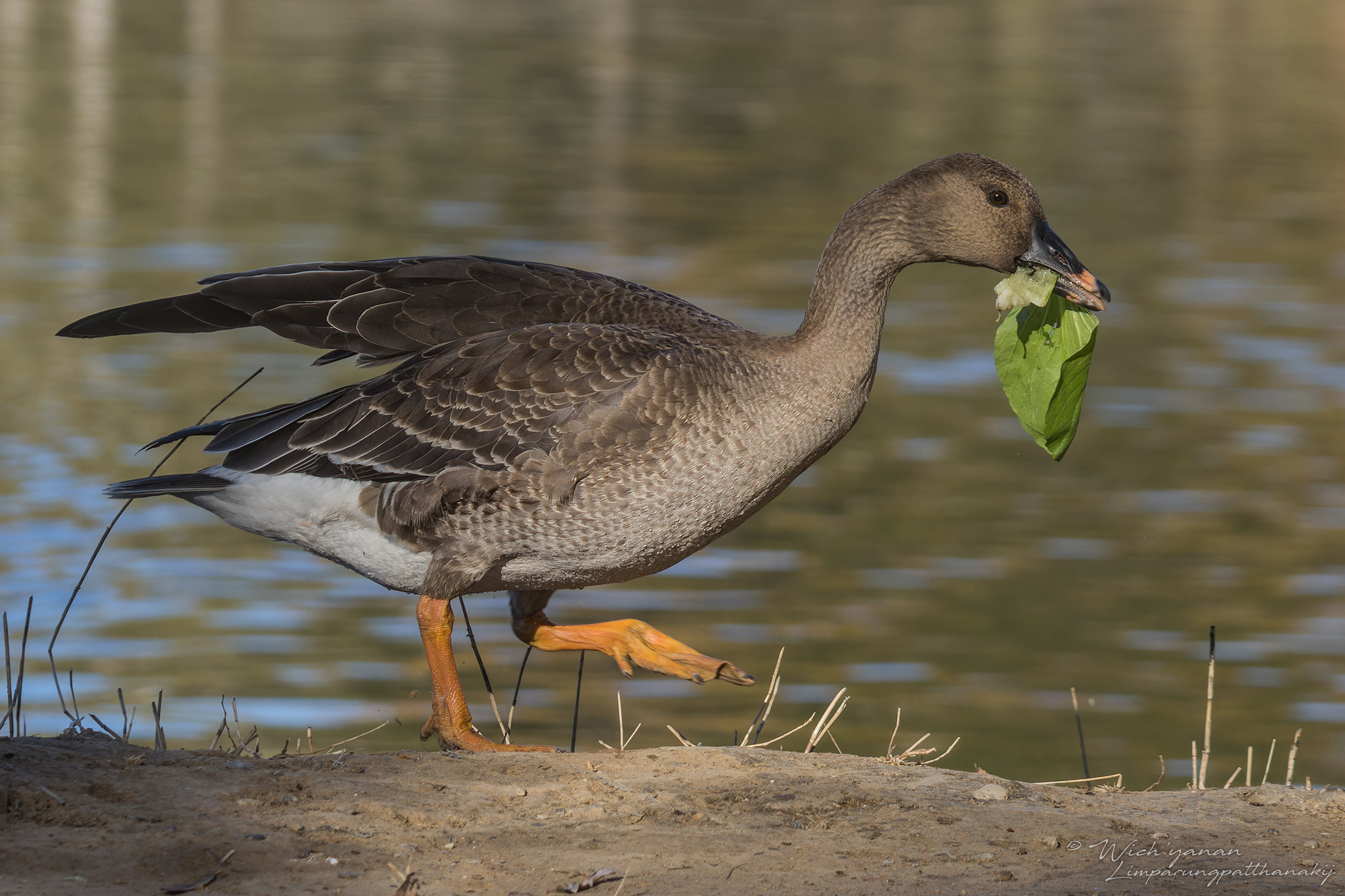
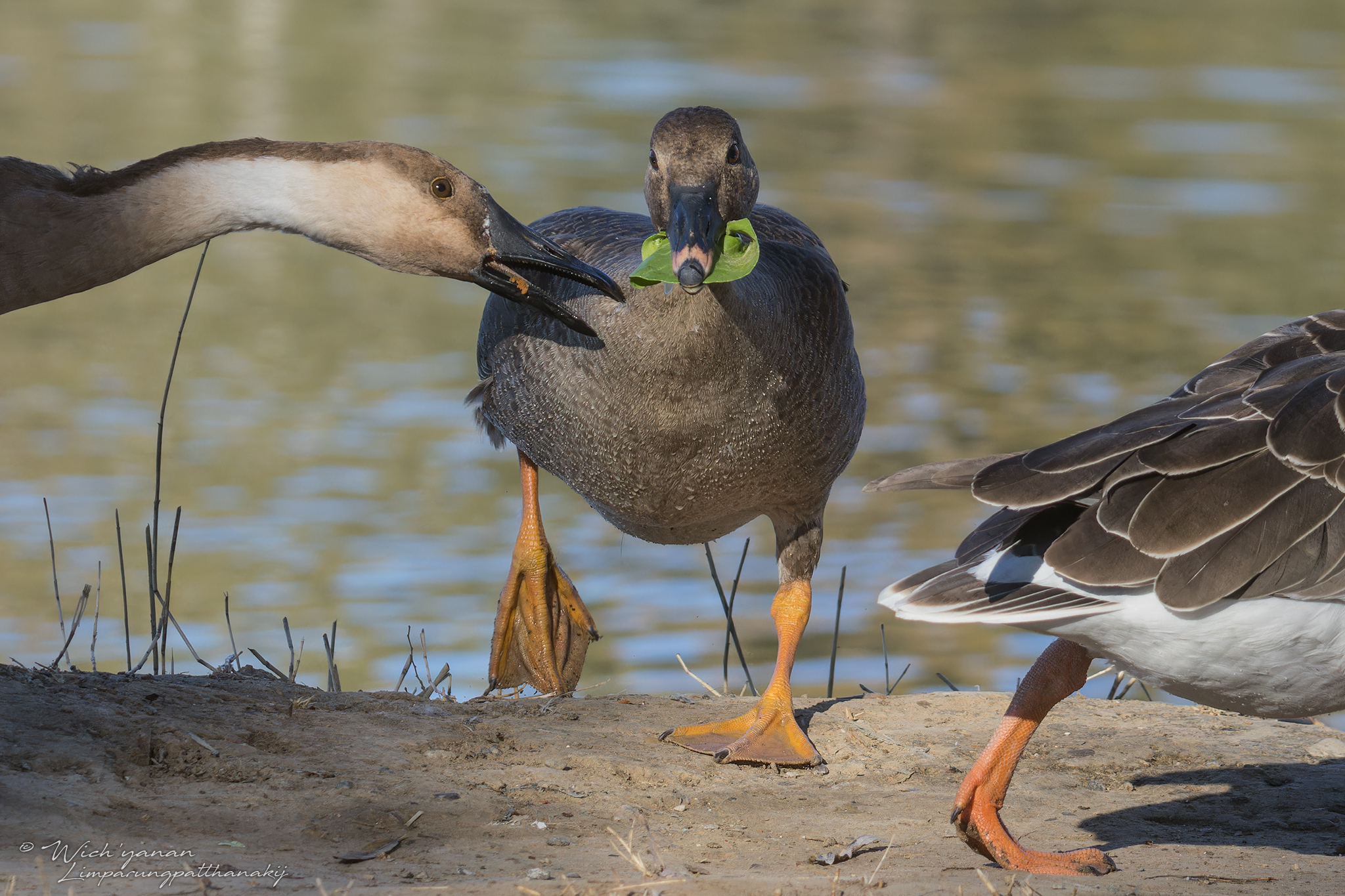
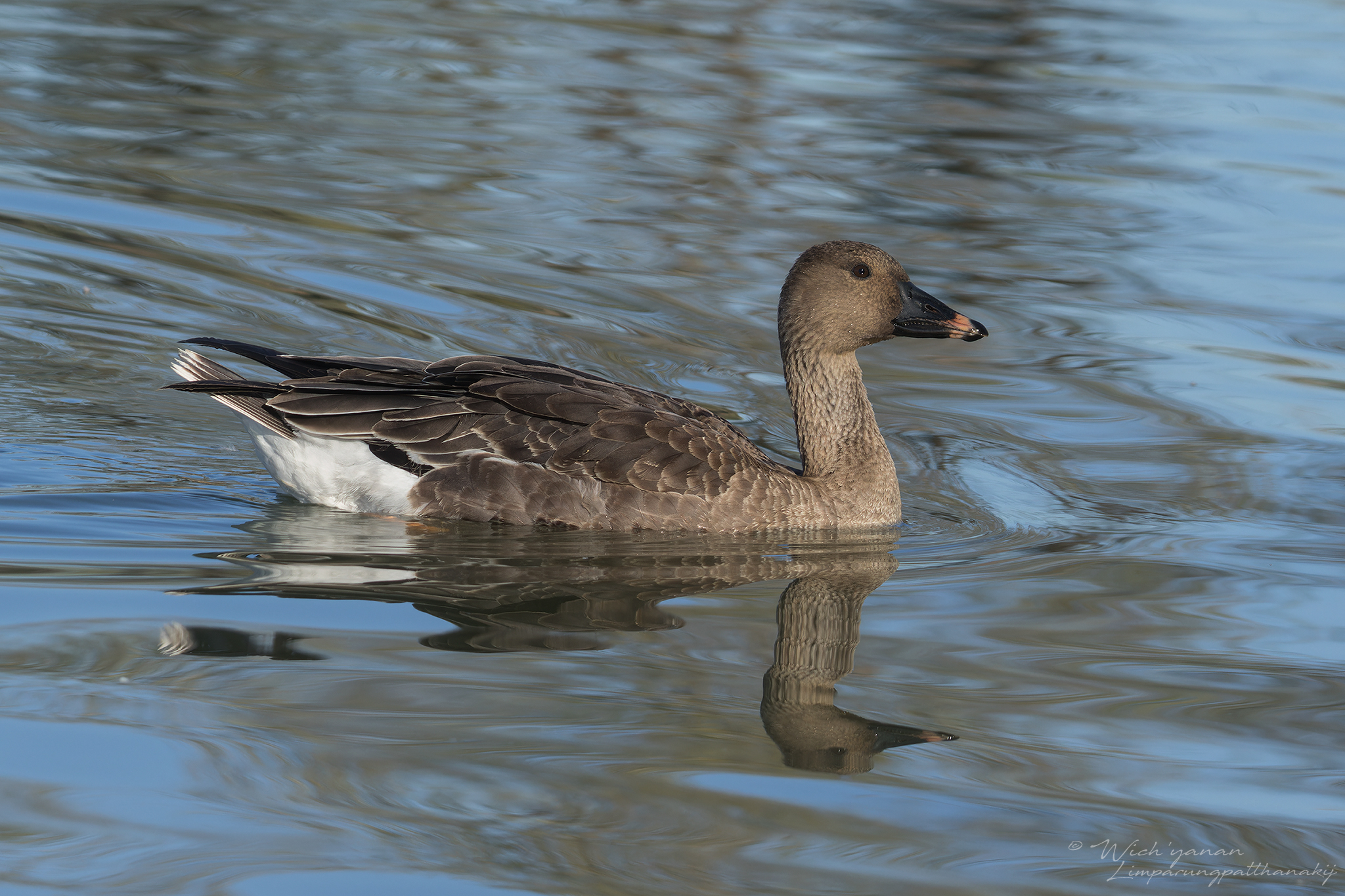
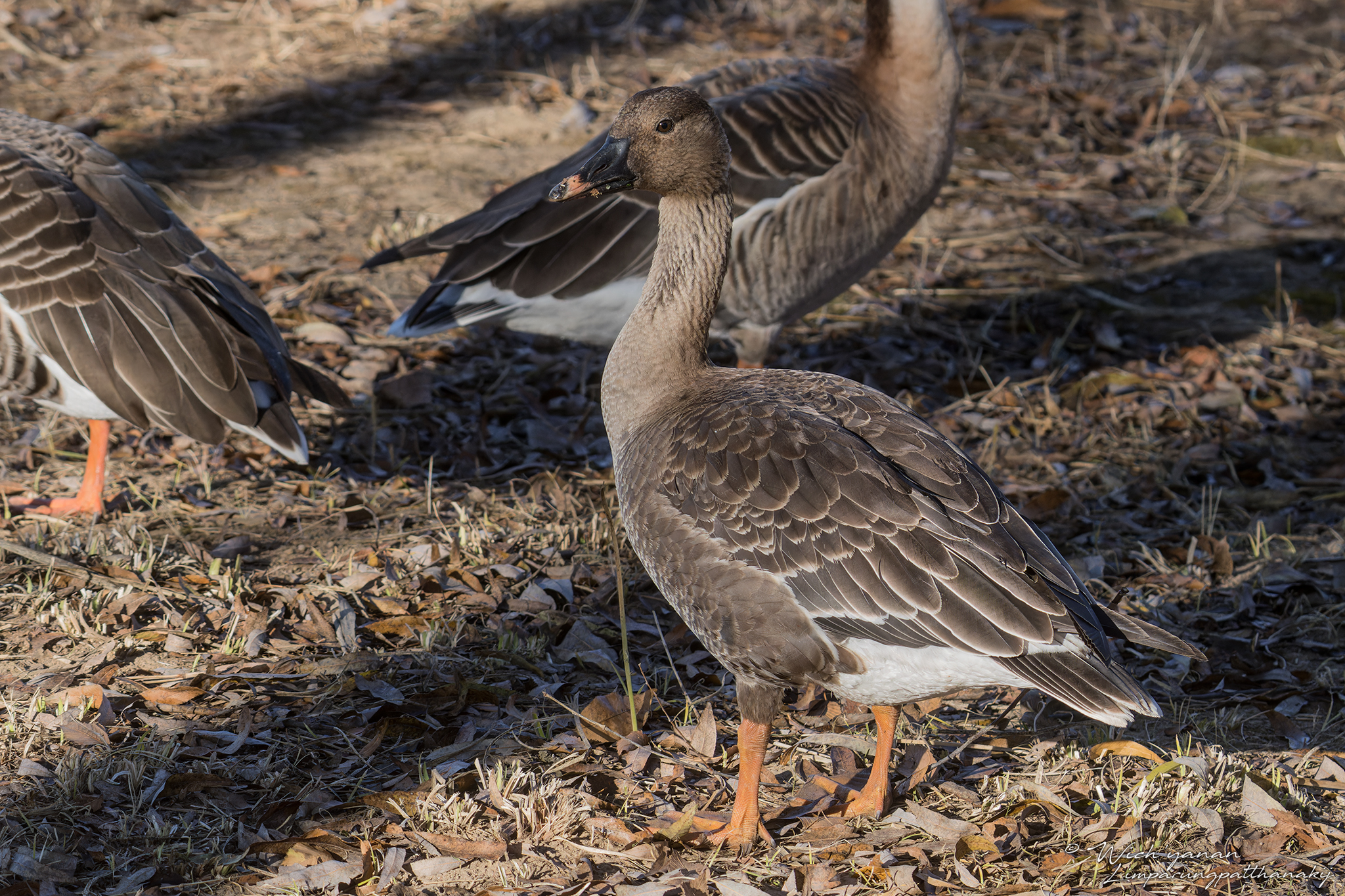
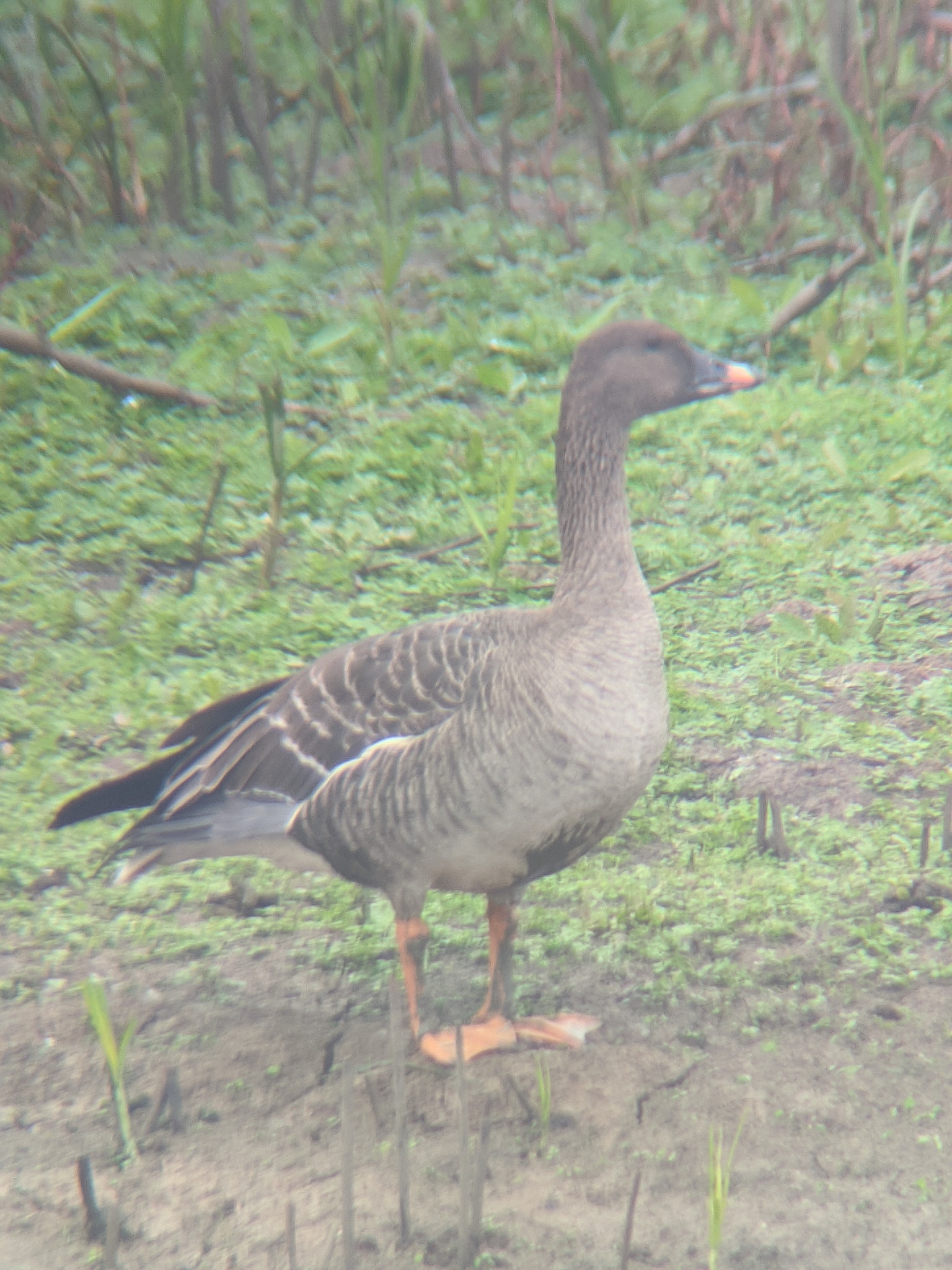
This is a large, heavy goose measuring 68-90 cm in length with an impressive wingspan of 140-174 cm. Adults weigh between 1.7-4 kg, with males averaging 3.2 kg and females slightly smaller at 2.84 kg. The plumage is predominantly dark brownish-gray on the upperparts, contrasting with a paler underside. The distinctive bill pattern is diagnostic: black at both the base and tip, crossed by a bright orange band across the middle. The legs and feet are also orange. The upper wing-coverts are dark brown, similar to white-fronted goose species but distinguished by narrow white fringes to the feathers. The voice is a loud, resonant honking that tends to be higher pitched in the smaller western subspecies.
Identification
The orange bill band against black base and tip is the most reliable field mark, distinguishing it from similar grey geese. It differs from white-fronted and lesser white-fronted geese by having narrower white fringes to the wing-coverts. The pink-footed goose is shorter-billed with bright pink coloring in the middle of the bill rather than orange, and pink legs; its upper wing-coverts appear bluish-gray, similar to greylag goose. The two subspecies can be distinguished by size and bill shape: the western rossicus subspecies is smaller with a short, stubby bill, while the eastern serrirostris is larger with a longer, more robust bill.
Distribution & Habitat
Breeds across the Siberian tundra from northern Russia east to the Taimyr Peninsula and further to the East Siberian tundra. The western rossicus subspecies occupies the Russian tundra east to Taimyr, while the larger serrirostris subspecies breeds in the East Siberian tundra. Unlike many goose species, this bird has no regular wintering sites and occurs unpredictably in small groups among mixed grey goose flocks. Occasional winter records in western Europe include regular sightings at WWT Slimbridge in Gloucestershire and Holkham Marshes in Norfolk, where they join other wintering geese.
Behavior & Ecology
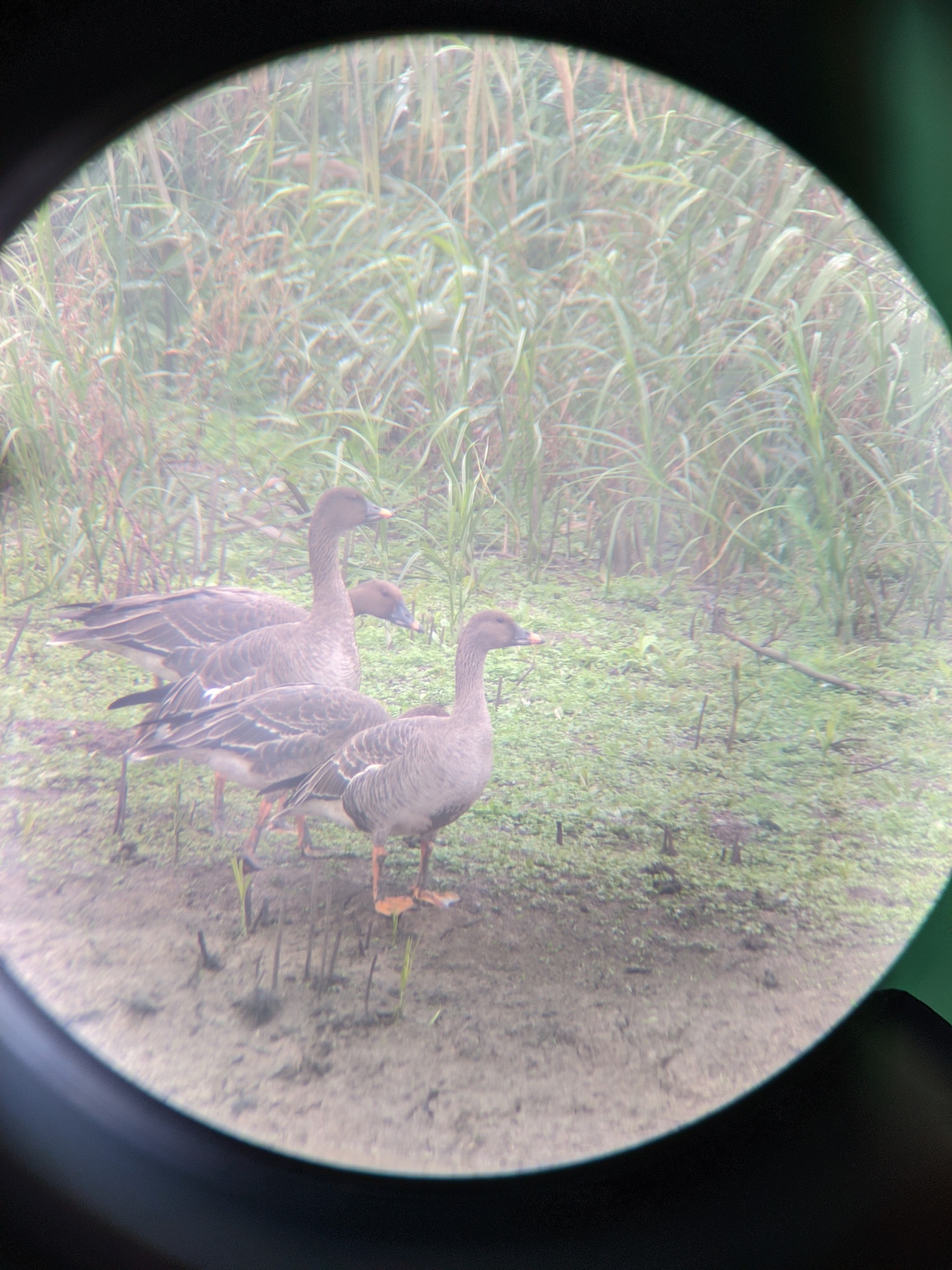
The species is migratory, moving south from Siberian breeding grounds to wintering areas in Asia. During winter, it occurs in small groups rather than large flocks, typically associating with other grey goose species. The voice is a loud, resonant honking call, with the smaller western subspecies producing higher-pitched notes than the larger eastern population. Feeding behavior involves grazing on grasslands and agricultural fields within its winter range.
Conservation
The species is not globally threatened, though population trends are not well documented due to its remote breeding range and irregular winter distribution. The rossicus subspecies is listed under the Agreement on the Conservation of African-Eurasian Migratory Waterbirds (AEWA), which facilitates international cooperation on conservation measures for migratory waterbirds across their ranges.
Culture
The article does not contain information about cultural significance or folklore.
Source: Wikipedia · CC BY-SA 3.0
Taxonomy
- Order
- Anseriformes
- Family
- Anatidae
- Genus
- Anser
- eBird Code
- tunbeg1
Subspecies (2)
-
Anser serrirostris rossicus
breeds tundra of northern Russia and northwestern Siberia eastwards to the Taimyr Peninsula; winters mainly in western and central Europe and southwestern Asia
-
Anser serrirostris serrirostris
breeds tundra of northeastern Siberia from Lena Delta eastwards to Anadyrland and Kamchatka; winters central and eastern China, the Korean Peninsula, Japan, and Taiwan
Data Sources
Species description from Wikipedia, licensed under CC BY-SA 3.0.
Bird images and sounds sourced from GBIF, contributed by citizen scientists worldwide under Creative Commons licenses.
Taxonomy data from AviList 2025.