
Taiga Bean Goose
Anser fabalis
豆雁
Introduction
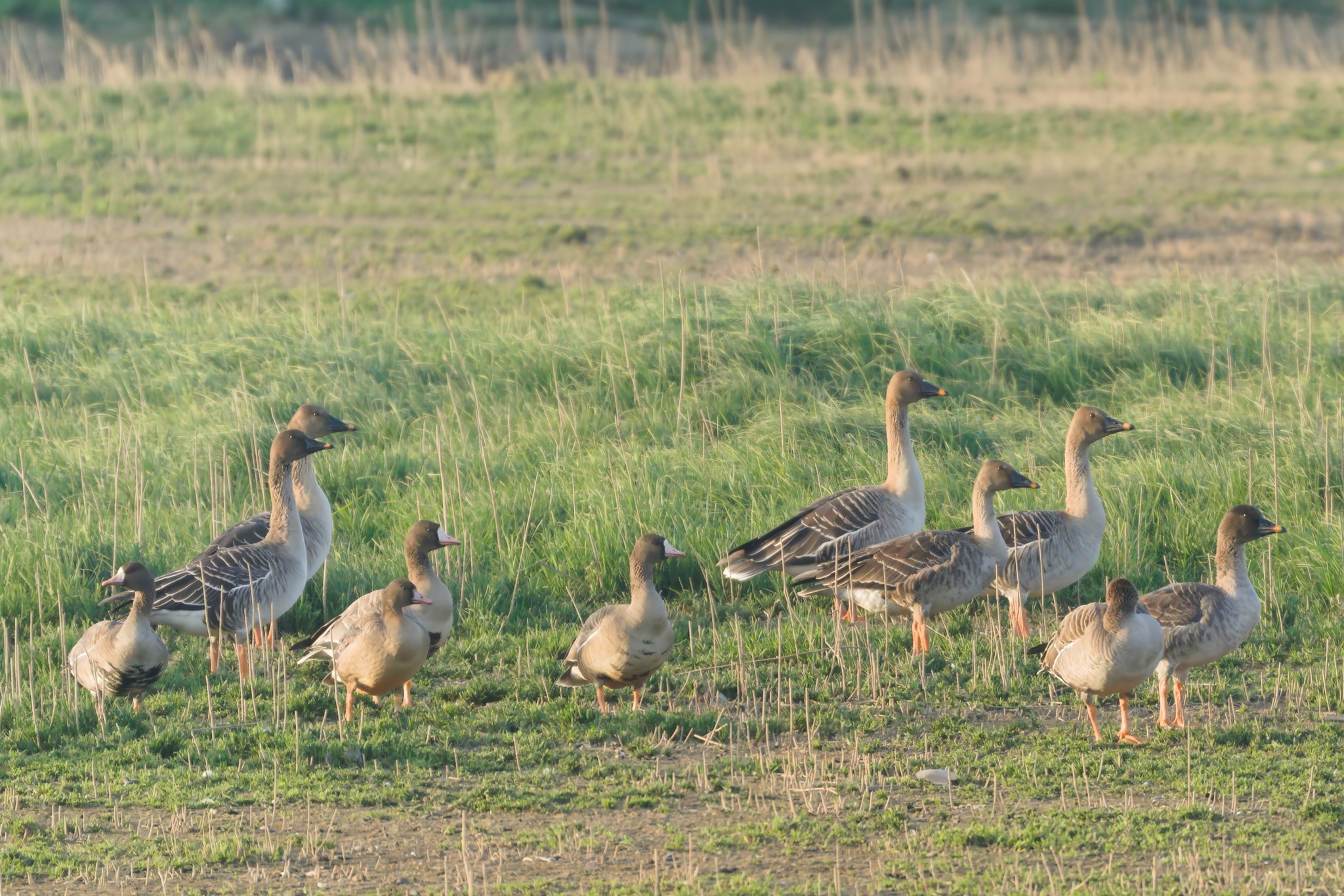
The taiga bean goose breeds in bogs and marshes across northern Europe and Asia. It winters in western Europe as a scarce visitor, where it grazes in agricultural fields and often forms mixed flocks with other goose species. The species was recently recognized as distinct from the tundra bean goose by major ornithological authorities.
Description
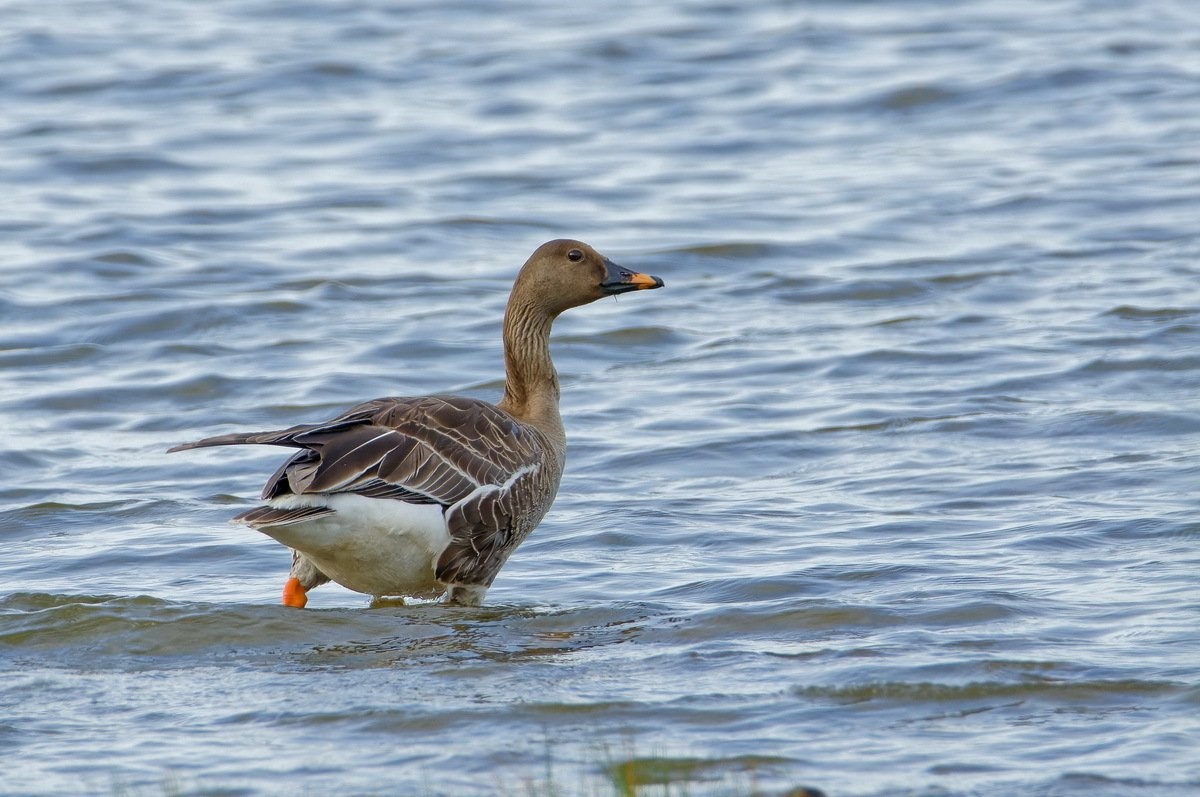
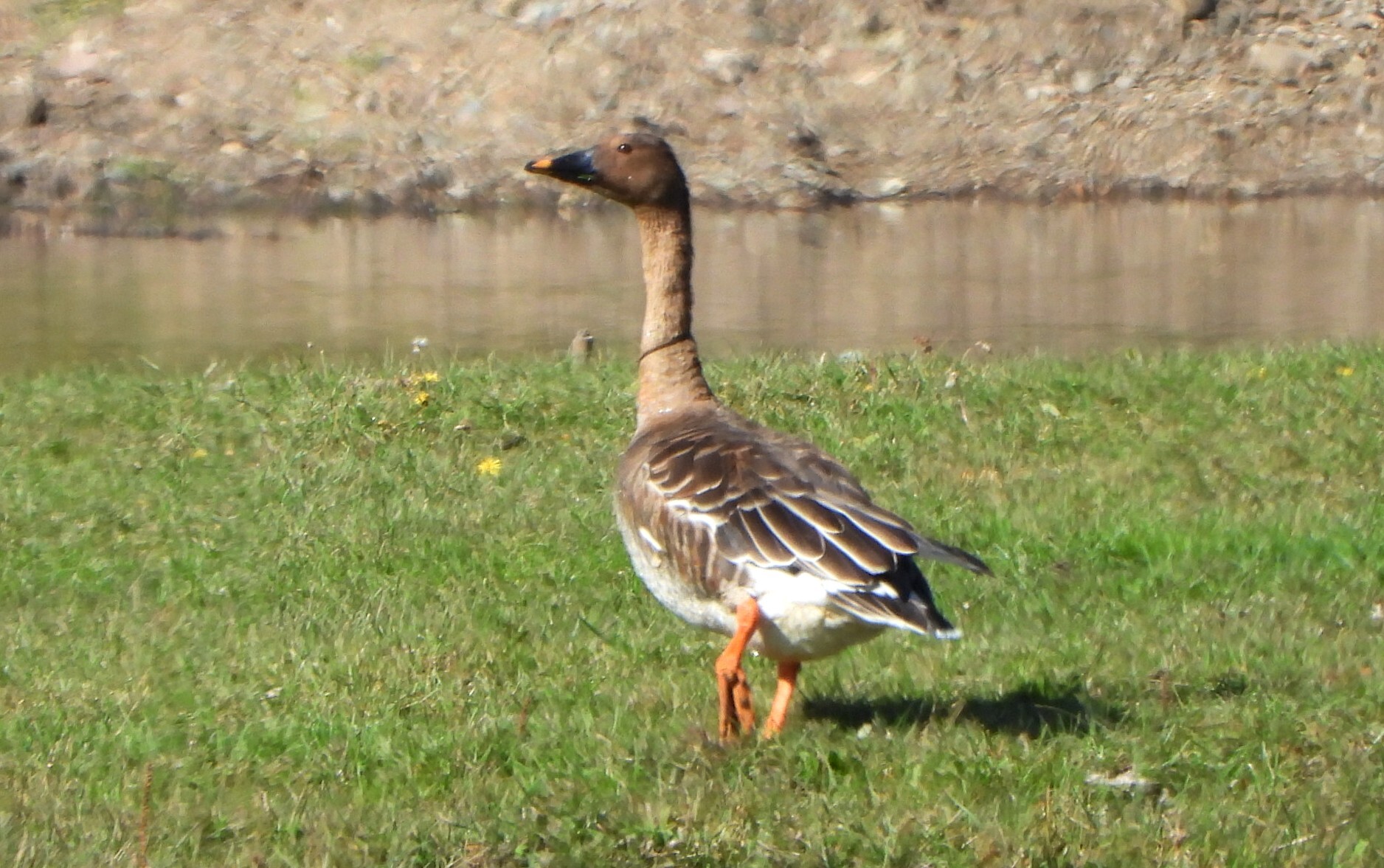
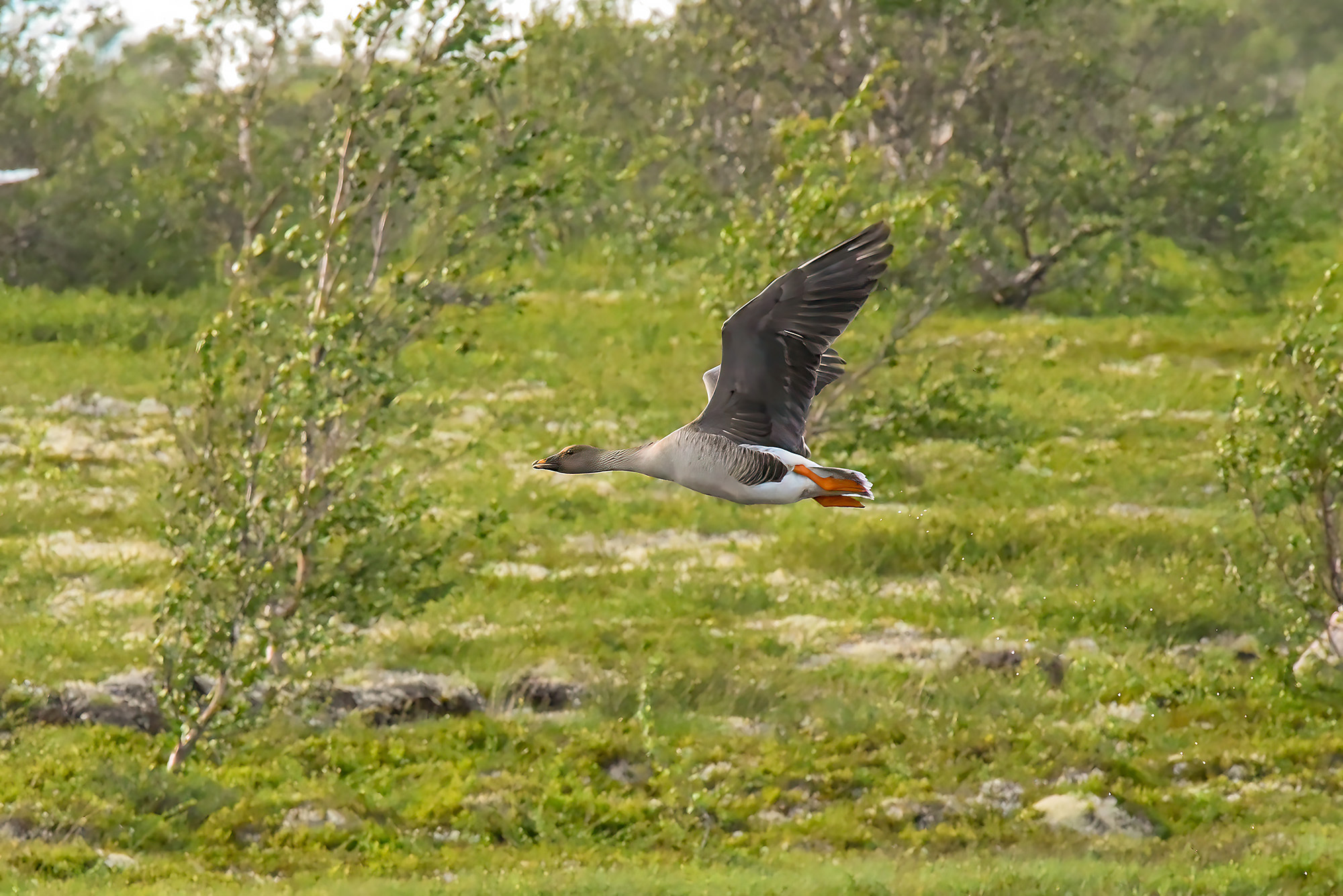
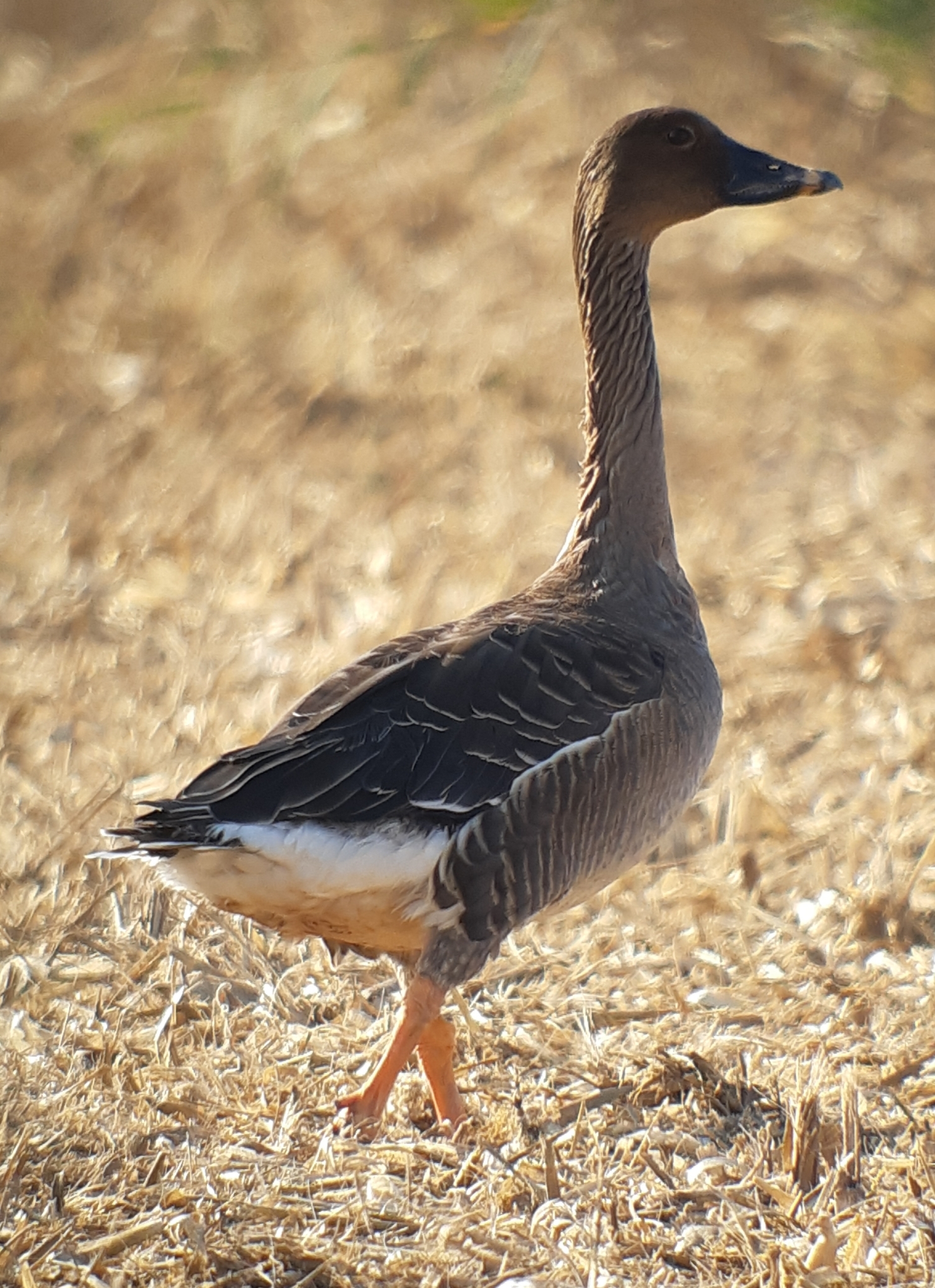
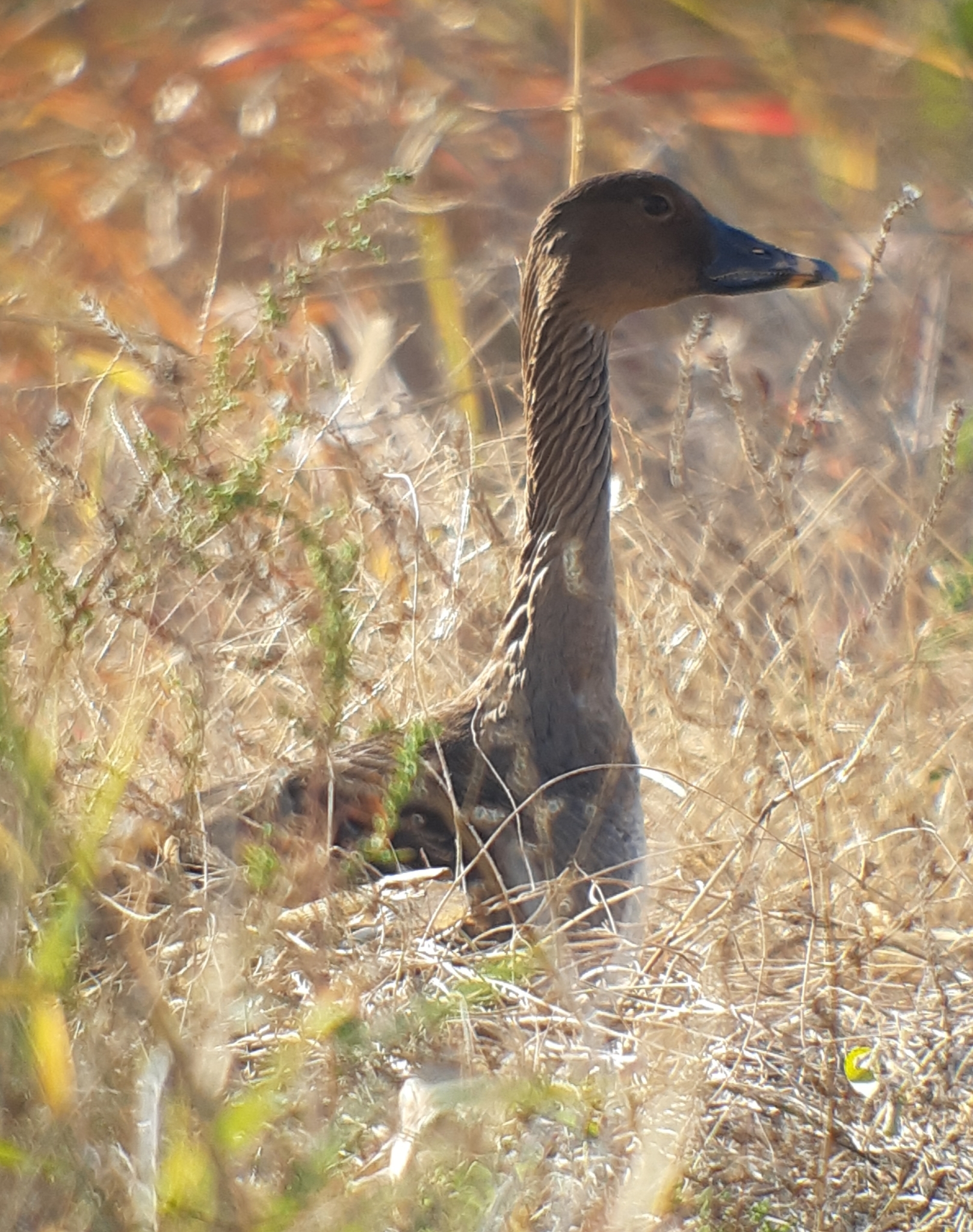
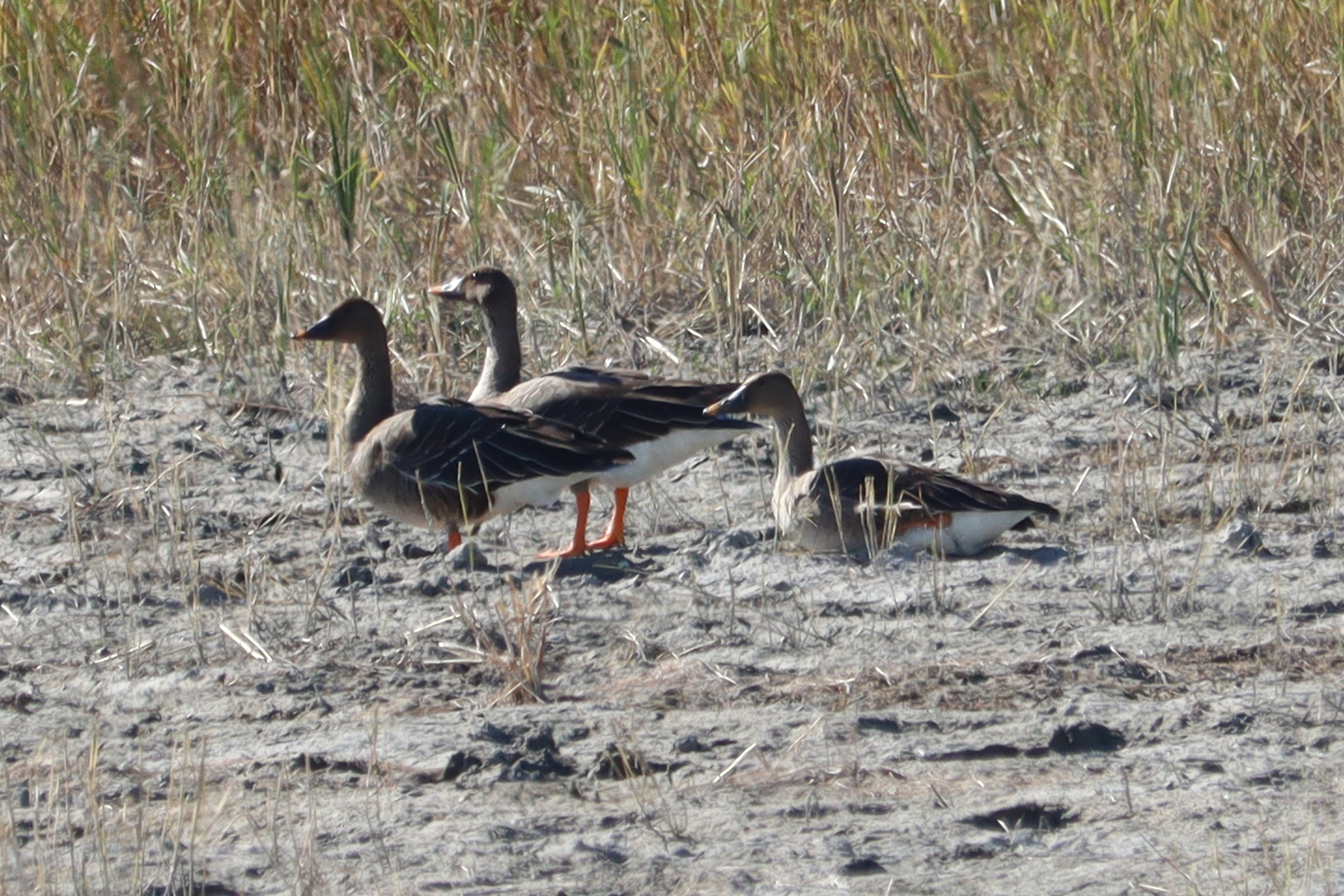
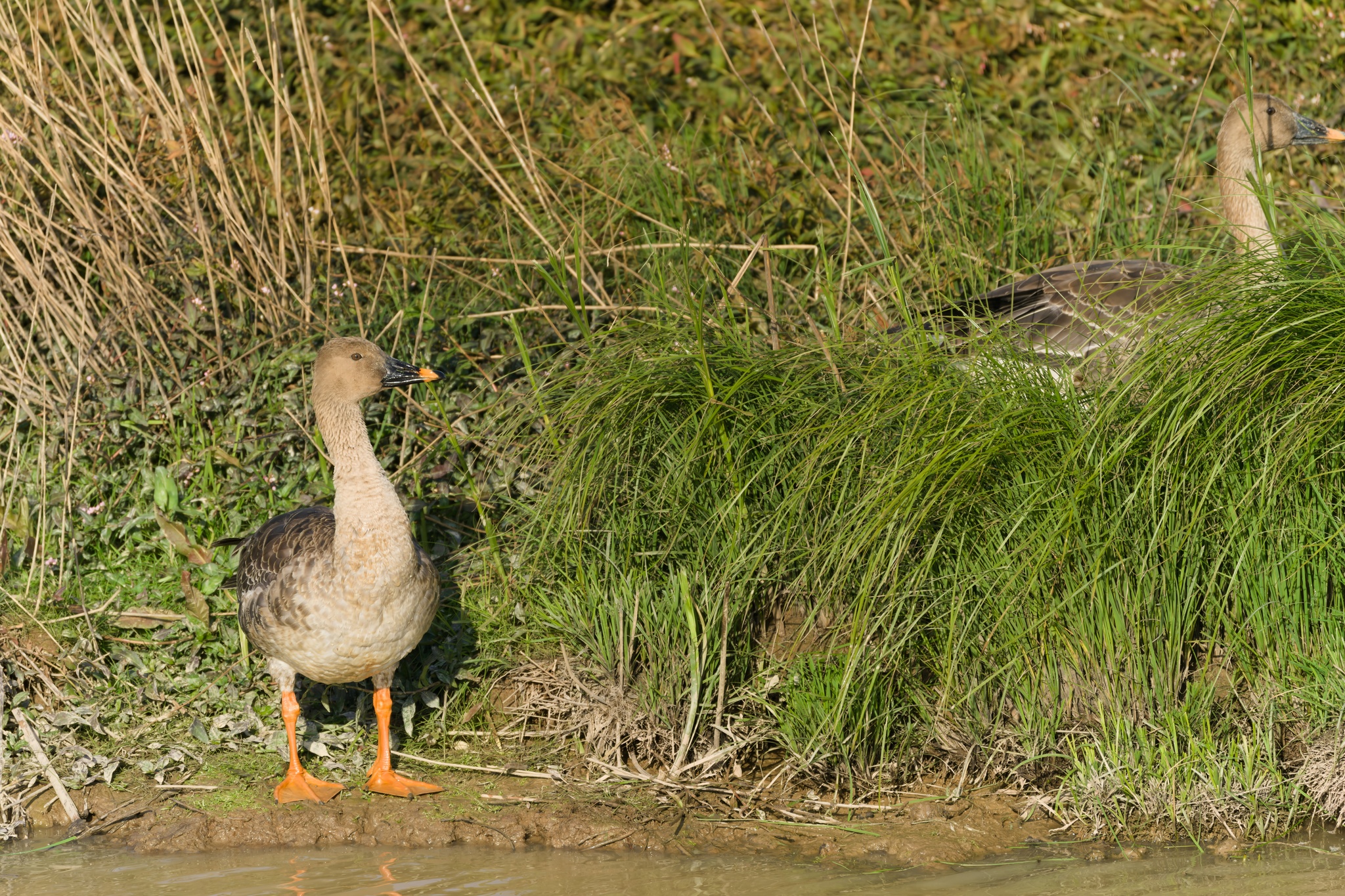
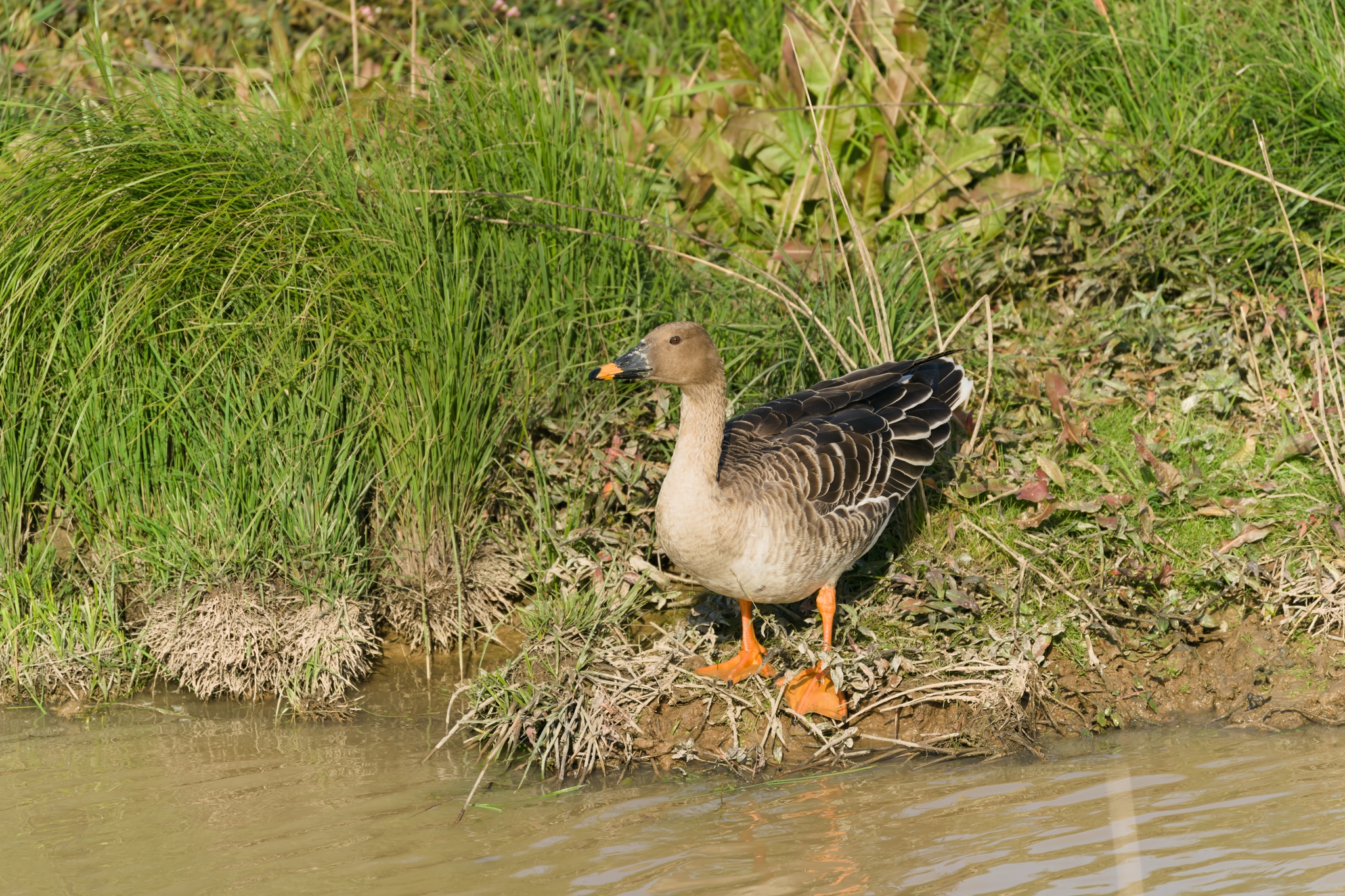
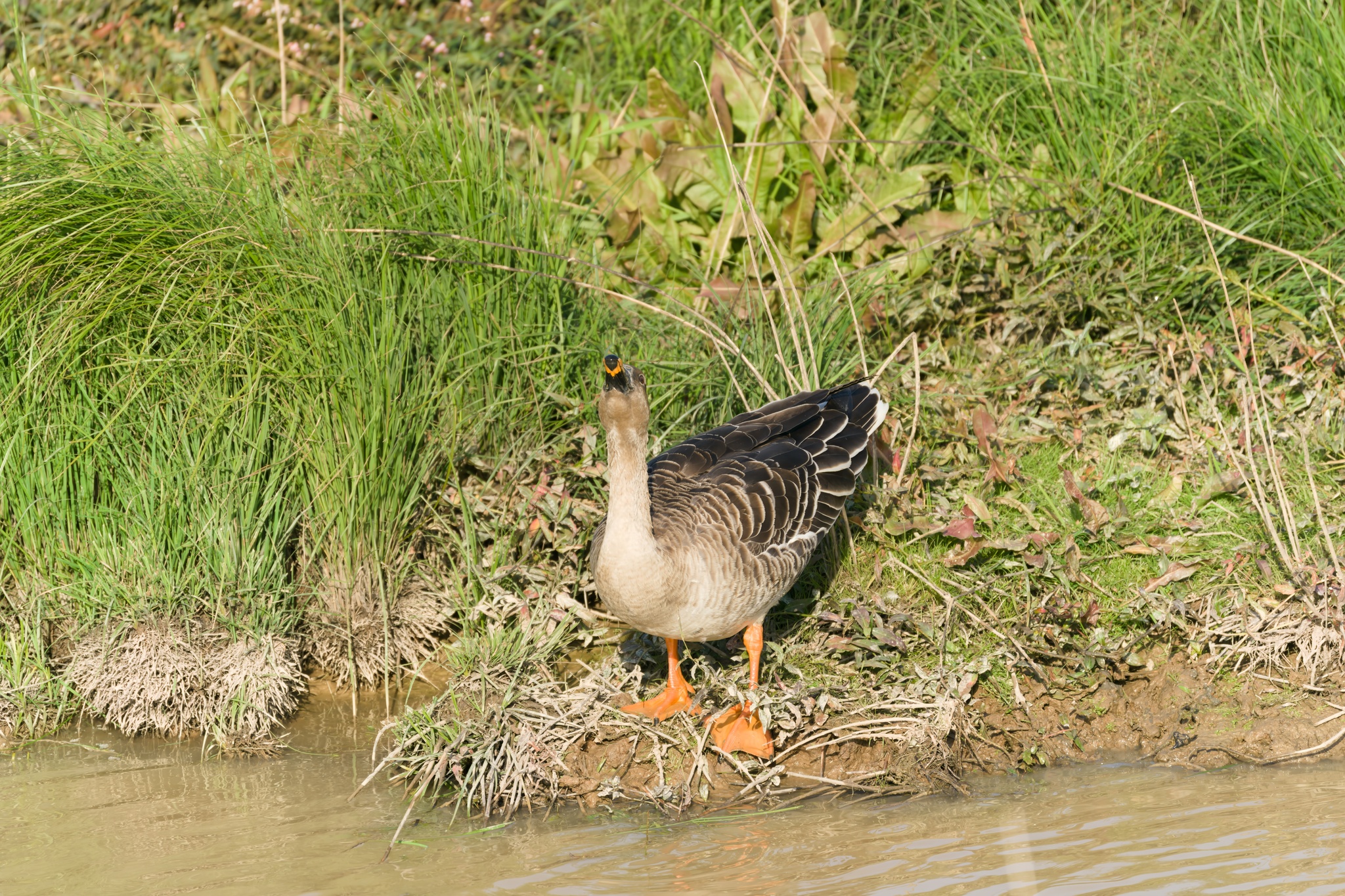
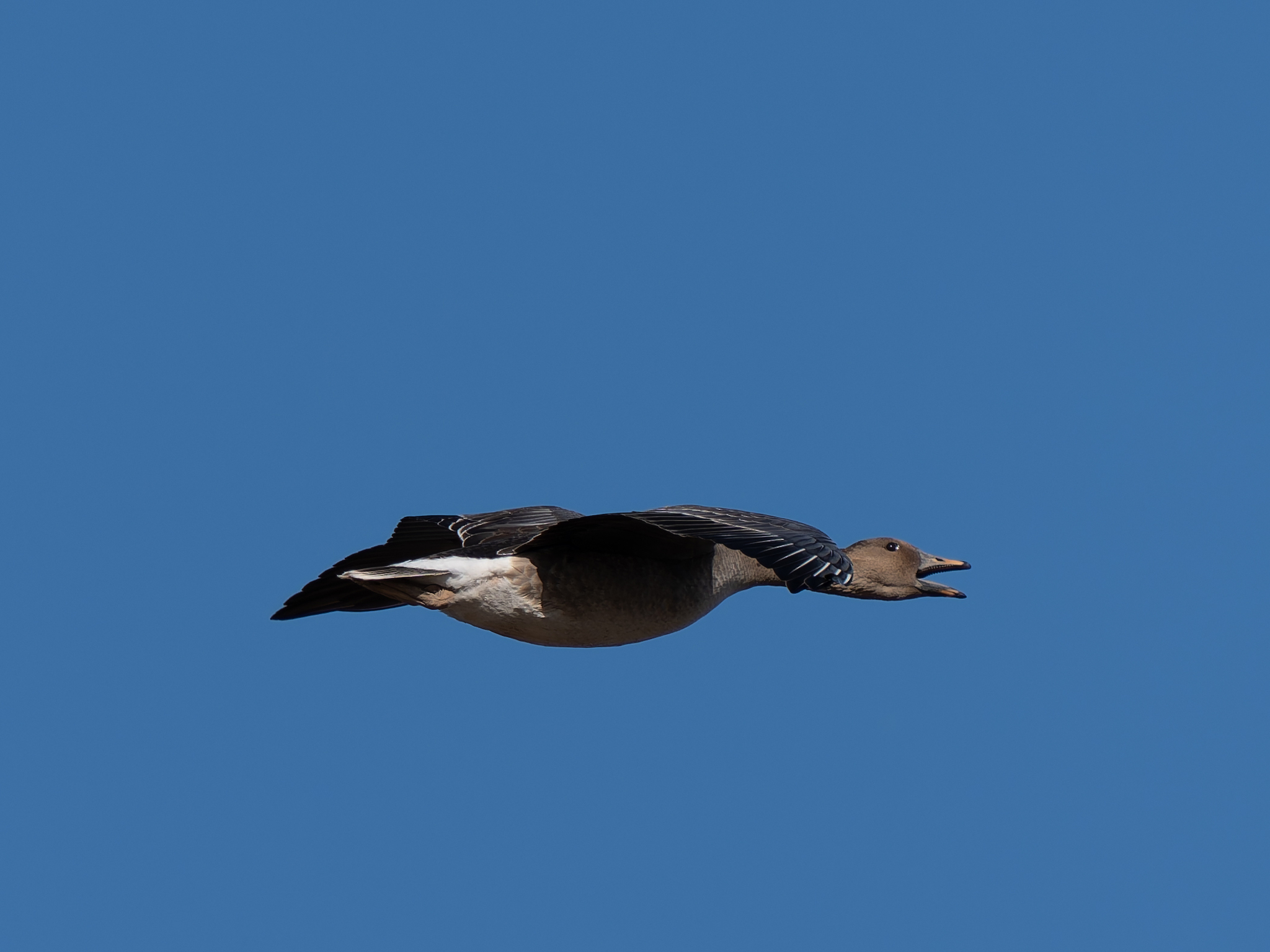
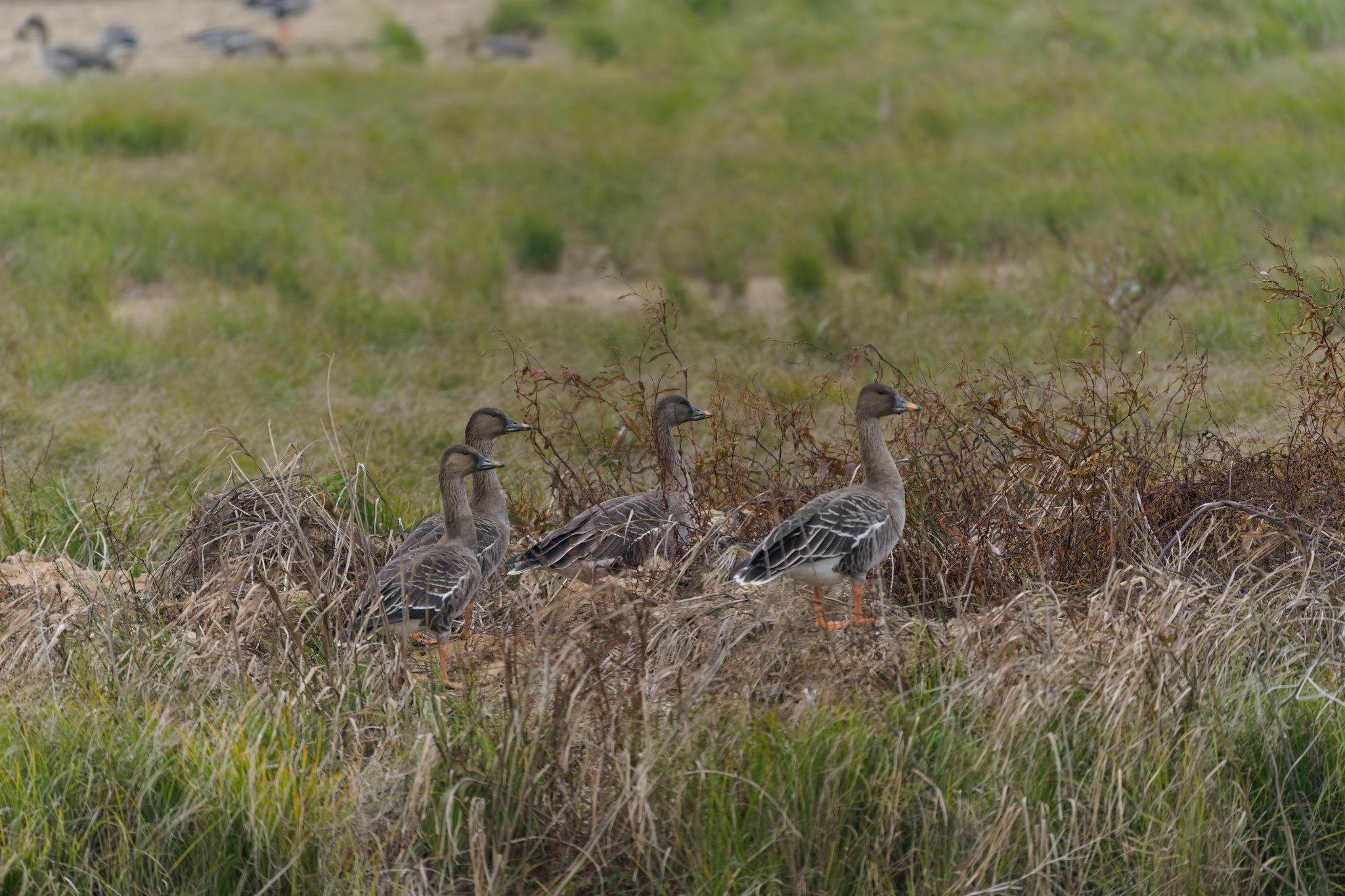
This is a large, heavy goose with a body length of 68-90 cm and wingspan of 140-174 cm. Adults weigh between 1.7-4 kg, with males typically larger at around 3.2 kg compared to females at 2.84 kg. The plumage is predominantly dark brownish-grey with paler underparts. The diagnostic bill pattern features black at both base and tip with a distinctive orange band across the middle. Legs and feet are a bright orange colour. The upper wing-coverts are dark brown, differing from the white-fronted goose species by having narrow white fringes to the feathers. In flight, they appear dark overall with relatively long necks and a bulky silhouette.
Identification
The orange bill band is the most reliable field mark, distinguishing it from the similar pink-footed goose, which has a short bill with bright pink in the middle and pink legs. The taiga bean goose is very similar in size and bill structure to the tundra bean goose subspecies rossicus, making separation challenging in the field. The dark brown upper wing-coverts with narrow white fringes help separate it from white-fronted goose species. Their loud, resonant honking call is often heard before the birds are seen. They typically appear more uniformly dark than pink-footed geese when grazing.
Distribution & Habitat
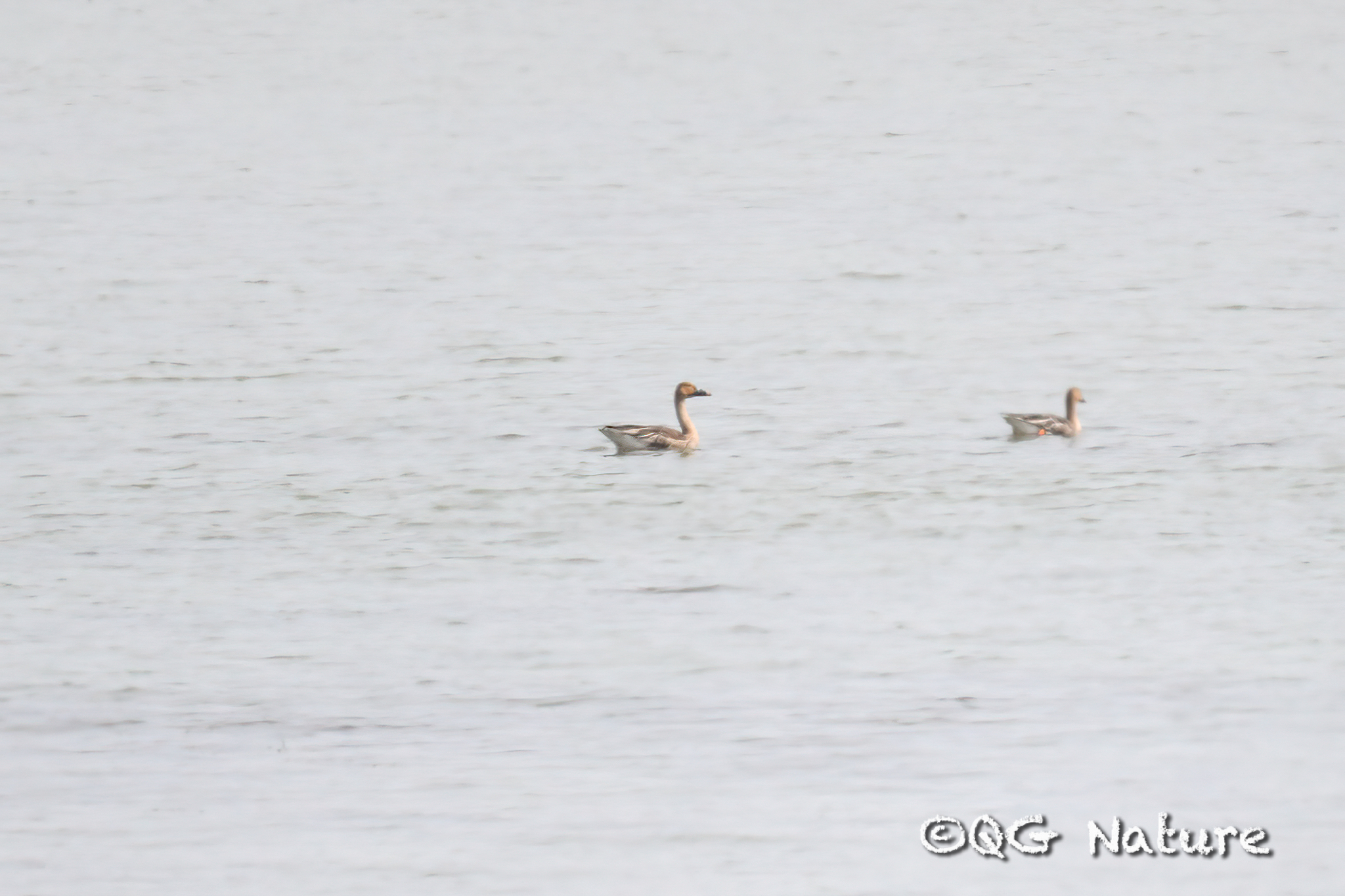
This species breeds throughout the taiga zone of northern Europe and Asia, from Scandinavia eastwards through Siberia. It is fully migratory, moving southward to winter in temperate regions of Europe and Asia. The western subspecies fabalis winters across three distinct flyways in Europe: Western, Central, and Eastern, as confirmed by stable isotope analysis. In Great Britain, it is a rare winter visitor with just two regular wintering flocks—in the Yare Valley of Norfolk and the Avon Valley between Glasgow and Edinburgh, Scotland. A former flock in Dumfries and Galloway no longer occurs there.
Behavior & Ecology
Information on specific behavioural traits is limited in available sources. The species is known to graze in agricultural fields during winter, particularly favouring stubble fields. They form relatively small, compact flocks compared to some other goose species. The voice is described as a loud, resonant honking. They are typically wary and alert birds, quick to take flight at perceived disturbance. Breeding behaviour follows the typical goose pattern of monogamous pairs and territorial nesting.
Conservation
The taiga bean goose is not assessed separately by the IUCN, being listed collectively with the tundra bean goose. The western subspecies fabalis is covered by the Agreement on the Conservation of African-Eurasian Migratory Waterbirds (AEWA), indicating international conservation cooperation. Its rarity in western Europe, particularly the very limited wintering flocks in Britain, makes it a conservation priority in that region. The loss of the Dumfries and Galloway flock may reflect broader population changes or shifts in wintering distribution.
Culture
The species' common name derives from its historical habit of grazing in bean field stubbles during winter months. The scientific name Anser fabalis follows this theme, with Anser being Latin for goose and fabalis derived from faba, the broad bean. However, beyond these etymological origins, there is no significant folklore or cultural tradition associated with this species.
Source: Wikipedia · CC BY-SA 3.0
Taxonomy
- Order
- Anseriformes
- Family
- Anatidae
- Genus
- Anser
- eBird Code
- taibeg1
Vocalizations
Subspecies (3)
-
Anser fabalis fabalis
breeds taiga of Scandinavia to Ural Mountains; winters western Europe to far southwestern Asia
-
Anser fabalis johanseni
breeds taiga and wooded tundra of Ural Mountains to Lake Baikal; winters mainly to southeastern Kazakhstan, eastern Kyrgyzstan, and Iran eastwards to northwestern China
-
Anser fabalis middendorffii
breeds taiga of Altai region, eastern Siberia (east of Lake Baikal), and northern Mongolia, and eastwards to the Sea of Okhotsk; winters in central and eastern China, the Korean Peninsula, Japan, and Taiwan
Data Sources
Species description from Wikipedia, licensed under CC BY-SA 3.0.
Bird images and sounds sourced from GBIF, contributed by citizen scientists worldwide under Creative Commons licenses.
Taxonomy data from AviList 2025.