Emperor Goose
Anser canagicus
帝雁
Introduction
A waterfowl species (Anser canagicus) in the family Anatidae. Summer range encompasses remote coastal areas near the Bering Sea in arctic and subarctic Alaska and the Russian Far East, where it breeds in monogamous pairs. Winter range includes ice-free mudflats and coasts in the Aleutian Islands, Alaska, and British Columbia, rarely reaching the contiguous United States. Distinguished by its relatively short migration distance of 370-470 miles compared to other goose species, and its reputation as one of the most unsocial goose species. Rated as near threatened by the IUCN due to population declines from pollution, hunting, and climate change.
Description
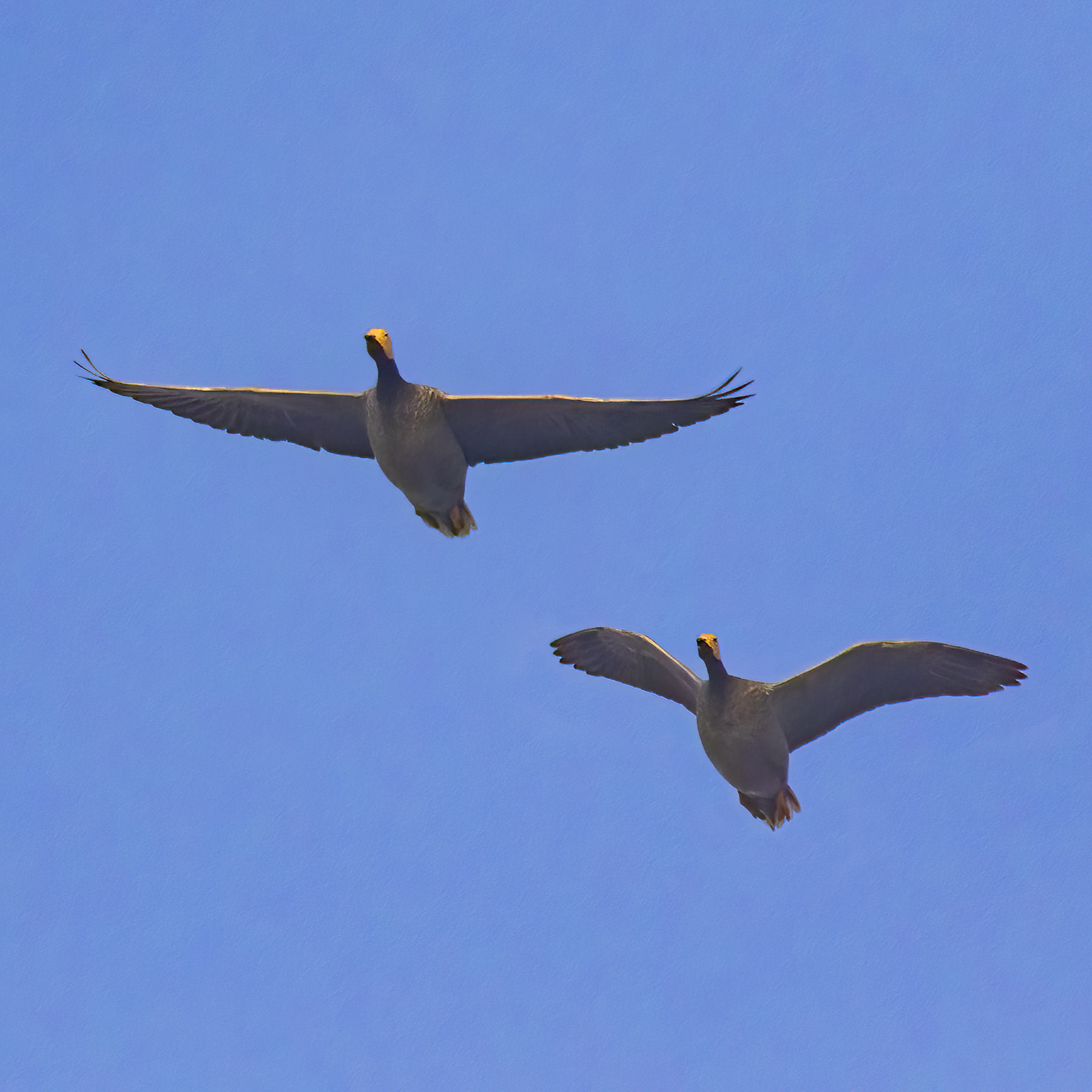
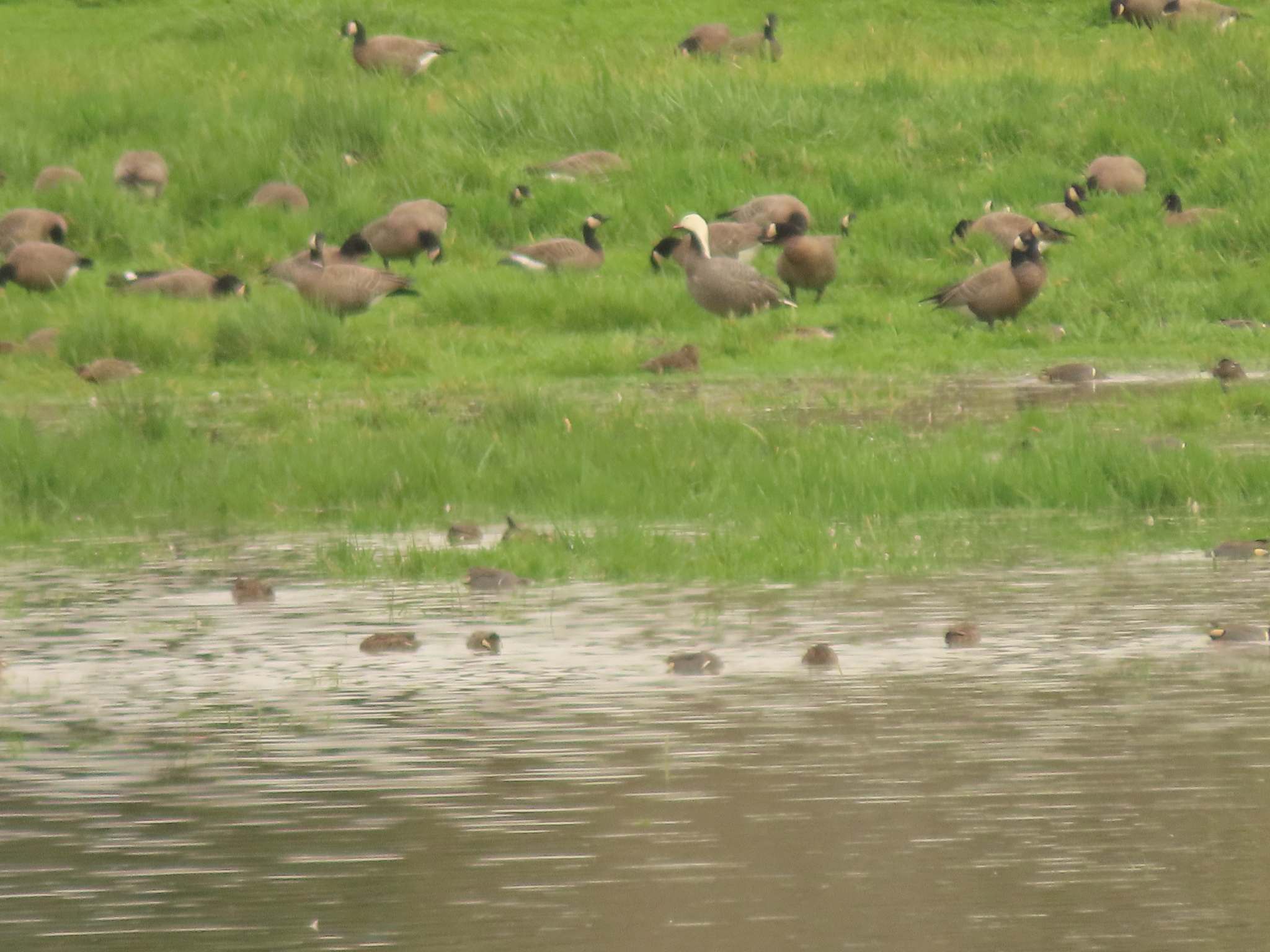
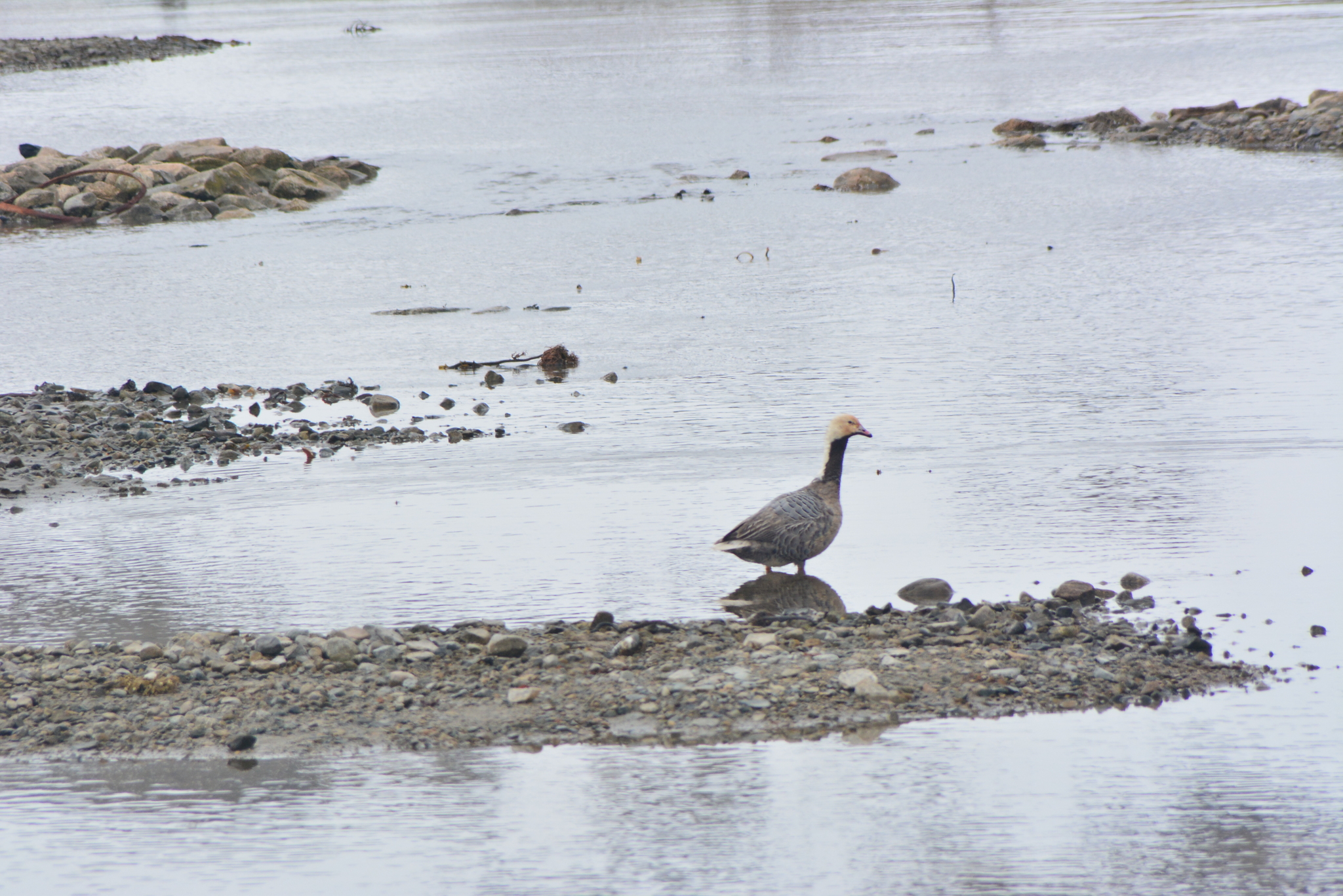
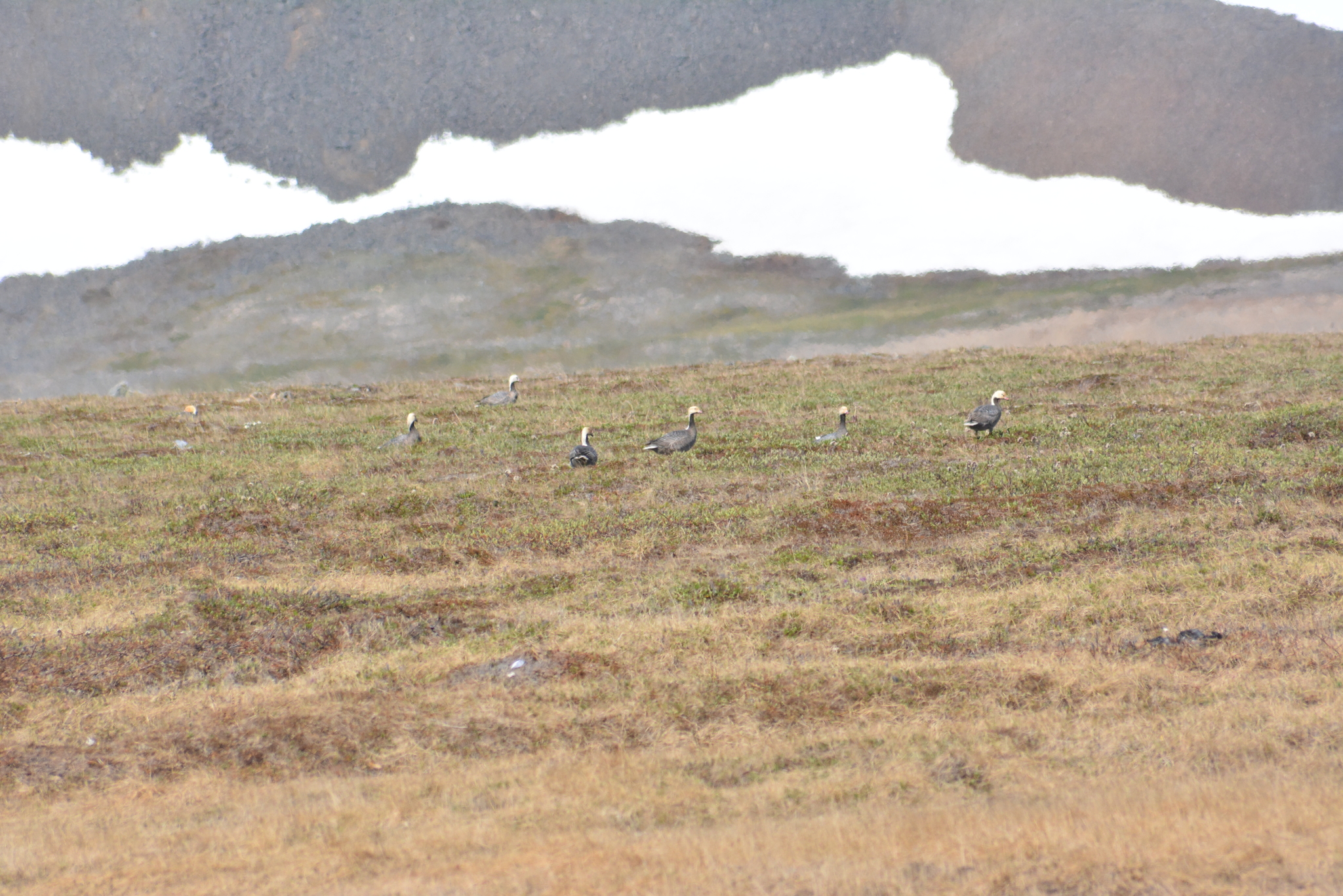
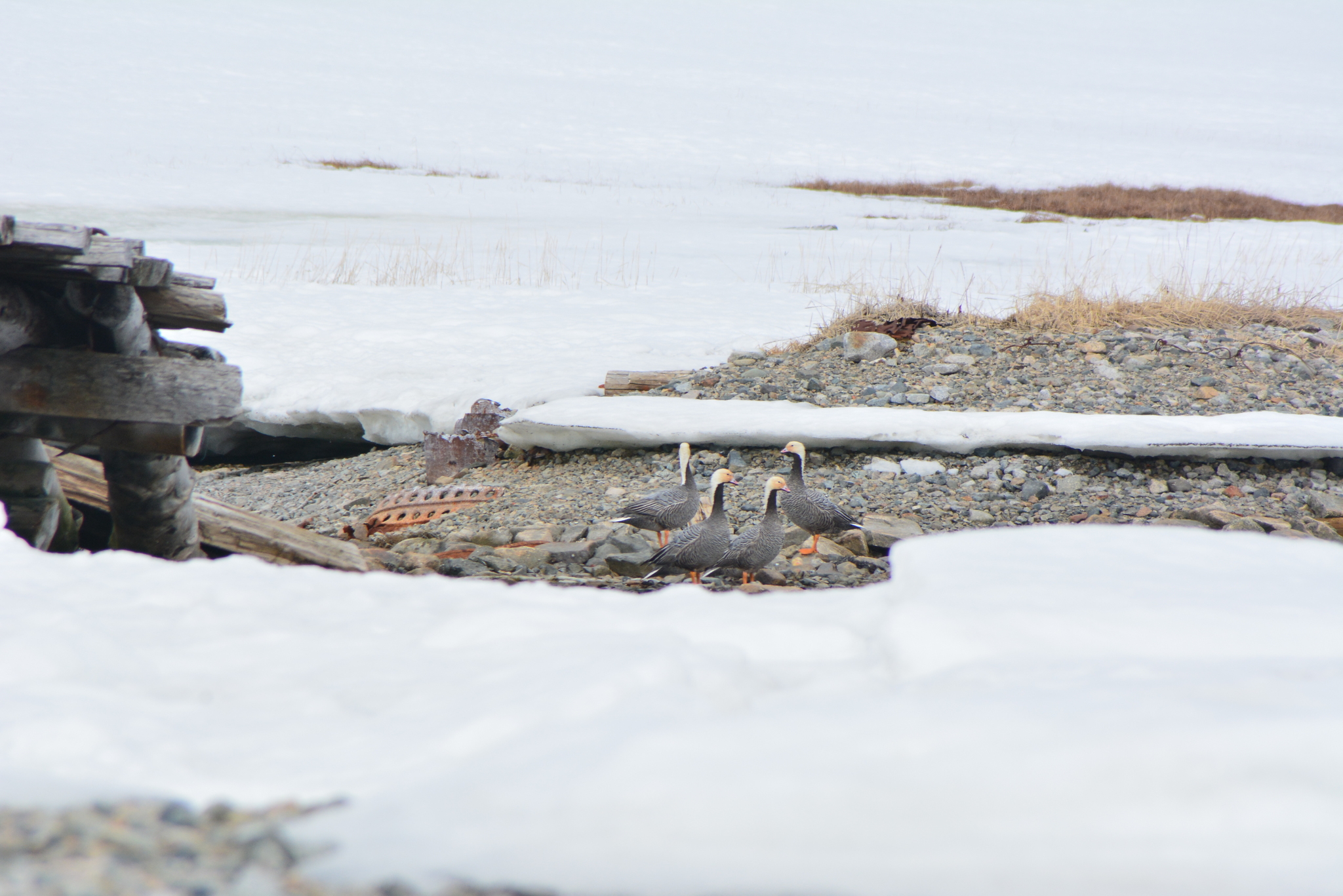
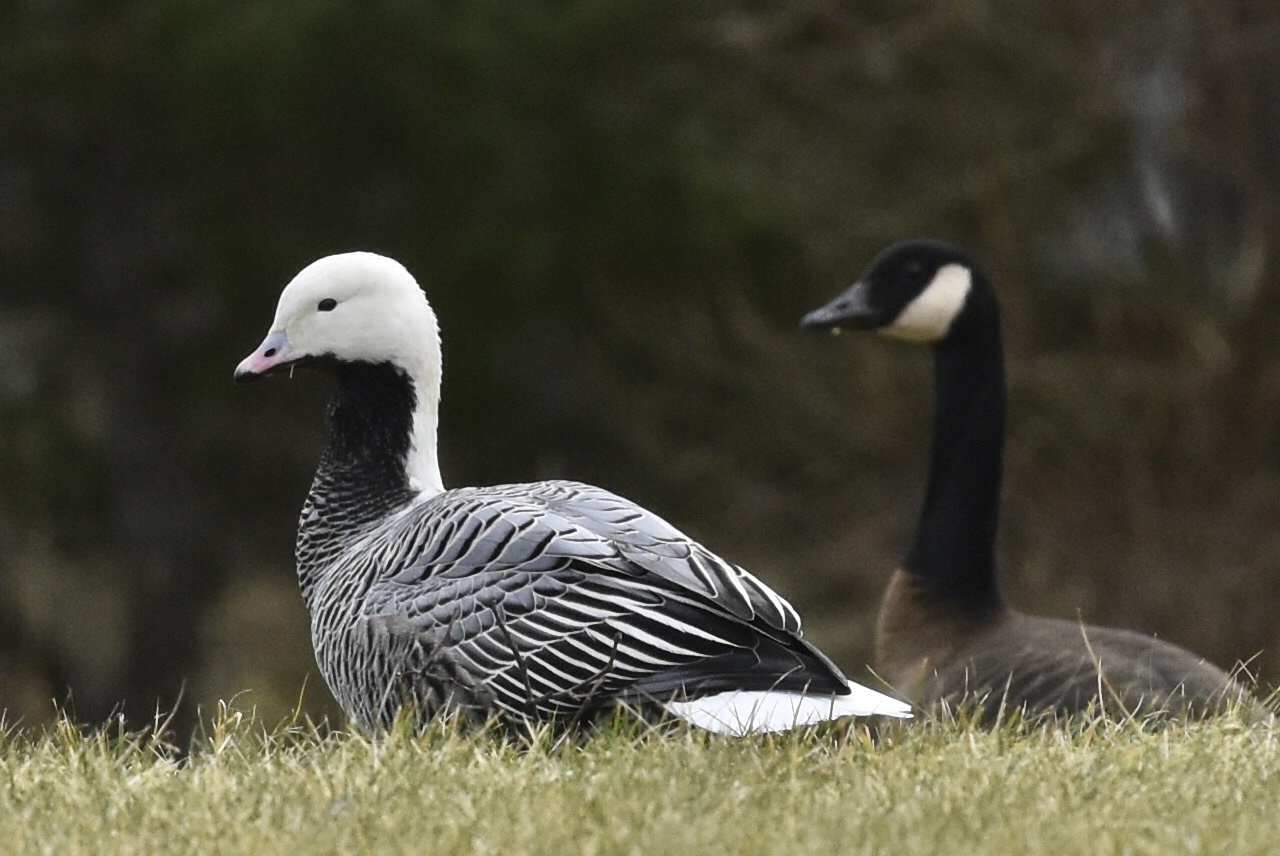
A stout blue-gray goose with black and white spots creating a scaled appearance. The head and back of neck are white tinged with amber-yellow, with a black chin and throat; unlike the snow goose, the white does not extend to the front of neck. Has a white tail, pink bill tipped with white, and yellow-orange legs and feet. Wing undersides are gray. Adults develop reddish-brown head coloration in summer from iron oxide in tidal pools. Males measure 26-28 inches (66-71 cm) in length, females 25.6-27.5 inches (65-70 cm). Wingspan is 119 cm (47 inches). Males weigh 2.8-3.1 kg, females average 1.9 kg. Heavy body with short neck and short wings resulting in slow flight.
Identification
Distinguished from the snow goose by having white only on the head and back of neck, not extending down the front of the neck. Wing undersides are gray versus black and white in snow geese. The scaled appearance from black and white spotting is distinctive. Pink bill with white tip separates it from similar-sized geese. Juveniles are mostly gray with dark head and neck, turning mostly white by their first winter. Goslings have black bills and gray, brown, or black feet, with a white area surrounding the bill for the first three weeks.
Distribution & Habitat
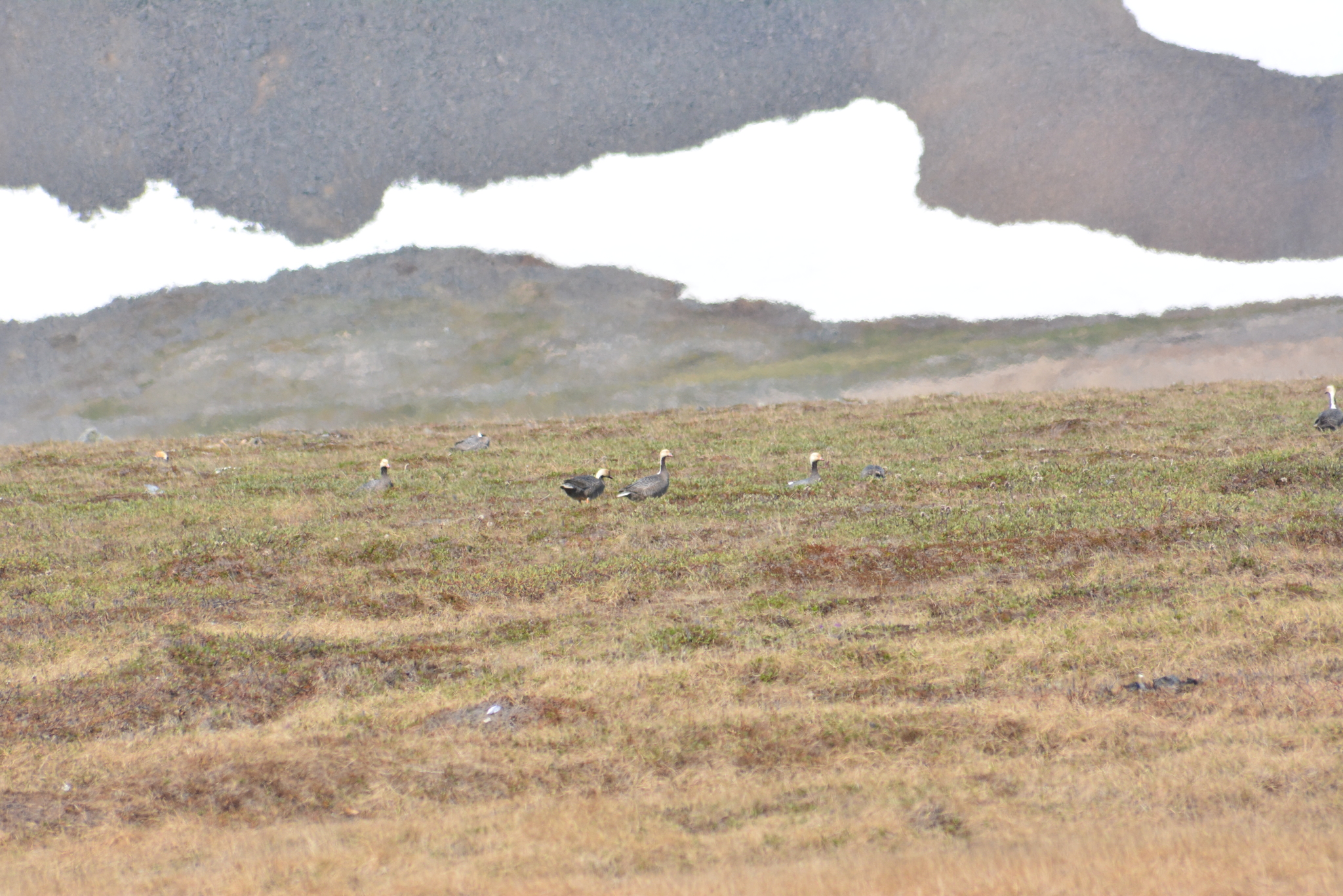
Summer breeding range covers the Bering Sea region of arctic and subarctic Alaska and northeastern Russia, using freshwater pools, inland lakes, and coastal lagoons. Approximately 90% of the global population nests on the Yukon-Kuskokwim Delta. Winter range includes the Aleutian Islands, Alaska Peninsula, and Kodiak Island, with some individuals wintering in British Columbia and rarely reaching northwestern California. Habitats include mudflats and rocky shores in winter, and tundra wetlands in summer. The species migrates shorter distances than most geese, traveling about 370-470 miles between breeding and wintering areas.
Behavior & Ecology
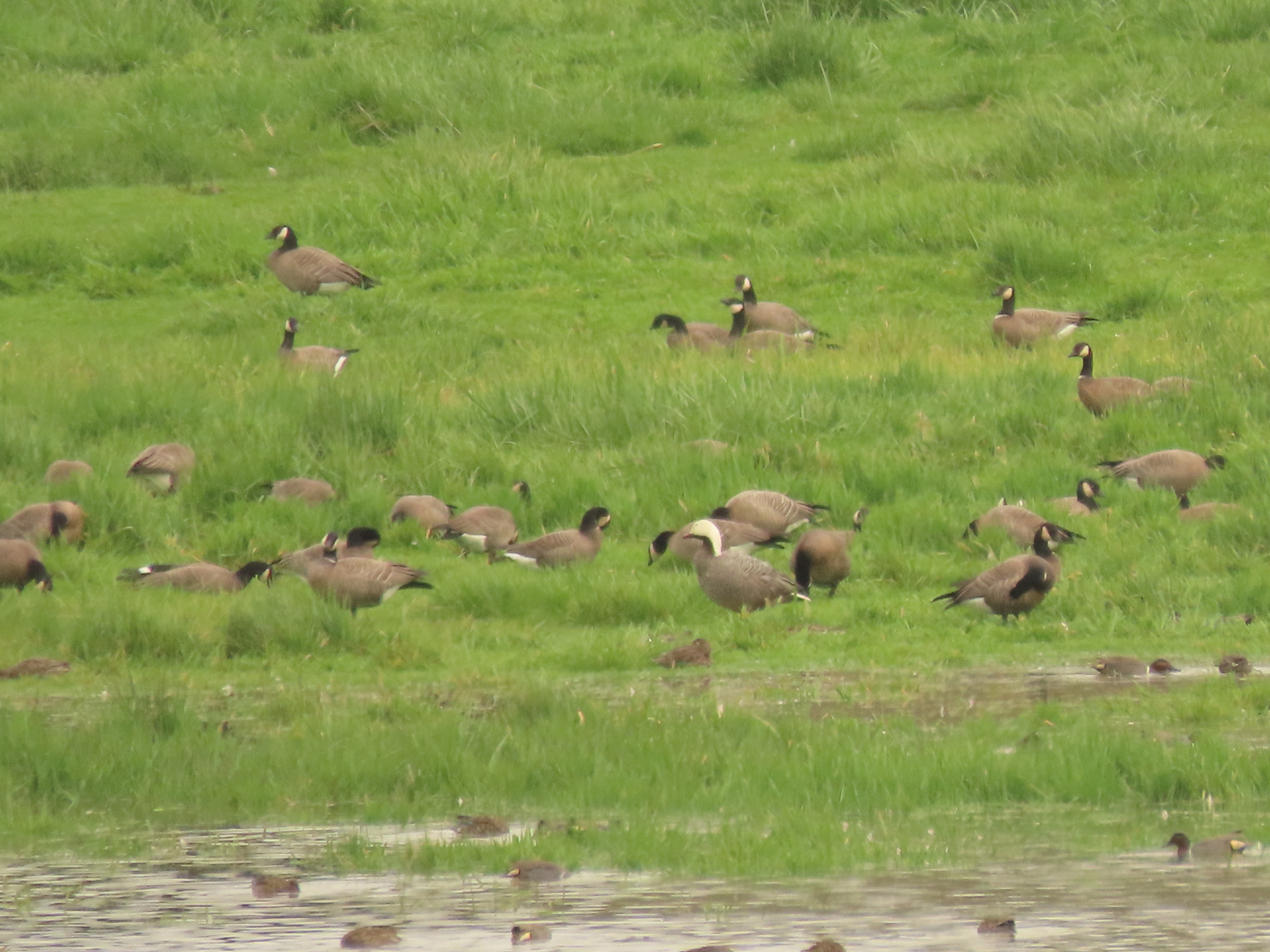
Migratory, traveling north in summer to breed and south for winter. Breeds in monogamous pairs; only individuals three years or older mate. Nests are constructed on tundra within 10 miles of coast, built as ground depressions lined with vegetation and feathers. Clutch size is typically 4-6 eggs (range 2-8), averaging 7.86 cm by 5.21 cm. Incubation lasting 24 days is performed solely by females. Eggs hatch in late June to early July. Goslings are precocial, walking and swimming hours after hatching, and can fly at 50-60 days. Summer diet consists of vegetation including shoots, roots, and berries; winter diet primarily bivalve molluscs and algae. Vocalizations sound like kla-ha, kla-ha, kla-ha with a nasal quality, less frequent than other geese. Very unsocial, typically associating only with family groups.
Conservation
Listed as near threatened on the IUCN Red List. Population declined from 139,000 in 1964 to 42,000 in 1986, but has since recovered to approximately 98,000 in 2015, with some estimates suggesting 170,000 by 2017. The declining trend is attributed to oil pollution, hunting, and climate change, with additional pressures from competition with cackling geese and predation of goslings. Recreational and subsistence hunts closed in 1986-1987 due to low populations but have since reopened under management. Rated 14 out of 20 on the Continental Concern Score and included on the 2016 State of North America's Birds' Watch List.
Source: Wikipedia · CC BY-SA 3.0
Taxonomy
- Order
- Anseriformes
- Family
- Anatidae
- Genus
- Anser
- eBird Code
- empgoo
Distribution
breeds in northeastern Siberia and western Alaska; winters mainly in Alaska, from the Aleutian Islands to the Alaska Peninsula
Data Sources
Species description from Wikipedia, licensed under CC BY-SA 3.0.
Bird images and sounds sourced from GBIF, contributed by citizen scientists worldwide under Creative Commons licenses.
Taxonomy data from AviList 2025.