Snow Goose
Anser caerulescens
雪雁
Introduction
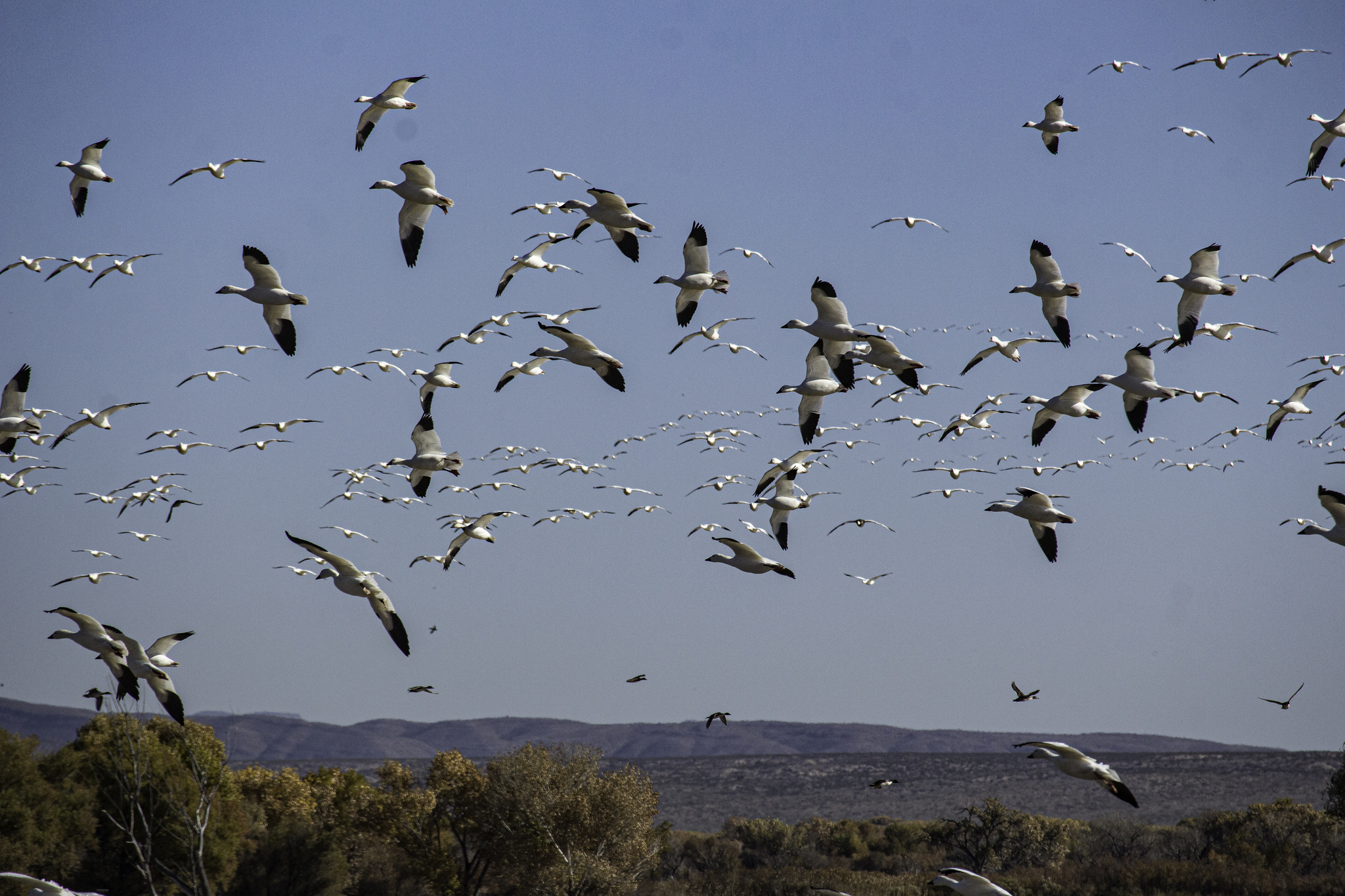
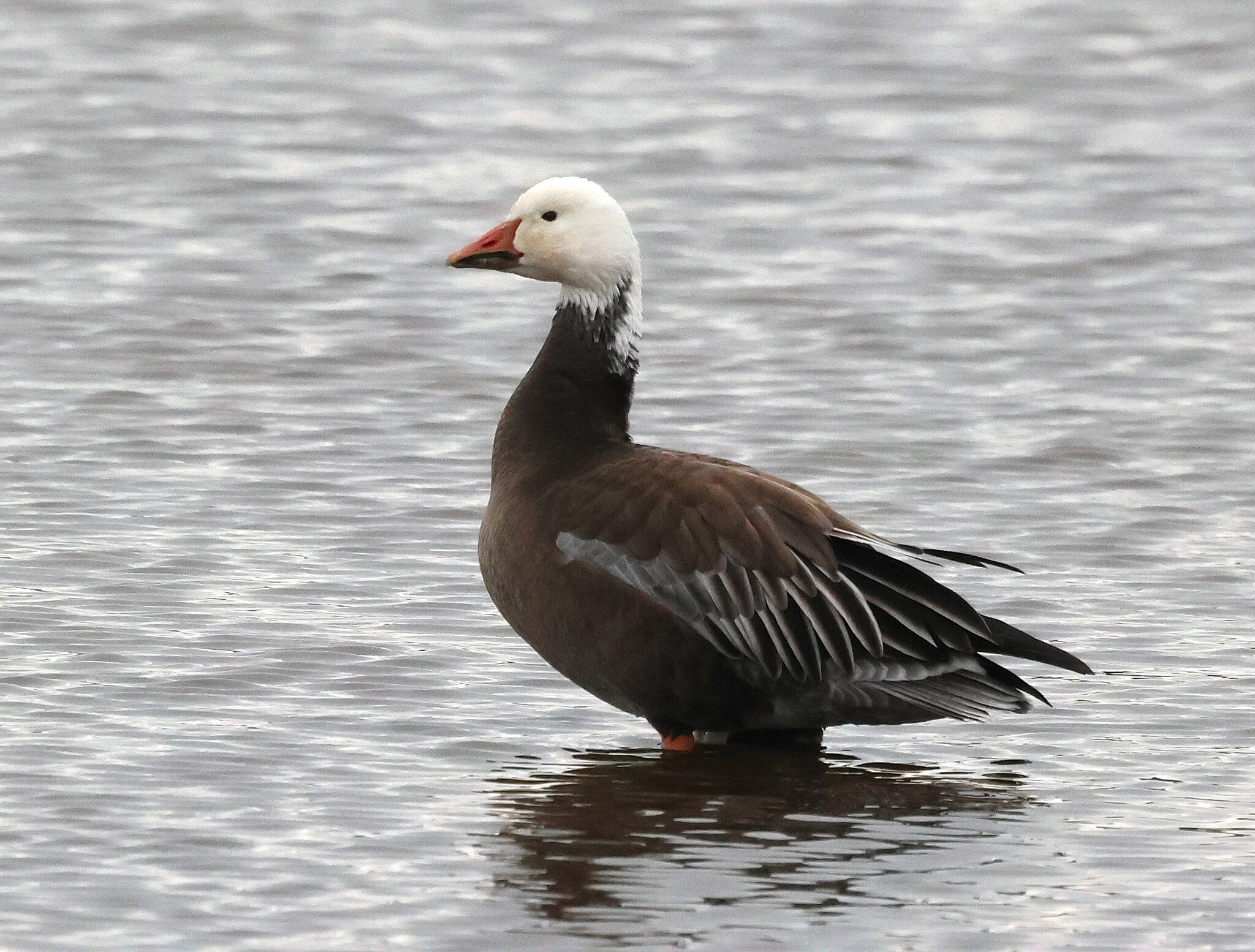
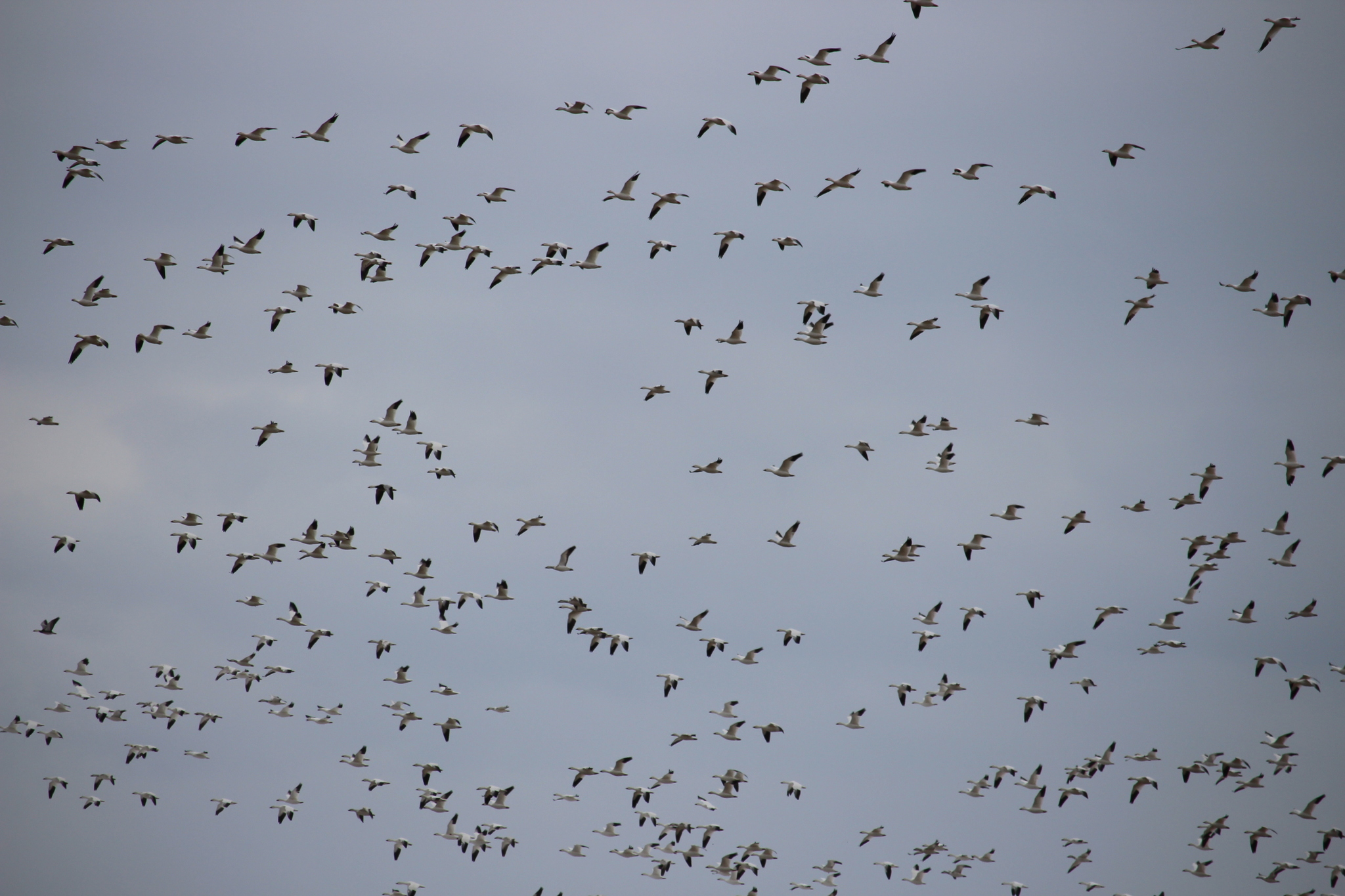
A medium-sized goose species with two color morphs: white and dark blue-gray. The dark morph was historically classified as a separate species. Body length measures 25-31 inches with a wingspan of 53-60 inches. High-arctic breeders, nesting in coastal tundra and marsh regions. Winters primarily in agricultural fields of the central and southern United States. Forms massive flocks numbering in the hundreds of thousands. Emits loud, piercing calls audible across open terrain. Global population exceeds 5 million individuals. Conservation concerns exist due to habitat degradation at both breeding and wintering sites.
Description
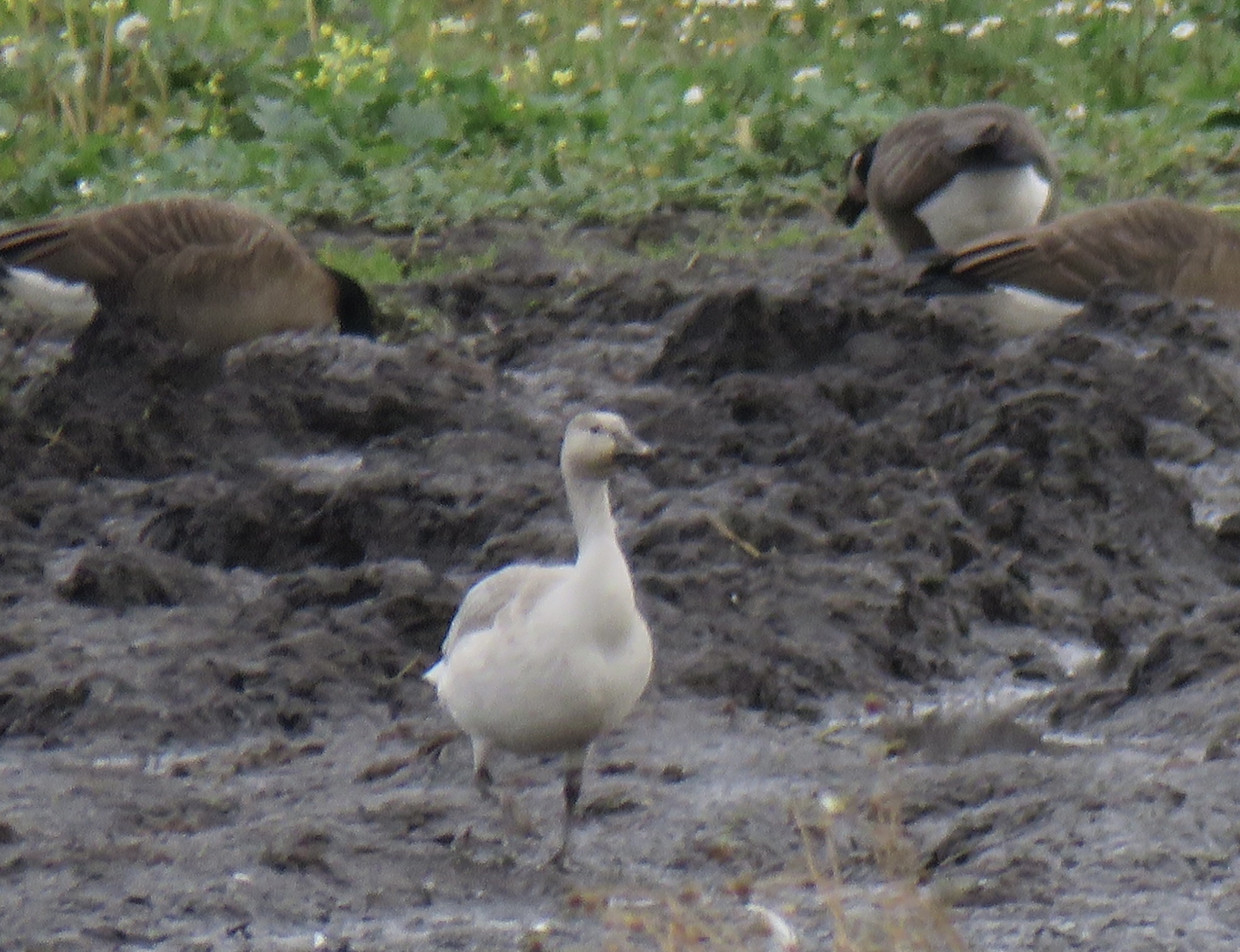
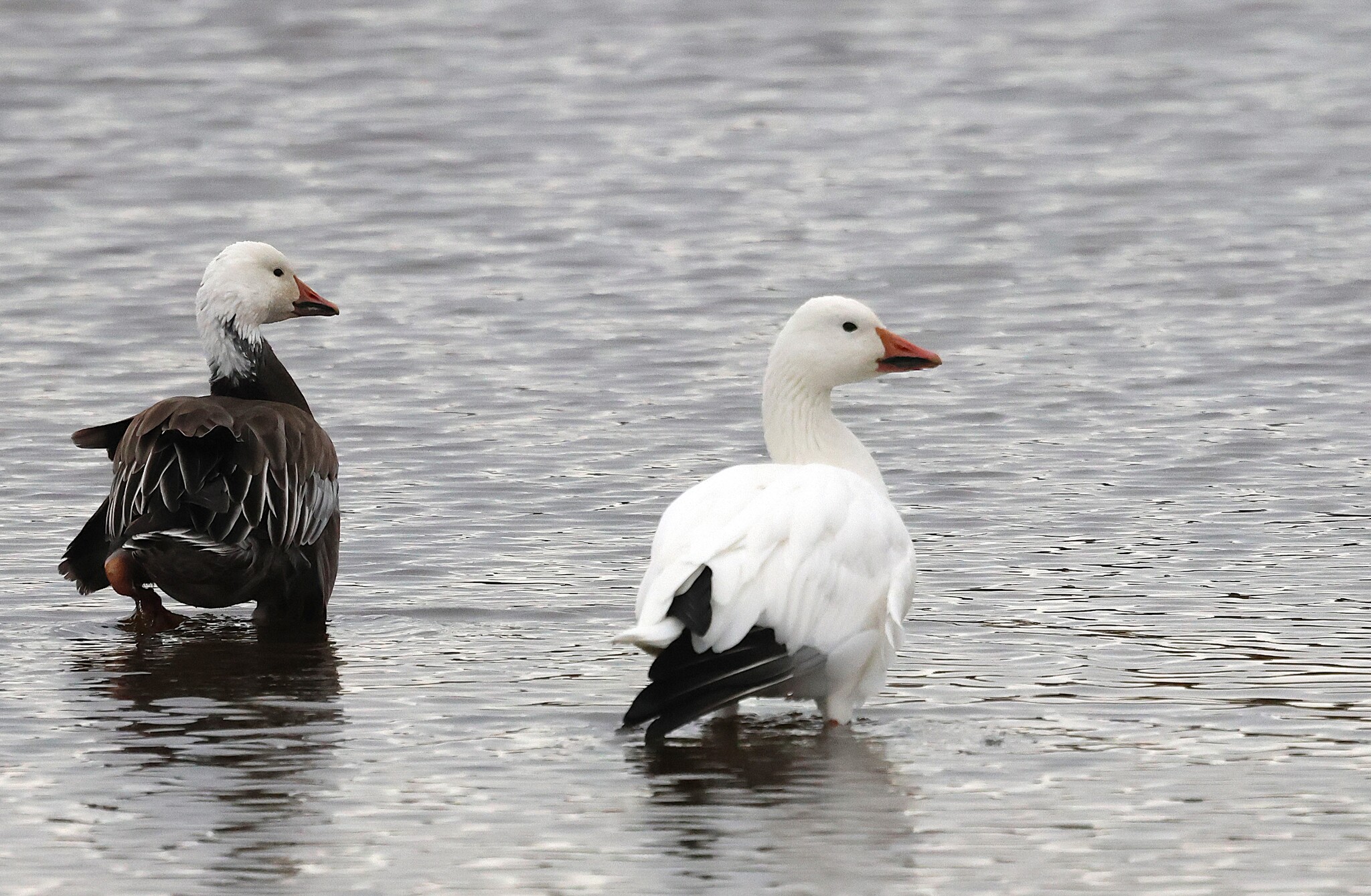
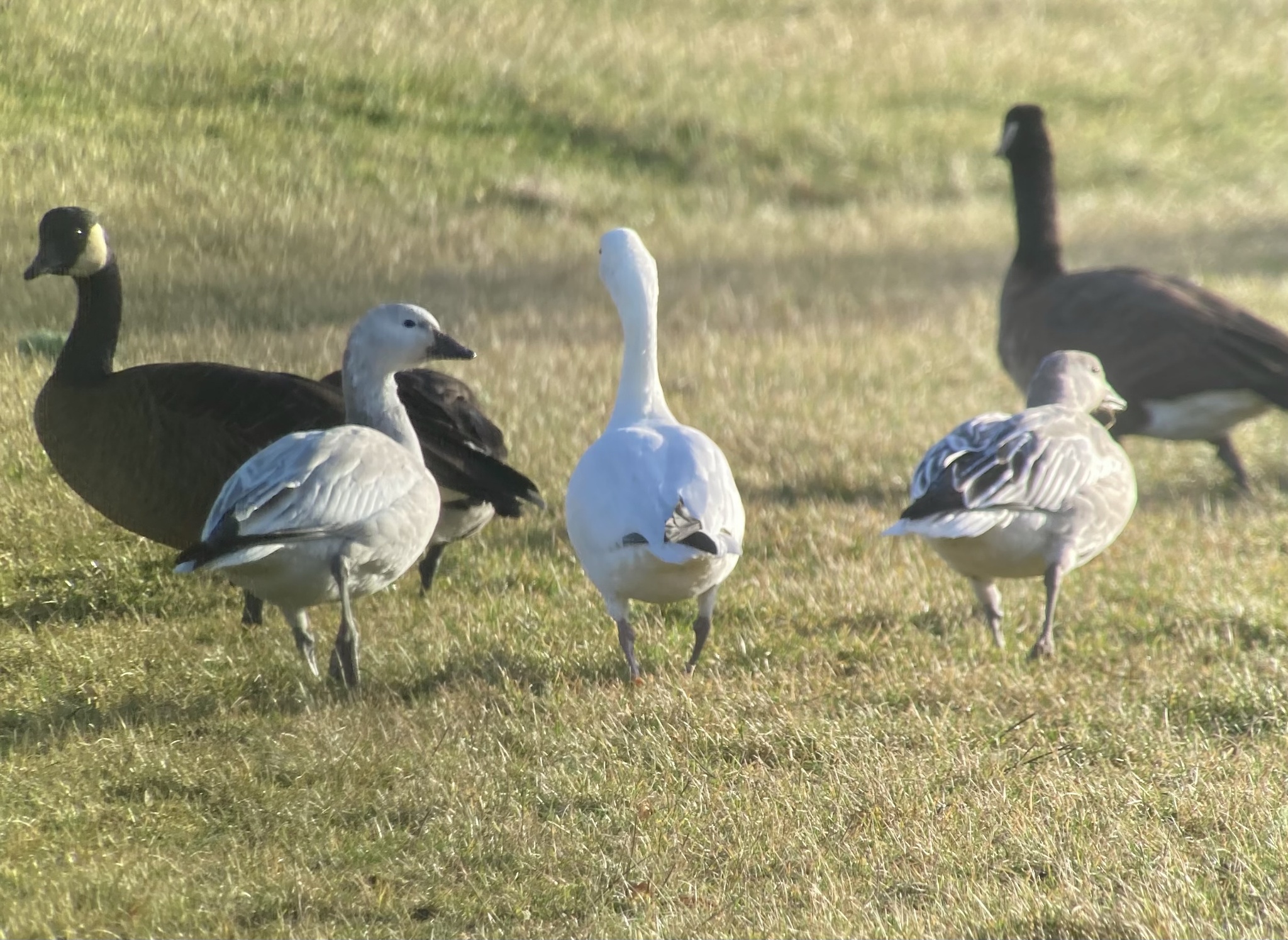
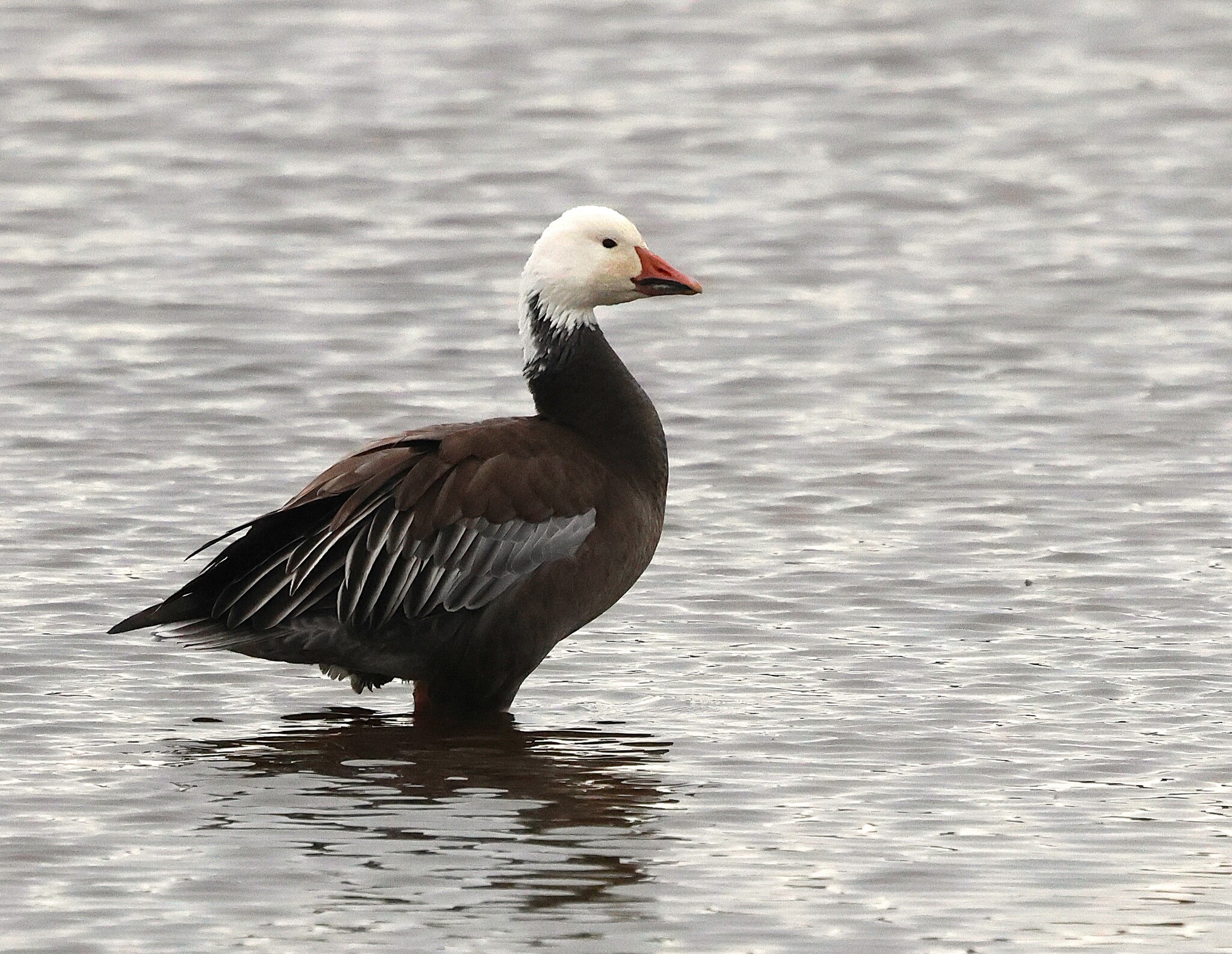
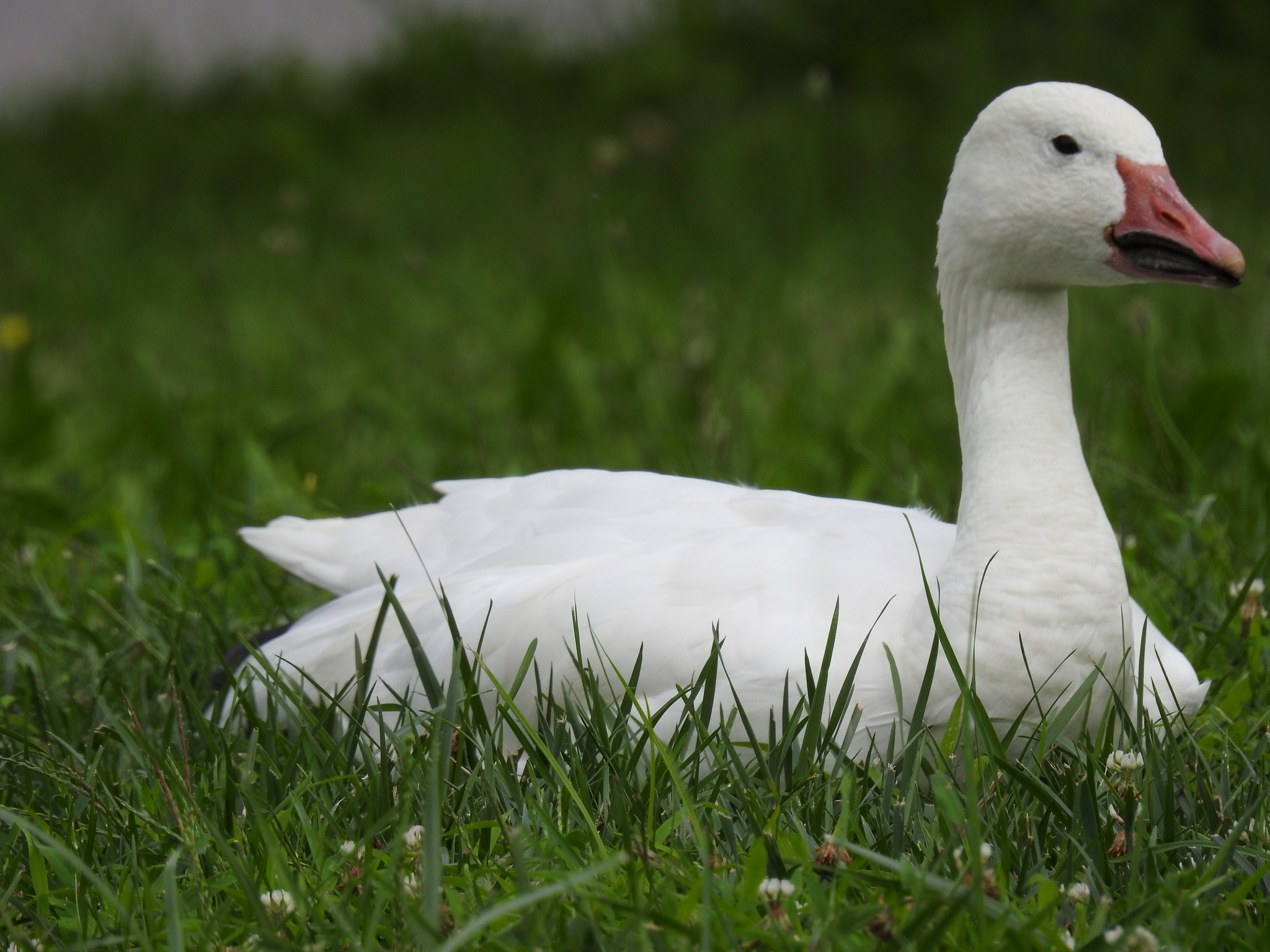
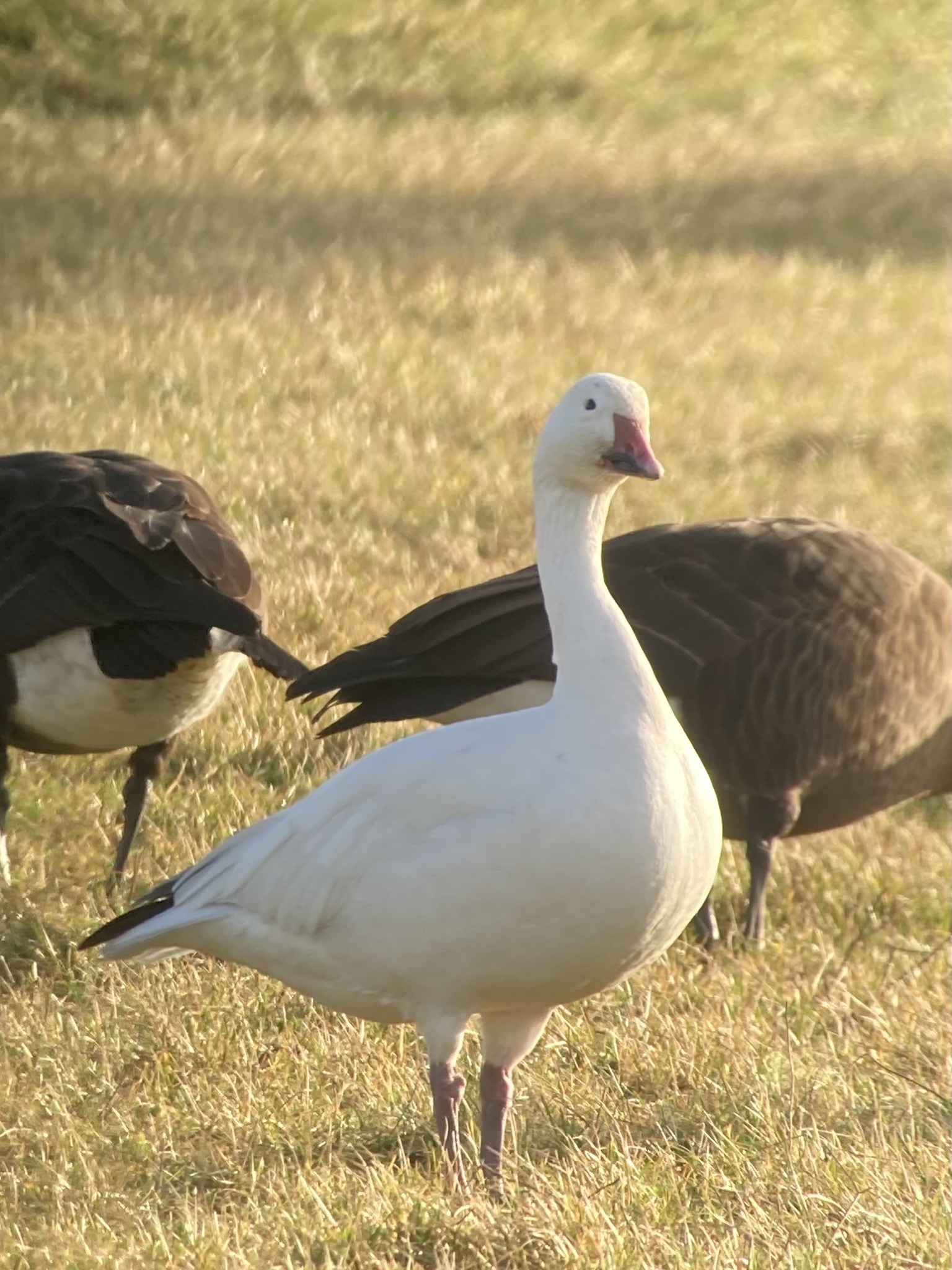
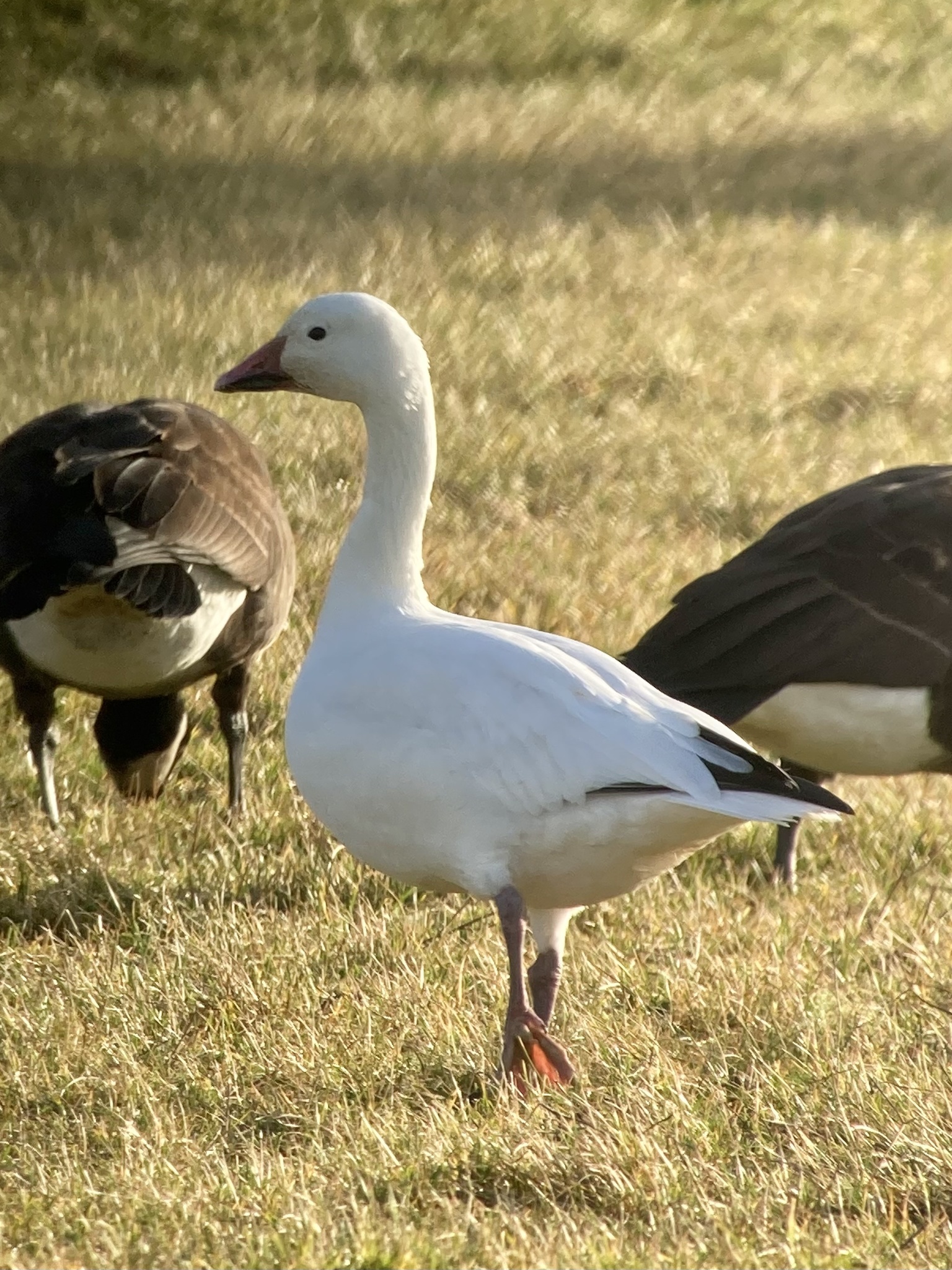
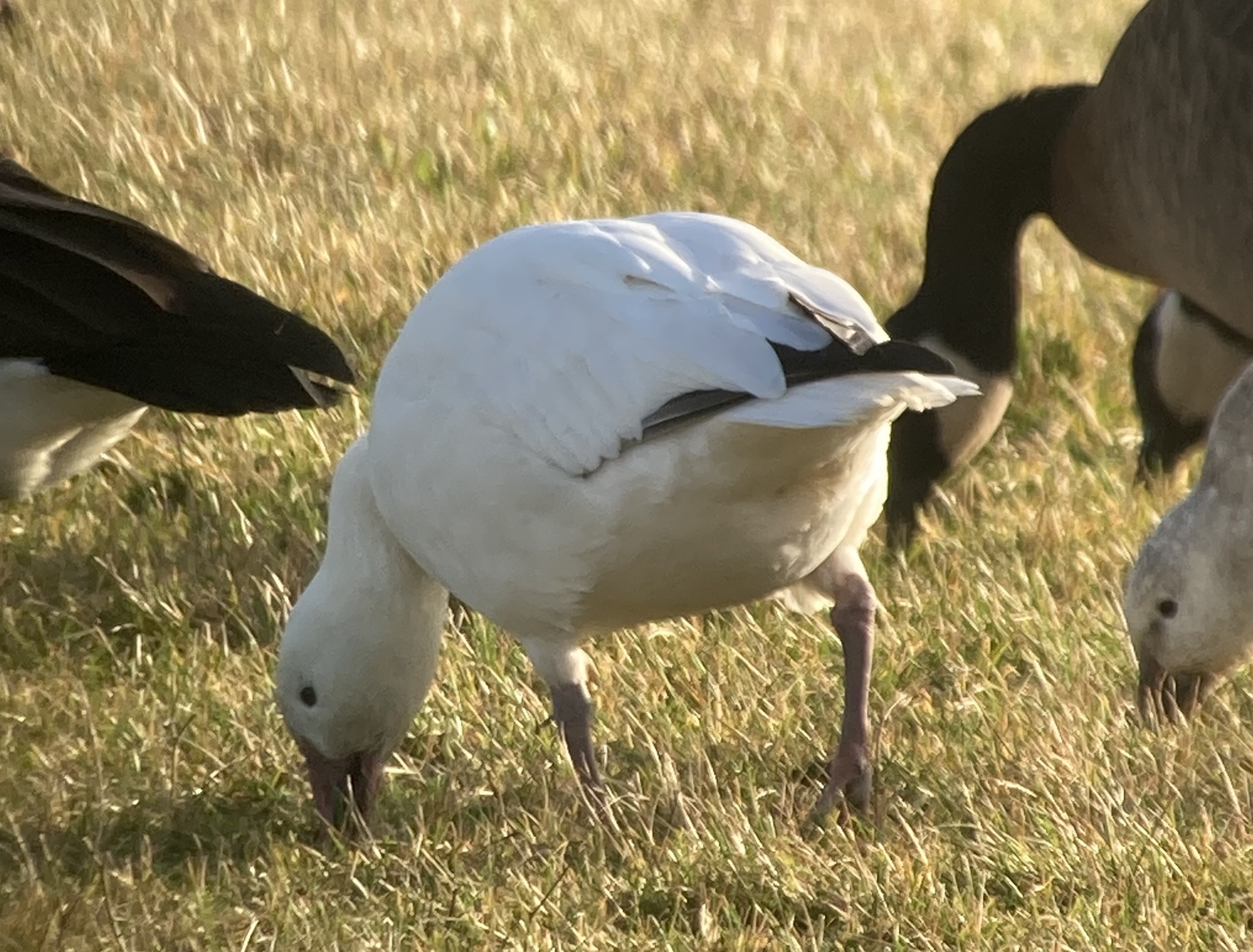
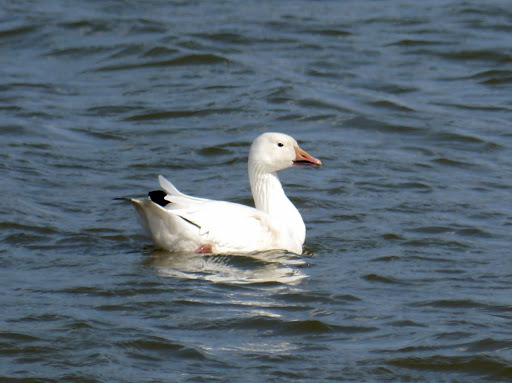
This medium to large goose exhibits two distinct color morphs. The white morph appears predominantly white with black primary wing feathers, while the blue morph displays bluish-gray body plumage with white restricted to the head, neck, and tail tip. Immature blue-phase birds are dull gray with minimal white coloration. All morphs share distinctive rose-red legs and feet, and pink bills featuring black cutting edges that create a characteristic 'grin patch' appearance. These leg and bill colors help distinguish wild birds from domestic geese. The lesser subspecies measures 64-79 cm in length and weighs 2.05-2.7 kg, while the greater subspecies averages 79 cm and 3.2 kg, with exceptionally large individuals reaching 4.5 kg. Both subspecies share a wingspan of 135-165 cm. Immature birds display less vibrant coloration, with rusty-brown staining often visible on the head from mineral-rich soils where they feed.
Identification
The combination of pink bill with black 'grin patch' and rose-red legs distinguishes this species from domestic geese and other white waterfowl. The two color morphs frequently interbreed, producing offspring of either phase. Ross's goose is smaller with a more delicate bill lacking the dark tomia. Greater white-fronted geese have orange legs and a distinctive white face patch. Canada and cackling geese are darker overall with different body proportions and lack the pink bill coloration. In flight, the black wingtips of white-morph birds are visible, while blue-morph individuals show dark wings contrasting with paler body sections. The species' high-pitched, nasal calls are distinctive and carry considerable distances.
Distribution & Habitat
Breeding occurs across the high arctic, including Greenland, northern and central Canada, Alaska, and the northeastern tip of Siberia. Two subspecies reflect geographic division: the lesser snow goose breeds from northeast Siberia through northern Alaska to northwest Canada, while the greater subspecies nests in northeast Canada and northwest Greenland. Wintering grounds extend from southwestern British Columbia through the western, central, and southern United States to northern Mexico, with greater snow geese concentrated along the Atlantic coastal plain. The species migrates along major flyways—Central, Mississippi, Pacific, and Atlantic—covering more than 4,800 km from wintering areas to arctic breeding grounds. A self-sustaining feral population exists in Scotland, and vagrants regularly appear in the British Isles among flocks of other goose species.
Behavior & Ecology
These geese form strong pair bonds, typically established in the second year with breeding commencing at age three. Females return faithfully to their hatching locations to breed. Colonial nesters, they select elevated ground sites and construct shallow depressions lined with vegetation and down. Clutches contain three to five eggs incubated by the female for 22-25 days. goslings leave the nest within hours of hatching and feed themselves while under parental protection. They achieve flight capability at 42-50 days but remain with family groups until two to three years old. Outside breeding season, they feed in flocks on agricultural fields and marshes, often associating with greater white-fronted geese while typically avoiding the heavier Canada goose. The species produces distinctive loud, high-pitched calls audible from over a mile away.
Conservation
The IUCN Red List categorizes this species as Least Concern due to its extremely large population and extensive range. The breeding population exceeds 5 million birds, representing a 300% increase since the mid-1970s, with growth exceeding 5% annually. This overpopulation stems from agricultural expansion providing abundant winter food sources, leading to unsustainable degradation of tundra breeding habitats and saltmarsh wintering areas. Conservation measures implemented since 1997 include the Light Goose Conservation Order, increased hunter bag limits, extended seasons, and new hunting methods. Major threats include arctic fox and skua predation on nests, with some protection observed near snowy owl and rough-legged hawk nests. Avian cholera periodically kills thousands during migration, with 2,000 birds dying in a 2015 Idaho outbreak.
Culture
The species gained scientific recognition in 1750 when English naturalist George Edwards described and illustrated a specimen from the Hudson Bay region in his work 'A Natural History of Uncommon Birds,' using the English name 'blue-winged goose.' When Carl Linnaeus formalized the species in 1758, he assigned it to the genus Anas. The French zoologist Mathurin Jacques Brisson later established the genus Anser in 1760, where the species is now classified. The scientific name derives from Latin: 'anser' meaning goose and 'caerulescens' meaning bluish. This species serves as the sister taxon to Ross's goose, and both have been the subject of extensive waterfowl management programs in North America due to their population dynamics and habitat impacts.
Source: Wikipedia · CC BY-SA 3.0
Taxonomy
- Order
- Anseriformes
- Family
- Anatidae
- Genus
- Anser
- eBird Code
- snogoo
Subspecies (2)
-
Anser caerulescens atlanticus
breeds northwestern Greenland and islands in Baffin Bay; winters to northeastern Mexico
-
Anser caerulescens caerulescens
breeds from northeastern Siberia and Alaska to northwestern and north-central Canada; winters in the southern USA from California to New York and to northern Mexico
Data Sources
Species description from Wikipedia, licensed under CC BY-SA 3.0.
Bird images and sounds sourced from GBIF, contributed by citizen scientists worldwide under Creative Commons licenses.
Taxonomy data from AviList 2025.