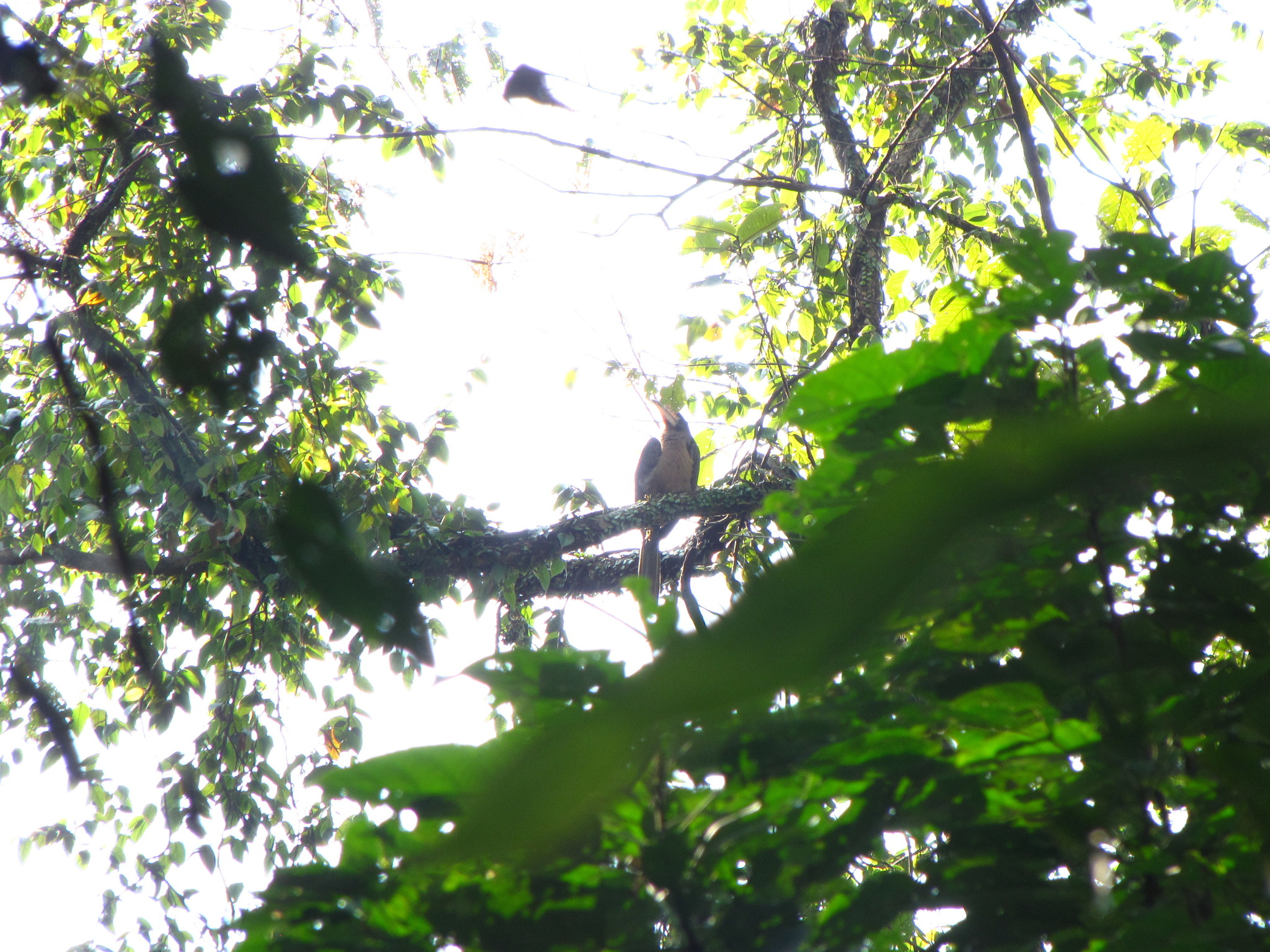
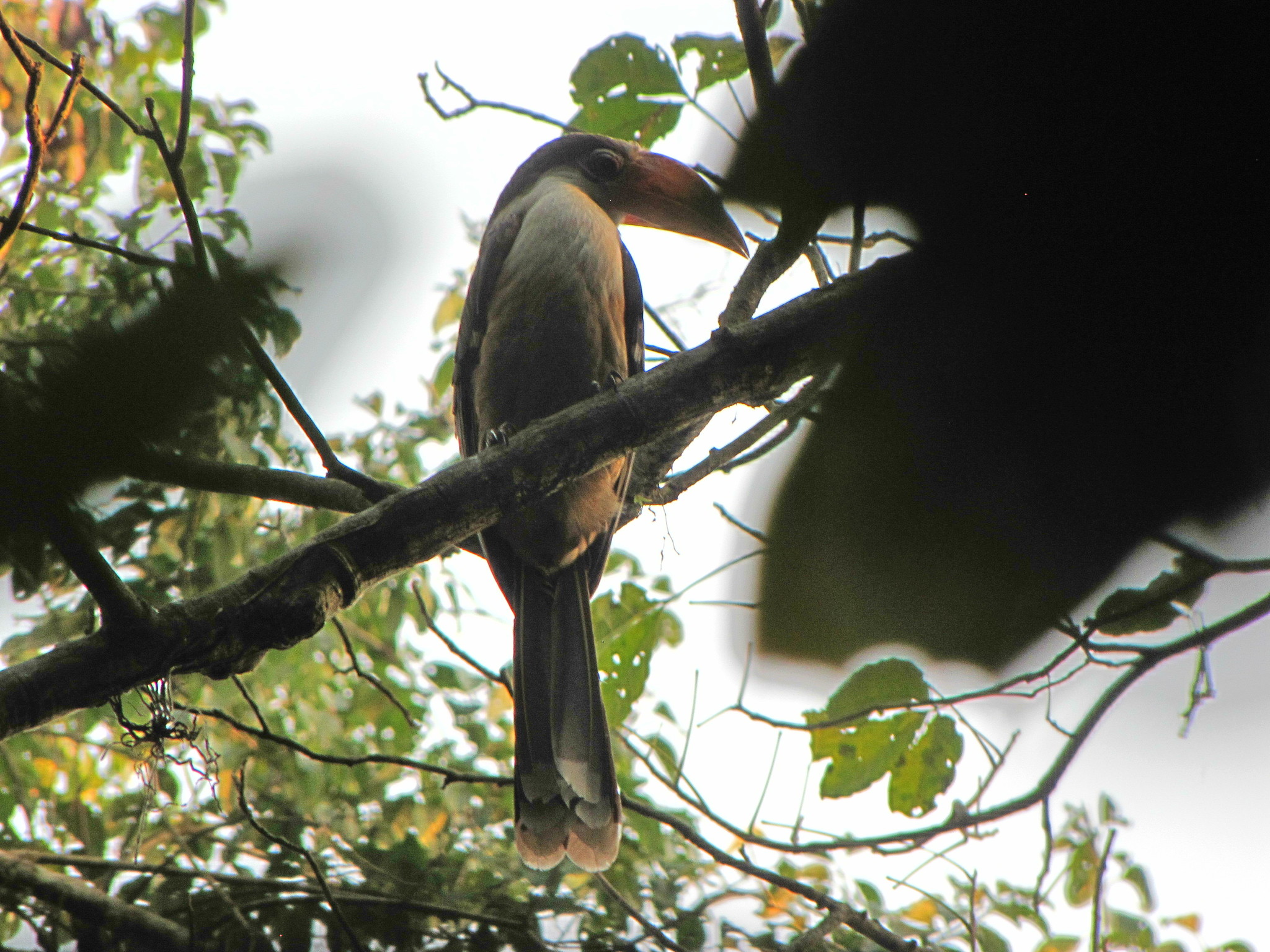
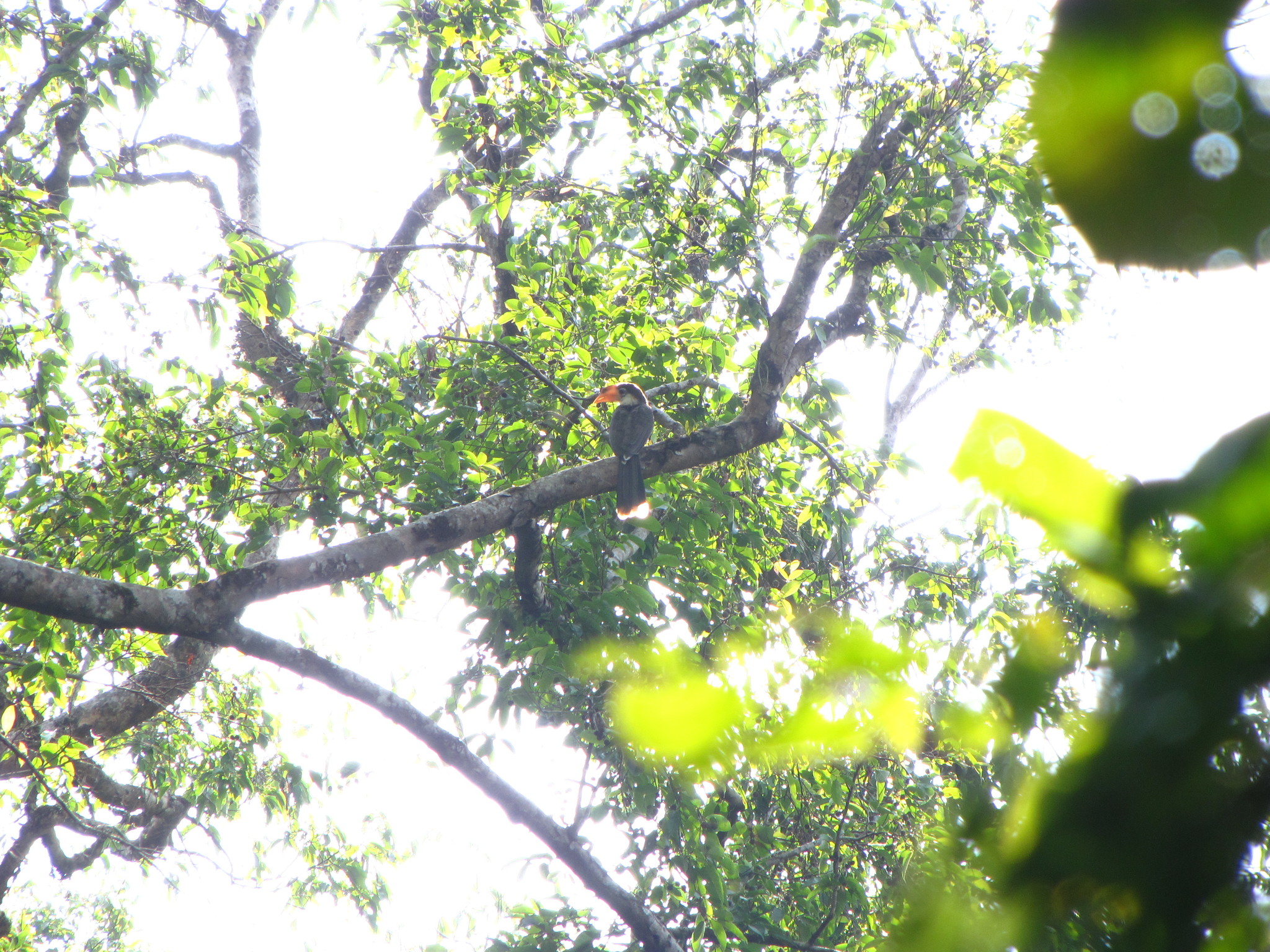
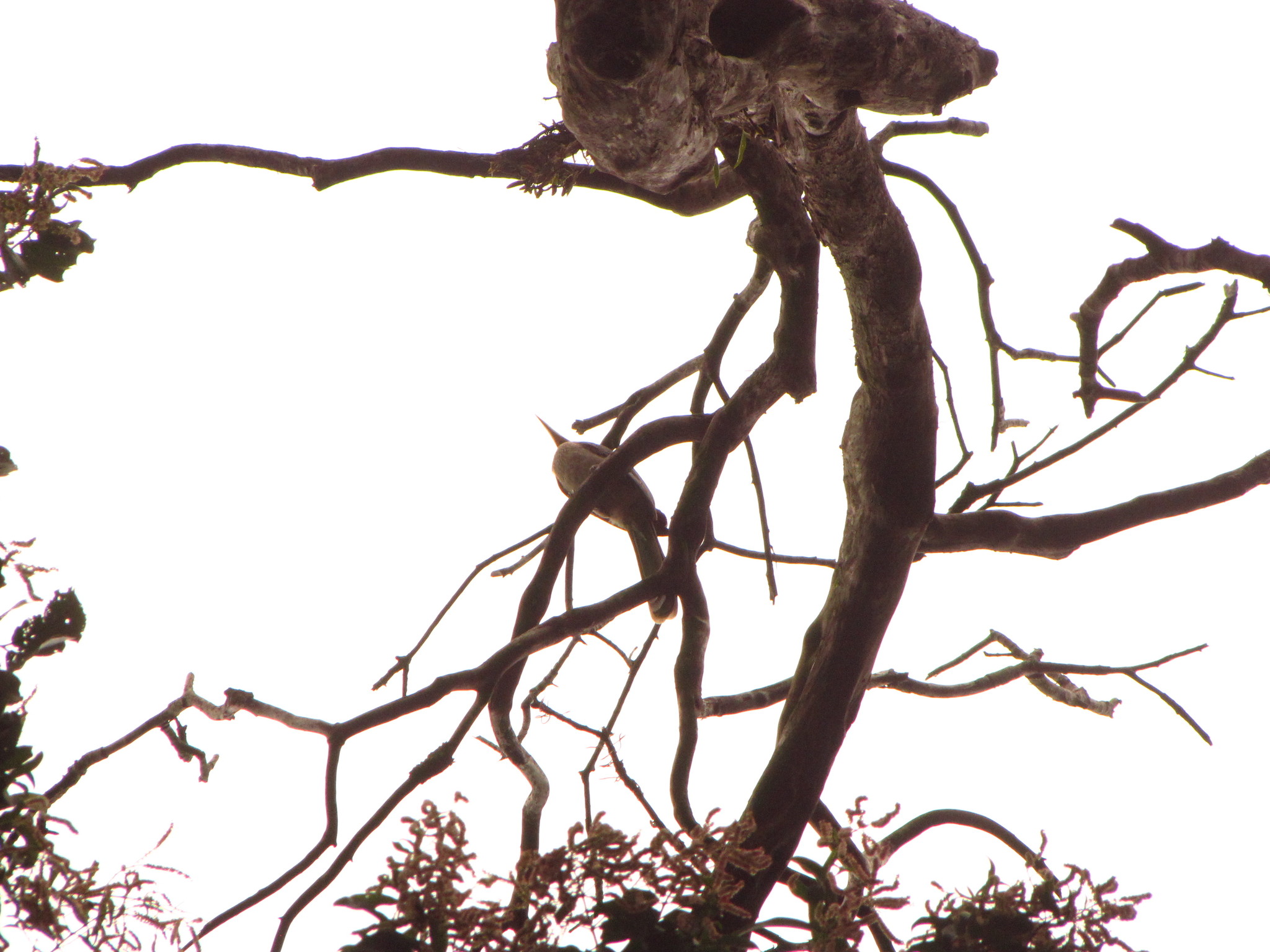
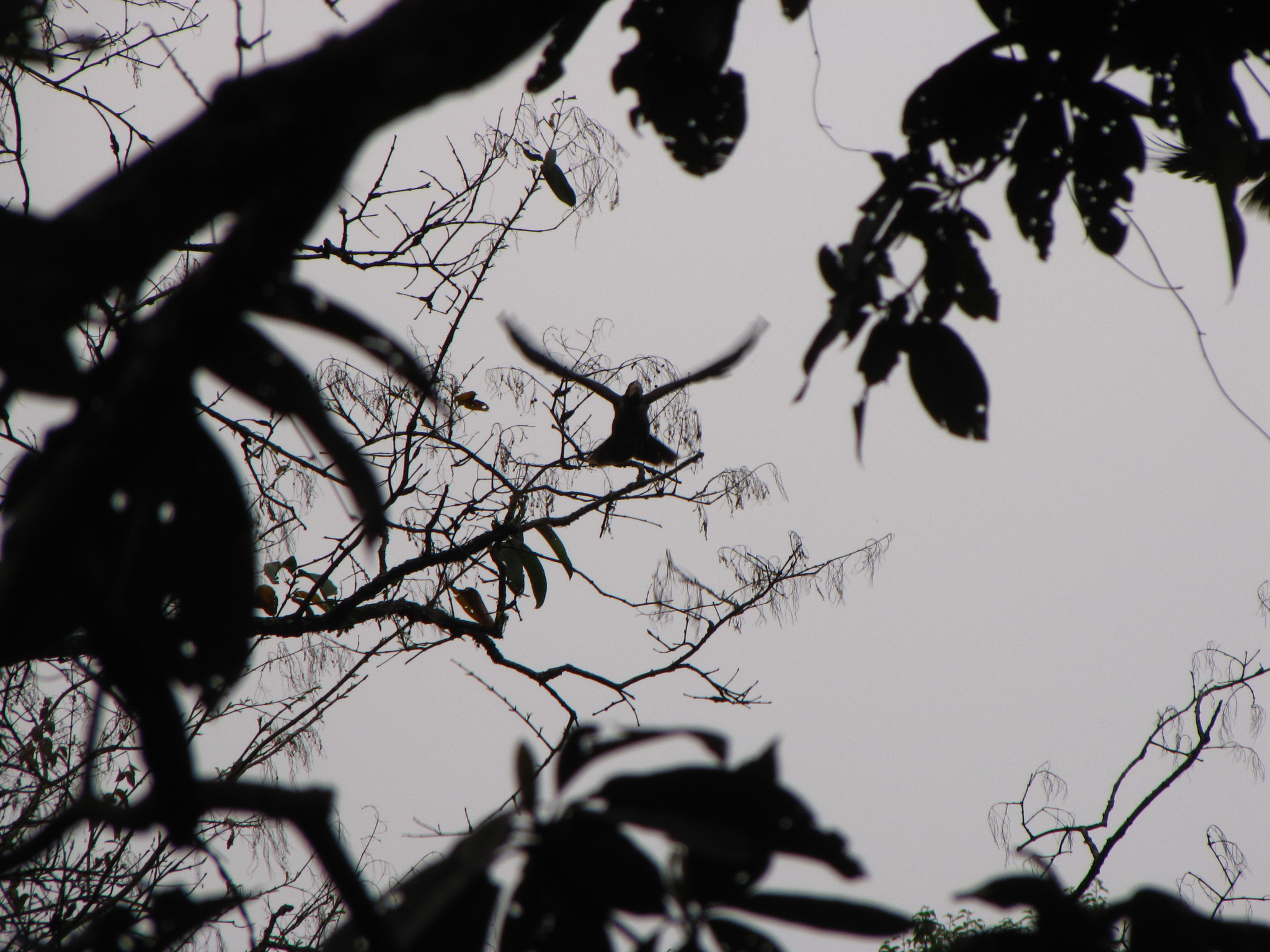
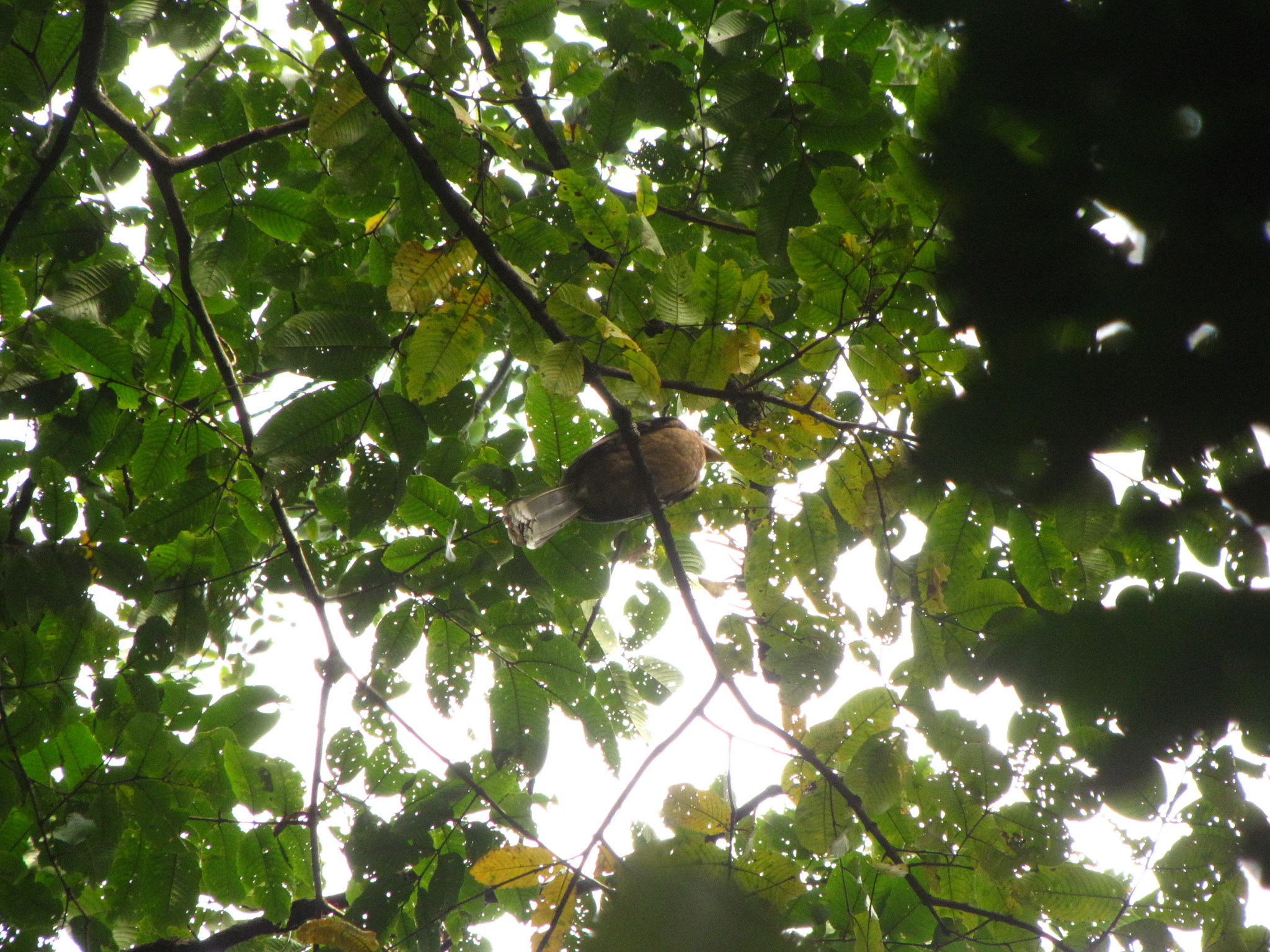
Austen's Brown Hornbill
Anorrhinus austeni
白喉犀鸟
Introduction
This medium-sized hornbill inhabits dense evergreen forests in lowlands and foothills from northeastern India through Southeast Asia. It occupies all canopy layers and lives in social groups of 2-15 individuals, with up to 80 birds roosting communally. Groups maintain small territories of 4.3-5.9 square kilometers. The species is highly vocal, producing loud screams, croaks, chisels, low cackles, squeals, and a nasal 'ank-ank-ank' call. Due to habitat loss, fragmentation, and hunting, it is classified as Near Threatened and occurs primarily within protected areas.
Description
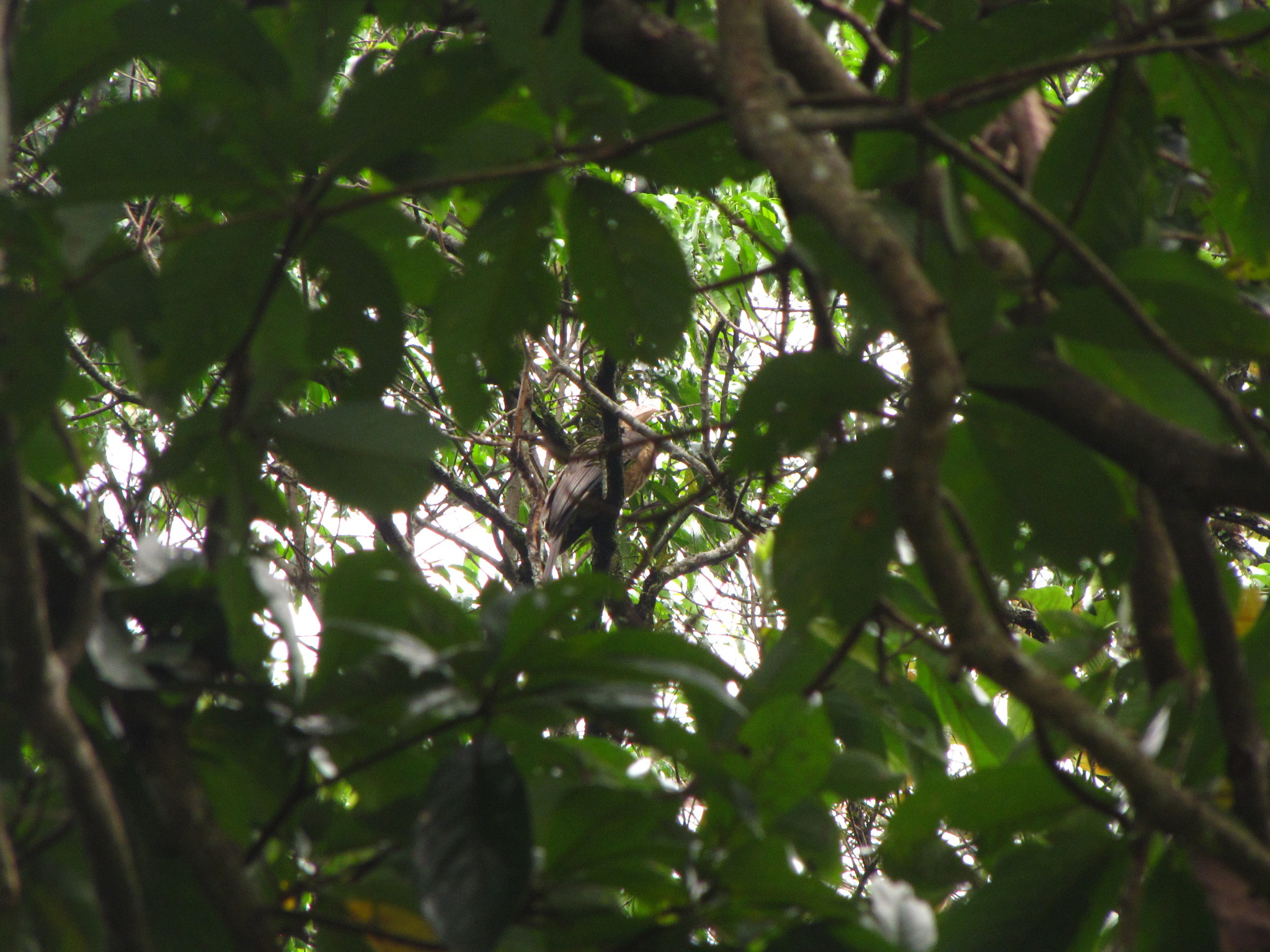
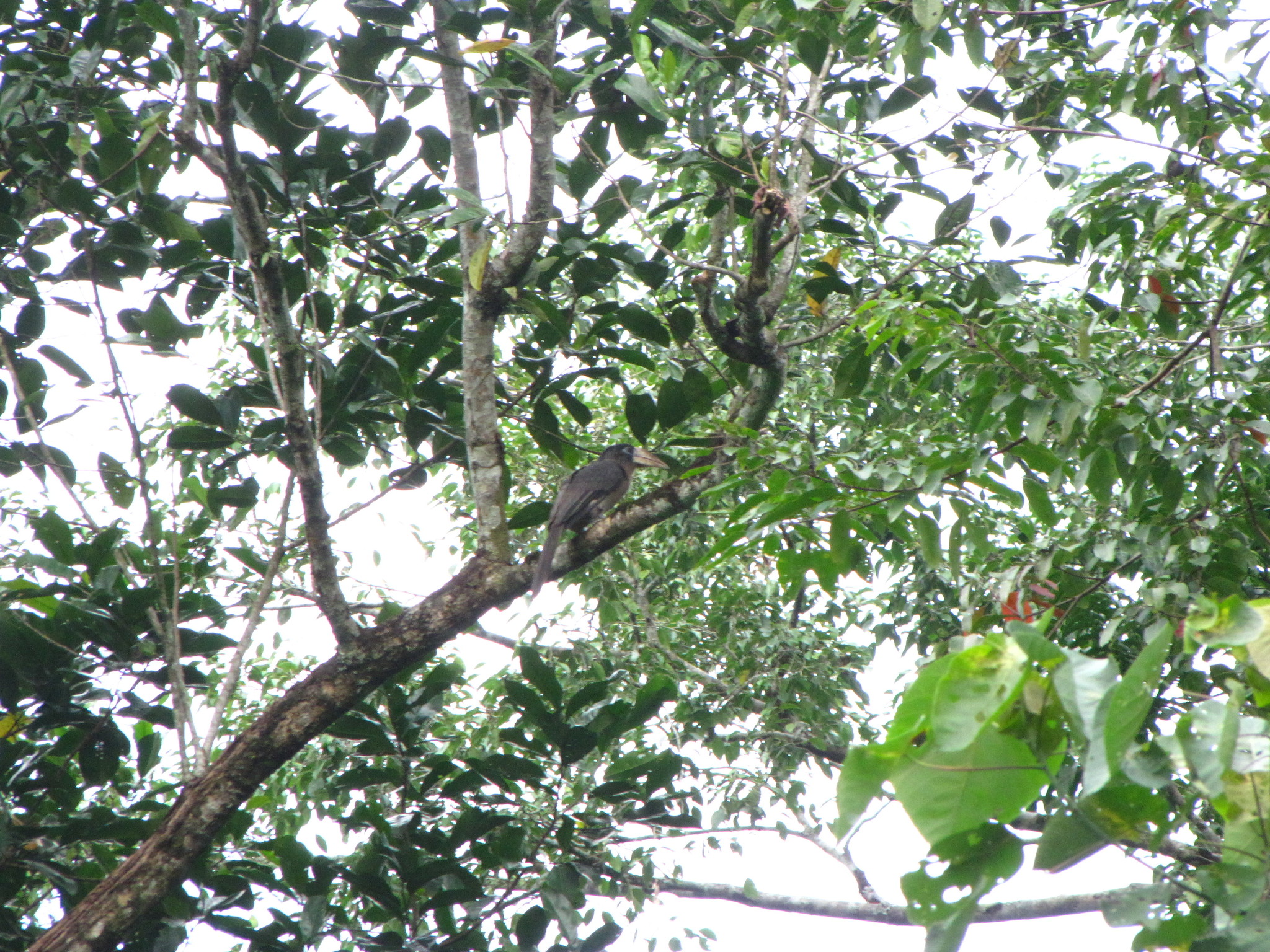
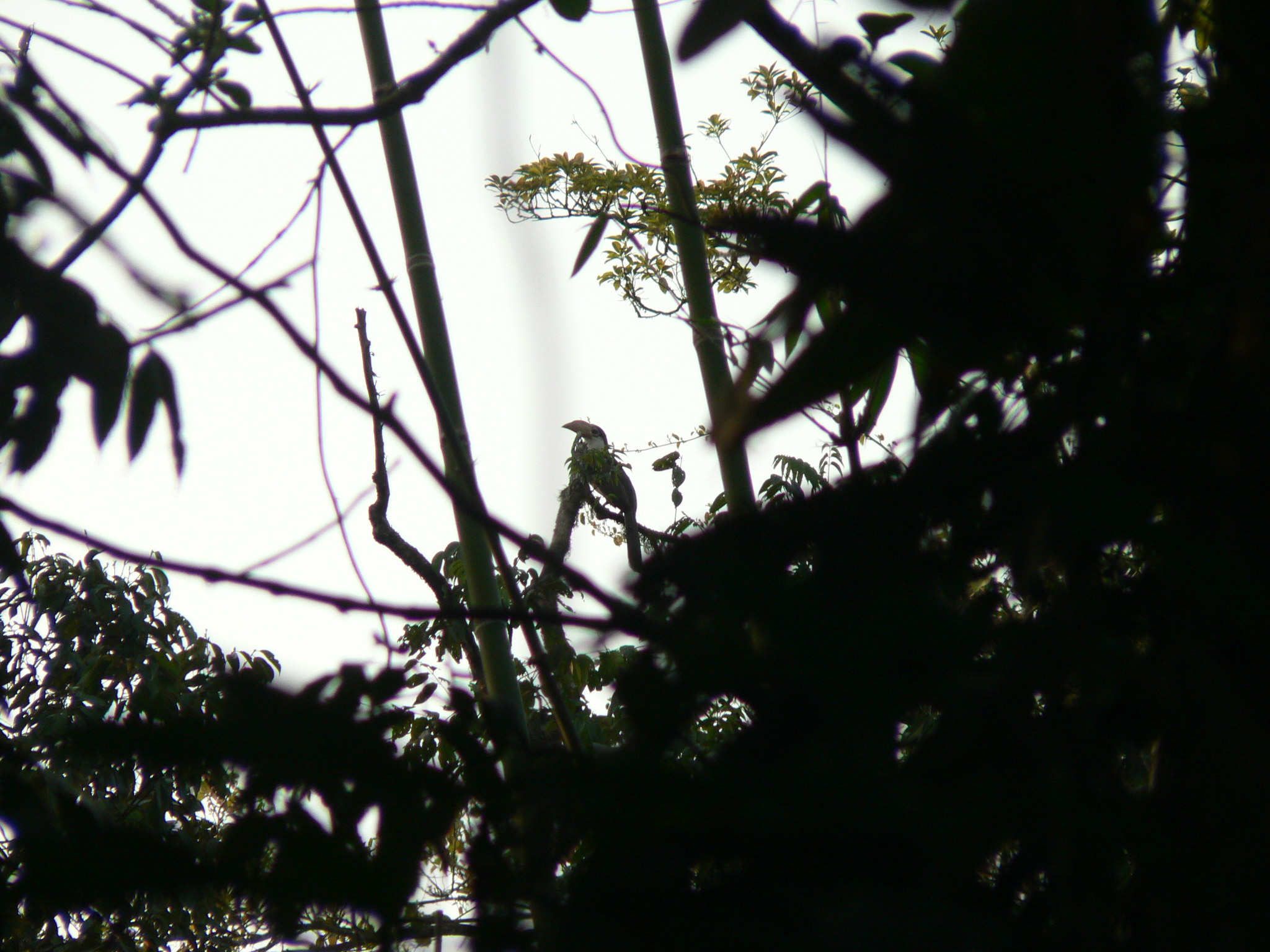
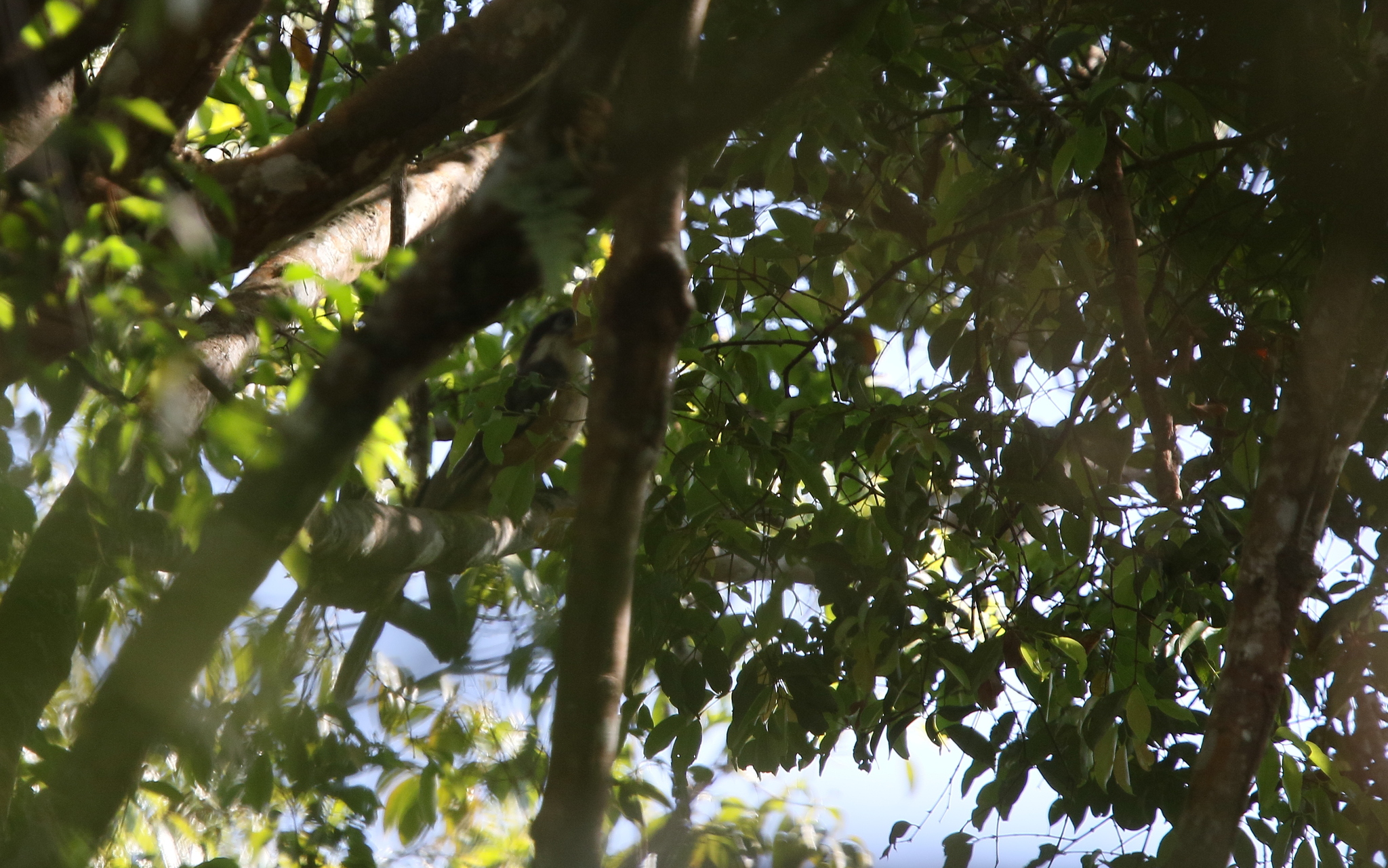
This hornbill has dark brown upperparts including the back, wings, and tail, contrasting with a lighter-colored belly, cheeks, and throat. The tail and wings feature white tips, and the bare skin around the eyes is blue. The species exhibits sexual dimorphism in plumage and bill coloration. Males have a cream-colored bill and casque, whitish throat and cheeks, and a reddish belly. Females have an ivory white bill and casque with a grey-brown throat, belly, and cheeks, plus a yellow wash below the eye. Juveniles resemble adult males but have a short yellow bill, orange skin around the eye, and pale-brown feather tips. Males weigh 710-900 grams and measure 73-80 centimeters in length; females are smaller.
Identification
The vocalizations provide key identification clues, sounding similar to the Malabar pied hornbill and bushy-crested hornbill but notably less harsh. The combination of dark brown plumage with white-tipped tail and wings, along with the blue eye skin, helps distinguish this species from other hornbills in its range. The sexual dimorphism in bill and casque coloration is another useful field mark, with females showing ivory white bills versus the cream-colored bills of males.
Distribution & Habitat
This species occurs in northeastern India, central and northern Thailand, Myanmar, Laos, Vietnam, and Cambodia, with historical records from China but no recent reports. It inhabits dense evergreen forests in lowlands and foothills, less commonly found in deciduous forests. Elevation ranges up to 1,000 meters in India, 1,500 meters in Southeast Asia, and 1,800 meters in Tibet. The species is rare throughout most of its range and found mainly in protected areas such as the Patkai Wildlife Sanctuary and Namdapha Tiger Reserve, though it remains relatively common in Laos despite declining populations.
Behavior & Ecology
The species is a monogamous, cooperative breeder with a dominant breeding pair typically accompanied by two helpers, though helpers can range from zero to five. These helpers are non-breeding offspring, mostly adult males, who assist by bringing food to the female and chicks and defending the nest from predators. The diet consists of fruits comprising 20-60% and animal matter comprising 40-79%, including arthropods, molluscs, earthworms, reptiles, bats, and bird eggs and chicks. Figs make up a large portion of fruit intake. Compared to other hornbills, this species is more of an animal specialist and spends considerable time hunting below the canopy. Breeding begins in February-March before the monsoon, with nests in natural tree cavities or old woodpecker holes 5-7 meters high. The female seals herself during incubation and molts her flight feathers. Clutch size averages two eggs, with an incubation period of 24-30 days and nesting period of 57-62 days. Fledging occurs in May-July, with the entire breeding cycle lasting 73-112 days.
Conservation
This species is listed as Near Threatened on the IUCN Red List, with populations declining throughout its range. Primary threats include logging, expanding roads and settlements, and hunting by local tribes who use the casque, meat, fat, and feathers. While hunting typically avoids the breeding season, winter hunting continues to impact populations. Evidence suggests the species can persist in logged forests, but nesting attempts are less successful in such areas. Human disruption disproportionately affects this hornbill, with populations concentrated in protected areas and lower probability of habitat use outside them. Conservation recommendations include conducting surveys in Myanmar and Laos, repeating population surveys to monitor changes, raising awareness about its conservation status, and studying habitat requirements to inform protected area designation.
Culture
Local tribes in its range hunt this species for its casque, meat, fat, and feathers, though this represents a threat rather than cultural significance. No specific folklore or mythological associations are documented for this species.
Source: Wikipedia · CC BY-SA 3.0
Taxonomy
- Order
- Bucerotiformes
- Family
- Bucerotidae
- Genus
- Anorrhinus
- eBird Code
- brnhor1
Distribution
Assam, Myanmar, and southwestern China to Thailand and Indochina
Data Sources
Species description from Wikipedia, licensed under CC BY-SA 3.0.
Bird images and sounds sourced from GBIF, contributed by citizen scientists worldwide under Creative Commons licenses.
Taxonomy data from AviList 2025.