Oriental Darter
Anhinga melanogaster
黑腹蛇鹈
Introduction
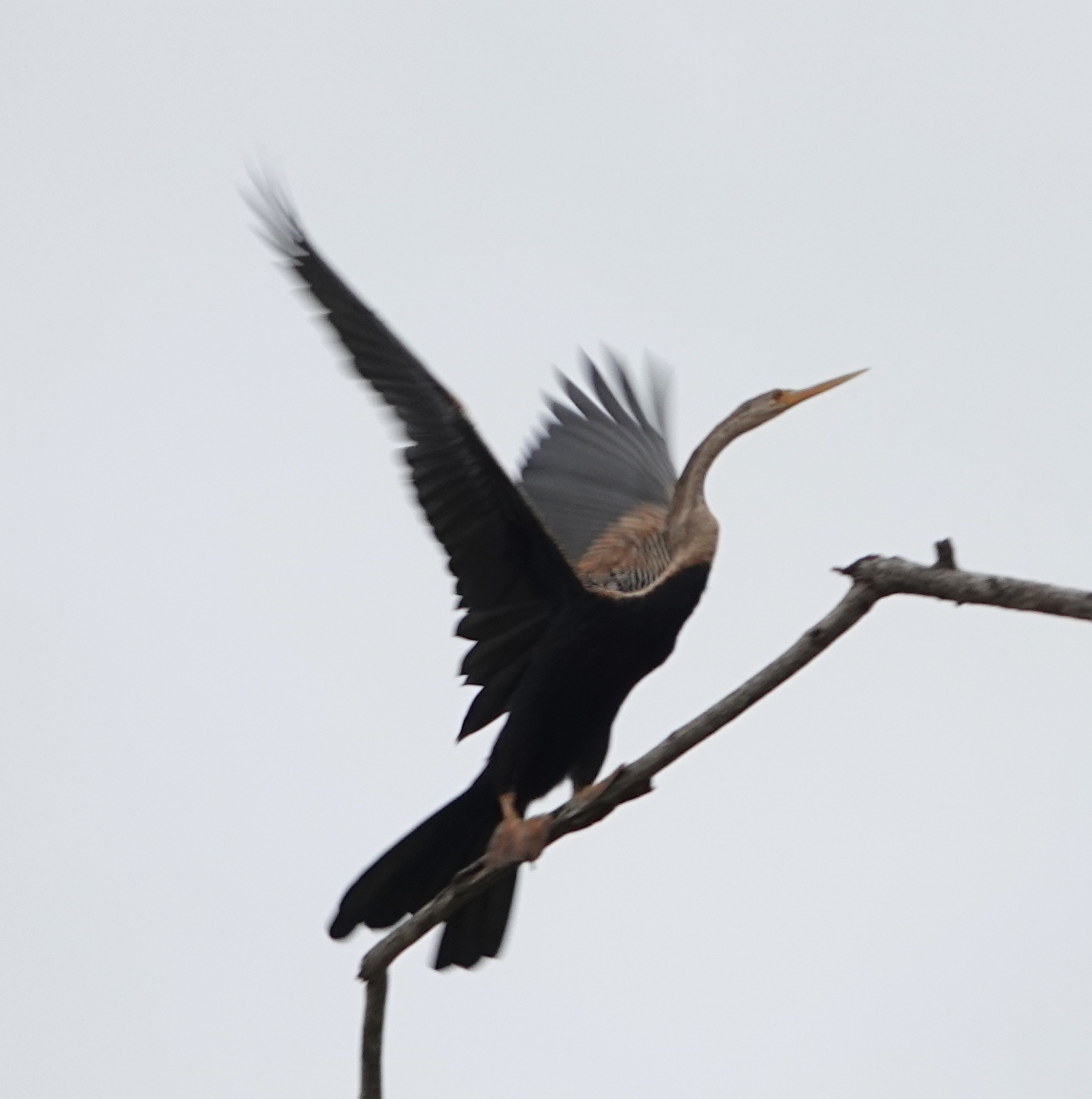
The Oriental Darter is a water bird found across tropical Asia. It inhabits freshwater habitats. Unlike most water birds, it swims with its entire body submerged, with only the slender neck and head visible above the water surface. It has wettable feathers similar to cormorants and is frequently observed perched with wings spread open to dry, a behavior that aids in thermoregulation and feather maintenance. When disturbed, it dives underwater and escapes by swimming. During post-breeding moult, it loses flight ability briefly as flight feathers are replaced synchronously.
Description
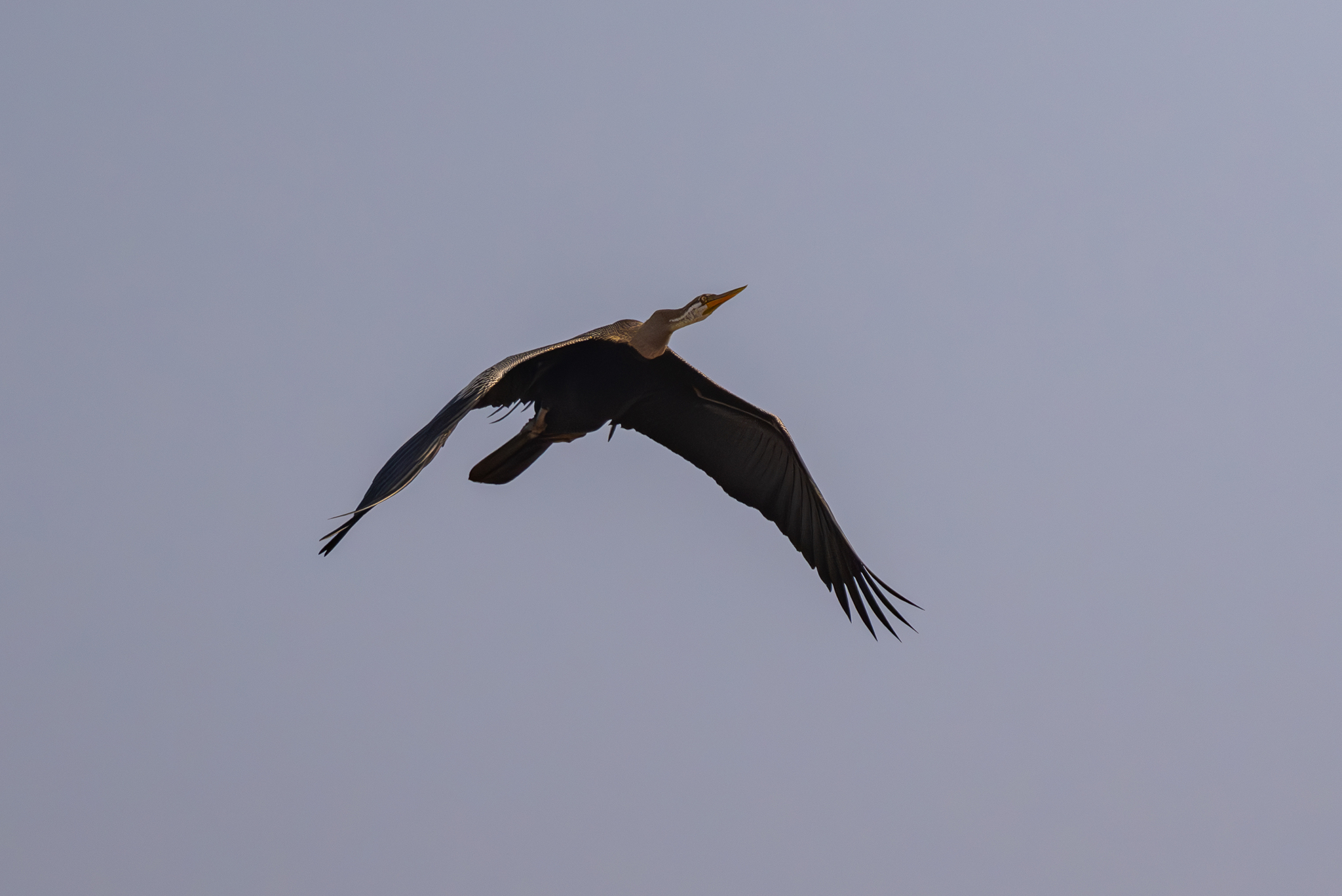
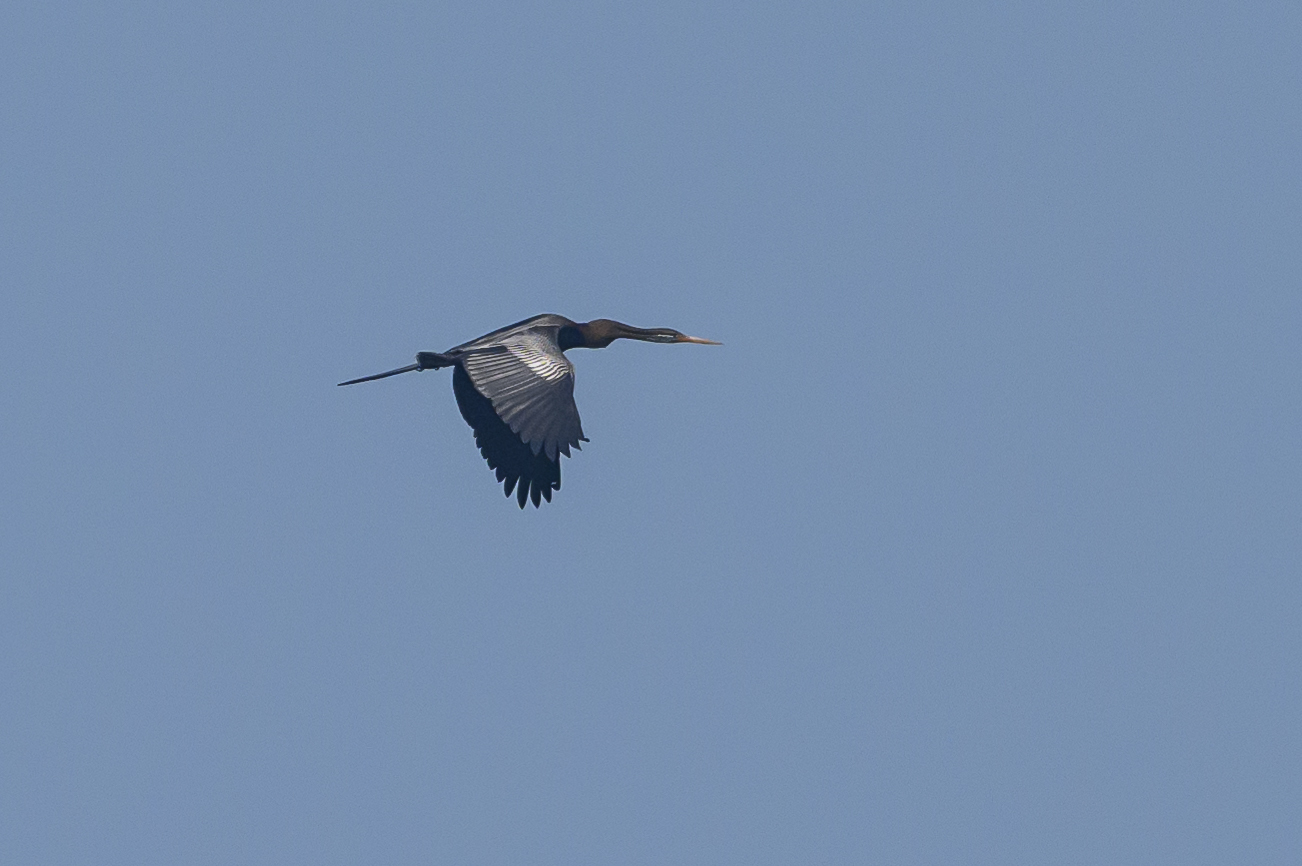
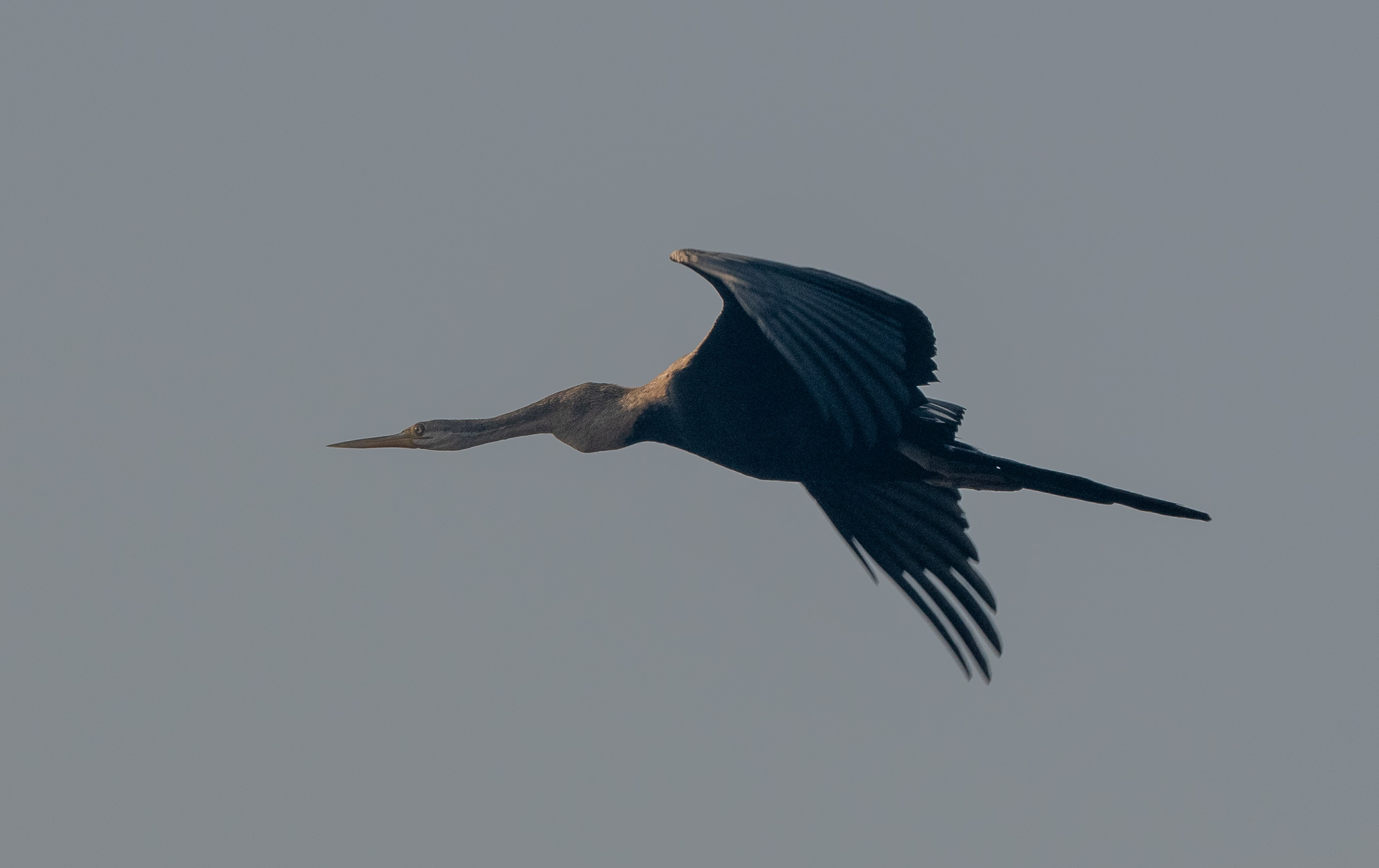
This is a cormorant-like bird with an exceptionally long, slender neck that appears kinked at the 8th and 9th vertebrae, an adaptation allowing rapid forward darting to spear fish underwater. Adults have predominantly black plumage above, with wing coverts and tertials displaying silvery streaks along the feather shafts. The crown and neck are brown, darkening toward the back of the neck, while underparts appear blackish brown. A pale line extends over the eye and throat, with another stripe running along the sides of the neck, creating a subtle striped pattern. The iris is white surrounded by a yellow ring that intensifies during breeding season. The bill is straight and pointed, with a dark-tipped upper mandible and yellowish lower mandible. The tail consists of twelve stiff feathers and is wedge-shaped, becoming distinctive in flight.
Identification
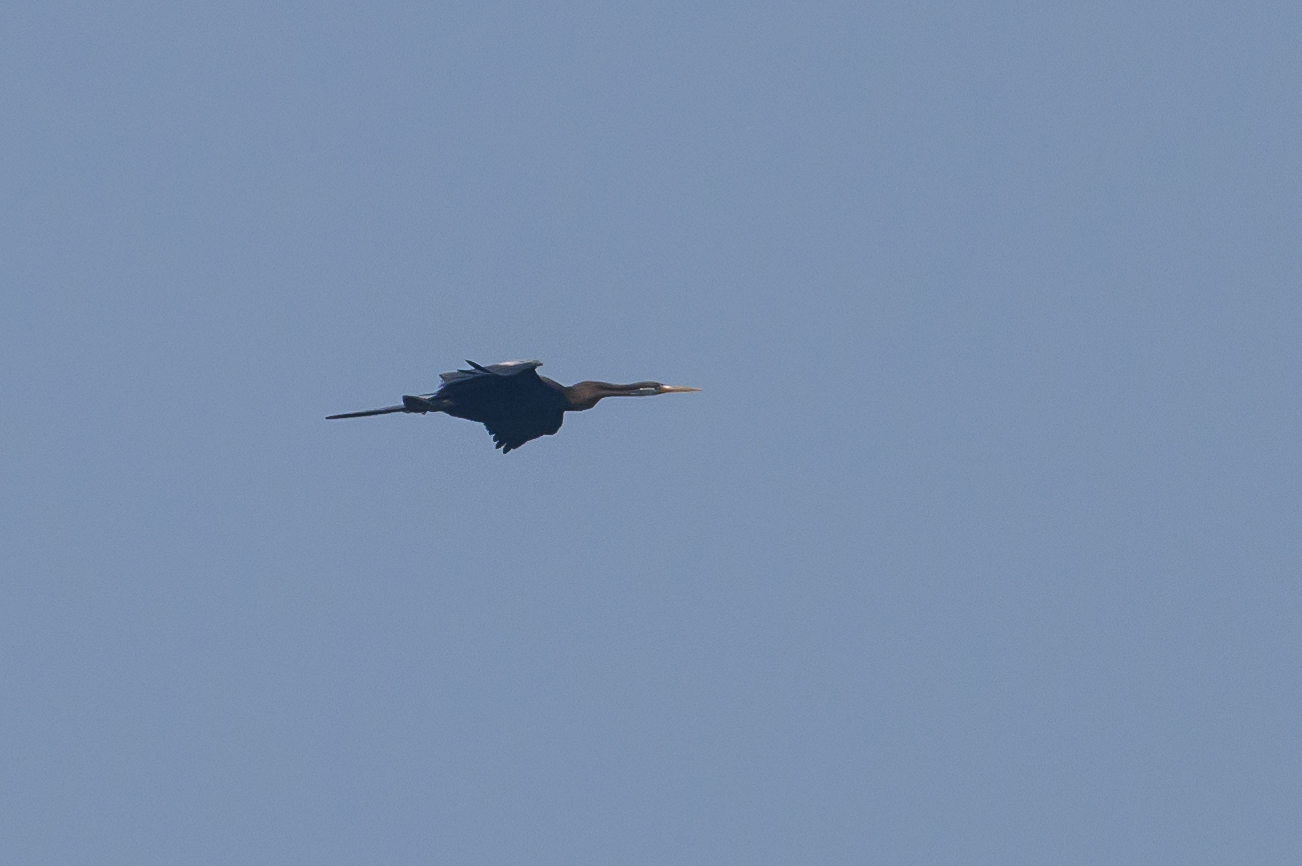
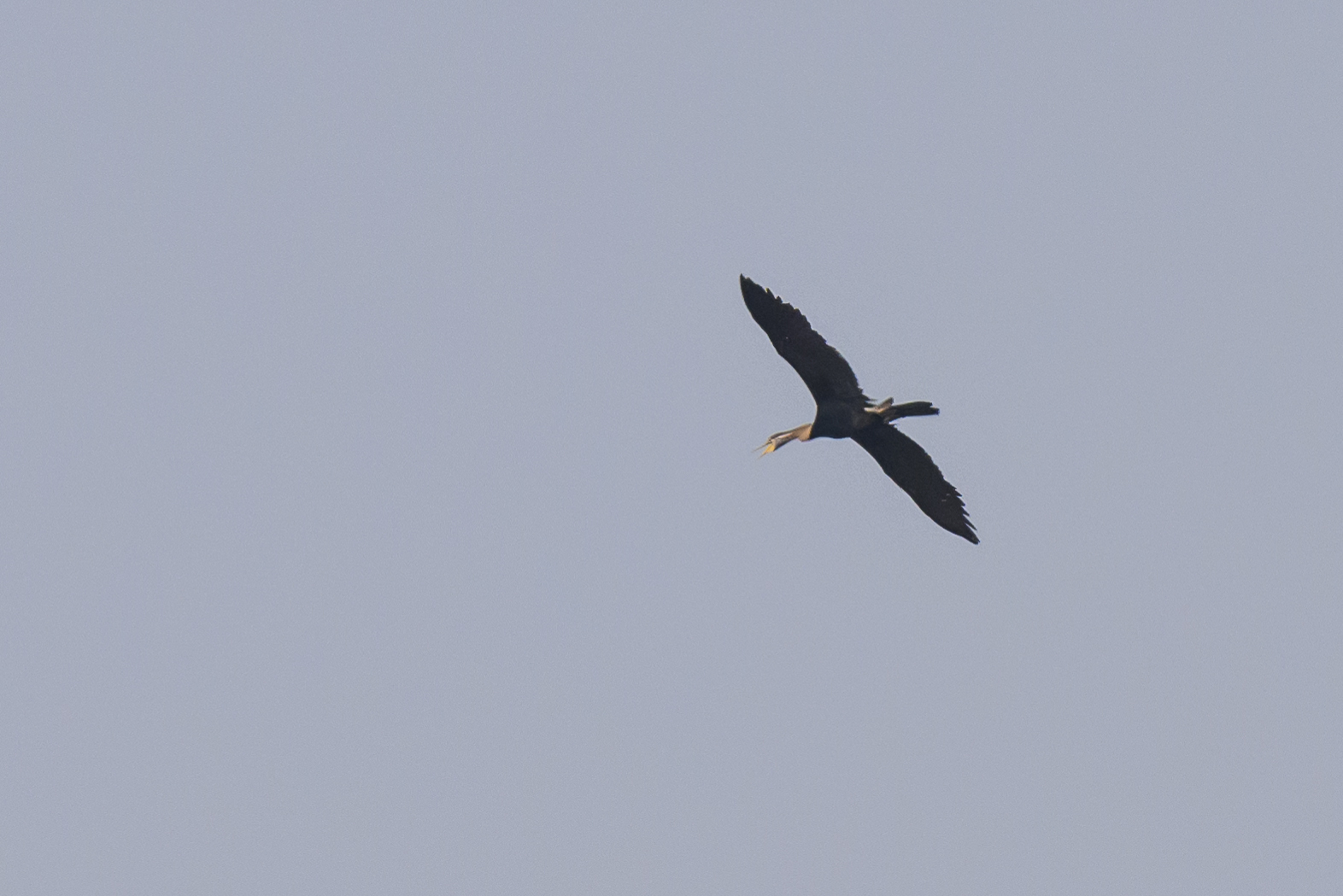
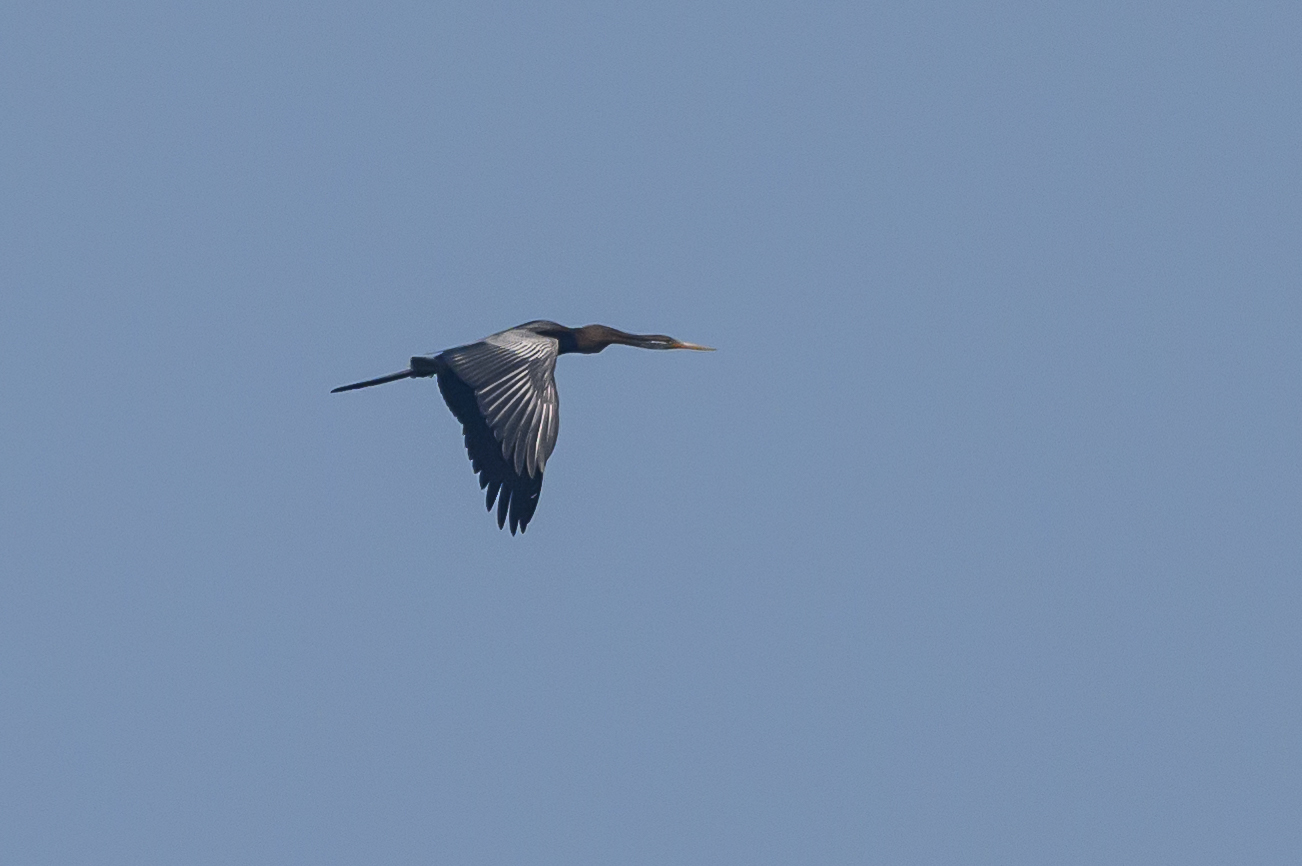
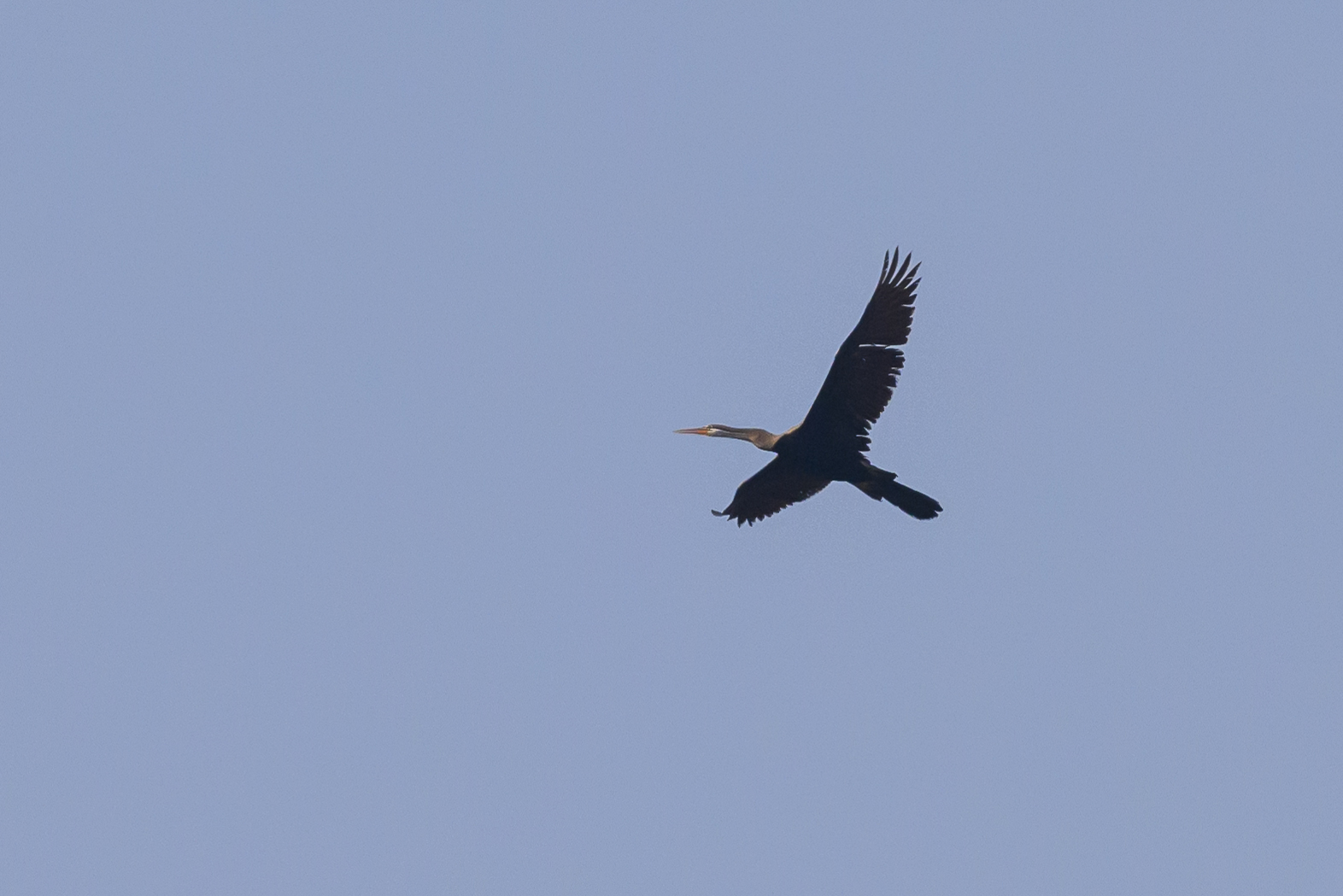
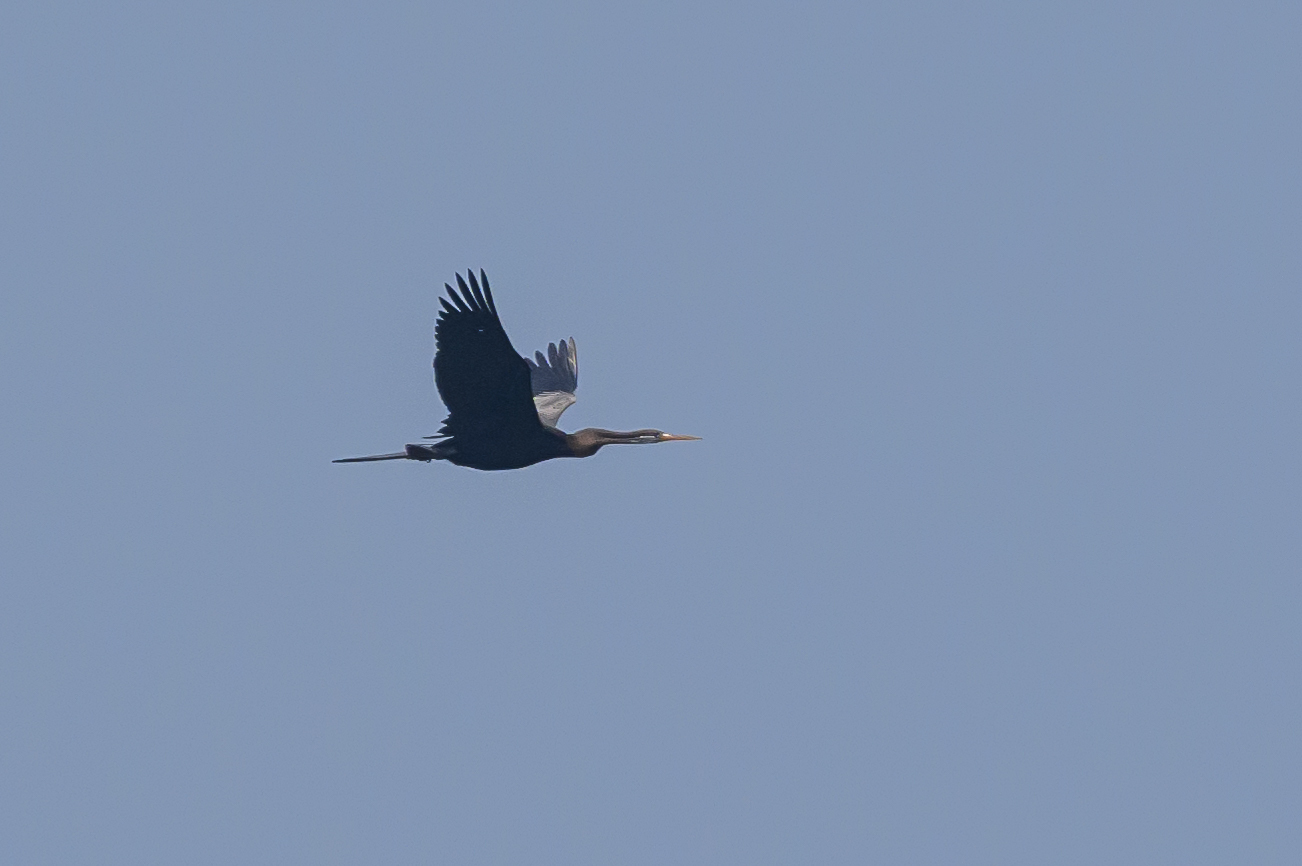
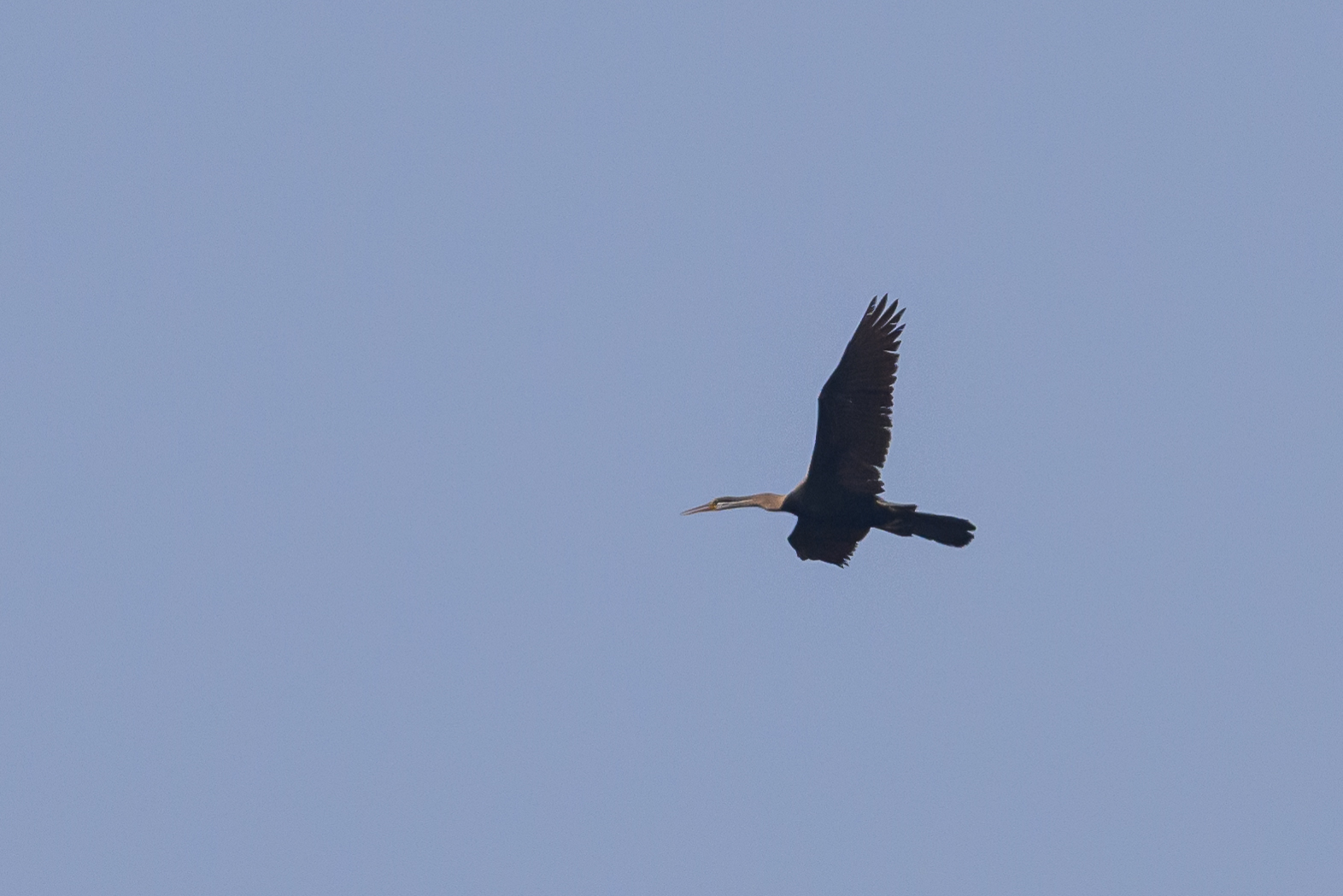
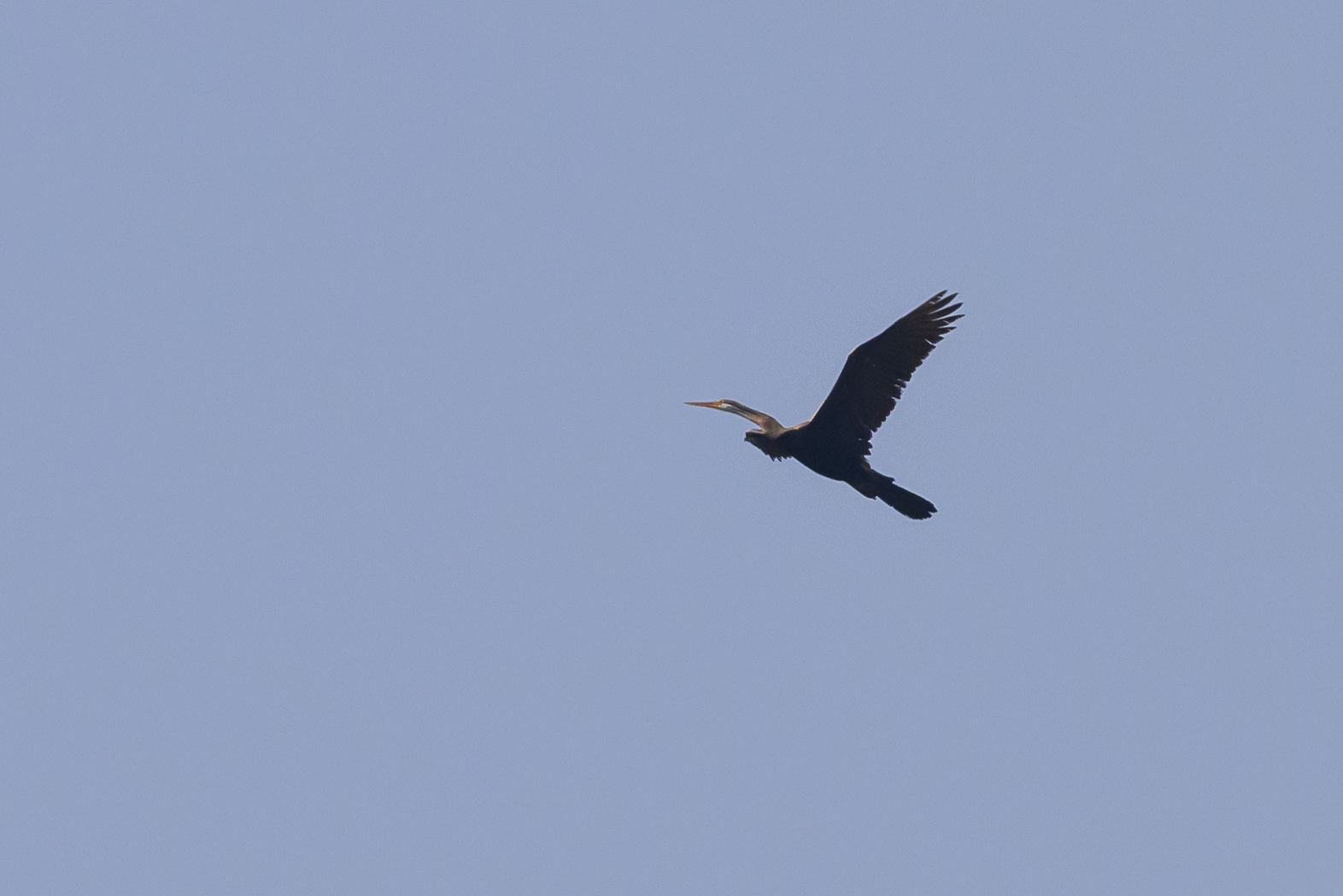
The Oriental Darter is most readily identified by its long, slender neck that resembles a snake when the bird is swimming with body submerged. In flight, the combination of long neck, broad wings, and wedge-shaped tail creates a distinctive silhouette unlike most other water birds. It differs from the similar American Darter most noticeably by its prominent white lateral neck stripe. From cormorants, it can be distinguished by its thinner, more snake-like neck and different posture when swimming—cormorants typically float higher in the water with necks more upright. Sexes are similar but males often show black speckling on the throat, while females typically have a buff band separating black coloration at the base of the neck and chest from the hind neck. Young birds lack the white neck stripe and have pale brown necks with whitish underparts.
Distribution & Habitat
This species occurs across tropical South Asia and Southeast Asia, inhabiting freshwater lakes, rivers, and streams. Its range extends from India and Sri Lanka through Southeast Asia including Myanmar, Thailand, Vietnam, Malaysia, Indonesia, and the Philippines. It is primarily resident within its range, though some local movements may occur in response to water conditions. The species prefers freshwater wetlands with surrounding trees for nesting and roosting, typically avoiding coastal marine environments. It is often found in mixed heronries alongside other water birds in wetland areas with overhanging or waterside vegetation.
Behavior & Ecology
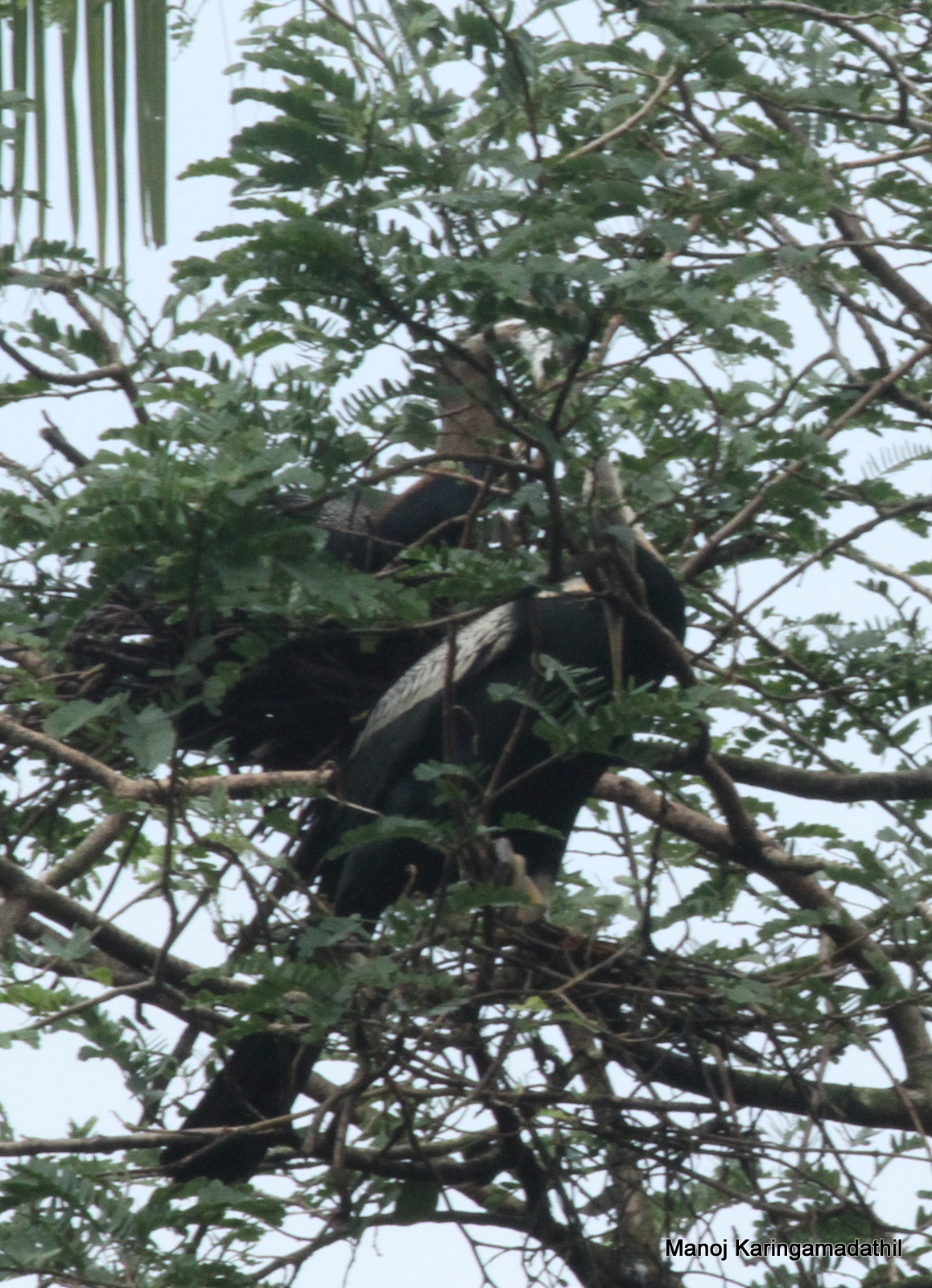
The Oriental Darter forages singly, swimming slowly underwater with its body completely submerged while using webbed feet for propulsion. It moves its head and neck jerkily above the water surface while searching for prey, then darts its neck with explosive speed to impale fish. After spearing a fish, it brings it above the surface, tossing and juggling the prey before swallowing it head first. The species nests in mixed-species heronries, building stick platforms in trees surrounded by water. Several pairs may nest close together, defending their territory with posturing and neck thrusts. Breeding seasons vary regionally: June to August in northern India, April to May in southwestern India, and during winter in southeastern India. The typical clutch contains three to six bluish-green eggs, incubated by both parents. Adults are largely silent except at nesting sites, where they produce grunts, croaks, and a distinctive disyllabic call. They roost communally in trees near water.
Conservation
The conservation status of this species has not been separately evaluated by the IUCN, as it was previously considered conspecific with other darter populations. Population trends across its range are not well documented, though habitat degradation and wetland loss likely pose ongoing concerns. Adults face predation from Pallas's Fish Eagle, particularly targeting nearly-grown chicks. The species has been recorded carrying various parasites including trematodes and cestodes. In some regions, traditional fishing practices use darters to catch fish, with rings tied around their necks to prevent swallowing prey, similar to cormorant fishing methods practiced elsewhere in Asia.
Culture
In parts of northeastern India, tribal communities have historically used darters for fishing, employing techniques similar to cormorant fishing practiced in other parts of Asia and historically in China and Europe. The long scapular feathers of the Oriental Darter were once popular for decorating hats, contributing to plume trade pressures that affected many water bird species during the late 19th and early 20th centuries. There is no significant mythology or folklore associated with this species in the documented literature, though its snake-like appearance and unusual behavior have likely contributed to local interest and recognition among communities within its range.
Source: Wikipedia · CC BY-SA 3.0
Taxonomy
- Order
- Suliformes
- Family
- Anhingidae
- Genus
- Anhinga
- eBird Code
- darter2
Distribution
Indus Valley (central Pakistan) southward to Sri Lanka and eastward Greater Sundas, Sulawesi, and Philippines (now only southern Philippines)
Data Sources
CBR Notes: IUCN红色名录等级由NT降为LC
Species description from Wikipedia, licensed under CC BY-SA 3.0.
Bird images and sounds sourced from GBIF, contributed by citizen scientists worldwide under Creative Commons licenses.
Taxonomy data from AviList 2025.