
Asian Openbill
Anastomus oscitans
钳嘴鹳
Introduction
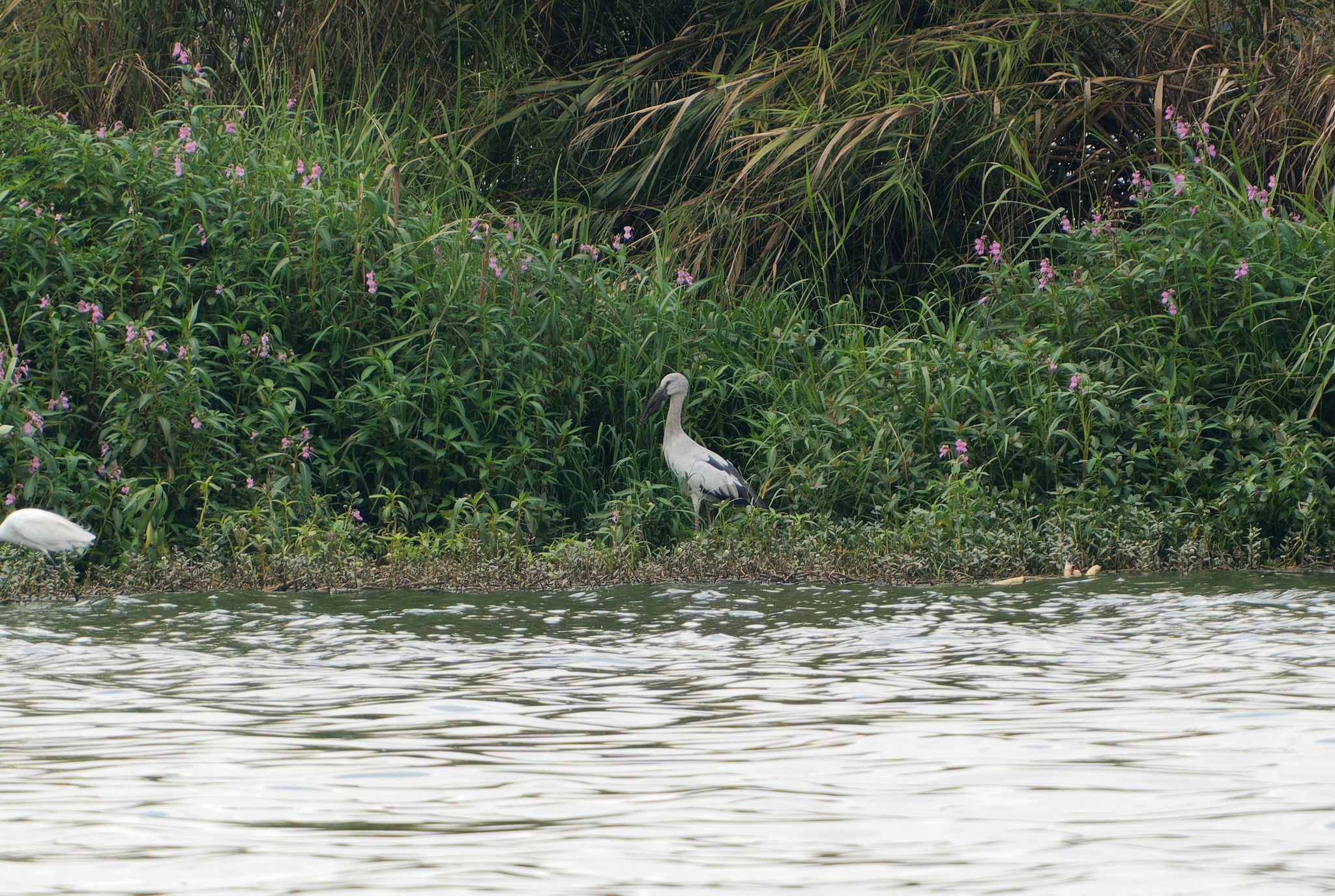
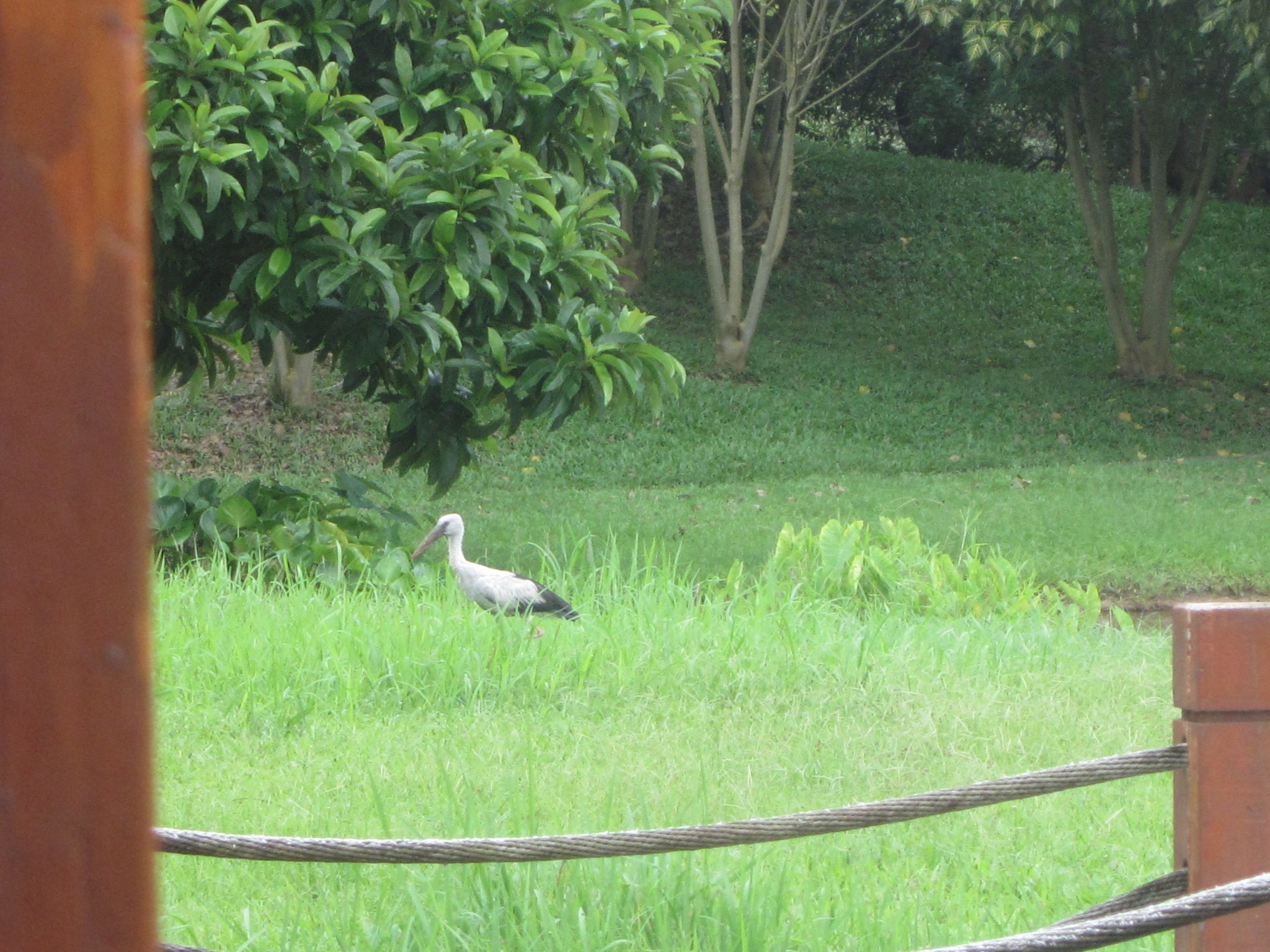
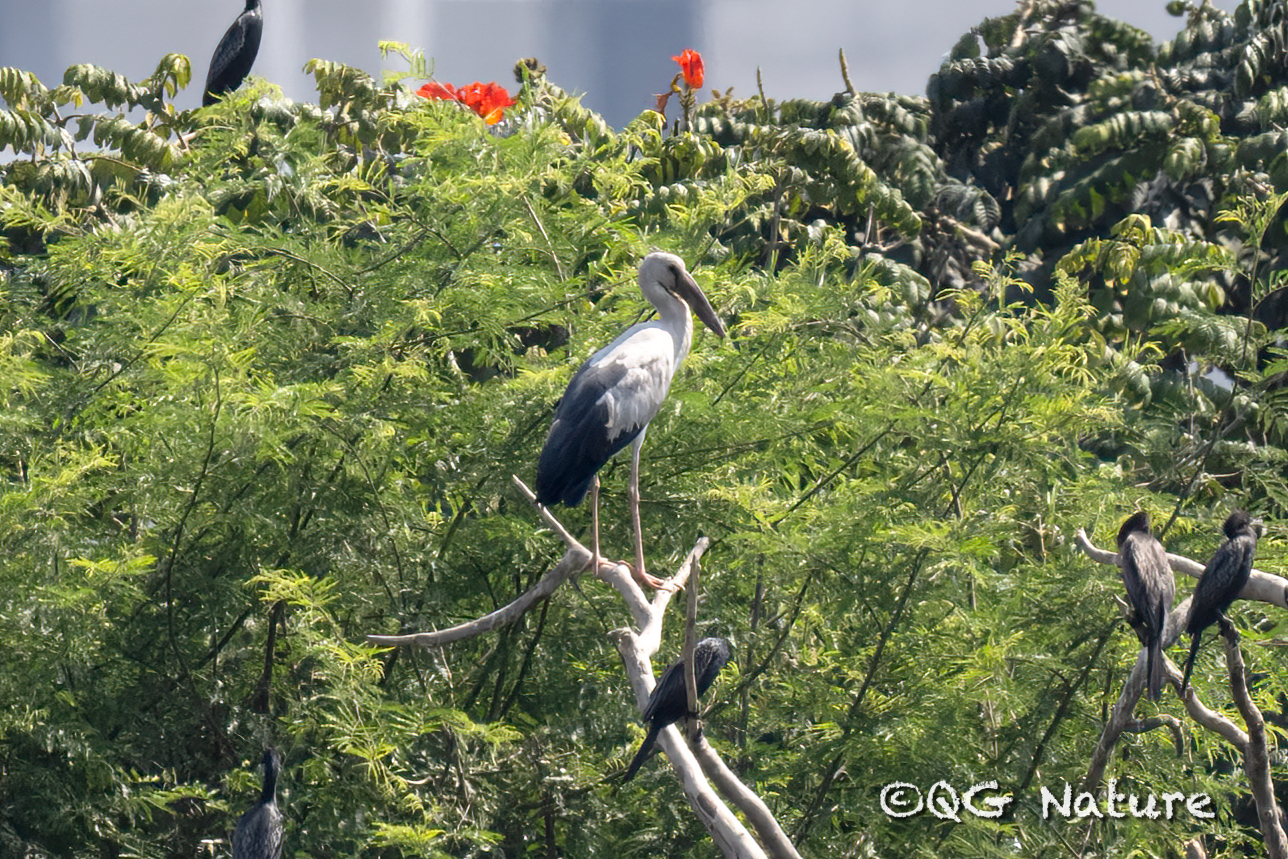
A stork species inhabiting wetlands across the Indian subcontinent and Southeast Asia. It is characterized by a bill with a distinctive gap between the upper and lower mandibles, a feature that develops with age. Plumage is predominantly greyish outside the breeding season and white during the breeding period, with glossy black wings and tail feathers showing green or purple iridescence. Classified as resident within its range, though individuals undertake considerable movements in response to weather patterns and food availability. Typically occurs in flocks, though solitary individuals occur. Soars on broad wings with outstretched neck.
Description
This is a relatively small stork, standing 68 cm tall with a body length of approximately 81 cm. Adults display predominantly greyish plumage during non-breeding season, transforming to white when breeding. The wings and tail are glossy black with a distinctive green or purple sheen. The most diagnostic feature is the gap between the arched upper mandible and the recurved lower mandible, which develops as the bird matures. The bill cutting edges possess a fine brush-like structure thought to aid in gripping slippery snail shells. The mantle is black, while the bill itself is horn-grey. Legs are short and pinkish-grey, becoming reddish prior to breeding. Non-breeding birds have smoky grey wings and back. Young birds are brownish-grey with a brownish mantle and lack the characteristic bill gap. The tail consists of twelve feathers and the preen gland carries a tuft.
Identification
At distance, this species can be confused with the white stork or Oriental stork, though it is notably smaller. The distinctive bill structure—visible as a gap between the mandibles in adults—is the most reliable field mark. The relatively short legs compared to other storks also help distinguish it. Young birds lack the bill gap but can be identified by their brownish-grey plumage and brownish mantle. In flight, the black wings and white body (in breeding plumage) create a striking contrast, and like all storks, it flies with neck fully outstretched. The broad wings adapted for thermal soaring are typical of the family.
Distribution & Habitat
The species is widespread and common across India, Sri Lanka, Nepal, Bangladesh, Myanmar, Thailand, and Cambodia, with recent range expansion into southwestern China. It is very rare in the Sind and Punjab regions of Pakistan. The usual foraging habitat consists of inland wetlands, though birds also utilize agricultural landscapes including crop fields, irrigation canals, and seasonal marshes. They are rarely seen along river banks or tidal flats. Although resident, individuals make long-distance movements; ringed birds have been recovered 800 km east of banding location in India, and a bird ringed in Thailand was found 1,500 km west in Bangladesh. In Kerala, India, they are most commonly seen at wetland sites from September to February.
Behavior & Ecology
This stork feeds primarily on large molluscs, especially Pila species, using its bill to extract snail bodies from shells. The twisted tip of the lower mandible is inserted into the snail opening to extract the body, often while the bill remains underwater. They also consume water snakes, frogs, and large insects. Foraging occurs in shallow water or marshy ground, with groups often feeding in close proximity. The breeding season varies by region: July to September in northern India and Nepal, November to March in southern India and Sri Lanka. They breed colonially, building stick platforms on half-submerged trees, typically laying two to four eggs. Both parents share incubation duties, with eggs hatching after approximately 25 days. Apart from bill-clattering during copulation and low honking notes when greeting mates, they are generally silent.
Conservation
The species is currently assessed as Least Concern by the IUCN, with populations considered stable across much of its range. However, they demonstrate susceptibility to extreme weather events; in Xishuangbanna, China, 45 birds were found dead following a single hailstorm, while no carcasses of other bird species were observed. They are also occasionally preyed upon by imperial, steppe, and greater spotted eagles targeting young birds in nests. The species has shown adaptability to human-modified landscapes, with breeding success in agricultural areas comparable to that in protected mangrove reserves, suggesting that well-managed agricultural wetlands can provide suitable habitat.
Culture
In colonial India, this bird was hunted for meat by sportsmen, who referred to it as the 'beef-steak bird.' Interestingly, this same colloquial name was also applied to the woolly-necked stork. Beyond this hunting practice, the species does not appear prominently in traditional folklore or cultural symbolism within its range. Religious beliefs and traditional agro-forestry practices have inadvertently helped conserve important nesting trees, particularly Ficus species and Bombax ceiba, which the storks preferentially select for breeding colonies.
Source: Wikipedia · CC BY-SA 3.0
Taxonomy
- Order
- Ciconiiformes
- Family
- Ciconiidae
- Genus
- Anastomus
- eBird Code
- asiope1
Distribution
lowlands of Indian subcontinent to southeastern Asia
Data Sources
Species description from Wikipedia, licensed under CC BY-SA 3.0.
Bird images and sounds sourced from GBIF, contributed by citizen scientists worldwide under Creative Commons licenses.
Taxonomy data from AviList 2025.