Philippine Duck
Anas luzonica
棕颈鸭
Introduction
The Philippine Duck is the Philippines' sole endemic duck species. Historically abundant in flocks numbering thousands, populations have declined significantly due to hunting pressure and wetland destruction. It inhabits various wetland types across the Philippine islands, including mountain lakes, freshwater marshes, coastal waters, salt pans, and river systems, with a preference for shallow freshwater marshland. The species is threatened by widespread wetland drainage for agriculture and aquaculture. While occasionally recorded as a vagrant in Taiwan and Japan, most sightings now concentrate on the islands of Luzon and Mindanao. This species is most active during early morning, evening, and moonlit nights.
Description
This is a large and conspicuously patterned dabbling duck with a distinctive facial configuration. The head and neck are a rich cinnamon coloration, contrasted sharply by a black crown, nape, and eye stripe that extends back from the eye. The body plumage is greyish brown overall, while the speculum (wing patch) is a striking bright green. The legs are greyish brown, and the bill shows a bluish-grey tone. Females are noticeably smaller than males but otherwise identical in plumage pattern and coloration. The combination of the cinnamon head with bold black markings and the green speculum makes this species unmistakable within its range.
Identification
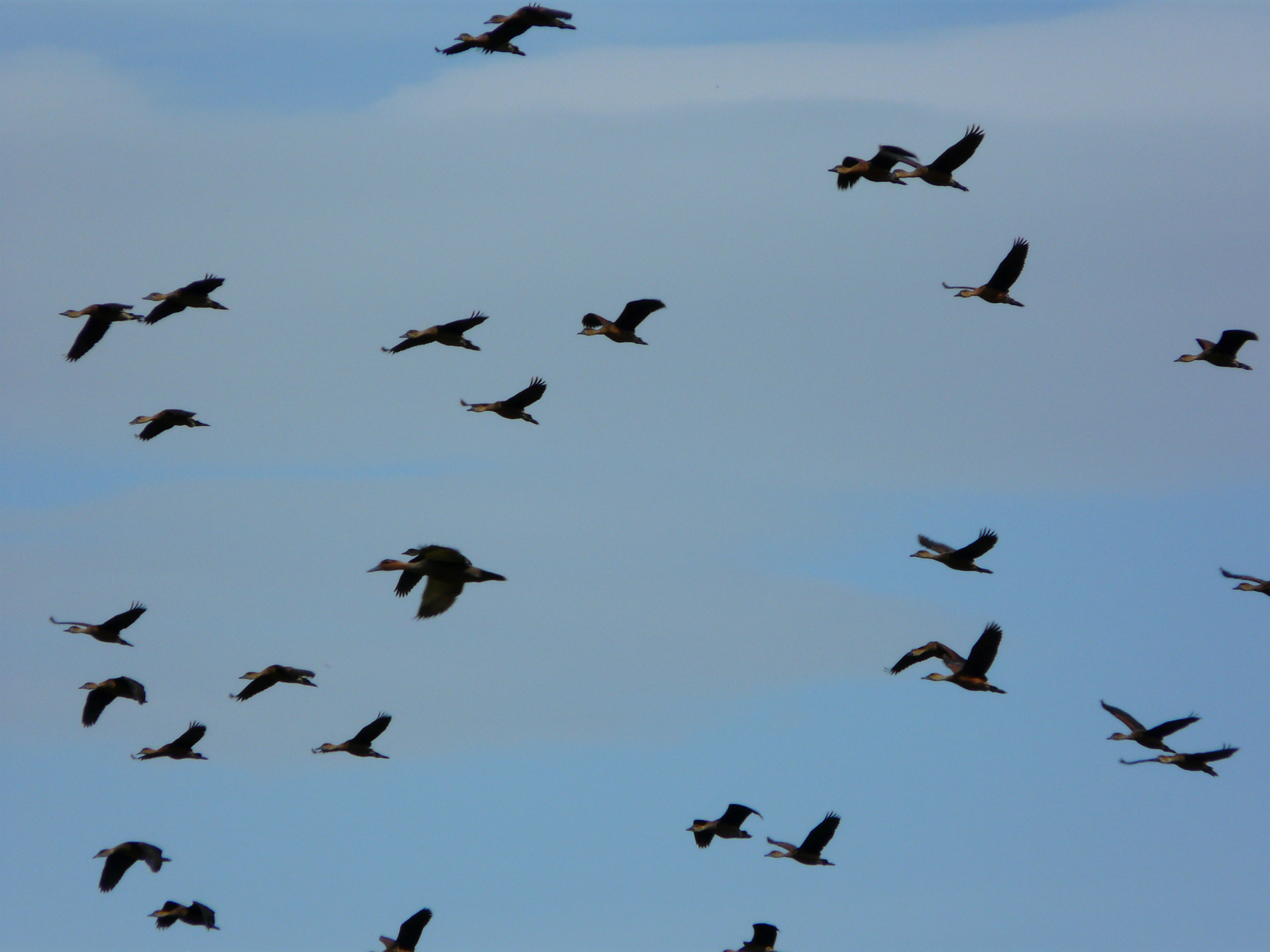
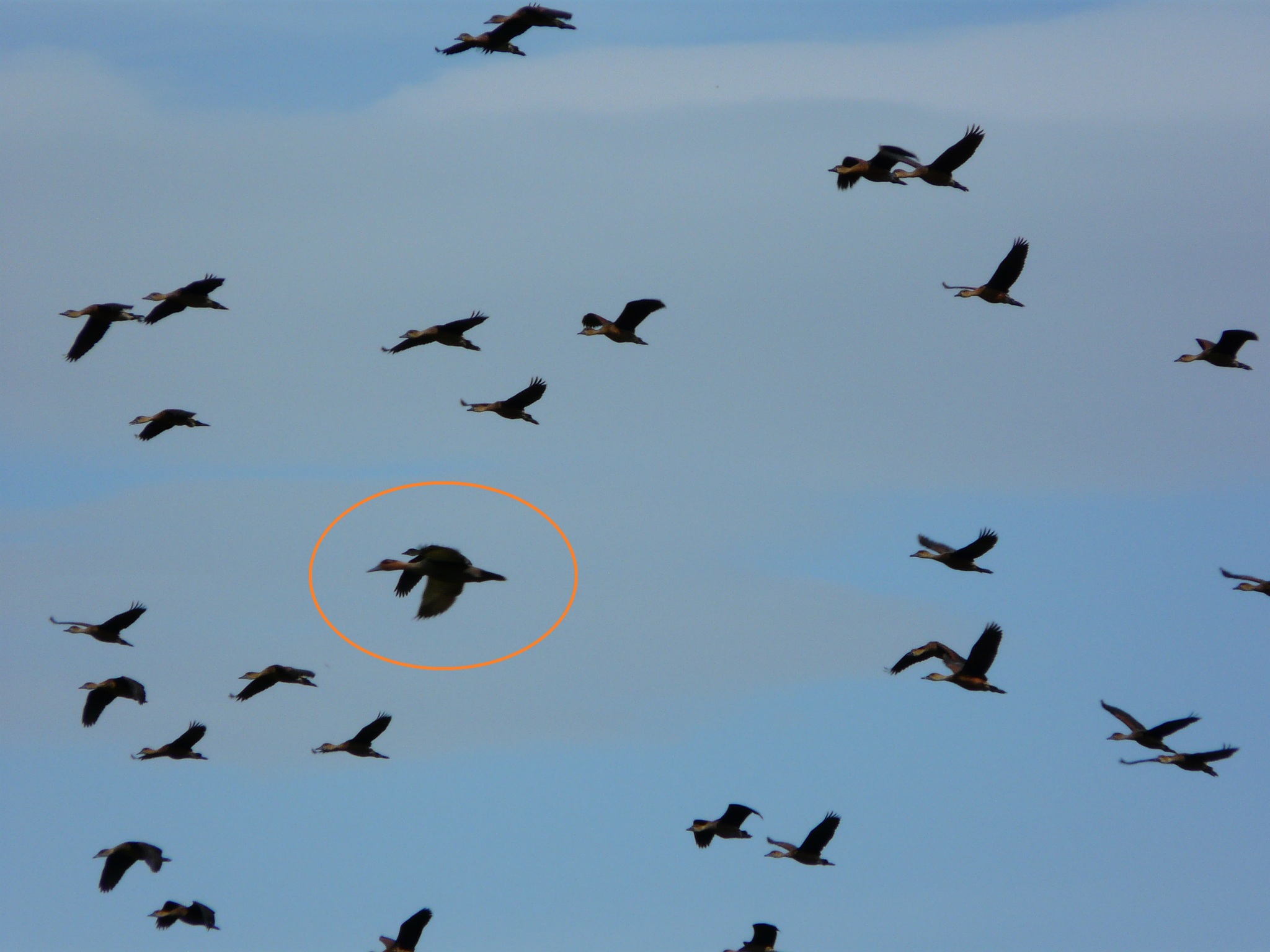
The Philippine duck's distinctive head pattern— cinnamon head and neck with black crown, nape, and eye stripe—sets it apart from all other waterfowl in the region. When observed in mixed flocks with other ducks such as the Wandering whistling duck, Garganey, Northern shoveler, Eurasian wigeon, and Tufted duck, this species' unique facial coloration and large size aid identification. The bright green speculum is visible in flight and can help confirm identification at distance. No similar species shares this particular combination of head and body coloration.
Distribution & Habitat
This species historically occurred across all major Philippine islands and eight minor islands, though since the 1980s most reliable sightings have concentrated on Luzon and Mindanao. It occupies all wetland types within its range but shows a preference for shallow freshwater marshland. Long-distance vagrants have been recorded in Okinawa and Japan and Taiwan. The species utilizes protected areas including Manleluag Spring Protected Landscape, Mounts Iglit-Baco National Park, Naujan Lake National Park, Bataan National Park, Northern Sierra Madre Natural Park, Las Piñas-Parañaque Wetland Park, and Olango Island (a Ramsar wetland site).
Behavior & Ecology
This duck maintains a varied diet including plants, rice, molluscs, crustaceans, fish, frogs, and insects. It is considered a pest in agricultural areas where it damages newly sown fields and germinating seeds. The species is crepuscular and nocturnal in activity, being most vocal and foraging actively during early mornings, evenings, and bright moonlit nights. While typically seen in pairs or small groups, historical accounts describe flocks of up to 2,000 individuals, possibly larger before hunting pressure intensified. Breeding occurs from March through November with a peak in July and August. Nests are well-concealed and contain approximately 10 eggs, incubated solely by the female for 25 to 27 days. Ducklings fledge at around 8 weeks of age.
Conservation
This species is classified as Vulnerable on the IUCN Red List, with an estimated population of only 3,300 to 6,700 mature individuals remaining. The population has experienced steep declines since the 1970s due to two primary threats. Hunting pressure was intense from the 1960s through the late 1980s, with thousands of birds harvested annually. Simultaneously, extensive habitat loss has occurred through wetland drainage, aquaculture expansion, mangrove destruction, and fishpond creation. The Candaba Swamp once supported up to 10,000 birds but has been largely converted to farmland and remains heavily hunted. While the species occurs in multiple protected areas, enforcement against hunting remains inadequate throughout the Philippines.
Culture
Known locally as papan or patong gubat, which translates to 'forest duck' in Filipino, this species holds cultural significance as the Philippines' only endemic duck. Its local names reflect the traditional knowledge of the bird's habitat preferences and its place in the natural environment. The species has not been the subject of extensive folklore traditions, but its status as an endemic species has made it a point of national interest and concern as conservation awareness has grown.
Source: Wikipedia · CC BY-SA 3.0
Taxonomy
- Order
- Anseriformes
- Family
- Anatidae
- Genus
- Anas
- eBird Code
- phiduc1
Distribution
Philippines (except Sulu Archipelago)
Data Sources
Species description from Wikipedia, licensed under CC BY-SA 3.0.
Bird images and sounds sourced from GBIF, contributed by citizen scientists worldwide under Creative Commons licenses.
Taxonomy data from AviList 2025.