Oriental Plover
Anarhynchus veredus
东方鸻
Introduction
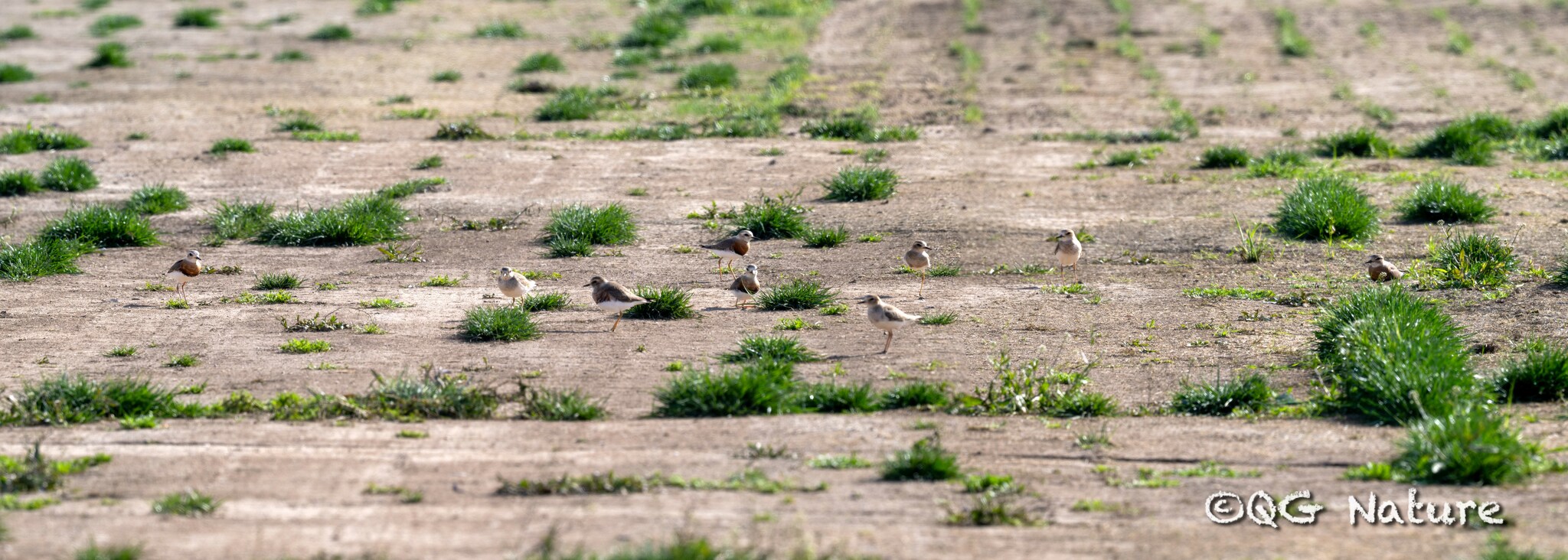
This medium-sized wader breeds in the Inner Mongolian and Manchurian steppes, migrating to Australia and Indonesia for the austral summer. It arrives in September and departs by April. The species inhabits coastal grasslands, saltpans and agricultural fields. During migration it occurs in small flocks or loose groups, sometimes associating with other waders. It runs rapidly across the ground in typical plover fashion.
Description
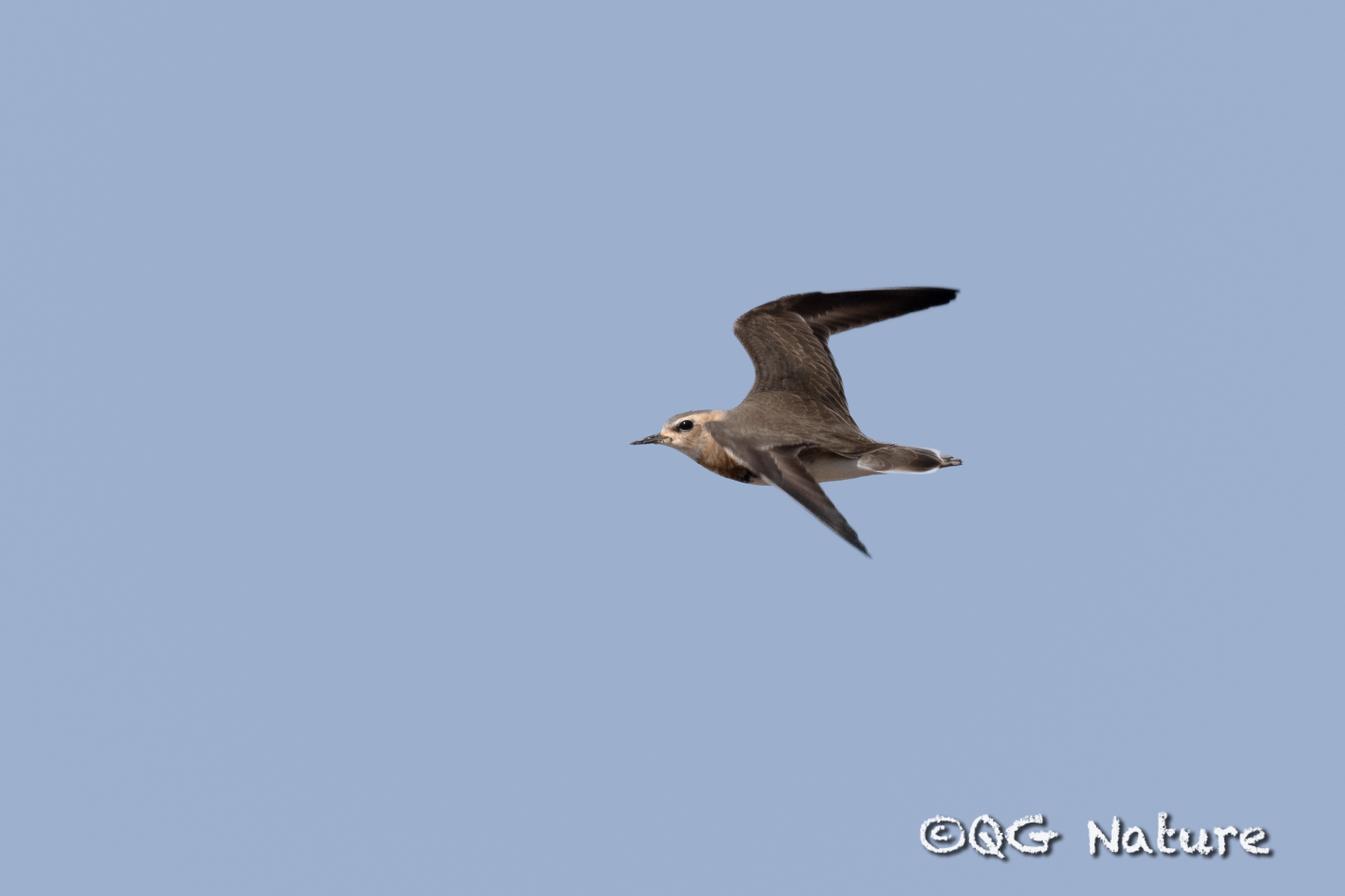
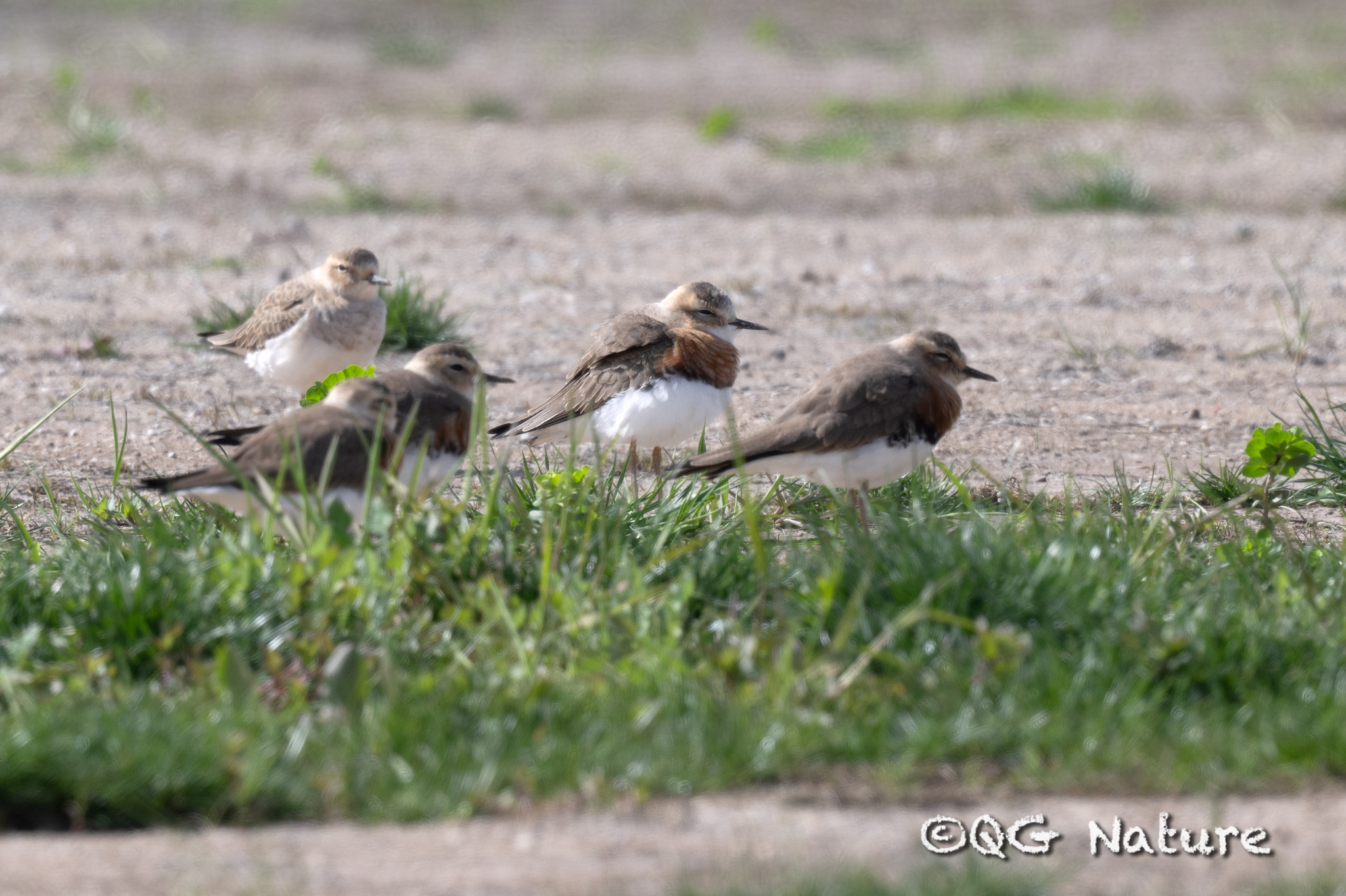
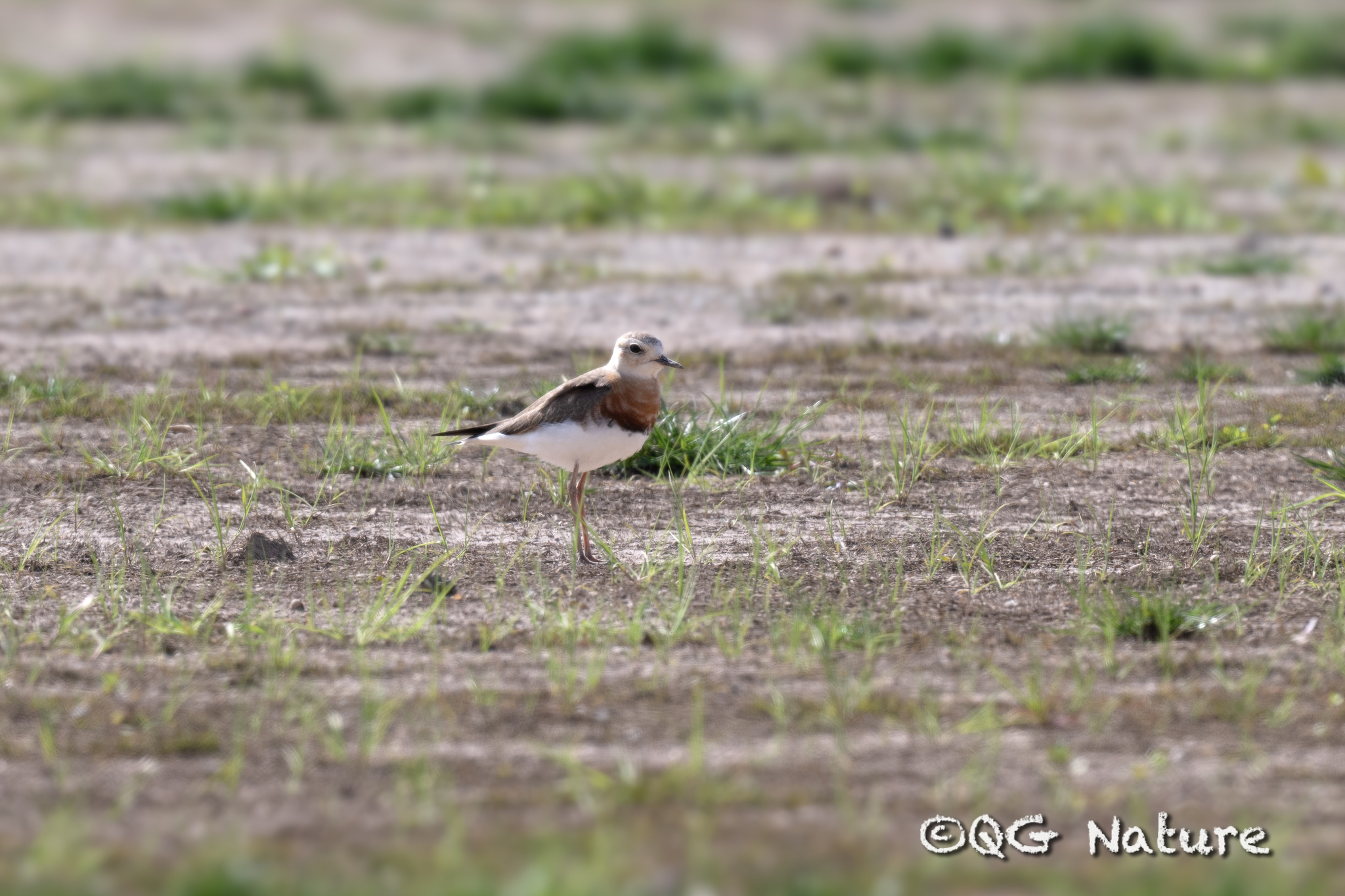
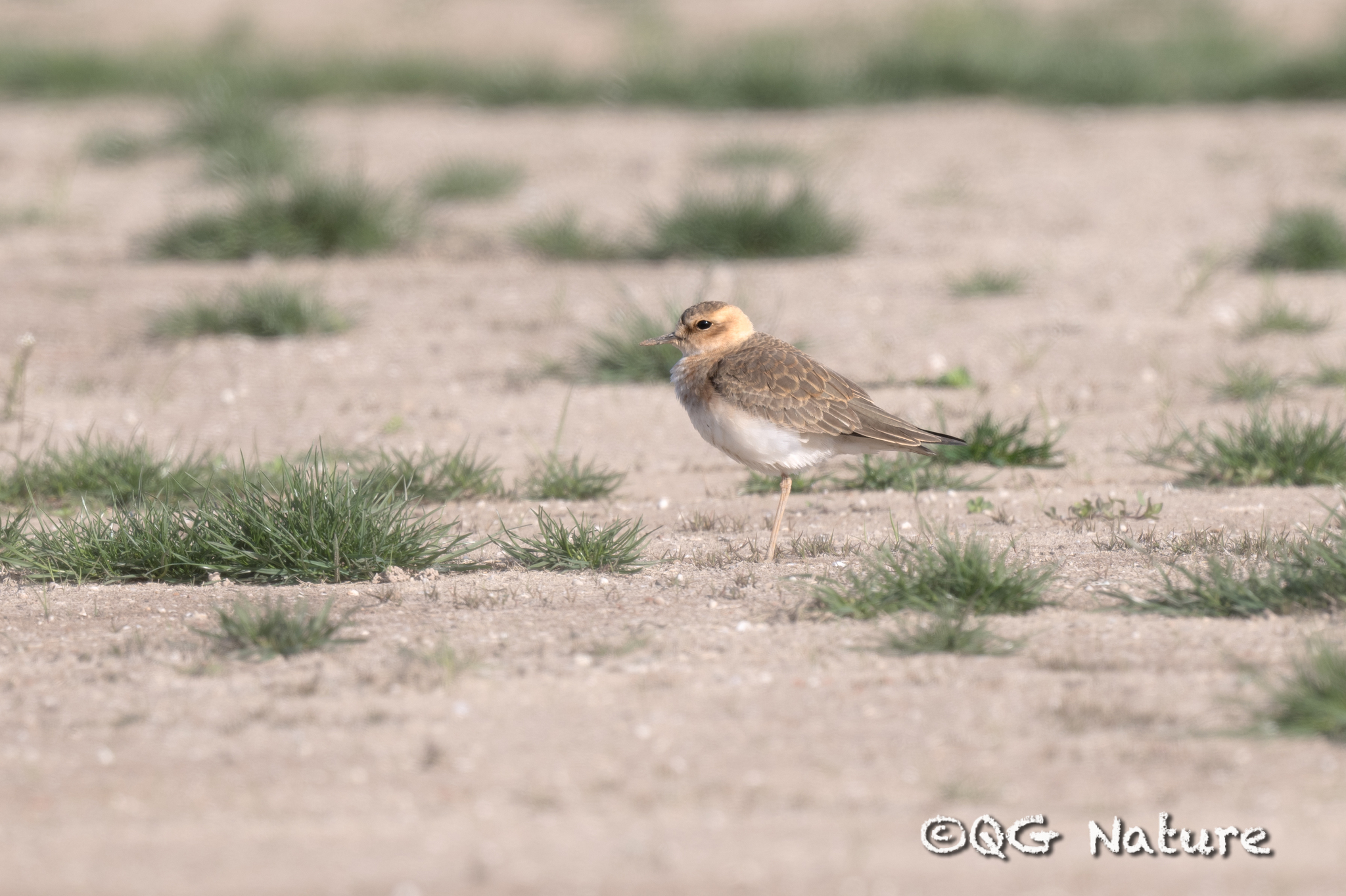
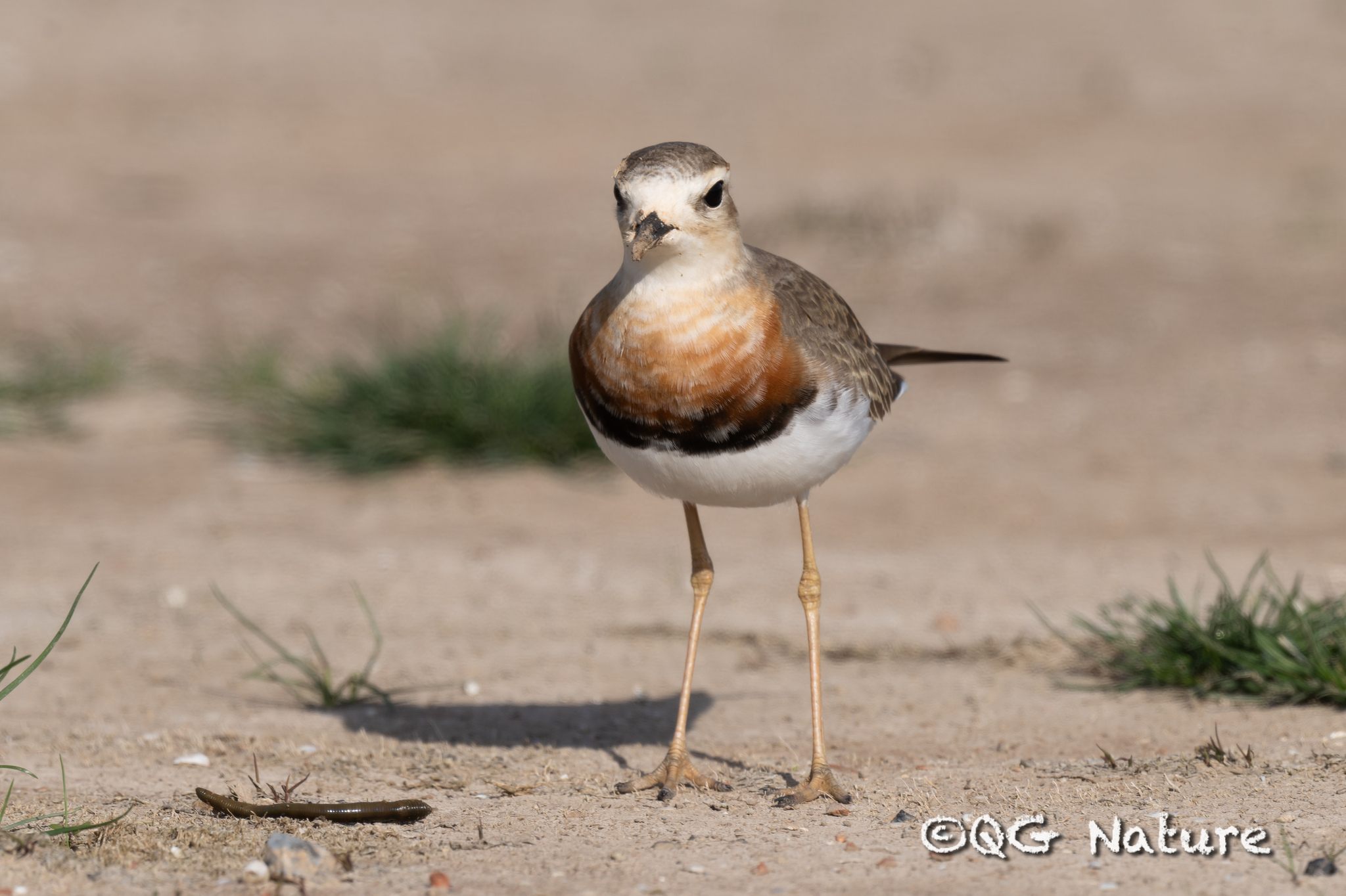
A medium-sized plover measuring 21-25 cm in length with a wingspan of 46-53 cm and weighing approximately 95 g. In breeding plumage, males display a striking pattern with white face, throat and fore-crown contrasting with grey-brown hind-crown, hind-neck and back. A narrow black breast band separates the white belly from a broad chestnut breast band that merges into the white throat. Females, juveniles and non-breeding males show more subdued plumage with grey-brown upperparts, white belly and a pale face featuring a distinctive white streak above the eye. The species is notably large, long-legged and long-winged compared to other red-breasted Charadrius plovers.
Identification
The combination of size, long legs and long wings helps distinguish this species from similar red-breasted plovers in the Charadrius genus. In breeding plumage, the extensive chestnut breast band and bold black pectoral band are distinctive, though this plumage is only worn during the northern summer months. Non-breeding birds are more challenging to identify but can be separated from related species by their larger size, relatively longer wings and the pale supercilium. The white underwing visible in flight is another useful识别特征.
Distribution & Habitat
Breeds in eastern Russia, Mongolia and Manchuria in dry steppe, desert, arid grassland and saltpan habitats. Undertakes a long southward migration through eastern China and Southeast Asia to its main wintering grounds in Indonesia and northern Australia, where it is rare in New Guinea but regularly occurs. Approximately 90% of the global population winters in Australia. Has occurred as a vagrant in New Zealand and four European countries: Finland, Norway, Sweden and the Netherlands. Non-breeding habitats include coastal grasslands, salt-fields and estuarine areas.
Behavior & Ecology
Feeds primarily on insects, foraging by running and stopping to pick prey from the ground in typical plover fashion. Breeding behavior remains poorly studied, though the species is known to nest on the ground in the arid steppe habitats of its breeding range. It is typically seen in small flocks during migration and winter, though larger aggregations can form in prime feeding or roosting areas. Vocalizations are not described in detail in available sources.
Conservation
Rated as Least Concern by the IUCN due to its large range and apparently stable population. An estimated 160,000 individuals exist globally, with about 90% of the population wintering in Australia. No significant population declines have been documented, though the species may face threats from habitat degradation at migration stopover sites and wintering areas, as well as potential pressures from agricultural practices and development in its range.
Source: Wikipedia · CC BY-SA 3.0
Taxonomy
- Order
- Charadriiformes
- Family
- Charadriidae
- Genus
- Anarhynchus
- eBird Code
- oriplo1
Distribution
breeds inland eastern Asia from south-central Siberia and Mongolia to western Inner Mongolia (north-central China); winters inland and coastal Indonesia from Java to southern New Guinea and northern Australia
Data Sources
CBR Notes: 由Charadrius属移入Anarhynchus属(dos Remedios et al. 2015; Eaton et al. 2021)
Species description from Wikipedia, licensed under CC BY-SA 3.0.
Bird images and sounds sourced from GBIF, contributed by citizen scientists worldwide under Creative Commons licenses.
Taxonomy data from AviList 2025.