Caspian Plover
Anarhynchus asiaticus
红胸鸻
Introduction
This plover breeds across the steppes and semi-deserts of central Asia, migrating to eastern and southern Africa for the boreal winter. It inhabits open grassland and arid habitats, breeding in loose colonies. Distinguished by a strong white supercilium, long thin bill, and slimmer build compared to similar plovers. The species has a wide breeding range and large total population.
Description
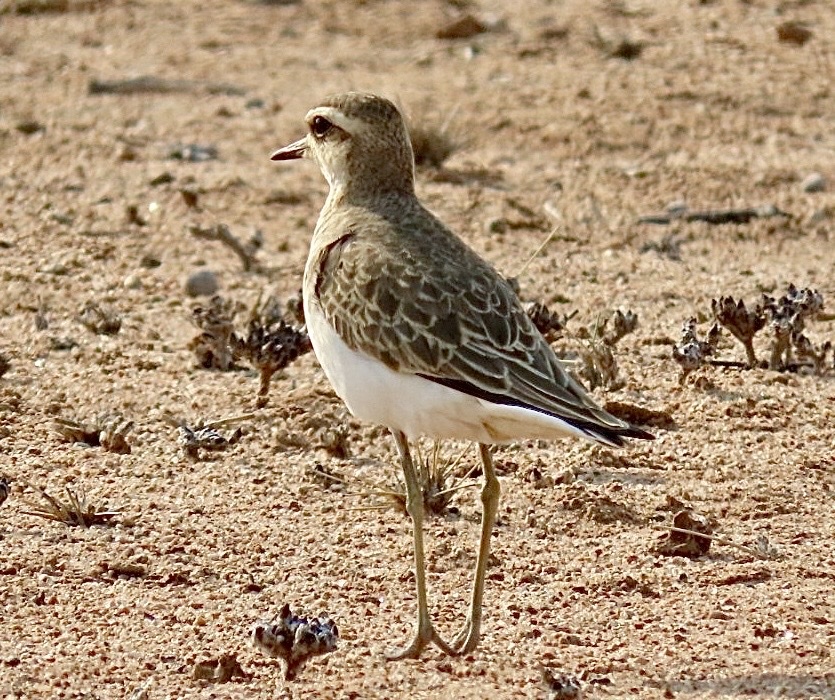
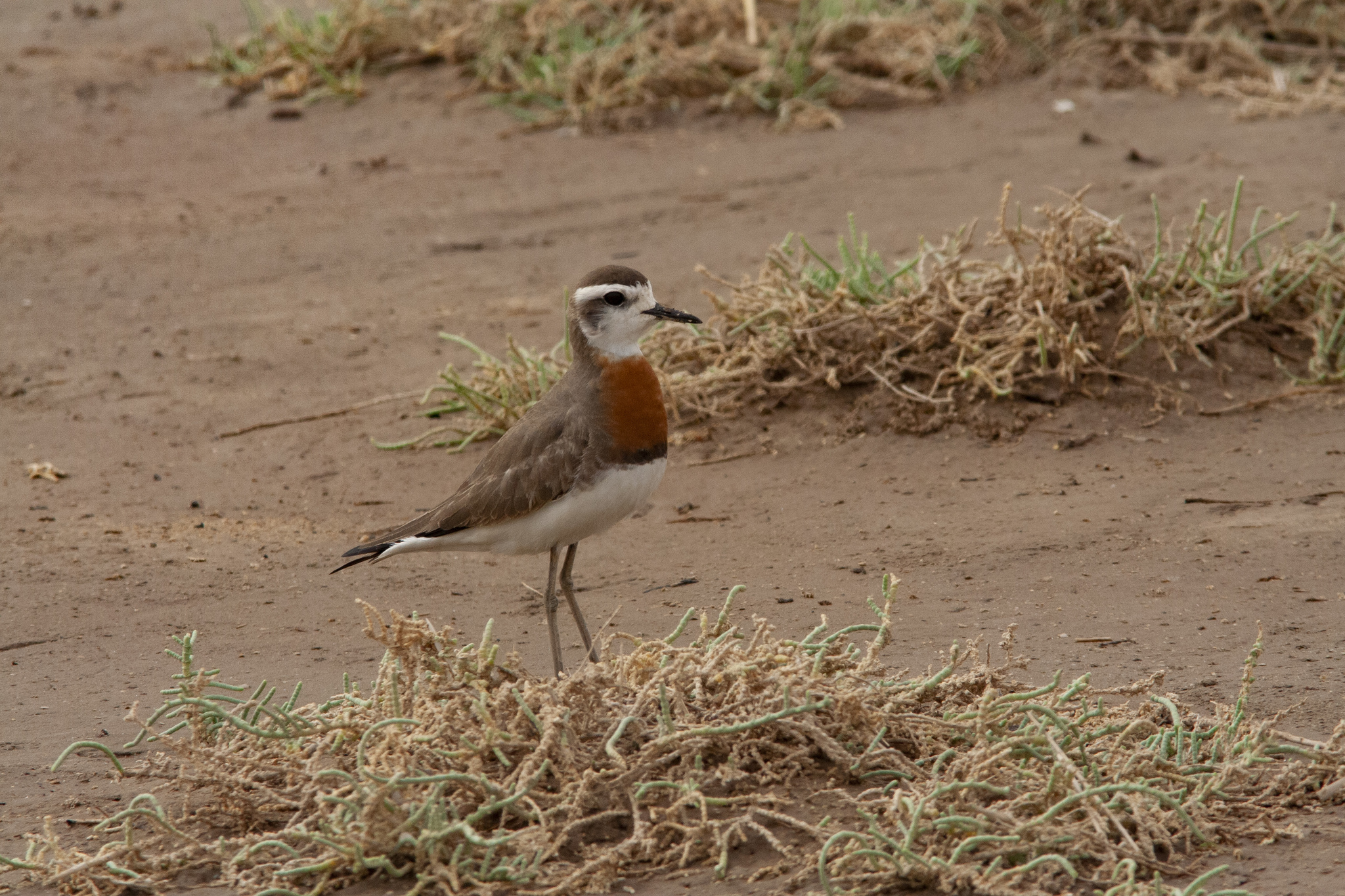
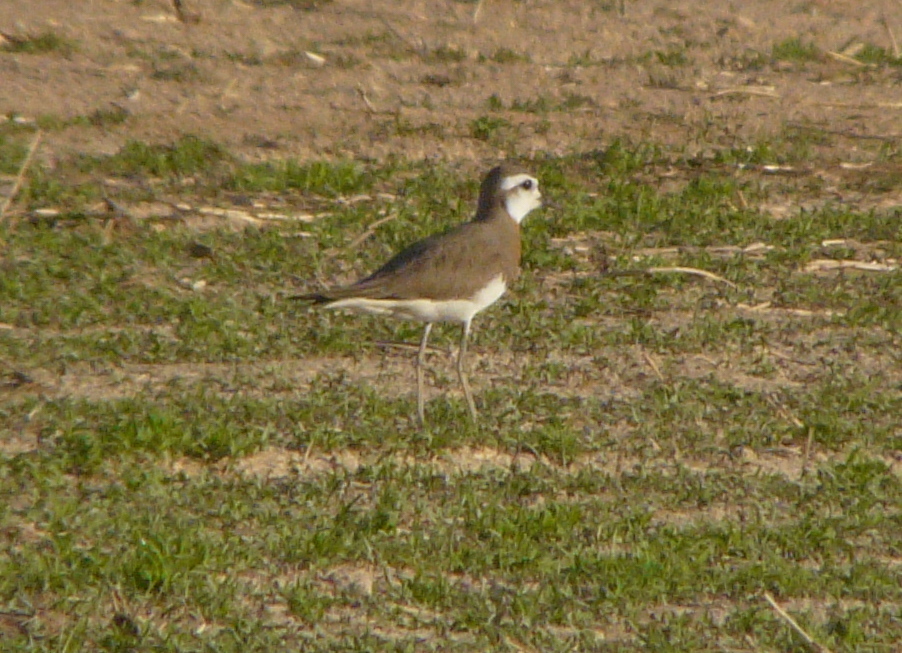
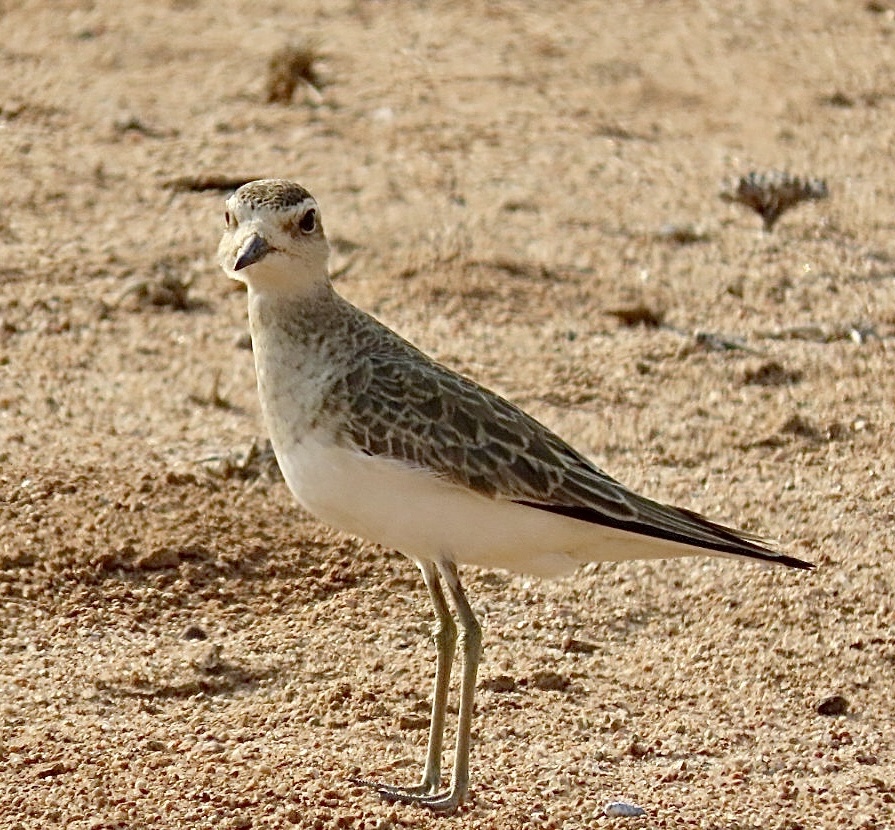
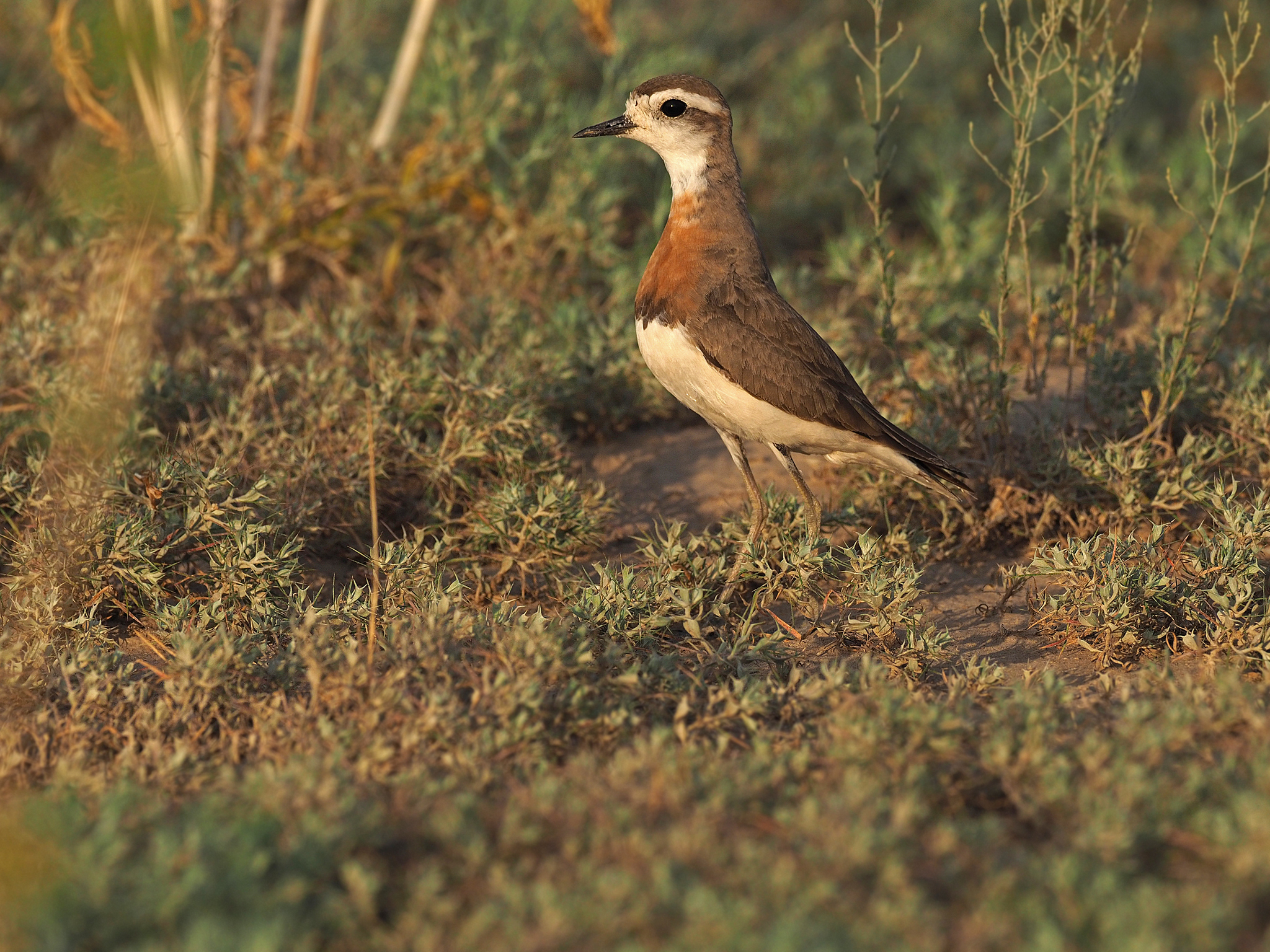
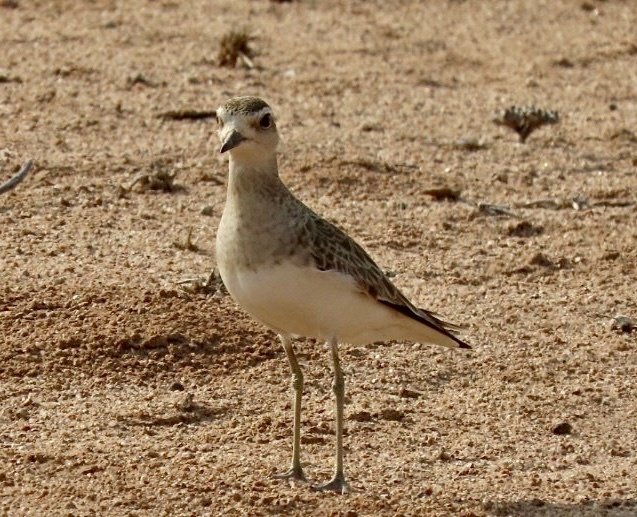
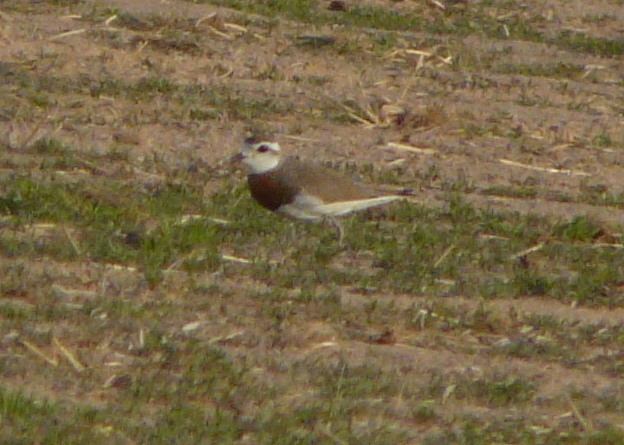
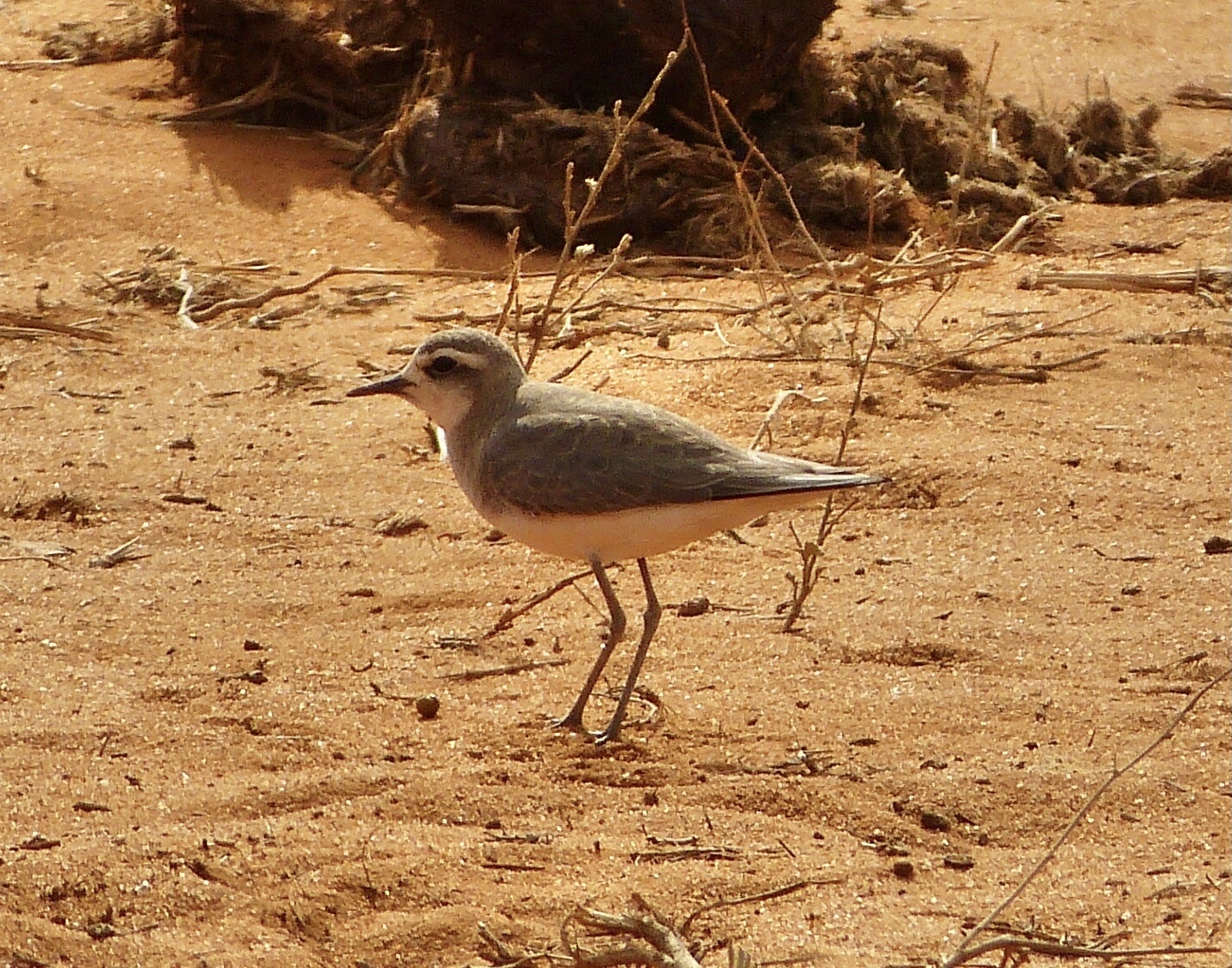
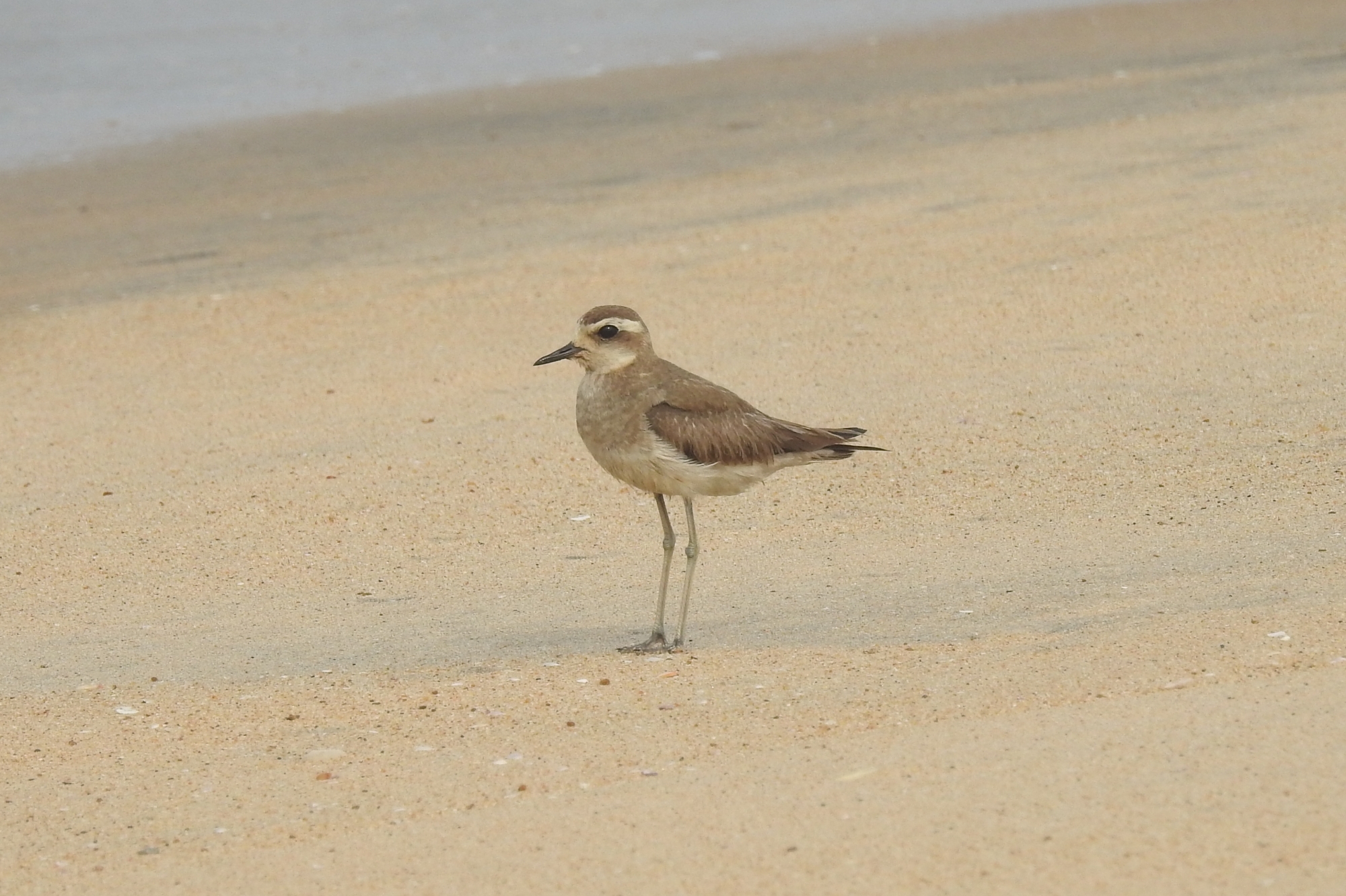
A medium-sized plover, slightly larger than the familiar ringed plover, measuring approximately 18-20 cm in length. The build is notably slim with longer legs than the sandplover species it otherwise resembles. The most distinctive head feature is the prominent white supercilium, which gives it a striking facial expression. The long, thin bill is dark and needle-like. In summer plumage, males display grey-brown upperparts, a clean white face and belly, and a chestnut breast band bordered with black below. Females and non-breeding birds show a more subdued grey-brown breast band, with females potentially showing faint chestnut coloration. The wings lack the white sides and weak wing bar seen in some similar plovers. The call is a sharp, distinctive chip.
Identification
This species requires careful identification due to its similarity to the greater and lesser sandplovers. The slimmer body profile and notably longer legs provide the first clues. The most reliable distinguishing feature is the strong white supercilium, which is much more prominent than in sandplovers. The long, thin bill is another key characteristic. Unlike the sandplovers, this species shows no white on the tail sides and lacks a distinct wing bar. In breeding plumage, the male's chestnut breast bordered with black is diagnostic, though this is less pronounced in females and immatures. When compared to ringed plover, this species is noticeably larger with a different structure and bill shape.
Distribution & Habitat
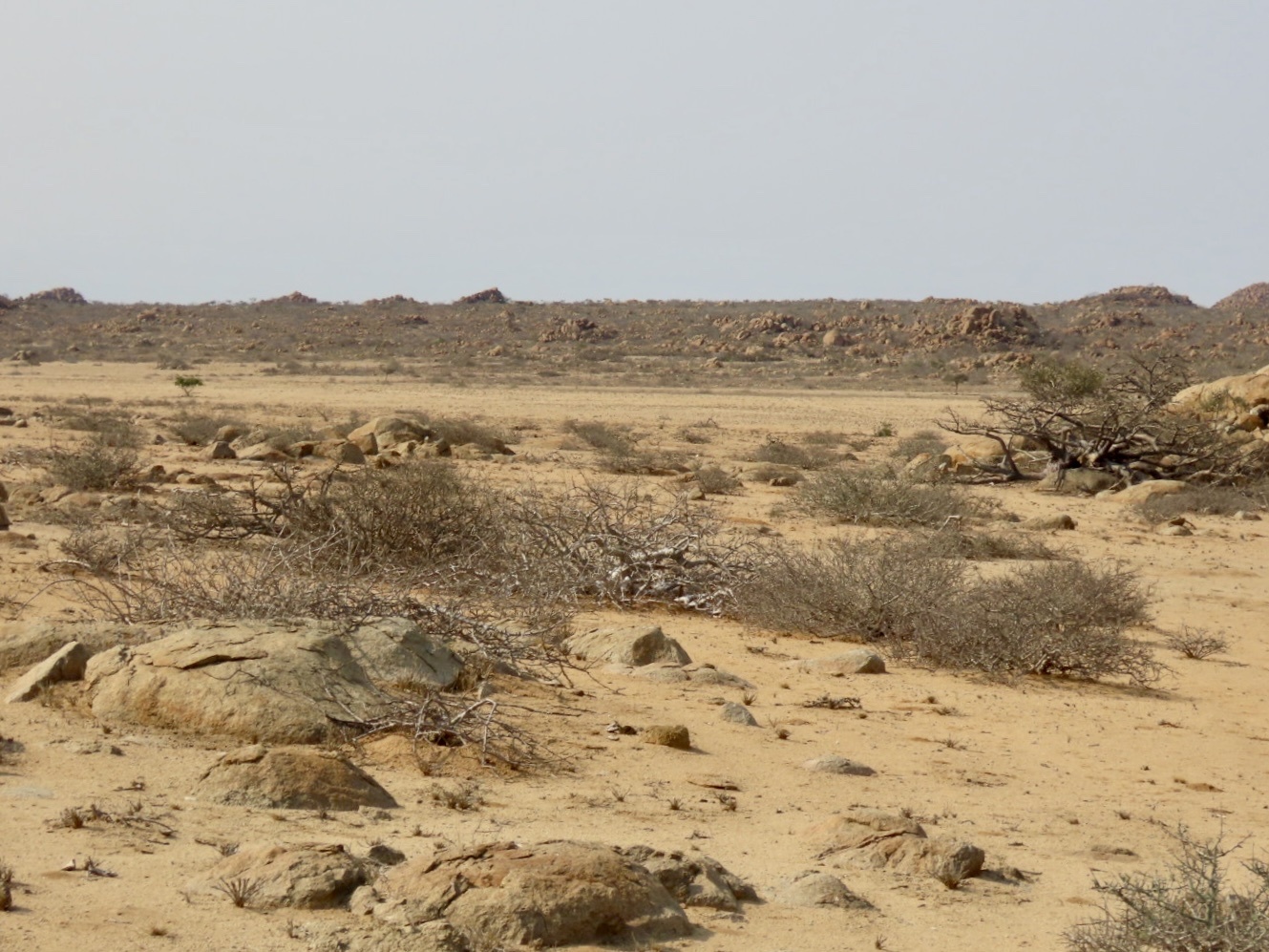
Breeds across western and central Asia in the Caspian Sea region, with populations extending through southern Russia, Turkey, Iran, Turkmenistan, Kazakhstan, Uzbekistan, and Afghanistan. Its preferred breeding habitat consists of steppes, desert verges, saltpans, and saline areas with sparse shrubby vegetation, typically at altitudes up to 800 meters. For winter, it migrates to eastern and southern Africa, with some individuals ranging as far as the Zambezi River. Winter habitats include dry grassland, coastal dunes, saltmarshes, and dry floodplains, occasionally using cultivated areas. Vagrants occasionally appear in western Europe and Australia, where sightings are considered noteworthy events.
Behavior & Ecology
Breeding occurs in loose colonies on open grassland in central Asia, primarily north and east of the Caspian Sea. The nest is a simple scrape on bare ground or among short vegetation, where the female lays three eggs. Feeding behavior follows the typical plover pattern of running short distances and then pausing to scan for prey before pecking. The diet consists primarily of beetles, termites, ants, grasshoppers, small snails, and other invertebrates taken from the ground surface. The species also consumes grass seeds on occasion. The most commonly heard vocalization is a sharp chip call.
Conservation
The species maintains a very wide range across multiple countries, contributing to its global security. However, population numbers are believed to be declining slowly, primarily due to degradation of its breeding habitat, particularly in the European parts of its range. Despite these localized concerns, the International Union for Conservation of Nature assesses it as Least Concern, determining that the rate of decline does not warrant listing in a more threatened category. The species receives protection through its inclusion in the Agreement on the Conservation of African-Eurasian Migratory Waterbirds, which implements coordinated conservation measures across its migratory range.
Culture
The article does not contain information about cultural significance, folklore, or historical references to this species.
Source: Wikipedia · CC BY-SA 3.0
Taxonomy
- Order
- Charadriiformes
- Family
- Charadriidae
- Genus
- Anarhynchus
- eBird Code
- casplo1
Distribution
breeds central Asia from southwestern Russia and Turkmenistan eastward to northwestern Xinjiang; winters inland Kenya to south-central Africa
Data Sources
CBR Notes: 由Charadrius属移入Anarhynchus属(dos Remedios et al. 2015; Eaton et al. 2021)
Species description from Wikipedia, licensed under CC BY-SA 3.0.
Bird images and sounds sourced from GBIF, contributed by citizen scientists worldwide under Creative Commons licenses.
Taxonomy data from AviList 2025.