Red Avadavat
Amandava amandava
红梅花雀
Introduction
Small sparrow-sized bird of the family Estrildidae native to tropical Asia. Inhabits open fields, grasslands, and areas with tall grasses or crops, often near water. Known for distinctive seasonal plumage changes and a characteristic pseep call given in flight. Breeds during the monsoon season on the Indian subcontinent. Currently listed as Least Concern globally, though populations are declining in parts of Southeast Asia due to trapping for the pet trade.
Description
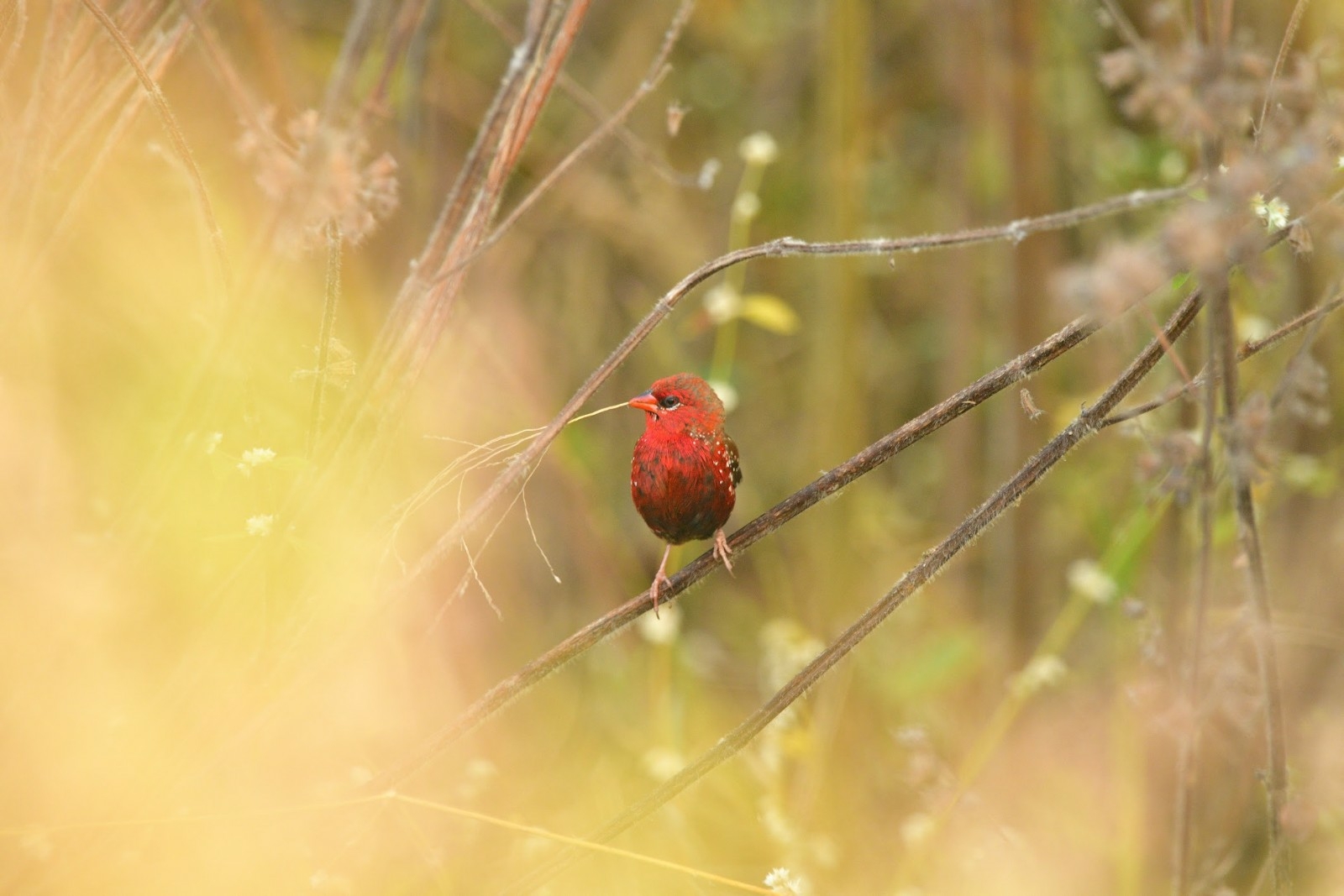
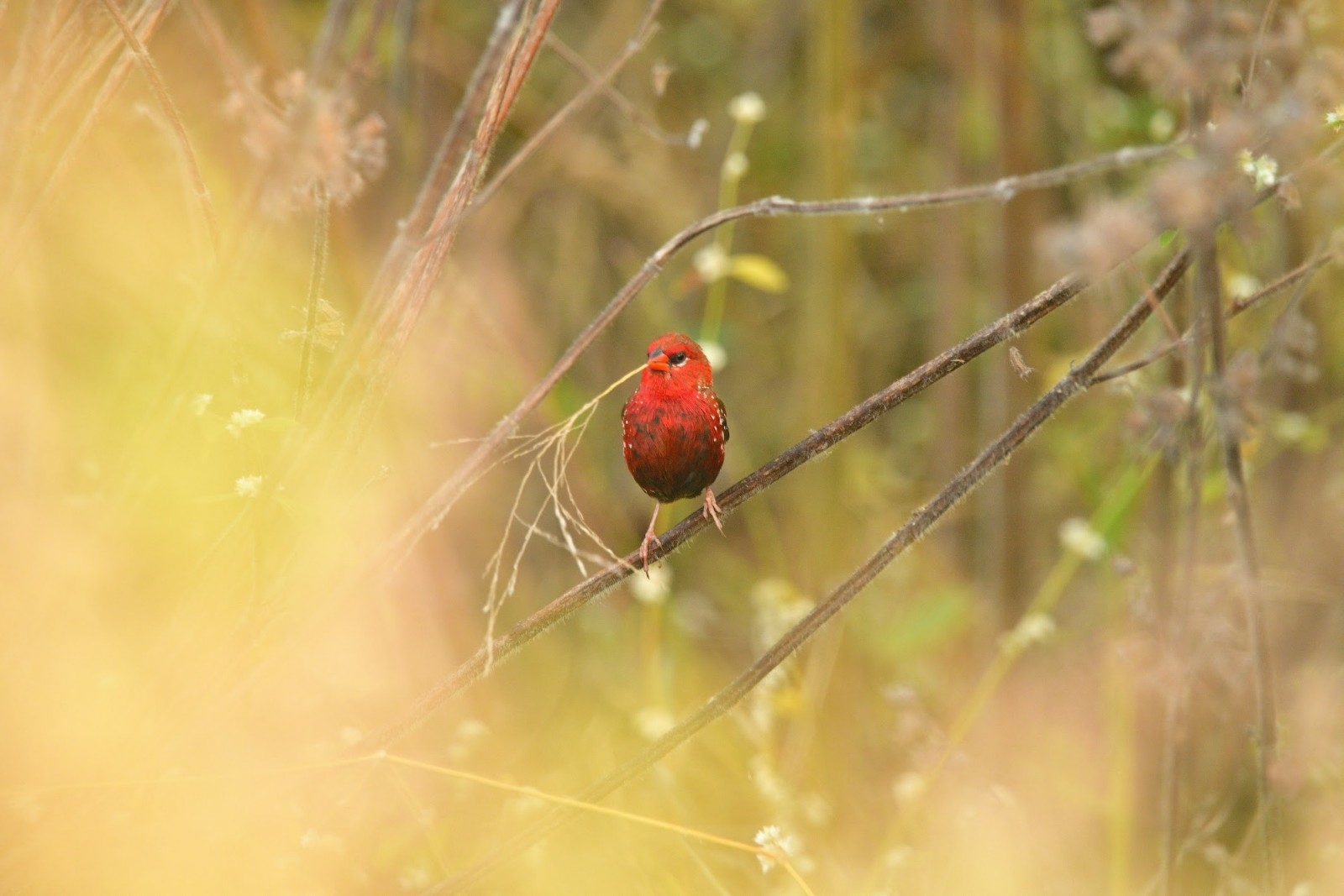
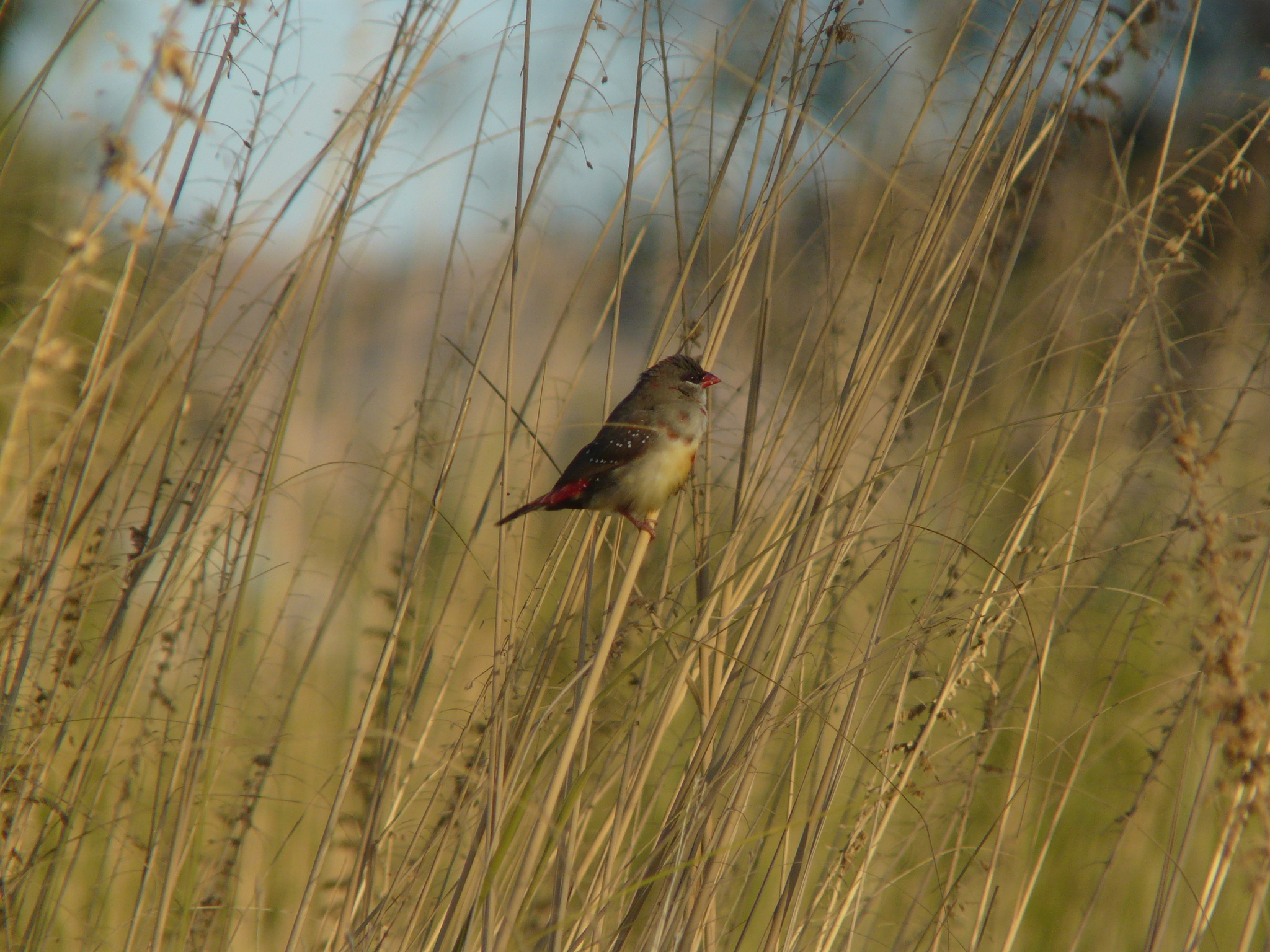
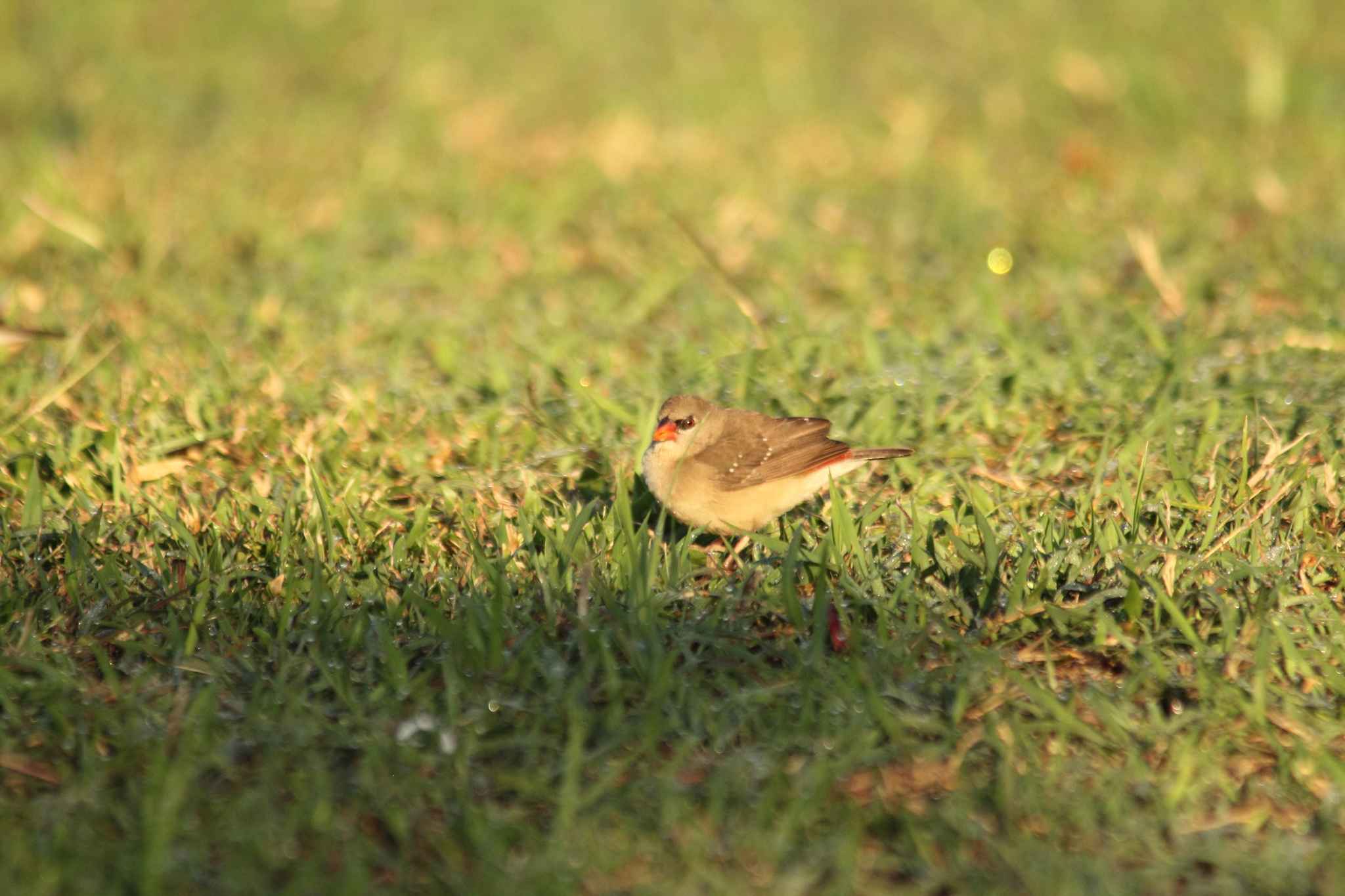
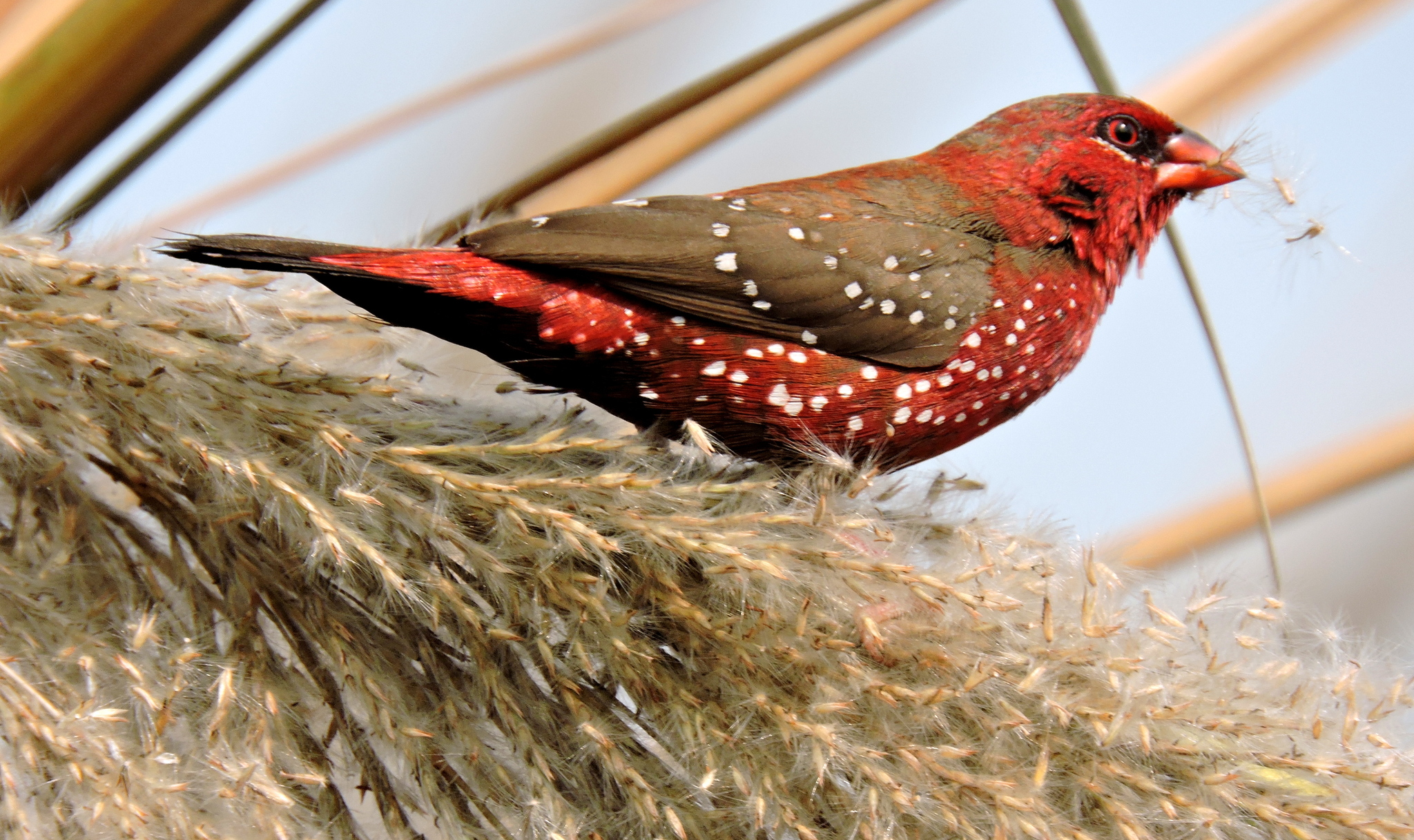
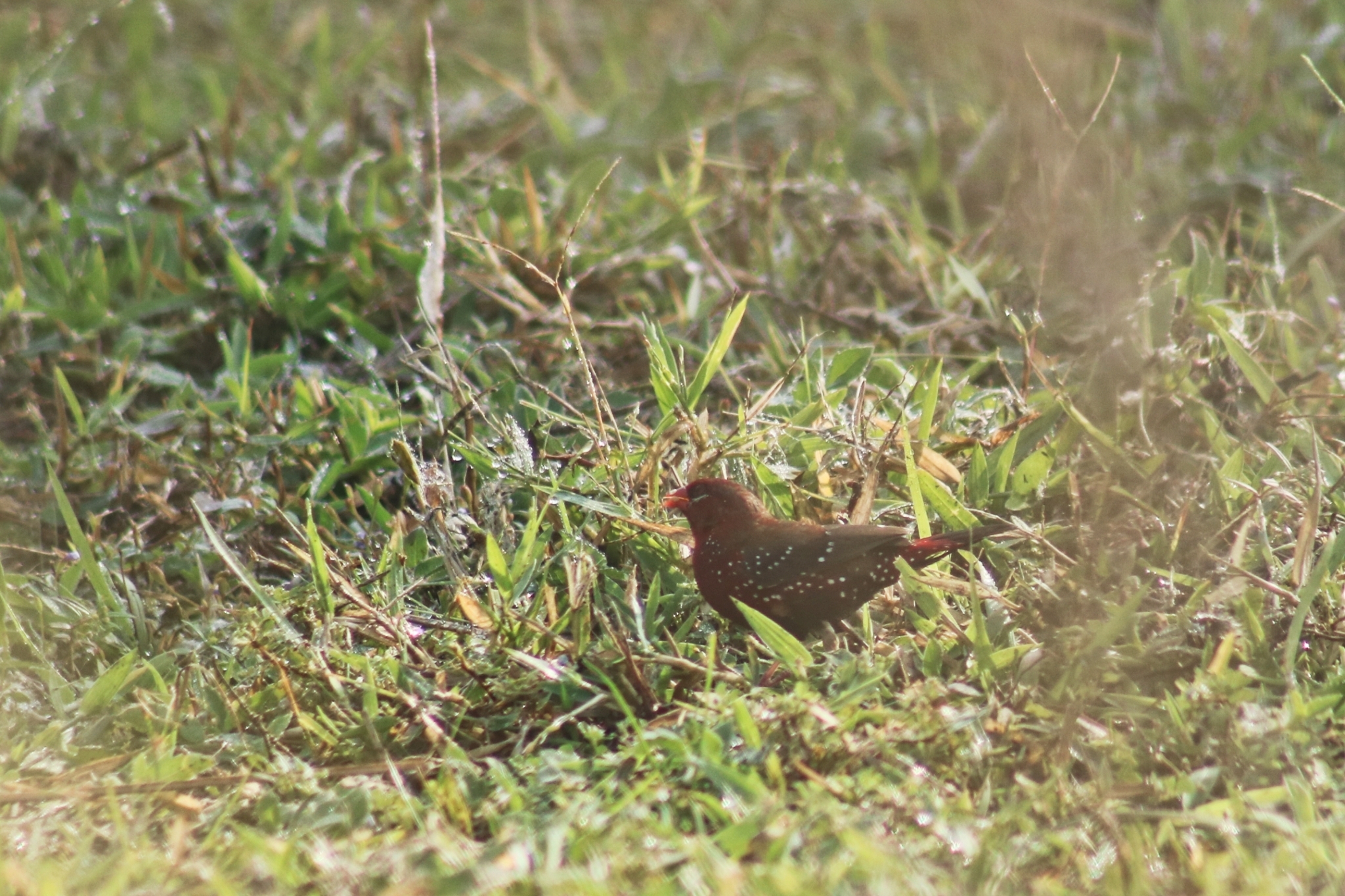
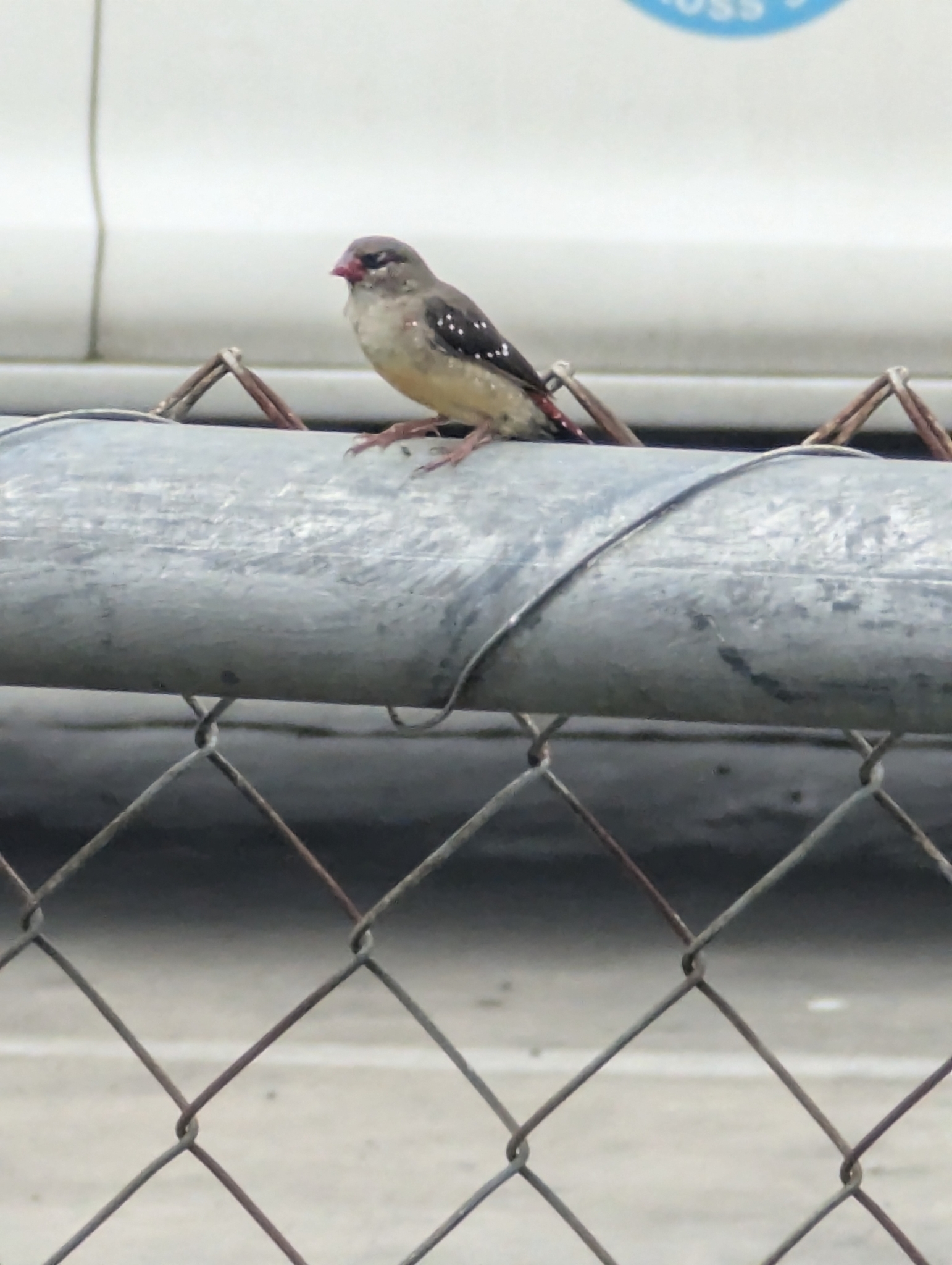
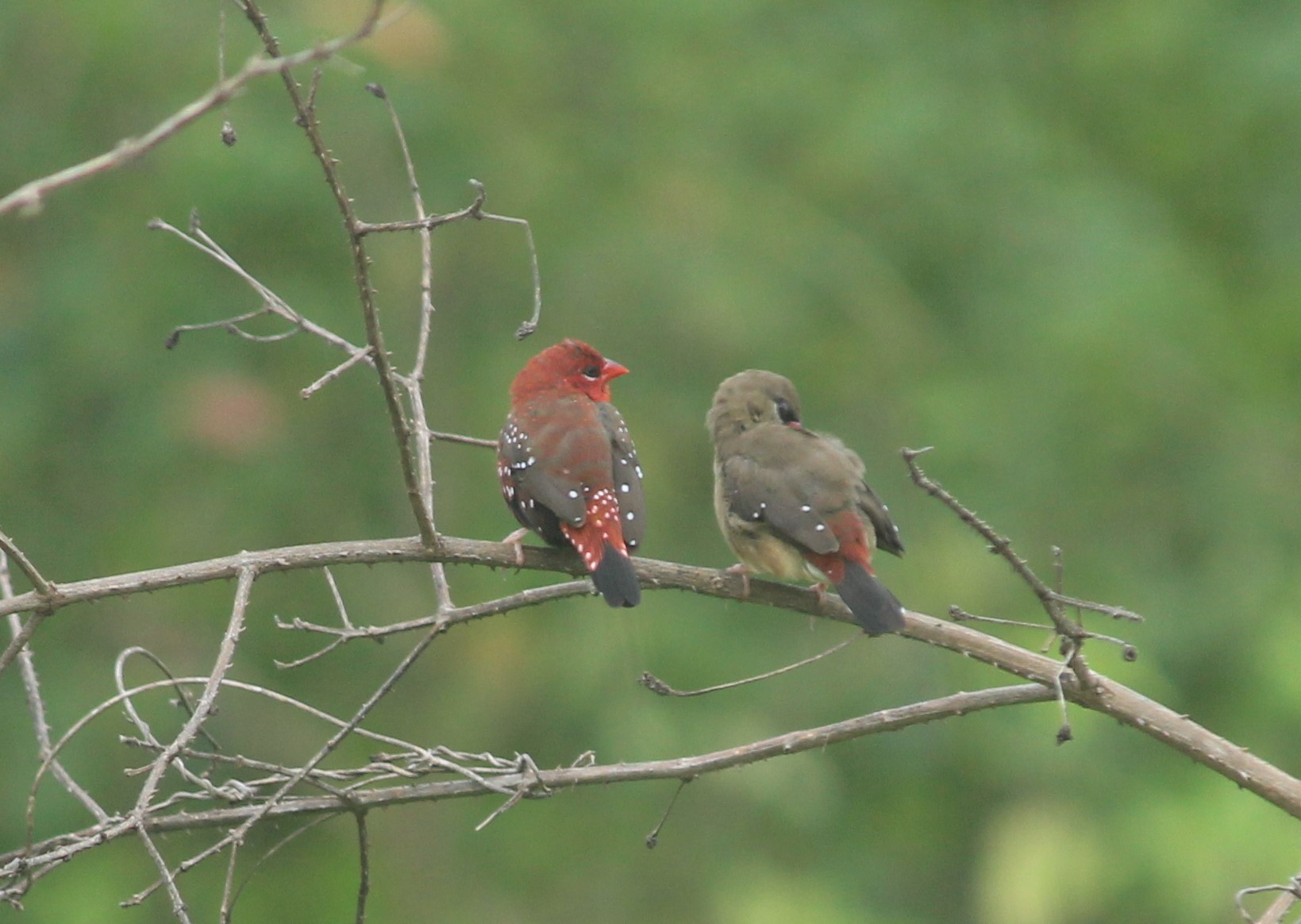
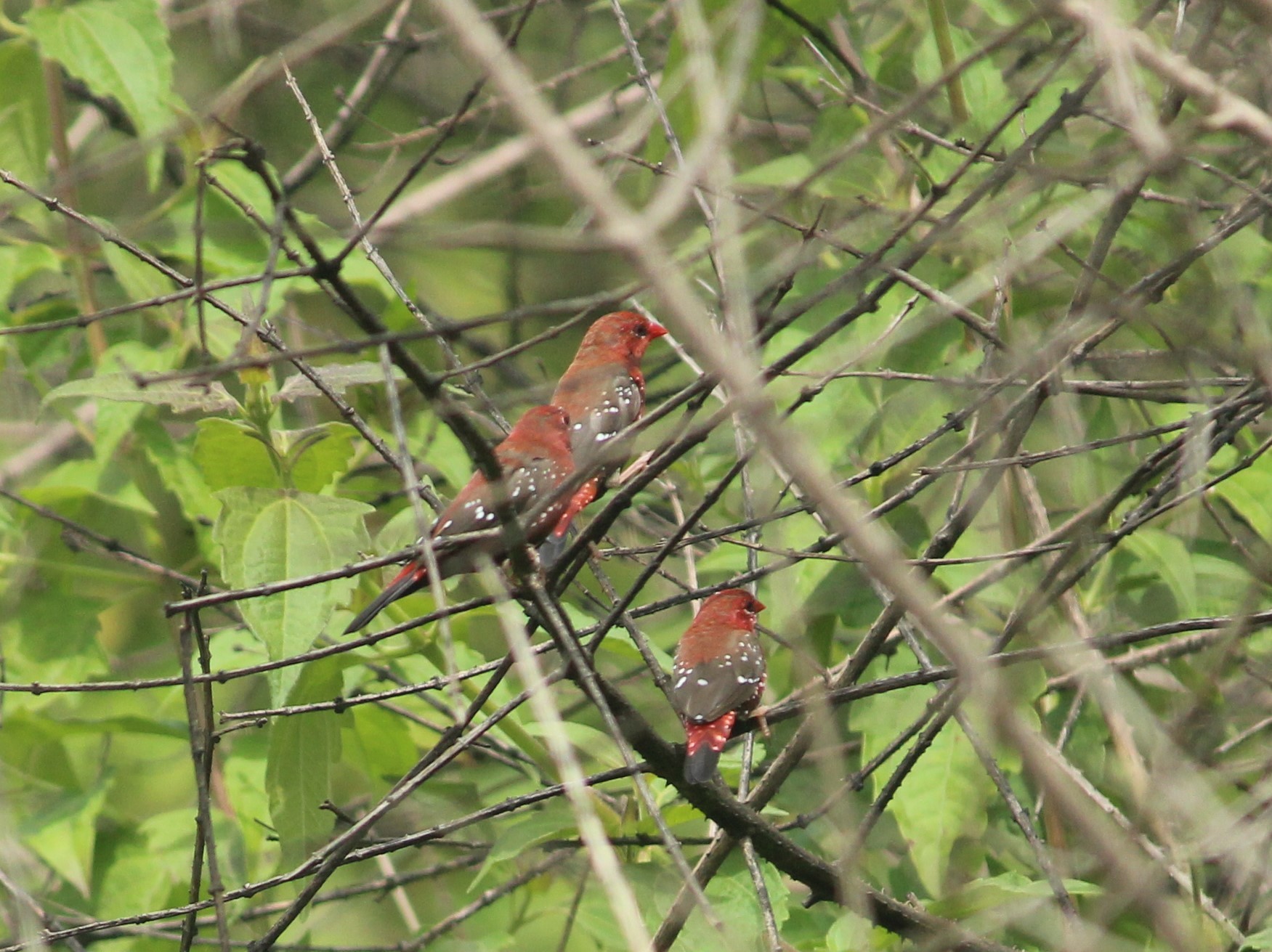
Small finch with a rounded black tail and seasonally variable bill color. The breeding male displays vivid red plumage on most upper parts, with a black eye-stripe, lower belly, and wings contrasting with white spots on the body and wing feathers. The red rump is a distinguishing feature. Non-breeding males are duller but retain the red-rump, while females are overall duller with reduced white spotting on the feathers.
Identification
Best identified by the combination of red rump, rounded black tail, and seasonally red bill. Breeding males are unmistakable with their predominantly red plumage and white spots. The duller non-breeding males and females can be distinguished from similar species by the red rump and the white-spotted wing feathers. The small size and preference for grassland habitats are also helpful identification clues.
Distribution & Habitat
Native range extends across the Indian subcontinent including Pakistan, India, Nepal, Bangladesh, Myanmar, south China, Thailand, Cambodia, south Vietnam, Indonesia (Java, Bali, Lesser Sundas), and southeast Asia. Inhabits flat plains with tall grasses, crops, and areas near water. Introduced populations now exist in southern Spain, Brunei, Fiji, Egypt, Malaysia, United States, Bahrain, Guadeloupe, Iran, Italy, Réunion, Mexico, Dominican Republic, Martinique, Portugal, Japan, Puerto Rico, Singapore, and Hawaii.
Behavior & Ecology
Social bird typically seen in small flocks with rapid wingbeats, dropping into grass clumps where they become difficult to observe. Pairs remain together during breeding season. Produces a distinctive low single-note pseep call in flight, with a song consisting of a series of low notes. Engages in mutual preing behavior where birds ruffle head feathers in invitation. Feeds primarily on grass seeds but will consume insects like termites when available. Builds a globular nest from grass blades, with clutches of 5-6 white eggs. Bill color cycles seasonally: red in May, darkening through November-December, then turning black in April.
Conservation
Classified as Least Concern on the IUCN Red List. However, populations are declining throughout much of the range, particularly in Southeast Asia. In Thailand, described as uncommon to rare. Cambodia populations are considered low and of concern following decades of trapping for the pet trade, with thousands exported to Vietnam in the 1920s. Significant numbers were still found in the merit release trade as recently as 2012.
Culture
The common name 'avadavat' and species name 'amandava' derive from Ahmedabad in Gujarat, India, the historic export center for these birds in the pet trade. The species has been traded internationally as a cage bird for centuries due to the spectacular breeding plumage of males.
Source: Wikipedia · CC BY-SA 3.0
Taxonomy
- Order
- Passeriformes
- Family
- Estrildidae
- Genus
- Amandava
- eBird Code
- redava
Subspecies (3)
-
Amandava amandava amandava
lowlands of Pakistan to India, southern Nepal, and Bangladesh
-
Amandava amandava flavidiventris
southwestern China (Yunnan) to Myanmar, Malay Peninsula, and Lesser Sundas
-
Amandava amandava punicea
southeastern China to southeastern Thailand, Cambodia, Vietnam, Java, and Bali
Data Sources
Species description from Wikipedia, licensed under CC BY-SA 3.0.
Bird images and sounds sourced from GBIF, contributed by citizen scientists worldwide under Creative Commons licenses.
Taxonomy data from AviList 2025.