Puff-throated Bulbul
Alophoixus pallidus
白喉冠鹎
Introduction
Seven subspecies are recognized across its Southeast Asian range. This species inhabits lowland evergreen and semi-evergreen forests, occurring in the understorey and mid-canopy. It is a regular but not obligatory cooperative breeder, with breeding pairs sometimes assisted by helpers from previous broods. The species is moderately common in suitable habitat.
Description
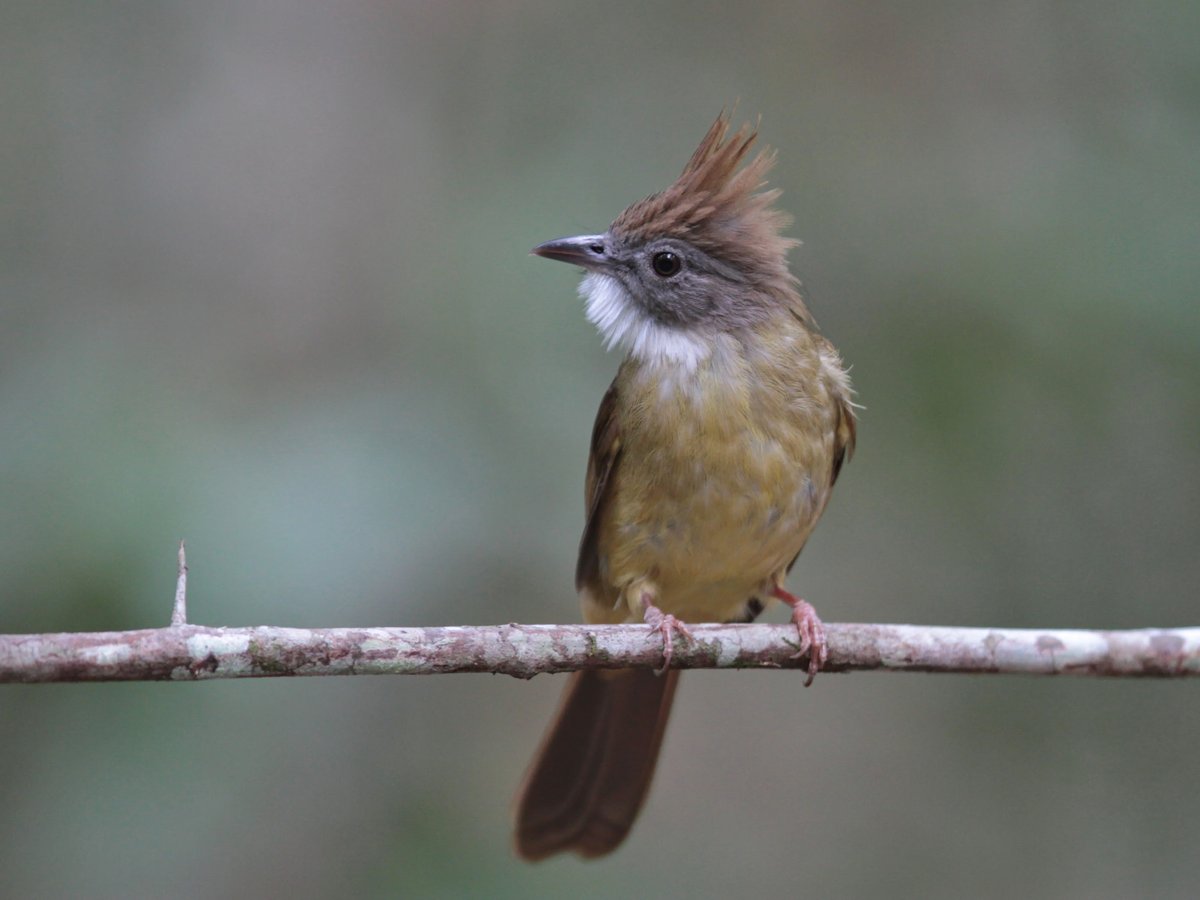
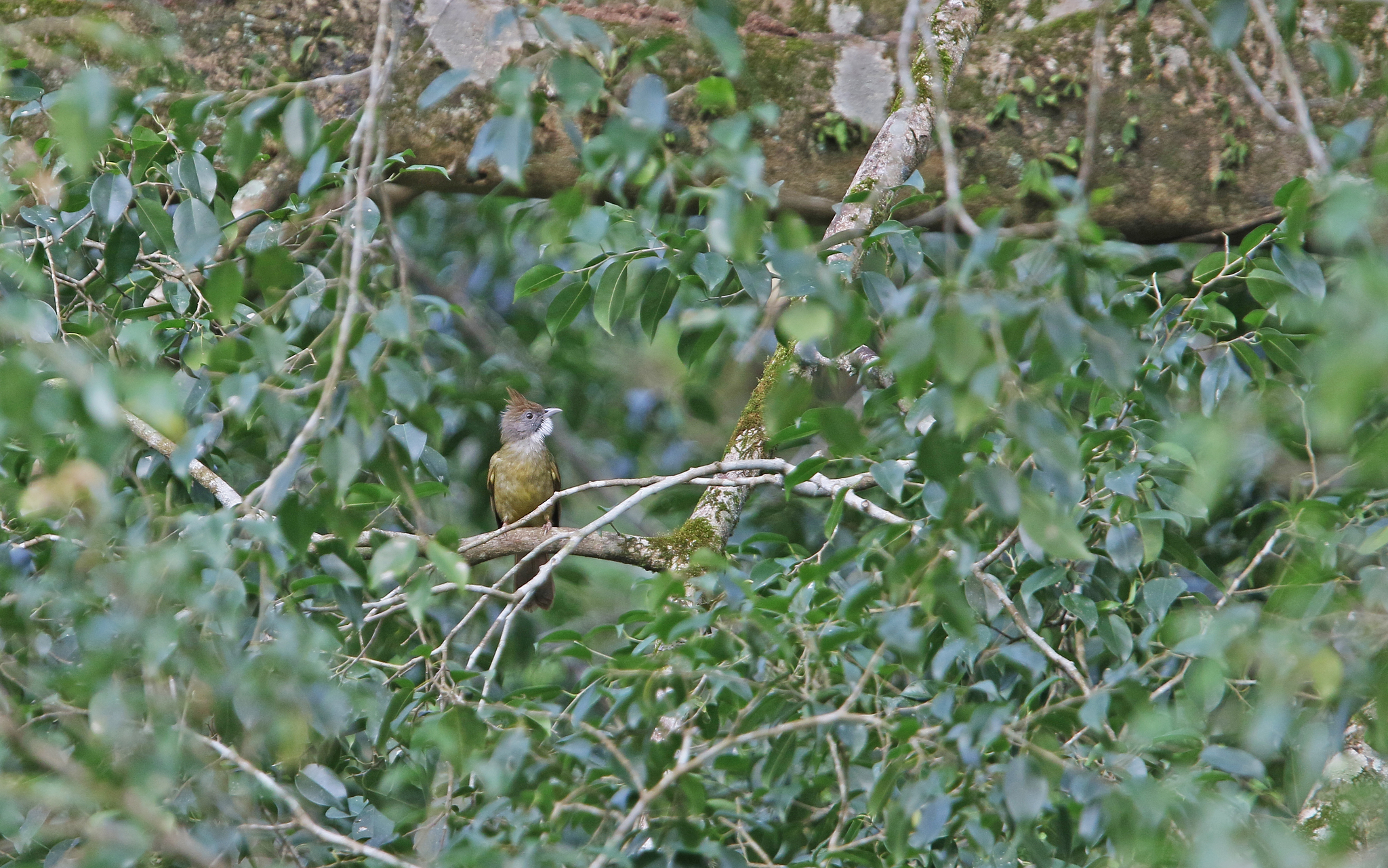
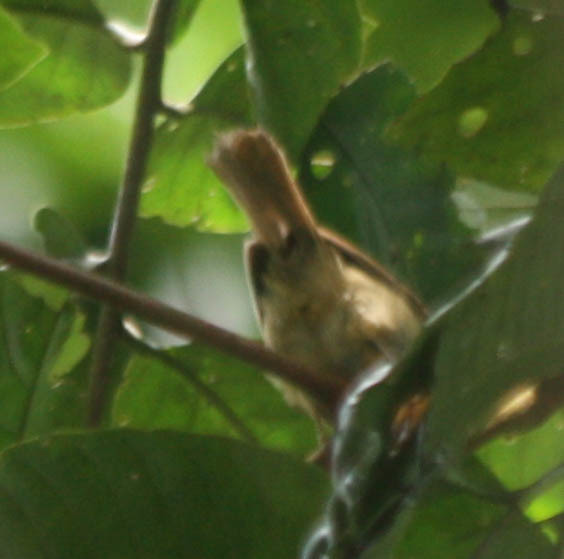
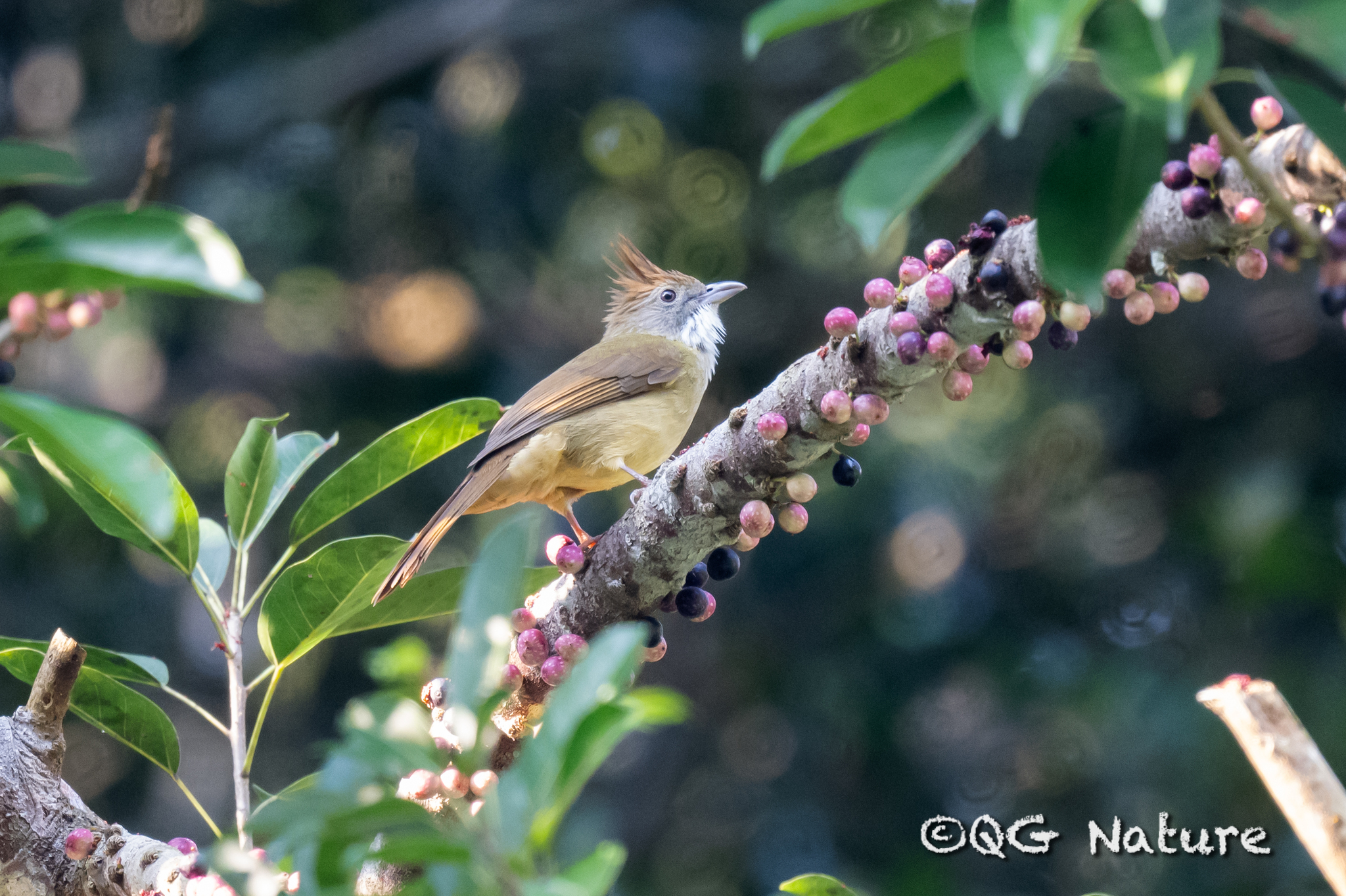
A sizeable bulbul measuring 23 centimeters in length, this species displays a striking combination of olive upperparts and yellow underparts that makes it relatively distinctive among Asian bulbuls. The most notable feature is the profusion of white, loosely-textured feathers on the throat that appear puffed out, giving the bird its common name. The remainder of the underparts shows a washed yellow coloration, generally duller than the bright yellow seen in some relatives. The feet are black, while the iris and bill are brown. The wings and tail show olive tones that blend with the upperparts. There is no sexual dimorphism in this species, with males and females appearing identical in the field.
Identification
The puffy white throat is the key field mark that distinguishes this species from similar bulbuls in its range. It closely resembles the white-throated bulbul (Alophoixus flaveolus), but can be separated by its noticeably duller underparts and the extent of white on the throat. The large size and combination of olive upperparts with yellow underparts also help distinguish it from smaller, more uniformly colored bulbuls. When observed in the field, the white throat feathers appear noticeably loose and fluffy, almost resembling a small beard, which is particularly visible when the bird is calling.
Distribution & Habitat
This species occurs across Southeast Asia, ranging through Myanmar, Thailand, Laos, Vietnam, Cambodia, and southern China, including Hainan Island. Seven subspecies are recognized, with most restricted to specific regions. The grey-crowned bulbul subspecies inhabits the Pegu Yoma Mountains of south-central Myanmar, while A. p. robinsoni is found in the Tenasserim region of southeastern Myanmar. The nominate subspecies occurs on Hainan Island off southeastern China. Throughout its range, this bulbul is restricted to subtropical and tropical moist lowland forests, where it frequents the understorey and mid-canopy levels.
Behavior & Ecology
This bulbul exhibits a flexible breeding system that makes it particularly interesting to observe. While it breeds cooperatively in some cases, with multiple birds helping to raise young, it is not an obligate cooperative breeder and will also breed as simple pairs. Groups may contain one or multiple breeding pairs, with each pair maintaining a separate nest within their shared territory. The female takes primary responsibility for nest construction, incubation, and brooding the young, while males and any helper birds assist with feeding nestlings and fledglings. Nests are simple open cups typically situated in the understorey vegetation. The species is vocal, producing a varied song that helps locate it in its dense forest habitat.
Source: Wikipedia · CC BY-SA 3.0
Taxonomy
- Order
- Passeriformes
- Family
- Pycnonotidae
- Genus
- Alophoixus
- eBird Code
- putbul1
Subspecies (7)
-
Alophoixus pallidus annamensis
central Indochina
-
Alophoixus pallidus griseiceps
Pegu Yoma Mountains (Myanmar)
-
Alophoixus pallidus henrici
southwestern China (western Yunnan to southern Guangxi) to northern Thailand and northern Indochina
-
Alophoixus pallidus isani
northwestern part of eastern plateau of Thailand
-
Alophoixus pallidus khmerensis
southern Laos to Cambodia and southern Vietnam
-
Alophoixus pallidus pallidus
Hainan (southern China)
-
Alophoixus pallidus robinsoni
southern Myanmar (Amherst District of Tenasserim)
Data Sources
Species description from Wikipedia, licensed under CC BY-SA 3.0.
Bird images and sounds sourced from GBIF, contributed by citizen scientists worldwide under Creative Commons licenses.
Taxonomy data from AviList 2025.