Brown-cheeked Fulvetta
Alcippe poioicephala
褐脸雀鹛
Introduction
A resident of moist forested habitats across South and Southeast Asia, this species inhabits forest edges and hillside areas. It moves through the understory in small, loose flocks, foraging actively among branches and foliage with agile, tit-like postures. The diet consists of insects and nectar, with the species visiting flowering trees such as Erythrina and Cullenia exarillata. Vocalizations are loud and emitted during morning and afternoon hours. The species regularly participates in mixed-species foraging flocks.
Description
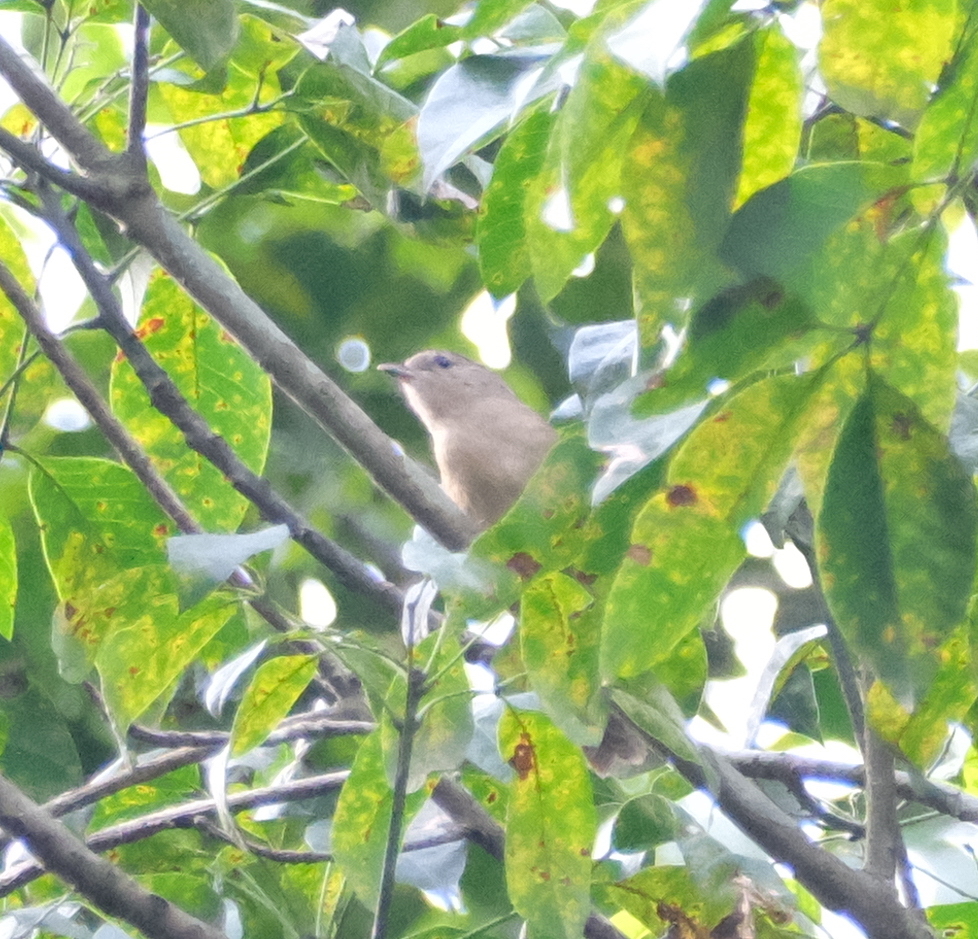
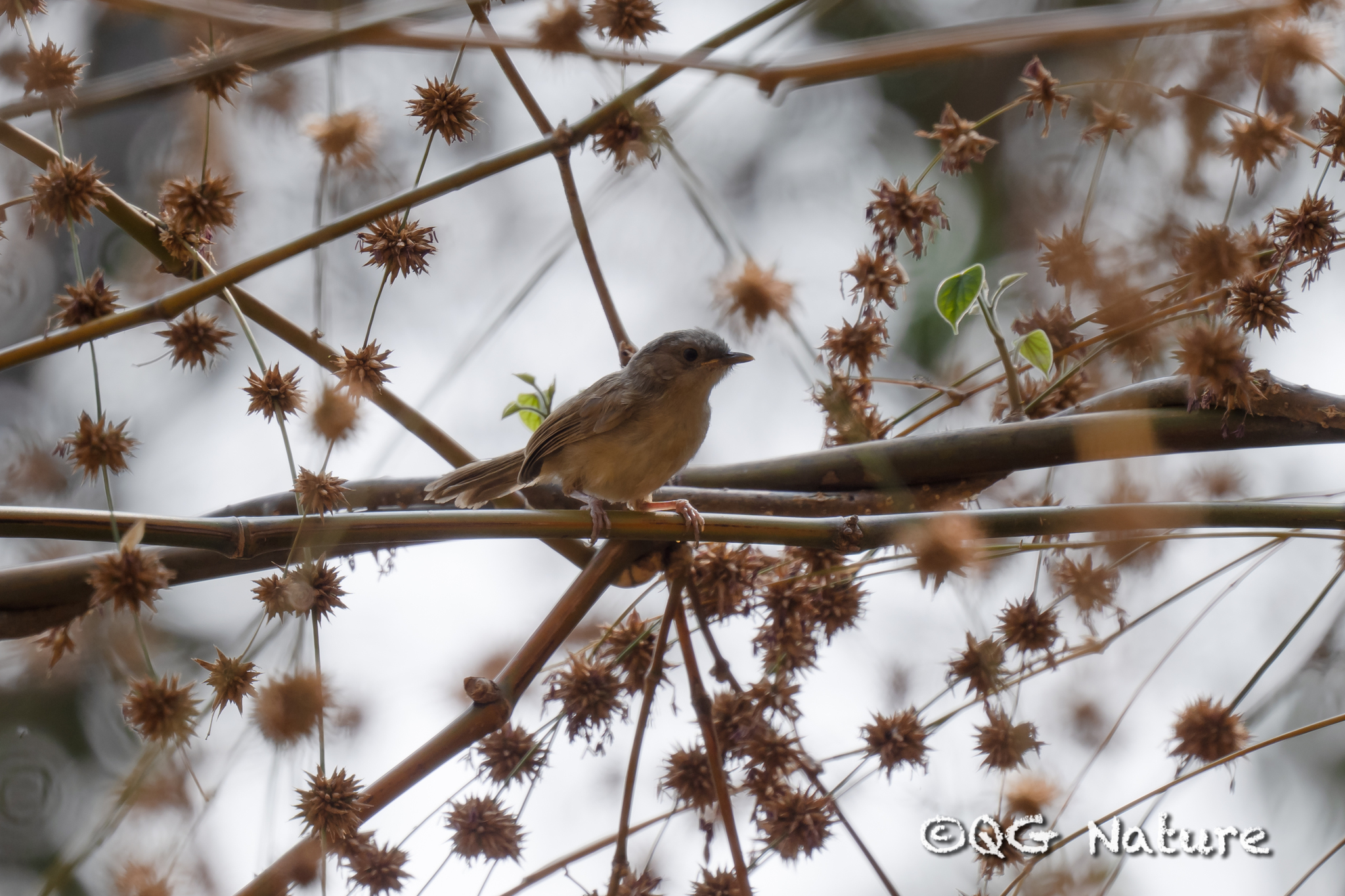
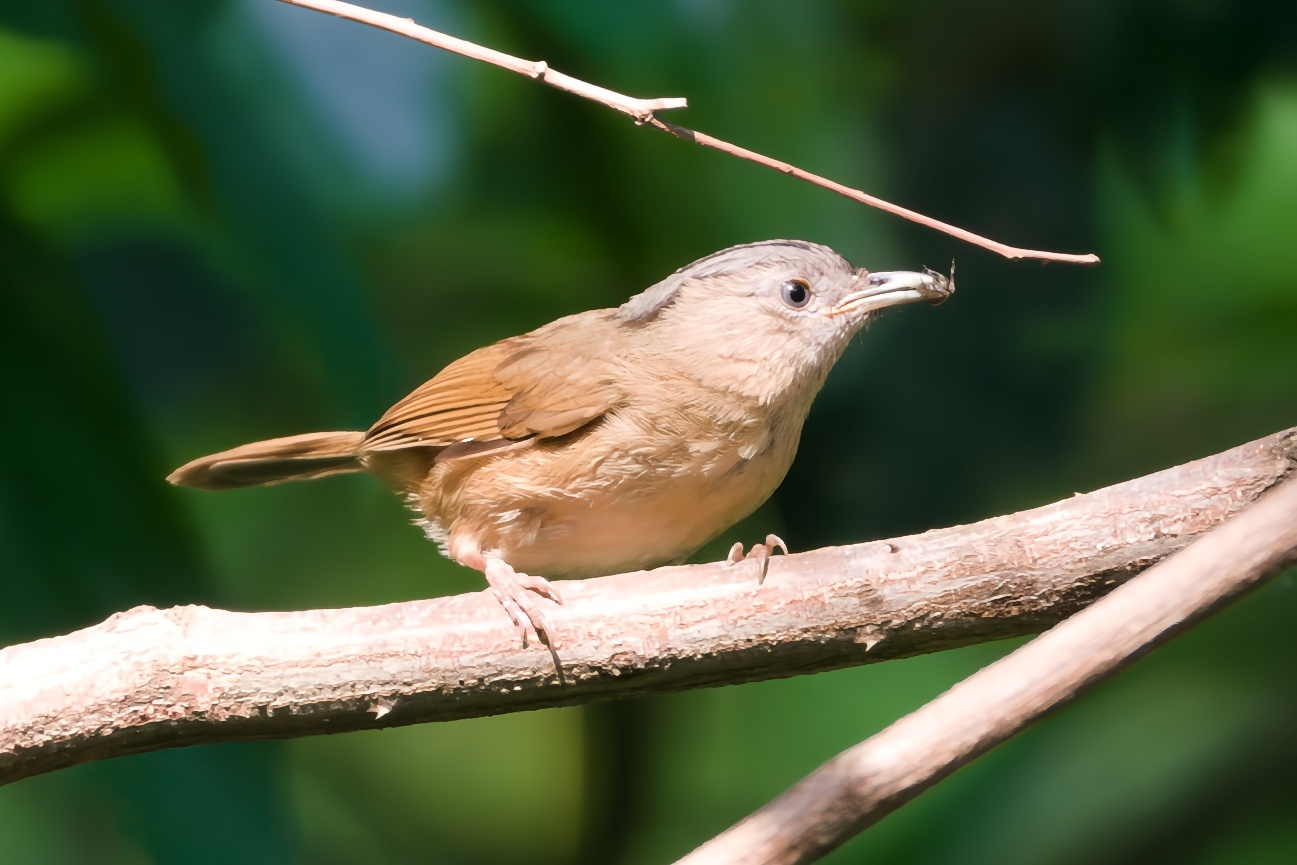
This compact, dull-plumaged bird measures approximately 15 centimeters in length. It possesses a short, weak grey bill with a curved upper mandible, characteristic of its genus. The nostrils are notably long and protected by an overhanging membrane. The tail feathers are relatively uniform in length. Overall coloration is muted, with brownish wings, a buff-colored underside, and a grey crown. The crown typically blends seamlessly with the rest of the head in the nominate subspecies, though some populations display a dark stripe extending from behind the eyes to meet at the nape. The sexes appear identical, making field separation based on plumage impossible. Juveniles have not been described in detail.
Identification
The species is most reliably identified by its loud, multi-note whistling call, particularly during dawn chorus periods. This vocalization can be confused with the magpie robin or puff-throated babbler, requiring careful listening for accurate identification. The tit-like foraging behavior, where birds dangle below branches while searching for insects, is a distinctive behavioral clue. In mixed flocks, the combination of its call, small size, and dull plumage helps distinguish it from similar species. The lack of sexual plumage differences means observers must rely on voice and behavior rather than visual sexing.
Distribution & Habitat
A resident species throughout its range, it inhabits moist deciduous and evergreen forests, with a particular preference for hilly terrain. The distribution covers peninsular India extensively, with additional populations found east of the Brahmaputra River. The range extends through Bangladesh and into Southeast Asia, where it occupies suitable forest habitats across multiple countries. No significant migratory movements have been recorded, as the species maintains territories year-round within its preferred forest habitats.
Behavior & Ecology
Foraging occurs actively among tree branches and foliage, with individuals sometimes adopting acrobatic positions while searching for insect prey. The species shows a dual dietary preference, consuming both invertebrates and nectar from flowering plants. Breeding activity peaks between January and February, with nests observed from January through June. The cup-shaped nest is constructed from green moss, rootlets, lichen, leaves, and grass, typically positioned in a fork or suspended from twigs at heights averaging 68 centimeters. Clutches contain two to three eggs, with an incubation period of approximately 10 days and a nestling period around 12 days. Birds often form loose foraging flocks and readily join mixed-species groups, where they demonstrate dominant behavior. The species is suspected to raise two broods annually.
Conservation
The article does not provide specific information regarding the conservation status, population trends, or major threats facing this species.
Source: Wikipedia · CC BY-SA 3.0
Taxonomy
- Order
- Passeriformes
- Family
- Leiothrichidae
- Genus
- Alcippe
- eBird Code
- brcful1
Vocalizations
Subspecies (8)
-
Alcippe poioicephala alearis
southern China (southern Yunnan) to northern plateau of Thailand and northern Indochina
-
Alcippe poioicephala brucei
central and southern peninsular India
-
Alcippe poioicephala davisoni
Malay Peninsula (Isthmus of Kra to Trang) and Mergui Archipelago
-
Alcippe poioicephala fusca
Assam (south of the Brahmaputra) to northwestern Myanmar
-
Alcippe poioicephala haringtoniae
northeastern Myanmar to southern China (western Yunnan) and northwestern Thailand
-
Alcippe poioicephala karenni
southeastern Myanmar (Karenni State) to southwestern Thailand
-
Alcippe poioicephala phayrei
southwestern Myanmar (Chin Hills and Arakan Mountains)
-
Alcippe poioicephala poioicephala
western India (Western Ghats from southern Mysore to Kerala and Palni Hills)
Data Sources
Species description from Wikipedia, licensed under CC BY-SA 3.0.
Bird images and sounds sourced from GBIF, contributed by citizen scientists worldwide under Creative Commons licenses.
Taxonomy data from AviList 2025.