White-winged Lark
Alauda leucoptera
白翅云雀
Introduction
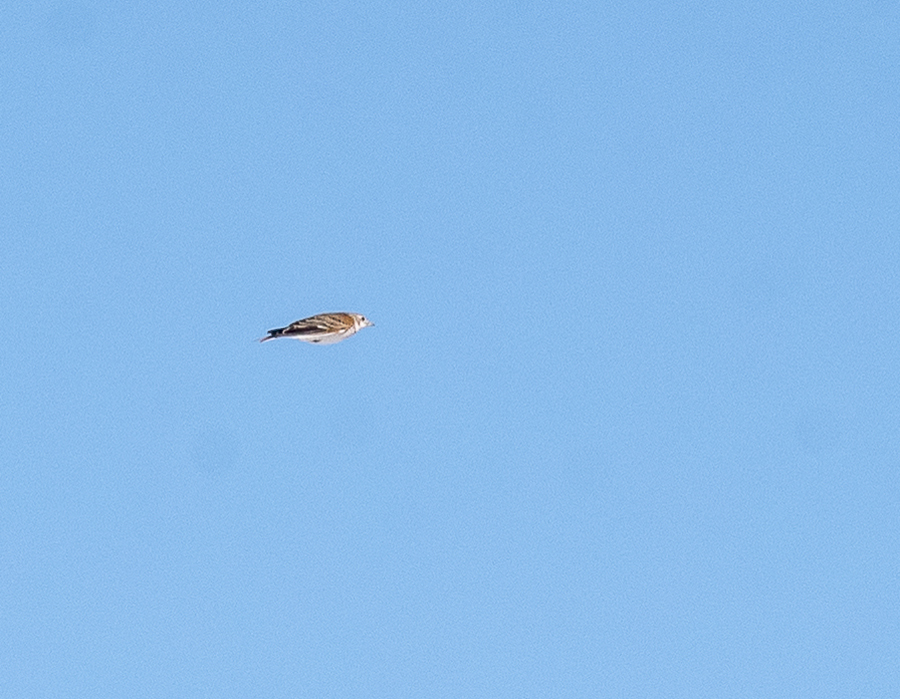
This lark inhabits steppes extending from southern Ukraine through Kazakhstan to south-central Russia. It is a partial migrant; most populations move southward in winter, while southern populations remain year-round. Habitat loss has significantly impacted numbers in recent decades. It favors open, dry grasslands and displays undulating flight with visible wing patterns.
Description
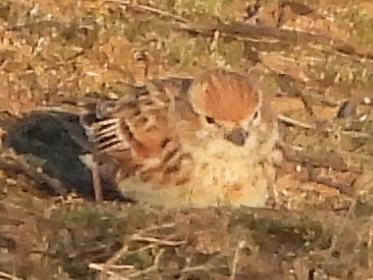
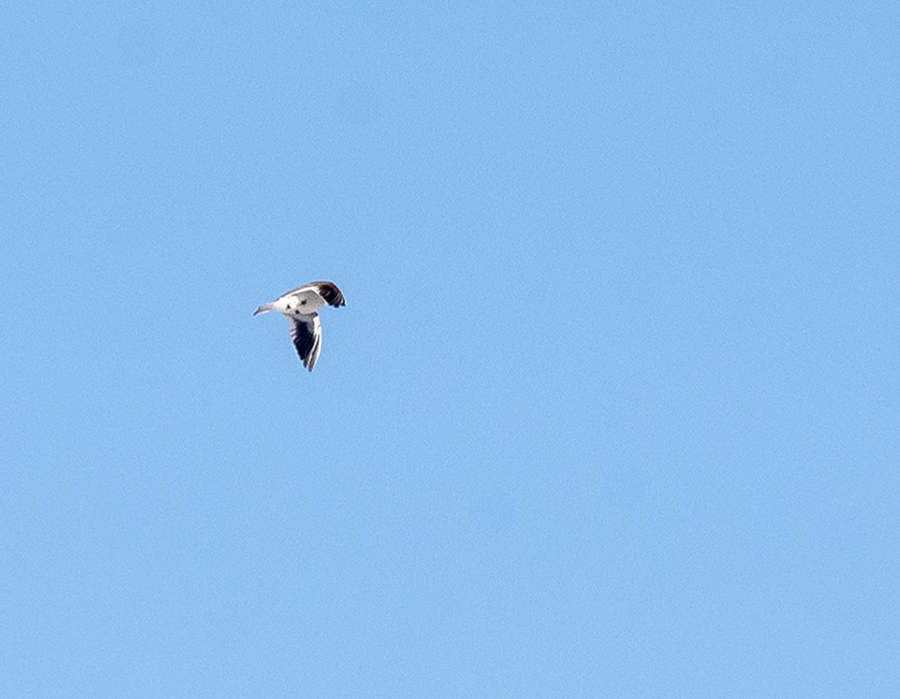
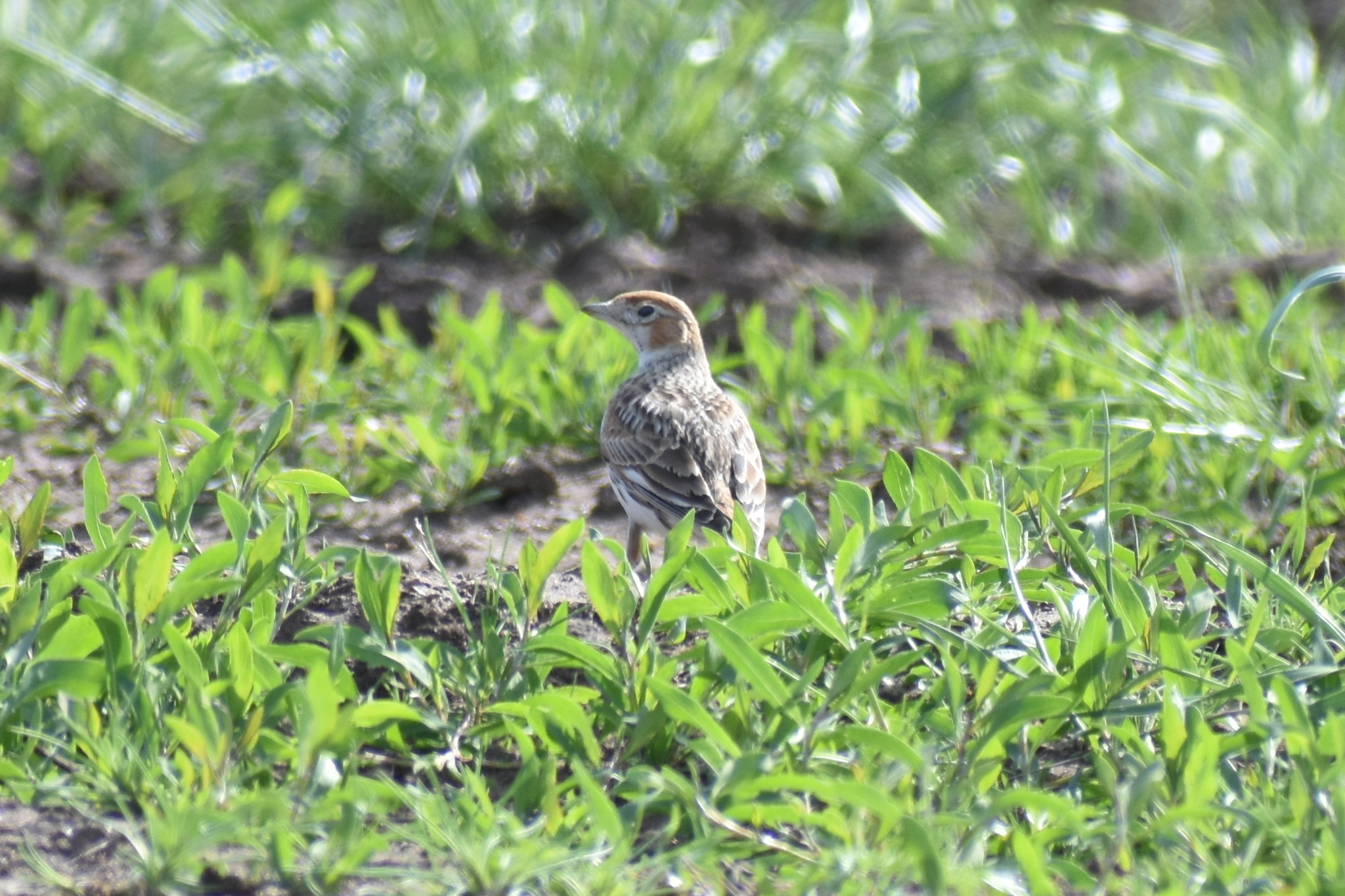
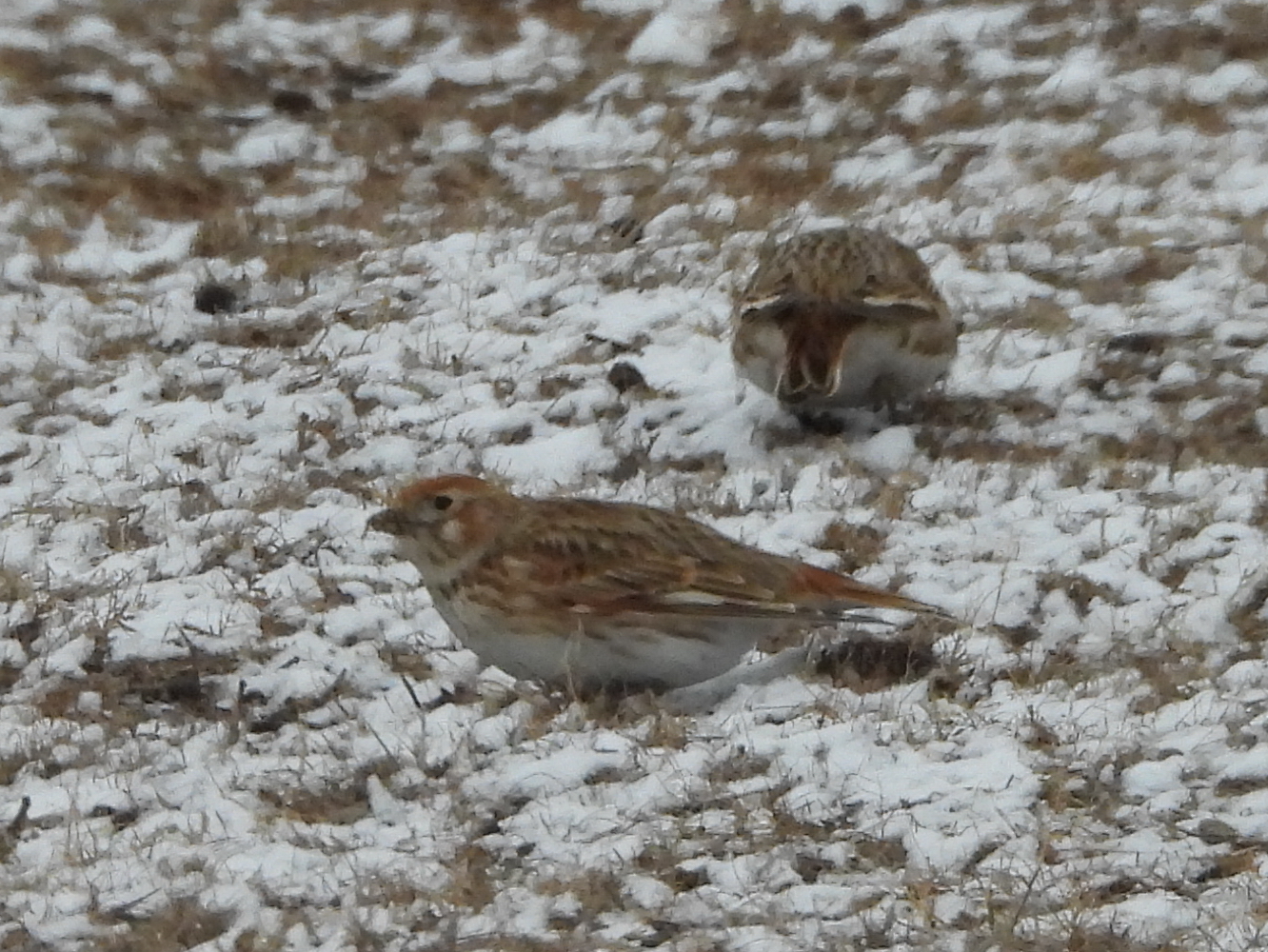
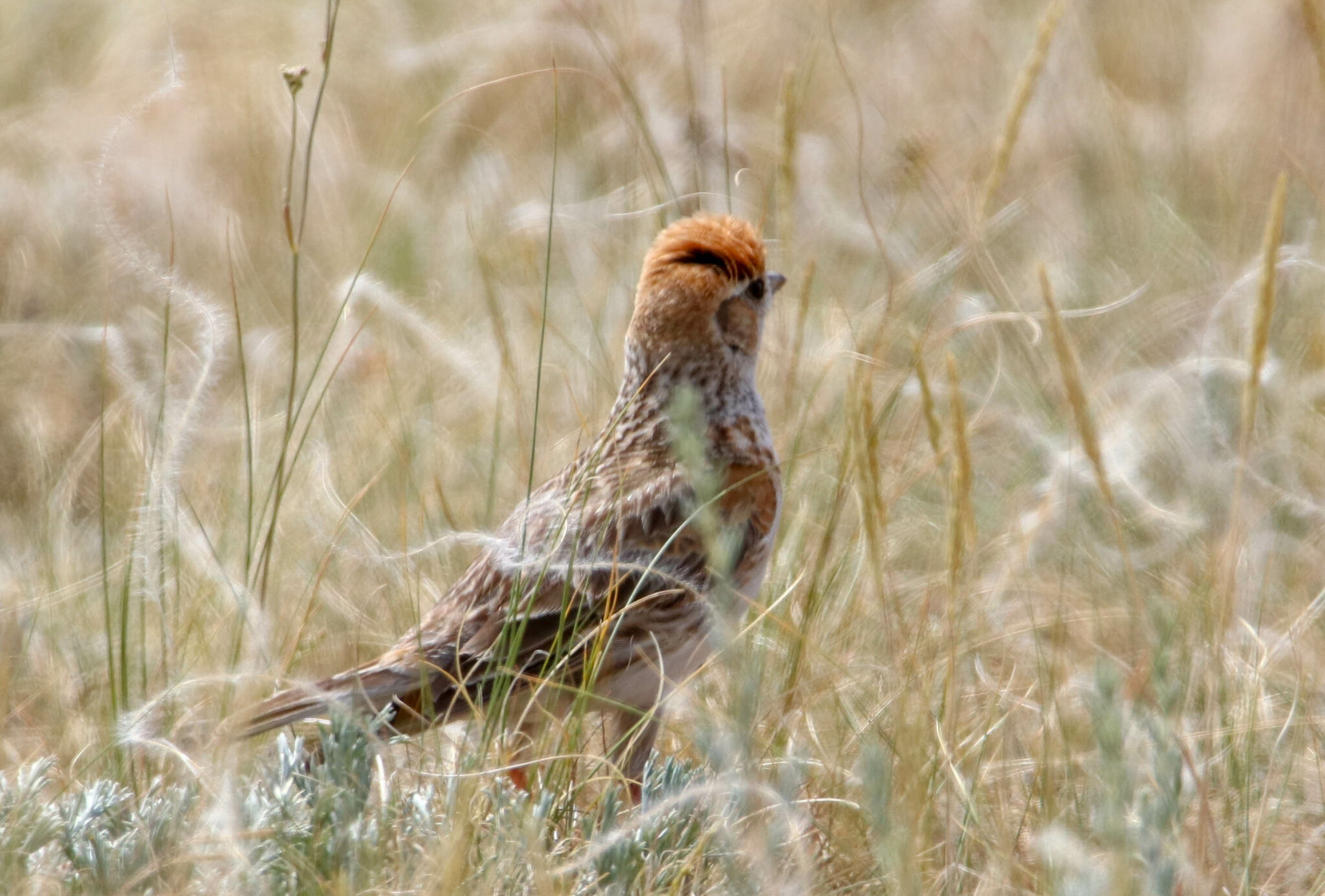
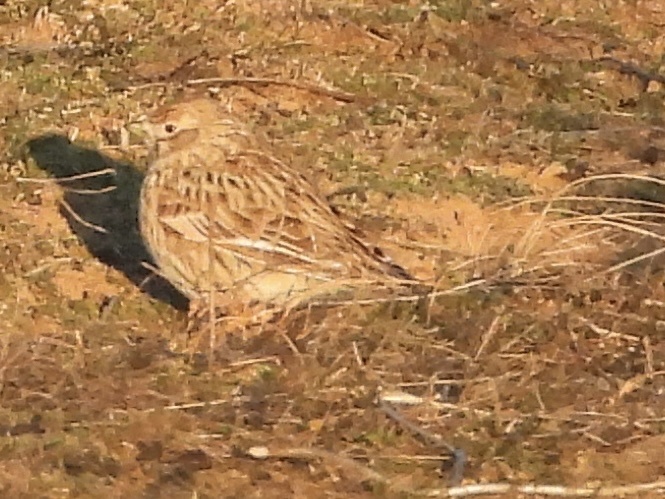
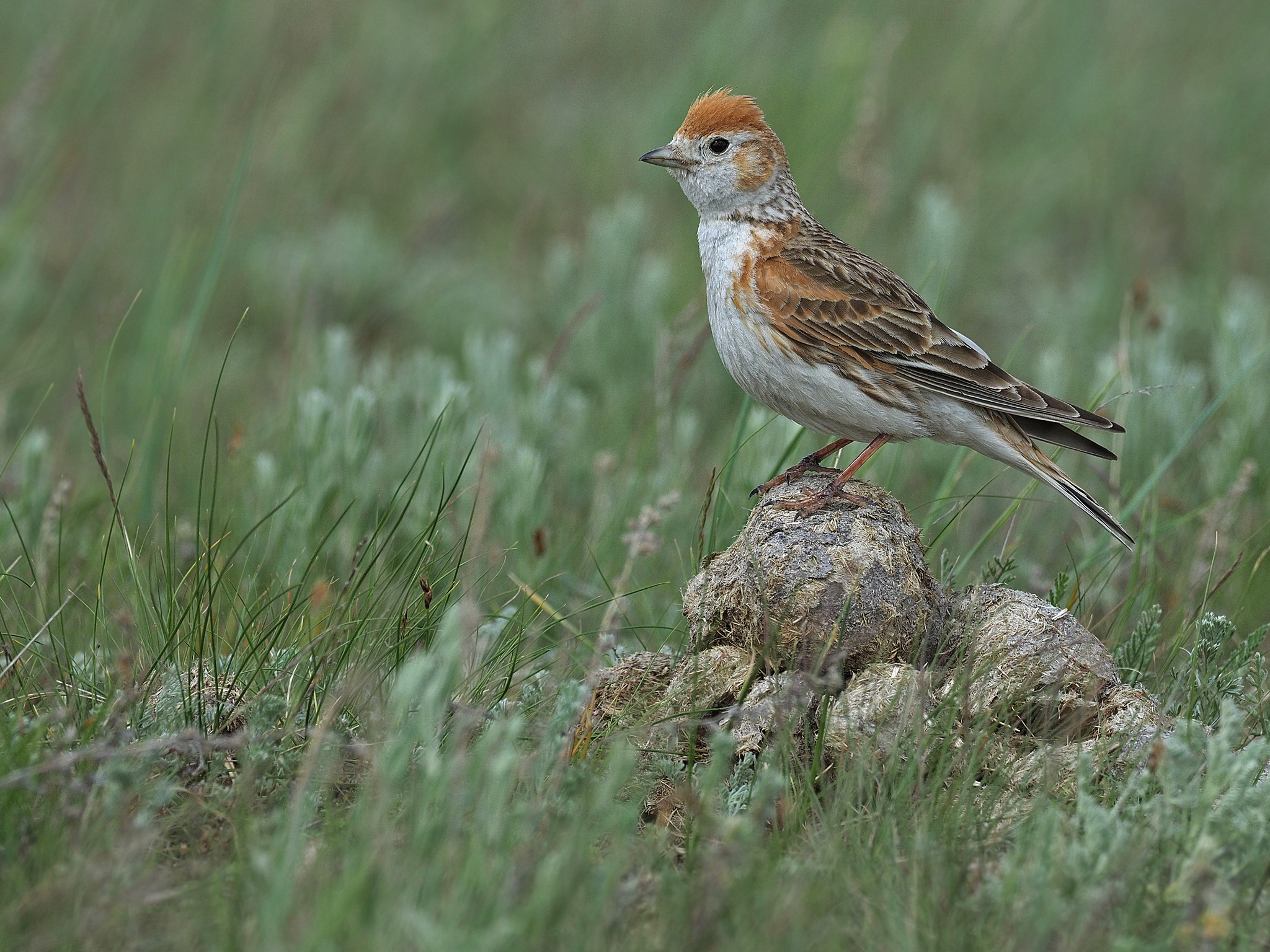
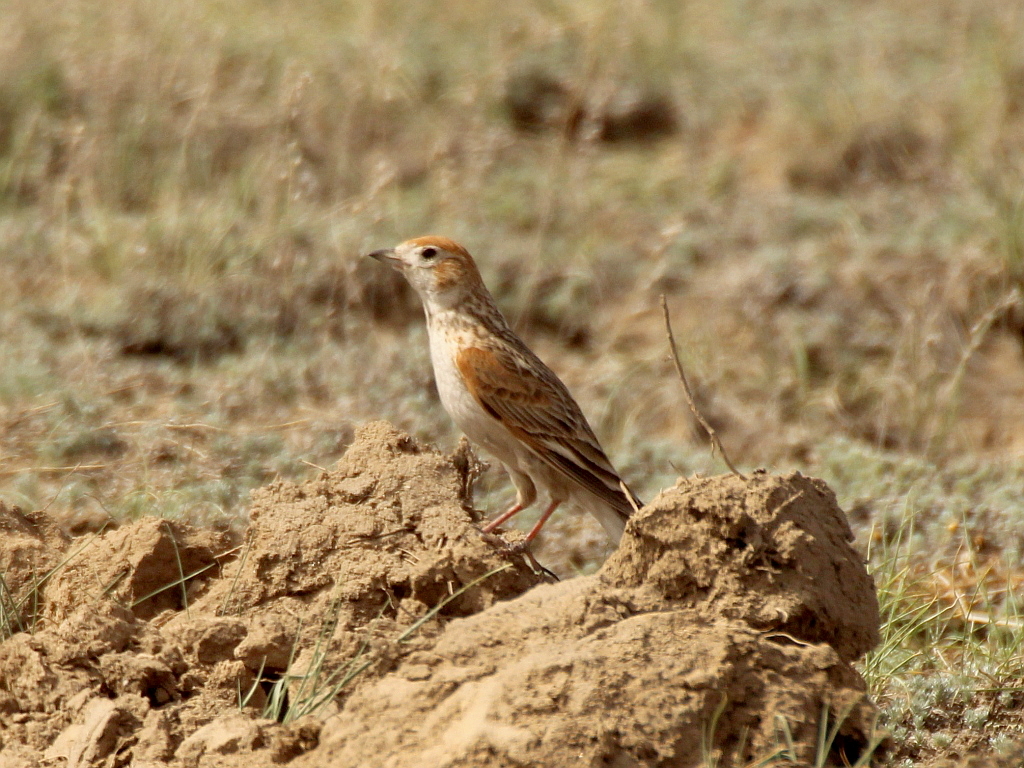
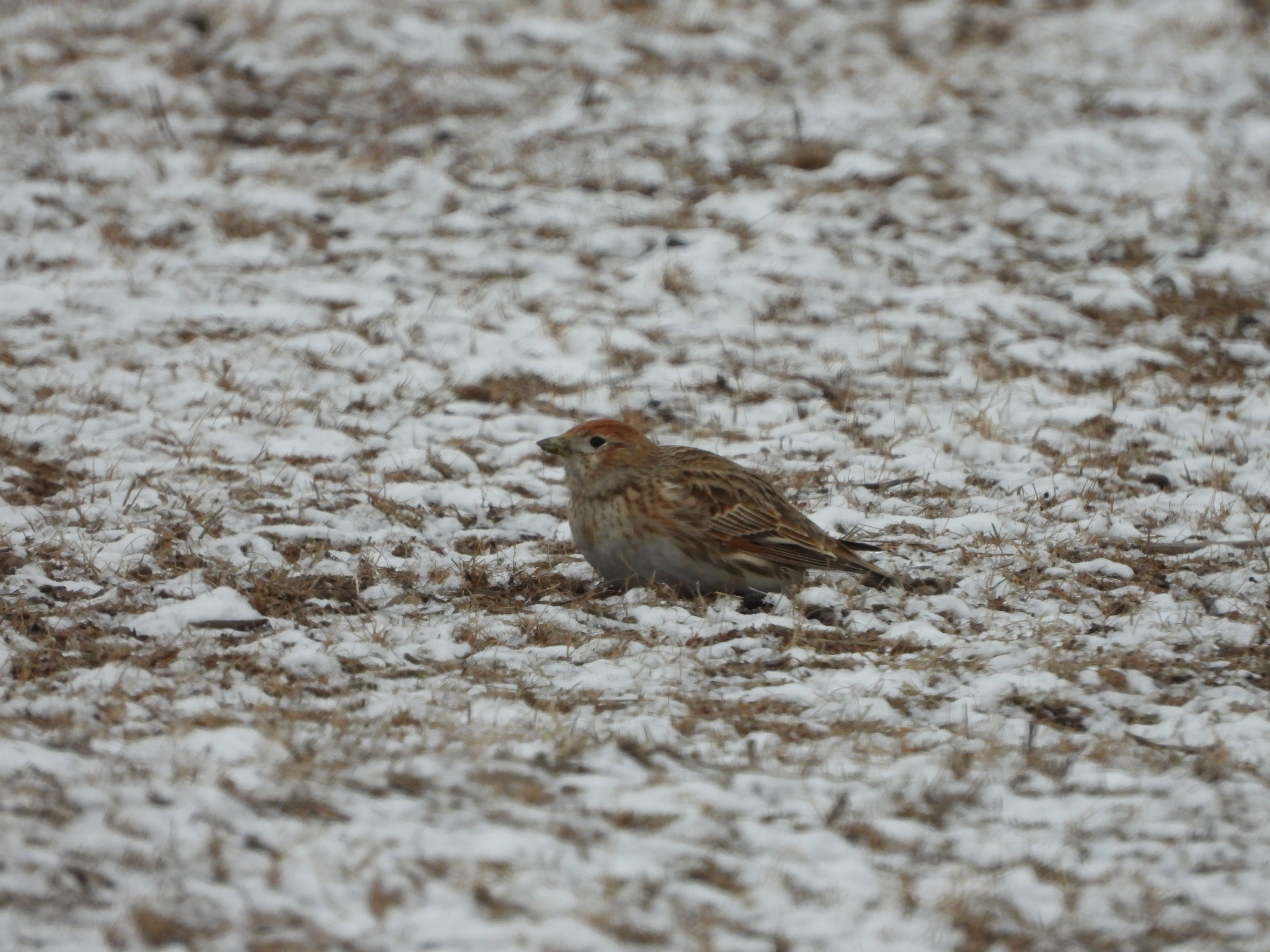
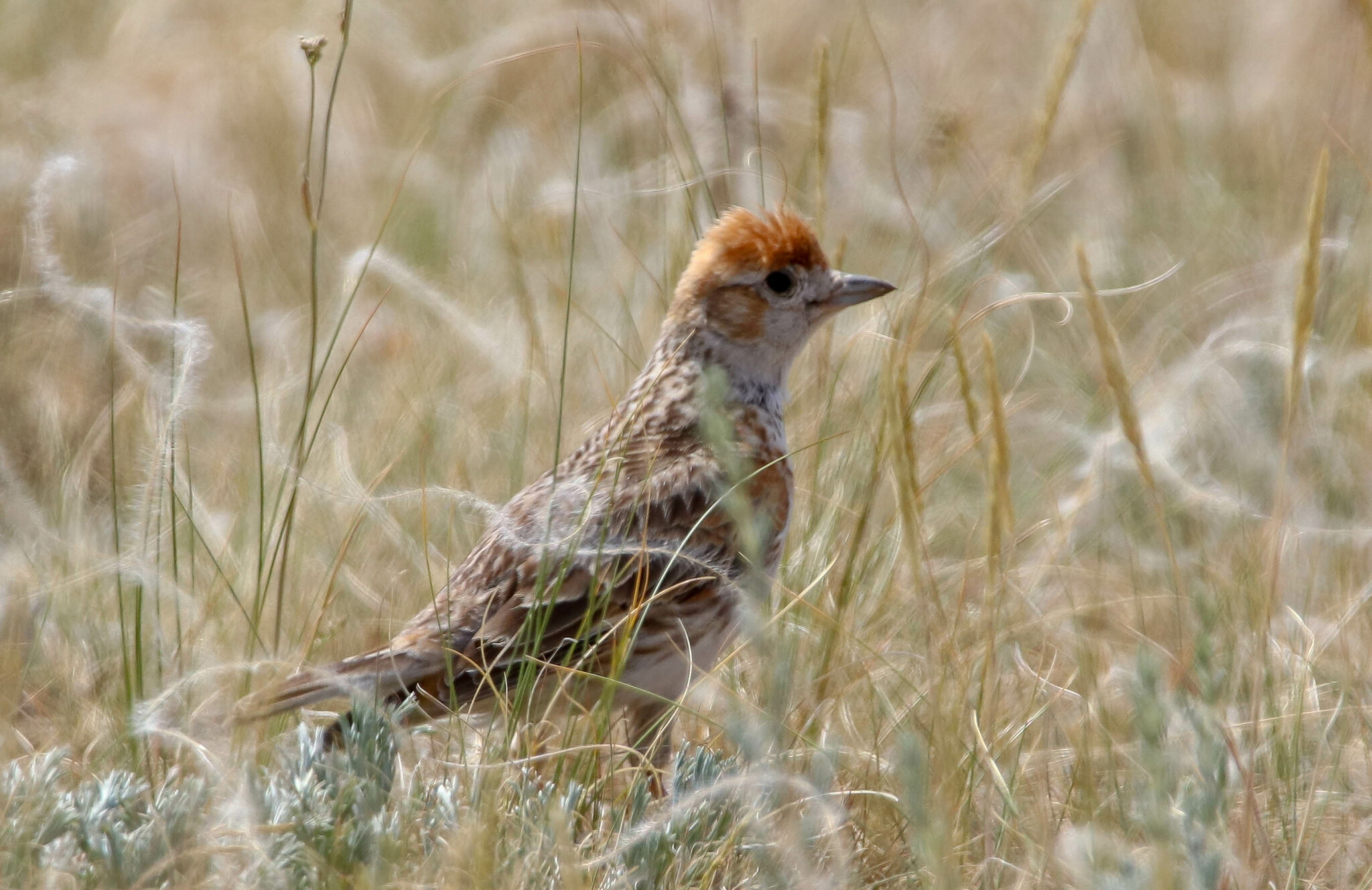
A large, robust lark measuring 17-19 cm in length with a 35 cm wingspan, both sexes weighing approximately 44 g. The most striking feature is the wing pattern visible in flight: black outer flight feathers contrast sharply with white inner feathers, while the remaining wing surfaces display chestnut coloration. The upperparts show dark streaking on a grey ground color, while underparts appear whitish. The adult male distinguishes himself with a chestnut crown, though the sexes are otherwise similar in appearance.
Identification
In flight, this species is unmistakable due to its distinctive wing pattern combining black, white, and chestnut. The combination of large size, robust build, and striking wing markings separates it from other lark species in its range. The Eurasian skylark shares its melodious song qualities but lacks the dramatic wing coloration that makes identification straightforward when this bird is observed in flight.
Distribution & Habitat
Breeds across the steppe regions from southern Ukraine and Kazakhstan eastward through south-central Russia. Inhabits dry, open steppe and plains habitats. Most populations migrate south for winter, though birds in the southern portions of the range are primarily resident. Has occurred as a very rare vagrant in western Europe, though such sightings are exceptional events for birders.
Behavior & Ecology
Nests on the ground in shallow cups, producing clutches of three to eight eggs. Diet consists primarily of seeds year-round, supplemented with insects during the breeding season. Outside the breeding period, this species gathers in flocks and becomes highly gregarious, often forming large wintering groups. Its song is a melodious rendition reminiscent of the Eurasian skylark, delivered during.display flights over its grassland habitat.
Conservation
Listed as Least Concern due to its relatively large population and extensive range, though numbers have declined significantly in recent years. The primary threat stems from agricultural expansion and habitat destruction caused by ploughing of natural steppe grasslands. Conversion of native grassland to cropland continues to reduce available breeding habitat across its range.
Source: Wikipedia · CC BY-SA 3.0
Taxonomy
- Order
- Passeriformes
- Family
- Alaudidae
- Genus
- Alauda
- eBird Code
- whwlar1
Distribution
breeds arid steppes of central Eurasia; winters southward to Black Sea region and northern Iran
Data Sources
CBR Notes: 中文名由白翅百灵改为白翅云雀
Species description from Wikipedia, licensed under CC BY-SA 3.0.
Bird images and sounds sourced from GBIF, contributed by citizen scientists worldwide under Creative Commons licenses.
Taxonomy data from AviList 2025.