Oriental Skylark
Alauda gulgula
小云雀
Introduction
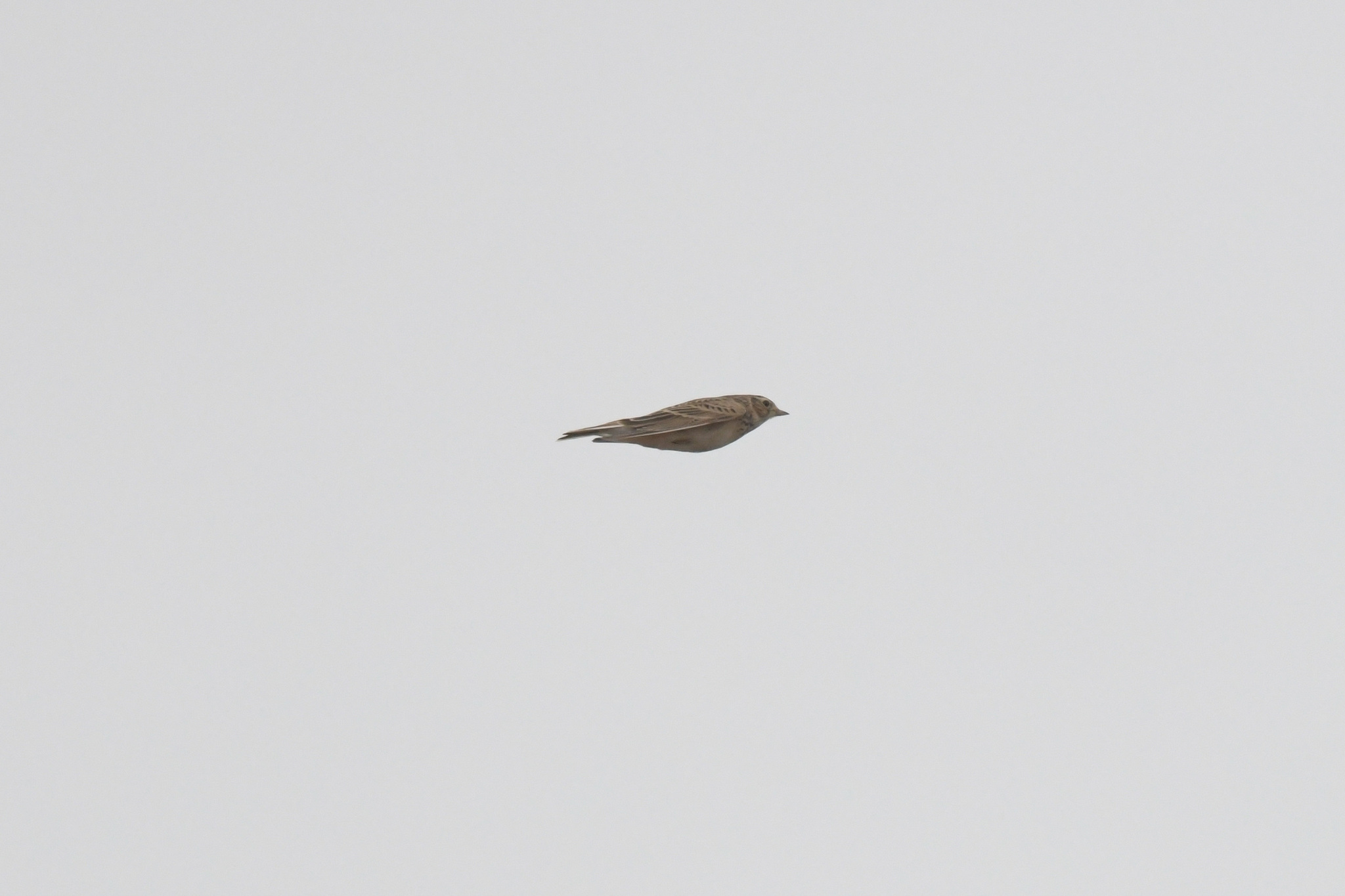
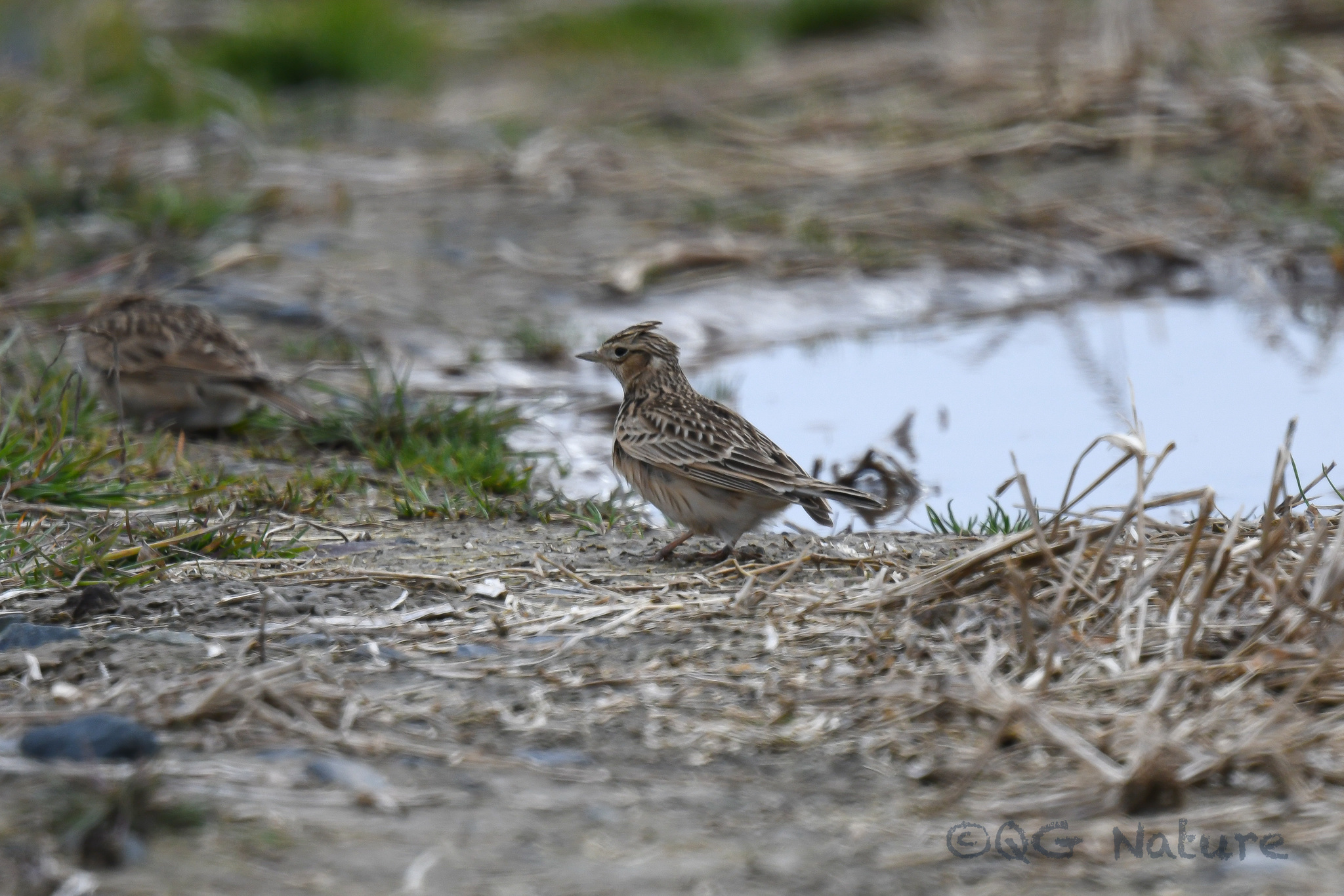
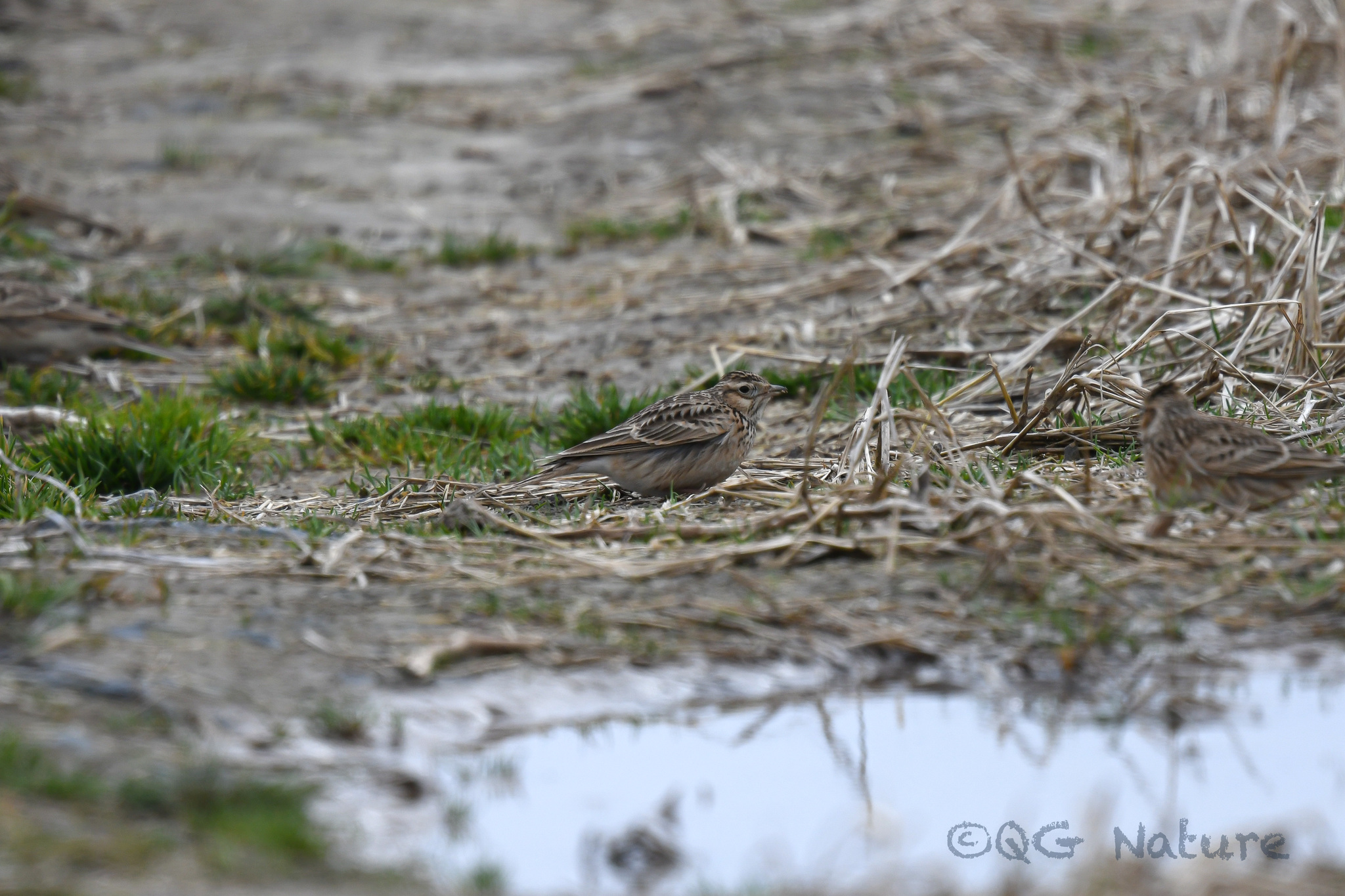
The Oriental skylark inhabits open landscapes across the Sino-Indian region and extends into parts of central Asia. It occurs in grasslands, marshes, and lake edges, walking and running along the ground while foraging. Males perform display flights, ascending while singing before descending. They may also hover in place while delivering songs. The species is largely resident but makes seasonal movements, with northern populations migrating southward during winter. Thirteen subspecies are recognized across its range. When threatened, it tends to freeze rather than flush immediately.
Description
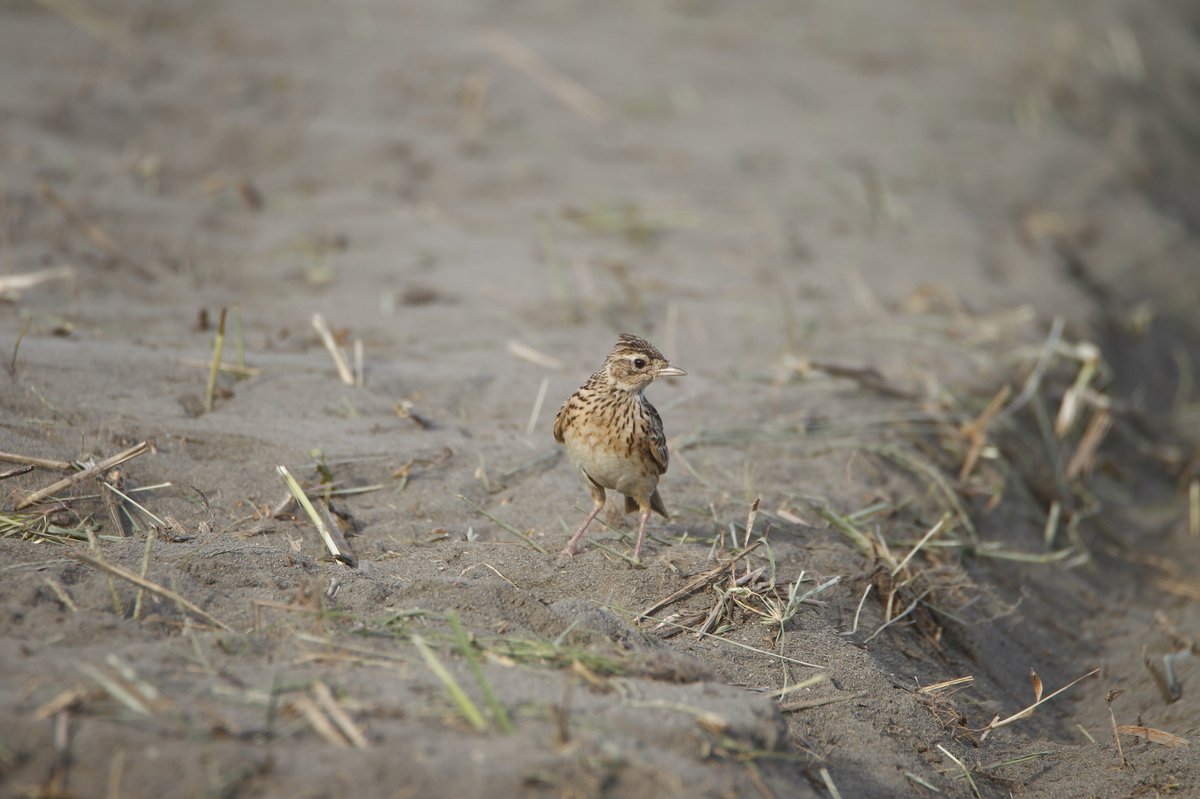
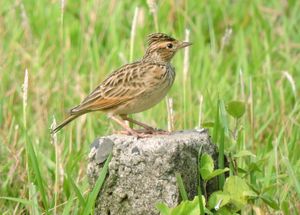
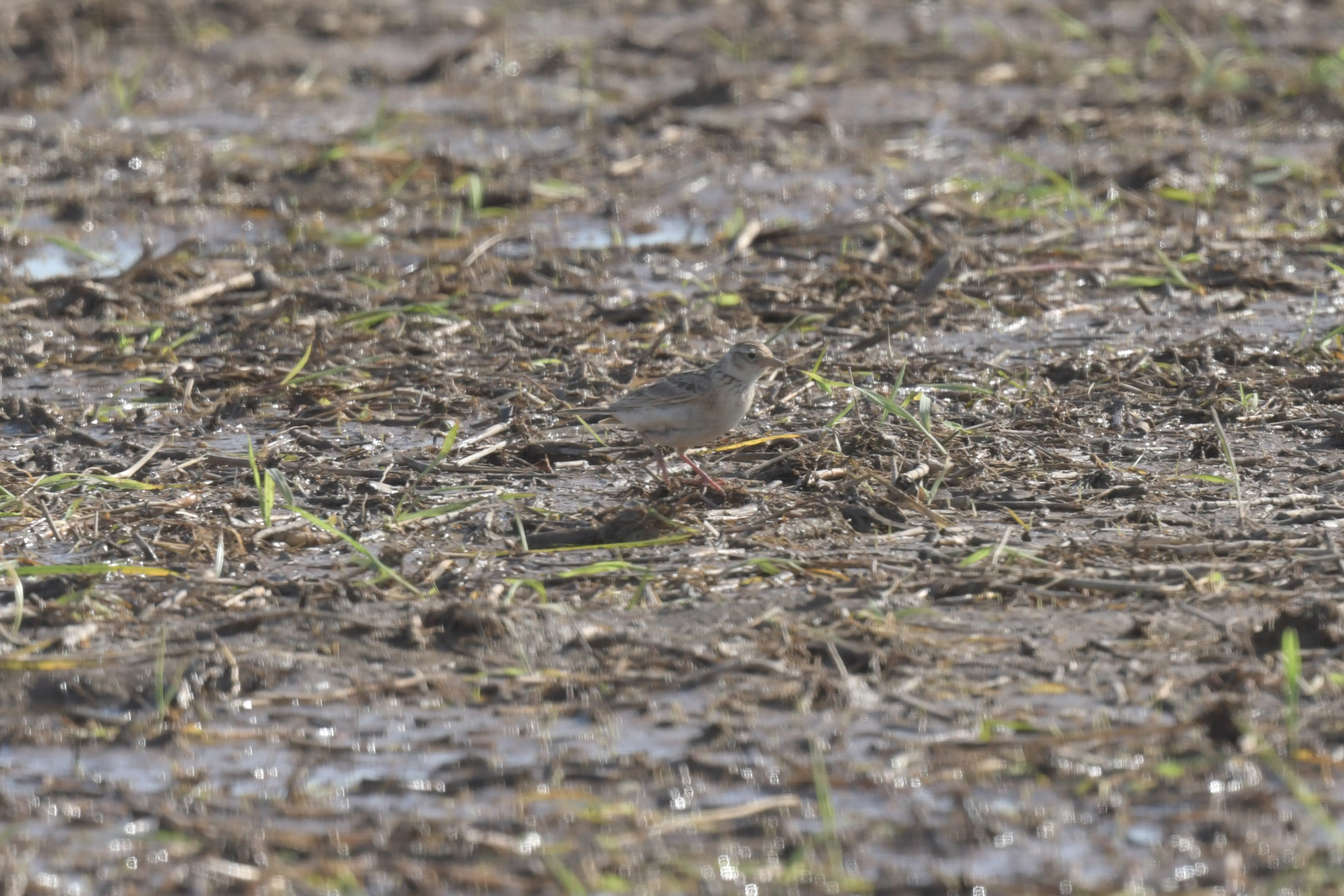
A small, compact lark measuring approximately 16 centimeters in length. The upperparts are streaked with yellow-brown coloration, providing excellent camouflage in grassland habitats. A short crest is present on the head, and both sexes appear similar in plumage. The outer tail feathers are white, contrasting with the otherwise brown tail. The underparts are typically pale with fine streaking on the breast. Compared to similar species, this bird shows a notably longer and more pointed bill.
Identification
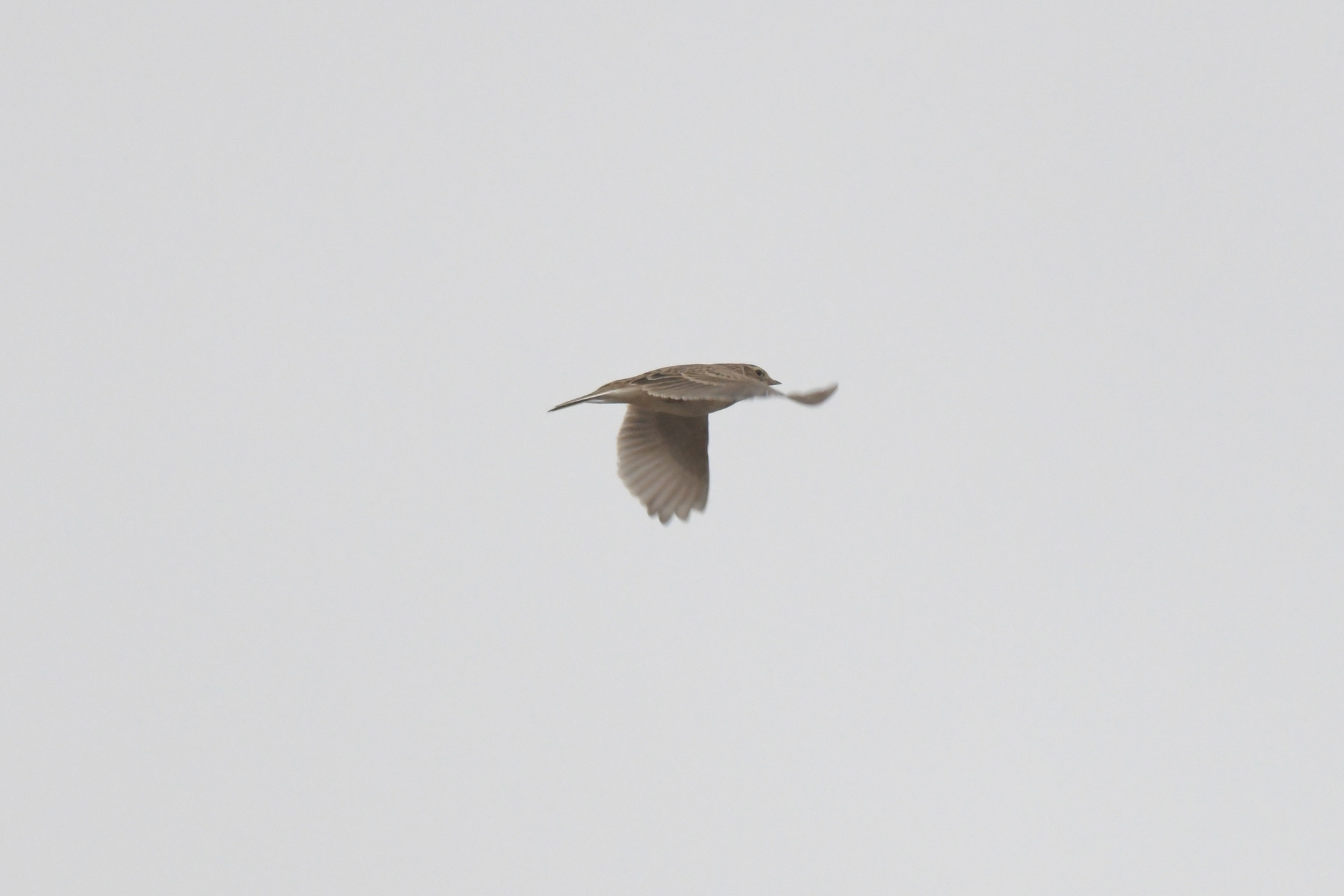
Distinguished from the larger Eurasian skylark by its smaller size and more elongated bill. The outer tail feathers are buff-colored rather than white, and notably lacks the white trailing edge on the wings visible during flight. The song is delivered from high in the air during display flights, often heard before the bird is seen. The combination of smaller size, pointed bill, and absence of white wing and tail edges provides the best field marks for identification.
Distribution & Habitat
Breeds across the Sino-Indian region, from central Asia through the Himalayas and into southern China and Southeast Asia. Northern populations migrate southward to spend the winter in the southern parts of the breeding range. Inhabits open areas with low vegetation including natural grasslands, agricultural fields, marsh edges, and the margins of lakes and rivers. Shows a strong preference for short vegetation and avoids forested areas, though may utilize large forest clearings.
Behavior & Ecology
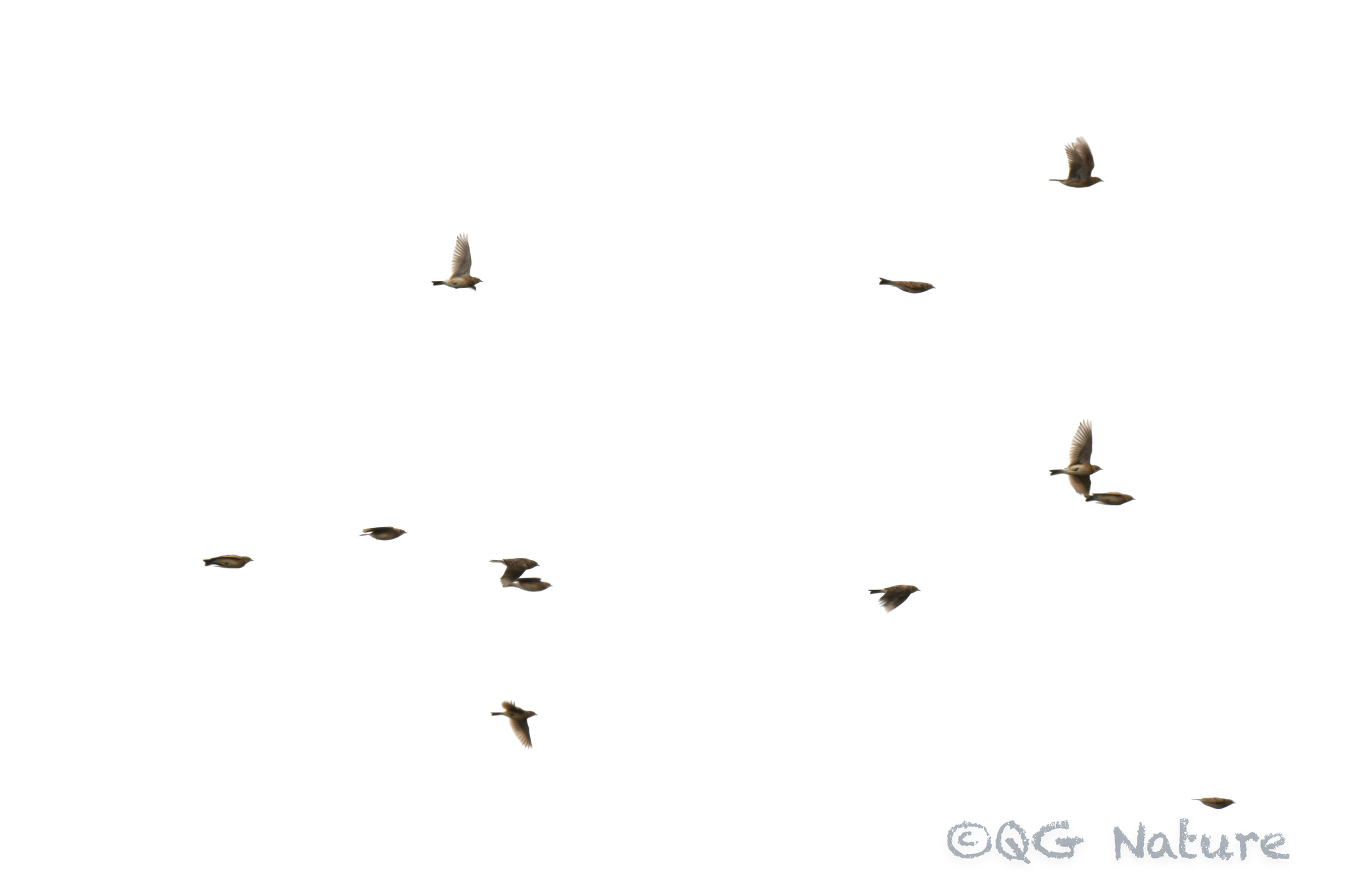
Feeds primarily on seeds and insects, foraging on the ground in open areas. During the breeding season, males perform spectacular display flights, ascending vertically while singing before parachute-like descents back to earth. They may also hover in place while continuing to sing, a behavior associated with courtship and territorial defense. Males establish breeding territories through these aerial displays. The species is not particularly social outside of breeding season, though small flocks may form outside the breeding period.
Source: Wikipedia · CC BY-SA 3.0
Taxonomy
- Order
- Passeriformes
- Family
- Alaudidae
- Genus
- Alauda
- eBird Code
- orisky1
Vocalizations
Subspecies (9)
-
Alauda gulgula australis
southwestern India
-
Alauda gulgula coelivox
southeastern and southern China to northern Vietnam; Hainan
-
Alauda gulgula gulgula
eastern India to Sri Lanka and Indochina
-
Alauda gulgula inconspicua
Transcaspia to Turkmenistan, eastern Iran, Afghanistan, and northwestern India
-
Alauda gulgula inopinata
Tibetan plateau, eastern Qinghai, Gansu, and southwestern Inner Mongolia
-
Alauda gulgula lhamarum
Pamir Mountains and western Himalayas (Kashmir to northern Punjab)
-
Alauda gulgula vernayi
eastern Himalayas and adjacent China (southeastern Xizang and western Yunnan)
-
Alauda gulgula wattersi
Taiwan and Philippines
-
Alauda gulgula weigoldi
eastern China (Shandong to southern Shaanxi and central Sichuan)
Data Sources
Species description from Wikipedia, licensed under CC BY-SA 3.0.
Bird images and sounds sourced from GBIF, contributed by citizen scientists worldwide under Creative Commons licenses.
Taxonomy data from AviList 2025.