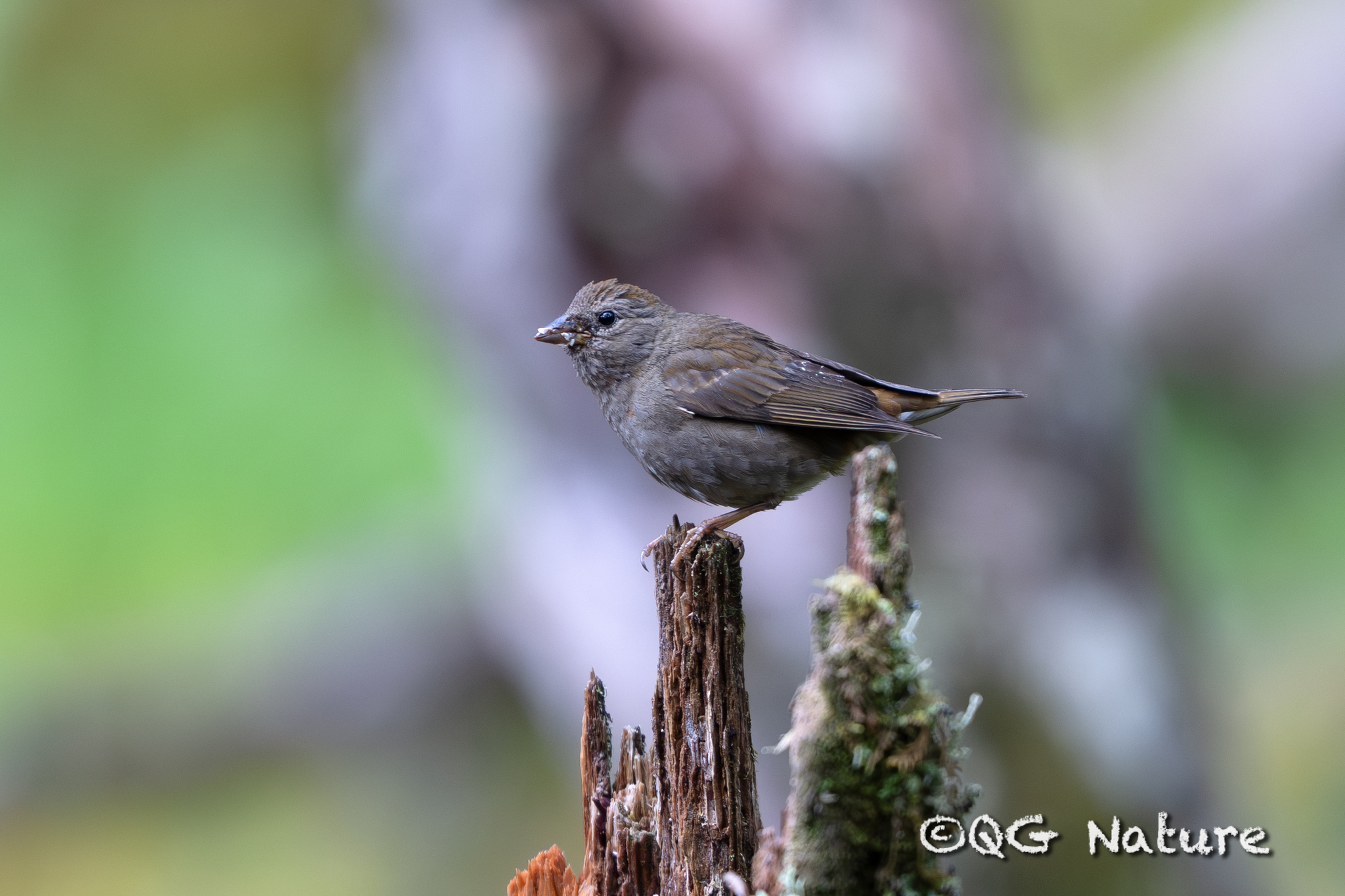
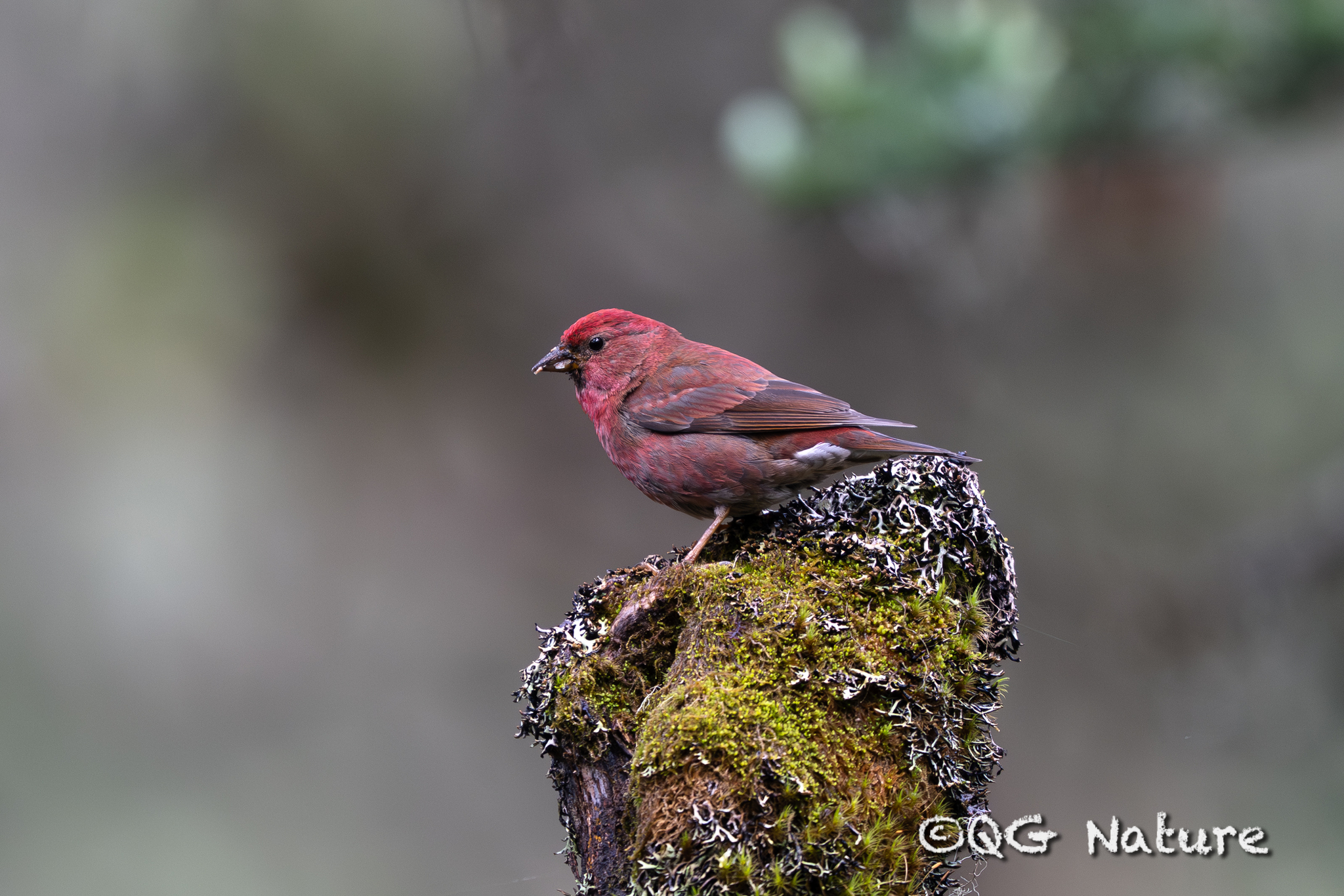
Blanford's Rosefinch
Agraphospiza rubescens
赤朱雀
Introduction
This small finch inhabits the high-altitude forests of the Himalayas and neighboring regions. It is a member of the Fringillidae family. Formerly classified within the genus Carpodacus with other rosefinches, it was later assigned to its own monotypic genus Agraphospiza following genetic analysis. This reclassification reflects morphological differences from typical rosefinches. The species favors boreal forest environments at elevations where coniferous and mixed forests dominate the landscape.
Description
This small passerine exhibits the typical compact build of finches but differs from related rosefinches in several notable aspects. Both males and females share unstreaked plumage, a distinguishing feature that separates them from many Carpodacus relatives. The bill is relatively thin and less conical compared to typical rosefinches, suggesting potentially different feeding adaptations. The wings are notably pointed, and the tail is shorter than in its close relatives. These structural differences, combined with the genetic evidence, justified its placement in a separate genus.
Identification
Distinguishing this species from other rosefinches requires attention to several key characteristics. Unlike most Carpodacus rosefinches that display heavily streaked plumage, this species shows clean, unstreaked feathering in both sexes. The thin, slender bill shape differs markedly from the robust, conical bills typical of the genus Carpodacus. The more pointed wing shape and shorter tail profile provide additional visual cues for identification. In the field, these structural differences become apparent when observing the bird in flight or during active foraging. The combination of unstreaked plumage and distinctive bill shape serves as the primary means of separating it from similar species in the rosefinch complex.
Distribution & Habitat
The species occupies a restricted geographic range centered on the Himalayan region, with confirmed populations in Bhutan, China, India, and Nepal. Within this range, it demonstrates a preference for boreal forest habitats, typically occurring at higher elevations where coniferous forest ecosystems predominate. The boreal forest environment provides the specific ecological conditions this species requires for foraging and breeding. Its distribution appears tied to the availability of suitable high-altitude forest habitats throughout its range.
Source: Wikipedia · CC BY-SA 3.0
Taxonomy
- Order
- Passeriformes
- Family
- Fringillidae
- Genus
- Agraphospiza
- eBird Code
- blaros1
Distribution
coniferous forest of Nepal to southeastern Tibet and southwestern China
Data Sources
Species description from Wikipedia, licensed under CC BY-SA 3.0.
Bird images and sounds sourced from GBIF, contributed by citizen scientists worldwide under Creative Commons licenses.
Taxonomy data from AviList 2025.