Rosy-faced Lovebird
Agapornis roseicollis
桃脸牡丹鹦鹉
Introduction
This small parrot inhabits arid landscapes of southwest Africa. It lives in small groups, though larger flocks form when food is abundant. Foraging occurs during the day, and individuals bathe regularly. Pairs sleep positioned side-by-side, facing each other. Females build nests by tearing materials into strips and attaching them to their backs before flying to construction sites. Populations display considerable color variation across the range. Males and females are identical in plumage, making visual sexing impossible.
Description
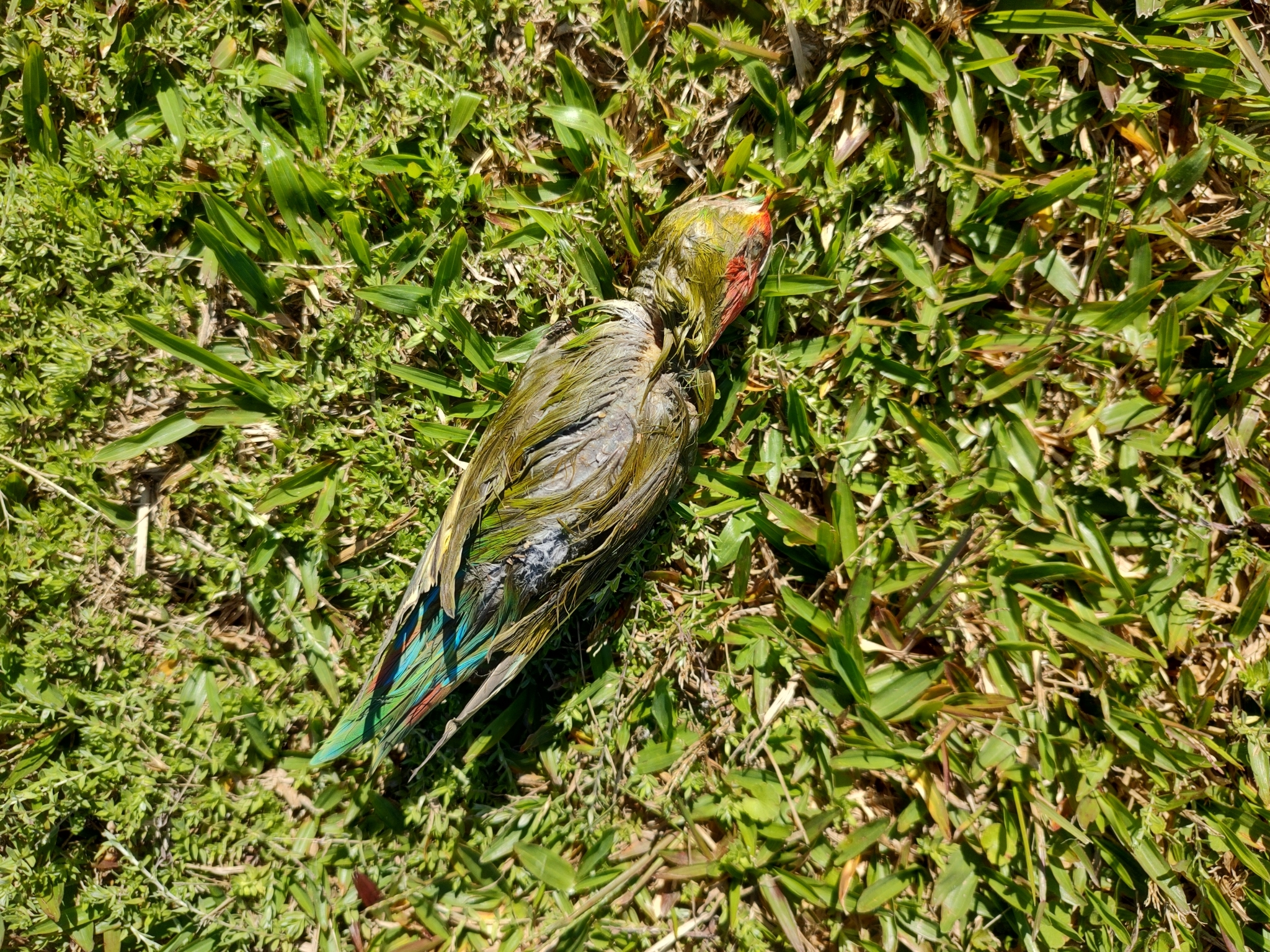
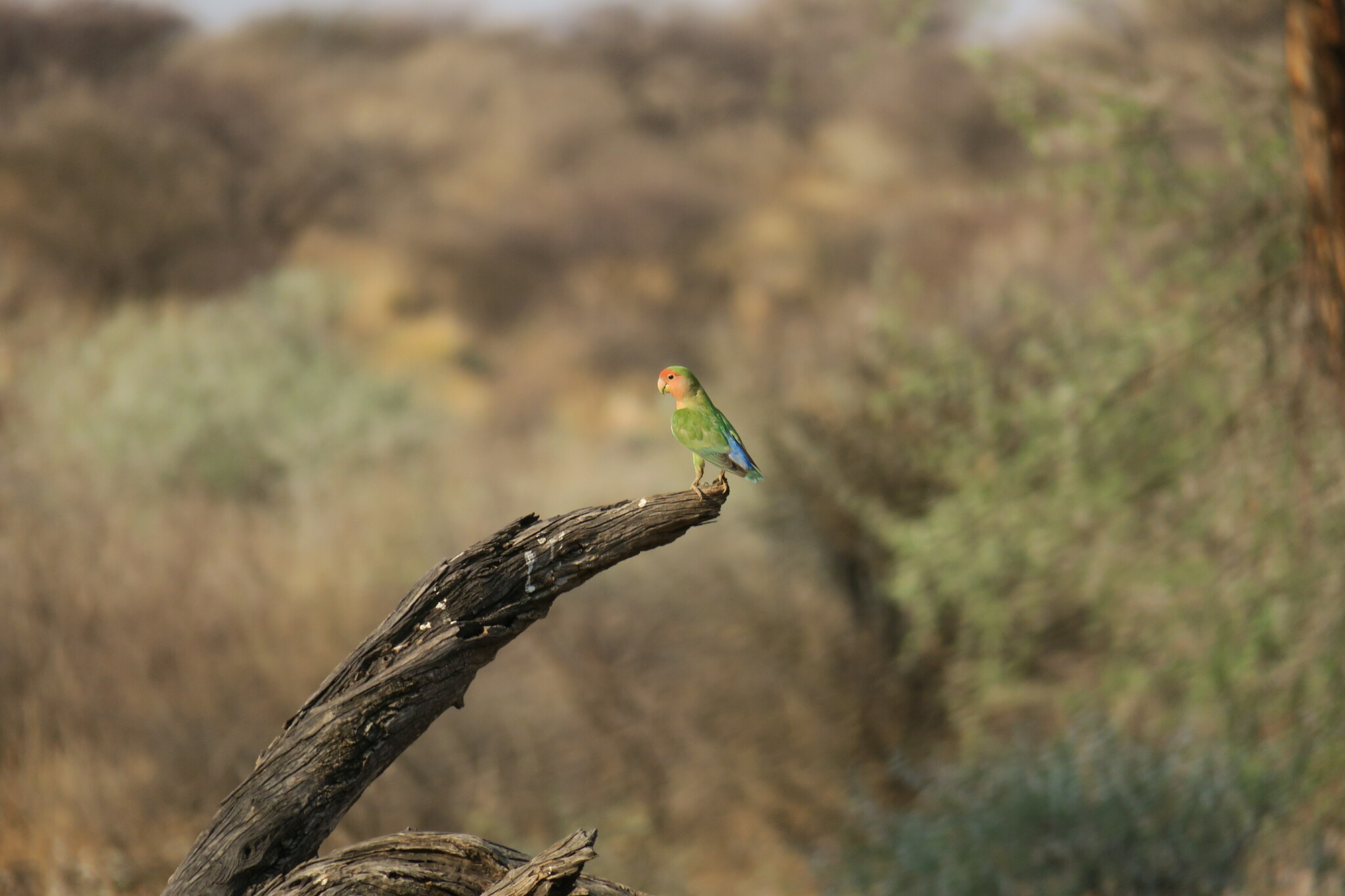
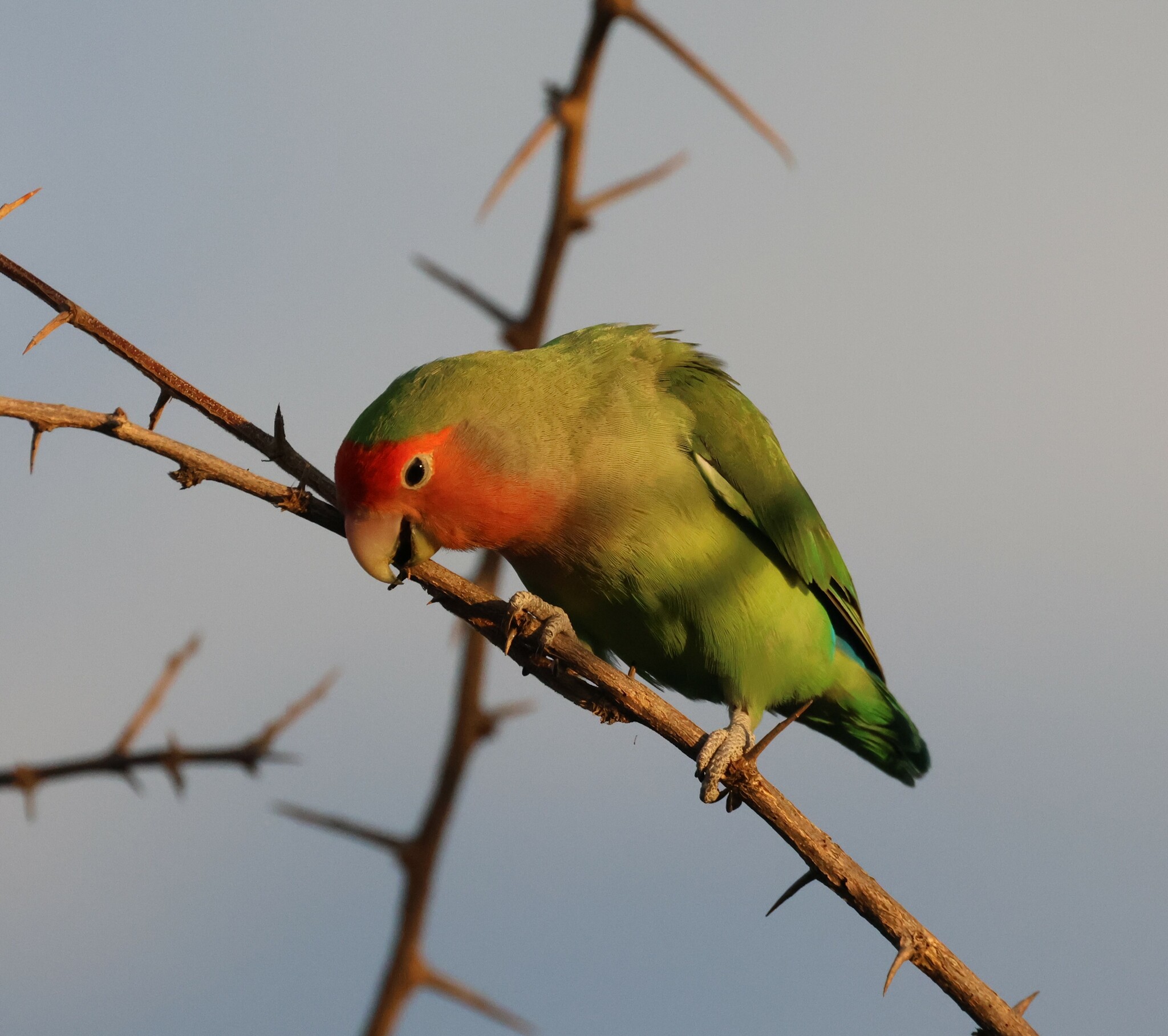
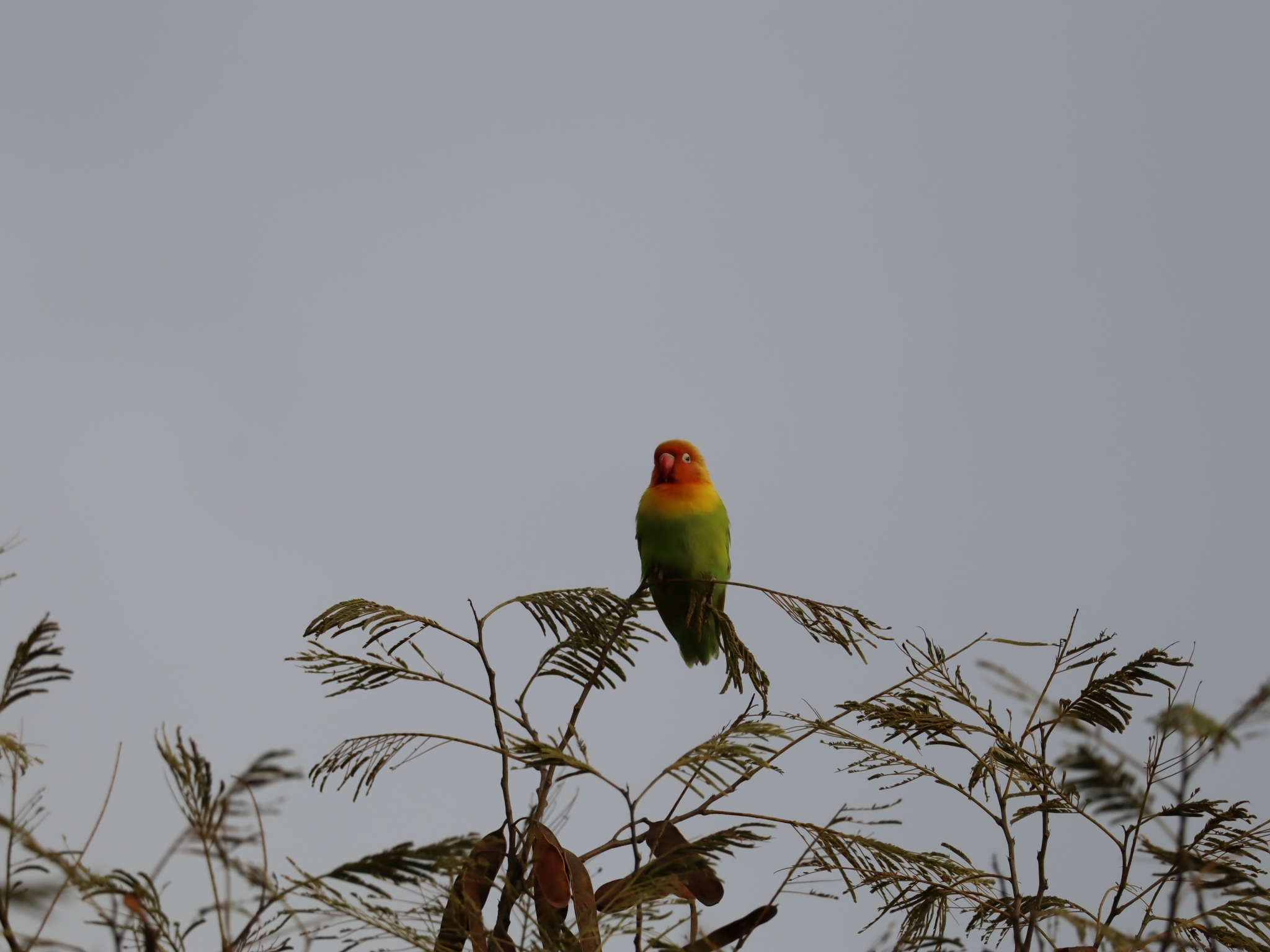
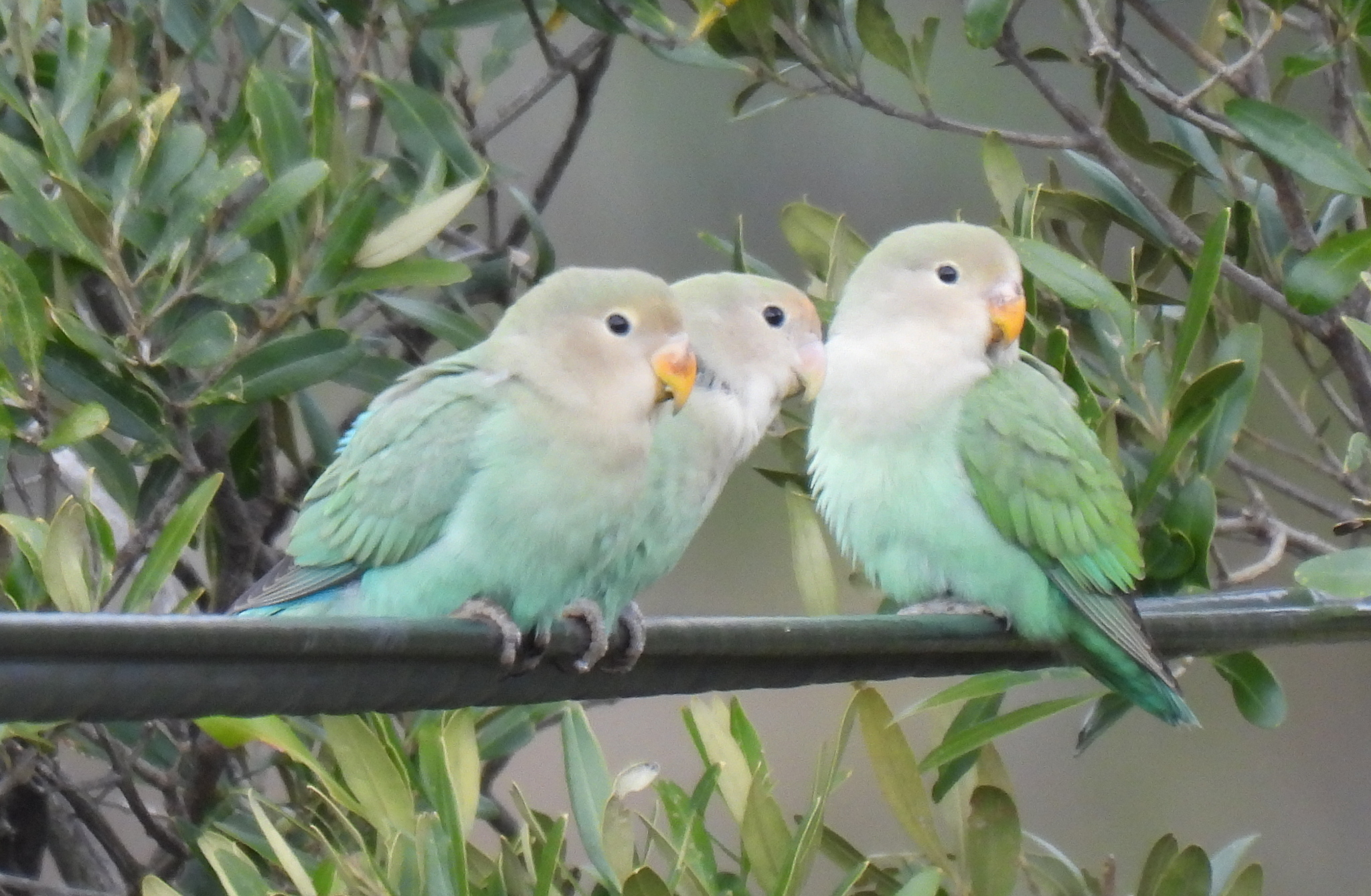
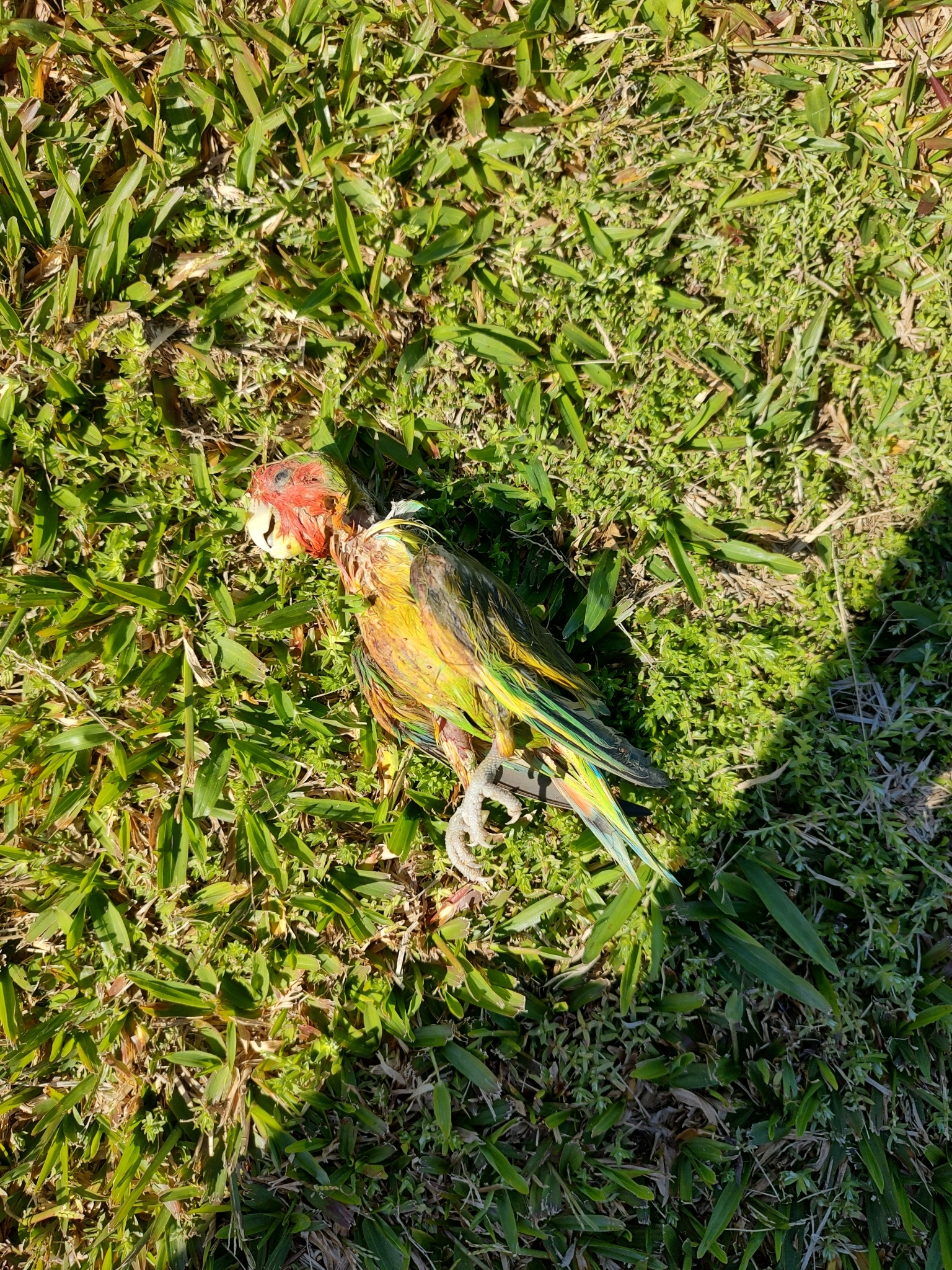
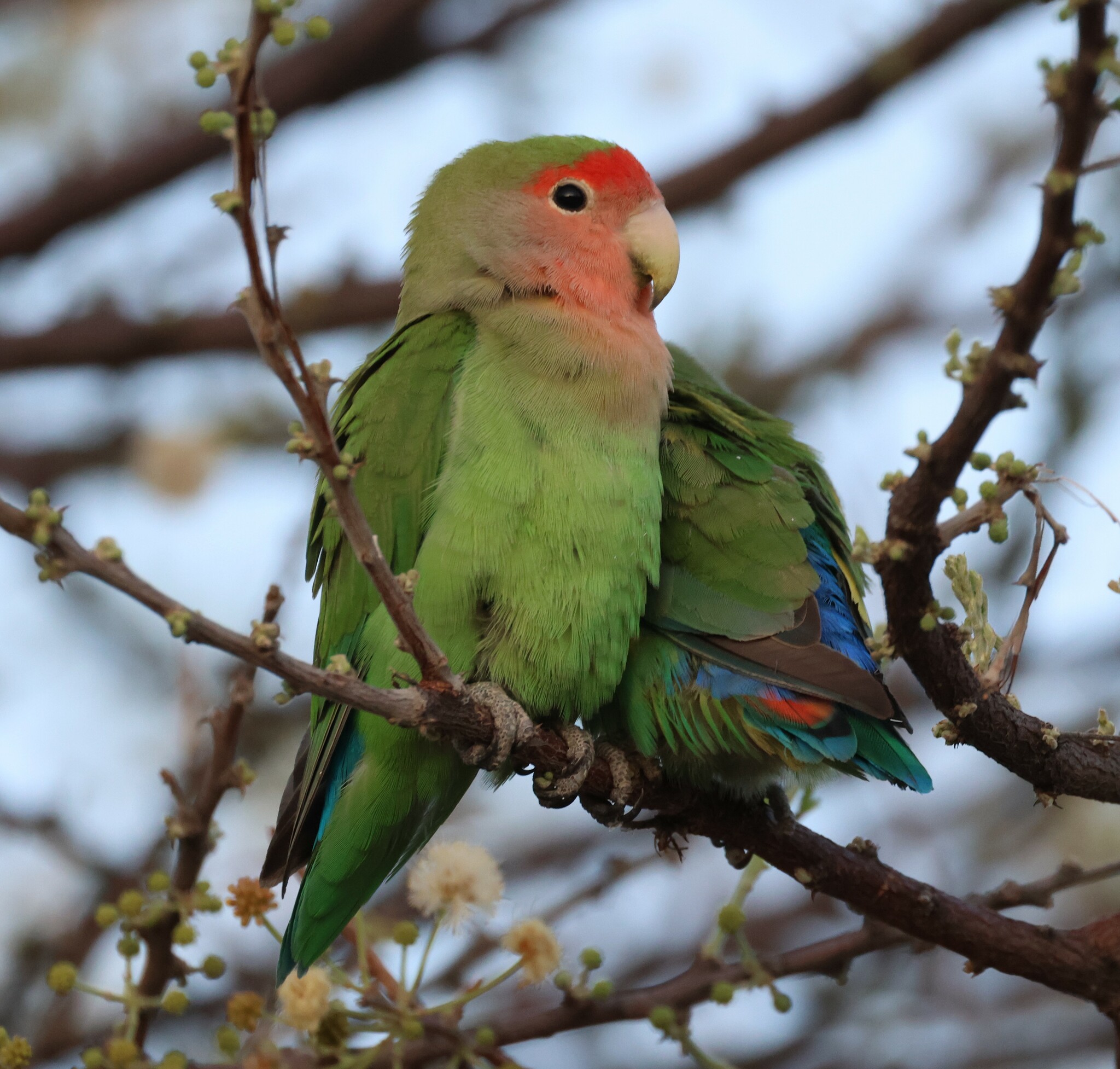
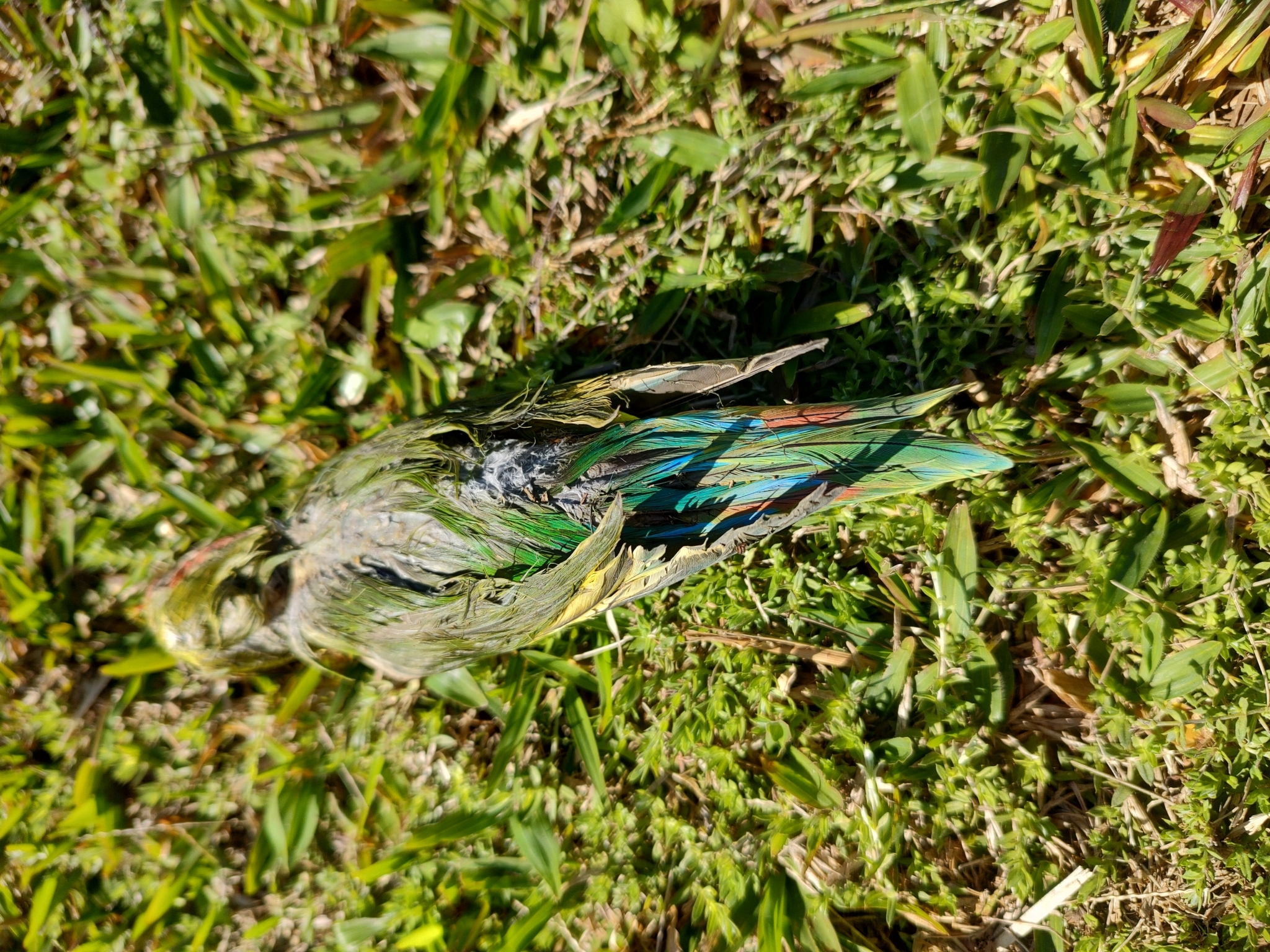
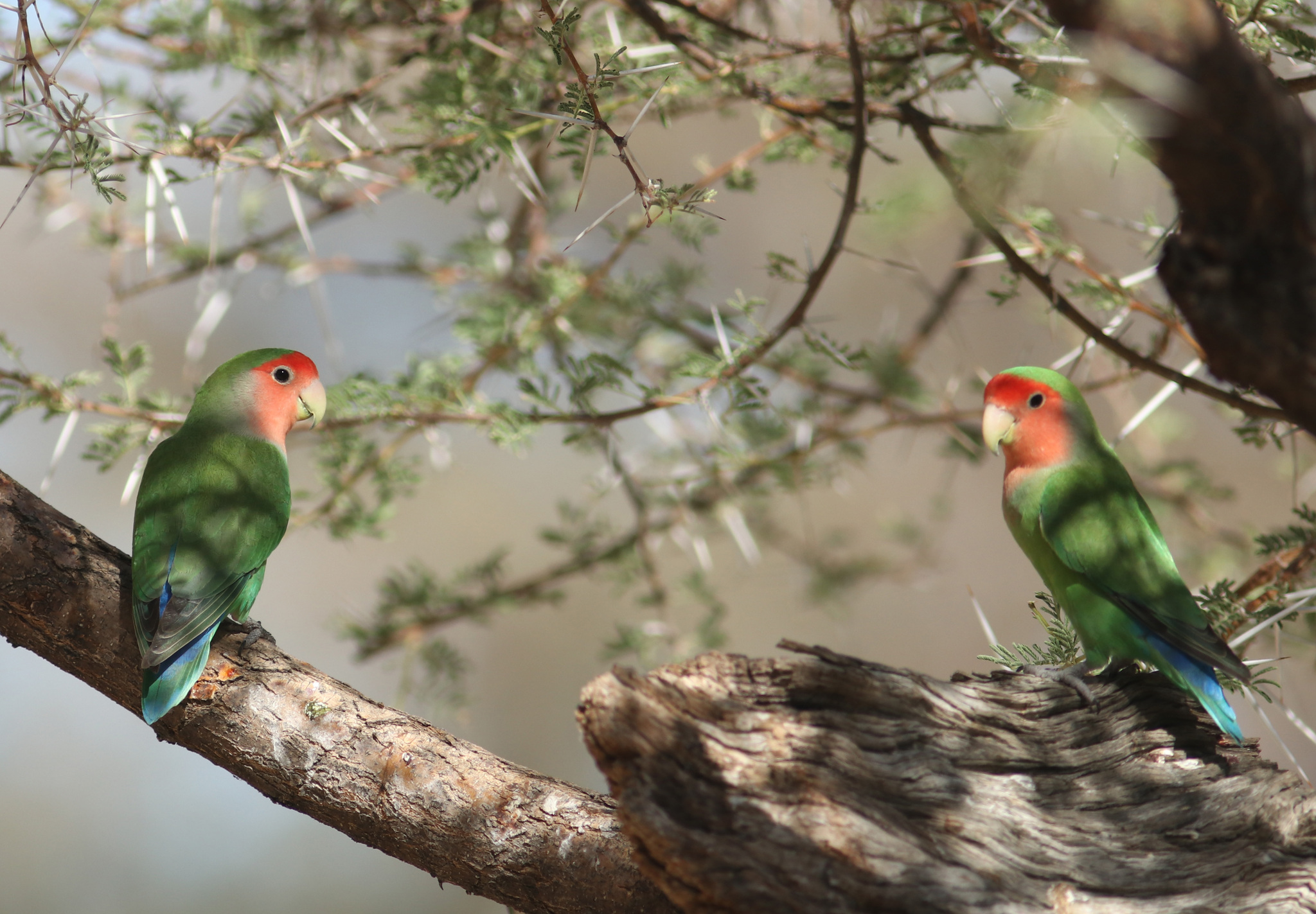
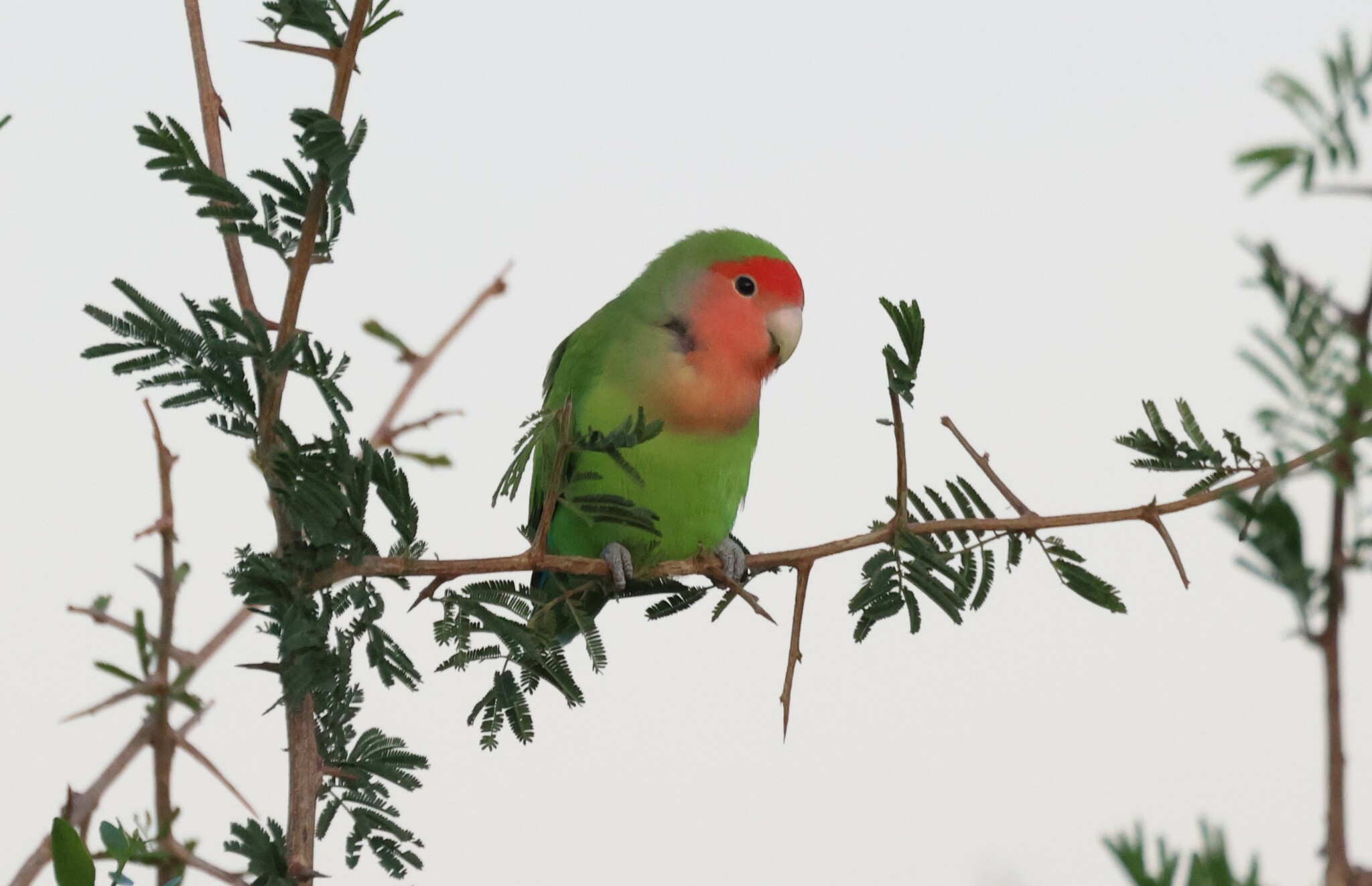
This compact parrot measures 17-18 cm in length with an average wing length of 106 mm and a tail length of 44-52 mm. The overall plumage is predominantly green, contrasting with a distinctive blue rump. The face and throat showcase the species' characteristic pink coloration, which becomes most intense on the forehead and above the eye. The bill displays a horn-coloured appearance, while the eyes feature brown irises and the legs and feet are grey. The two subspecies differ subtly in the intensity of facial coloration, with A. r. roseicollis exhibiting lighter pink compared to the slightly deeper tones of A. r. catumbella. Juveniles can be identified by their pale pink face and throat, greenish coloring on the crown, and a brownish base on the beak.
Identification
This species is monomorphic, meaning males and females appear identical in the field. The combination of small size, predominantly green body, blue rump, and pink face and throat serves as the primary identification marks. The pink facial coloration is most concentrated on the forehead and above the eye, creating a distinctive pattern. When observing flocks, the blue rump patch becomes particularly noticeable in flight. The horn-coloured bill and grey legs and feet provide additional field marks. Care should be taken to distinguish these birds from other green parrots in their range, with the facial and rump coloration being the key differentiators.
Distribution & Habitat
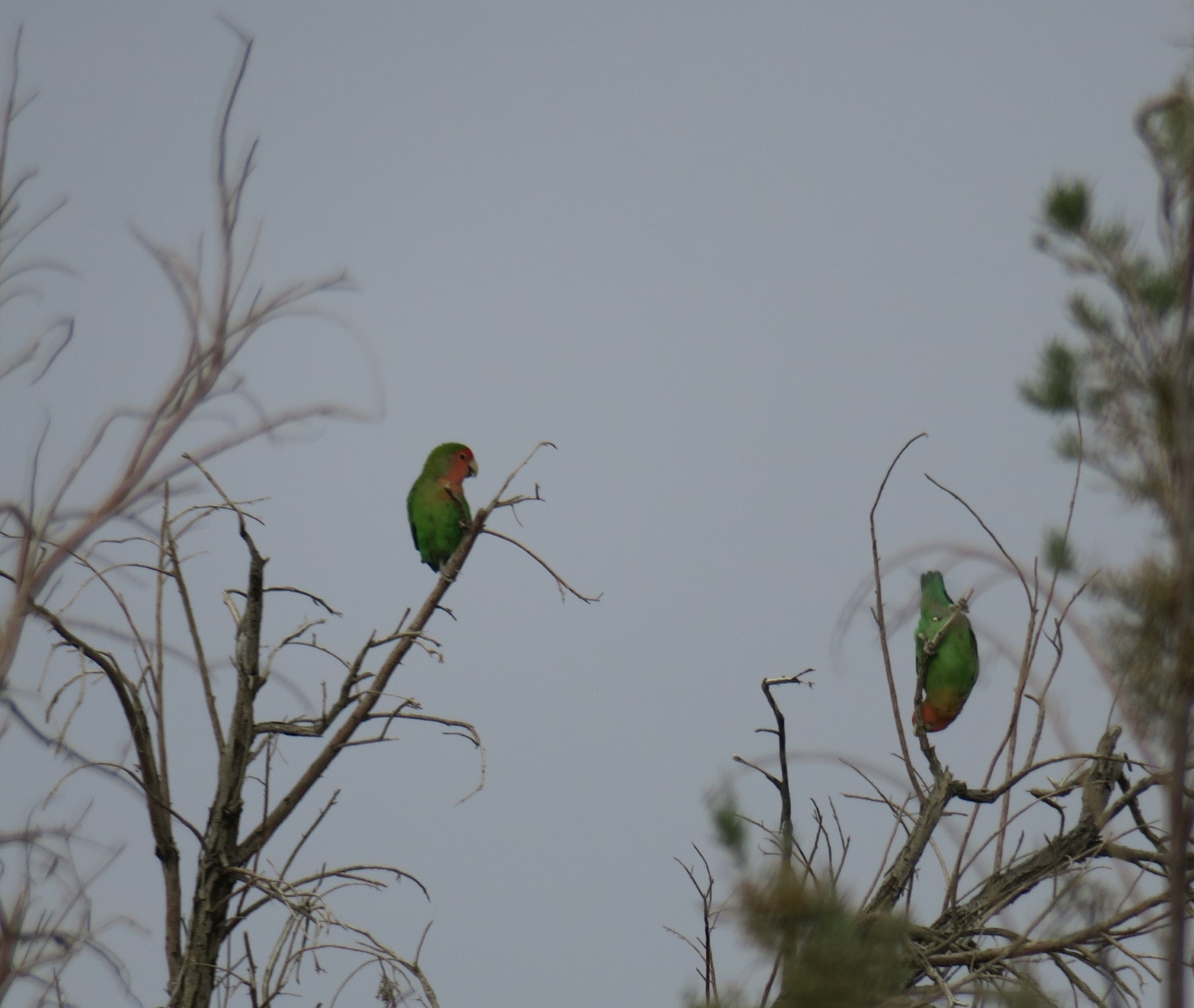
This species inhabits dry, open country across southwest Africa, ranging from southwest Angola through most of Namibia to the lower Orange River valley in northwest South Africa. They occupy elevations up to 1,600 meters in habitats including broad-leaved woodland, semi-desert, and mountainous regions. The presence of water sources is essential to their survival, and they regularly gather around pools to drink. Introduced populations have established themselves in metropolitan Phoenix, Arizona, where they thrive in both urban and rural habitats, even perching on air-conditioner vents to escape extreme heat exceeding 40°C. Additional feral colonies exist on Maui and the Big Island of Hawaii, while escaped pets have been observed in Puerto Rico.
Behavior & Ecology
These social birds feed mainly on seeds and berries, sometimes gathering in large flocks of hundreds when food is abundant. They can become agricultural pests, particularly targeting millet crops. The breeding season spans from February to April, with 4-6 dull white eggs measuring 23.5 by 17.3 mm being laid in rock crevices or compartments within the large communal nests built by sociable weavirs. Roofs of houses and other man-made structures also serve as nesting sites. The incubation period lasts approximately 23 days, with young fledging after 43 days. Notably, this species became the first Psittacidae species documented to pass the mark test, demonstrating self-recognition abilities in mirrors.
Conservation
The species holds a Least Concern classification from the International Union for Conservation of Nature. While populations have declined in some areas due to trapping for the pet trade, other populations have benefited from human activities that create new water sources and provide artificial nesting structures. This adaptability has helped maintain stable numbers across their range, though localized pressures from trapping continue in some regions.
Culture
These lovebirds have become firmly established in global aviculture, being among the most commonly kept parrot species due to their compact size and relatively straightforward care requirements. Their widespread popularity in the pet trade has made them familiar to bird enthusiasts worldwide. The species exhibits the widest range of color mutations within the Agapornis genus, including dominant, codominant, recessive, and sex-linked recessive varieties, making them particularly appealing to breeders and hobbyists interested in color genetics.
Source: Wikipedia · CC BY-SA 3.0
Taxonomy
- Order
- Psittaciformes
- Family
- Psittaculidae
- Genus
- Agapornis
- eBird Code
- peflov
Subspecies (2)
-
Agapornis roseicollis catumbella
subdesert of southwestern Angola
-
Agapornis roseicollis roseicollis
subdesert of Namibia to northern Cape Province
Data Sources
Species description from Wikipedia, licensed under CC BY-SA 3.0.
Bird images and sounds sourced from GBIF, contributed by citizen scientists worldwide under Creative Commons licenses.
Taxonomy data from AviList 2025.