Fischer's Lovebird
Agapornis fischeri
费沙氏情侣鹦鹉
Introduction
A small parrot species endemic to east-central Africa. Its range is limited to northern Tanzania, extending seasonally into Rwanda and Burundi. It inhabits isolated tree clumps amid grassy plains at elevations of 1,100 to 2,200 meters, particularly in Serengeti National Park and surrounding protected areas. Small flocks move through habitat with rapid wingbeats. Populations are locally abundant within protected zones but decrease significantly outside them. The species makes seasonal movements westward during drought periods.
Description
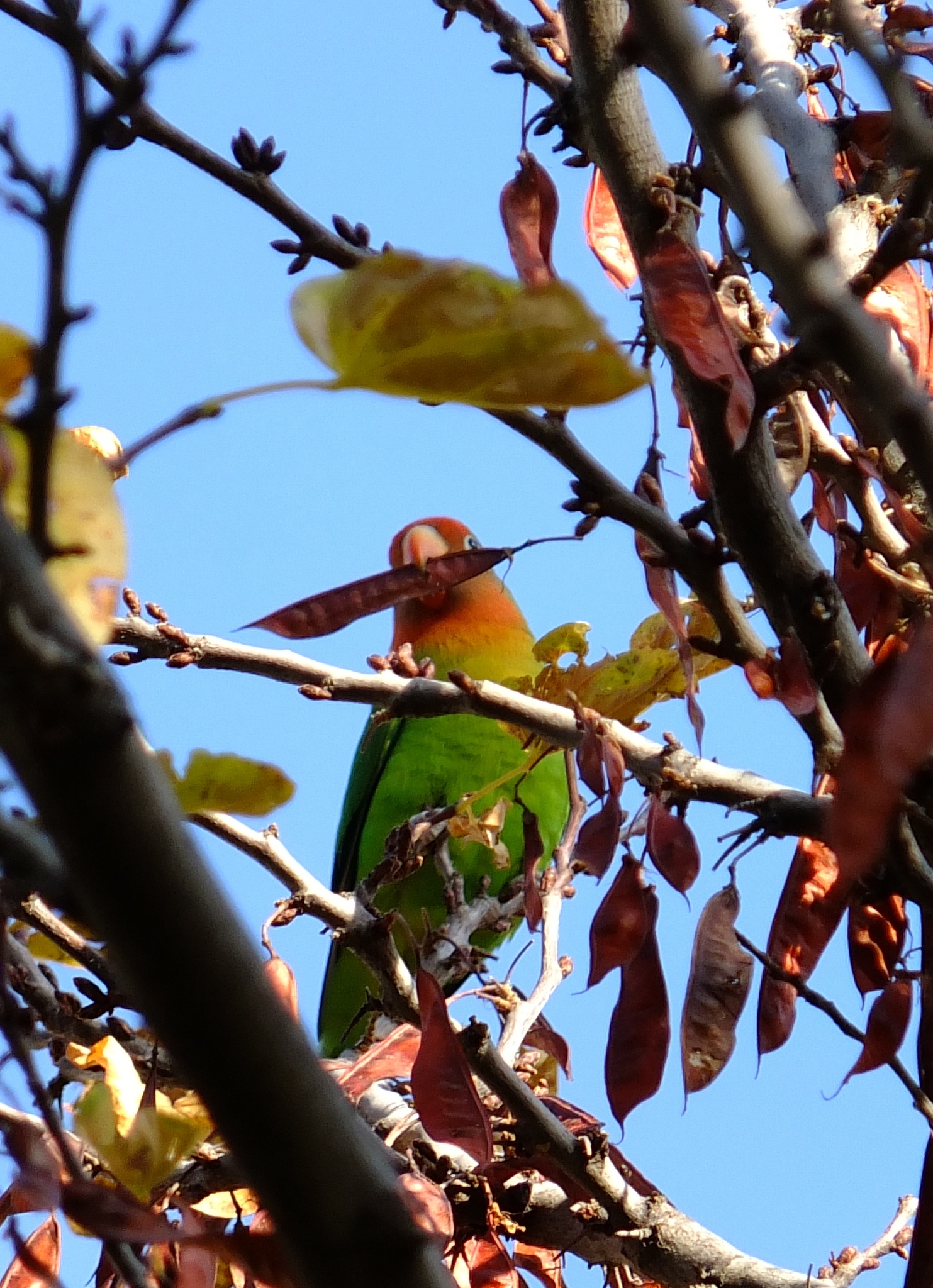
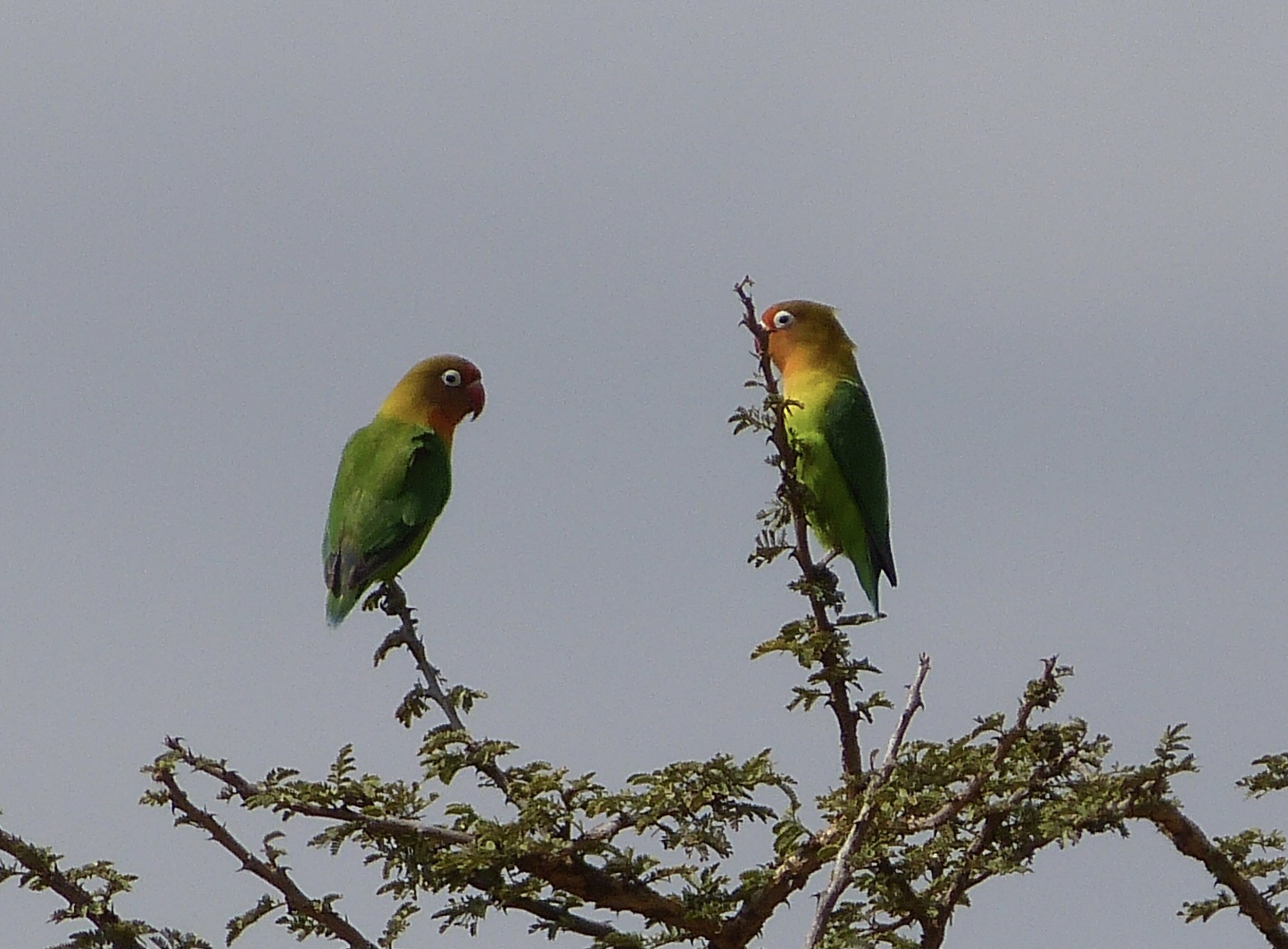
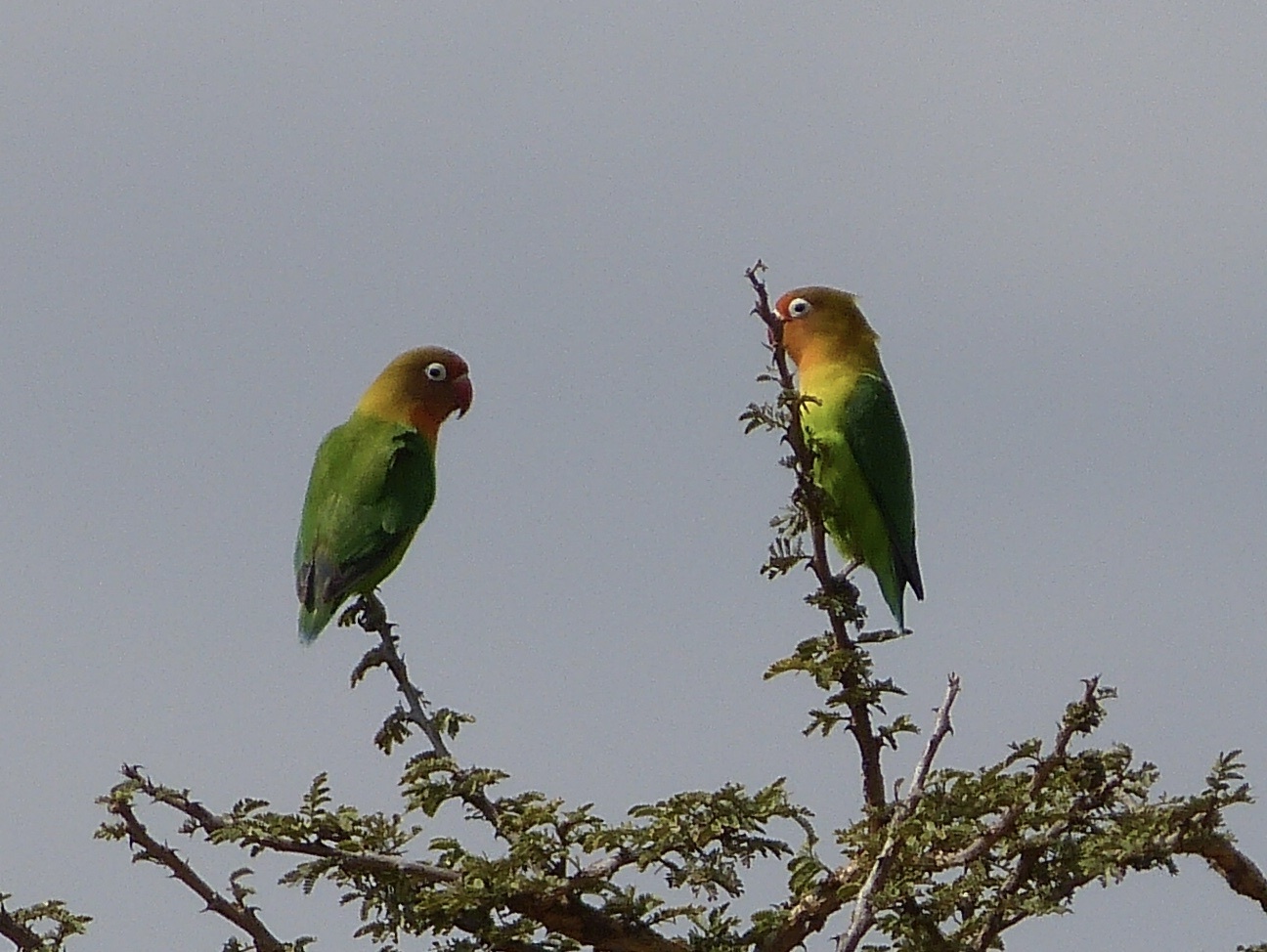
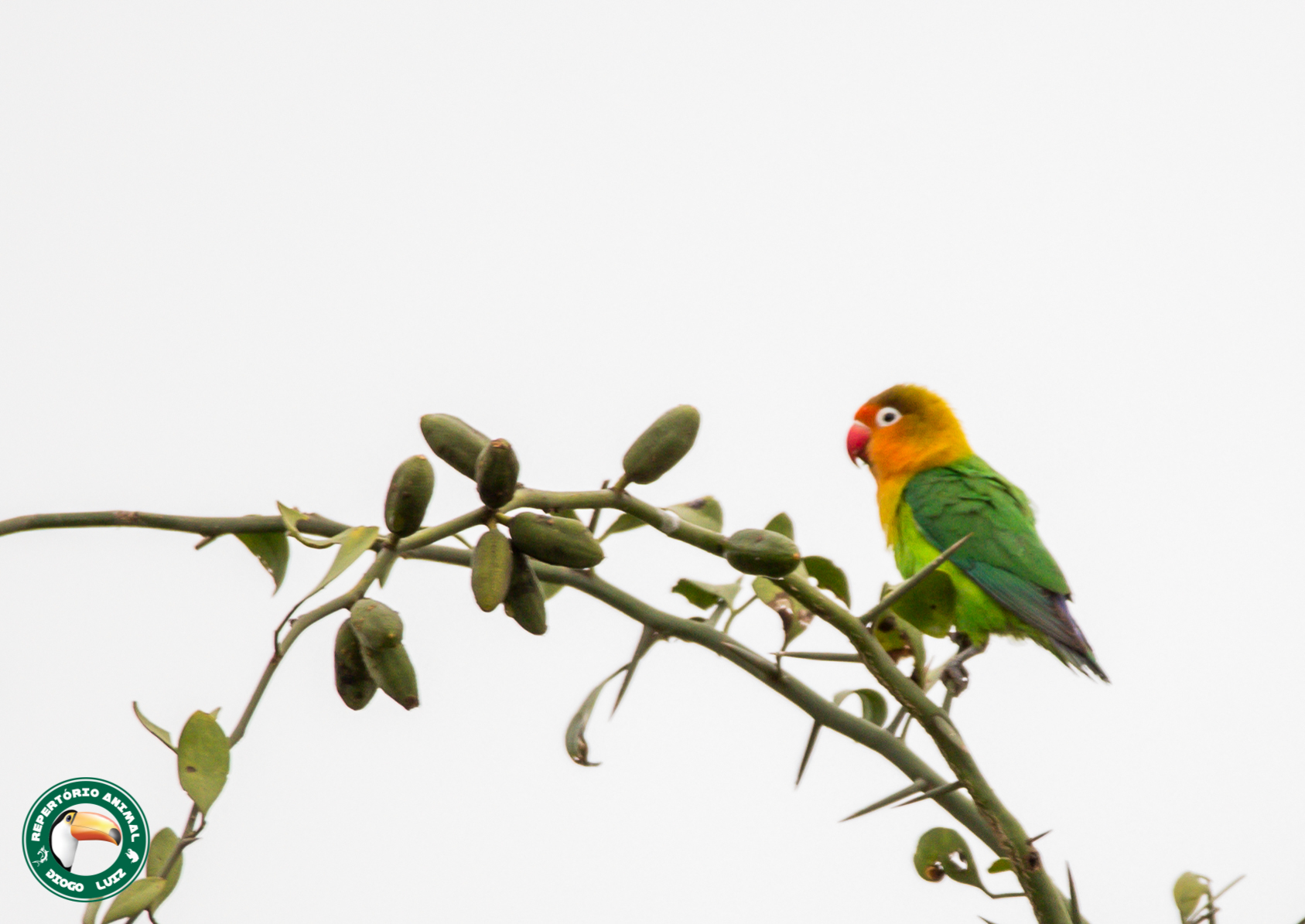
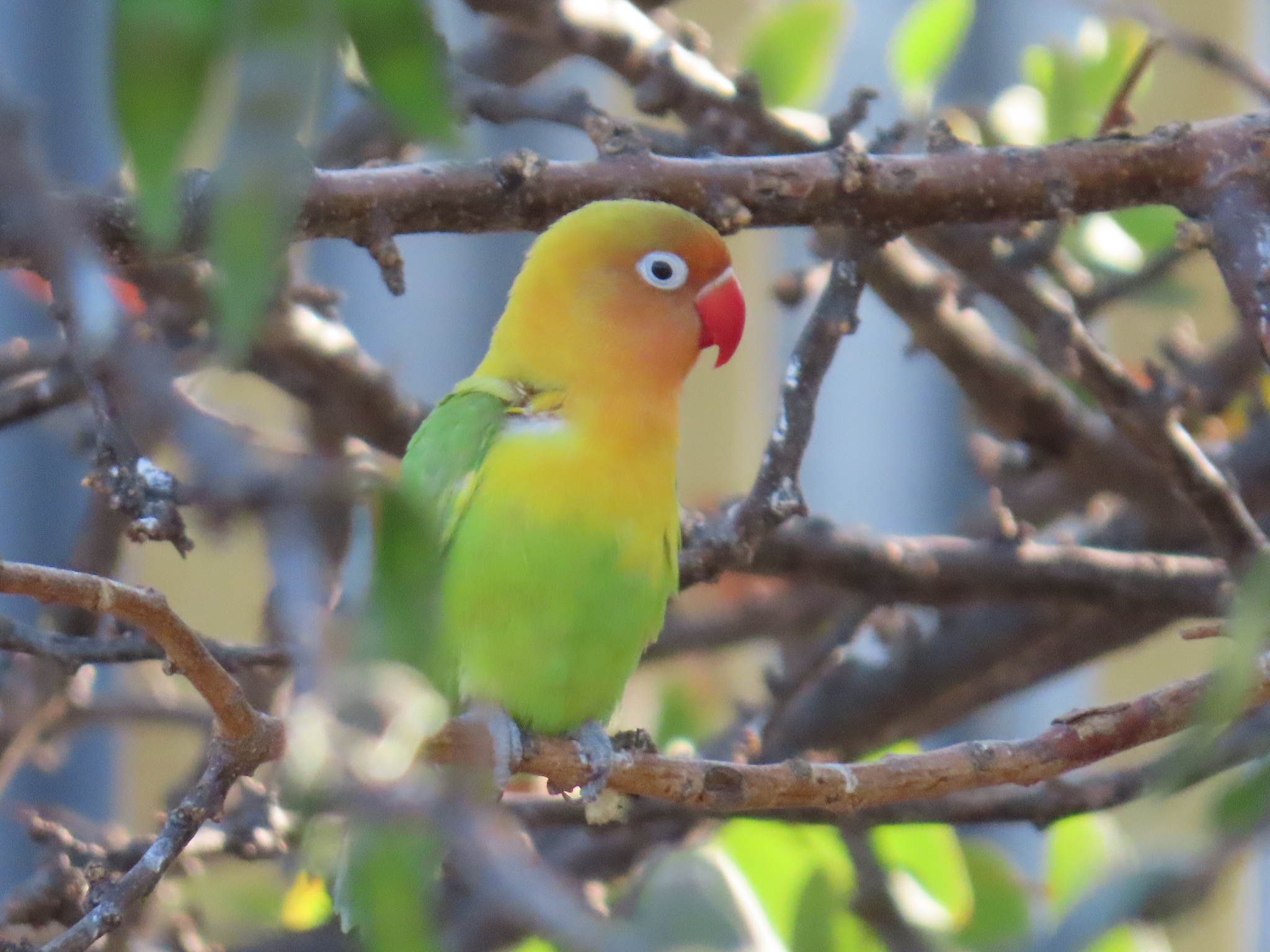
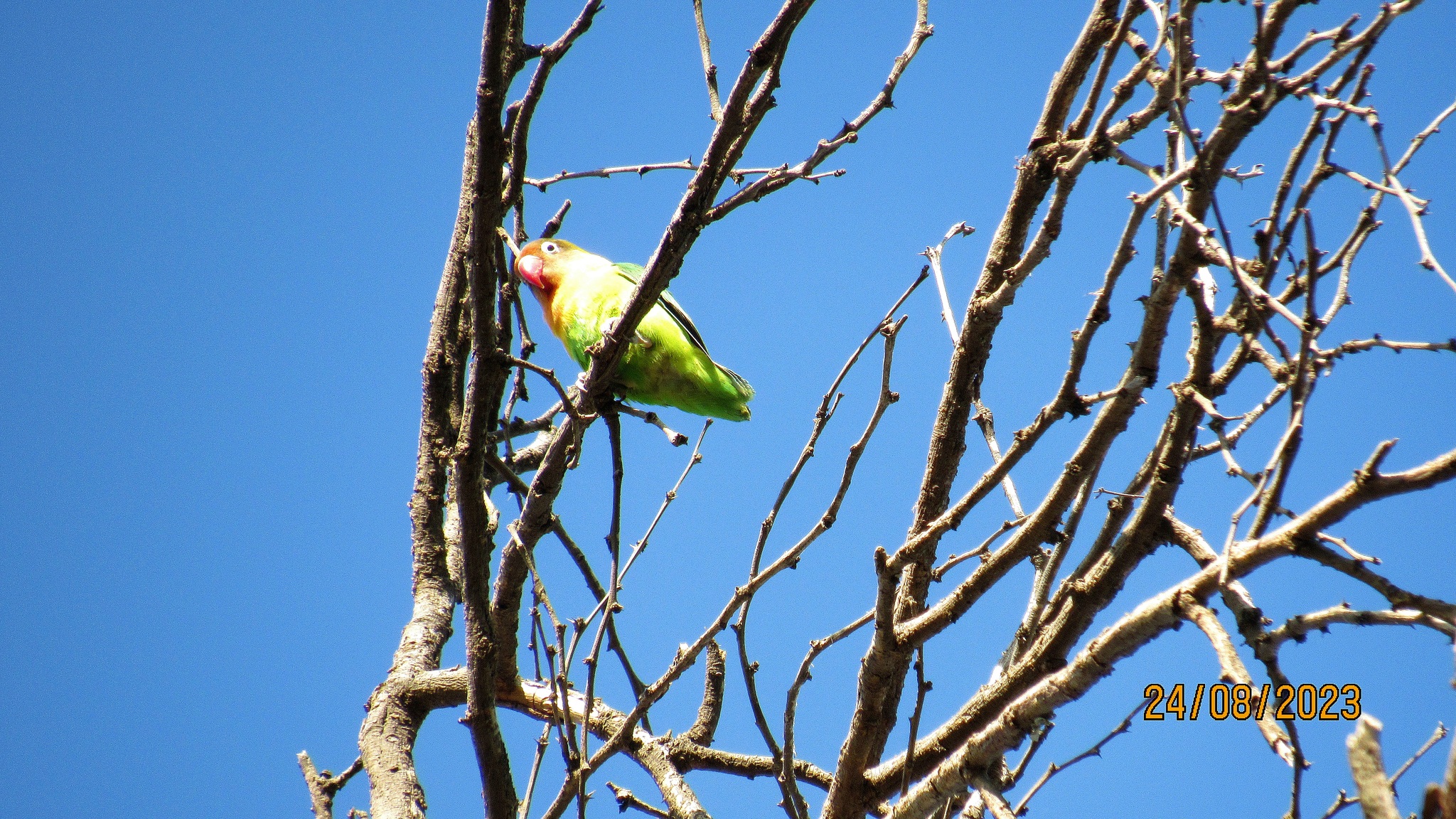
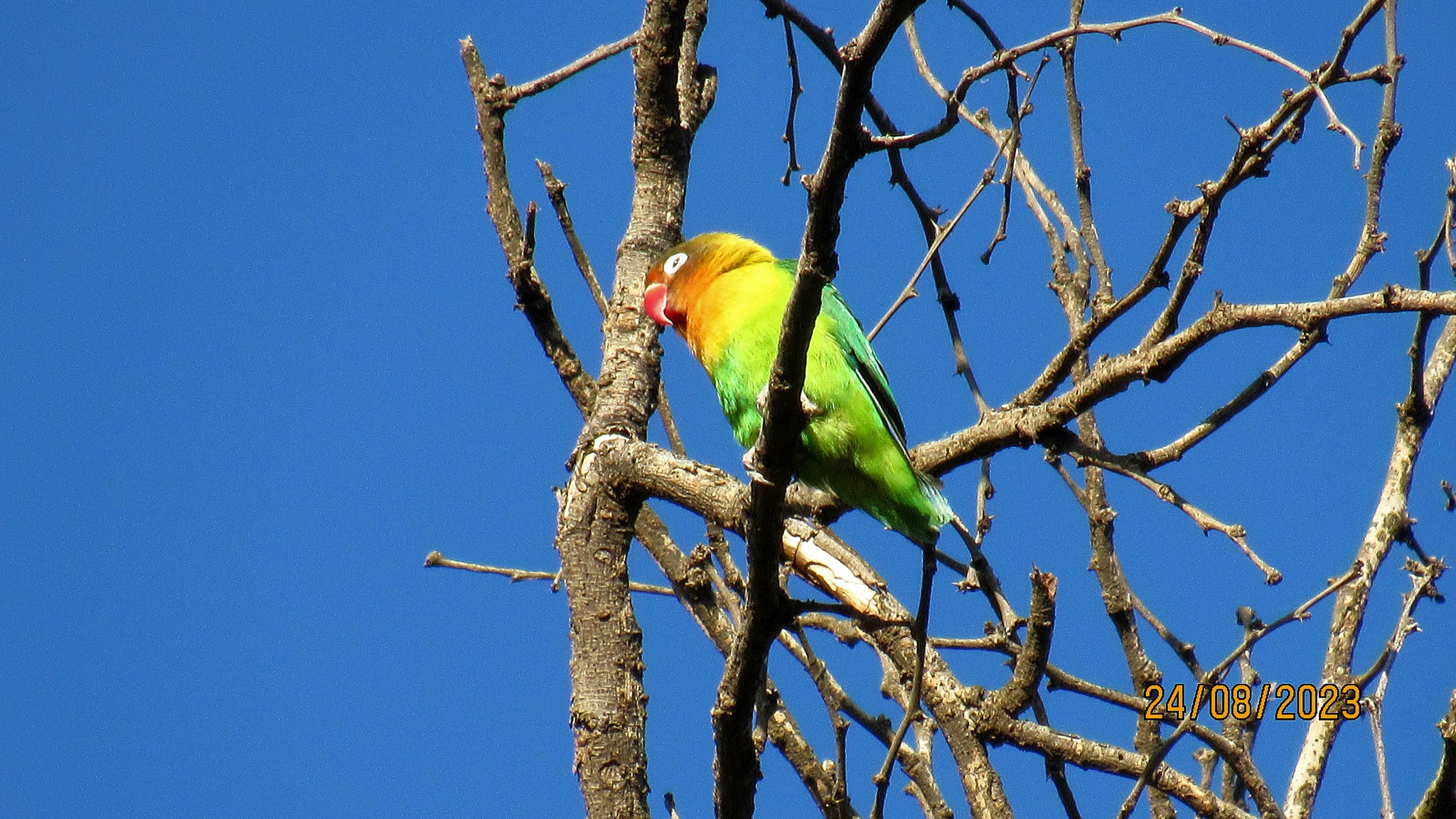
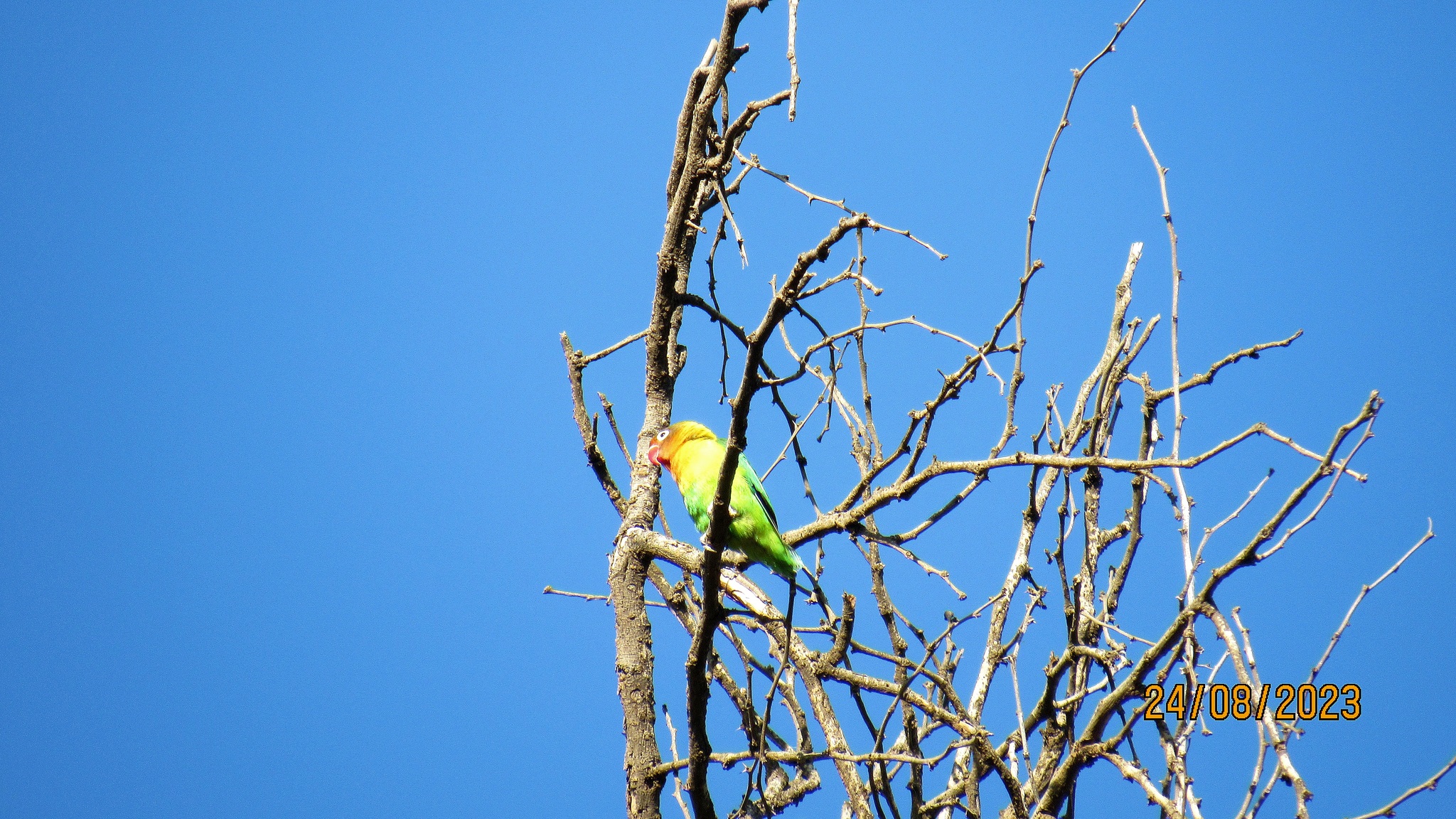
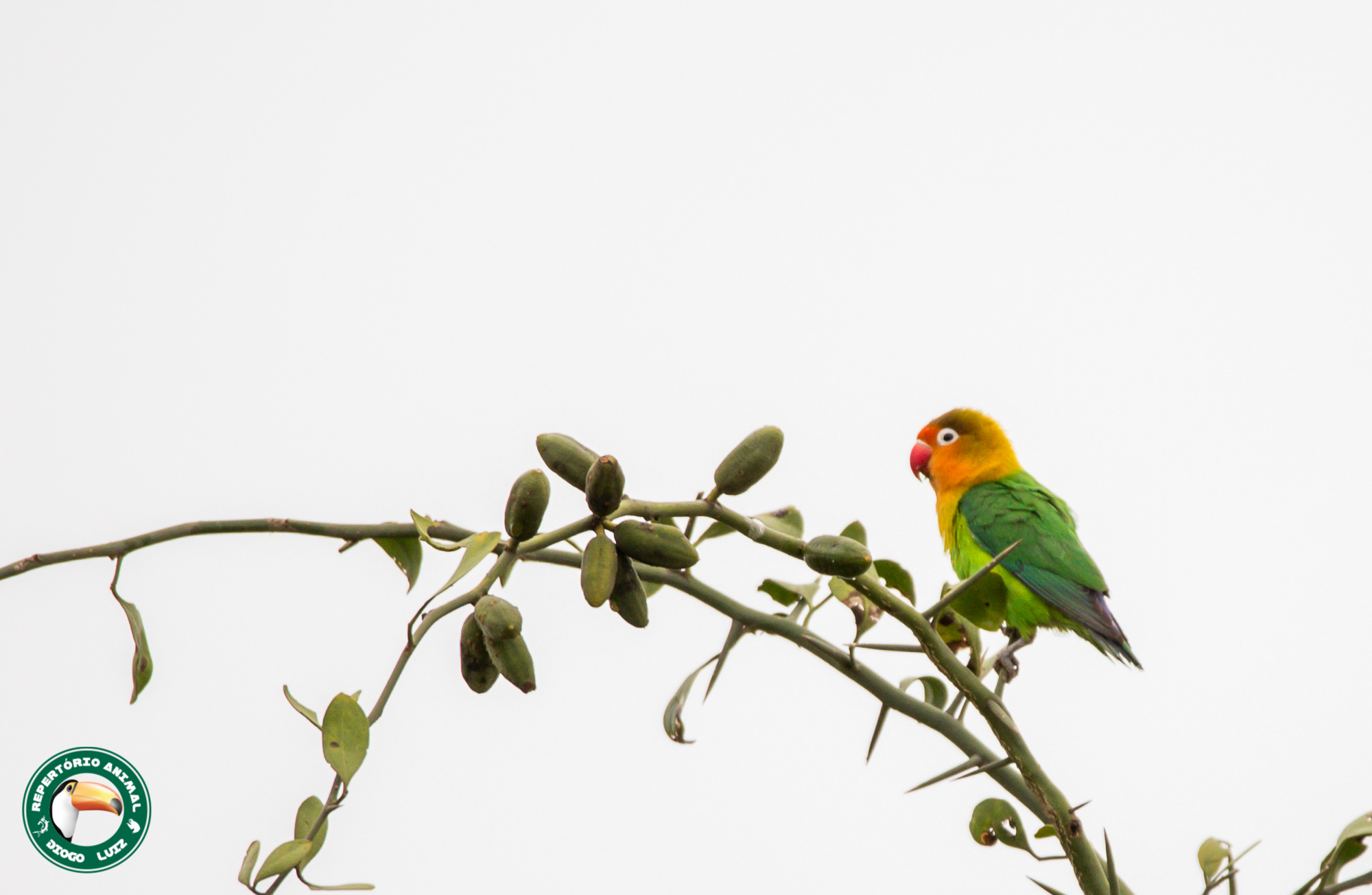
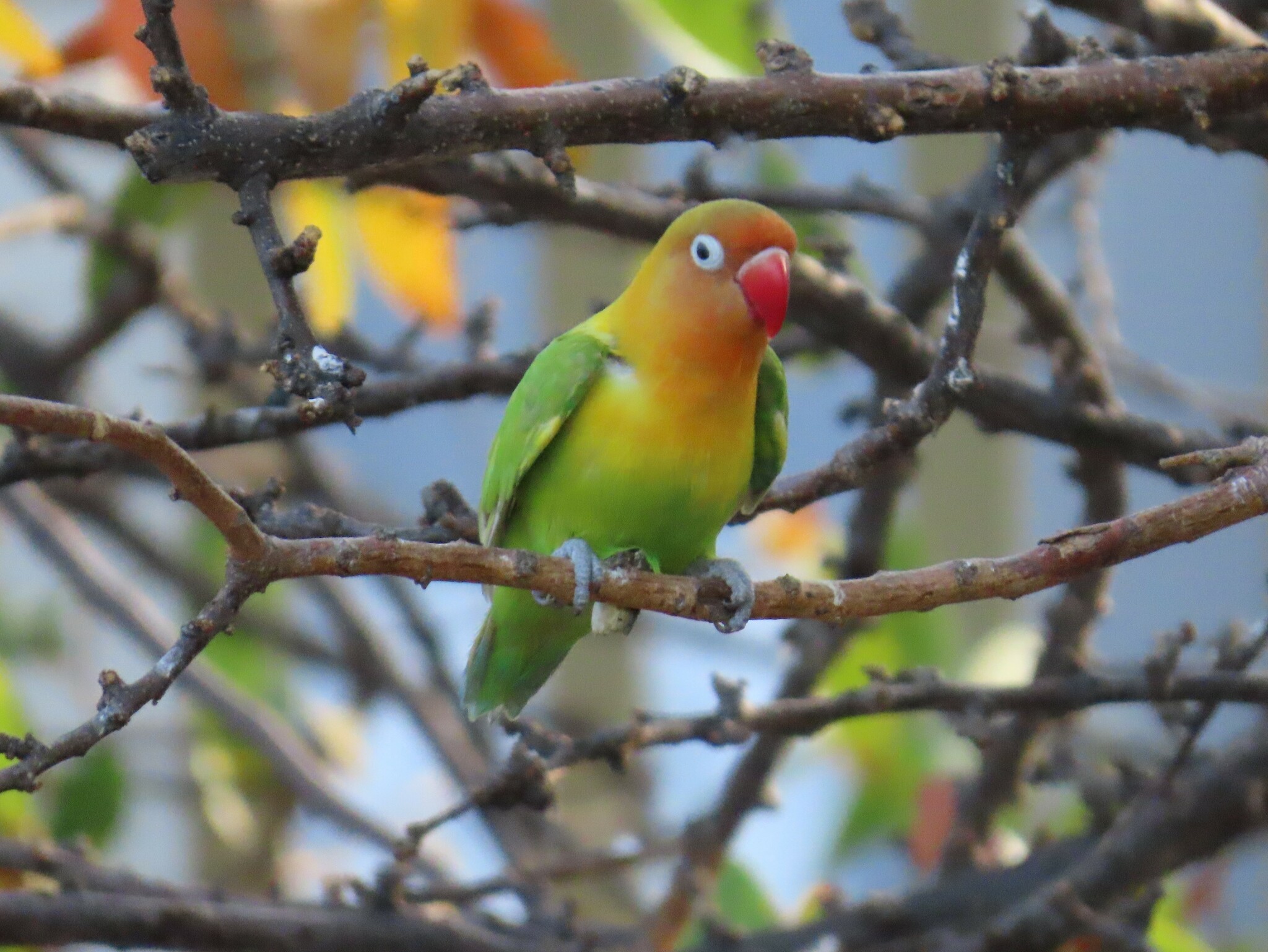
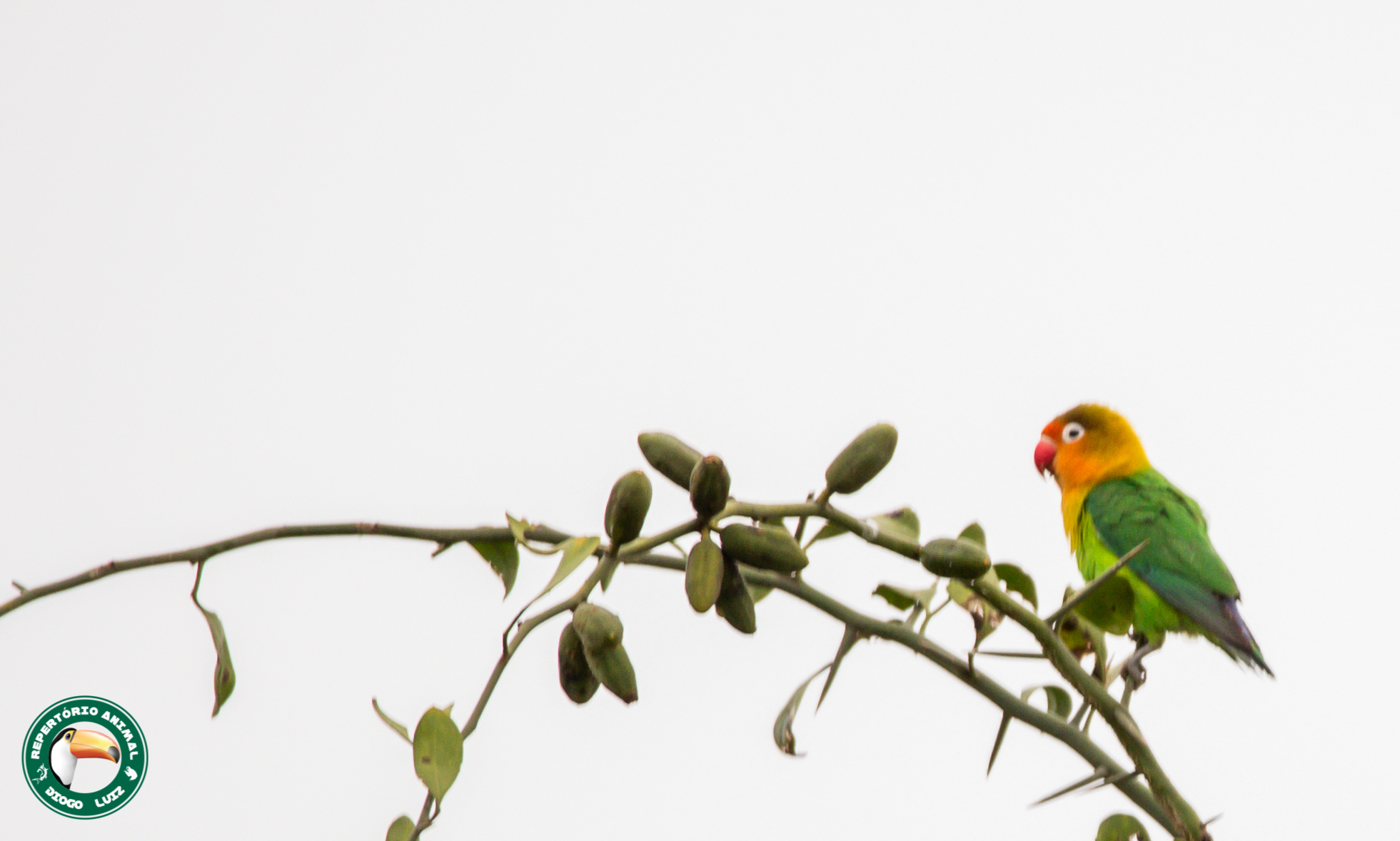
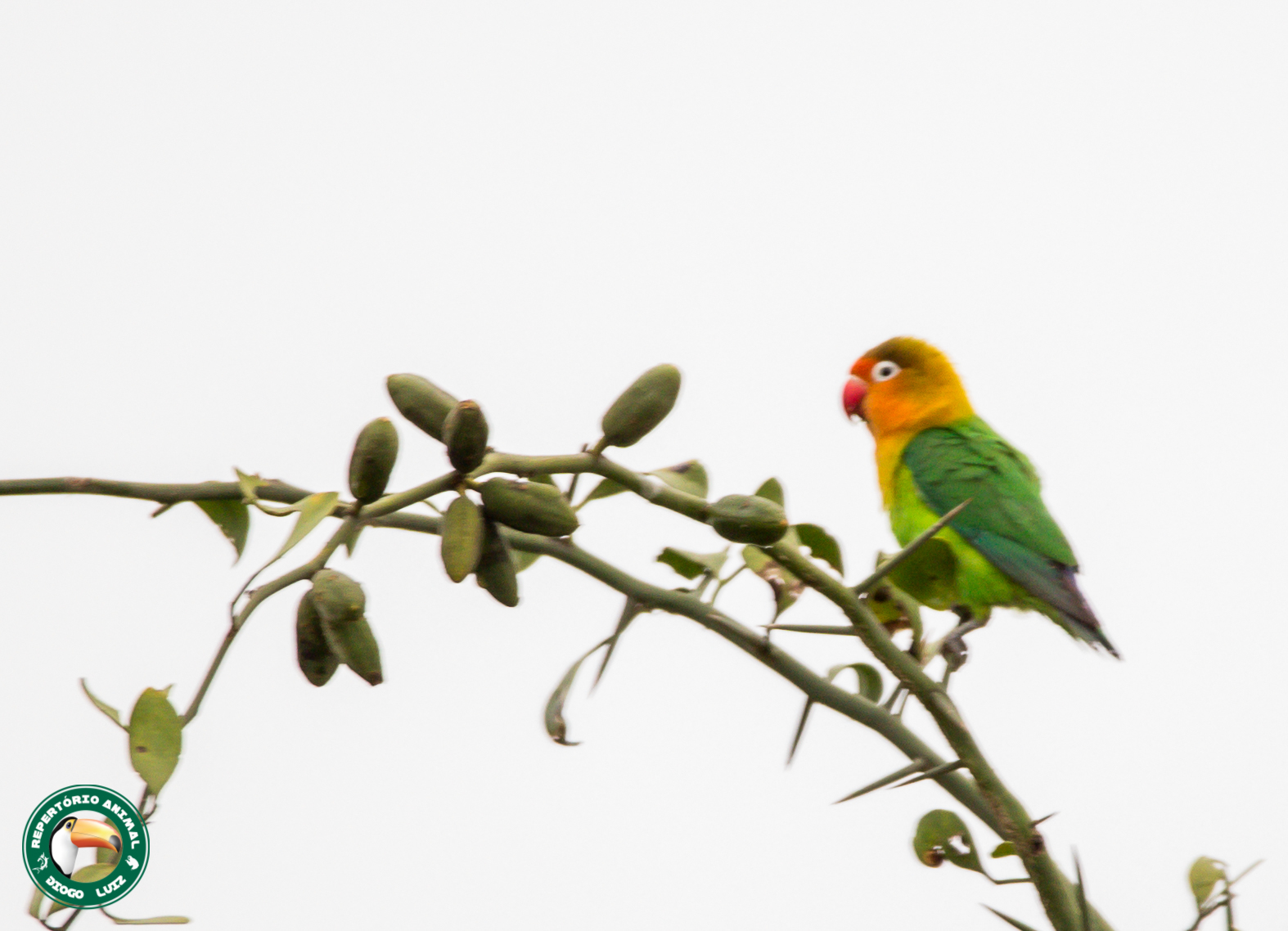
This small lovebird measures approximately 14 centimeters in length and weighs between 43 and 58 grams. The upperparts display green coloring on the back, chest, and wings, while the neck exhibits a golden yellow hue that deepens to orange as it approaches the head. The crown features olive-green plumage, complemented by a bright red beak. A distinctive white ring of bare skin surrounds each eye. The tail feathers display purple or blue tones on their upper surface. Juveniles resemble adults but appear duller overall and possess brown markings at the base of the mandible. Several color mutations have been developed in captivity, including a popular blue variation lacking yellow pigments, a yellow lutino mutation, and pied, cinnamon, white, and albino forms.
Identification
This species shows no sexual dimorphism, meaning males and females appear identical in plumage. Positive sexing requires DNA testing, though experienced observers can make probable determinations based on perching posture, as females typically sit with legs positioned wider apart due to their broader pelvic structure. The species differs from other lovebirds in its specific color pattern, particularly the combination of green body plumage, orange-yellow neck gradient, and prominent white eye-ring. The blue color mutation can be distinguished from similar blue-phase lovebirds by its pale grey head and white neck coloration.
Distribution & Habitat
This species is endemic to a relatively small region in east-central Africa, specifically south and southeast of Lake Victoria in northern Tanzania. Its habitat consists of isolated tree clumps surrounded by grassland plains at elevations ranging from 1,100 to 2,200 meters. During drought years, some populations make westward movements into Rwanda and Burundi in search of moister conditions. The total population is estimated between 290,000 and 1,000,000 individuals. Export licenses were suspended in 1992 to protect wild populations from capture for the pet trade, and densities remain lower outside protected areas. Small introduced populations exist in Portugal's Algarve region, and escaped pets have been observed in Puerto Rico, Florida, and the U.S. Virgin Islands, though no wild breeding has been confirmed in these areas.
Behavior & Ecology
These energetic birds travel in small flocks and have a fast, direct flight with distinctly audible wing sounds. They are highly vocal, producing constant high-pitched chirps that can carry considerable distance. Their diet consists primarily of seeds and various fruits, and they occasionally become agricultural pests by feeding on maize and millet crops. Breeding occurs from January through April and again from June through July. They are monogamous, forming lifelong pair bonds and remaining in constant physical contact when possible. The nest is constructed in tree cavities 2 to 15 meters above ground, where the female lays a clutch of three to eight white eggs, typically four or five. She incubates for 23 days, and chicks fledge approximately 38 to 42 days after hatching.
Conservation
The species maintains a relatively stable population estimated between 290,000 and 1,000,000 individuals. While not currently facing immediate extinction risk, populations outside protected areas have declined due to capture for the international pet trade. Export licenses were suspended in 1992 specifically to address this threat and prevent further population decreases. The species' limited natural range and dependence on intact woodland habitat within protected areas make it potentially vulnerable to habitat loss and additional collection pressure if trade restrictions are relaxed.
Culture
The term lovebird originated from the strong, visible pair bonds these birds form with their mates, a characteristic that has made them popular among bird enthusiasts and contributed to their cultural recognition as symbols of devotion. While no extensive folklore specifically references this species, lovebirds generally have come to represent romantic affection in popular culture, largely due to their monogamous nature and the close physical contact between paired individuals. Their popularity in the pet trade has made them familiar to people worldwide, though this has also contributed to conservation concerns regarding wild populations.
Source: Wikipedia · CC BY-SA 3.0
Taxonomy
- Order
- Psittaciformes
- Family
- Psittaculidae
- Genus
- Agapornis
- eBird Code
- fislov1
Distribution
northern Tanzania (south and east of Lake Victoria); feral populations in coastal Kenya and Tanzania (sometimes hybridizing with Yellow-collared Lovebird Agapornis personatus) and in southern France
Data Sources
Species description from Wikipedia, licensed under CC BY-SA 3.0.
Bird images and sounds sourced from GBIF, contributed by citizen scientists worldwide under Creative Commons licenses.
Taxonomy data from AviList 2025.