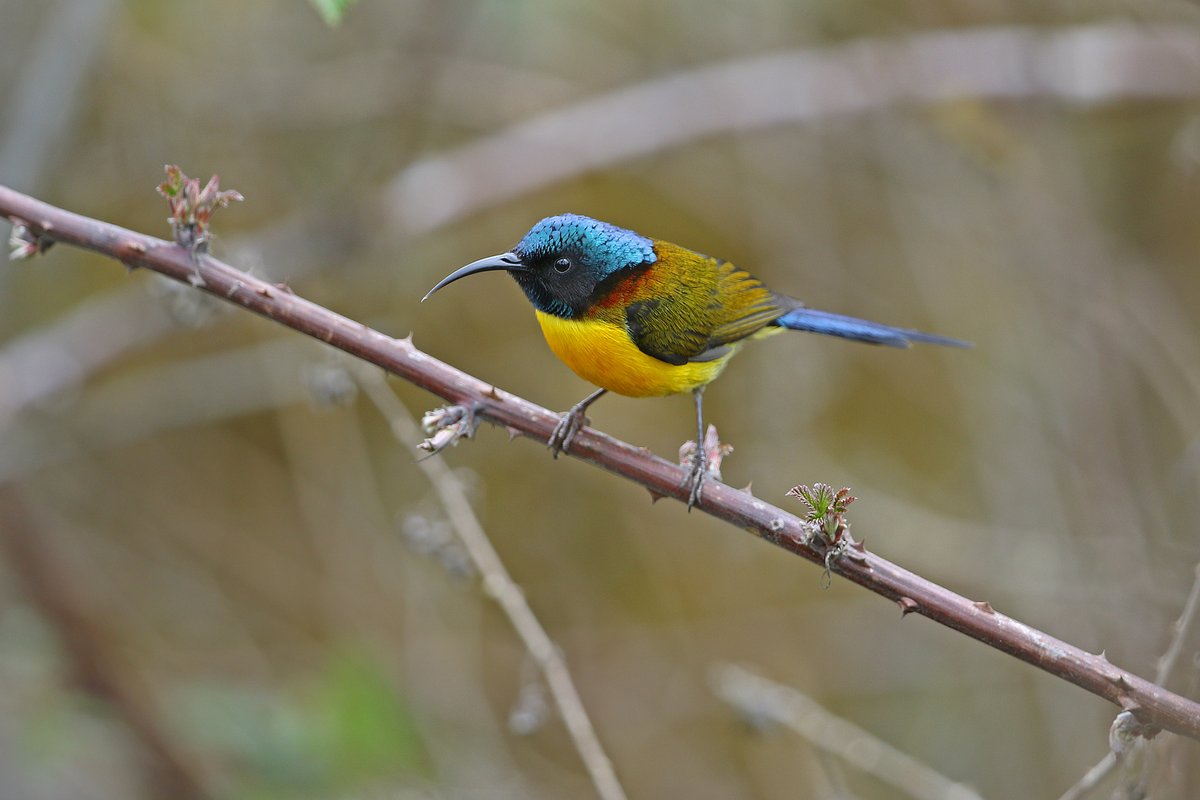
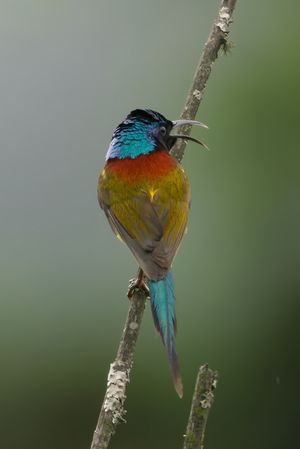
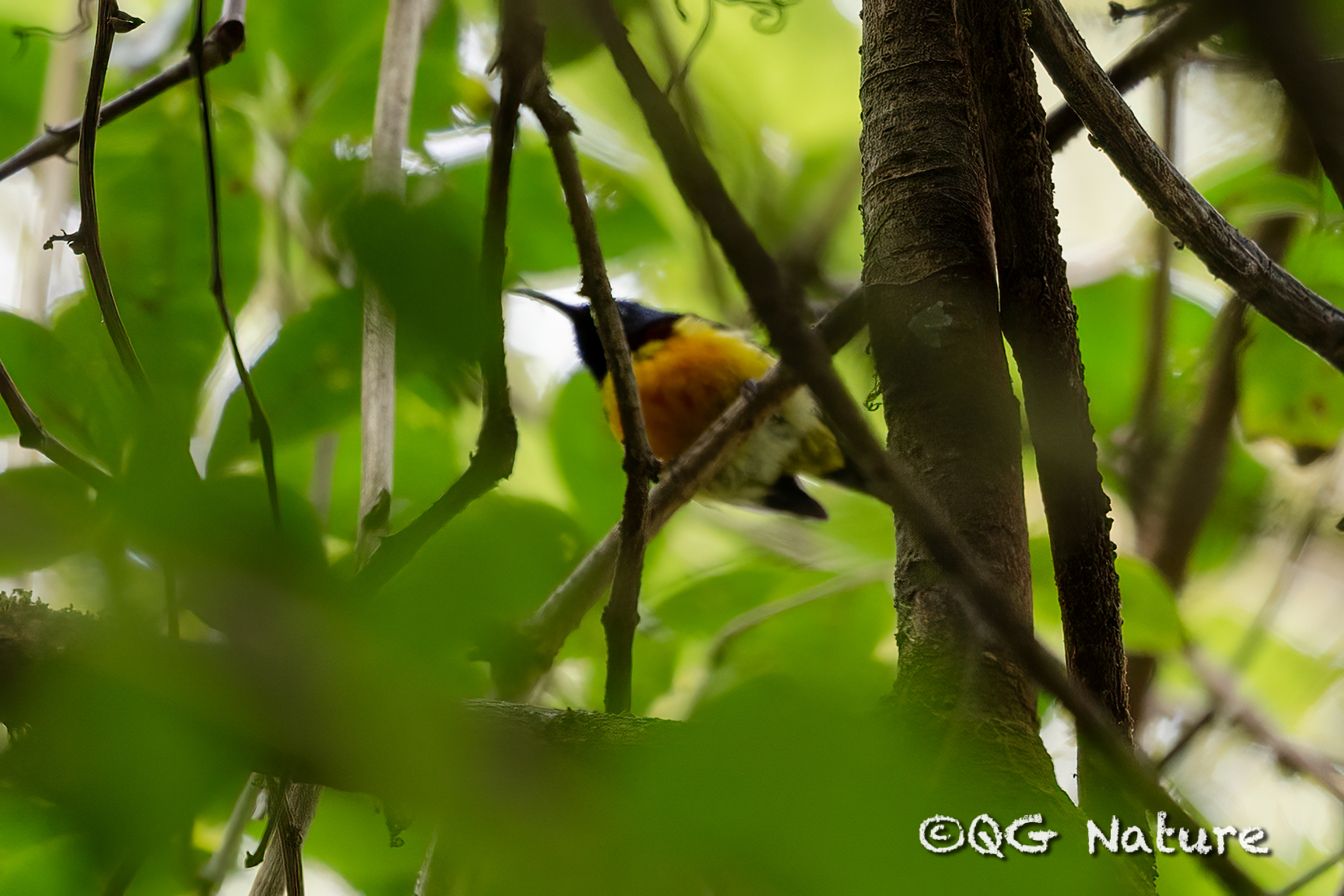
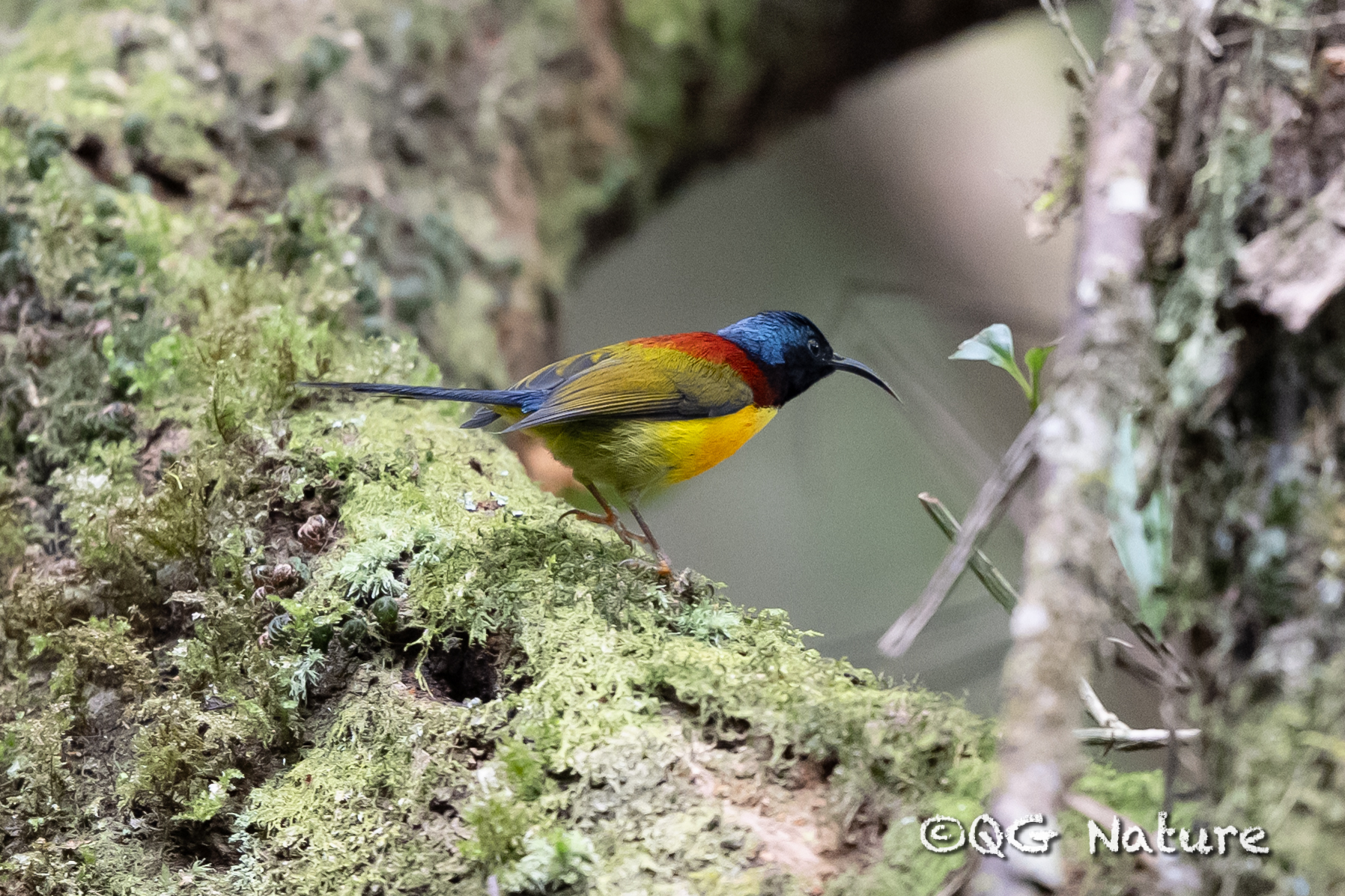
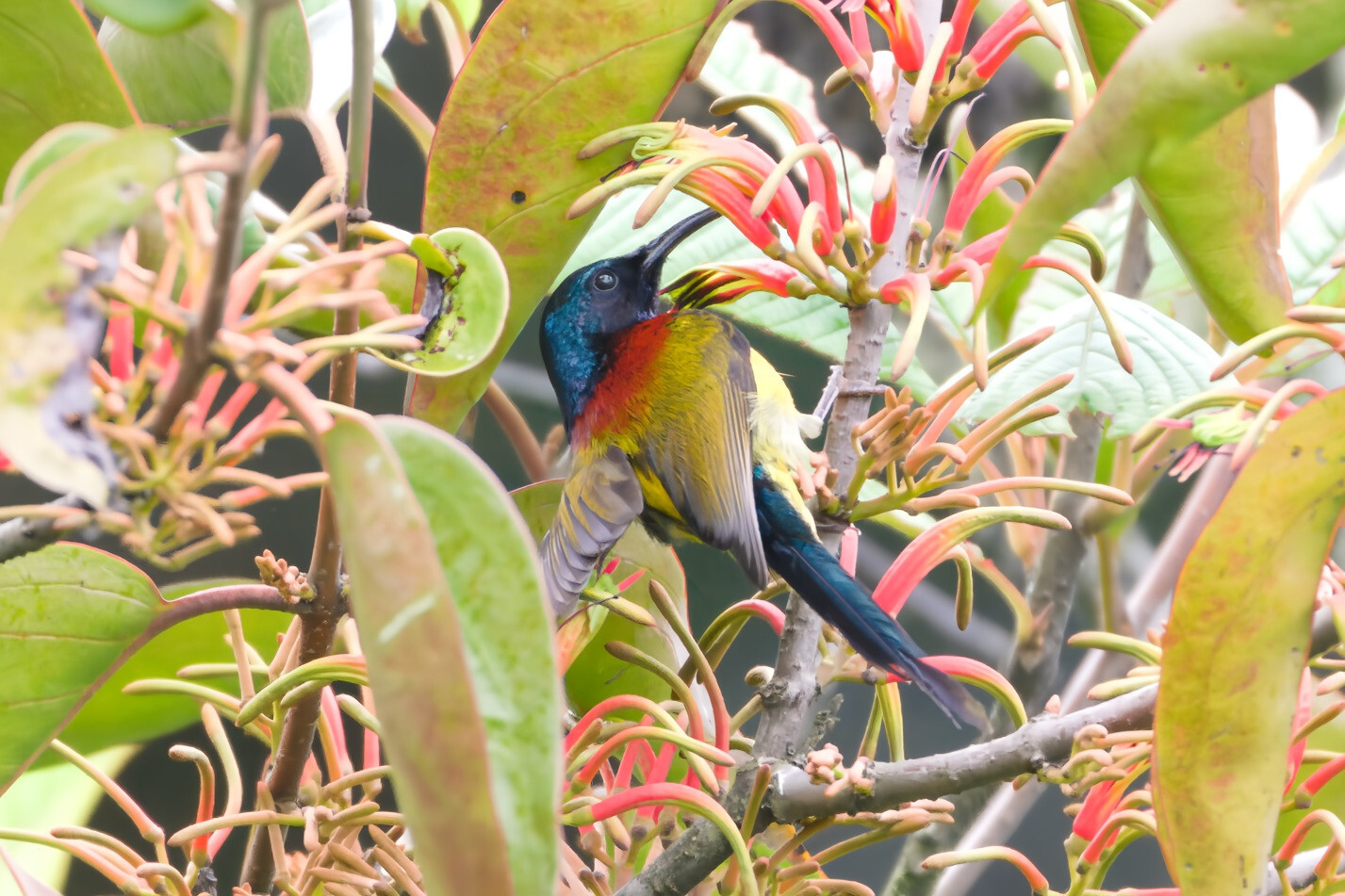
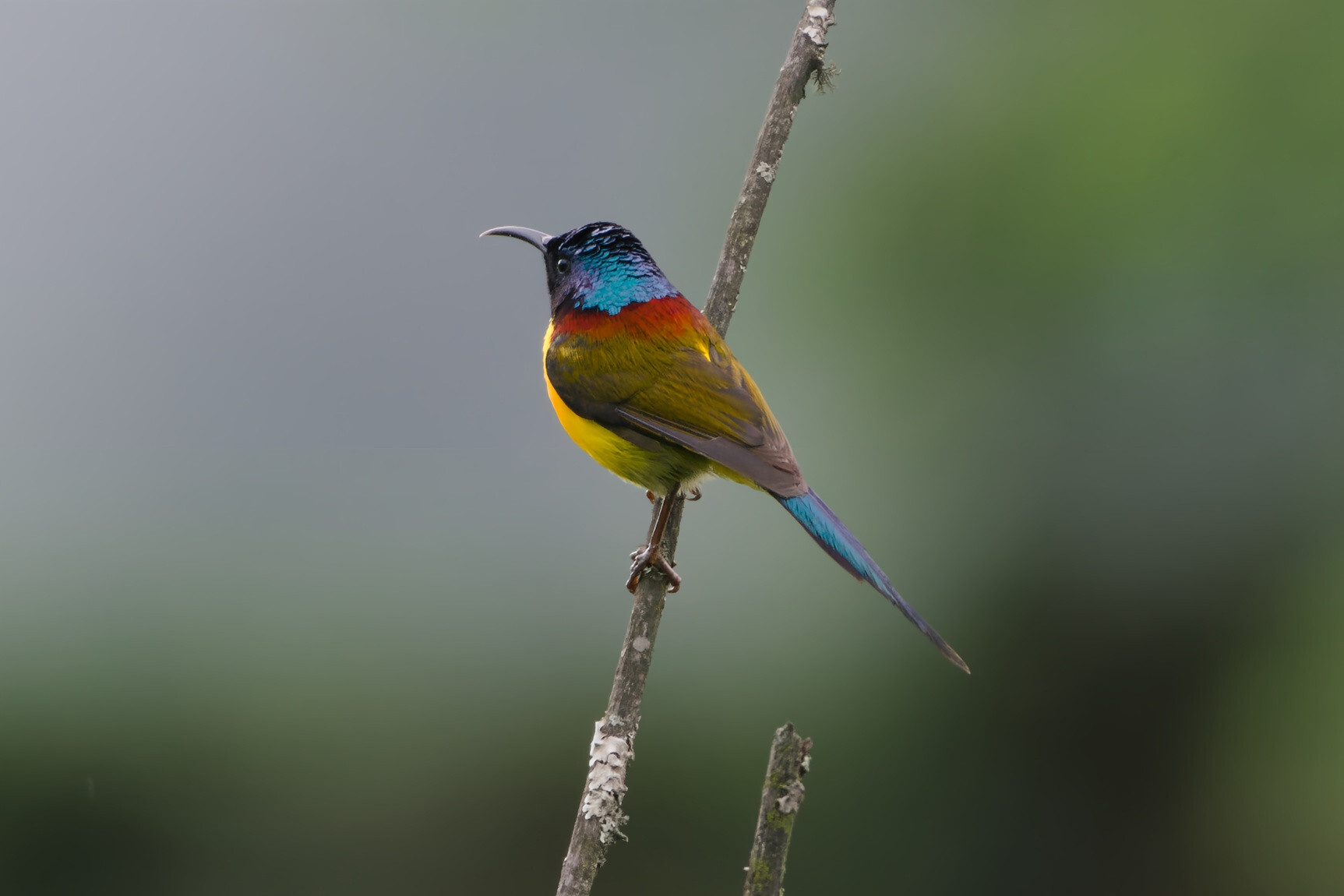
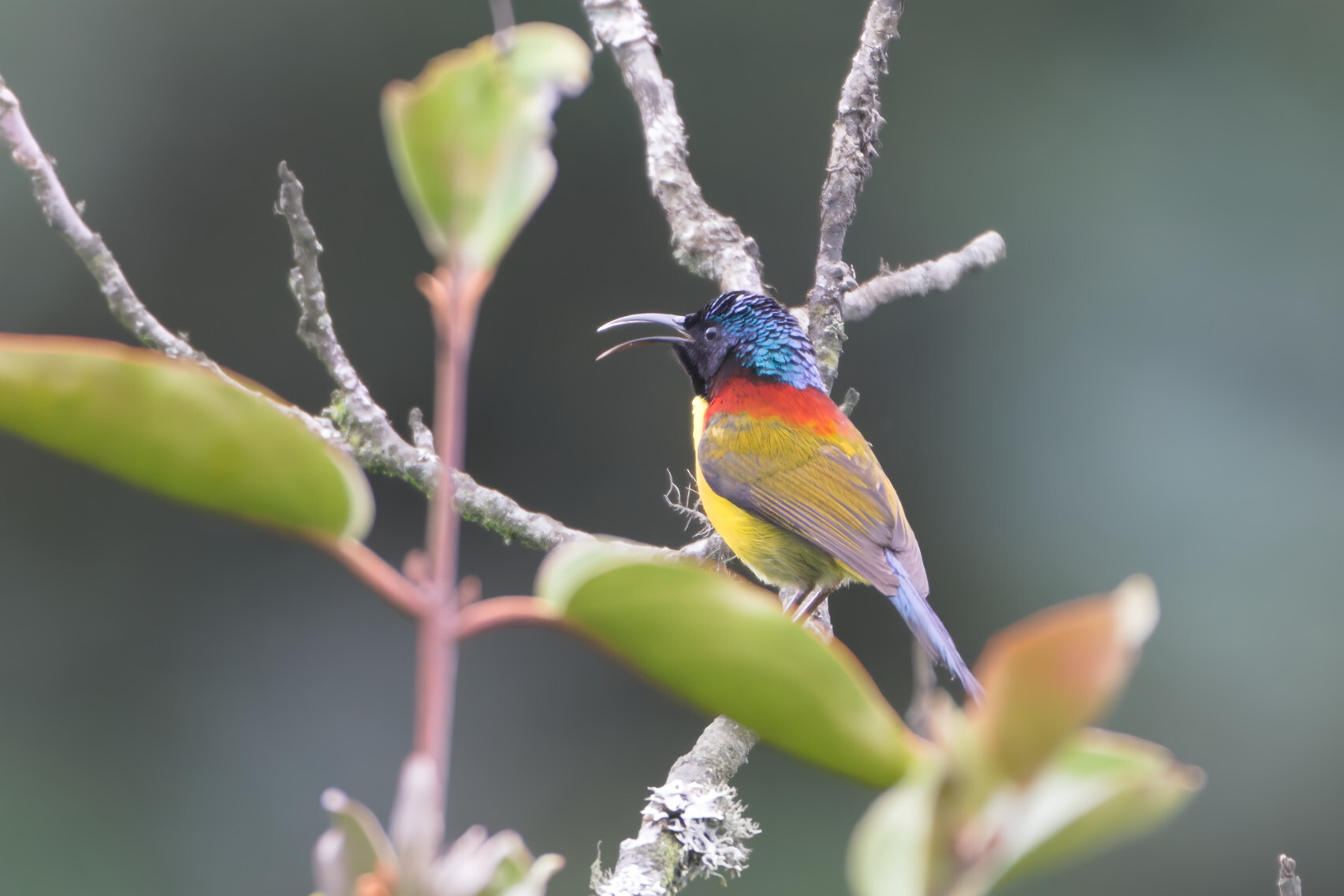
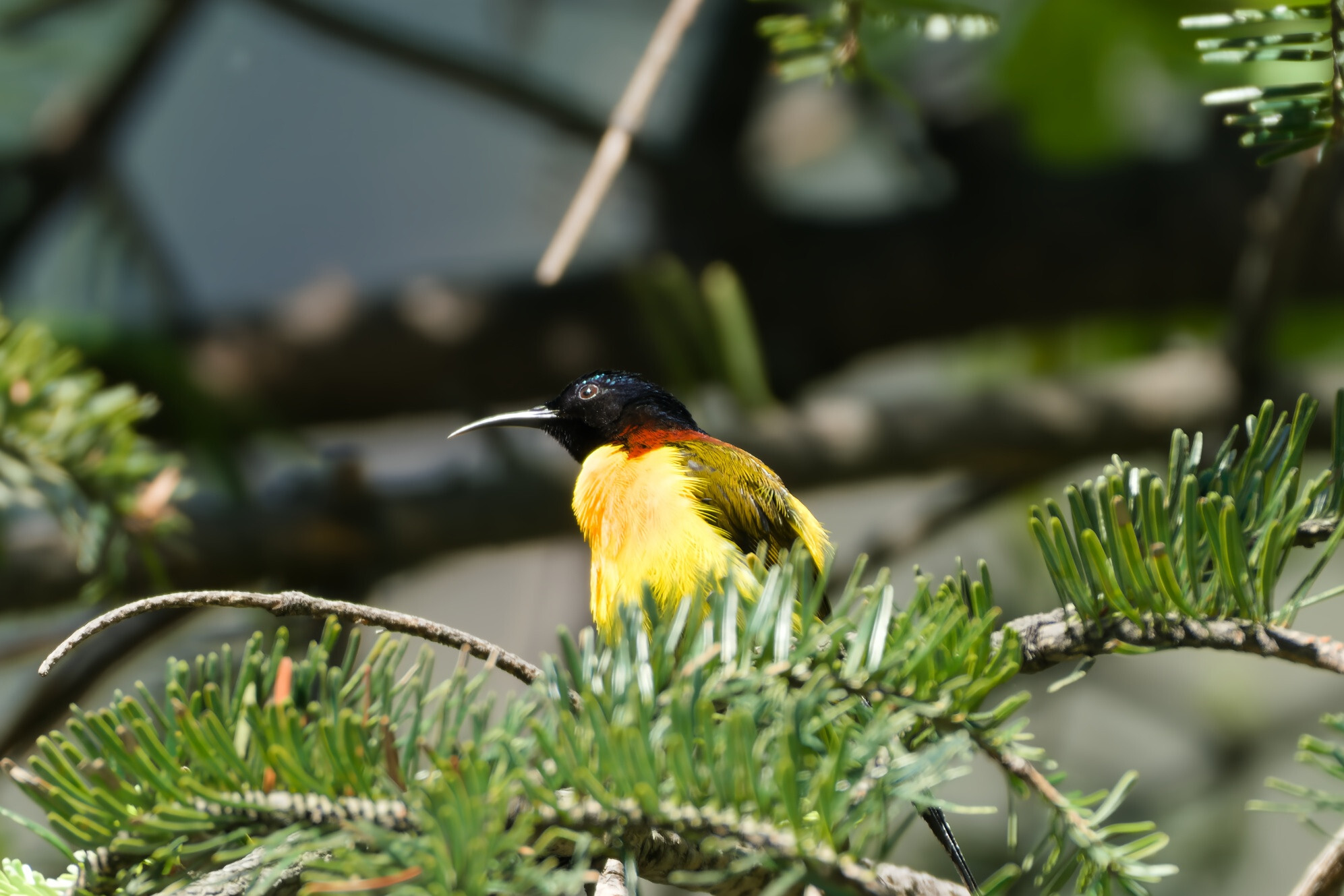
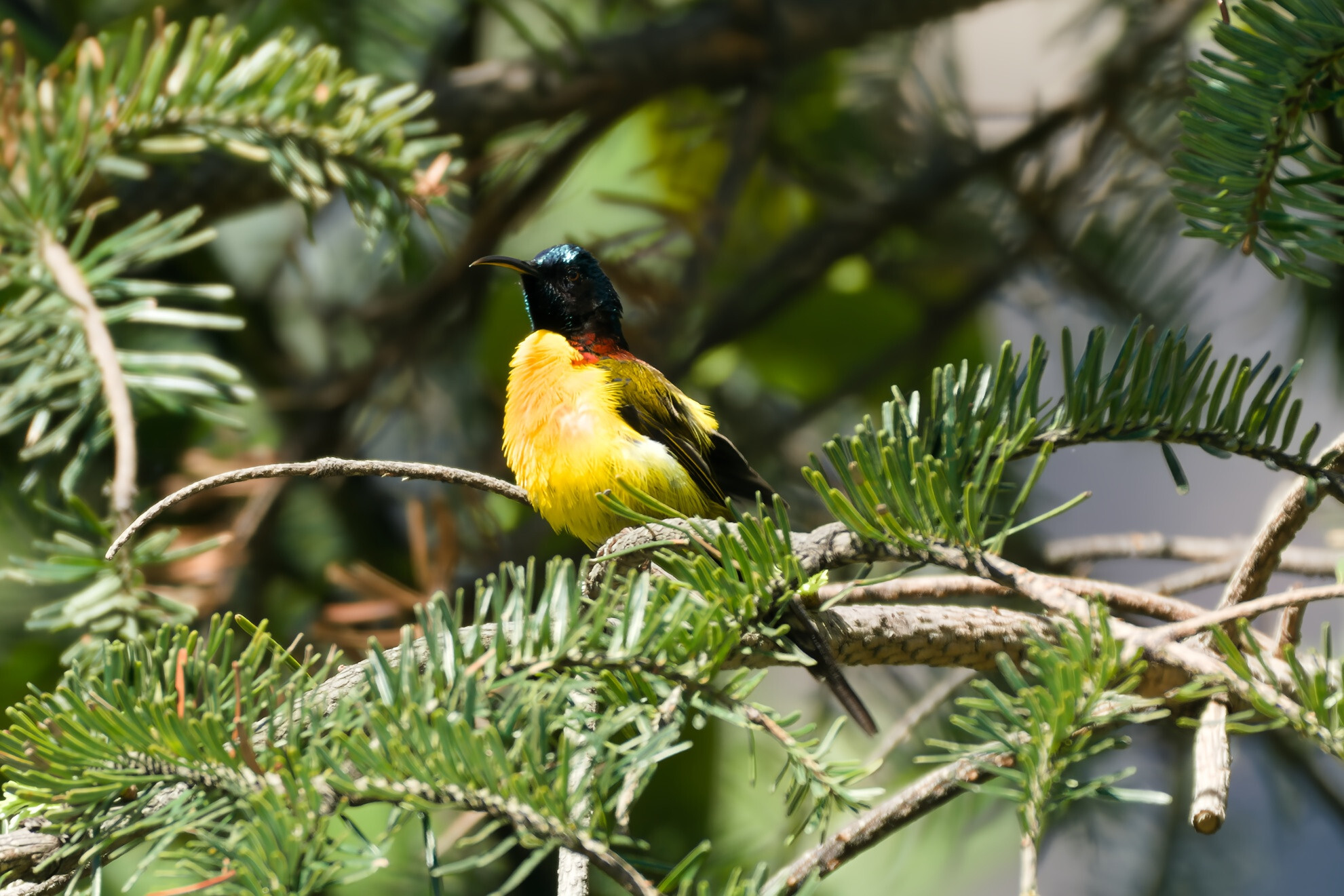
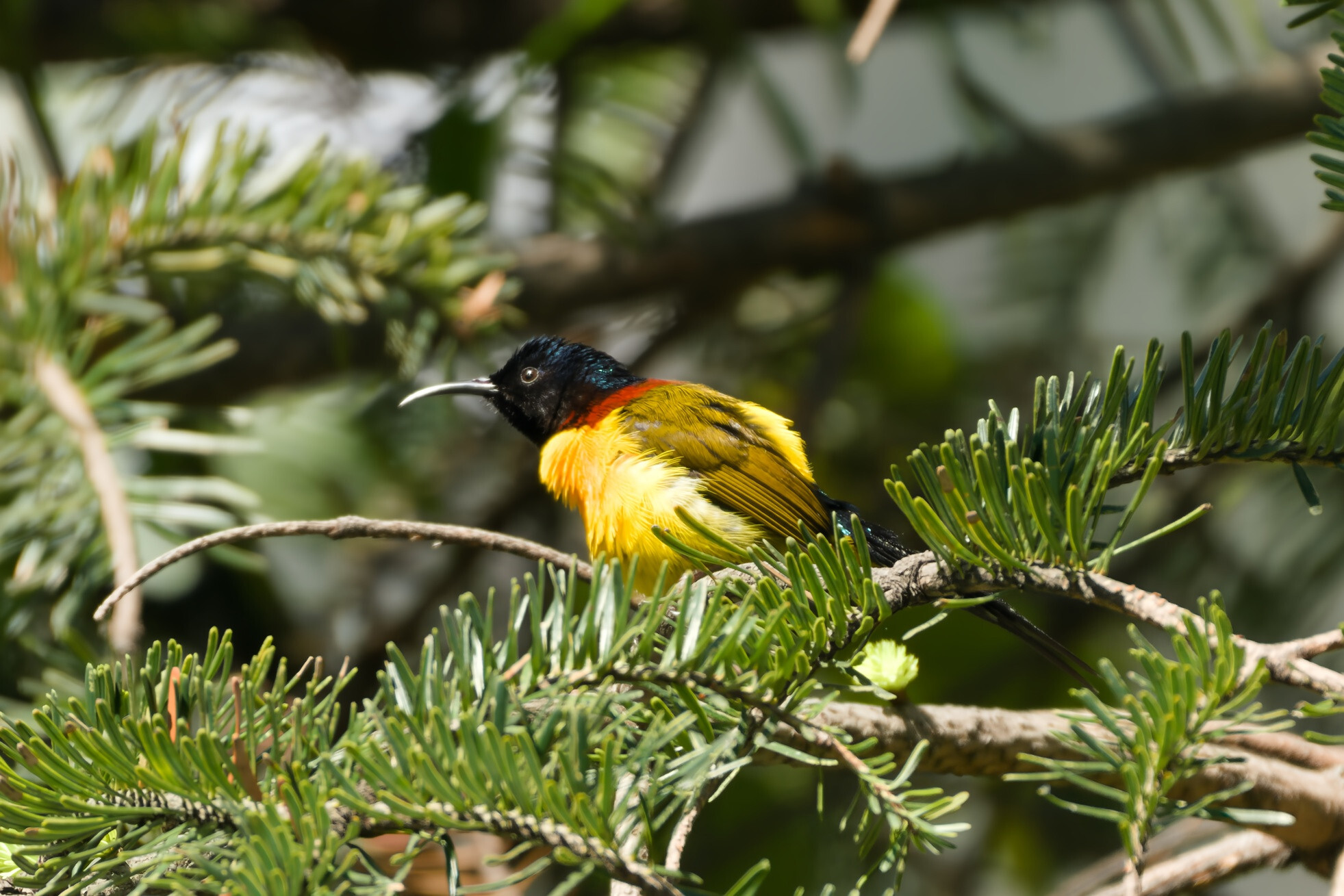
Green-tailed Sunbird
Aethopyga nipalensis
绿喉太阳鸟
Introduction
This sunbird inhabits the high-altitude forests of the central Himalayas and neighboring mountain ranges. Found primarily in Nepal and extending through the northern regions of the Indian subcontinent into parts of Southeast Asia, it favors temperate and subtropical moist montane forests. In the eastern parts of its range, particularly in southeastern Szechwan and Yunnan, it occupies open mountain woodlands characterized by moss-covered trees. This species is typically found at elevations between 1,825 and 3,350 meters.
Distribution & Habitat
This species occurs in Nepal and the northern regions of the Indian subcontinent, with its range extending eastward into parts of Southeast Asia. In southeastern Szechwan and Yunnan, it inhabits open mountain woods with moss-covered trees. It occupies temperate forests and subtropical or tropical moist montane forests at elevations from 1,825 to 3,350 meters.
Source: Wikipedia · CC BY-SA 3.0
Taxonomy
- Order
- Passeriformes
- Family
- Nectariniidae
- Genus
- Aethopyga
- eBird Code
- grtsun1
Vocalizations
Subspecies (9)
-
Aethopyga nipalensis angkanensis
high mountains of northern Thailand (Doi Ang Ka)
-
Aethopyga nipalensis australis
high mountains of southern peninsular Thailand south of Isthmus of Kra
-
Aethopyga nipalensis blanci
high mountains of Laos
-
Aethopyga nipalensis ezrai
high mountains of southern Vietnam
-
Aethopyga nipalensis horsfieldi
western Himalayas (Garhwal to western Nepal)
-
Aethopyga nipalensis karenensis
southeastern Myanmar (Karen Hills)
-
Aethopyga nipalensis koelzi
Himalayas (Bhutan to northeastern Myanmar, southwestern China, and northwestern Tonkin)
-
Aethopyga nipalensis nipalensis
western Nepal to northeastern India (Darjeeling) and Sikkim
-
Aethopyga nipalensis victoriae
western Myanmar (Chin Hills)
Data Sources
Species description from Wikipedia, licensed under CC BY-SA 3.0.
Bird images and sounds sourced from GBIF, contributed by citizen scientists worldwide under Creative Commons licenses.
Taxonomy data from AviList 2025.