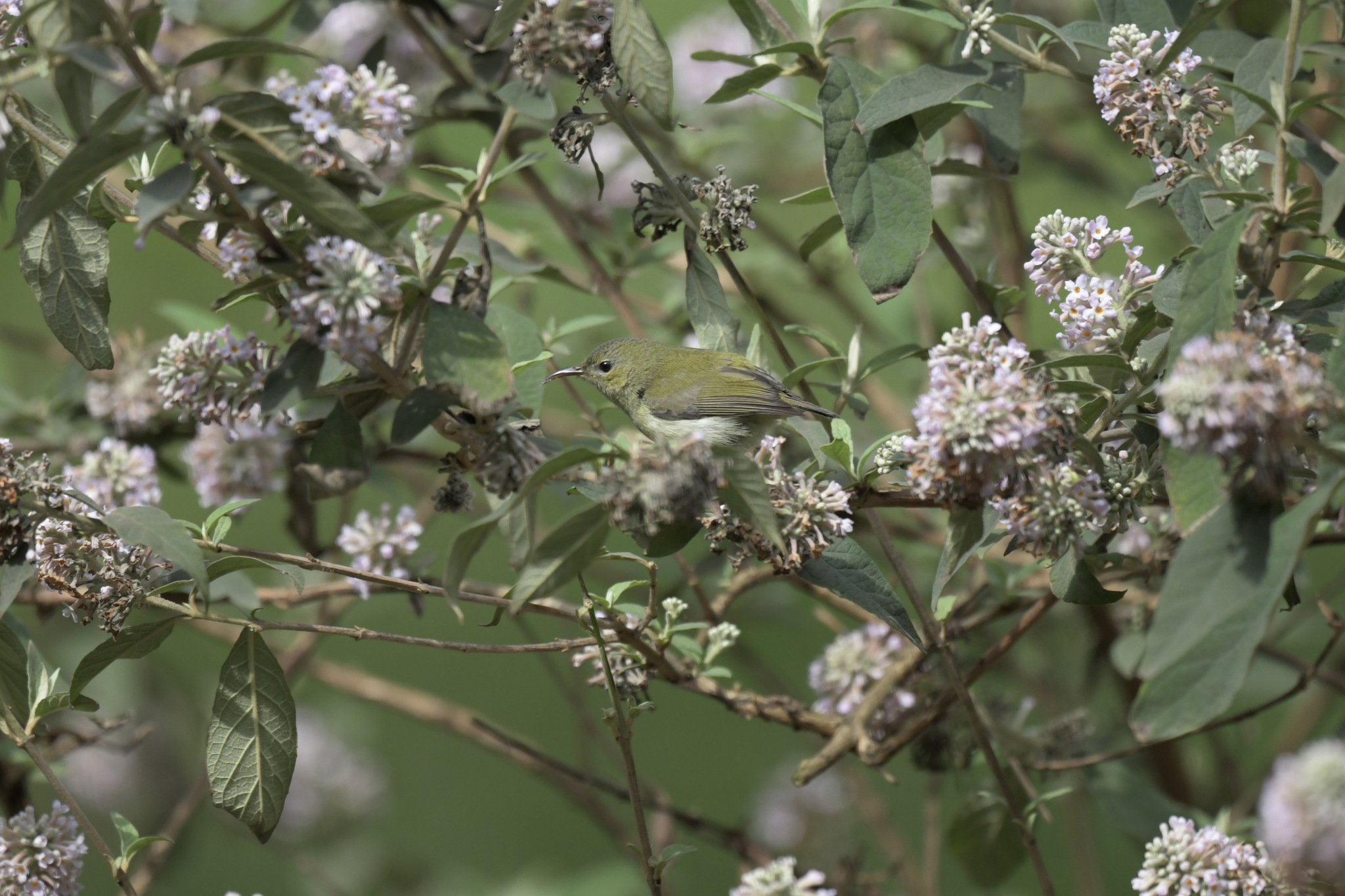
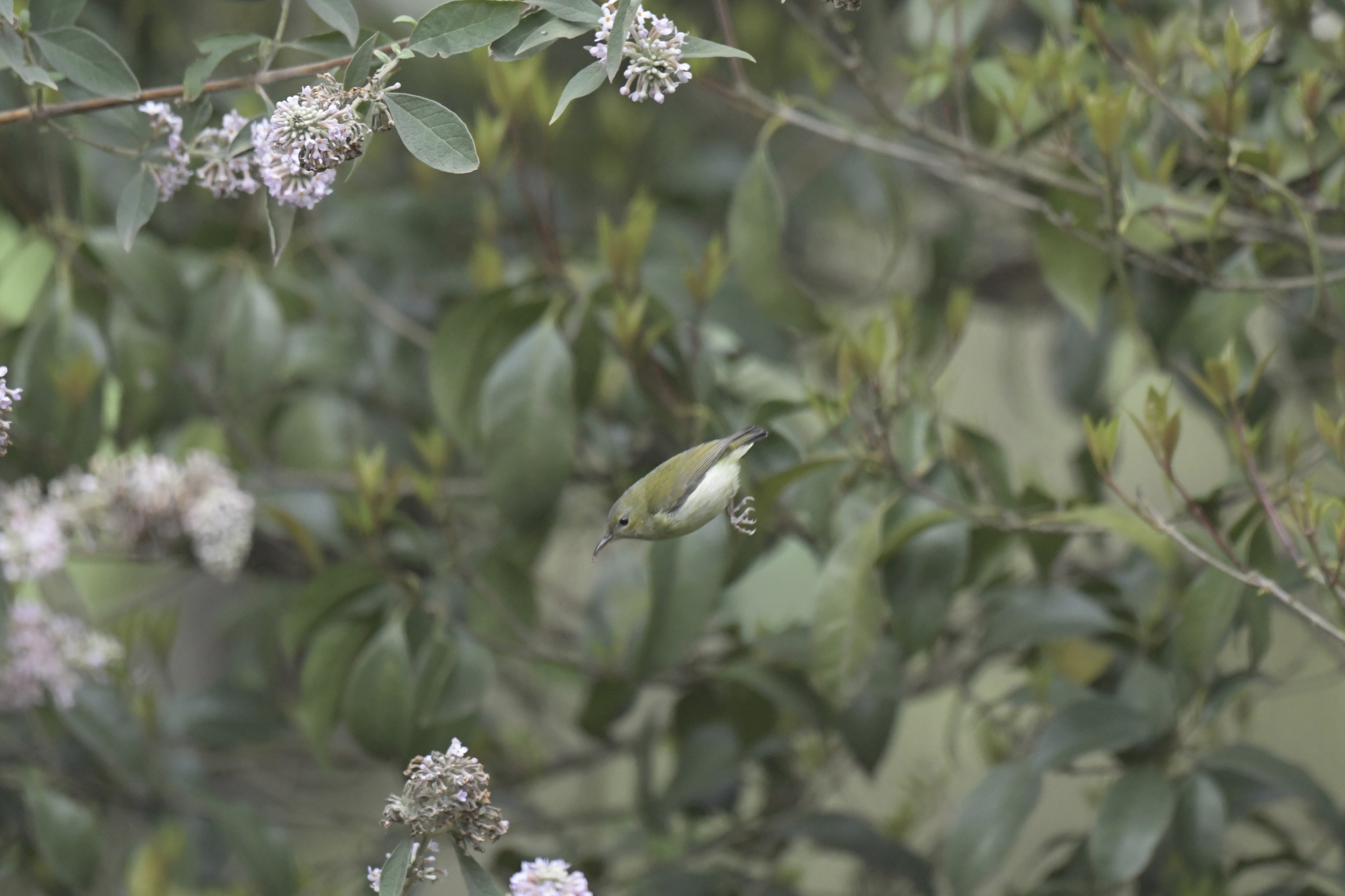
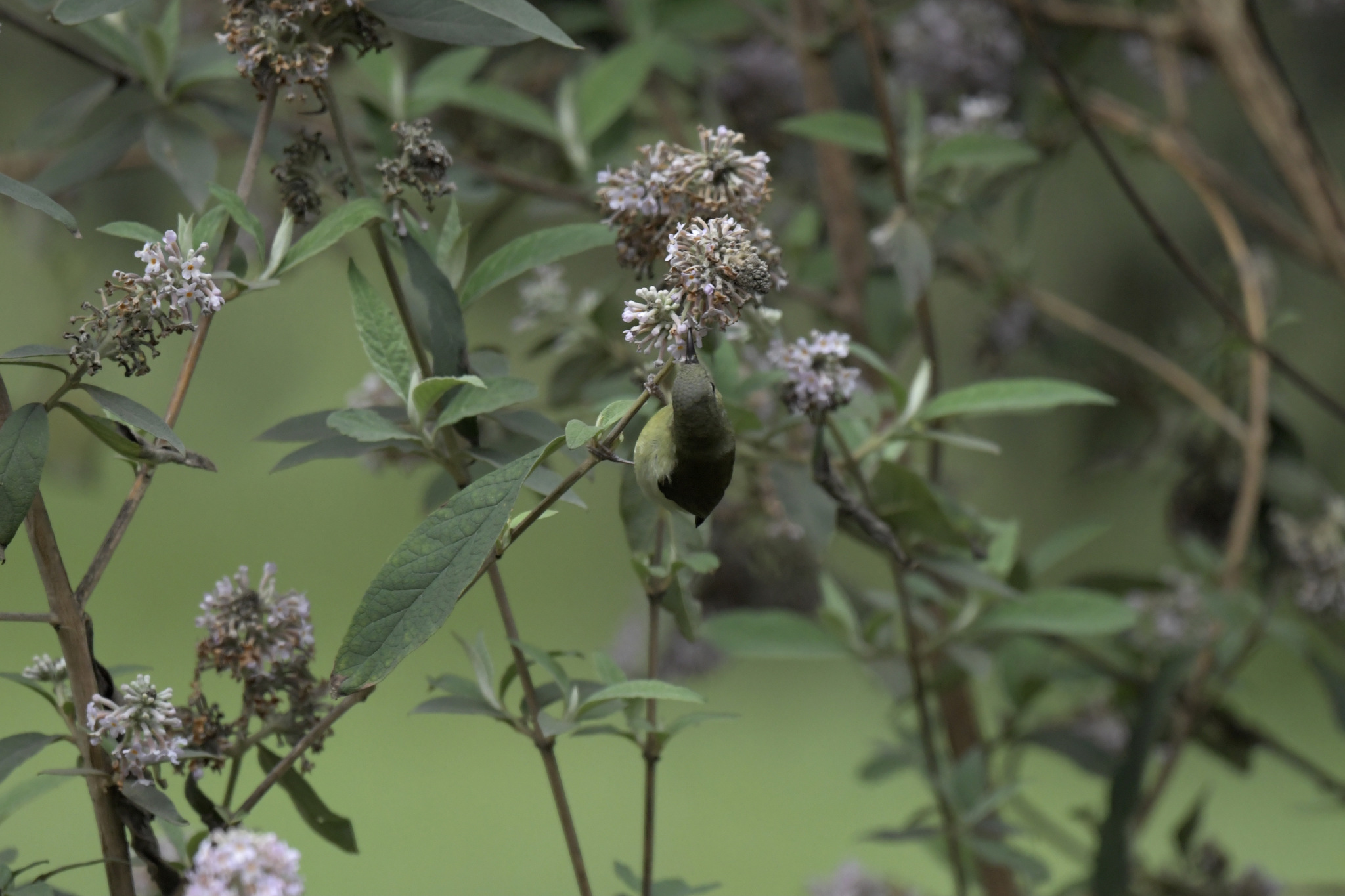
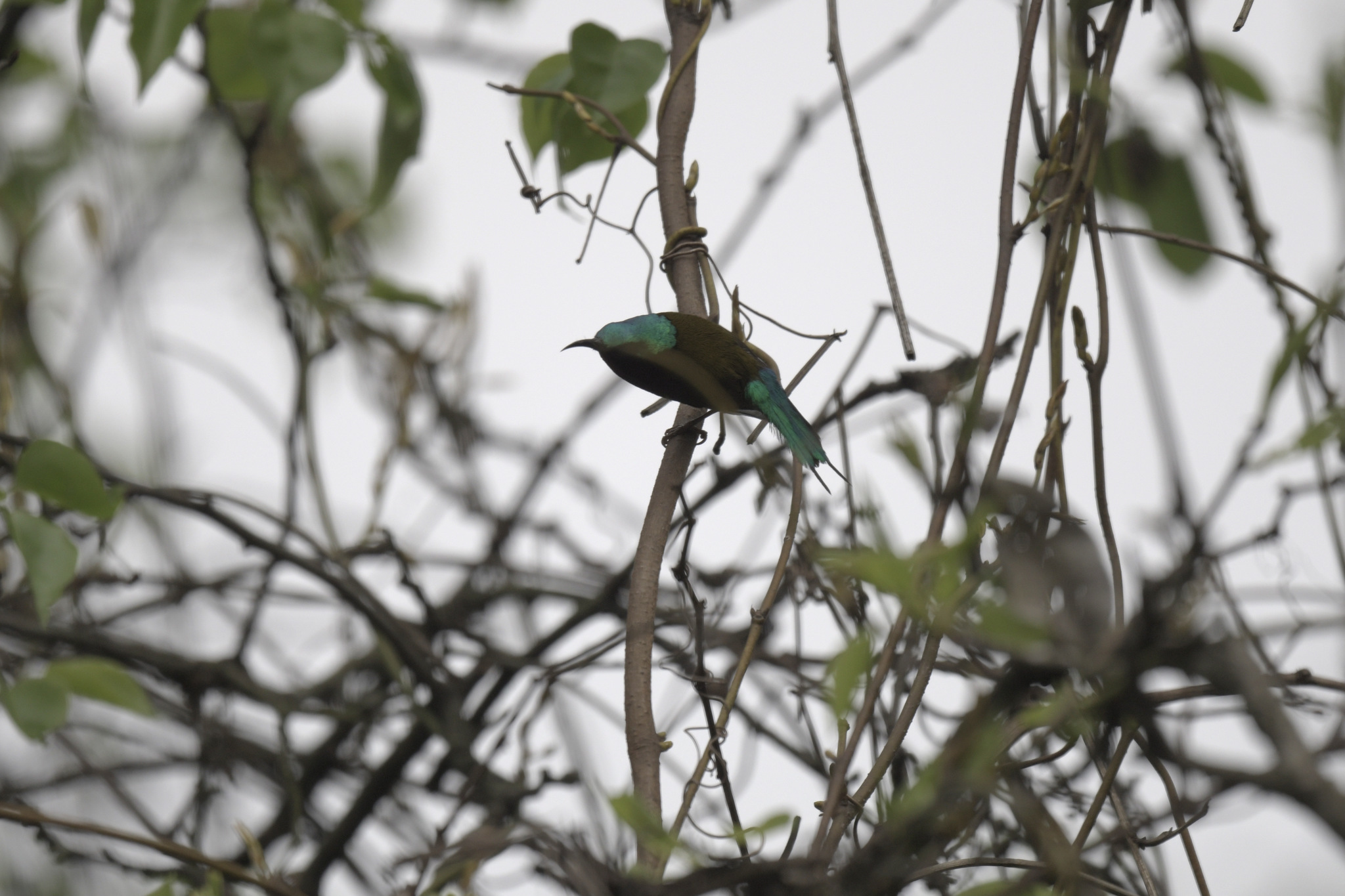
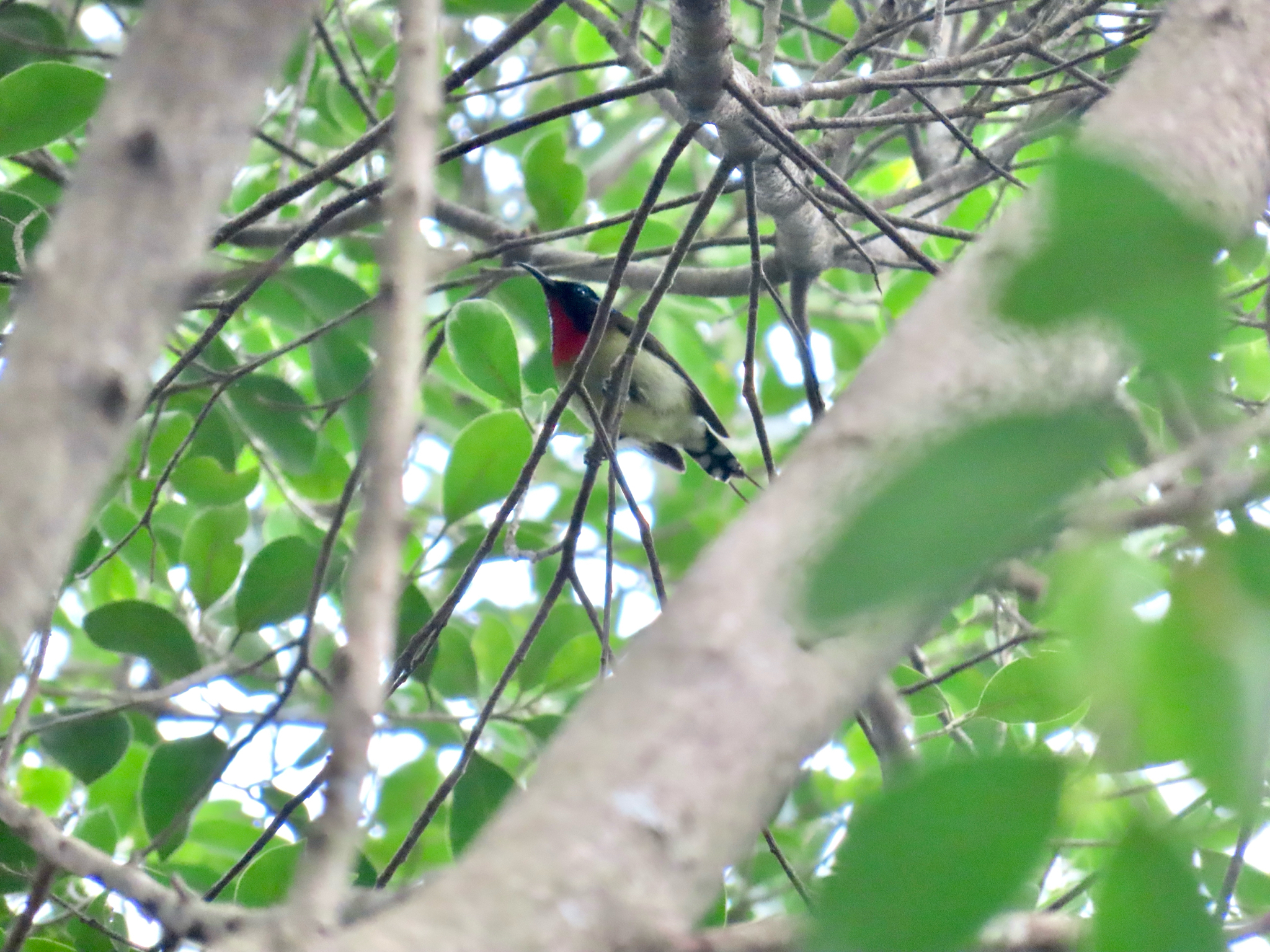
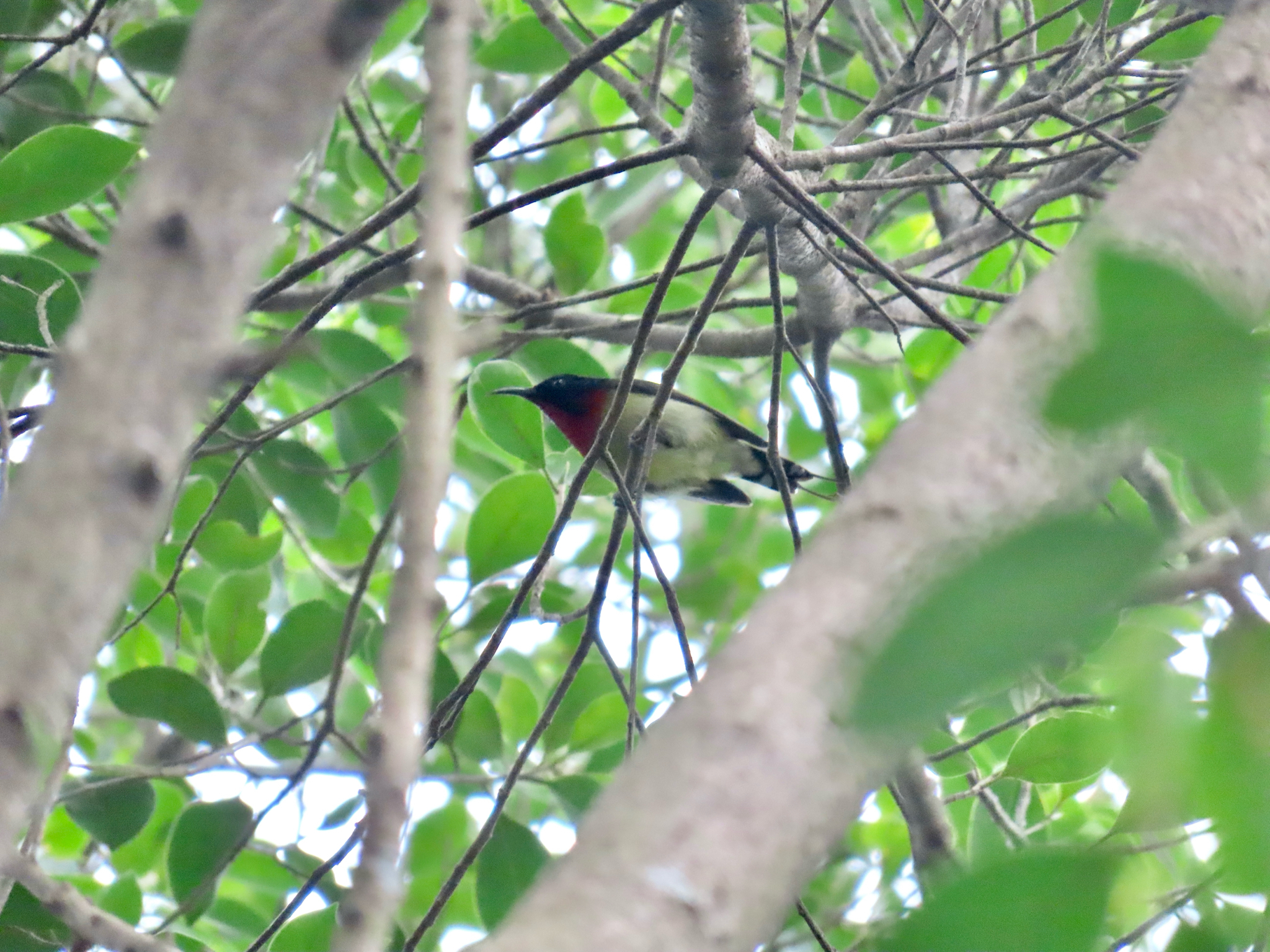
Fork-tailed Sunbird
Aethopyga christinae
叉尾太阳鸟
Introduction
The Fork-tailed Sunbird is a nectar-feeding bird species in the Nectariniidae family. It was first described by Robert Swinhoe in 1869. Its geographic range includes southern China and Southeast Asia. It inhabits subtropical and tropical moist lowland forests. It serves as a specialized pollinator. The species has a decurved bill adapted for extracting nectar from flowers. Its vocalizations include a soft 'zwink-zwink' contact call and occasional metallic trills.
Description
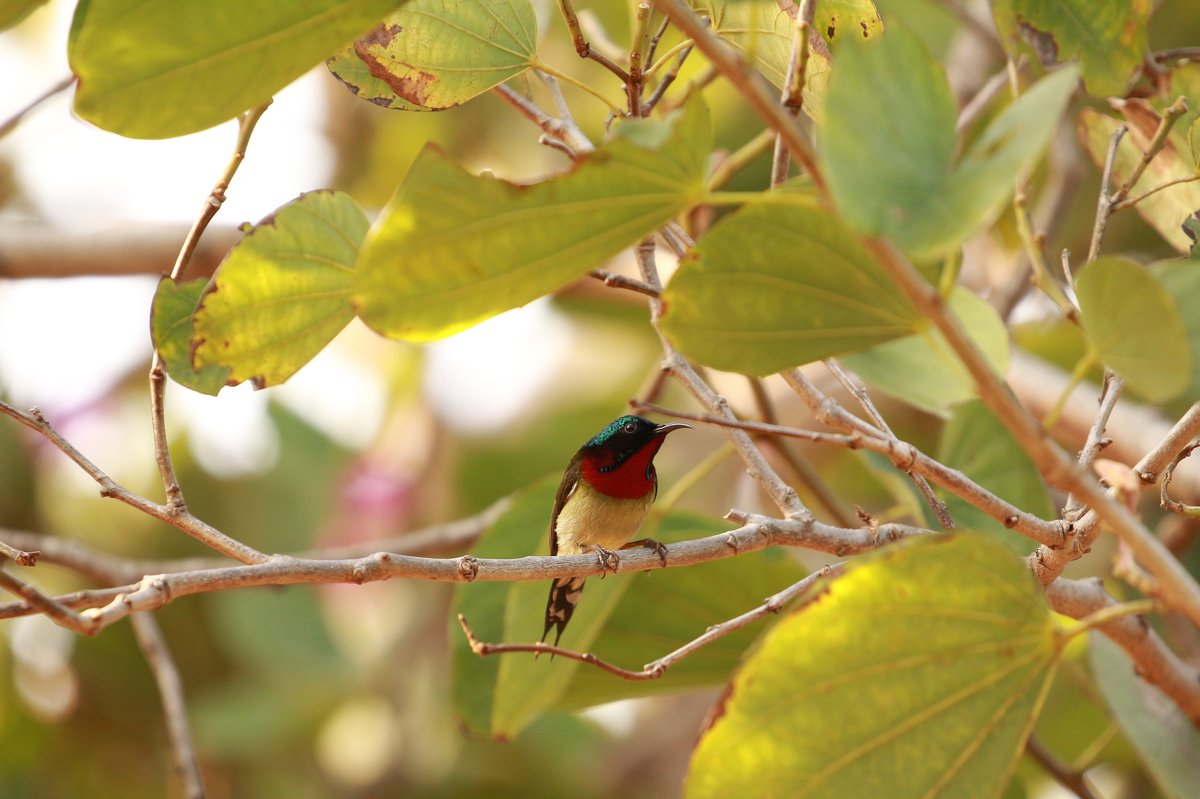
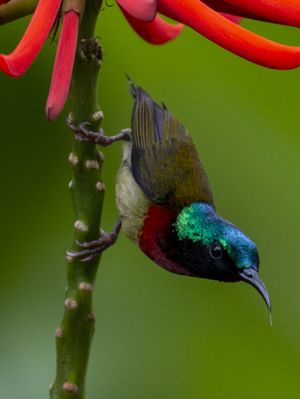
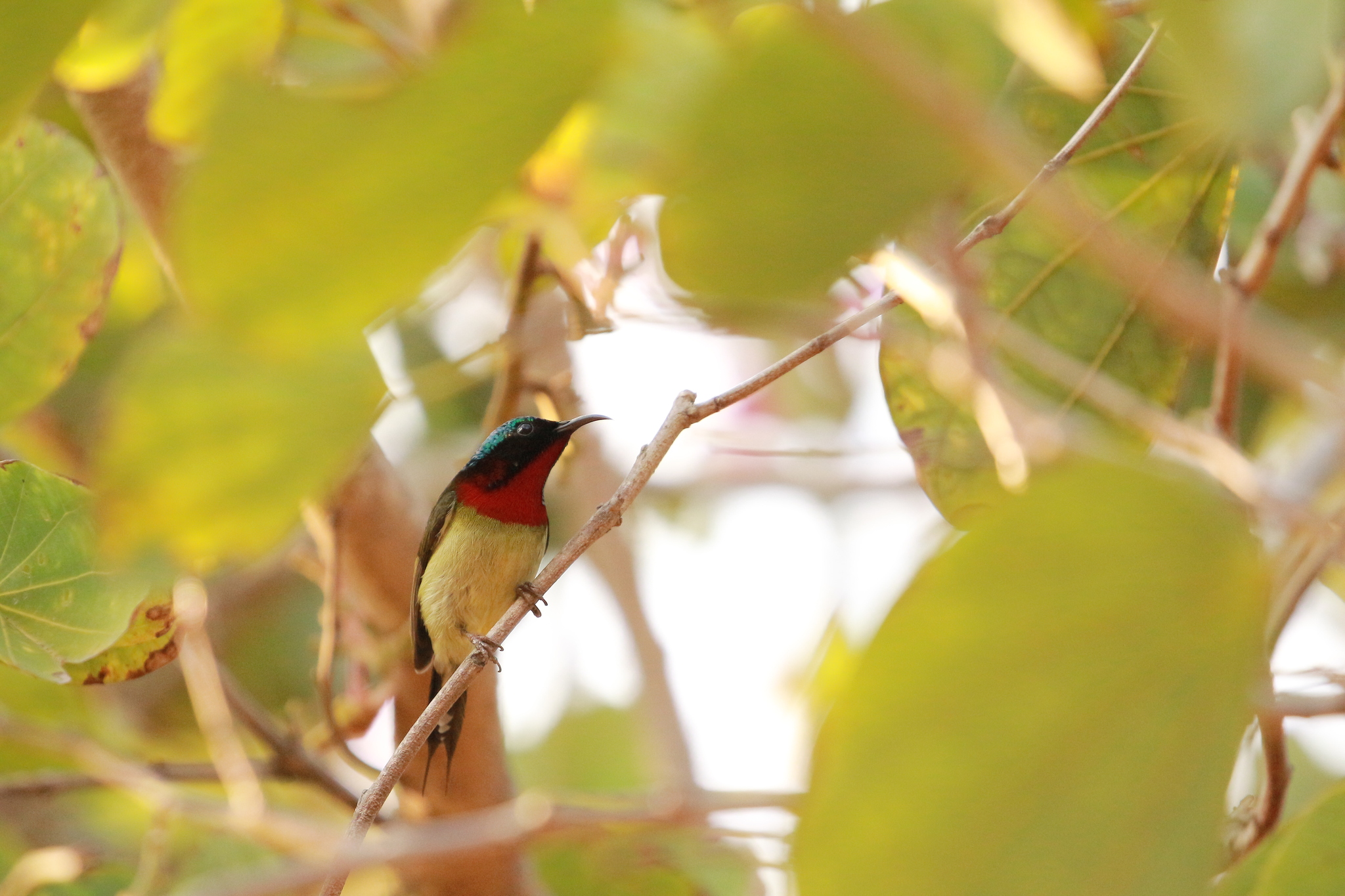
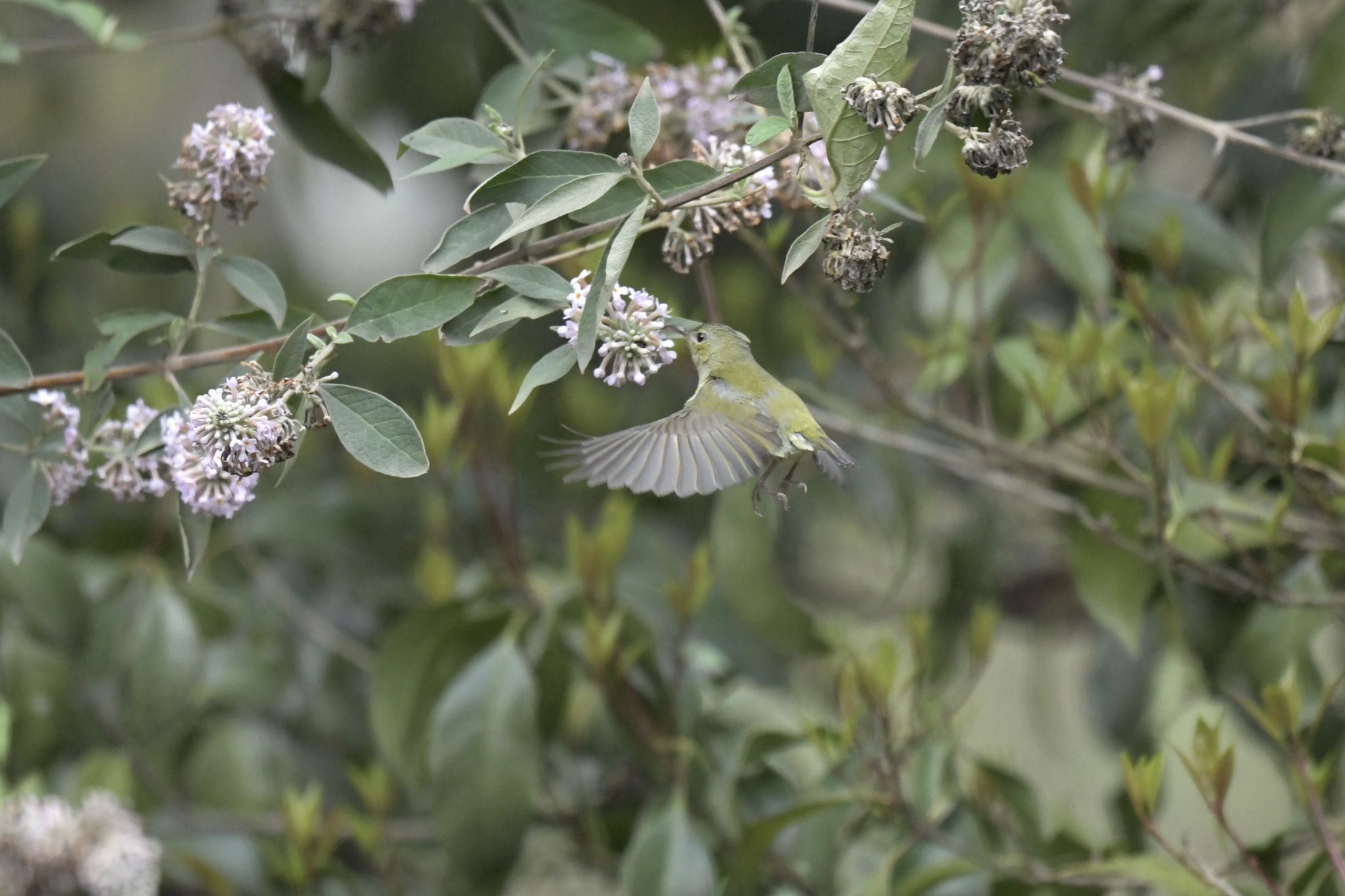
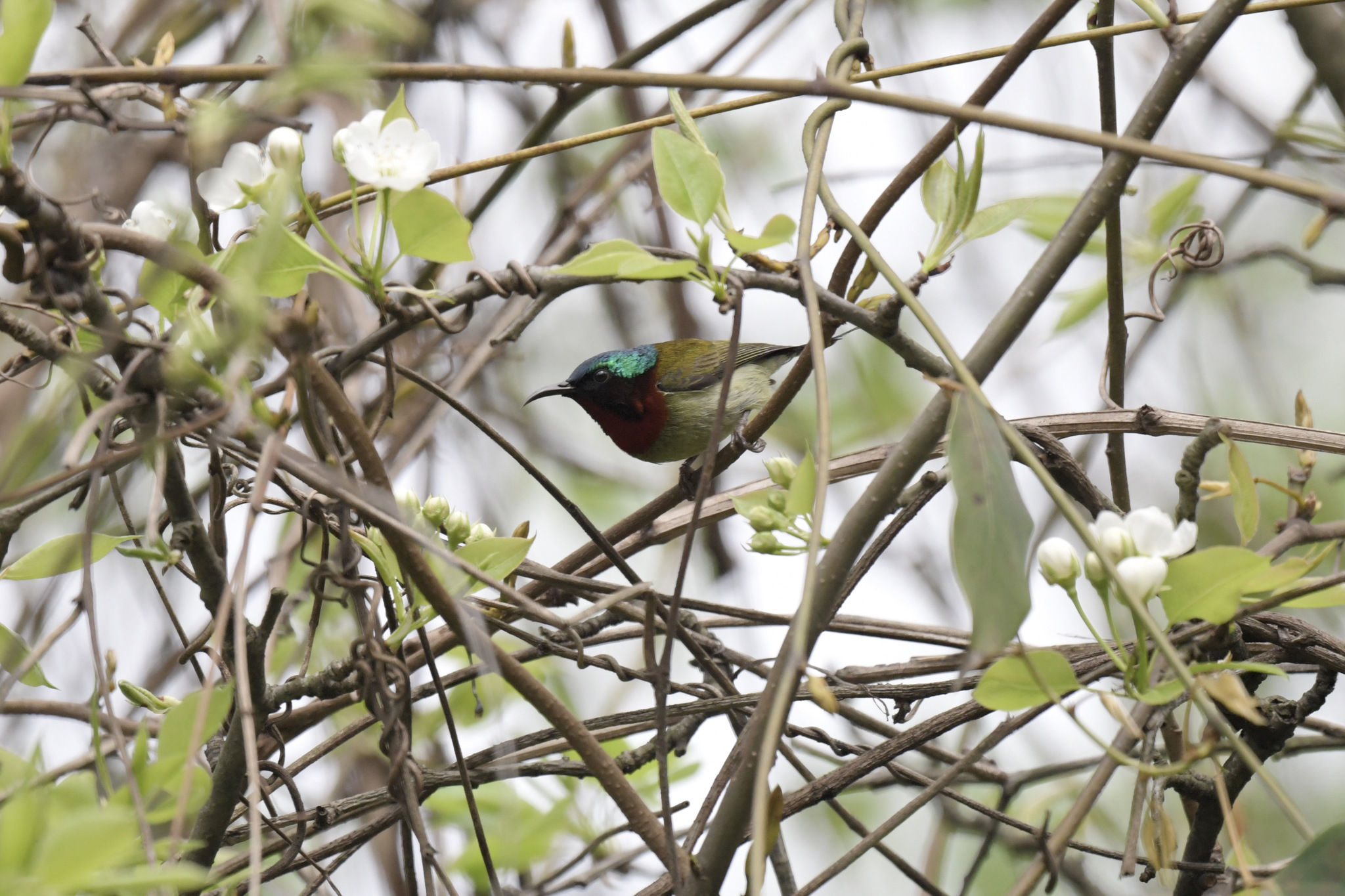
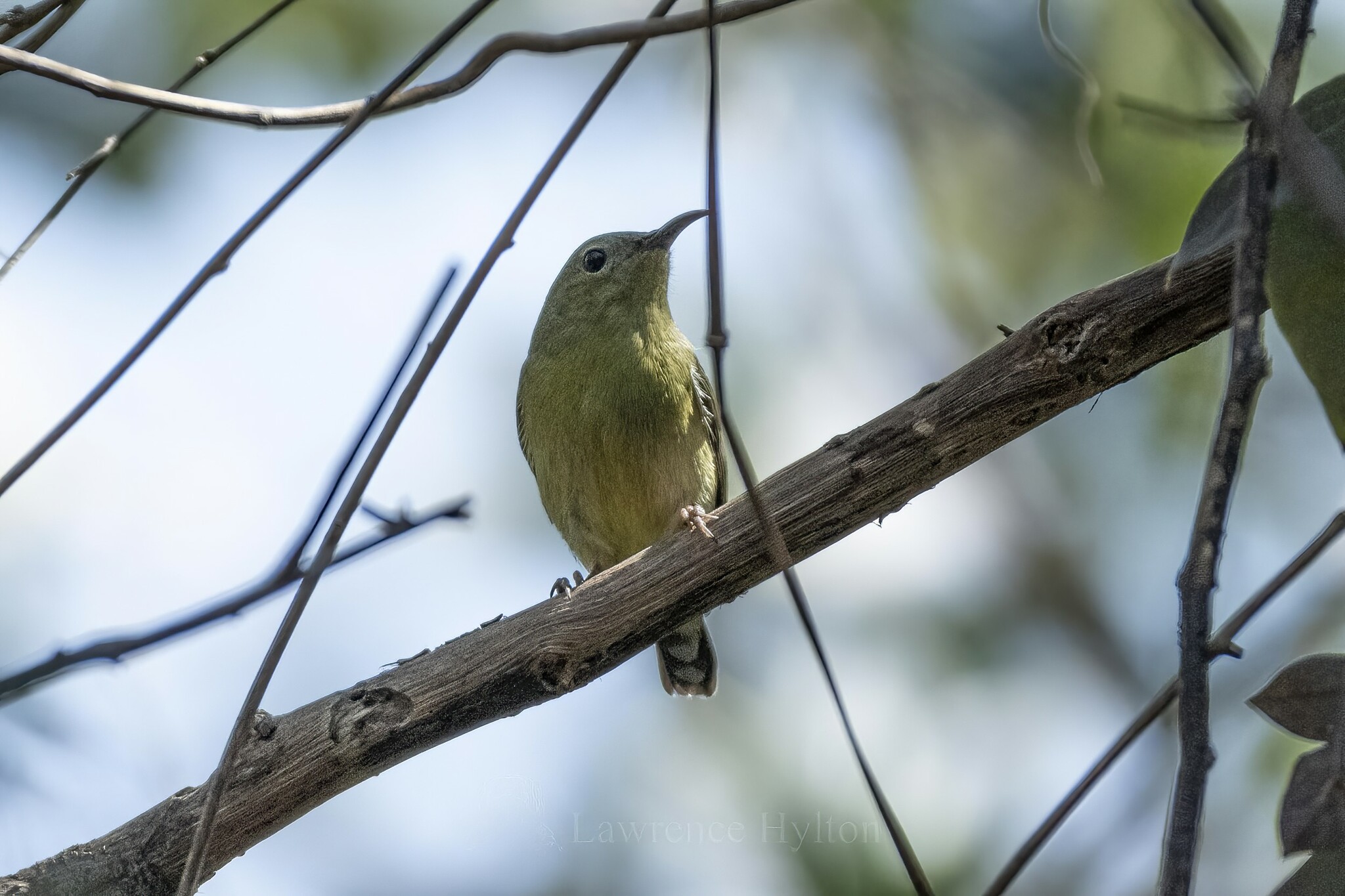
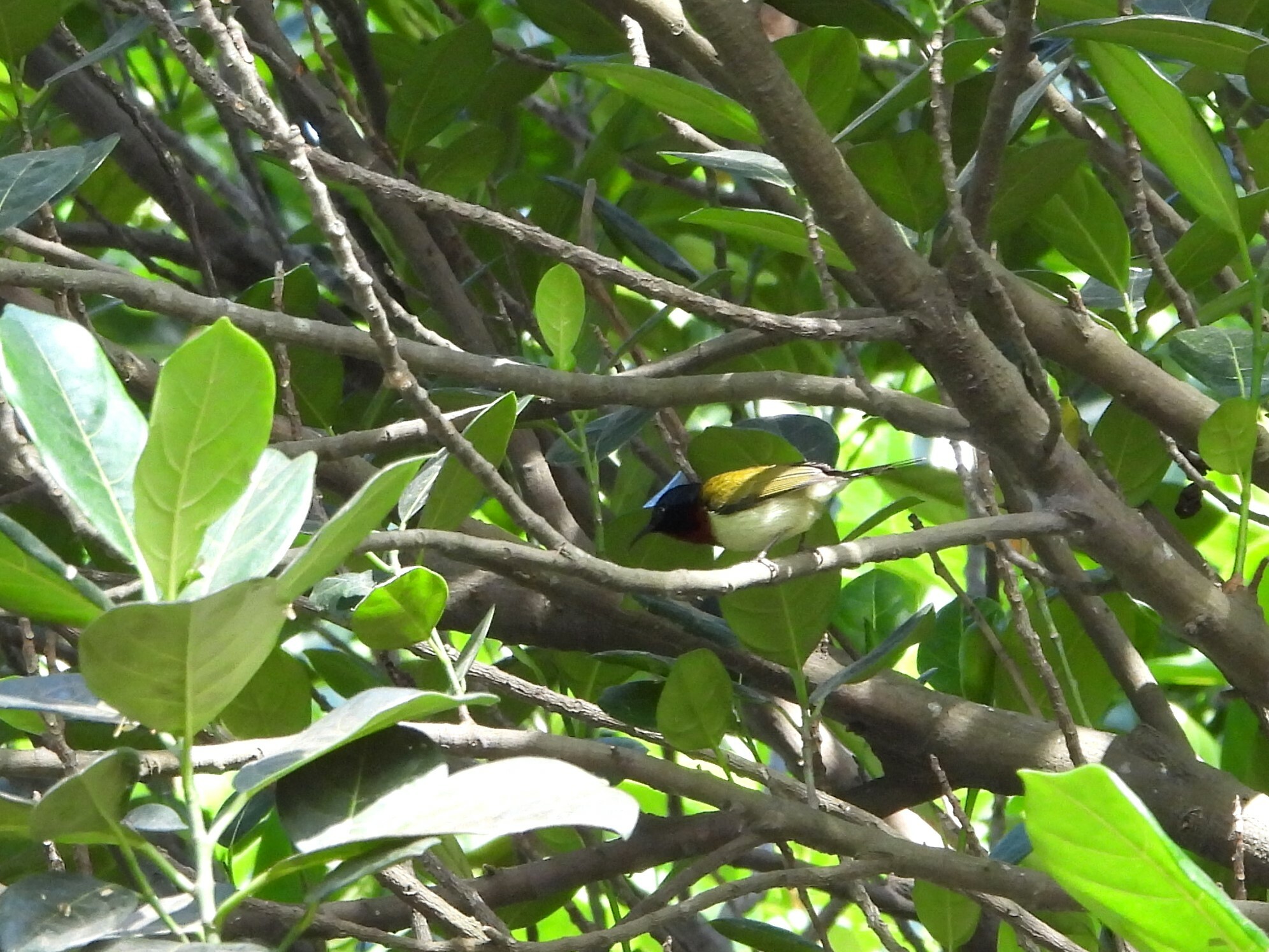
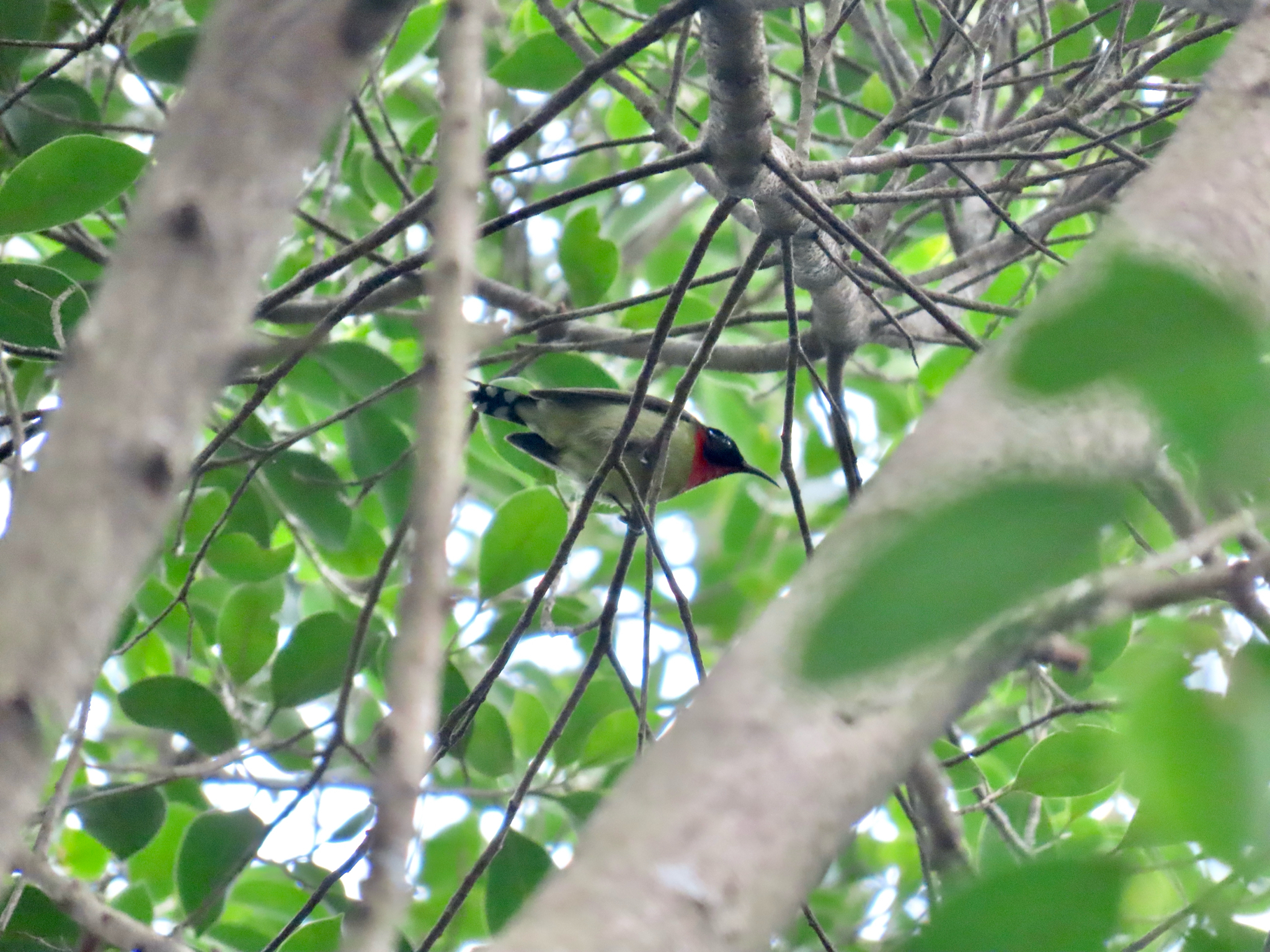
A small, compact sunbird with distinctive forked tail feathers. Adult males display brilliant green upperparts with yellow underparts and a deeply forked tail that gives the species its name. The long, slender decurved bill is perfectly adapted for accessing nectar from tubular flowers. Females show more subdued olive-green and yellow tones. The species measures approximately 10-12 cm in length.
Identification
Distinguished from similar sunbird species by its uniquely forked tail and restricted geographic range in southern China and Southeast Asia. The decurved bill separates it from superficially similar warblers and white-eyes. Males are unmistakable with their bright green and yellow plumage, while females are best identified by their small size, decurved bill, and association with flowering forest habitats.
Distribution & Habitat
Found in China, Hong Kong, Laos, and Vietnam. Inhabits subtropical and tropical moist lowland forests, typically at elevations below 1,500 meters. Some populations may make seasonal movements in response to flowering patterns, though migratory behavior remains poorly documented.
Behavior & Ecology
Primarily nectarivorous, feeding on nectar from various tropical flowering plants and serving as an important pollinator. Also consumes small insects and spiders for protein supplementation. Produces a soft, frequent 'zwink-zwink' contact call and a metallic trill. Constructs a pendulous nest suspended from vegetation. Maintains feeding territories around productive flowering plants.
Conservation
Information not available in source material.
Culture
Featured prominently on the most commonly used postal stamp of Hong Kong, making it an iconic symbol of the region's natural heritage. This cultural recognition has helped raise awareness of the species among both local residents and international visitors to Hong Kong.
Source: Wikipedia · CC BY-SA 3.0
Taxonomy
- Order
- Passeriformes
- Family
- Nectariniidae
- Genus
- Aethopyga
- eBird Code
- fotsun1
Vocalizations
Subspecies (3)
-
Aethopyga christinae christinae
Hainan (southern China)
-
Aethopyga christinae latouchii
southeastern China (eastern Sichuan, southern Hunan, Guandong, and Fujian) to northern Vietnam
-
Aethopyga christinae sokolovi
southern Vietnam
Data Sources
Species description from Wikipedia, licensed under CC BY-SA 3.0.
Bird images and sounds sourced from GBIF, contributed by citizen scientists worldwide under Creative Commons licenses.
Taxonomy data from AviList 2025.