Himalayan Swiftlet
Aerodramus brevirostris
短嘴金丝燕
Introduction
This small swiftlet is a colonial breeder across the Himalayas and Southeast Asia, frequenting mountainous regions where it nests in caves and forages over open areas. Populations exhibit altitudinal migrations seasonally. The species exhibits cave-dwelling habits and colonial nesting behavior, constructing tiny cup-shaped nests attached to vertical rock walls. It forms flocks of typically around 50 birds but sometimes numbering up to 300 individuals as they emerge from caves at dusk to feed.
Description
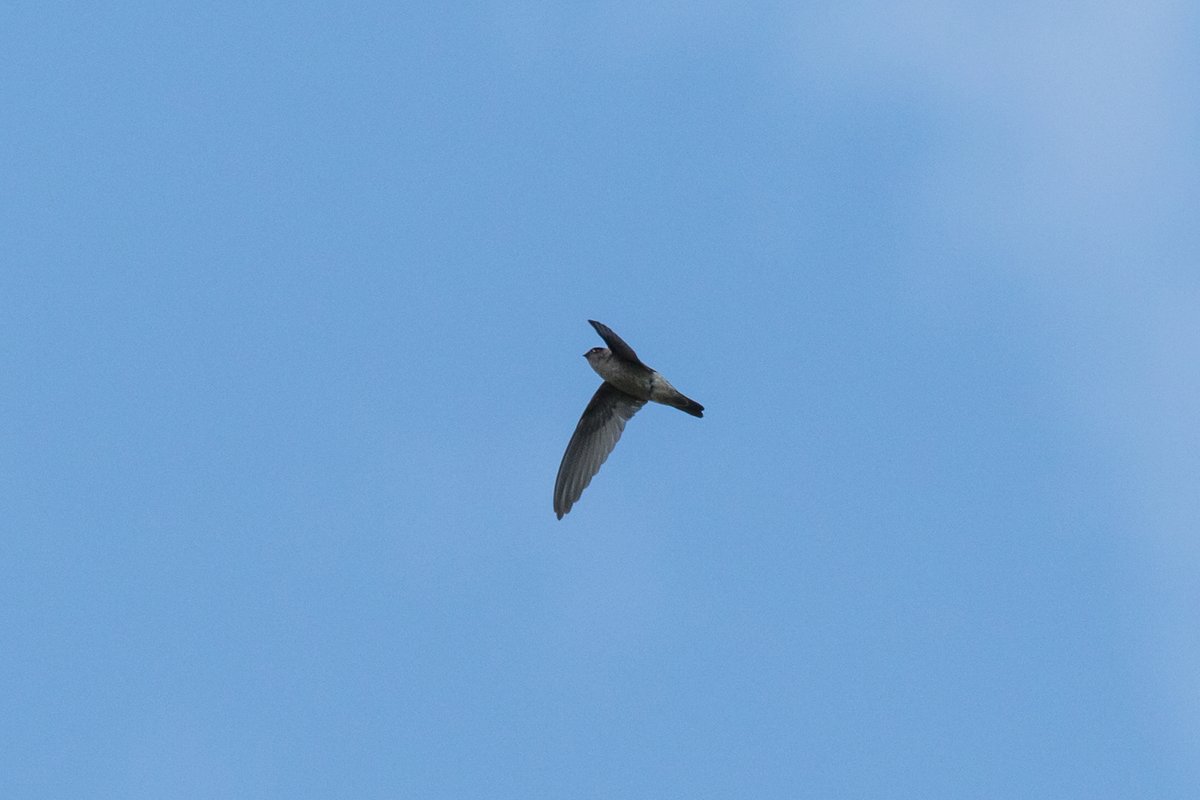
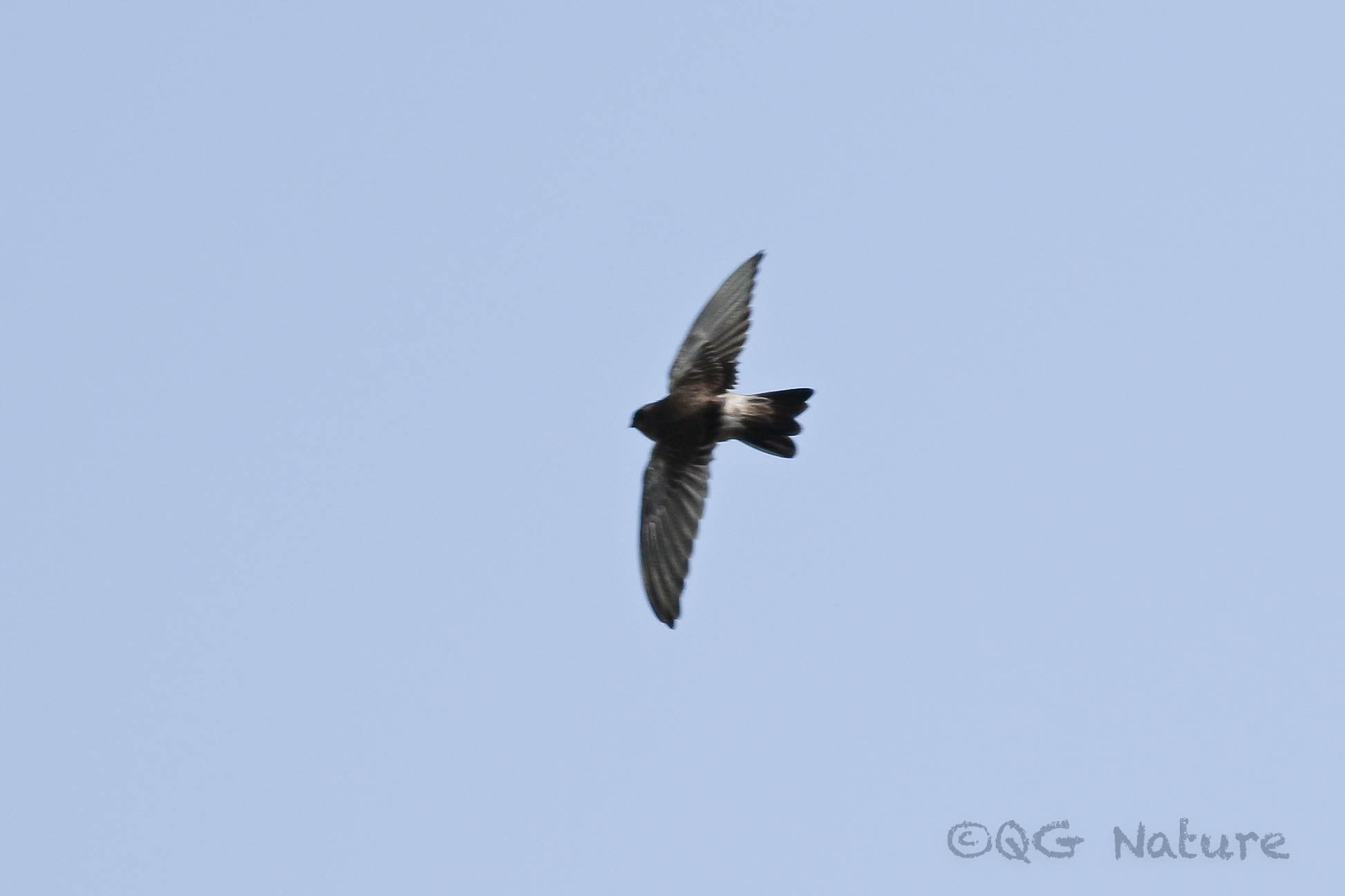
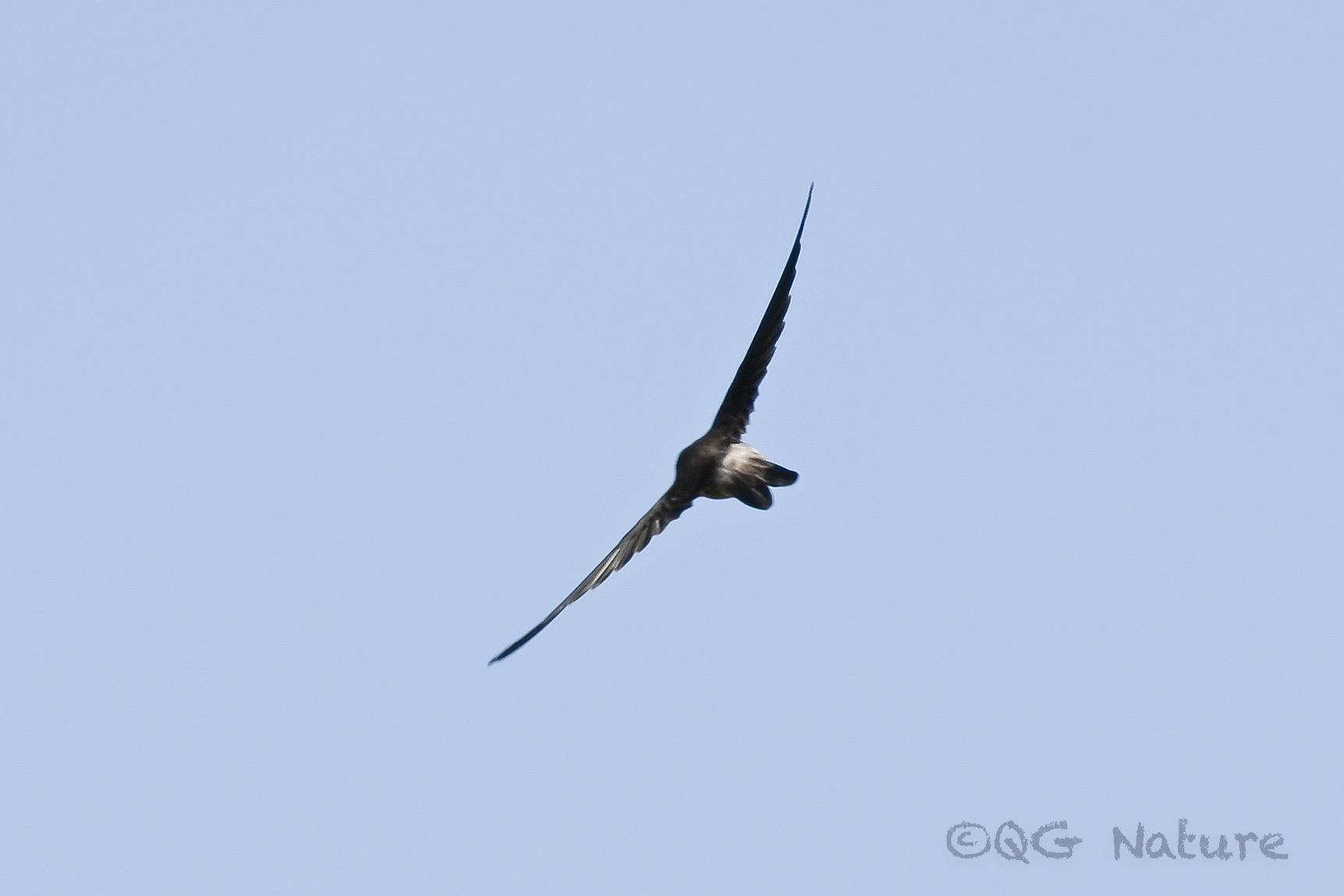
This compact swiftlet measures 13-14 centimeters in length with a slender body and deeply forked tail. Its wings are long, narrow, and swept-back, creating a distinctive crescent or boomerang silhouette in flight. The species possesses typical swift anatomy: very short legs that prevent perching but allow clinging to vertical surfaces, a wide gape, and a small beak surrounded by sensory bristles for capturing airborne insects. Upperparts are mainly grey-brown, while underparts appear paler brown. A pale grey rump patch and a pale marking above and behind the bill are diagnostic features. The sexes appear identical, though juveniles display a less distinctly marked rump. Five subspecies are recognized, varying primarily in rump coloration intensity from pale grey to dark grey.
Identification
Over much of its range, this is the only swiftlet present, simplifying identification. However, in the southern portions of its breeding territory and throughout its wintering grounds, distinguishing it from other Collocalia swiftlets can be challenging. The pale grey rump and the pale patch above and behind the bill are useful field marks. Flight style is characterized by prolonged glides on long primary feathers, and observers should note the bird's tendency to emerge from caves at dusk. The high-pitched teeree-teeree-teeree call may aid identification when birds are detected aurally.
Distribution & Habitat
The species occupies disjunct populations across South and Southeast Asia. The nominate race breeds in the Himalayas east through Bangladesh, Myanmar, and Thailand, breeding at elevations up to 4,500 meters and descending to 900-2,750 meters for winter. Other subspecies occupy central China, southwestern China, eastern Myanmar with western Thailand and Laos, and volcanic peaks in Java, Indonesia. Highland habitats are preferred, particularly open forested areas such as river valleys. Central Chinese populations migrate southwest to Thailand and the Malay Peninsula for the northern hemisphere winter.
Behavior & Ecology
As an aerial insectivore, this swiftlet leaves its roosting caves daily to forage for flying insects over open areas including forests, rivers, and cultivated land. The tiny cup nest is constructed from thick saliva and moss, attached to vertical cave walls in colonies where nests may touch. The species is monogamous with both parents sharing nestling duties. It produces a twittering chit-chit call at roost and a piercing teeree-teeree-teeree call in flight. Echolocation ability enables navigation in dark caves—two broadband clicks with a pause that shortens in poorer light, followed by twittering as the bird approaches its nest. Flocks of about 50 birds are typical, though up to 300 have been recorded.
Conservation
The species is currently assessed as common and widespread across most of its range, with stable population trends. However, the Javan volcanic form, if treated as a separate species (Volcano swiftlet), is classified as near-threatened. This isolated population nests only on active volcanoes in Java, with four confirmed sites and five suspected localities totaling fewer than 400 individuals. Nesting in crater crevices on active volcanic peaks makes colonies susceptible to periodic extinction from eruptions. The entire global population of this form remains highly vulnerable to volcanic activity.
Culture
No specific cultural significance, folklore, or mythological associations are documented for this species.
Source: Wikipedia · CC BY-SA 3.0
Taxonomy
- Order
- Apodiformes
- Family
- Apodidae
- Genus
- Aerodramus
- eBird Code
- himswi2
Subspecies (3)
-
Aerodramus brevirostris brevirostris
Himalayas to Nepal, northeastern India, Myanmar, and Thailand
-
Aerodramus brevirostris innominatus
east-central China to northern Vietnam; winters to Malay Peninsula
-
Aerodramus brevirostris rogersi
mountains of eastern Myanmar, western Thailand, northern Laos, and Vietnam
Data Sources
Species description from Wikipedia, licensed under CC BY-SA 3.0.
Bird images and sounds sourced from GBIF, contributed by citizen scientists worldwide under Creative Commons licenses.
Taxonomy data from AviList 2025.