Boreal Owl
Aegolius funereus
鬼鸮
Introduction
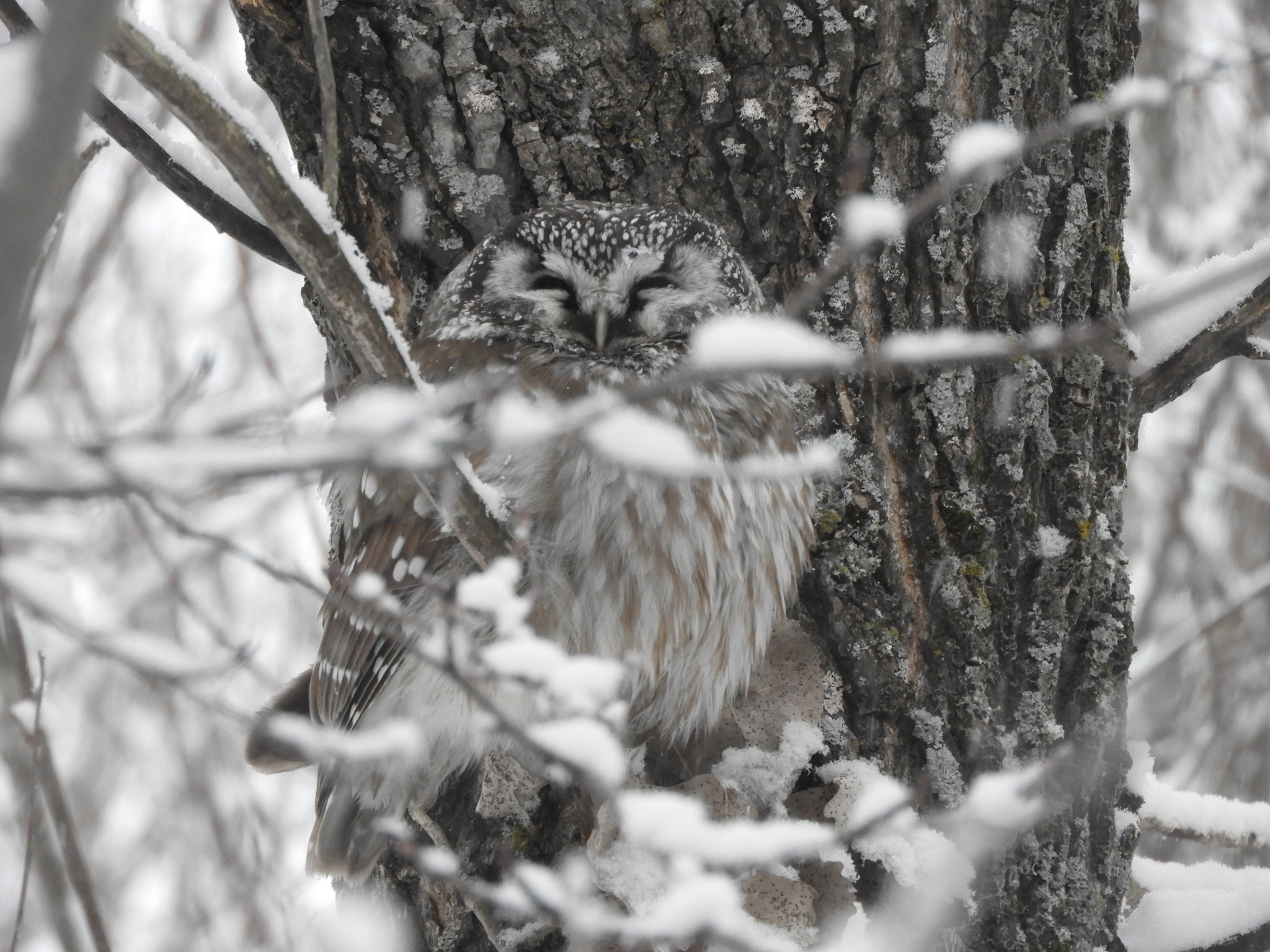
Small owl (Aegolius funereus) in the family Strigidae. Found across boreal forest zones of northern North America and the Palearctic from Scandinavia to Siberia, the Caucasus, and the Rocky Mountains. Inhabits dense boreal, subalpine, and mixed old-growth forests. Two distinctive traits: highly nocturnal and extremely inaccessible habitat make it rarely seen; however, when encountered it is remarkably confiding, showing little fear and only flying off when approached to within 3-5 metres. Currently listed as Least Concern with stable population of 730,000-1,810,000 mature individuals.
Description
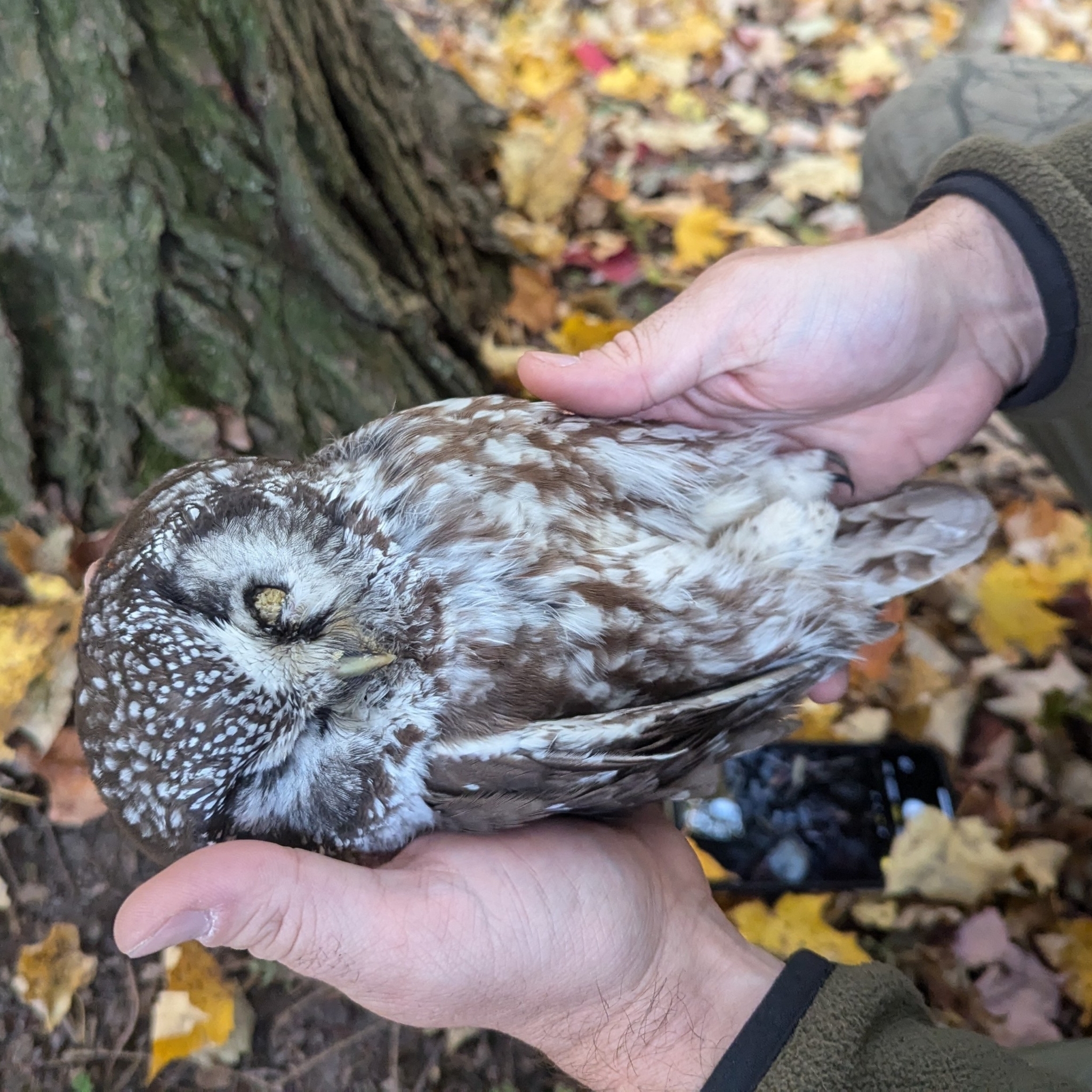
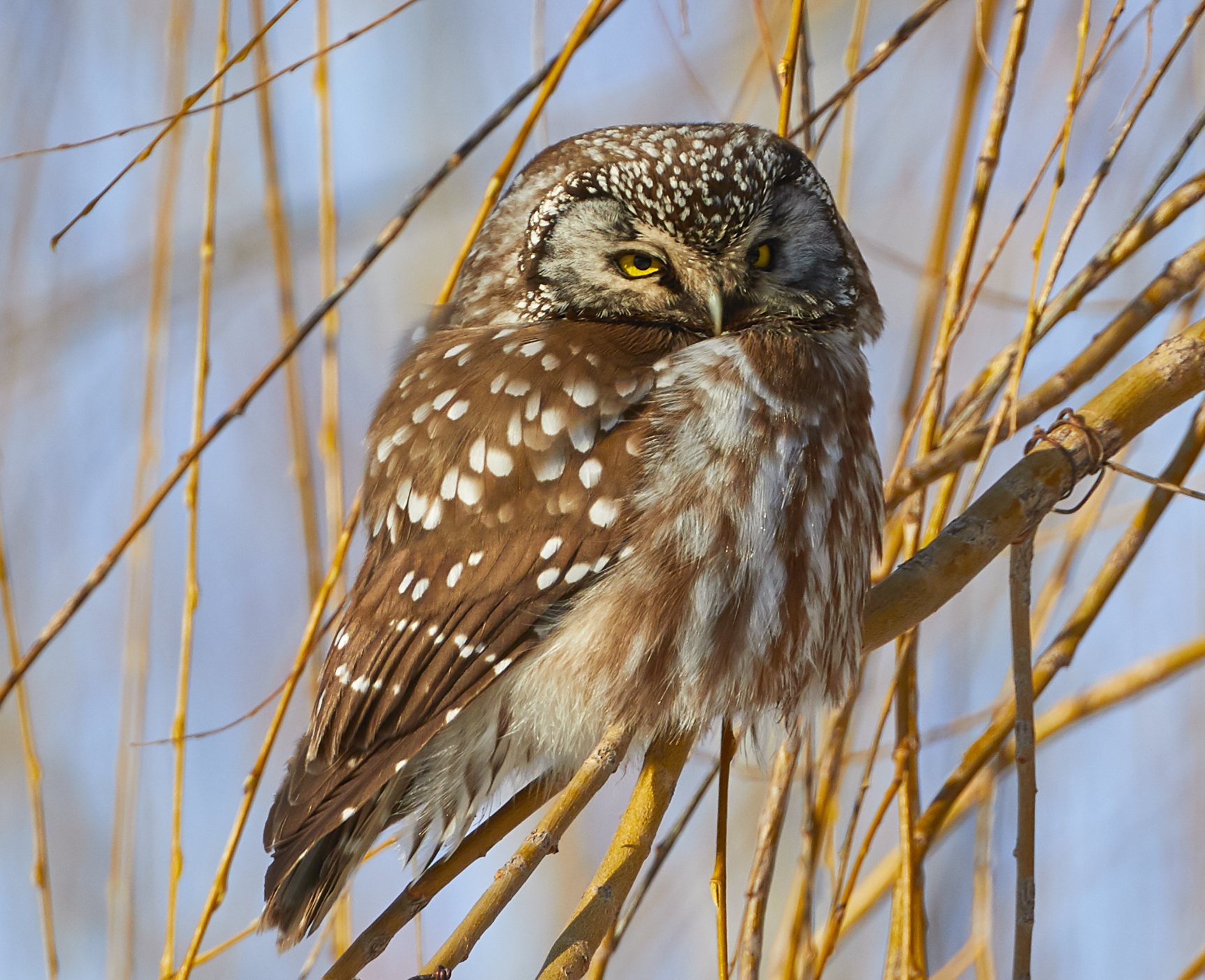
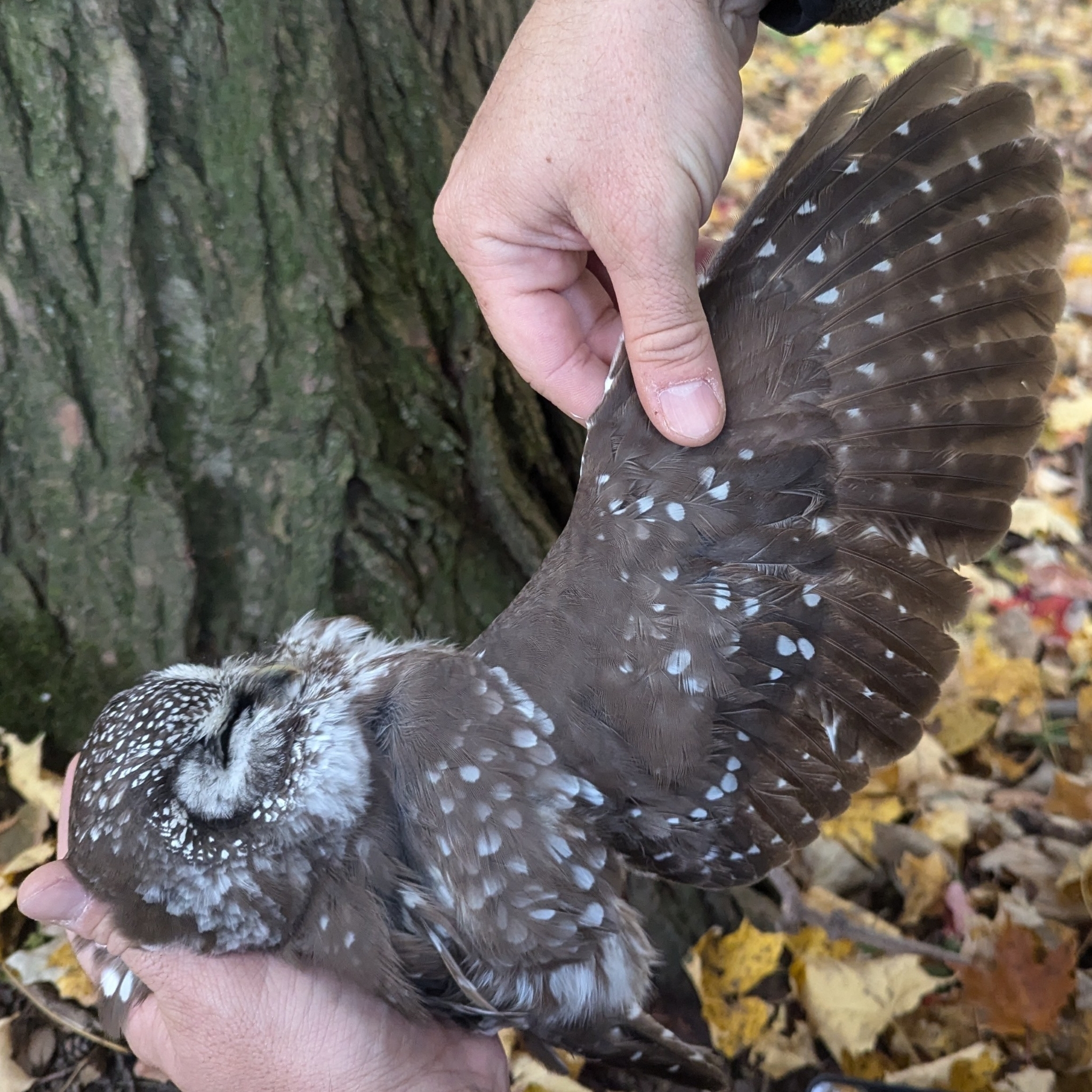
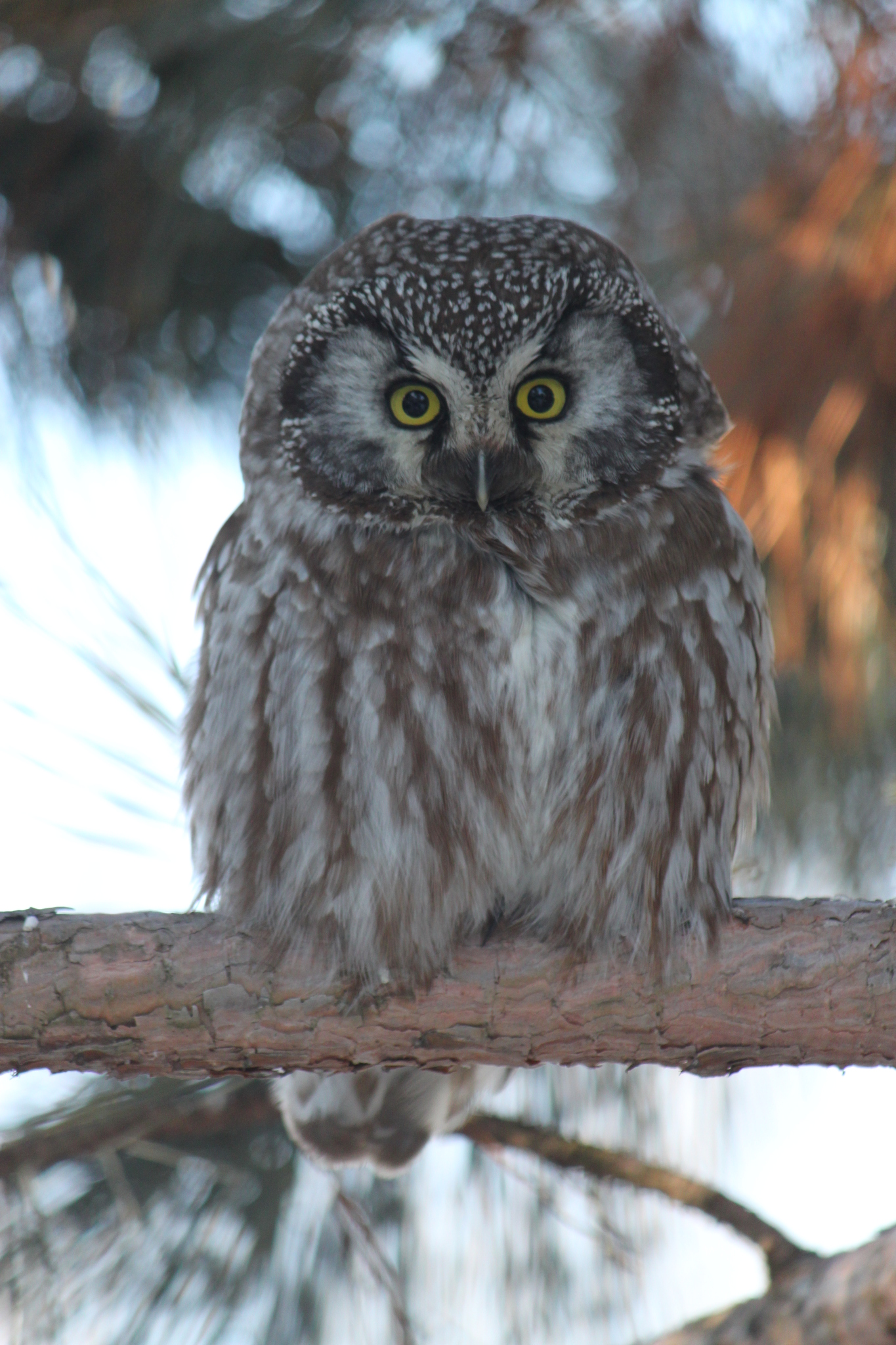
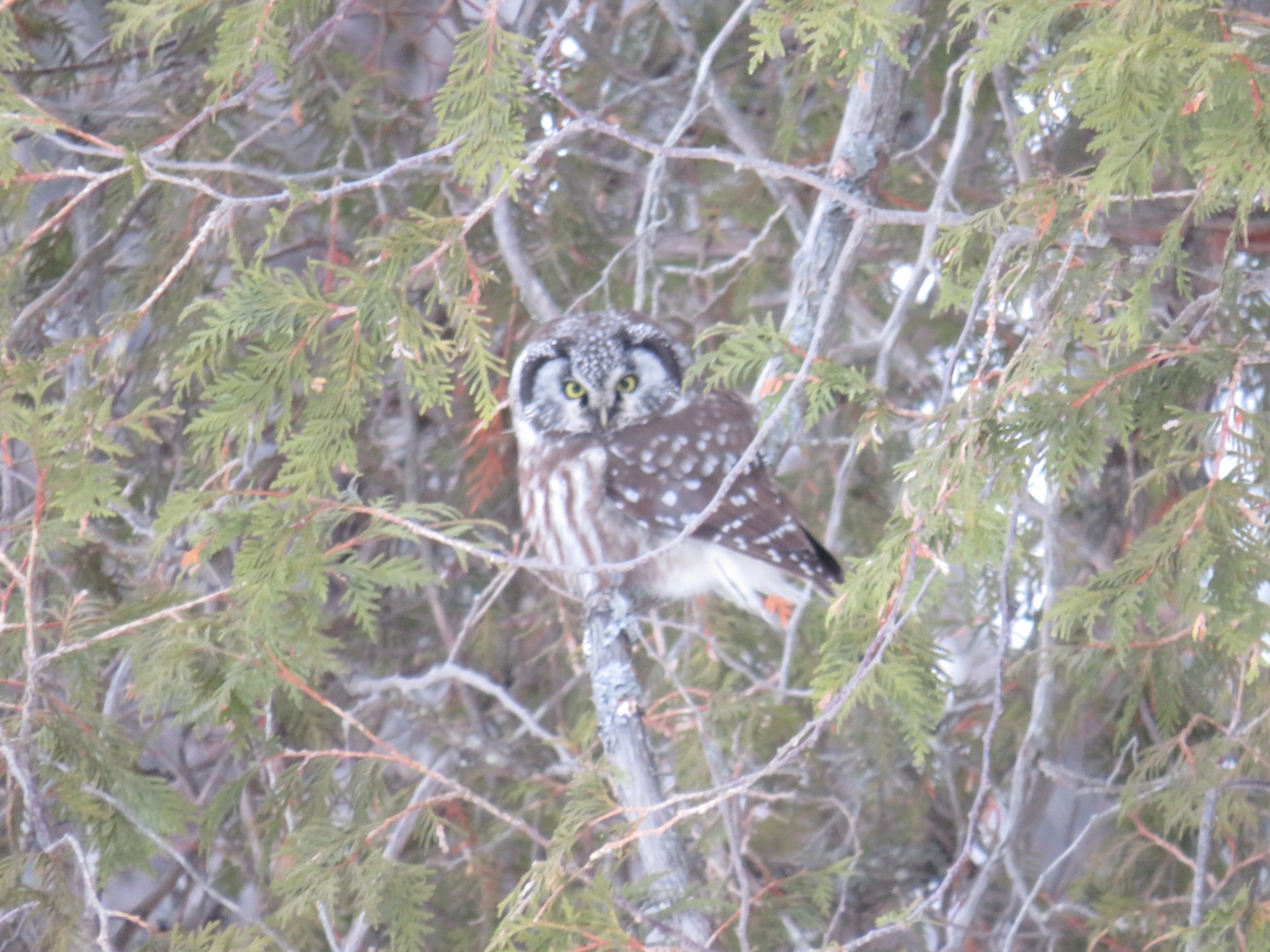
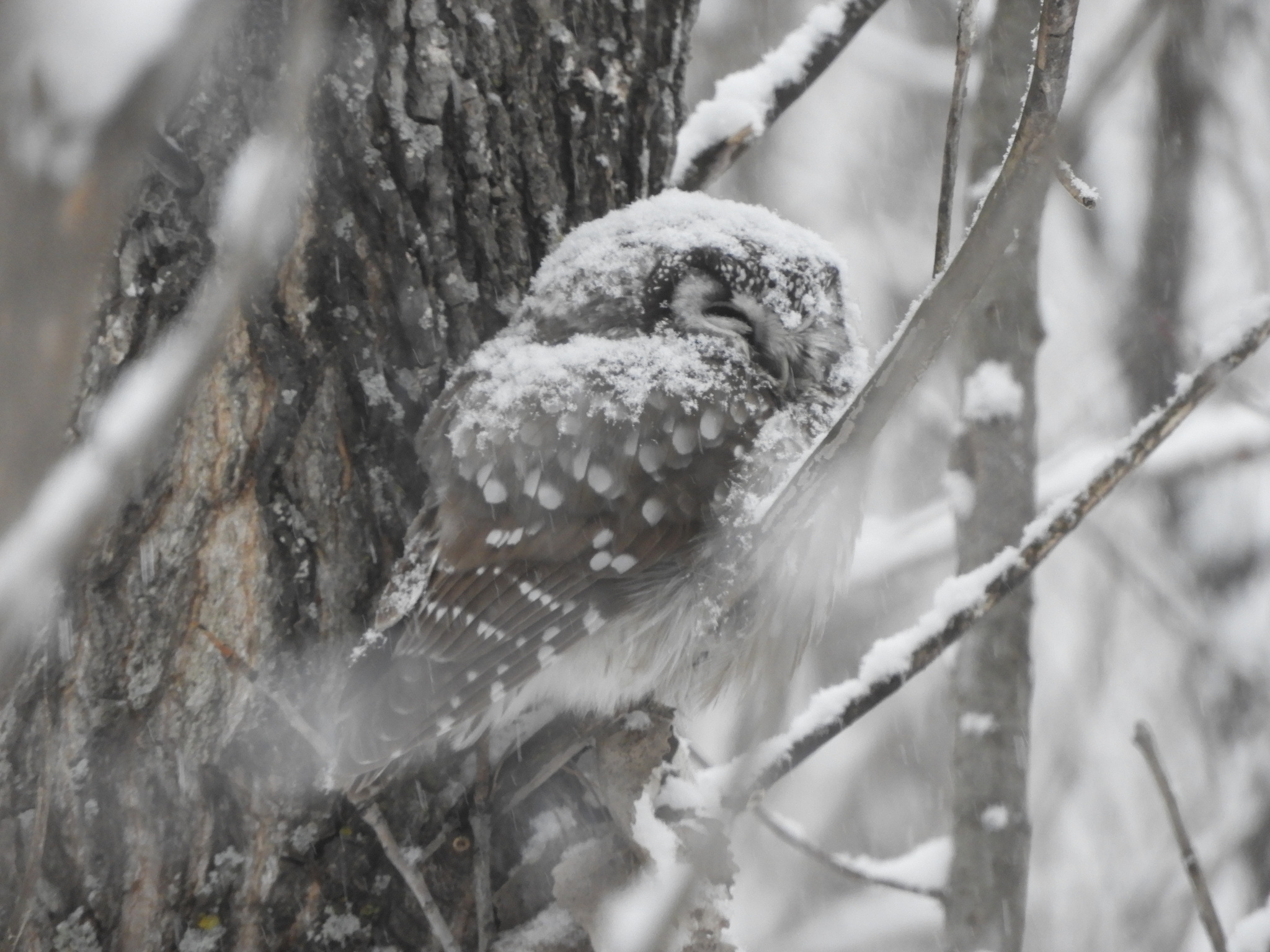
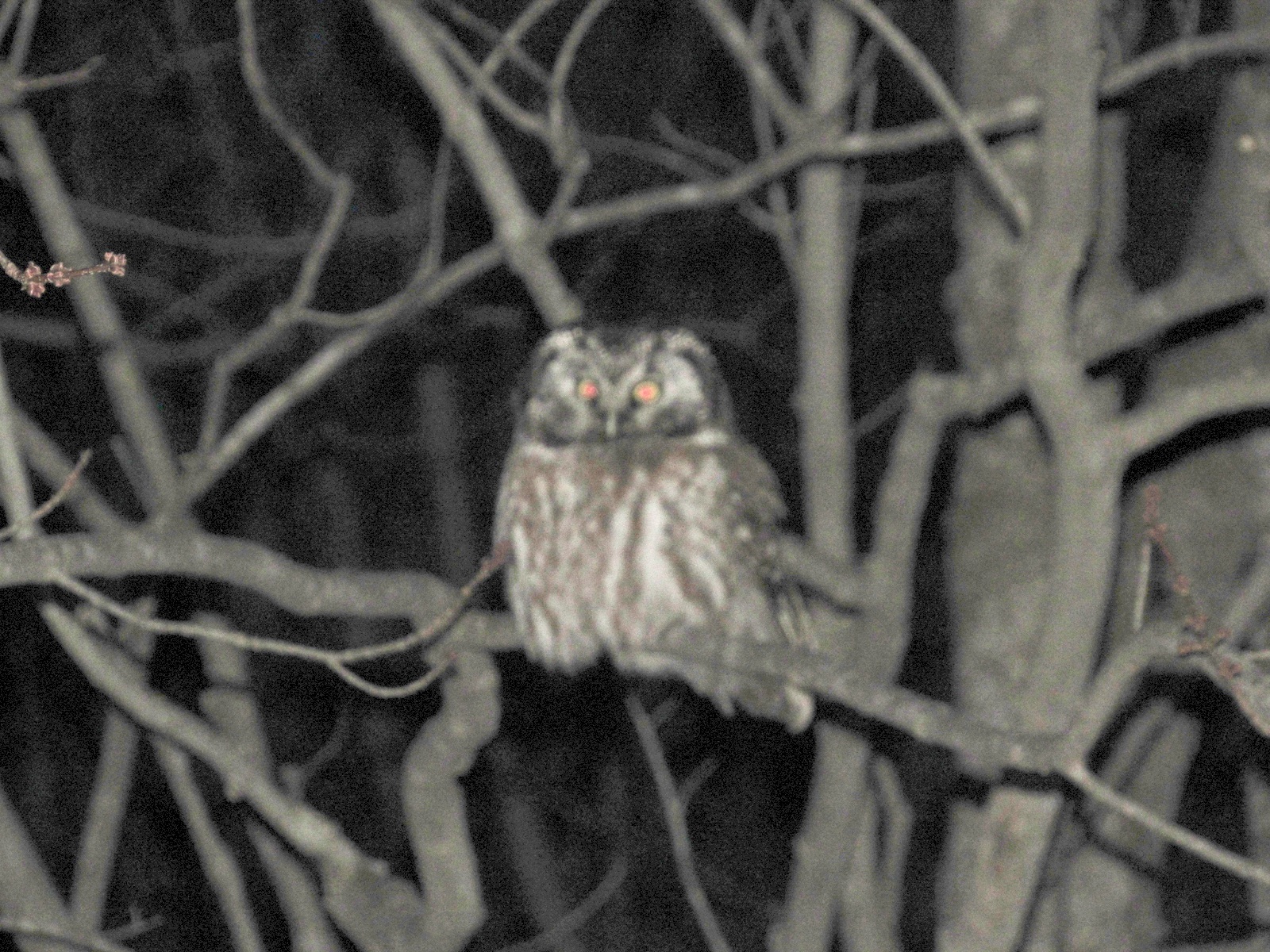
Compact owl with large head and relatively long wings. Males measure 21-25 cm length with 55-58 cm wingspan, weighing 93-139 g; larger females are 25-28 cm with 59-62 cm wingspan and weigh 132-215 g. Brown upperparts conspicuously marked with pearly-white spots on back and wings. Large head features yellow eyes, olive-brown crown with white droplets, and dull white facial disc framed by dark border and distinctive white 'eyebrows' giving a surprised expression. Underparts cream-white with rust-coloured streaks. Flight feathers and tail olive-brown with dark bars and contrasting white spots, typically up to five rows on primaries and three rows on tail. Beak light yellow, not dark. Flight is notably noiseless and straight.
Identification
Key识别 features include pale facial disc with dark border and prominent white eyebrows, light yellow beak contrasting with darker bills of similar owls, and bold white spots on wings and tail. From above, shows conspicuous pearly-white spots on brown upperparts. Juveniles chocolate-brown overall with dark facial disc bordered by black-and-white markings near bill; develop broad white 'X' between eyes upon fledging. Unlike the northern saw-whet owl, this species shows more contrasting facial markings and lacks the uniform reddish-brown plumage. Also distinguished by larger size than saw-whet owl where ranges overlap in southern Canada.
Distribution & Habitat
Breeds across boreal forest zones of northern North America from Alaska through northern Canada to northern United States, and across Eurasia from Scandinavia east through Siberia to the Caucasus, Pyrenees, and Urals. Inhabits dense old-growth boreal forests of black and white spruce, birch, and aspen, as well as mixed woodland and mountain conifer forests. Nests in tree cavities, readily using nest-boxes. Roosts in conifers about 6 metres high. Shows high site fidelity; most individuals breed within 500 metres of natal sites. Northern populations may migrate south in response to deep snow and low prey availability, but return to breeding grounds.
Behavior & Ecology
Monogamous, raising single brood annually from age one. Courtship involves males singing up to 102 days from mid-February to mid-April. Nests in tree cavities, typically old woodpecker holes, or readily uses nest-boxes. Clutch of 3-7 glossy white eggs laid at 2-day intervals, measuring 33mm × 26mm. Female incubates 25-32 days; young fledge after 28-36 days. Diet primarily voles and other mammals, also birds, small amphibians, beetles, and invertebrates. Hunts by ambush from perch, capturing prey under snow and dense vegetation using asymmetrical ear structure for precise sound localization. Primary song is loud male trill; eight distinct call types documented including courtship songs, prey delivery calls, and defensive hisses.
Conservation
Least Concern with stable population trend. Major threats include clear-cutting and timber harvest reducing old-growth habitat and prey availability; pesticide accumulation; and decline of black woodpecker populations reducing nest cavity availability. Primary predators are martens (preying on 48% of Norwegian clutches) and tawny owls; other predators include American red squirrels, various hawks and goshawks, great horned owl, and ural owl. Adult annual survival ranges 62-72%; ringed individuals live up to 16 years. Conservation measures include nest-box installation, selective logging to maintain old-growth characteristics, and black woodpecker protection.
Culture
No significant folklore or cultural traditions documented in the source material.
Source: Wikipedia · CC BY-SA 3.0
Taxonomy
- Order
- Strigiformes
- Family
- Strigidae
- Genus
- Aegolius
- eBird Code
- borowl
Subspecies (7)
-
Aegolius funereus beickianus
far northwestern India (Lahul) to southwestern China (Qinghai)
-
Aegolius funereus caucasicus
northern Caucasus Mountains
-
Aegolius funereus funereus
northern Scandinavia to Pyrenees and Urals (except for Caucasus Mountains)
-
Aegolius funereus magnus
northeastern Siberia (Kolyma to Kamchatka Peninsula)
-
Aegolius funereus pallens
western and southern Siberia
-
Aegolius funereus richardsoni
central Alaska and northern Canada to northern USA
-
Aegolius funereus sibiricus
southeastern Siberia and northeastern China
Data Sources
Species description from Wikipedia, licensed under CC BY-SA 3.0.
Bird images and sounds sourced from GBIF, contributed by citizen scientists worldwide under Creative Commons licenses.
Taxonomy data from AviList 2025.