






Long-tailed Tit
Aegithalos caudatus
北长尾山雀
Introduction
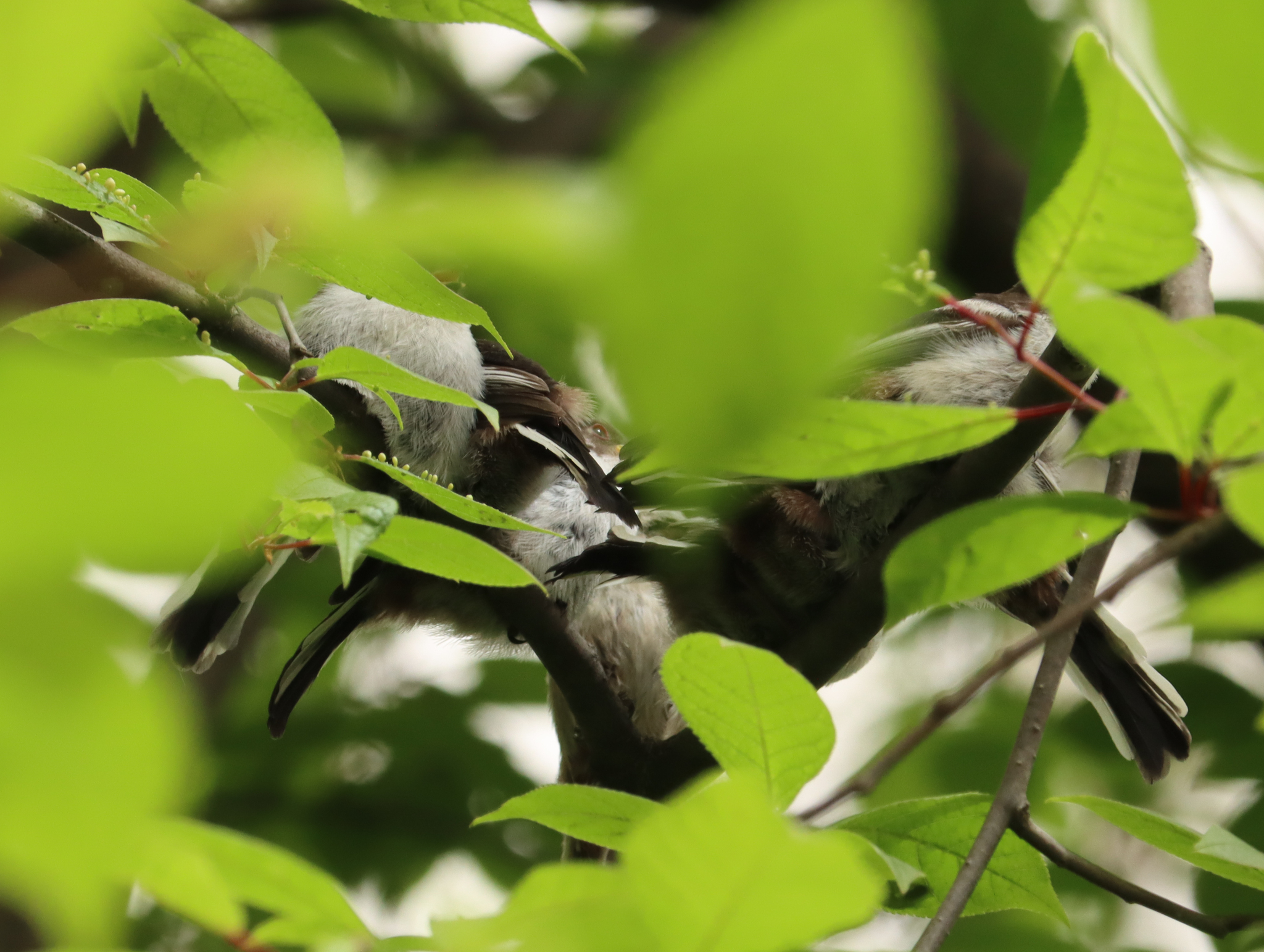
A member of the bushtit family (Aegithalidae), this species occurs across much of Eurasia. It inhabits woodlands, woodland edges, scrublands, and gardens, requiring sufficient scrub and shrub cover for foraging and nesting. It reaches body lengths of approximately 13-16 cm, with the tail comprising more than half the total length. Outside the breeding season, it forms family flocks that move through territories while maintaining contact with calls. It readily uses gardens where appropriate vegetation is present.
Description
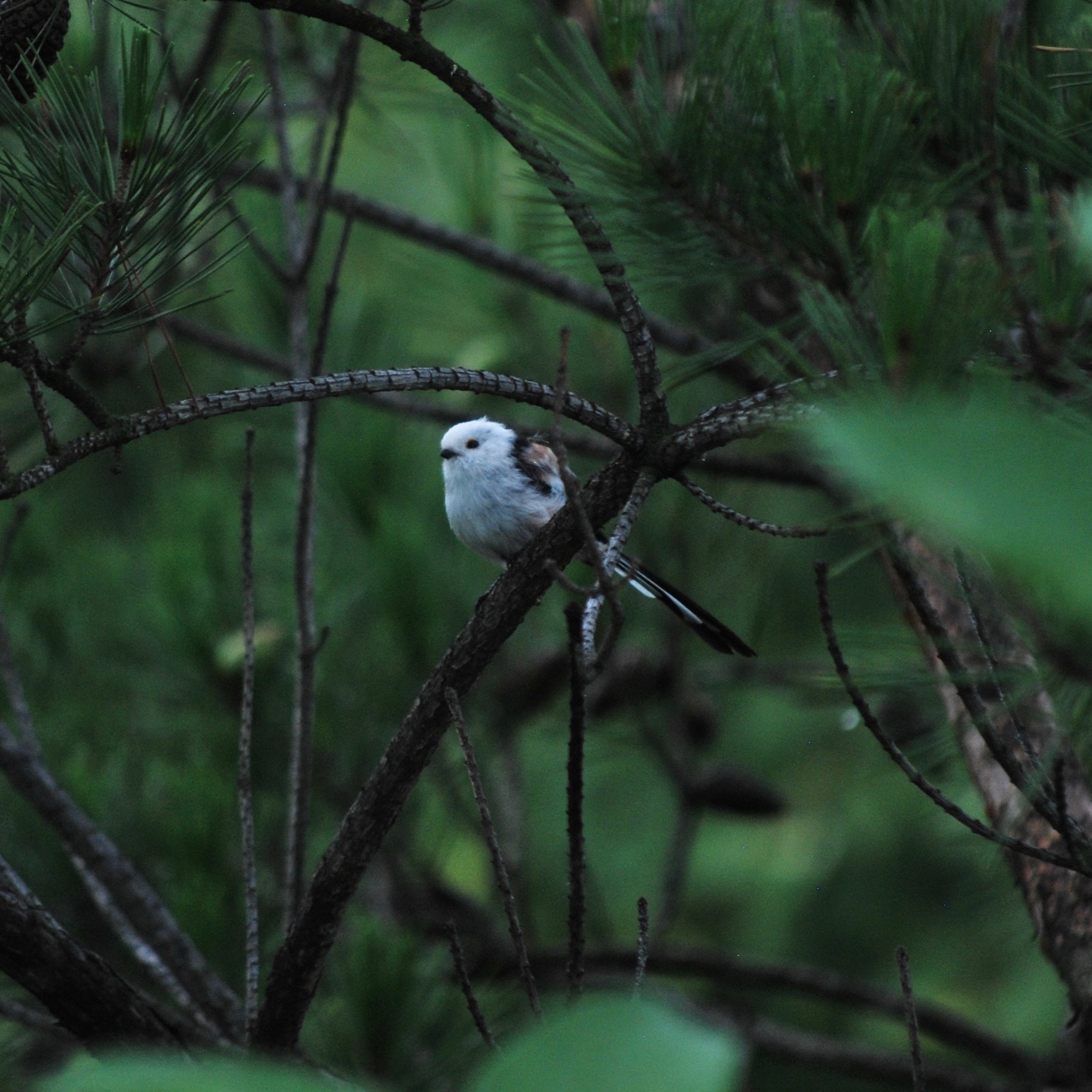
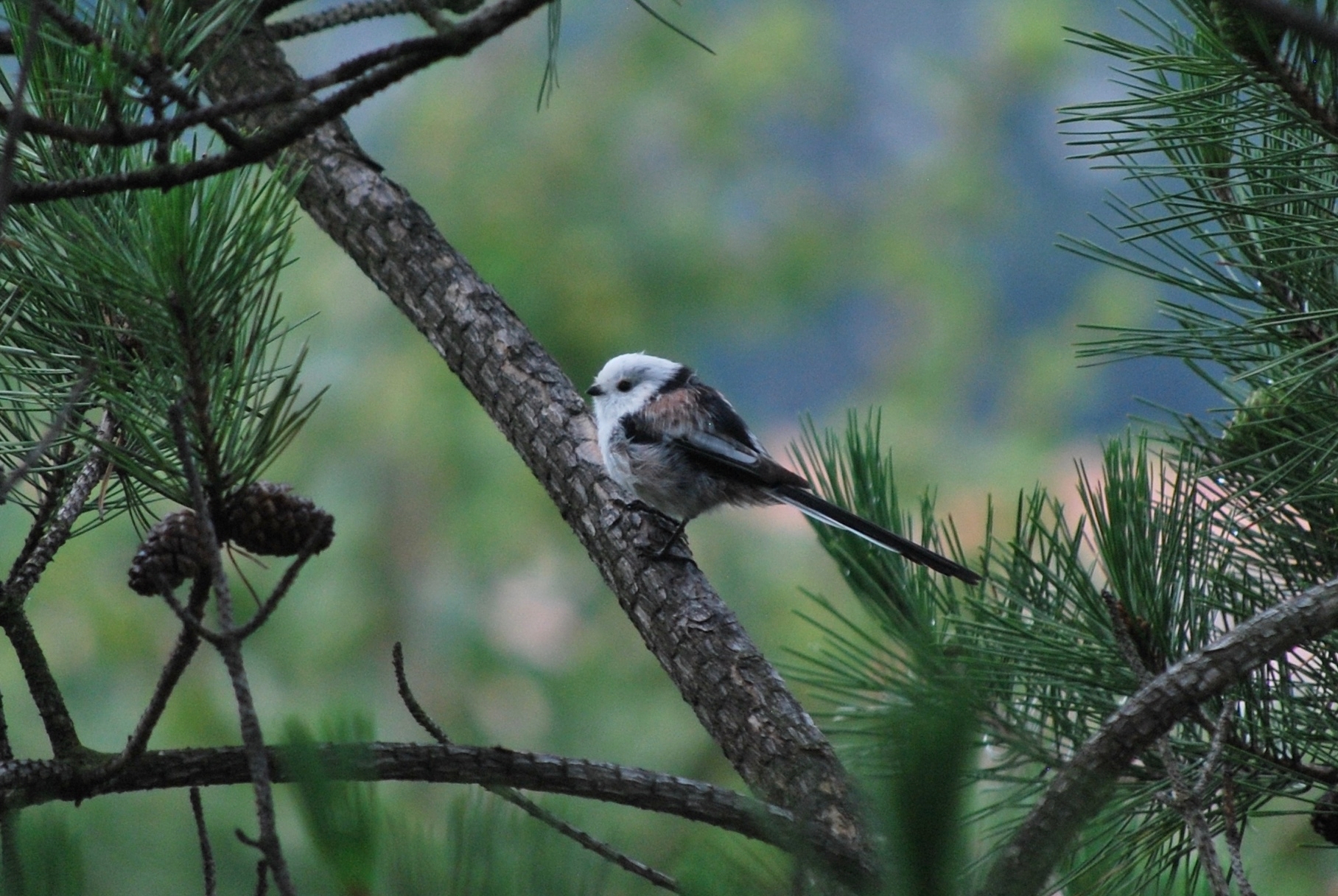
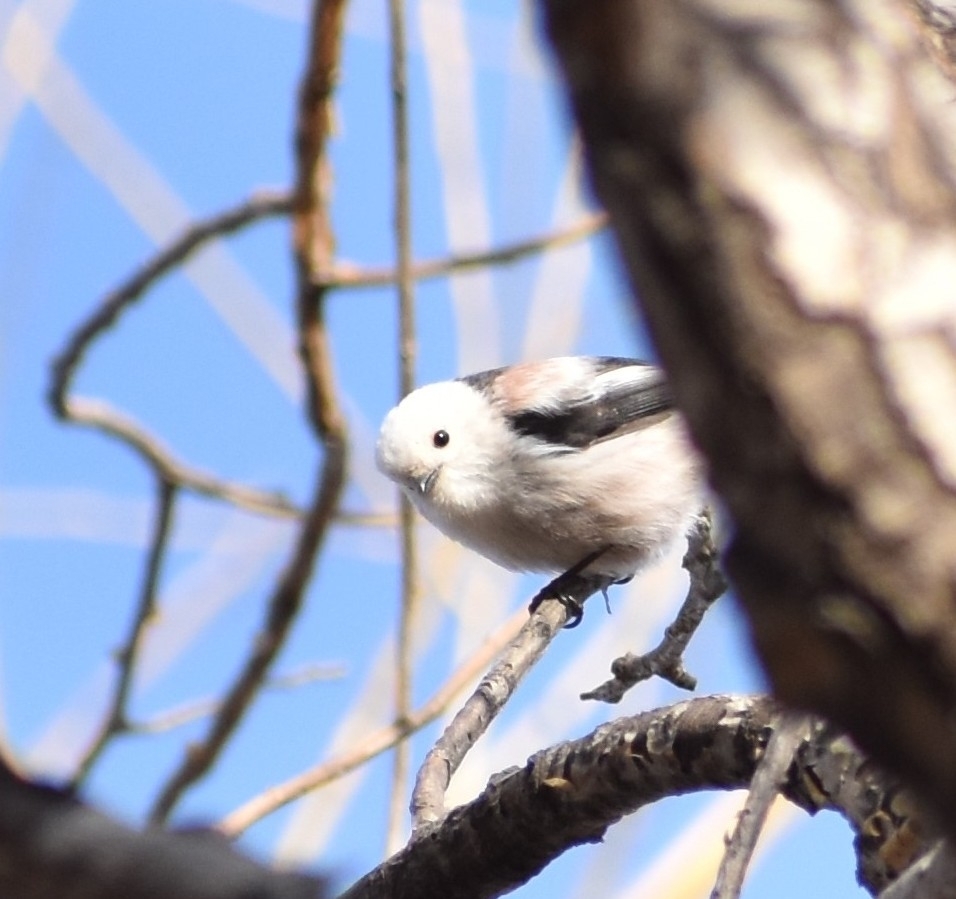
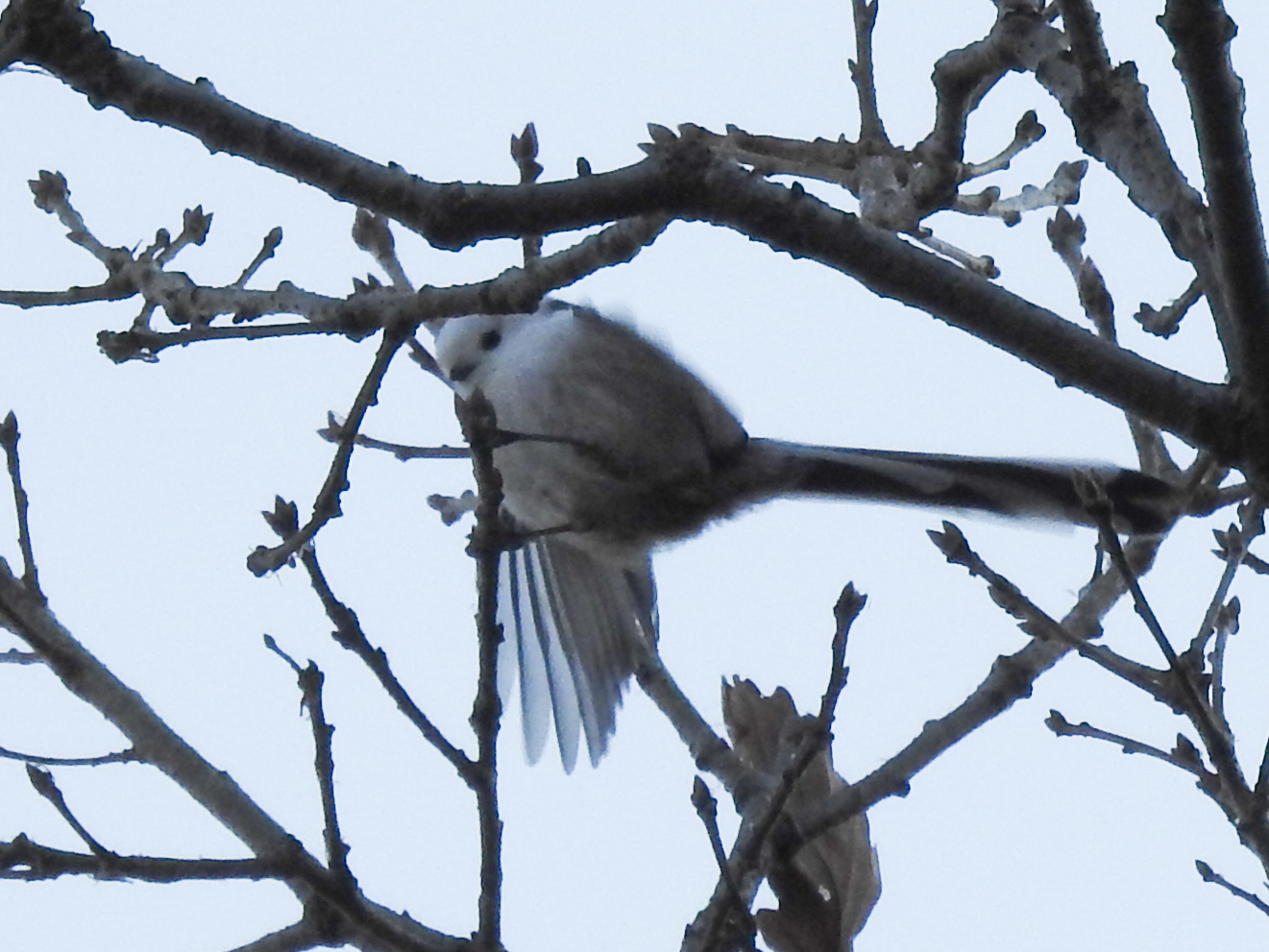
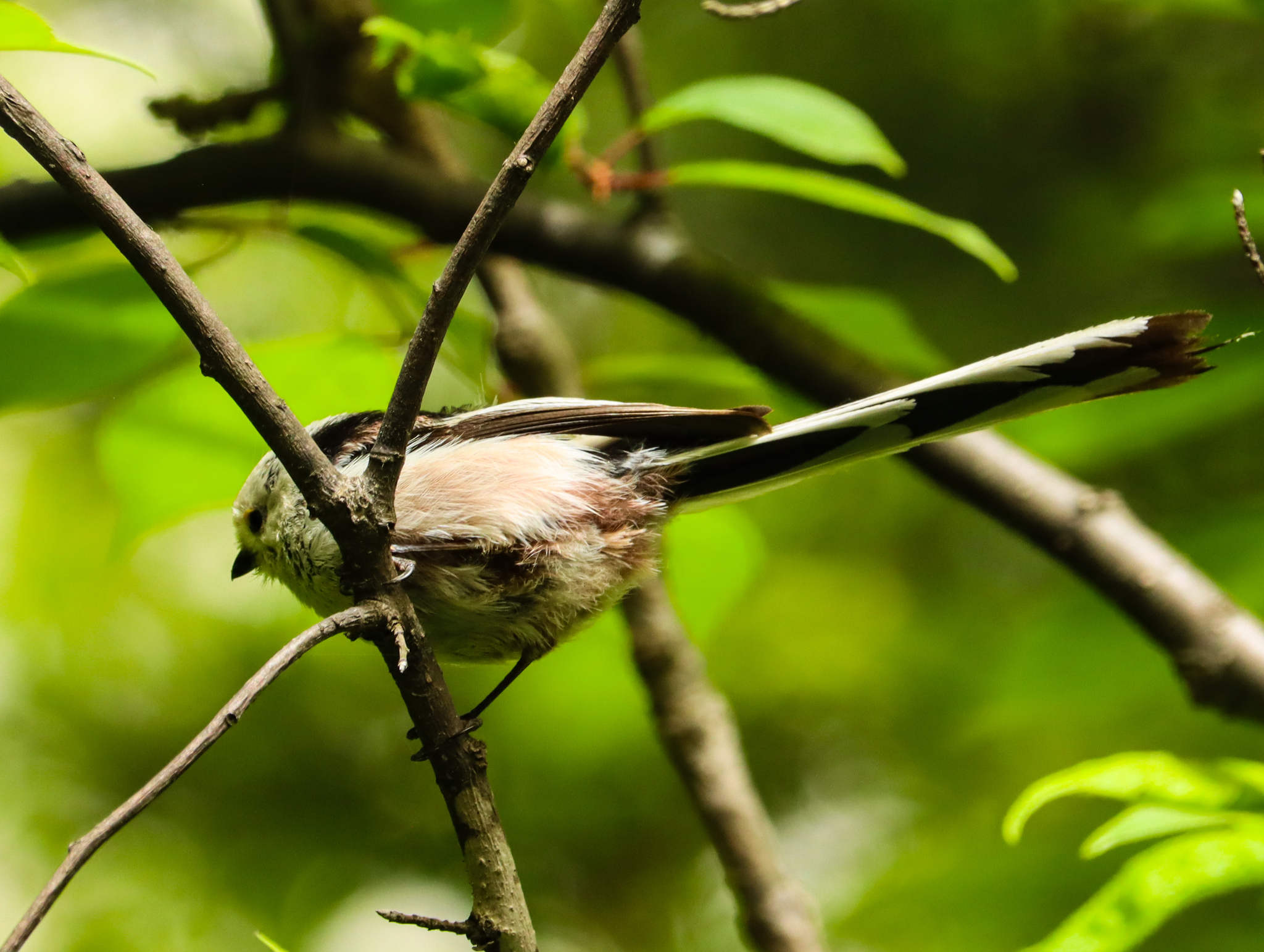
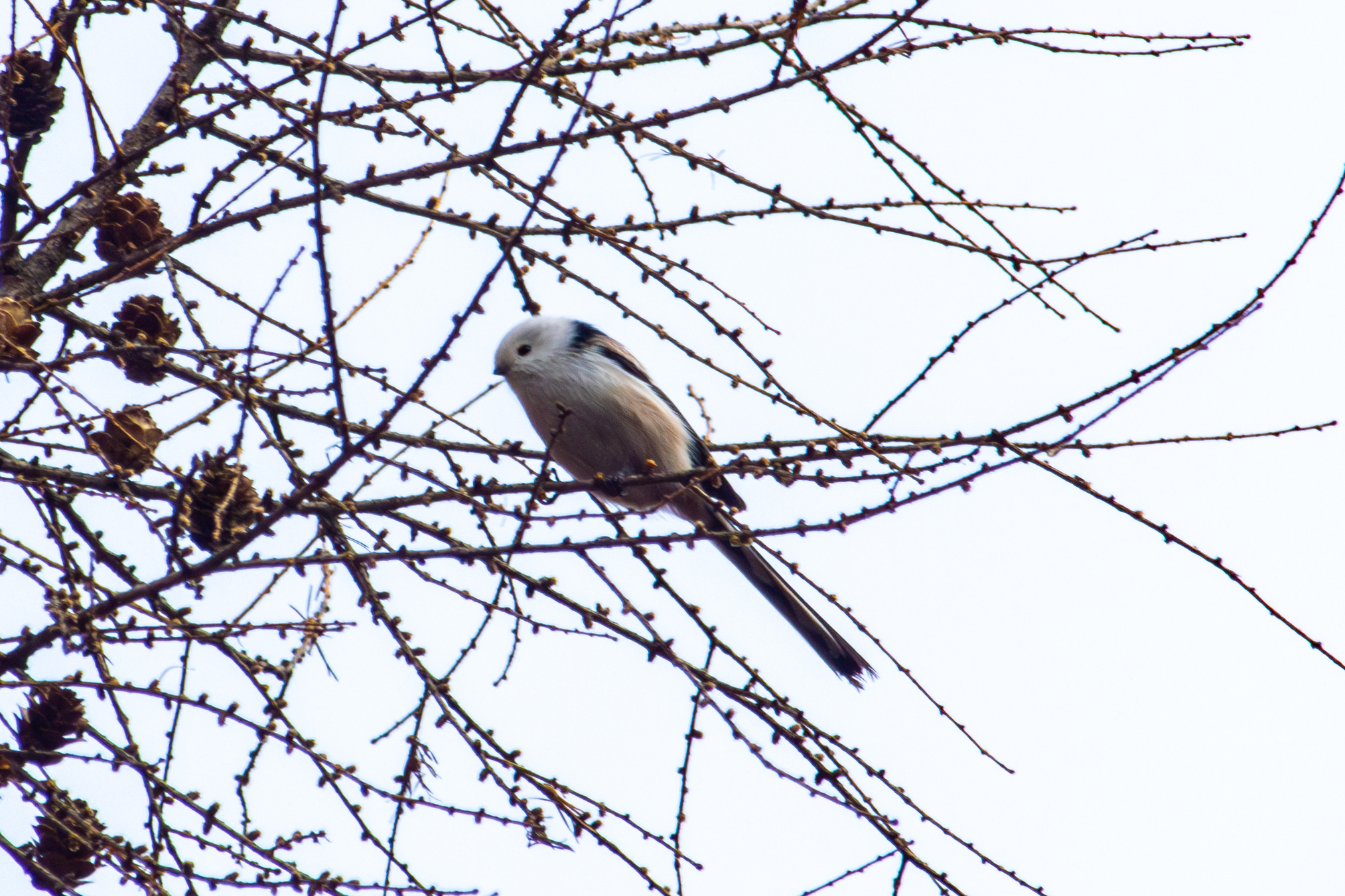
This diminutive species measures just 13-15 cm in total length, of which the slender tail accounts for an impressive 7-9 cm. The body is round and compact, almost spherical in appearance, with a short, stubby bill suited to picking insects from twigs and leaves. The plumage is predominantly black and white, but with considerable geographic variation in the amount of pink and grey feathering on the underparts and upperparts. The sexes are identical in appearance, and young birds undergo a complete moult to adult plumage before their first winter. Northern populations are noticeably paler overall, with some subspecies exhibiting completely white heads, while southern birds retain darker plumage with prominent dark eyebrows. The overall impression is of a tiny, fluffy ball of black, white, and pink feathers terminating in an absurdly long, narrow tail.
Identification
The combination of tiny size, round body, and extraordinarily long tail is diagnostic across its range and should distinguish it from all other tit species. The tail itself, which appears almost ribbon-like in flight, is the single most reliable identification feature. The three main call types—a sharp single 'pit', a distinctive triple trill 'eez-eez-eez', and a rattling 'schnuur'—are often the first clue to this species' presence, as flocks move through canopy and understorey in tight formations. Compared to other small tits, this species lacks the contrasting face patterns of blue or great tits and has a much more pronounced tail. The white-headed northern subspecies can be confused with other white-faced Aegithalos species, but the overall structure and call are distinctive.
Distribution & Habitat
This species is widespread throughout temperate Northern Europe and the entire Palearctic region, from Scandinavia in the north to the Mediterranean zone in the south. It occupies a broad range of woodland and scrub habitats, showing particular preference for deciduous and mixed woodlands with a well-developed understorey, along with heathland, farmland, hedgerows, and suburban parks and gardens. The winter habitat centres on deciduous woodlands dominated by oak, ash, and sycamore species, where the bird's insect prey is most accessible. Nesting is strongly associated with scrub areas, especially thorny bushes such as gorse and bramble, typically positioned less than three metres above ground.
Conservation
The species is classified as of least concern globally by the IUCN, reflecting its extensive range and generally abundant populations across most of Eurasia. It is not considered to be under significant threat from habitat loss, as it readily uses human-modified landscapes including farmland and gardens. However, its small size makes it highly vulnerable to extreme cold weather, with documented population losses of up to 80% during periods of prolonged severe winter conditions. Despite these occasional crashes, populations demonstrate rapid recovery due to high breeding potential and the production of multiple broods in favourable years. Local populations may fluctuate considerably in response to winter severity, but the species' adaptability appears to buffer it against more serious long-term declines.
Culture
The species has accumulated a few folk names over the centuries, most notably the historical nickname 'bum-towel' derived from the distinctive shape of its elongated tail. This older colloquial name reflects the close observation of rural communities who noted the bird's peculiar proportions. While not featuring prominently in mythology or major cultural traditions, its striking appearance and social lifestyle have made it a favourite subject for wildlife artists and photographers, and it frequently appears in bird guides and field identification materials across Europe and Asia.
Source: Wikipedia · CC BY-SA 3.0
Taxonomy
- Order
- Passeriformes
- Family
- Aegithalidae
- Genus
- Aegithalos
- eBird Code
- lottit1
Subspecies (17)
-
Aegithalos caudatus alpinus
southeastern Azerbaijan to northern Iran and southwestern Turkmenistan
-
Aegithalos caudatus aremoricus
western France, Channel Islands, and Île d'Yeu (off western France)
-
Aegithalos caudatus caudatus
Scandinavia and northeastern Europe to Siberia, northern China, Korea, and Japan
-
Aegithalos caudatus europaeus
France and Germany to northern Italy, western Romania, and northern Bulgaria
-
Aegithalos caudatus irbii
southern Spain, Portugal, and Corsica
-
Aegithalos caudatus italiae
mainland Italy and southwestern Slovenia
-
Aegithalos caudatus kiusiuensis
southern Japanese islands (Shikoku, Kyushu, and Yakushima)
-
Aegithalos caudatus macedonicus
southeastern Europe (Balkans)
-
Aegithalos caudatus magnus
southern Korea and Tsushima Islands (Kamino-shima and Shimono-shima)
-
Aegithalos caudatus major
Caucasus to western and central Transcaucasia
-
Aegithalos caudatus passekii
Zagros Mountains (southwestern Iran)
-
Aegithalos caudatus rosaceus
British Isles
-
Aegithalos caudatus siculus
Sicily
-
Aegithalos caudatus taiti
southern and southwestern France to northwestern Spain and Portugal
-
Aegithalos caudatus tauricus
southern Crimean Peninsula
-
Aegithalos caudatus tephronotus
Türkiye
-
Aegithalos caudatus trivirgatus
Japan (Honshu, Awa-shima, Sado, and Oki); Jeju Island (Korea)
Data Sources
Species description from Wikipedia, licensed under CC BY-SA 3.0.
Bird images and sounds sourced from GBIF, contributed by citizen scientists worldwide under Creative Commons licenses.
Taxonomy data from AviList 2025.