Clamorous Reed Warbler
Acrocephalus stentoreus
噪苇莺
Introduction
The clamorous reed warbler (Acrocephalus arundinaceus) occupies reed beds across the Old World. It breeds from Egypt eastward through the Middle East to South and Southeast Asia. The species inhabits large reed beds often interspersed with bushes. It has a powerful, far-carrying song that is less harsh than that of the great reed warbler. Most populations are sedentary while northern breeders undertake migratory journeys to wintering grounds.
Description
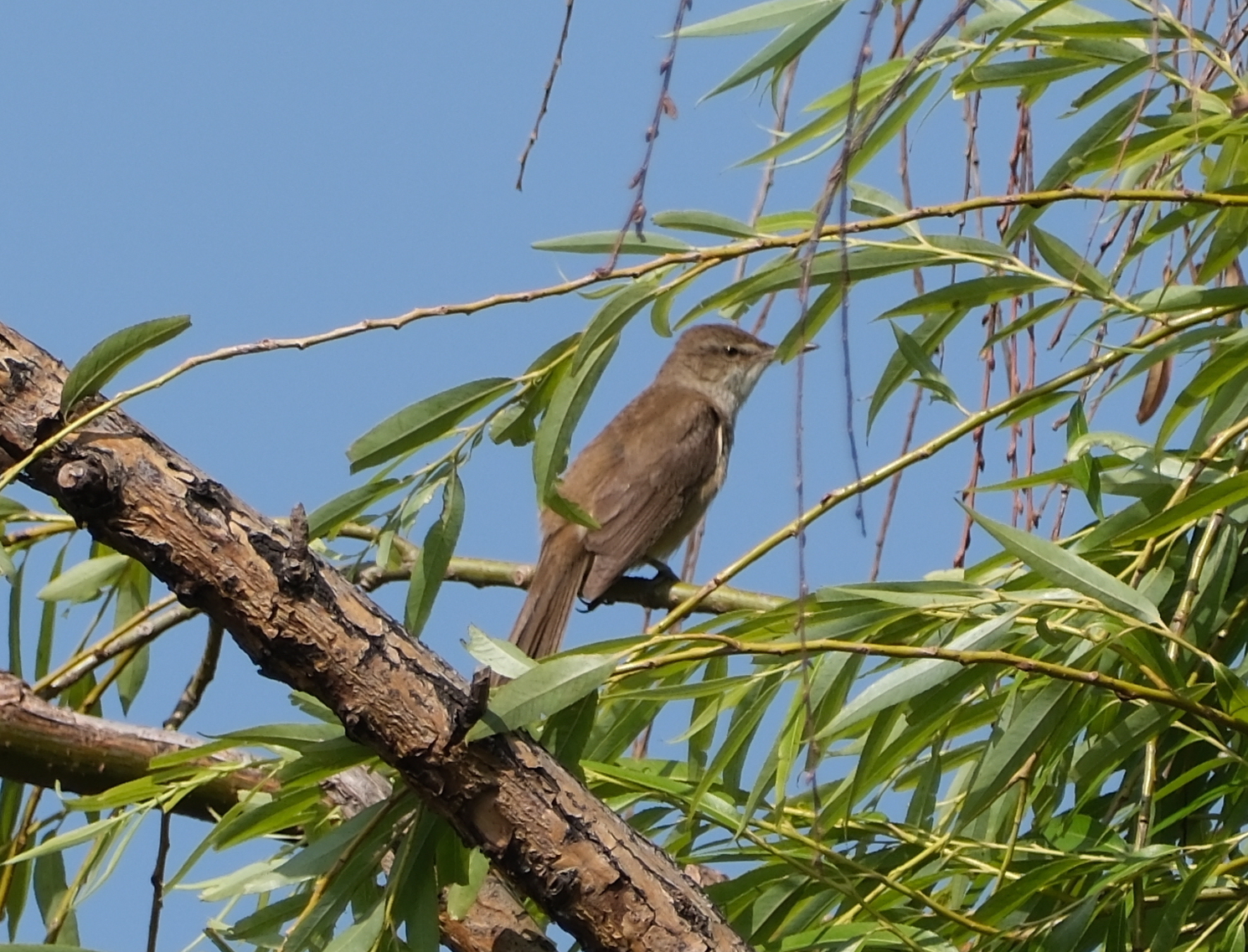
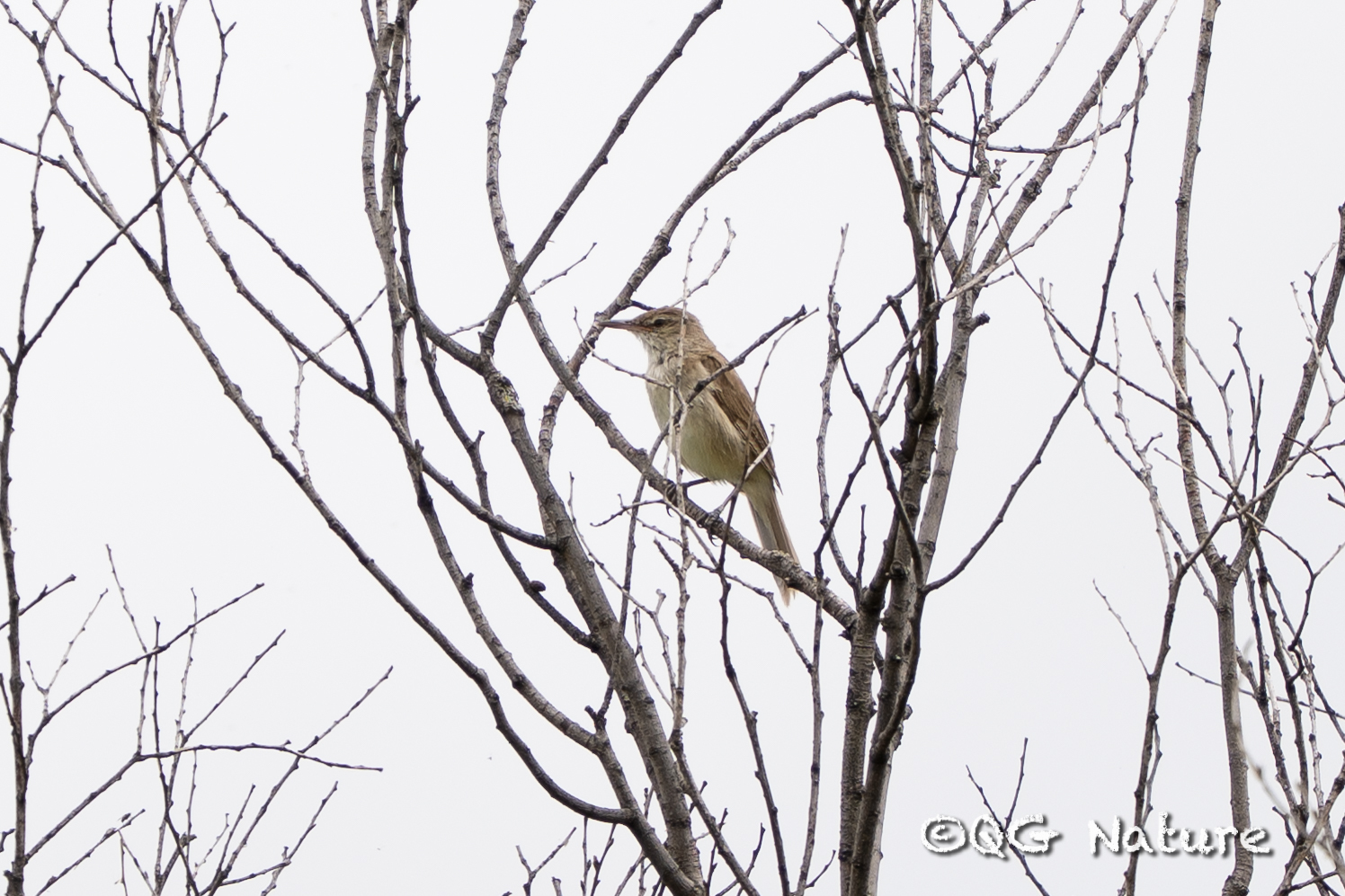
This is a large warbler, measuring 18-20 cm in length, roughly comparable to a song thrush. The adult plumage features an unstreaked brown upperparts and clean whitish underparts. The species shows a distinctive flattened forehead and possesses a strong, pointed bill. Both sexes appear identical, as is typical for most warblers. Considerable geographic variation exists among the nine recognized subspecies, which differ in plumage shades. The migratory northern race exhibits the richest brown coloration on the upperparts, while the Sri Lankan endemic subspecies represents the darkest form. The overall appearance closely resembles the great reed warbler, though this species can be distinguished by its less richly colored underparts.
Identification
The most reliable identification feature is the underpart coloration, which is notably less rich than that of the great reed warbler. The combination of large size, unstreaked brown upperparts, whitish underparts, strong pointed bill, and flattened forehead helps distinguish it from similar species. Geographic location and subspecies characteristics provide additional clues, with the darkest Sri Lankan form being particularly distinctive. The loud, chattering song with its characteristic kereet-kereet-kereet pattern, while similar to related species, tends to be less raucous than the great reed warbler's song.
Distribution & Habitat
This species breeds across a vast area from Egypt eastward through Pakistan, Afghanistan, and northernmost India to south China and Southeast Asia. The Sri Lankan population represents an endemic subspecies. Most populations remain sedentary year-round, but breeding birds in Pakistan, Afghanistan, and northern India are migratory, moving to peninsular India and Sri Lanka for the winter months. The species inhabits large reed beds, typically those with some bush growth interspersed through the vegetation.
Behavior & Ecology
The diet consists primarily of insects, though the species will take other small prey items when available. The song is notably loud and carries far through the reed habitat, though it is less raucous than that of the great reed warbler. The vocalization consists of a slow, chattering series of kereet-kereet-kereet notes, typically including the characteristic acrocephaline whistles and occasional mimicry. Breeding occurs in reed beds where the female constructs a basket-shaped nest among the reeds, laying a clutch of 3-6 eggs.
Source: Wikipedia · CC BY-SA 3.0
Taxonomy
- Order
- Passeriformes
- Family
- Acrocephalidae
- Genus
- Acrocephalus
- eBird Code
- clrwar1
Vocalizations
Subspecies (9)
-
Acrocephalus stentoreus amyae
plains of Brahmaputra River (Assam) to Myanmar and southwestern China
-
Acrocephalus stentoreus brunnescens
breeds Arabia and Iran to southeastern Kazakhstan and India; winters to India
-
Acrocephalus stentoreus celebensis
southern Sulawesi
-
Acrocephalus stentoreus harterti
Philippines (Luzon, Mindoro, Leyte, Bohol, and Mindanao)
-
Acrocephalus stentoreus lentecaptus
southeastern Borneo, Java, and western Lesser Sundas (Lombok and Sumbawa)
-
Acrocephalus stentoreus levantinus
northern Israel
-
Acrocephalus stentoreus meridionalis
Sri Lanka
-
Acrocephalus stentoreus siebersi
western Java
-
Acrocephalus stentoreus stentoreus
Egypt
Data Sources
Species description from Wikipedia, licensed under CC BY-SA 3.0.
Bird images and sounds sourced from GBIF, contributed by citizen scientists worldwide under Creative Commons licenses.
Taxonomy data from AviList 2025.