Common Reed Warbler
Acrocephalus scirpaceus
芦莺
Introduction
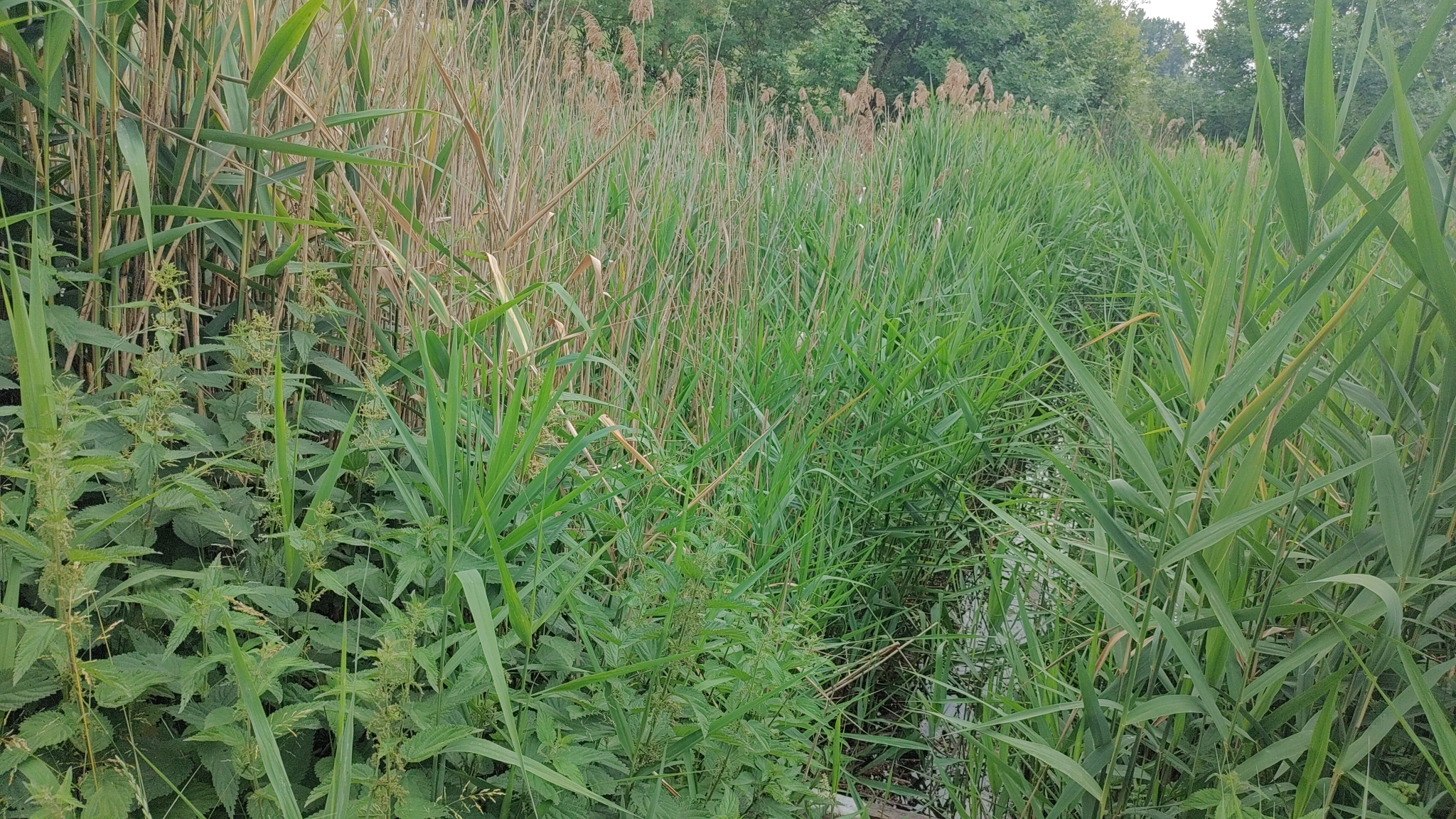
Reed Warbler (Acrocephalus scirpaceus) is an Old World warbler in the genus Acrocephalus. It breeds across much of Europe and western Asia, occupying reed bed habitats. Most populations migrate south to sub-Saharan Africa for winter, though resident populations persist in parts of Iberia and North Africa. The species constructs deep cup nests suspended just above water among Phragmites reed stems. Its song is chattering and includes mimicry of other bird species.
Description
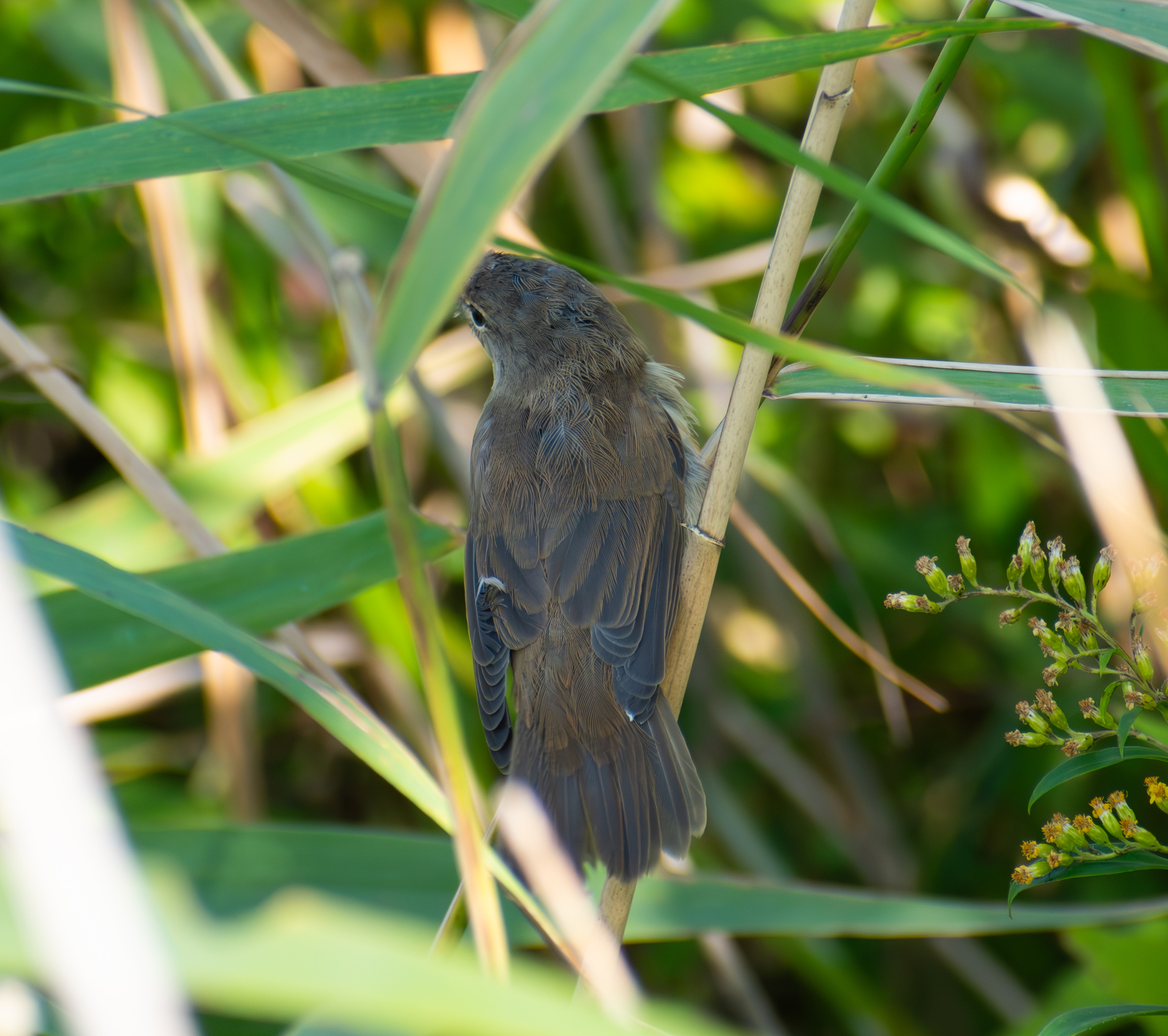
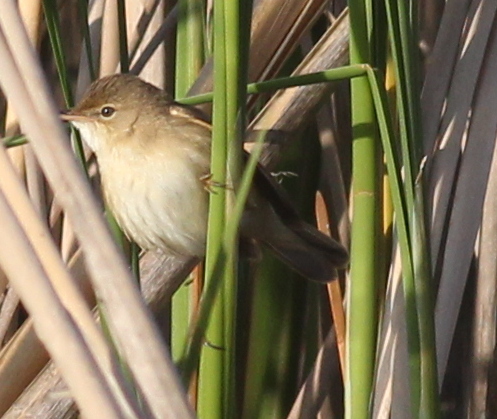
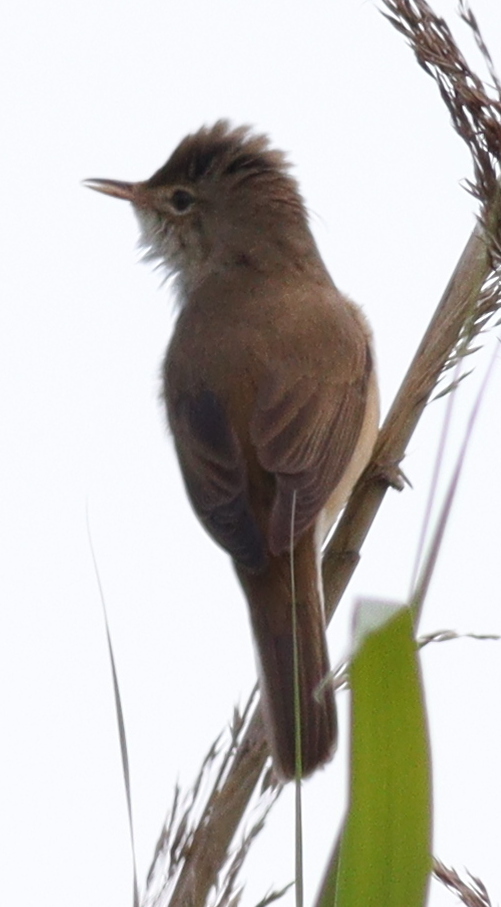
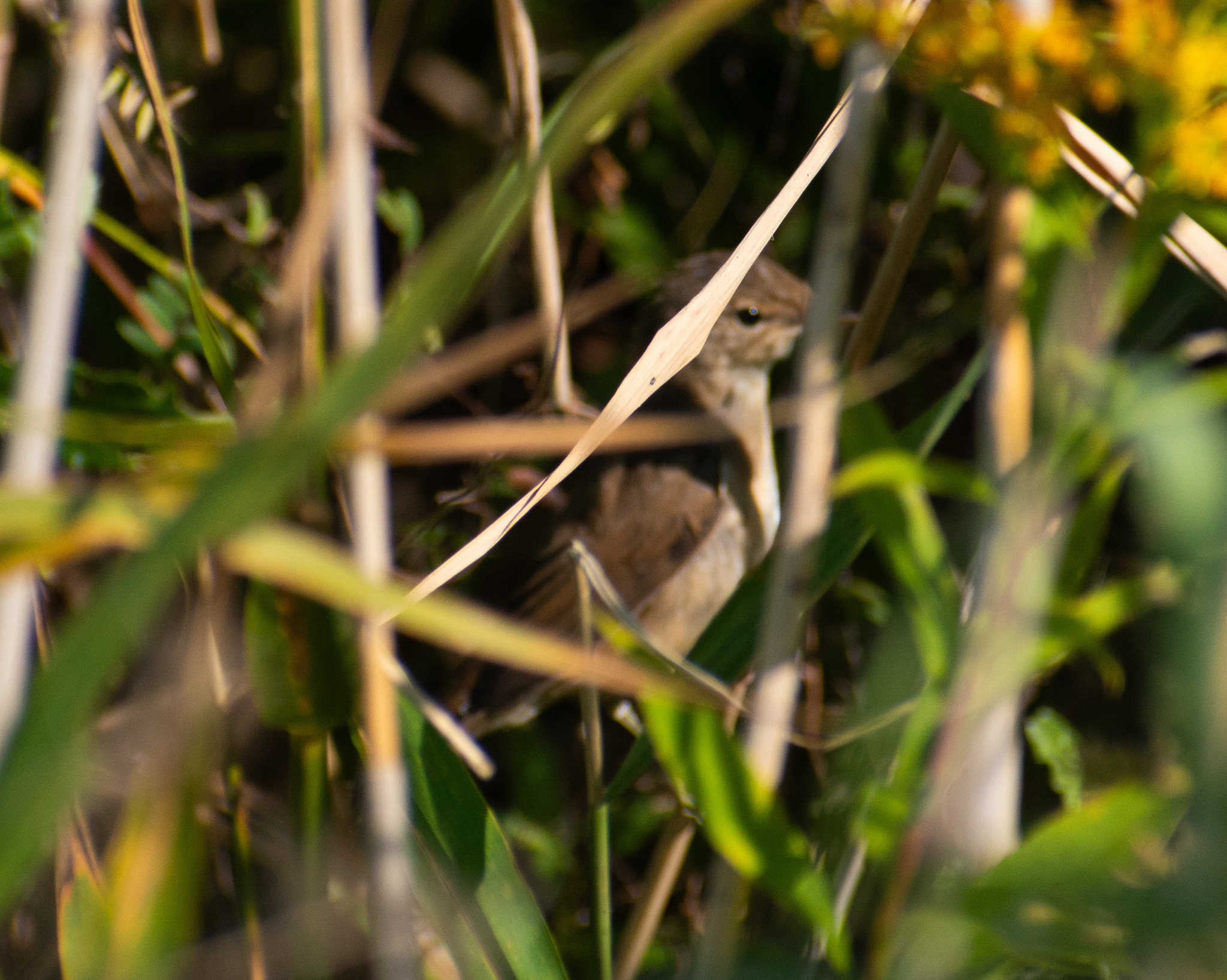
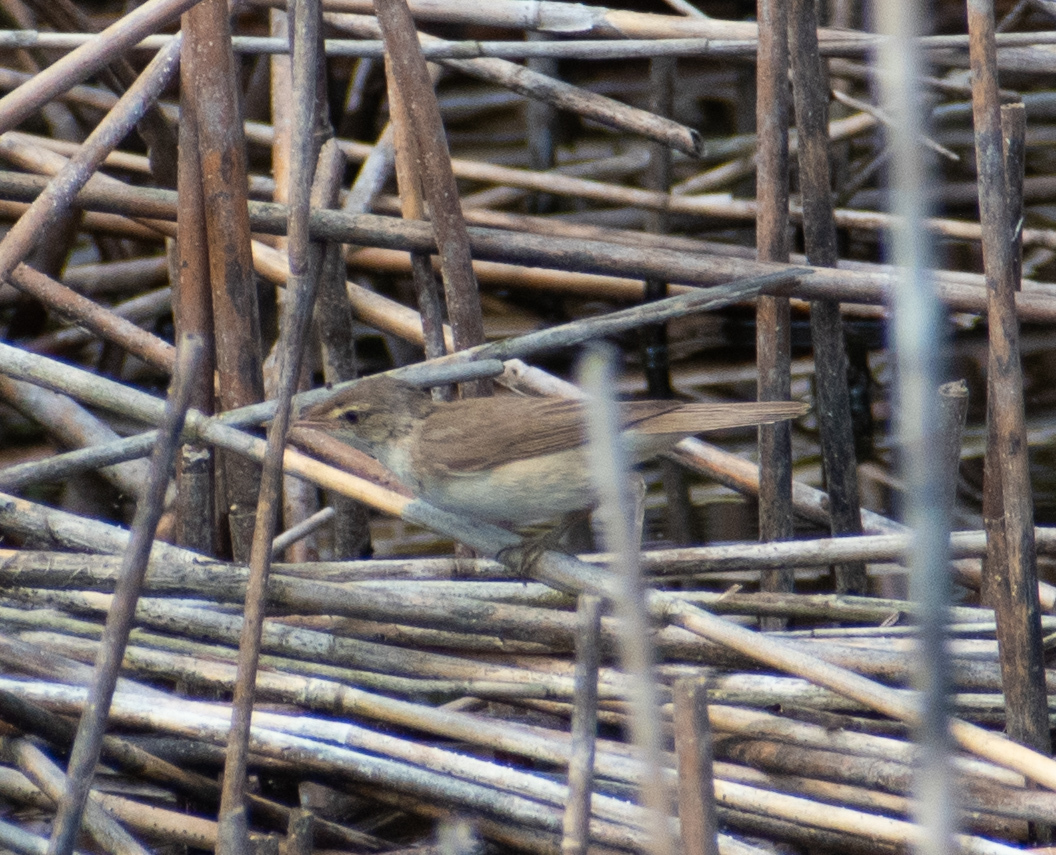
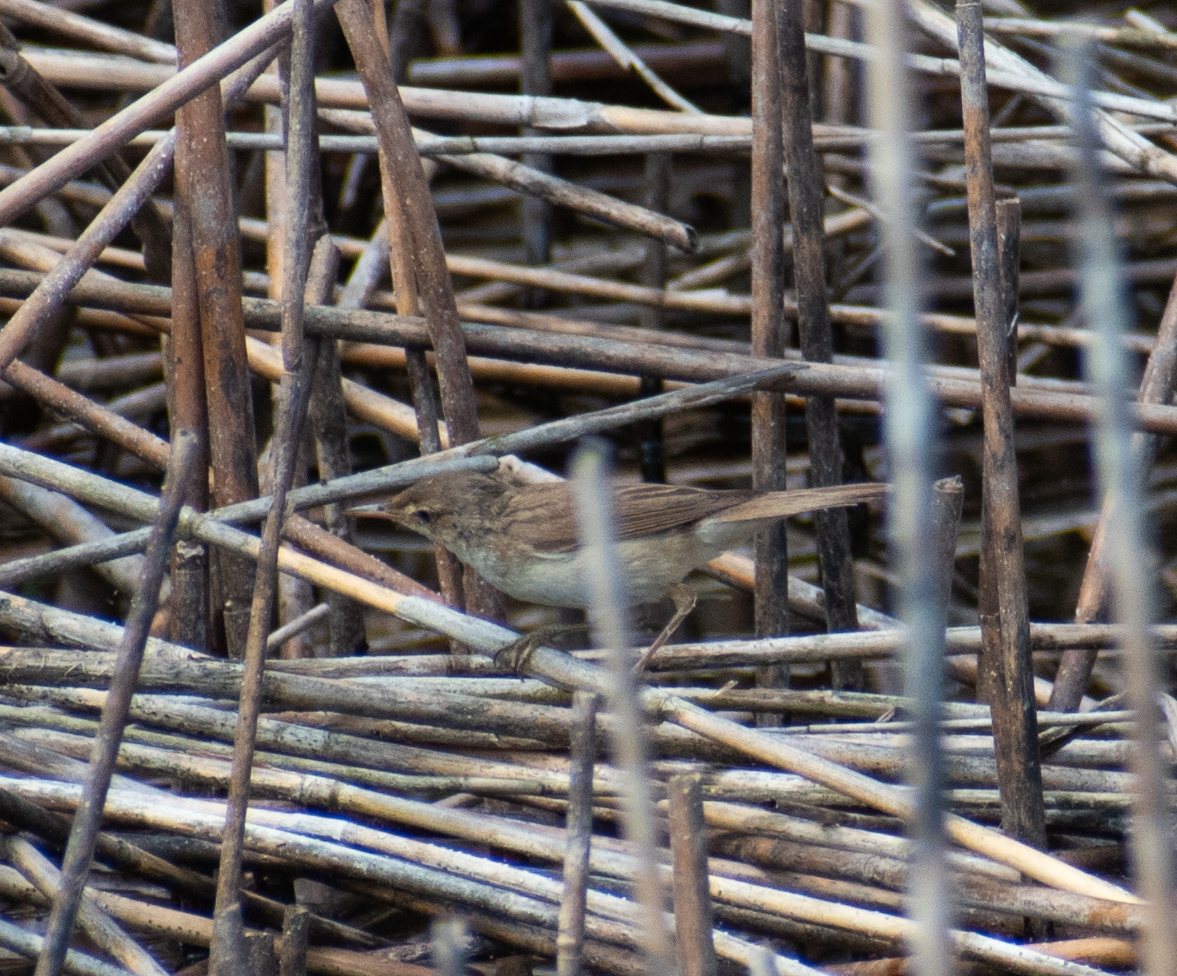
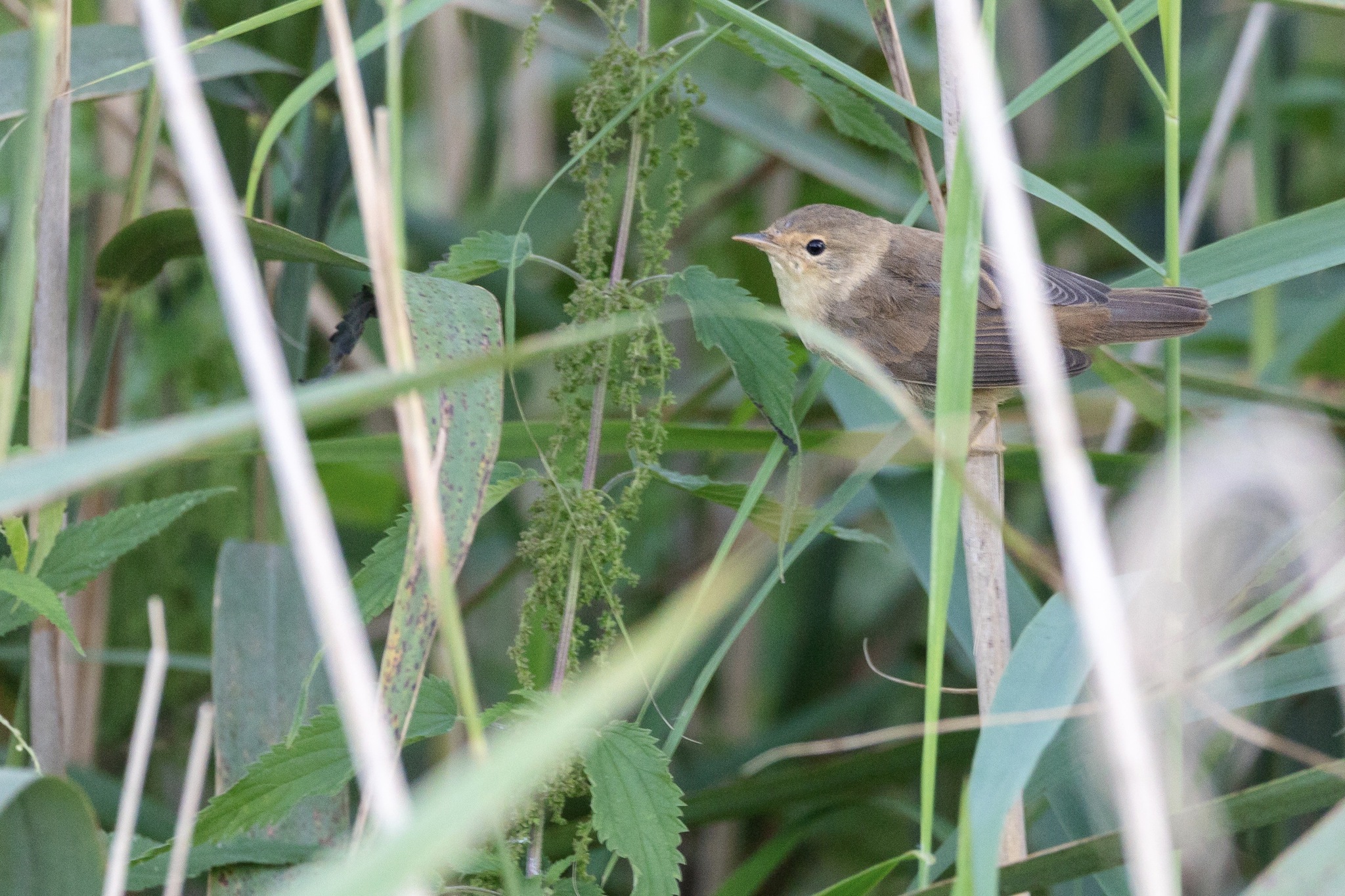
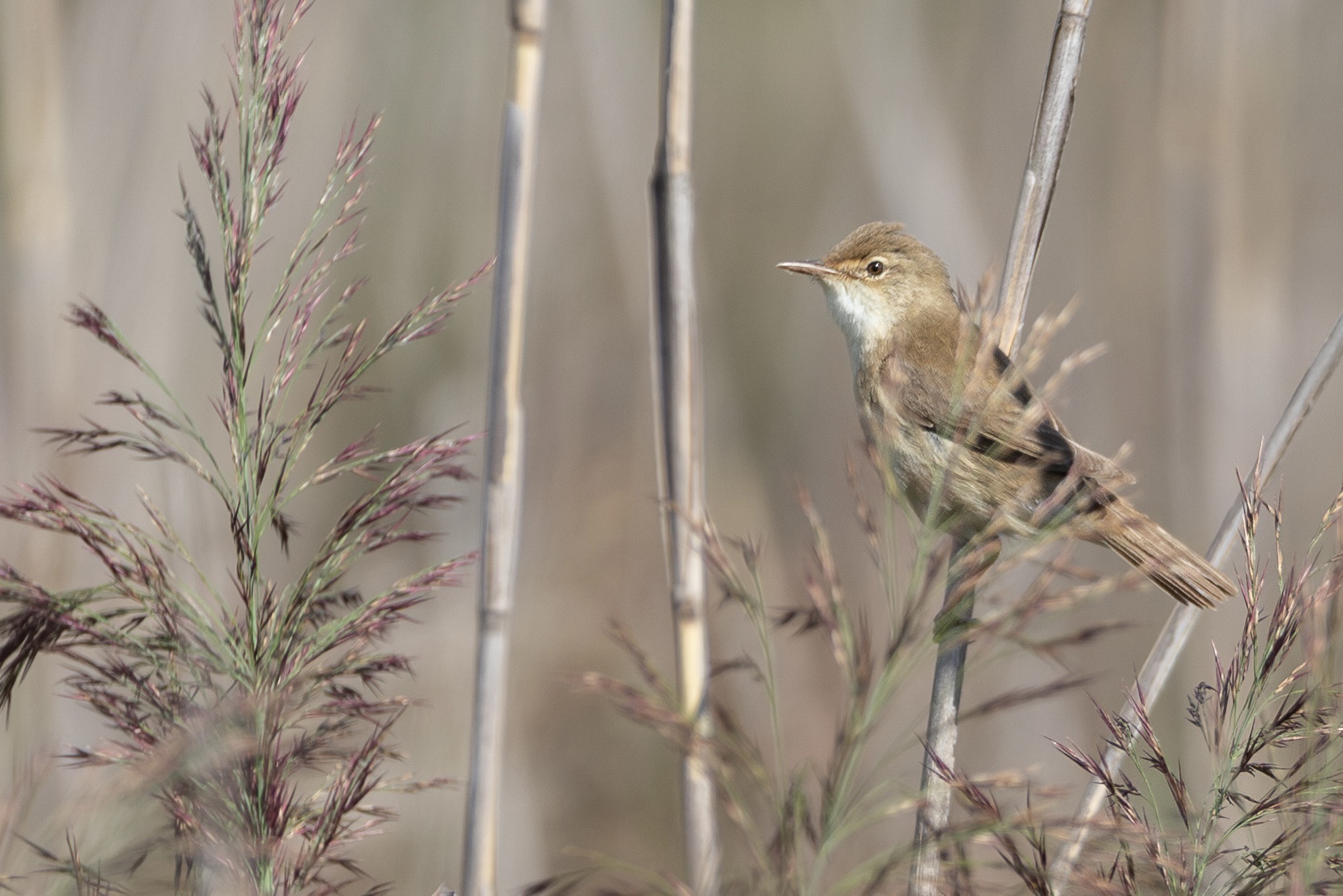
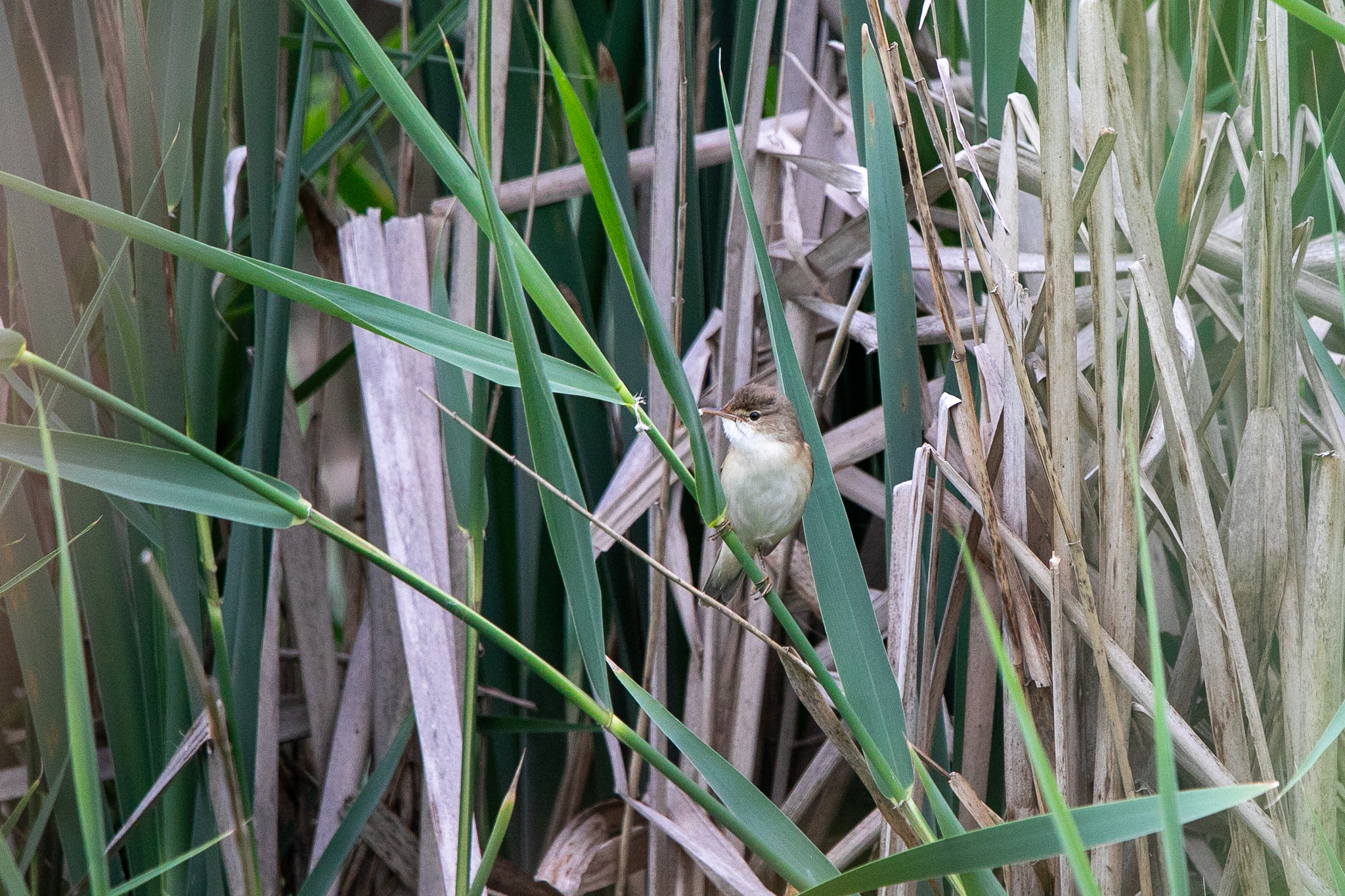
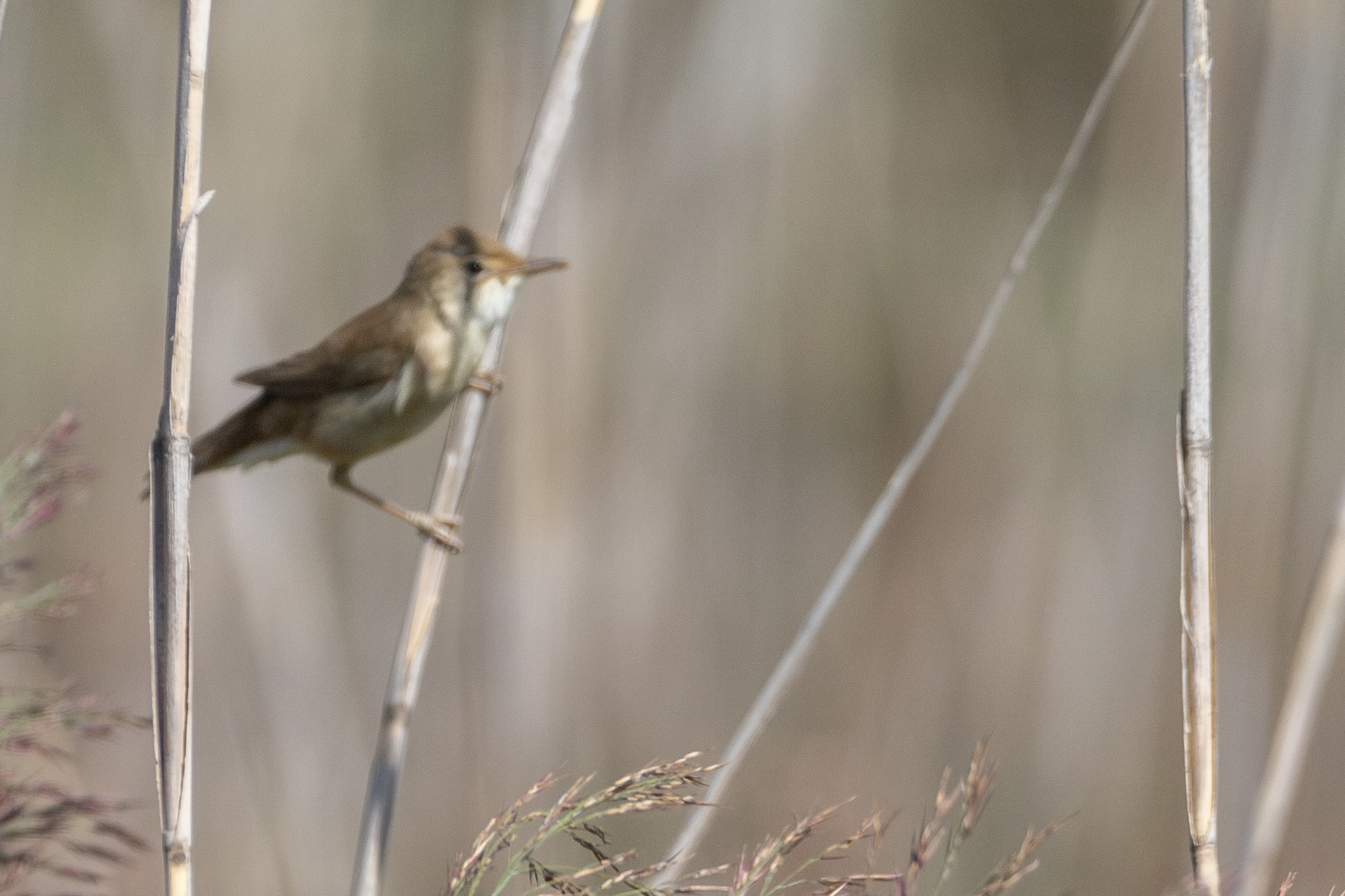
A medium-sized warbler measuring 13 centimeters in length with a wingspan of 17 to 21 centimeters, this species presents a relatively plain appearance well-suited to its reed bed habitat. The upperparts are a uniform, unstreaked brown, while the underparts show warm buff tones that become richer and more extensive in juvenile birds. The head profile features a flattened forehead and a robust, pointed bill typical of active insect hunters. The sexes appear identical, as is common among most warblers, which can make field identification more challenging without behavioral cues. The overall impression is one of subtle, cryptic plumage that provides excellent camouflage among the brown and tan colors of mature reed beds.
Identification
The primary identification challenge involves distinguishing this species from the larger great reed warbler, which shares similar habitat preferences and plumage tones. The great reed warbler is noticeably larger and possesses a more prominent supercilium, or eyebrow stripe, which helps separate the two species in areas where their ranges overlap. Within its preferred reed bed habitat, the combination of unstreaked brown upperparts, buff underparts, and the characteristic chattering song provides the best clues to identification. Birdwatchers should note the flattened head profile and strong, pointed bill, which distinguish it from other Acrocephalus warblers that may occur in similar wetlands.
Distribution & Habitat
This species breeds extensively across Europe, extending eastward into temperate western Palaearctic regions, where it shows a strong association with reed bed habitats containing stands of Phragmites australis. While most populations migrate to sub-Saharan Africa for the winter months, interesting resident populations exist in parts of Iberia and across large areas of Africa, creating a complex pattern of movement and local adaptation. The subspecies diversity reflects this wide range, with ten recognized forms varying in their migratory behavior and geographic distribution from the Iberian Peninsula through the Middle East to southern Africa.
Behavior & Ecology
As an insectivorous specialist, this warbler forages actively among reed stems, taking a variety of invertebrates with occasional supplementation from berries. The breeding season begins with males arriving at their wetland territories two to three weeks before females, allowing them to establish and defend prime nest sites. Pairs are typically monogamous, and the female constructs a deep cylindrical cup nest suspended in vegetation over water, usually between 20 and 140 centimeters above the surface. She takes approximately seven days to complete the structure using grass, reed stems, and leaves, with a final lining of finer materials including hair. The clutch of three to five pale green eggs, speckled with olive and grey, is incubated by both parents for 9 to 12 days, and the young fledge after 10 to 12 days, receiving continued parental care for up to two additional weeks. The species is known to raise two broods in a single season in favorable conditions. The song consists of a rapid, chattering jit-jit-jit delivered at a leisurely pace, often incorporating imitations of other species and the characteristic whistled notes typical of the genus. Perhaps most remarkably, this species serves as an important host for the common cuckoo, with up to one third of nests containing the parasitic eggs of this brood parasite.
Conservation
The common cuckoo represents the primary brood parasite affecting this species, laying its eggs in the nests of unsuspecting reed warbler parents who then raise the cuckoo chick at the expense of their own offspring.
Culture
No specific cultural significance or folklore associated with this species appears to have been documented in available sources.
Source: Wikipedia · CC BY-SA 3.0
Taxonomy
- Order
- Passeriformes
- Family
- Acrocephalidae
- Genus
- Acrocephalus
- eBird Code
- eurwar1
Vocalizations
Subspecies (10)
-
Acrocephalus scirpaceus ambiguus
breeds northwestern Africa (Morocco to Tunisia) and southwestern Europe (Iberian Peninsula); Moroccan population at least partially resident, otherwise nonbreeding range poorly known but winters from Mauritania eastward at least to Côte d'Ivoire, and probably farther east
-
Acrocephalus scirpaceus ammon
Libyan Desert depressions on the Libya/Egypt border (oases of Qattara, Siwa, Sitra, and Al Jaghbub)
-
Acrocephalus scirpaceus avicenniae
mangroves of coastal Sudan, Eritrea, Somalia, and western Arabia
-
Acrocephalus scirpaceus baeticatus
eastern Botswana and Zimbabwe to southern and southeastern South Africa
-
Acrocephalus scirpaceus cinnamomeus
Senegal eastward to South Sudan, Ethiopia, and southern Somalia, southward to eastern Democratic Republic of the Congo, eastern Zambia, Malawi, and Mozambique
-
Acrocephalus scirpaceus fuscus
breeds eastern Mediterranean and Caspian to Kazakhstan; winters to southern Africa
-
Acrocephalus scirpaceus hallae
southwestern Angola southward to western Botswana and western South Africa
-
Acrocephalus scirpaceus minor
northern Senegal
-
Acrocephalus scirpaceus scirpaceus
breeds Europe (except the Iberian Peninsula) eastward to western Türkiye and western Russia; winters in sub-Saharan Africa (Senegal eastward to Sudan, southward at least to Gabon and the northern edge of the Congo Basin)
-
Acrocephalus scirpaceus suahelicus
coastal Tanzania to eastern Mozambique and northeastern South Africa (KwaZulu-Natal)
Data Sources
CBR Notes: 英文名由Eurasian Reed Warbler修改为Common Reed Warbler
Species description from Wikipedia, licensed under CC BY-SA 3.0.
Bird images and sounds sourced from GBIF, contributed by citizen scientists worldwide under Creative Commons licenses.
Taxonomy data from AviList 2025.