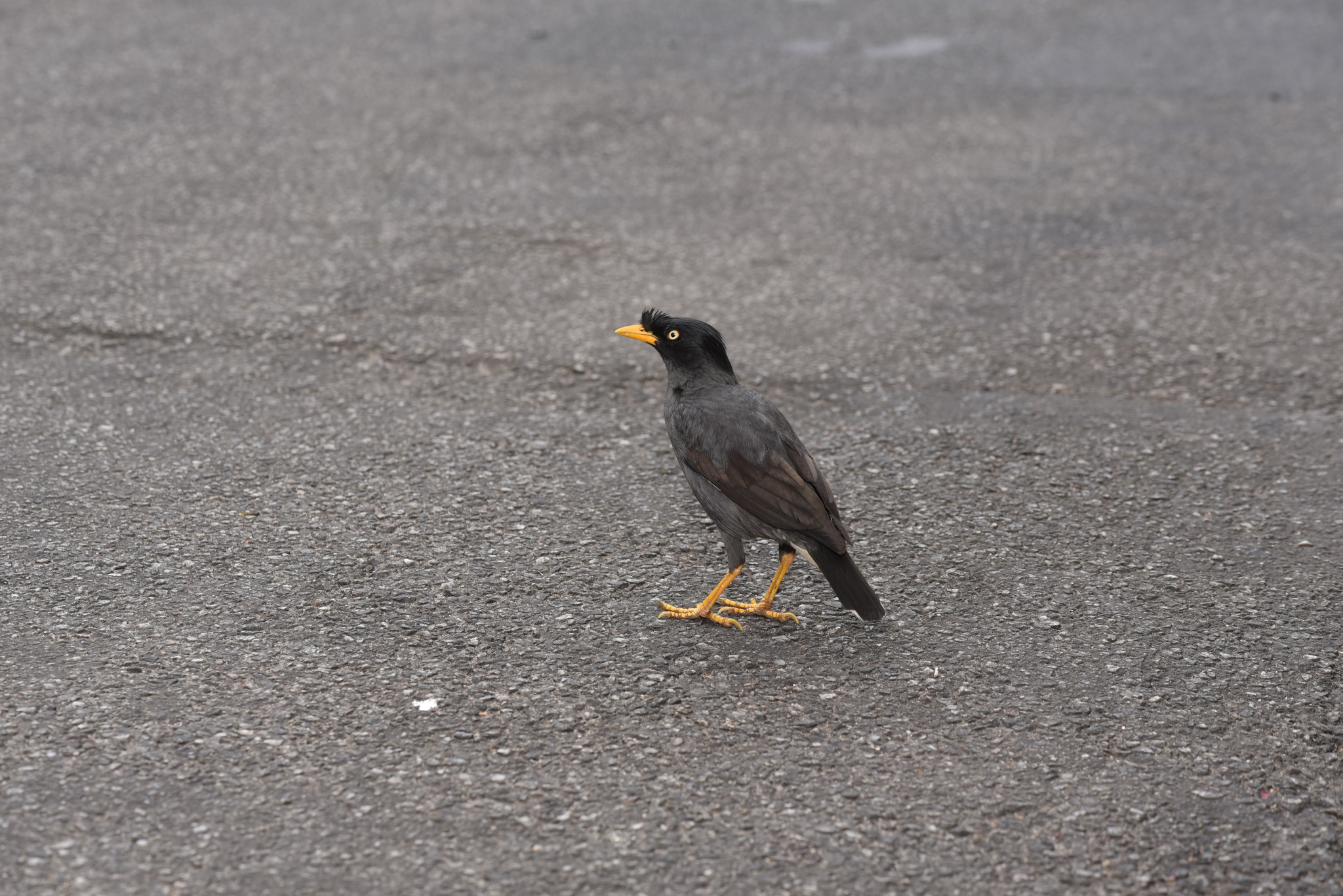
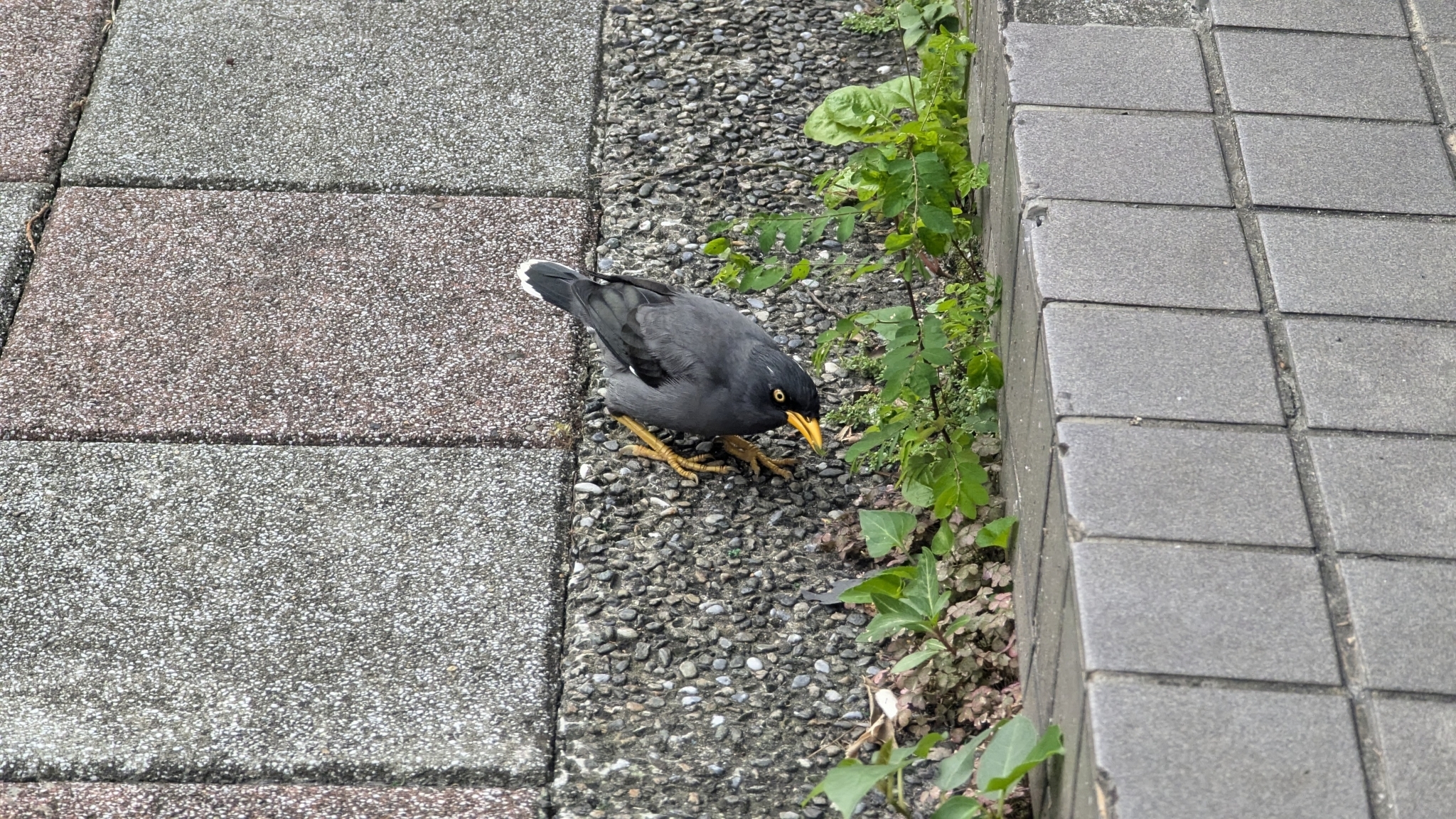
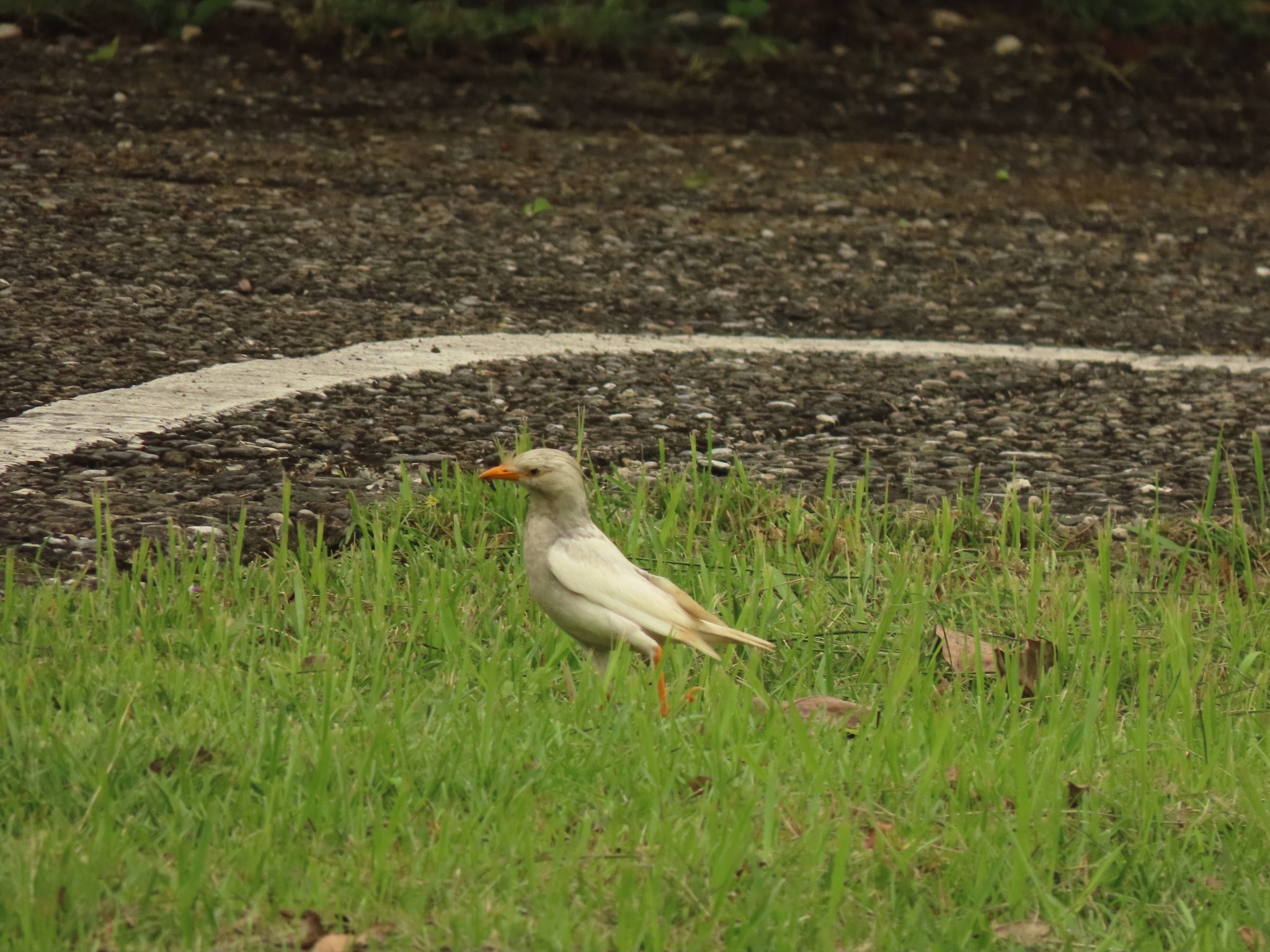
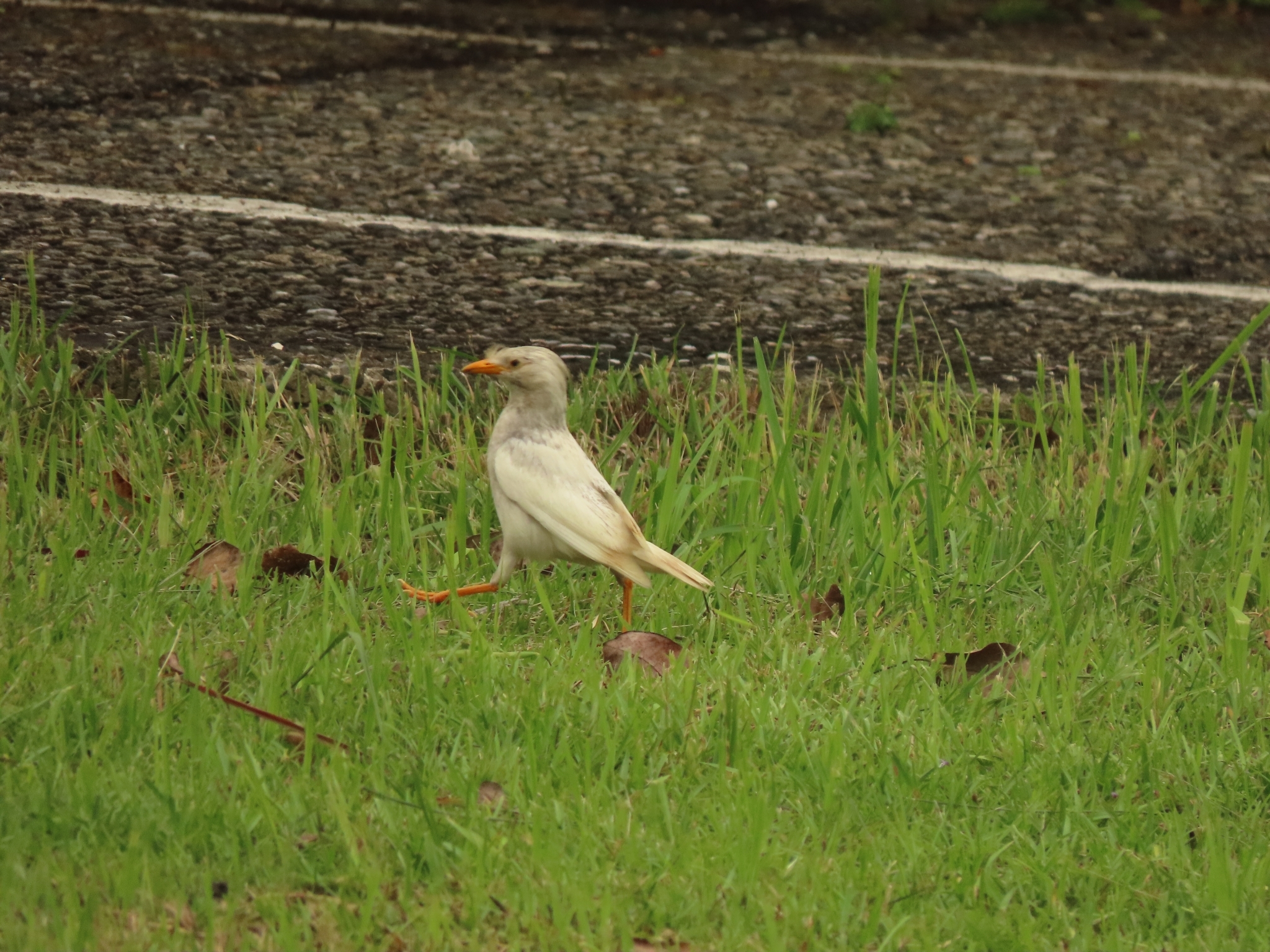
Javan Myna
Acridotheres javanicus
爪哇八哥
Introduction
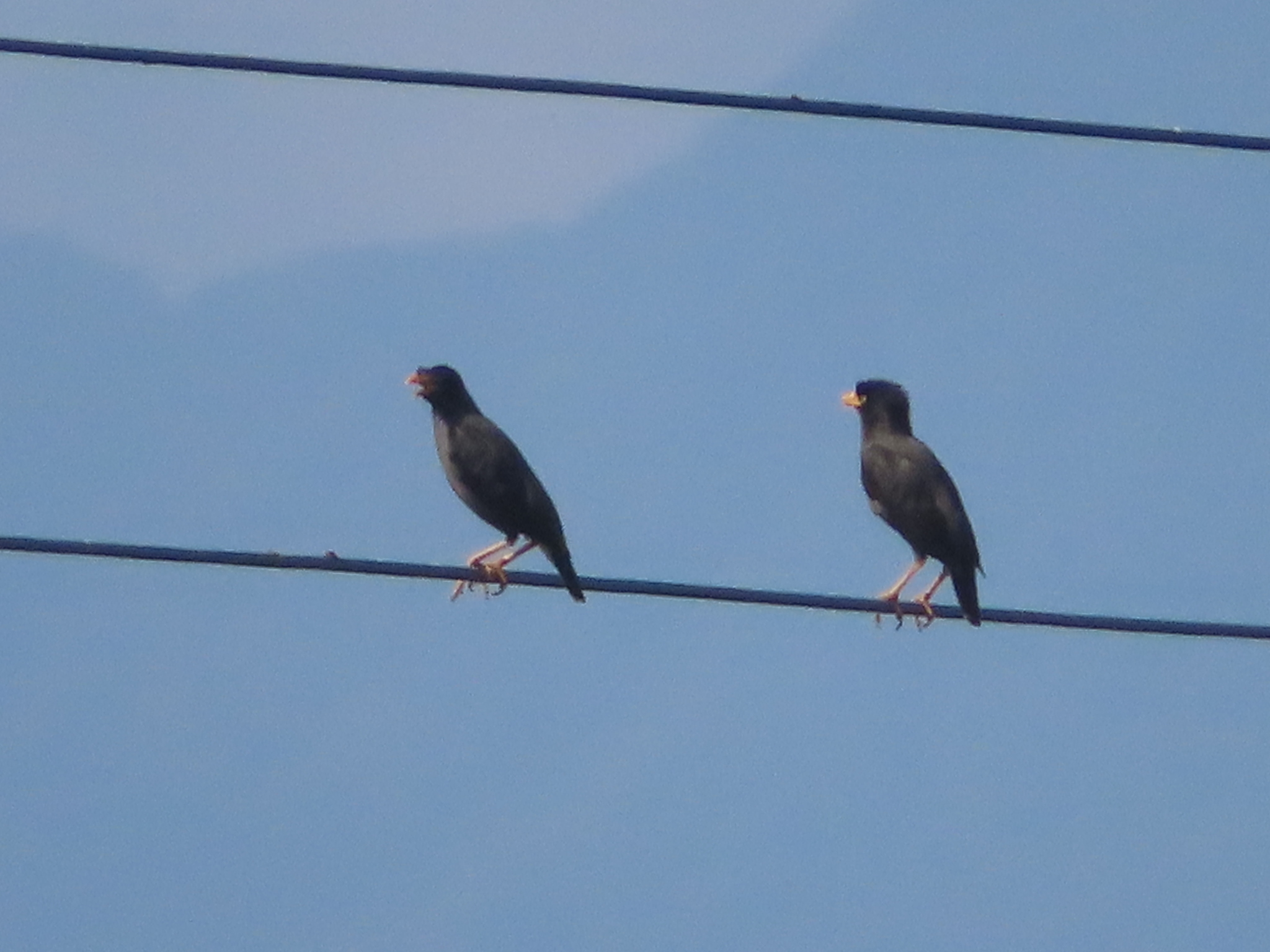
A starling-like myna native to Java and Bali, Indonesia. Introduced to Singapore in the 1920s via the cage-bird trade, it has since established populations in Thailand, Malaysia, Sumatra, Taiwan, Japan, Nepal, and Puerto Rico. In Singapore, it is now the most abundant urban bird species. Native populations have declined significantly due to trapping for the cage-bird trade. Inhabits parks, gardens, markets, and residential areas, typically occurring in close association with human settlements. Characterized by white wing patches and yellow eyes. Known to compete with native species including the common myna and Oriental magpie-robin for resources and nesting sites.
Description
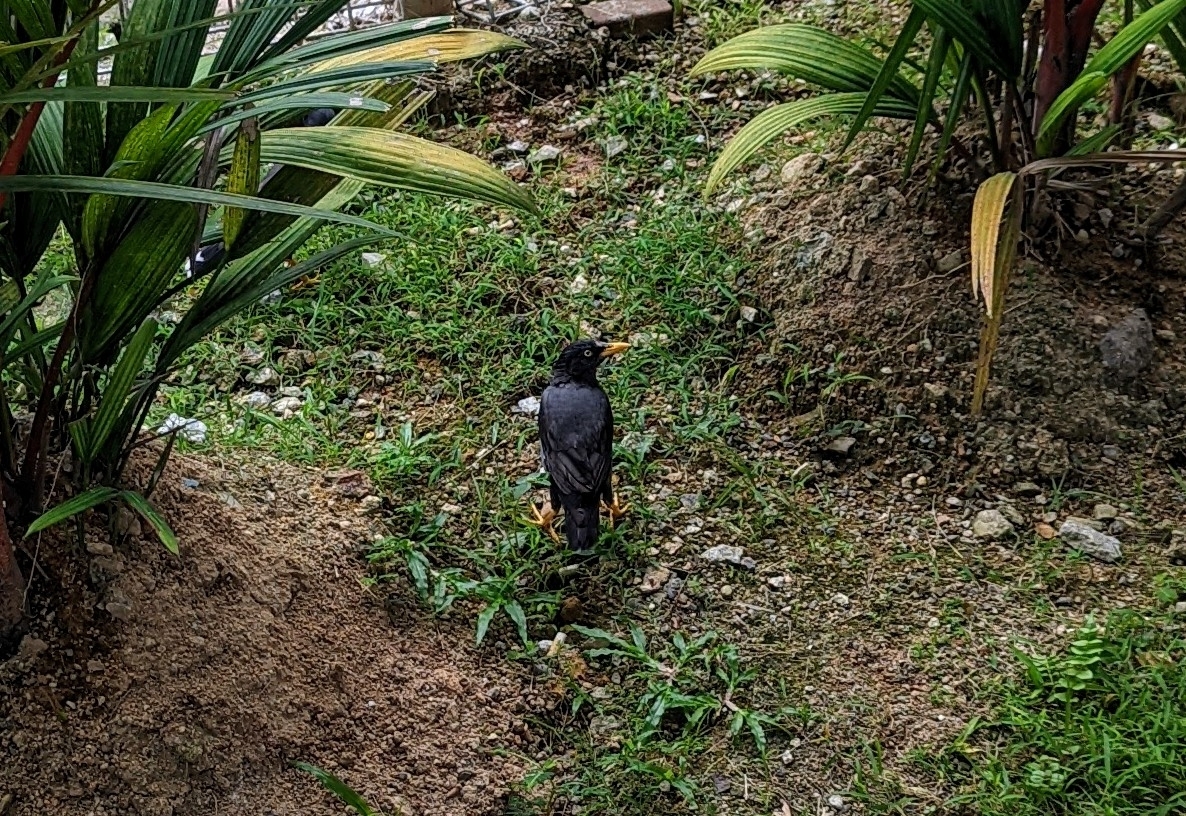
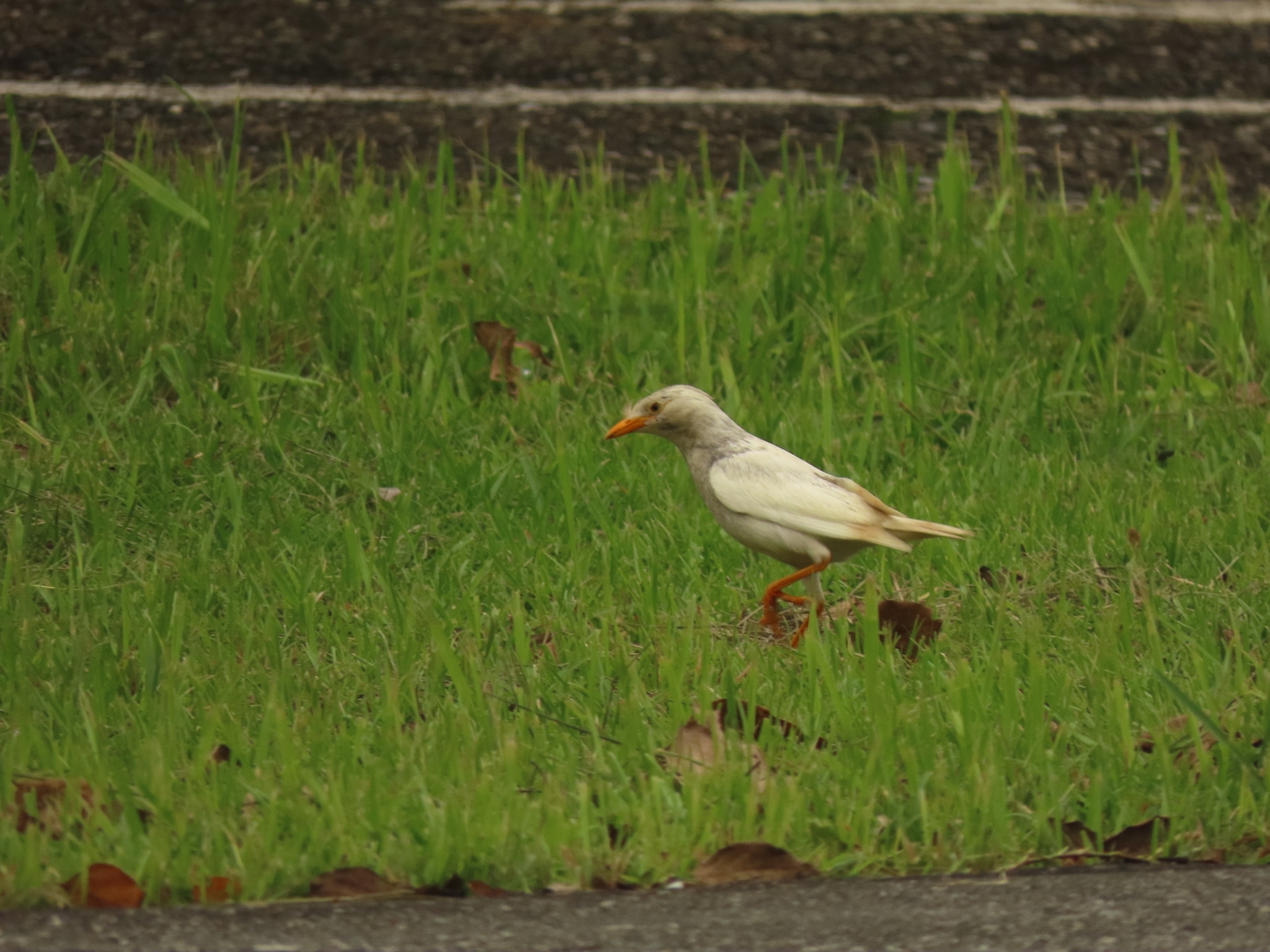
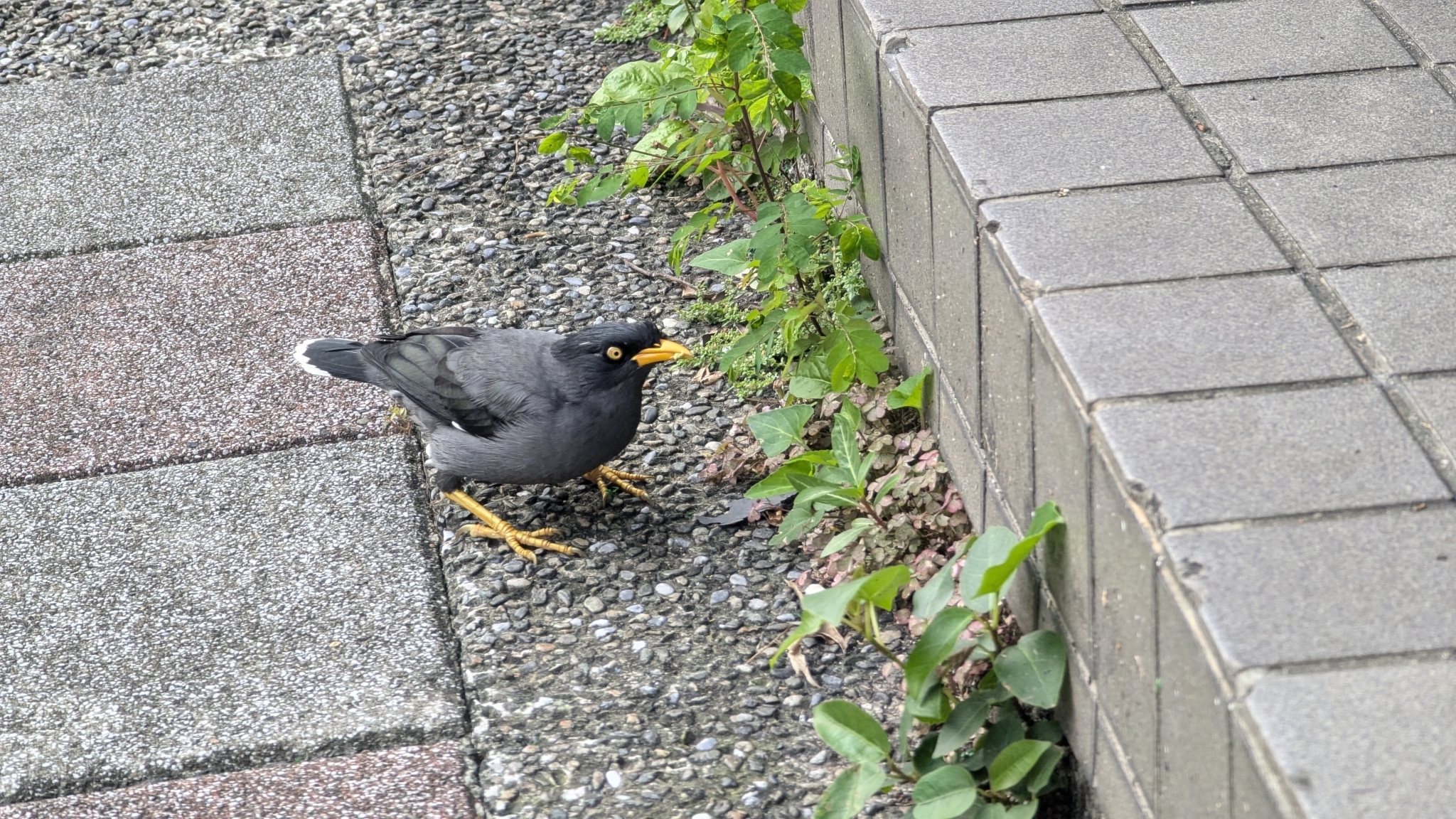
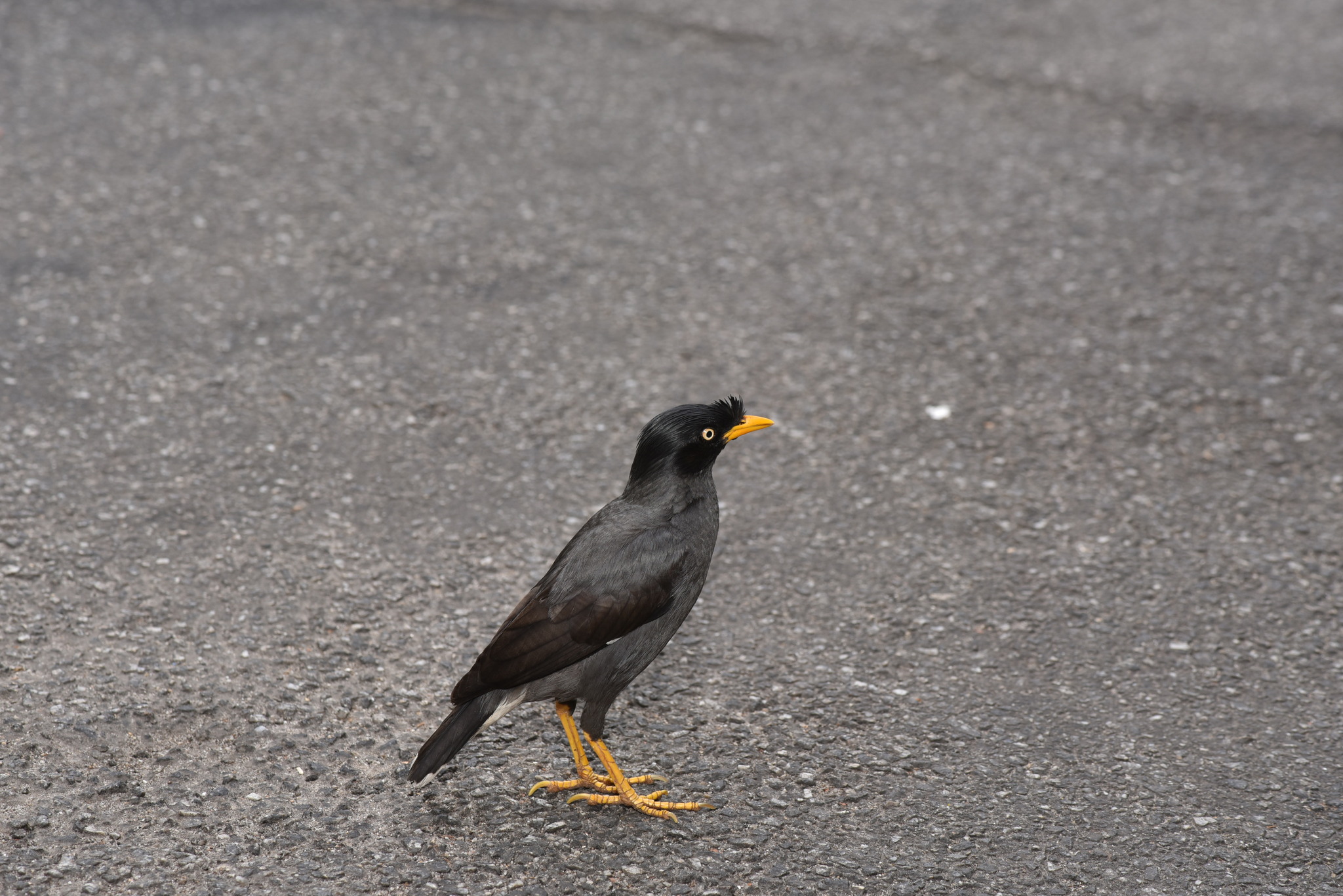
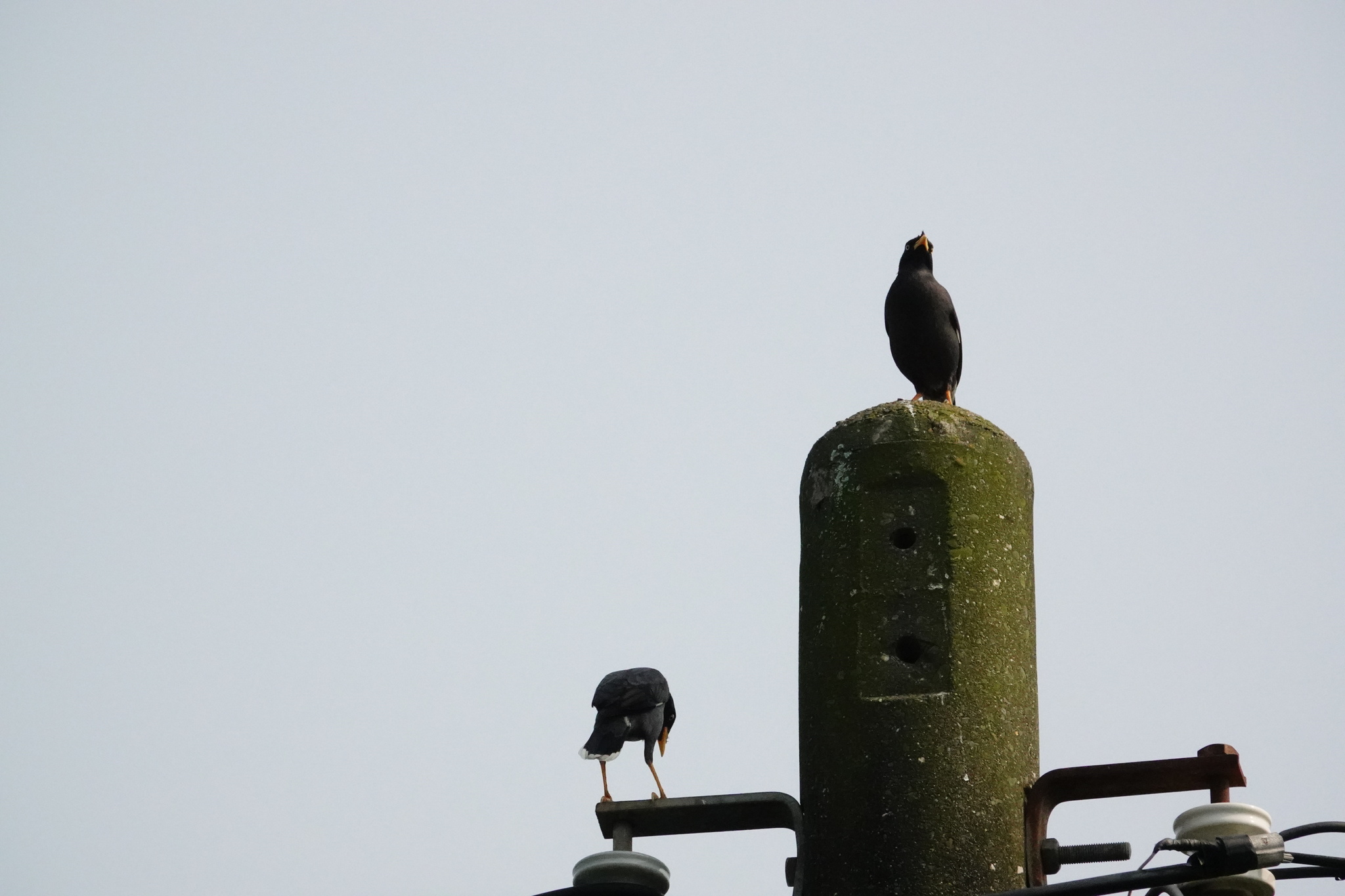
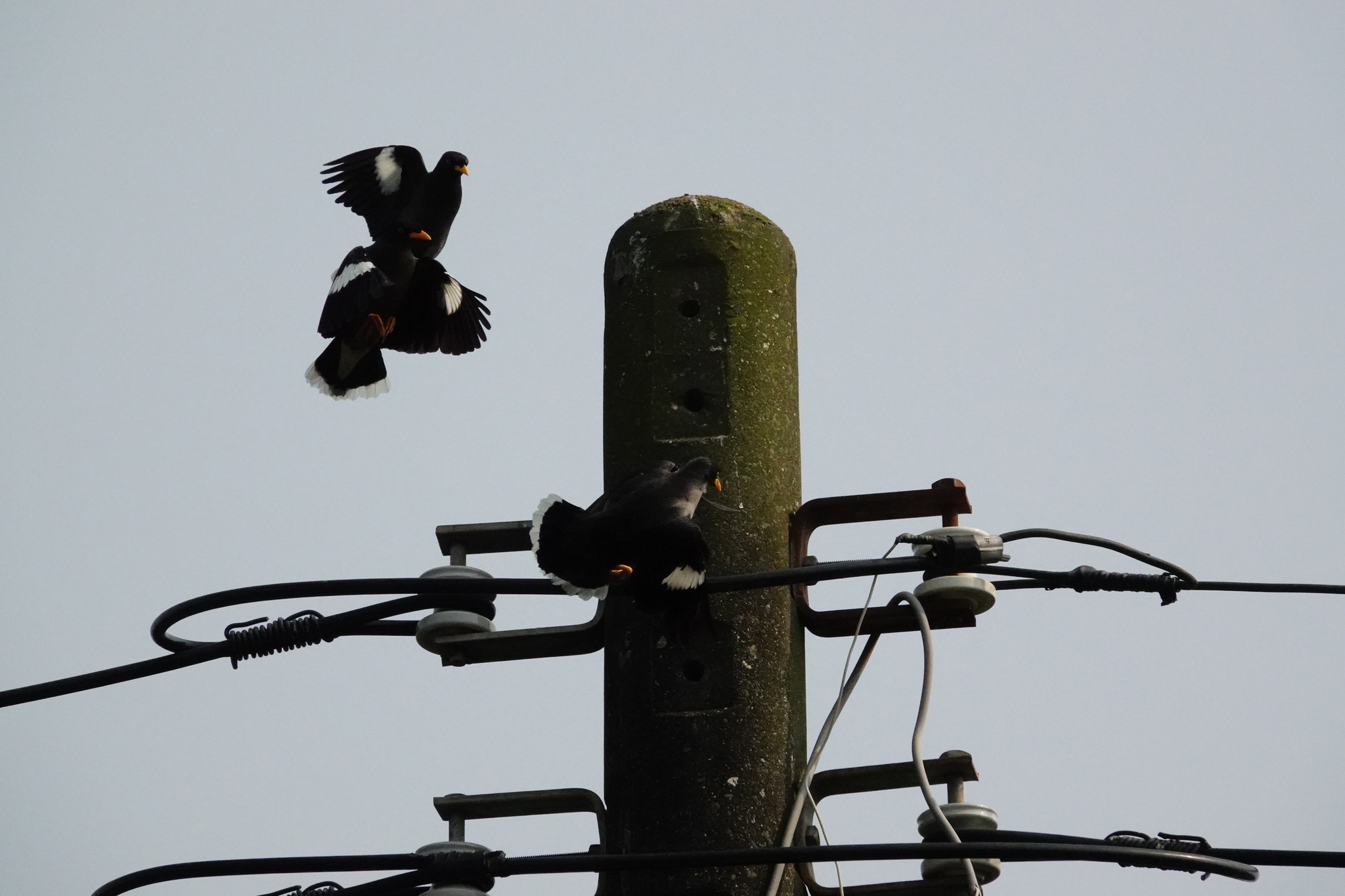
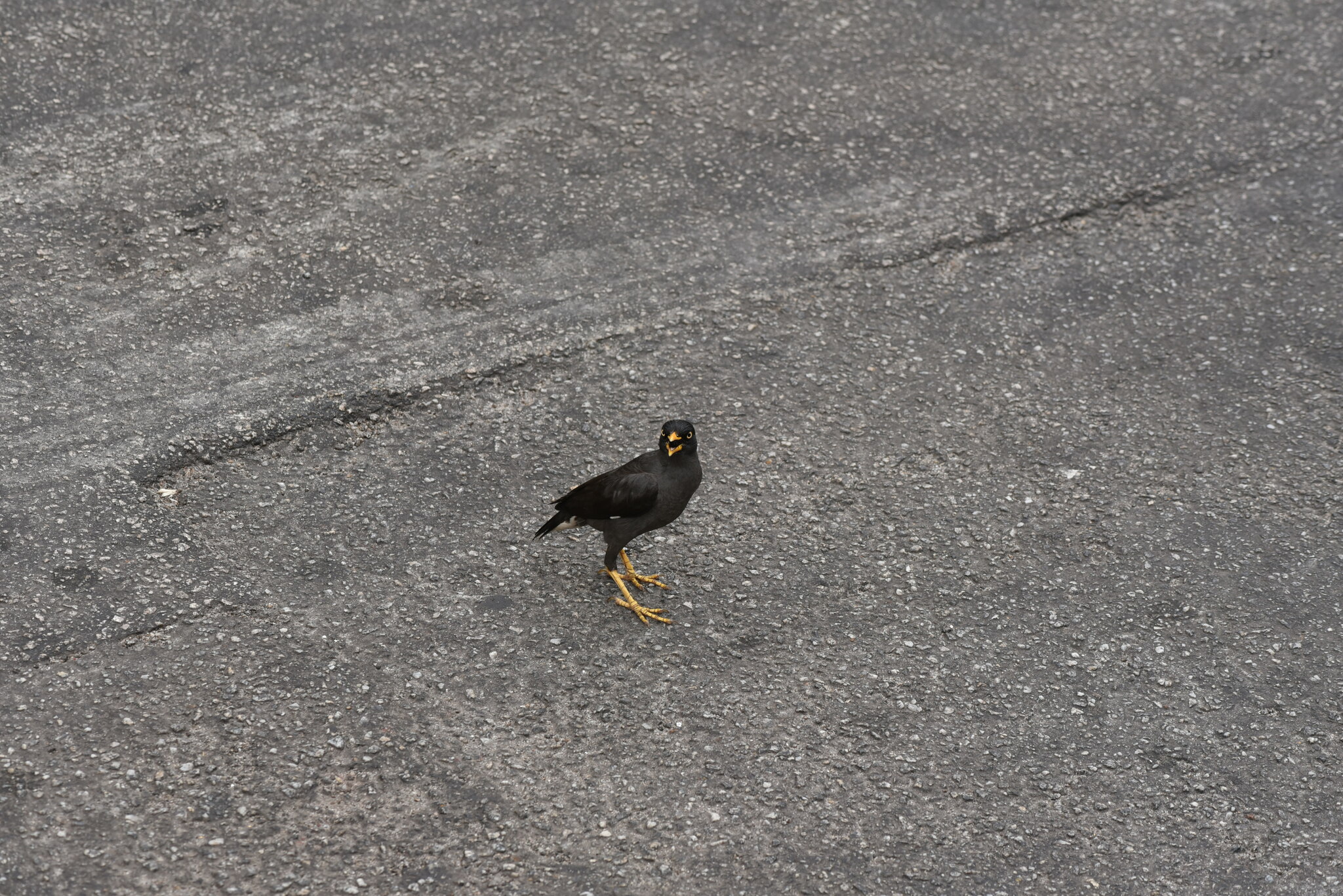
This is a stocky, medium-sized starling measuring 21-23 cm in length and weighing approximately 100 g. The plumage is predominantly black with a subtle glossy sheen, while the wings appear brownish-black. The primary feathers feature white bases that create a conspicuous white wing bar visible during flight, and a white tail bar is also displayed. The undertail coverts are white, lending the species its alternative name. A short, erect crest adorns the forehead, adding distinctive character to the profile. The beak, legs, and feet are bright yellow, and the iris is a striking lemon-yellow—though this colour darkens with age. Immature birds are browner and duller overall, with less prominent crests and paler soft parts on the face and limbs.
Identification
The lemon-yellow iris provides the most reliable distinguishing feature from the similar common myna, which has a brown iris. In flight, the bright white wing bar and tail bar become conspicuous identifiers. The white undertail coverts are visible when the bird is perched and may assist with identification. The short, erect forehead crest helps separate it from several related myna species. The species is often seen in pairs or small groups in urban settings, where its bold, almost fearless behaviour around humans contrasts with the more cautious nature of many native songbirds.
Distribution & Habitat
The species is native to the Indonesian islands of Java and Bali, where it has become uncommon to rare due to trapping pressure. Introduced populations now occur across southeastern Thailand, southern Malaysia, Singapore, Sumatra, the Lesser Sunda Islands, Taiwan, Japan, Nepal, and Puerto Rico. This myna shows strong association with human-modified landscapes and thrives in cities, towns, and cultivated agricultural areas. In urban environments, it readily occupies parks, gardens, markets, and any area offering food and nesting opportunities. No regular migration occurs, though individuals may disperse locally in search of resources.
Behavior & Ecology
These birds are highly gregarious, typically occurring in pairs or small groups that gather at favoured feeding sites and communal roosts. One individual often acts as sentinel while others forage, issuing high-pitched alarm calls to warn of approaching threats. The species demonstrates notable intelligence, including documented cases of birds activating automatic doors by triggering motion sensors. It is territorial and engages in noisy confrontations lasting up to ten minutes, where aggressors attempt to pin opponents to the ground. The diet is thoroughly omnivorous, encompassing insects, seeds, grains, fruits, nectar, and human food waste. Breeding pairs are monogamous cavity nesters, using tree holes, building gaps, roof spaces, and air conditioning units. Clutches of 2-5 blue eggs incubate for 13-14 days, with fledging occurring after approximately 25 days. Vocalizations include loud whistles, chattering, harsh grating notes, and at communal roosts produce a considerable cacophony.
Conservation
The species is classified as Vulnerable on the IUCN Red List, though this assessment applies specifically to its native range in Java and Bali, where populations have declined substantially. The primary threat is intensive trapping for the cage-bird trade, driven by the cultural tradition of keeping songbirds in Indonesia and Malaysia. Paradoxically, the species has become superabundant and even problematic as an invasive species in Singapore and other introduced locations, where it competes with native birds for resources and nesting sites.
Culture
The species has long been valued as a cage bird in Indonesia and Malaysia, prized for its loud, varied vocalizations and ability to mimic sounds. This cultural demand for songbirds remains deeply rooted in Southeast Asian society and represents the primary driver of population decline in its native range. In areas where the species has become invasive, particularly Singapore, it is sometimes regarded as a pest due to noise at roosts, droppings, and its habit of scavenging food from outdoor eating areas.
Source: Wikipedia · CC BY-SA 3.0
Taxonomy
- Order
- Passeriformes
- Family
- Sturnidae
- Genus
- Acridotheres
- eBird Code
- whvmyn
Distribution
Java and Bali; widely introduced elsewhere (southern Thai-Malay Peninsula, Sumatra, Borneo, Flores, Sumba, Honshu, and Taiwan)
Vocalizations
Data Sources
Species description from Wikipedia, licensed under CC BY-SA 3.0.
Bird images and sounds sourced from GBIF, contributed by citizen scientists worldwide under Creative Commons licenses.
Taxonomy data from AviList 2025.