Rufous-necked Hornbill
Aceros nipalensis
棕颈犀鸟
Introduction
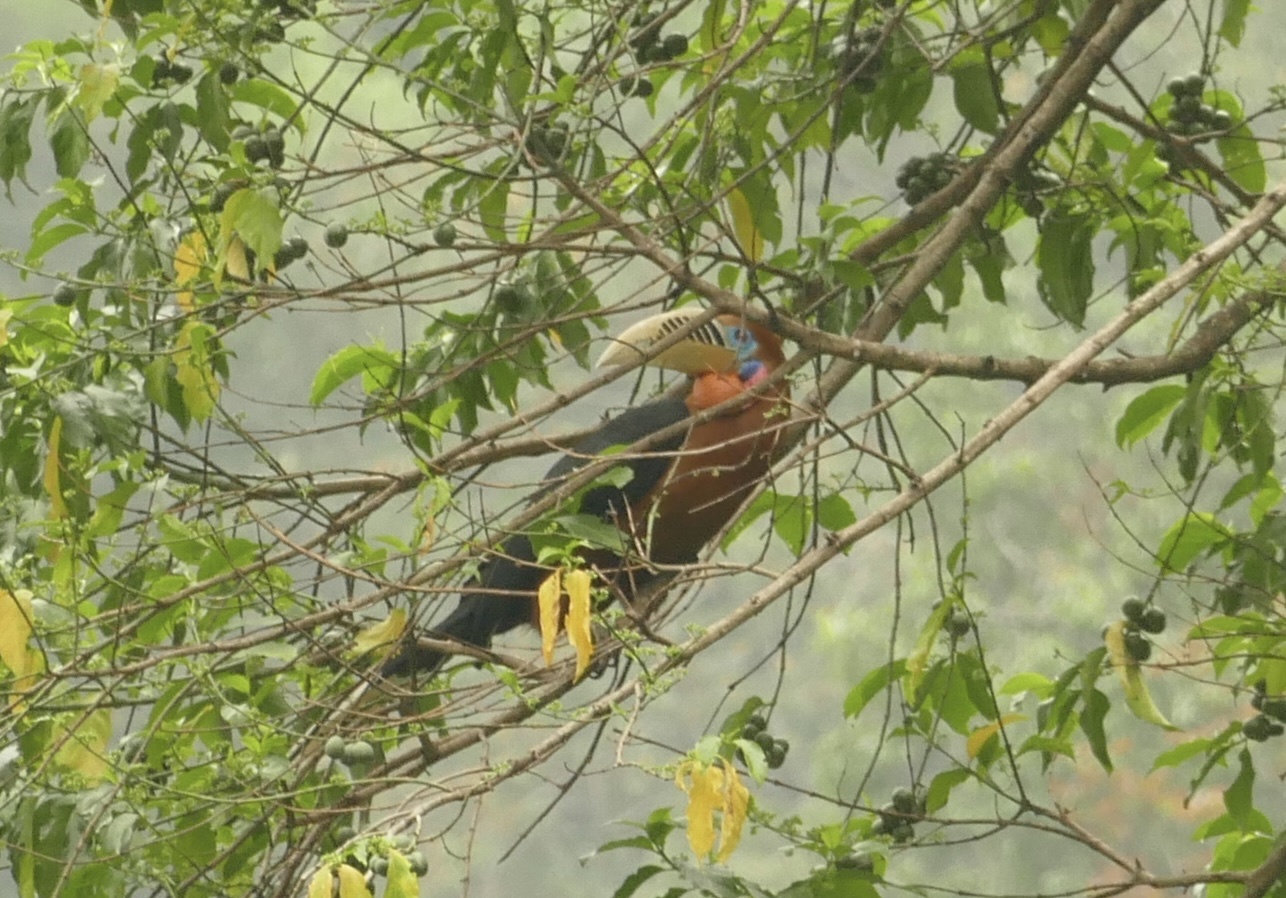
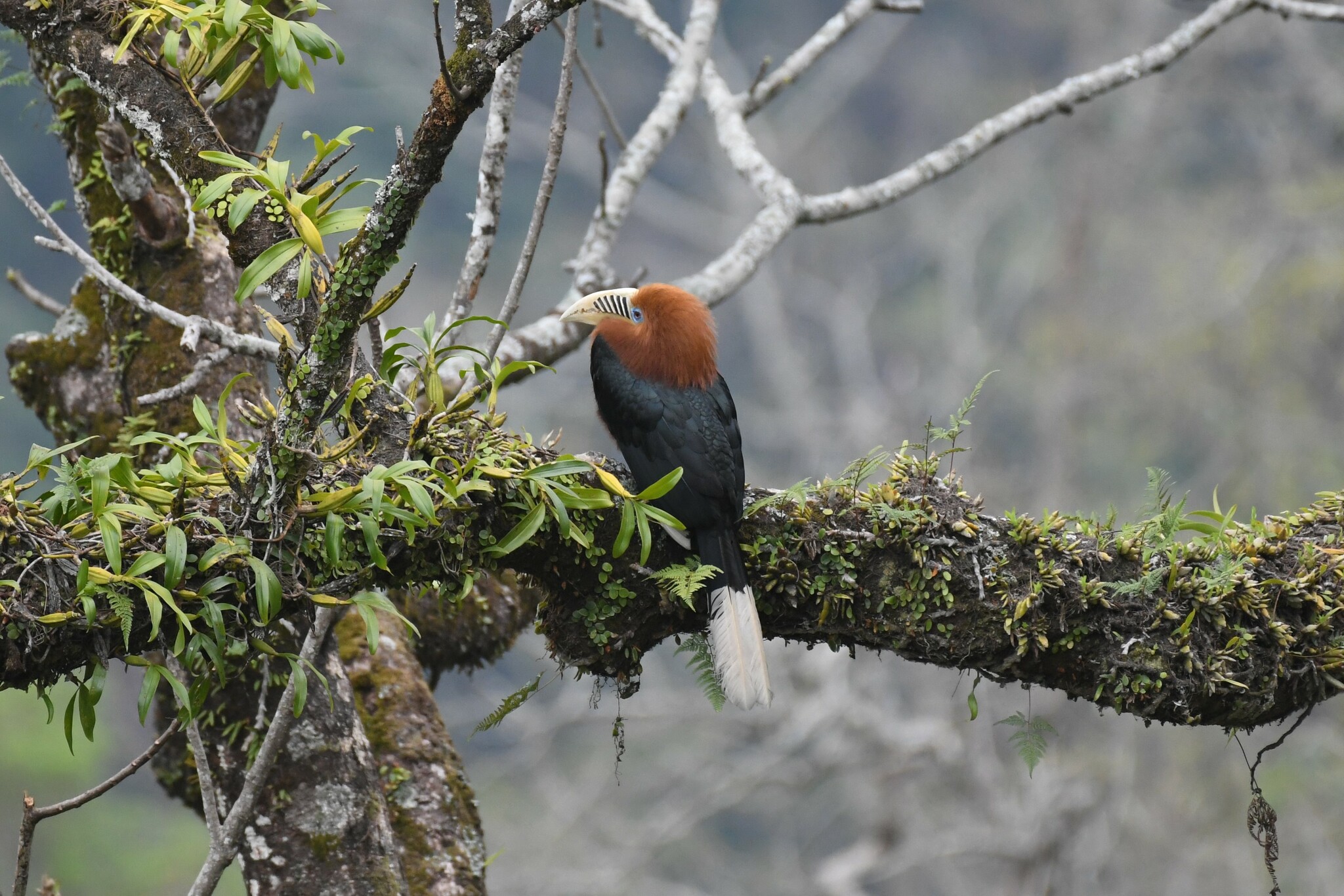
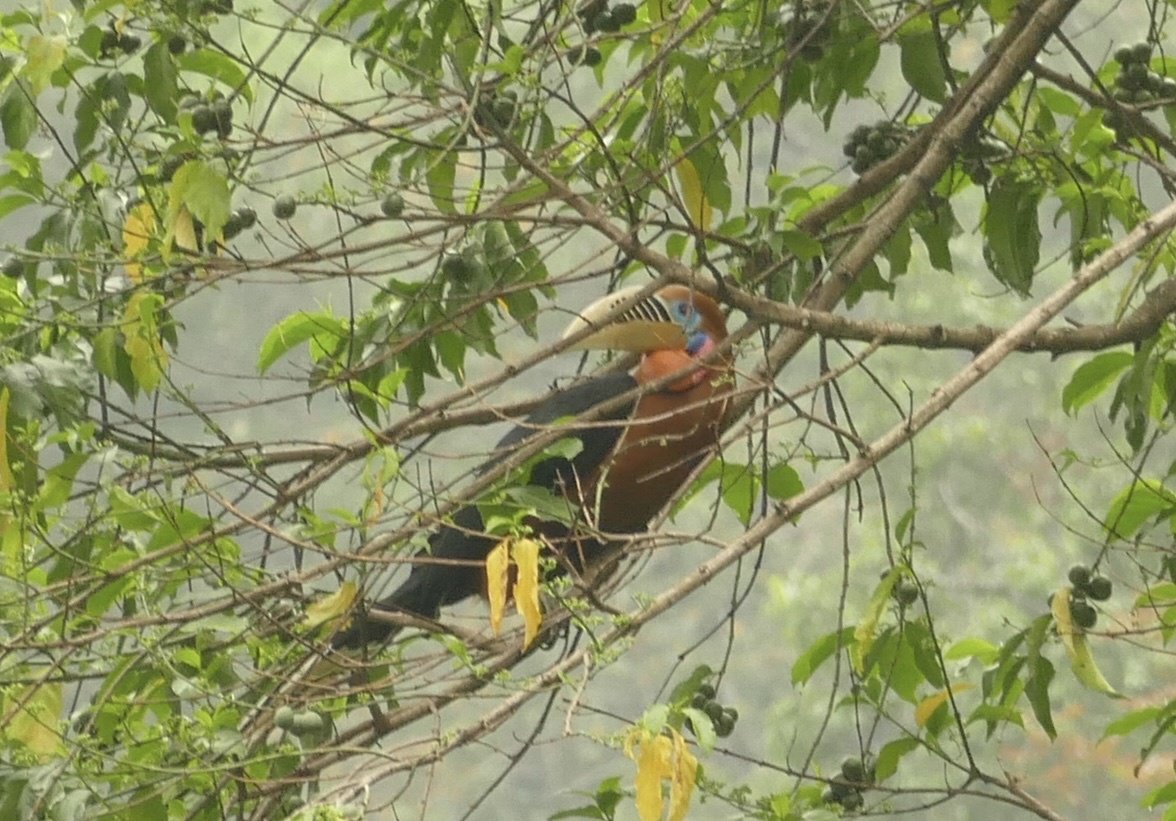
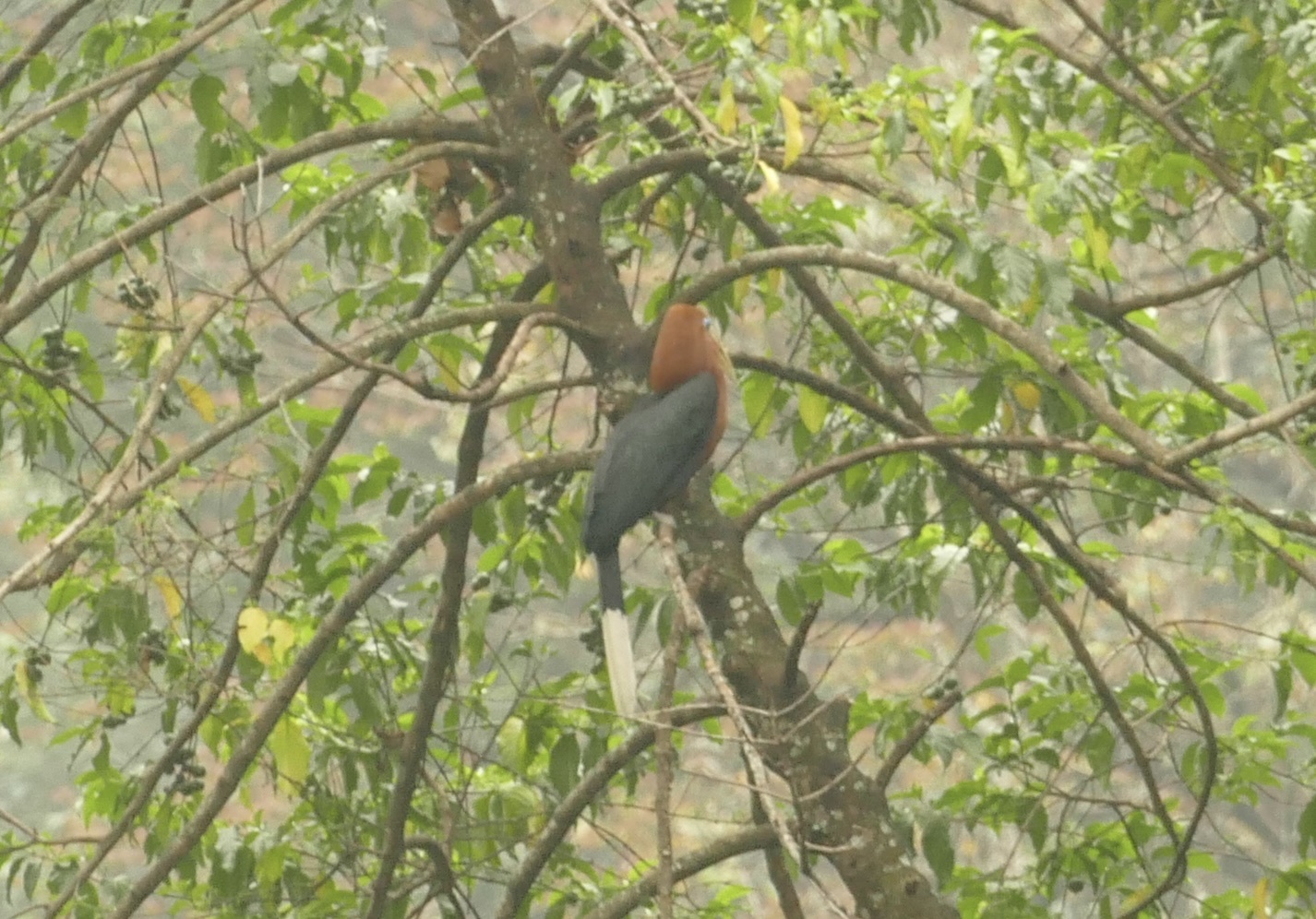
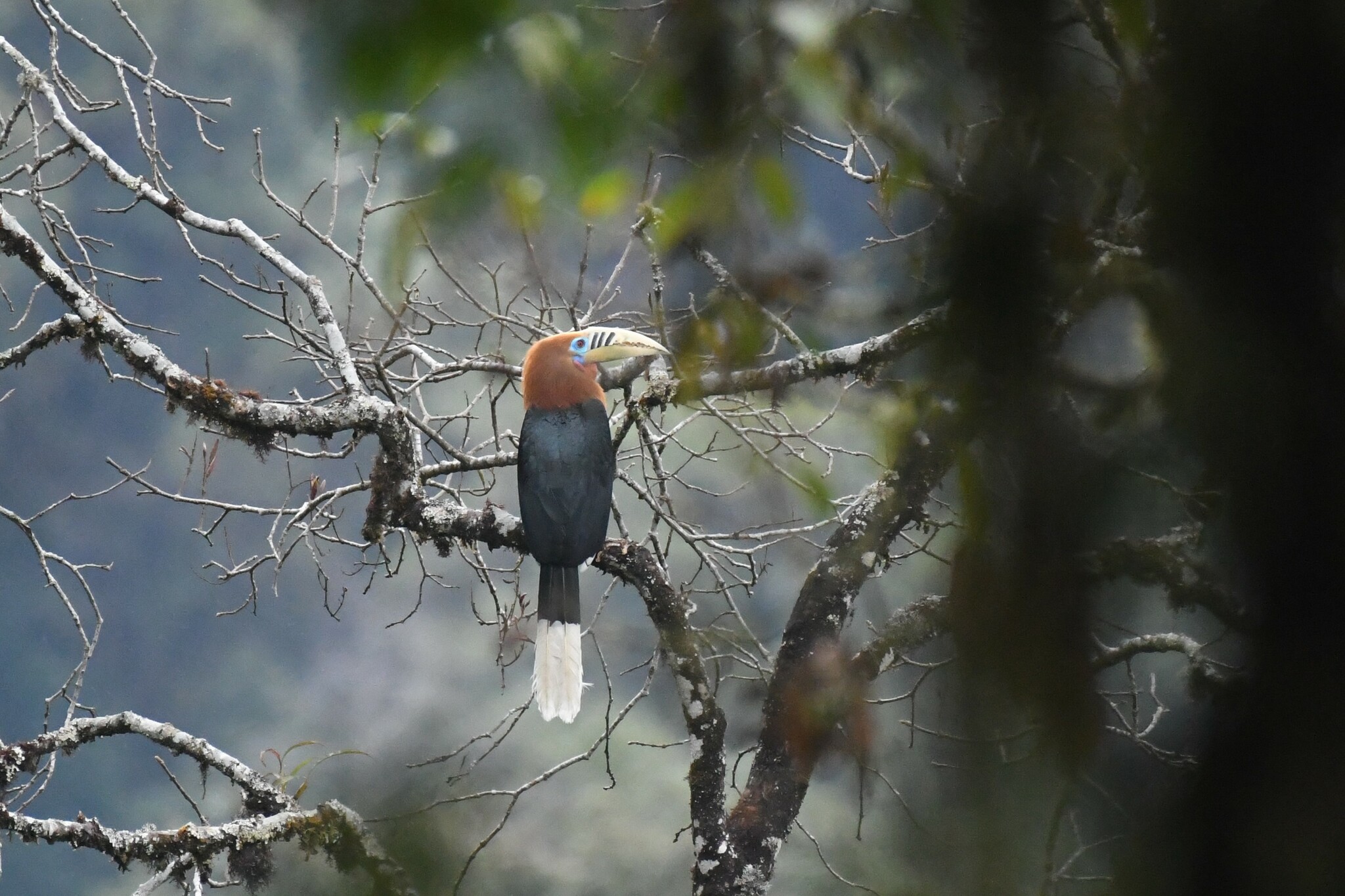
The rufous-necked hornbill (Aceros nipalensis) is a hornbill species measuring approximately 117 cm in length. It occurs in Bhutan, northeastern India (Arunachal Pradesh), and Southeast Asia. The species is locally extinct in Nepal and has fewer than 10,000 mature individuals remaining globally. It exhibits sexual dimorphism: males have rufous underparts, neck, and head, while females are entirely black. The species inhabits high-elevation forested areas and undertakes seasonal movements between forest patches in response to fruit availability.
Description
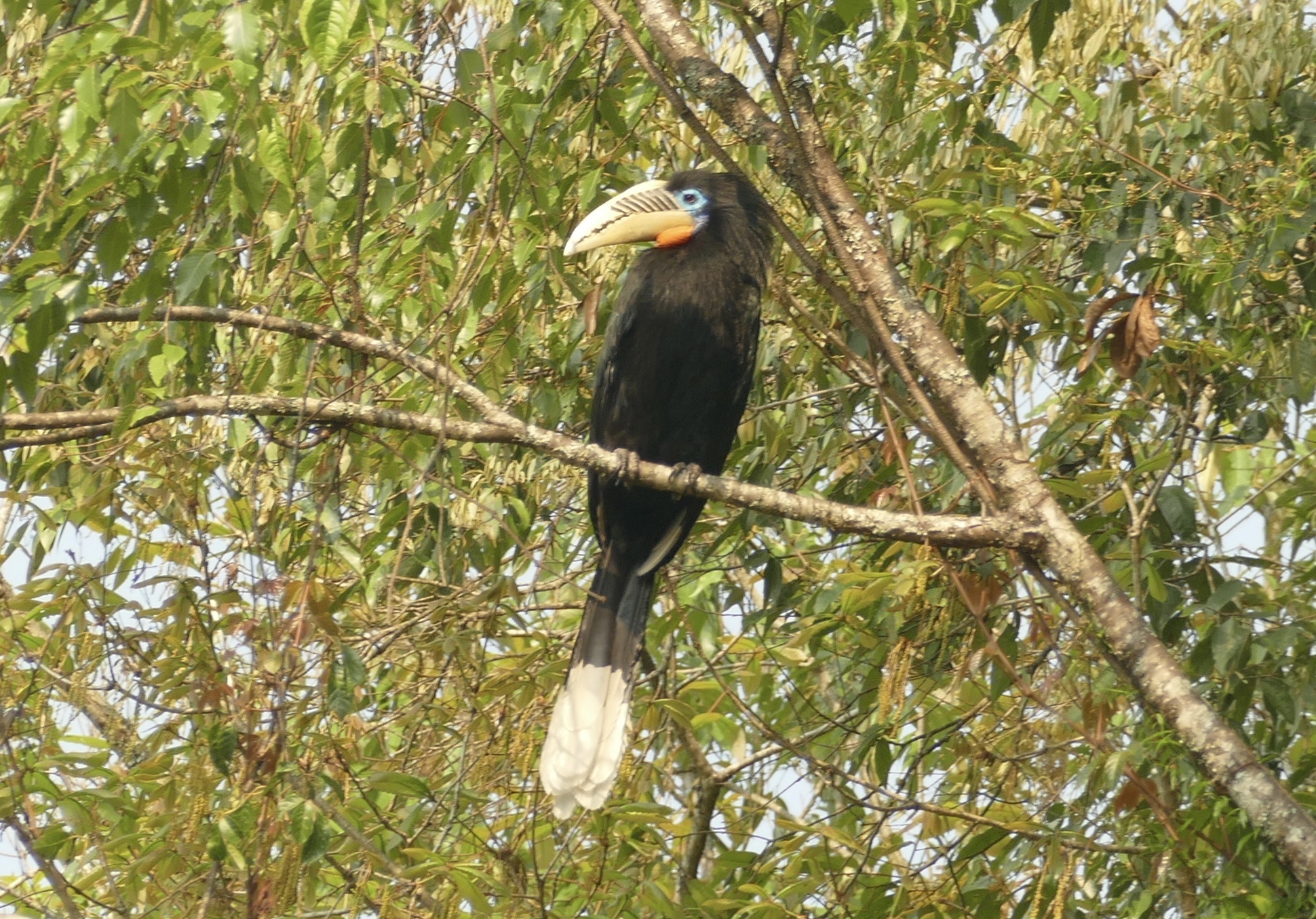
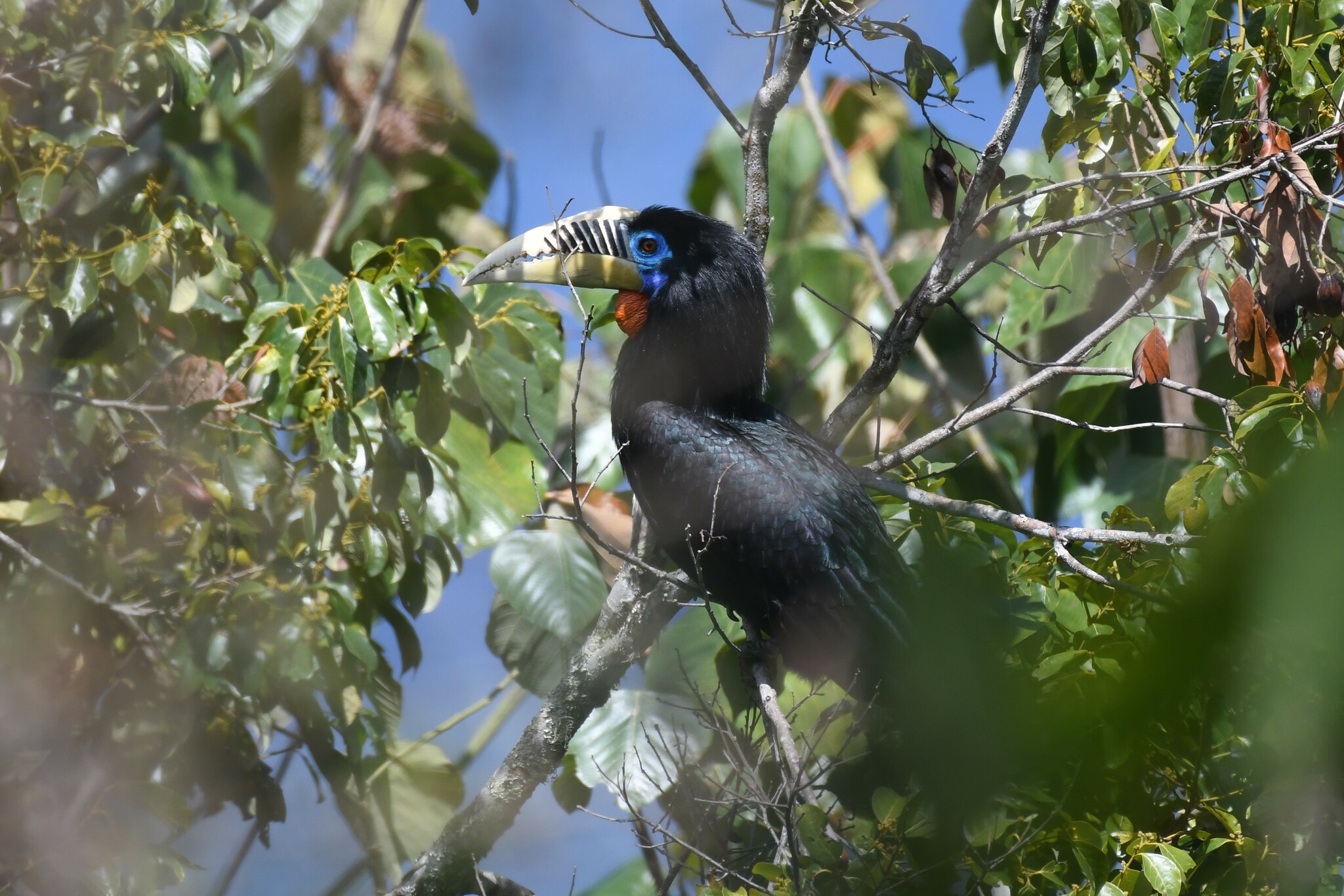
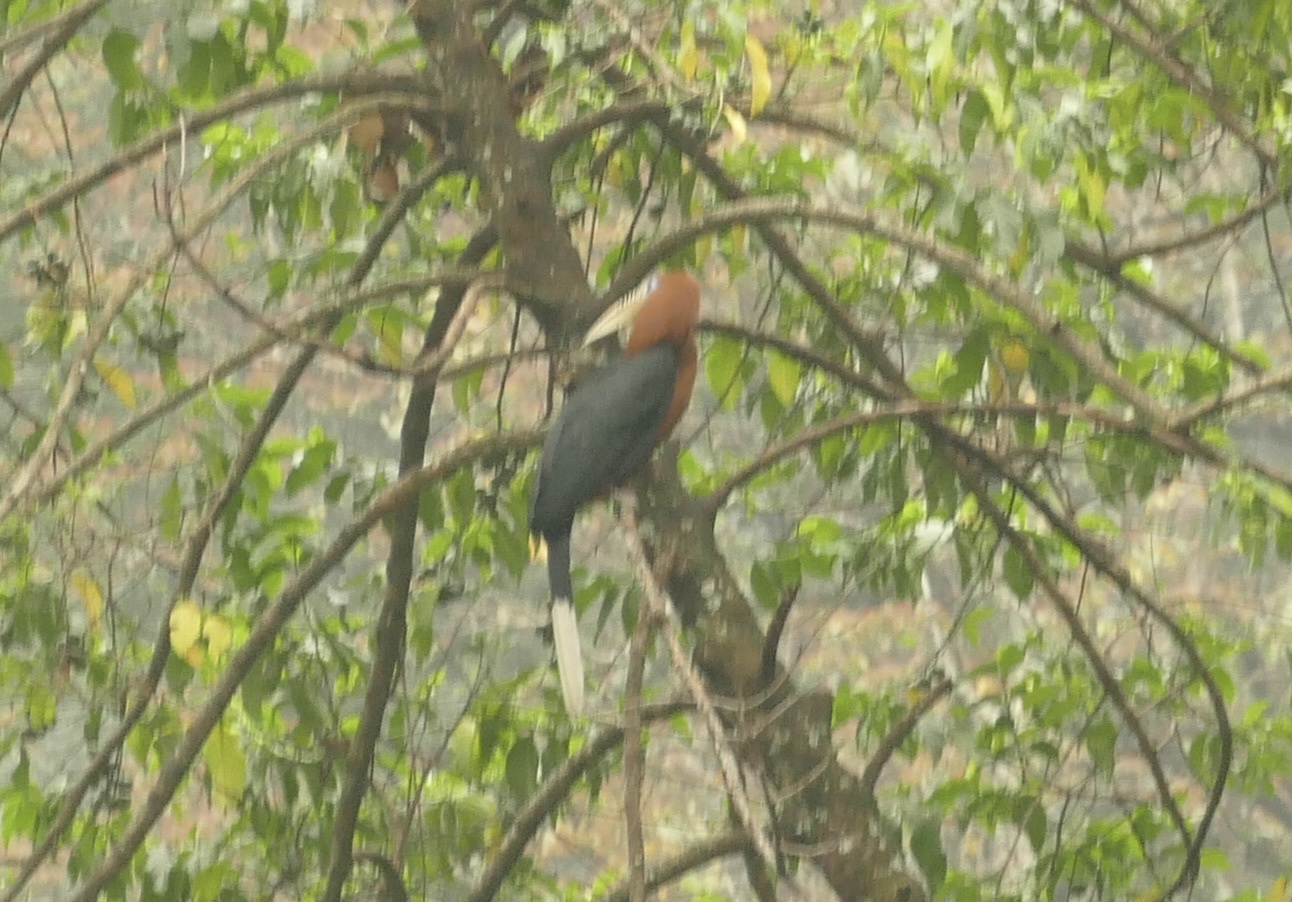
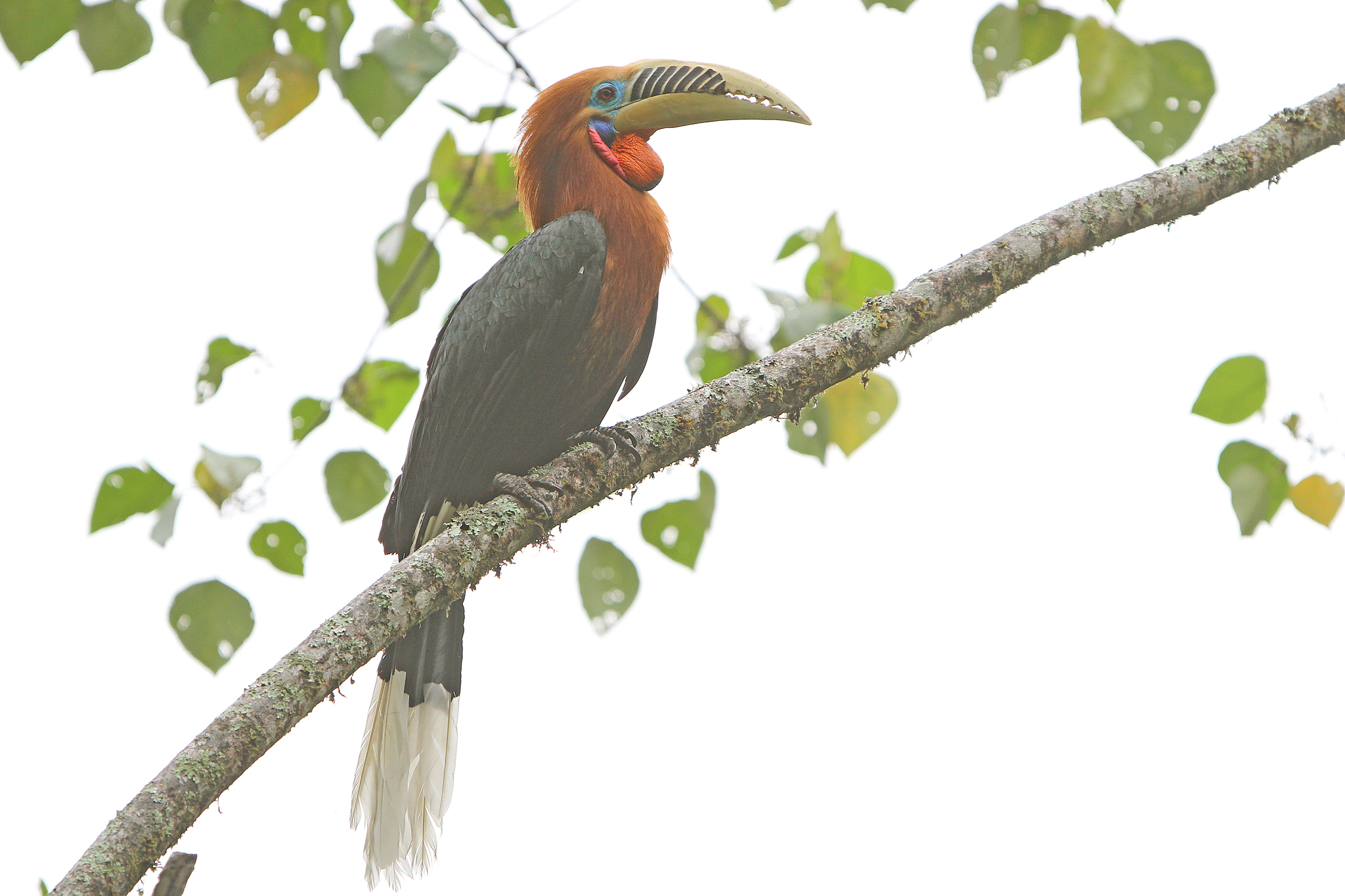
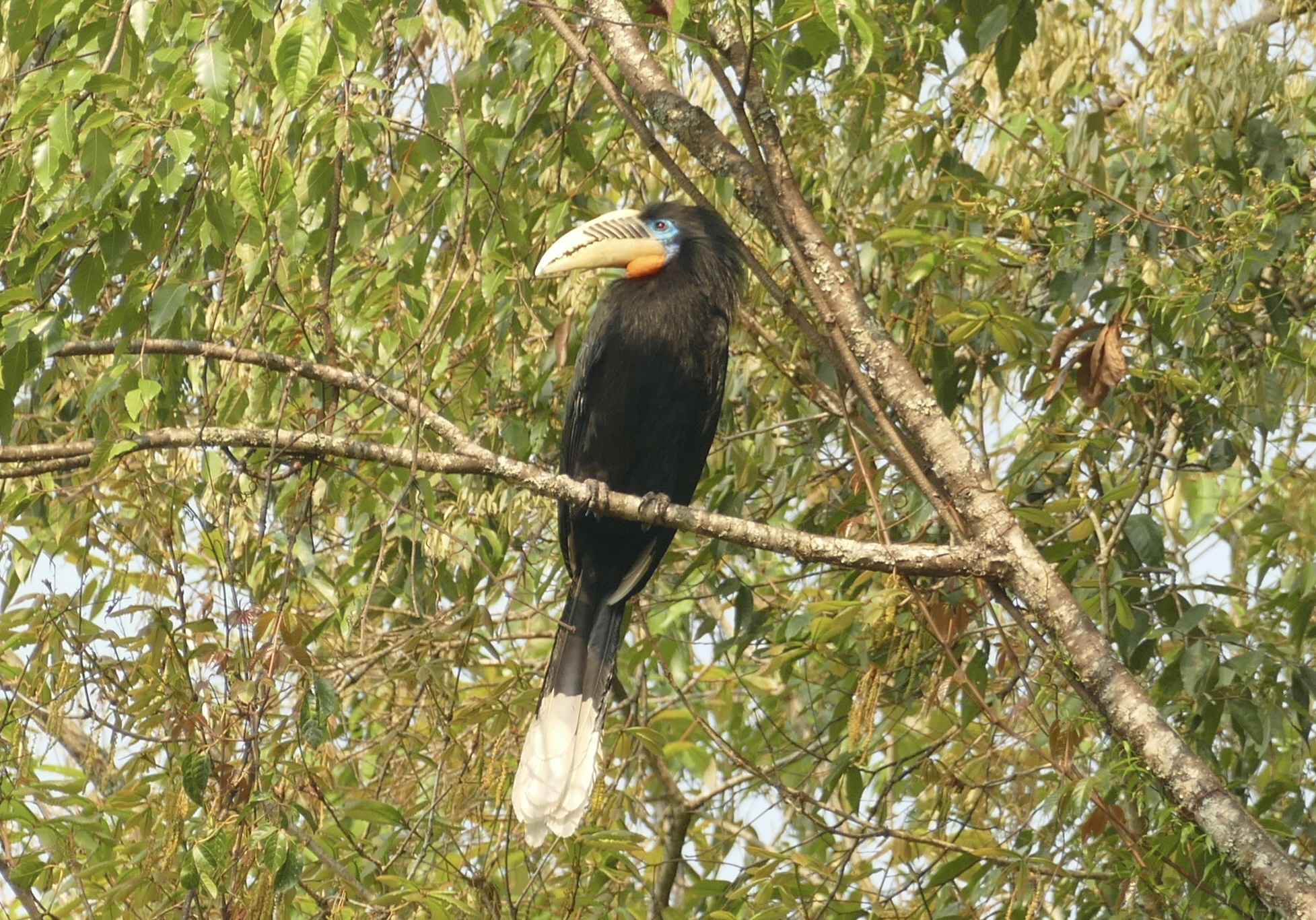
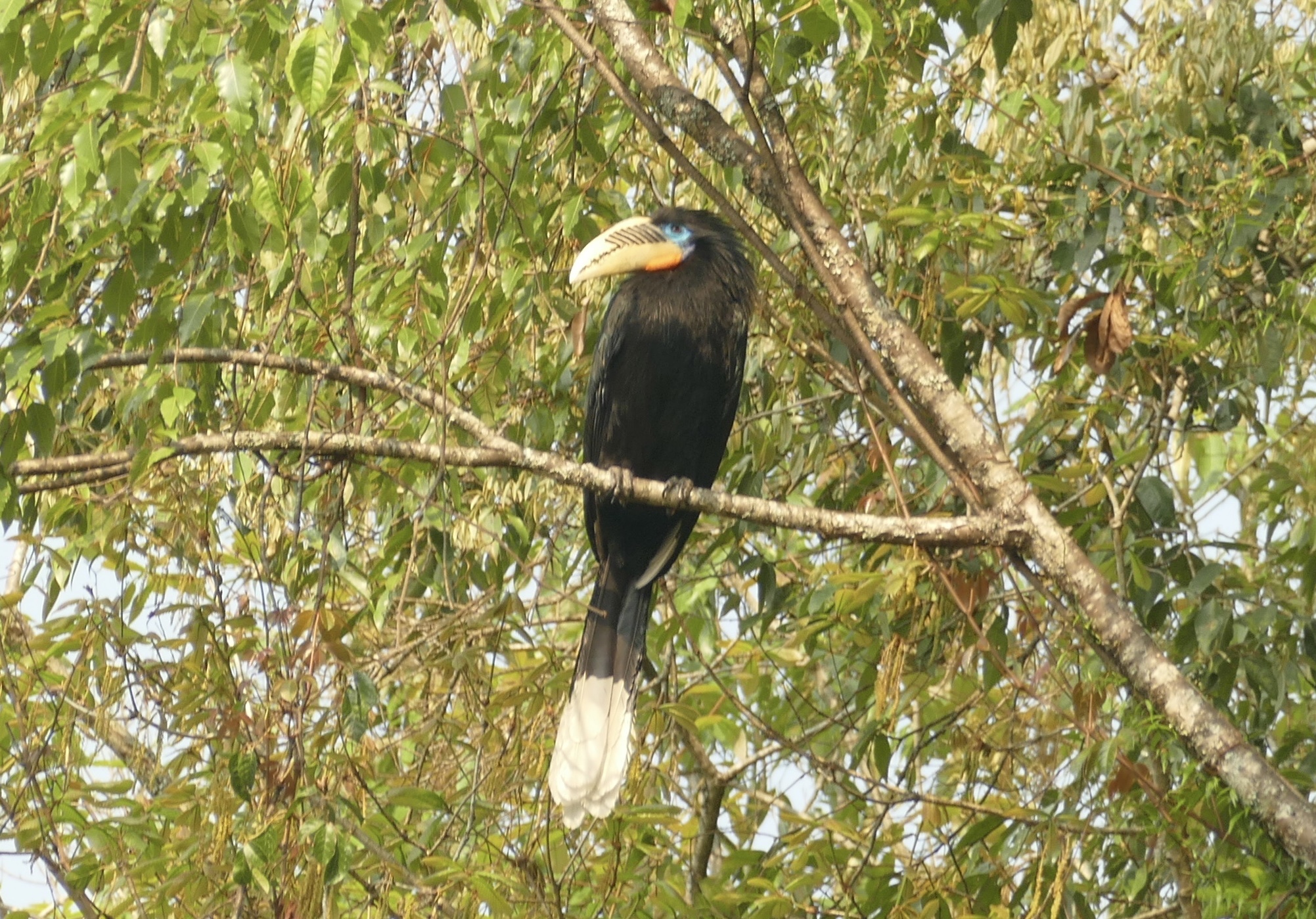
This large hornbill measures about 117 cm in length, placing it among the larger Bucerotine hornbills. Males display rich rufous coloring on their head, neck, and underparts, with deeper coloration on the flanks and abdomen. The middle primaries and lower half of the tail show white tips, while the remaining plumage is glossy dark-green and black. The lower tail-covert feathers are chestnut mixed with black. Females are almost entirely black, with white only on the tail tips and middle primary tips. Both sexes possess a beak that lacks a true casque but is thickened at the base, with several dark ridges on the upper beak that develop with age, reaching up to approximately seven ridges in older individuals. The commissure of the beak is broken in both sexes. Juveniles resemble adults of their respective sex but lack the characteristic ridges at the base of the upper beak.
Identification
The pronounced sexual dimorphism serves as the primary field identification characteristic for this species. Males with their distinctive rufous head, neck, and underparts can be distinguished from other hornbill species by this coloration pattern, while the all-black females may be separated by the white-tipped middle primaries and tail tips. The lack of a true casque distinguishes this species from hornbills that possess well-developed casques. The broken commissure of the beak and the developing ridges on the upper mandible in adults provide additional identification features for experienced observers.
Distribution & Habitat
This species occupies the northernmost range among Asian hornbills, extending from Northeast India and central Bhutan through to western Thailand and northwestern Vietnam. Its distribution covers approximately 1,163,811 square kilometers of which over 825,000 square kilometers consists of forested habitat. Within this range, the species occurs in 90 protected areas totaling nearly 55,000 square kilometers of protected forest, though this represents only about 7% of optimal hornbill habitat. The westernmost limit includes Mahananda Wildlife Sanctuary in West Bengal, with additional populations in Buxa Tiger Reserve, Manas National Park, Eaglenest Wildlife Sanctuary, Sessa Orchid Sanctuary, Kamlang Wildlife Sanctuary, Namdapha National Park, and Pakke Tiger Reserve. The species predominantly inhabits hilly, ridged forests, especially temperate broadleaf and mixed forests at elevations between 150 and 2,200 meters, though it has also been recorded in dry woodland areas.
Behavior & Ecology
The breeding season spans from March to June, with nesting pairs selecting tall trees that have substantial girth for cavity formation. The eggs are broad oval in shape, somewhat compressed toward one end, measuring approximately 2.25 by 1.75 inches. The shell is strong and thick but coarse and entirely glossless, colored a dirty white with a pale yellowish tinge and minute white specks. The species forms communities that move between forest areas depending on seasonal availability of fruiting trees, making local movements in response to changing food resources rather than undertaking long migrations. These movements are directly tied to the fruiting patterns of trees throughout their habitat.
Conservation
The species is currently listed in CITES Appendix I and classified as Vulnerable on the IUCN Red List. However, due to increased information about its range and population extent, there have been suggestions that the conservation status should be downgraded to Near Threatened. The primary threats include habitat loss from deforestation and hunting for feathers and beaks. Conservation initiatives targeting this species include the Hornbill Nest Adoption Programme and efforts to replace traditional use of hornbill beaks with fiber-made replicas. These programs are implemented through collaboration between the Wildlife Trust of India, Arunachal Pradesh Forest Department, and local communities.
Culture
This hornbill appears in Sanskrit literature under the epithet 'vārdhrīnasa,' a term that has occasionally been applied to other members of the Bucerotidae family as well. In Arunachal Pradesh, local tribal communities have traditionally hunted these birds for their decorative feathers and distinctive beaks, which have cultural and ceremonial significance. This traditional hunting pressure, combined with habitat modification, has contributed to population declines in parts of the species' range.
Source: Wikipedia · CC BY-SA 3.0
Taxonomy
- Order
- Bucerotiformes
- Family
- Bucerotidae
- Genus
- Aceros
- eBird Code
- runhor1
Distribution
Himalayan foothills to southwestern China and northern southeastern Asia
Data Sources
Species description from Wikipedia, licensed under CC BY-SA 3.0.
Bird images and sounds sourced from GBIF, contributed by citizen scientists worldwide under Creative Commons licenses.
Taxonomy data from AviList 2025.